Viajá con Gus
HomeBrazilGaropaba
Garopaba
🇧🇷 Brazil · South

Garopaba

Jump to what you need
📌State
Santa Catarina (southern coast, South region of Brazil). Garopaba is a coastal municipality some 90 km south of Florianópolis, an old Azorean fishing village turned into one of the best-loved destinations for surf, nature and whale watching in southern Brazil
📌Best time to go
Summer (Dec-Mar) for the beach and surf, with a livelier and busier scene; winter and spring (Jun-Nov) for southern right whale watching, with cooler weather and fewer people. The surf works for much of the year
📌Suggested days
3 to 5 days to combine beaches, surf, trails and the nearby Praia do Rosa, adding whale watching if you come in season
📌Currency
Brazilian real (BRL, R$). There are ATMs and cards are accepted at most businesses; bring some cash for beach kiosks and small stalls
📌Getting there
The nearest airport is Florianópolis International (FLN), some 90 km away. From Florianópolis you get there by car or bus on the BR-101 in roughly 1.5 to 2 hours. Porto Alegre is about 4 to 4.5 hours away
💱 BRL exchange rate
Loading rate…
🌤️ Weather in Garopaba
Loading weather…

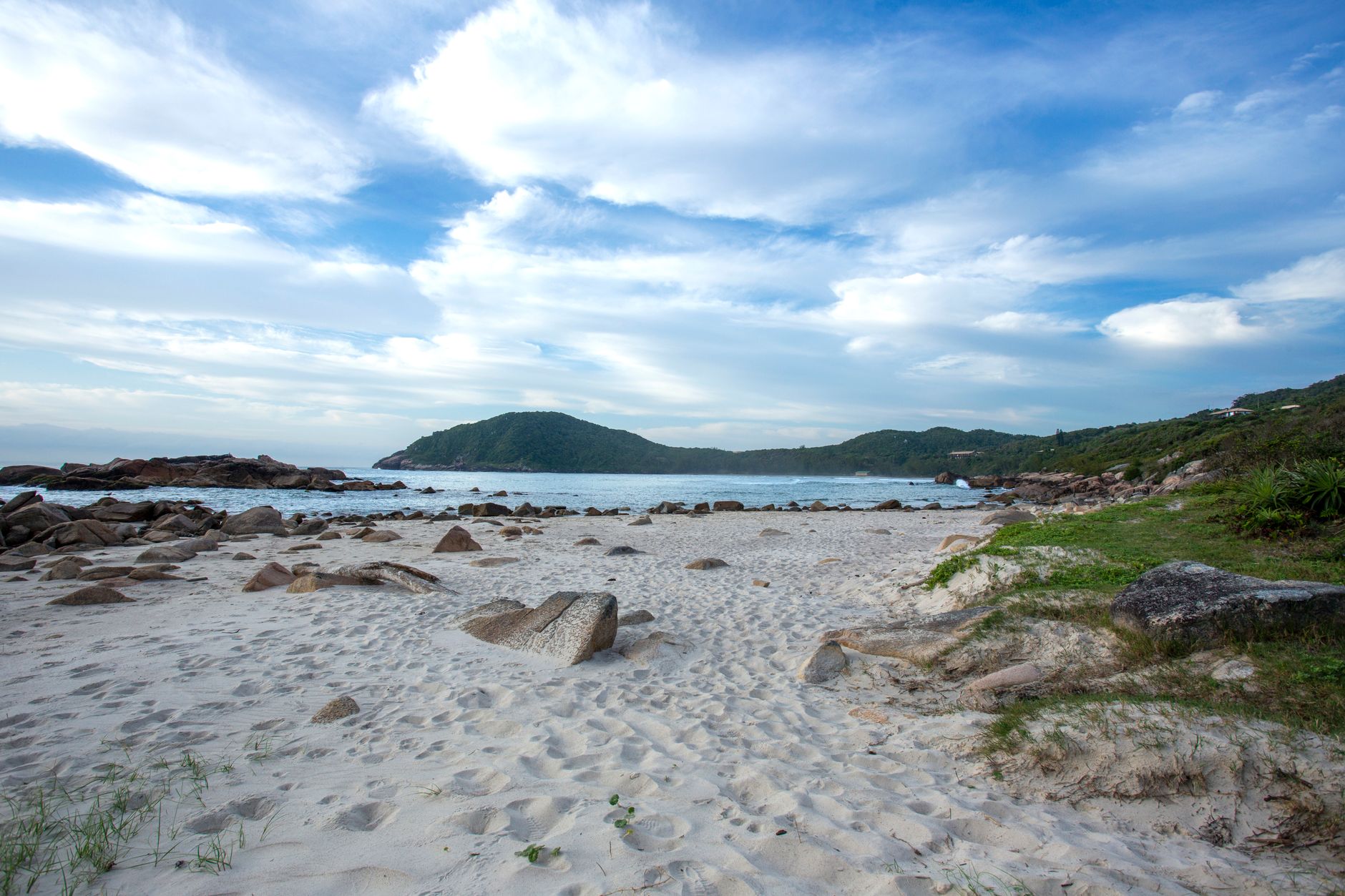
Garopaba is a coastal town on the southern shore of Santa Catarina, an old fishing village turned into one of the best-loved surf and nature destinations in southern Brazil. With a relaxed, alternative, sporty feel, it draws surfers, backpackers and families after beautiful beaches, waves, trails through green headlands and a calm far from the big cities.

Its great hallmark, besides the surf, is southern right whale watching (baleia-franca): between winter and spring these whales come close to the Santa Catarina coast to breed, in one of the most impressive nature experiences on the shoreline. The region is part of the Área de Proteção Ambiental da Baleia Franca. Add to that beaches such as Praia da Garopaba, Praia do Silveira, Praia do Ouvidor and the famous Praia do Rosa nearby, plus coastal trails with spectacular views.

This guide covers the essentials of Garopaba with a practical eye: how to get there and get around, which beaches and trails to visit, when and how to see whales, where to sleep and eat, and how to combine it with the Praia do Rosa and the Santa Catarina coast. Garopaba is surf, whales, nature and simple seaside life: one of the most genuine getaways in southern Brazil.

📖 History of Garopaba

Garopaba began as an Azorean fishing village, founded by immigrants from the Azores who settled on the coast of Santa Catarina from the 18th century onwards. For a long time it was a whaling port: in colonial times, hunting right whales was an important economic activity on the Santa Catarina coast, with armações (whaling stations) in the area. With the hunting ban and the passing of time, the whales came back to these waters and Garopaba went from hunting them to protecting and watching them. The arrival of surf and tourism in the last decades of the 20th century turned the fishing town into a destination for nature and sport. The full story is on our history page.

Read the full history ↓

🏛️ Garopaba is in Santa Catarina

The southern state of beaches, islands and cool highlands: settled by Azoreans, Germans and Italians, stage of Garibaldi's short-lived Juliana Republic and of the bloody Guerra do Contestado. Land of Florianópolis and its dozens of beaches, of the Blumenau Oktoberfest and of the only corner of Brazil where it regularly snows.

Read the history of Santa Catarina →

🗺️ What to see

1
Southern right whale watching (baleia-franca) from land
One of the great experiences on this coast: seeing right whales with their calves close to shore, from the headlands.
Between the southern winter and spring (roughly July to November, peaking between July and September), southern right whales come to the temperate waters of the southern Santa Catarina coast to mate and give birth. Garopaba and neighbouring Praia do Rosa are among the best places in Brazil to watch them, in a genuinely moving nature experience. One key detail: in this region the watching is done from land, not from a boat. Boat-based whale watching trips have been suspended since 2013 within the Área de Proteção Ambiental da Baleia Franca to protect the species, which is still recovering. The right whale tends to stay very close to the rocky points, so you can see it very well from the headlands and viewpoints, sometimes just a few metres from the shore. Many operators offer guided 'whale safaris' on land, with pick-up from your accommodation, short walks to the best spots and, on the longer options, a regional lunch included. Getting there: viewpoints on the headlands of Garopaba, Praia do Rosa (Imbituba) and Laguna; the guided safaris pick you up at your accommodation. Best time: winter and spring (Jul-Nov). Tips: book with authorised operators of the Rota da Baleia Franca (such as Amo Garopaba or Ao Sul Natural); bring binoculars, warm layers and protection from the sea wind.
ℹ️ Season: July to November (peak Jul-Sep, with sightings through October-November); watching from land (boat trips have been suspended since 2013) · Price: Guided whale safari on land from R$ 160 (guided trilha) and R$ 260 per person (a ~4 h expedition, minimum 2 people); the long ~6 h version with a regional lunch R$ 480 (source: operator Amo Garopaba / Ao Sul Natural, verified July 2026) · Tip: Book with Rota da Baleia Franca operators; bring binoculars and warm layers
2
Praia da Garopaba (central beach)
The town's family-friendly urban beach, in a sheltered bay with services close at hand.
The Praia da Garopaba is the town's central beach, set in a sheltered bay that makes it calmer and more family-friendly than the open surf beaches. It's the heart of the resort: along its edge are the historic church, the fishermen's sheds, restaurants, pousadas and all the summer bustle. With its calmer sea it's good for swimming and for children, and traditional fishing boats set out from its sand. A short walk takes you to the historic centre, with its Azorean-heritage houses, and to other points of interest. It's the natural base to stay in and to explore the rest of the municipality's beaches from. Getting there: right in the centre of Garopaba, steps from most accommodation. Best time: summer for swimming and atmosphere; all year for walking. Tips: ideal for families; pairs well with a walk around the historic centre and the fishing harbour.
ℹ️ Distance: Centre of Garopaba (walkable from town) · Price: Free and open access to the beach · Tip: Calmer sea, good for families and for swimming
3
Praia do Silveira (surf)
Garopaba's surf temple, home to competitions and a meeting point for surfers.
The Praia do Silveira is one of the most famous surf beaches in southern Brazil and the sporting soul of Garopaba. Its consistent, good-quality waves made it a competition venue and a meeting point for surfers from across the country, with a young, alternative atmosphere closely tied to surf culture. Around the beach there are surf schools, board rentals, pousadas and bars with a surfer feel. It suits both experienced surfers and beginners wanting lessons, though it's always worth checking the state of the sea and the currents. It's also lovely simply to walk along the sand and watch the surfers in the water at sunset. Getting there: a few kilometres from the centre of Garopaba, by car or taxi/app. Best time: the surf works almost all year; summer for more atmosphere. Tips: if you want to start out, there are schools in the area; follow the signs and respect the local surfers.
ℹ️ Distance: A few km from the centre of Garopaba (car/taxi) · Price: Free access; surf lesson about R$ 100–150 per hour (the Santa Catarina average is ~R$ 130); board rental from about R$ 40–60 a day (source: local schools and Cronoshare/Superprof, verified July 2026) · Tip: A competition venue; check the state of the sea before going in
4
Praia do Ouvidor
A wild, well-preserved beach to the north, with good waves and access by a trail between headlands.
The Praia do Ouvidor, further north in the municipality, is one of the most beautiful and best-preserved beaches in the region, combining nature, good waves and an approach on foot that is part of the charm. Surrounded by Atlantic forest and green headlands, it keeps a wilder, quieter feel than the central beaches. It's a favourite with surfers and with anyone after a natural setting, and trails lead from it to other beaches and viewpoints. In whale season, its headlands are good watching points. Nearby is Pura Vida, one of the area's surf schools. Getting there: you can drive up to a point and then take a short trail on foot. Best time: clear days; summer for swimming. Tips: bring comfortable shoes for the trail, water and sun protection; treat the natural setting with care.
ℹ️ Distance: North of the municipality, towards the Praia do Rosa; final access on foot by trail · Price: Free and open access · Tip: Well-preserved natural setting; a good spot for whale watching in season
5
Praia do Rosa (Imbituba)
One of the most beautiful beaches in southern Brazil and a right whale sanctuary, a few km away.
Very close to Garopaba, already in the neighbouring municipality of Imbituba, is the Praia do Rosa, considered one of the most beautiful beaches in southern Brazil and one of the country's main right whale sanctuaries. With its lagoon, its headlands, its waves and a sophisticated, bohemian atmosphere, the Rosa is usually visited alongside Garopaba on the same trip. The beach, a horseshoe between headlands, offers surf, walks, sandboarding on the dunes, kitesurfing on the lagoon and, in winter, excellent whale watching points from the headlands. Its charming pousadas and its food scene have made it a more exclusive destination within the region. Getting there: about 20-30 minutes from Garopaba by car. Best time: summer for the beach, winter-spring for whales. Tips: ideal to combine with Garopaba; the pousadas on the headlands have spectacular views.
ℹ️ Distance: Imbituba, about 20-30 min by car from Garopaba · Price: Free access to the beach; activities (surf, sandboarding) and whale safaris cost extra · Tip: A perfect match with Garopaba; a more sophisticated, bohemian feel
6
Coastal trails and viewpoints (trilhas)
Walks through Atlantic forest headlands with spectacular views of the Atlantic.
The Garopaba coast is criss-crossed by trails (trilhas) that run over the coastal headlands and link beaches, offering some of the best views in the region. Walks such as the one to the Praia do Ouvidor, to the Praia da Vila (Rosa) or out to the rocky points cross Atlantic forest vegetation, dunes and natural lookouts over the Atlantic. These trails are ideal for connecting with nature, taking spectacular photos and, in season (Jun-Nov), watching right whales from the top of the headlands. Some are short and easy; others call for decent fitness. It's one of the loveliest ways to discover the geography of rugged coast, hidden beaches and green headlands that defines Garopaba. Getting there: the trails start from the various beaches (Ouvidor, Silveira, Ferrugem, Rosa). Best time: clear days; whale season if you want to add sightings. Tips: bring suitable footwear, water and sun protection; some stretches are demanding and are best not done alone.
ℹ️ Distance: Trails spread across the municipality, starting from the beaches · Price: Free access; optional local guide from about R$ 80–160 per group (source: local guides, verified July 2026) · Tip: Excellent whale watching points in season; bring hiking shoes
7
Historic centre and fishing harbour
The old Azorean-heritage quarter, with the church, the fishing sheds and the feel of a seaside town.
The historic centre of Garopaba keeps the soul of the old Azorean fishing village. Around the Praia da Garopaba stand colonial houses, the historic church (dedicated to St Joachim), the sheds where the nets and boats of the small-scale fishery are still kept, and streets with the air of a coastal town. It's a pleasure to walk: watching the fishers head out and come back, seeing the tainha (mullet) fishery in season, buying fresh fish and soaking up the traditional way of life that coexists with tourism and surf. The Azorean heritage also shows in the food, the religious festivals and local customs. Getting there: right in the centre of Garopaba, steps from the main beach. Best time: all year; the tainha fishery (autumn-winter) is a spectacle in itself. Tips: an unhurried walk through the centre and the harbour is the best way to get to know the fishing identity of the place.
ℹ️ Distance: Centre of Garopaba, next to the main beach · Price: Free access (walking route) · Tip: Don't miss the traditional tainha fishery in autumn-winter
Advertisements
What nobody tells you

💵 Prices

Tickets

TypePrice
Guided whale safari on land (watching)From R$ 160 (guided trilha) and R$ 260 per person (a ~4 h expedition, minimum 2 people); the long ~6 h version with a regional lunch R$ 480. Boat trips have been suspended since 2013 (source: operator Amo Garopaba, verified July 2026)
Surf lessonAbout R$ 100–150 per hour depending on the school and whether it's private or in a group; the Santa Catarina average is ~R$ 130 (source: local schools and Cronoshare, verified July 2026)
Surfboard rentalFrom about R$ 40–60 a day (source: local surf schools in Garopaba, verified July 2026)
Access to beaches and trailsFree (open access)
Beach parking (in season)About R$ 10–25 a day at private car parks on the busiest beaches, in high season; at many spots it's free (source: local survey, verified July 2026)
🔄 updated monthlyOfficial / reference values · double-check when buying

Activities and tours

ActivityPriceDurationOperator
Guided right whale safari (on land)From R$ 160 (trilha) to R$ 260 per person (a ~4 h expedition); ~6 h with lunch R$ 480 (source: operator Amo Garopaba, verified July 2026)About 4 h (long options up to 6 h)Authorised operators of the Rota da Baleia Franca (Amo Garopaba, Ao Sul Natural)
Surf lessonsAbout R$ 100–150 per hour (source: local schools, verified July 2026)1-2 hLocal schools (Vento Sul, Pura Vida and others)
Trekking the coastal trailsFree on your own; with a guide from about R$ 80–160 per group (source: local guides, verified July 2026)Half a dayOn your own / local guides
Trip to the Praia do RosaFree on your own (by car); transfer/tour from about R$ 80–200 per person (source: inbound agencies, verified July 2026)Half a day to a full dayOn your own / inbound agencies
🔄 updated monthlyOfficial / reference values · double-check when buying
Advertisements

🚌 How to get there and distances

Getting around

ModePriceDurationNotes
Car / rentalRental from about R$ 120–250 a day depending on category and season (source: rental aggregators, verified July 2026)VariableThe most practical way to move between the different beaches and out to the Praia do Rosa, which are spread across the municipality
Taxi / appsShort rides within town about R$ 15–35; to the beaches or to Rosa about R$ 30–70 (source: local survey, verified July 2026)VariableAvailable in town; app coverage can be limited in low season
City / intercity busCity and intercity fare about R$ 4–8 per leg (source: local survey, verified July 2026)VariableLocal connections and links with neighbouring municipalities (Imbituba, Paulo Lopes); reduced timetables out of season
On foot / by bikeFree on foot; bike rental from about R$ 30–50 a day (source: local survey, verified July 2026)VariableThe centre and the main beach are walkable or cyclable; for the far-flung beaches a car is better
🔄 updated monthlyOfficial / reference values · double-check when buying

How to get there

RouteAirlines / operatorsAvg. priceDuration
Florianópolis → Garopaba (BR-101)Santo Anjo, Catarinense and others; carBus about R$ 36–49 (Santo Anjo from R$ 35.84; the fare from the Rita Maria terminal up to ~R$ 49); by car, fuel and tolls (source: Rodoviária de Florianópolis / Buson, verified July 2026)About 2 h (some 90 km)
Florianópolis airport (FLN) → GaropabaPrivate transfer, rental car or bus (with a connection)Private transfer about R$ 250–400 per car; the bus is far cheaper (source: transfer agencies, verified July 2026)About 1.5 to 2 h
Porto Alegre → Garopaba (BR-101)Scheduled buses; carBus about R$ 90–160 depending on the company and how far ahead you book (source: ticket aggregators, verified July 2026)About 4 to 4.5 h
Imbituba (Praia do Rosa) → GaropabaCar, intercity bus or taxiBus about R$ 4–8; taxi/app about R$ 40–70 (source: local survey, verified July 2026)About 20-30 min
🔄 updated monthlyOfficial / reference values · double-check when buying

🏨 Where to stay

No exact prices: a scale from $ (budget) to $$$$$ (luxury), with 2-3 options per category.

CategoryPriceRecommended options
Charming pousadas and eco-pousadas$$$$$About R$ 350–800 a night. Pousadas facing the sea or up on the headlands, many around the Praia do Rosa (Imbituba), with views, a pool and a quiet atmosphere. For travellers after something more exclusive and romantic (source: Booking/Tripadvisor, verified July 2026)
Mid-range pousadas and hotels$$$$$About R$ 150–350 a night. Comfortable options in the town of Garopaba and near the beaches, breakfast included; good value for families and couples (source: Booking/Tripadvisor, verified July 2026)
Hostels and budget pousadas$$$$$A hostel bed about R$ 50–90; a budget room from about R$ 100–150 a night. Places for surfers and backpackers, with a young crowd (source: Booking/Hostelworld, verified July 2026)

🍴 Where to eat

TypePriceOptions / signature dish
Fish and seafood$$$$$About R$ 50–120 per person. Seafood cooking rooted in the fishery: fresh fish, prawns, local oysters and the traditional tainha in season. The culinary essence of the town (source: local restaurant survey, verified July 2026)
Natural and health-focused restaurants$$$$$About R$ 35–80 per person. In keeping with the alternative, surfer feel: vegan options, bowls, açaí, juices and natural cooking, very present in the area
Beach bars and casual food$$$$$About R$ 20–60 per person. Kiosks and beach bars with sharing plates, pastéis, beer and a relaxed atmosphere right by the sea
Santa Catarina and home cooking$$$$$About R$ 25–55 per person. Regional dishes of Azorean heritage and home cooking at diners in town, a cheap and tasty option
Advertisements

📖 History of Garopaba

Origins, formation and what the sources say.

Azorean origins and a fishing village

Every autumn, when the south wind starts blowing cold over the coast of Santa Catarina, a shout runs along the beaches of Garopaba: «Tainha!». From the top of the headlands, a lookout —the same job that has existed for more than two centuries— spots the silver shoal coming up from the south and gives the signal. Then the fishers push their canoes into the water, haul the nets out by arm strength and repeat a rite inherited from their Azorean great-grandparents. That gesture, still alive today, is the best way into the history of Garopaba: the story of a town born looking at the sea and which never stopped.

Garopaba has its origin in the Azorean settlement of the Santa Catarina coast. From the 1740s onwards and above all in the period 1748-1756, the Portuguese Crown encouraged the arrival of thousands of immigrants from the Azores and Madeira to populate the southern coast of Brazil, a strip disputed with the Spanish Crown. These settlers —many of them young married couples who sailed on the promise of land— settled in numerous coastal towns in Santa Catarina, from the Ilha de Santa Catarina (Florianópolis) southwards, where they founded villages of fishers and farmers that kept their language, their religious festivals of the Divino Espírito Santo, their prayer traditions and their Azorean ways of life for generations.

Garopaba grew as one of those fishing communities, with small-scale fishing as the basis of its economy and its identity. The place name is Indigenous in origin, from the Tupi-Guaraní language, and is usually translated as «cove» or «place of boats» (from expressions linked to guará and paba), a clear reference to its geography of sheltered bays and open beaches. For generations, life in the town revolved around the sea: the tainha (mullet) fishery in autumn and winter, hand-woven nets, the sheds where the canoes were kept and Azorean traditions set the rhythm of a small, isolated community, linked to Florianópolis only by dirt roads, very different from the busy tourist destination it would become centuries later.

The whaling past: from hunting to protecting

One of the most singular —and darkest— chapters in the history of the Garopaba coast is its whaling past. Around 1795 the Armação de São Joaquim de Garopaba was founded in the town, a whaling station that operated, at varying intensity, until around 1839 (sources place the activity roughly between 1793 and 1839). These 'armações' were genuine industrial complexes for their time: whales were harpooned from boats, towed ashore and processed for their oil —used for lighting, in construction and even in the mortar of colonial buildings— and for baleen. It's estimated that the armações of Garopaba and Imbituba captured hundreds of whales: some records mention almost 500 animals in a few seasons, between June and November, precisely when the right whale came close to shore to breed and fell within reach of the whalers.

Intensive hunting, sustained for centuries along the whole coast, decimated the populations of southern right whales until they were nearly wiped out in the southwestern Atlantic. Whaling declined in Garopaba around the middle of the 19th century, when mineral oil and other alternatives made the hunt less profitable. But it was only in 1987, with the ban on commercial whaling in Brazilian waters, that the slow and still fragile recovery of the species began. Decade by decade, the whales returned to the temperate waters of the Santa Catarina coast in their breeding season.

That return completely changed what the sea means for the region: from the harpoon to binoculars, from hunting to conservation and whale watching tourism. The creation of the Área de Proteção Ambiental da Baleia Franca, which covers this stretch of coast, consolidated protection of the species and turned Garopaba and neighbouring Praia do Rosa into one of the country's main places to watch right whales with their calves. That the same town which killed whales for decades is today one of the places where thousands of people come to watch them is, perhaps, the most eloquent irony in its whole history.

The 1970s: hippies, mysticism and freedom

If one moment marks the birth of modern Garopaba, it isn't a founding date but the mood of an era. In the middle of the Brazilian military dictatorship, during the 1970s, the town —only recently made a municipality, on 19 December 1961, after splitting from Imbituba— was 'discovered' by the first hippies and surfers, many of them gaúchos coming up from Rio Grande do Sul in search of untouched beaches and, above all, somewhere to breathe.

Garopaba earned a reputation as a refuge: a remote corner, with almost no paved roads, where a generation held down by the regime could escape surveillance, live without clocks and try out other kinds of freedom. That mystical, countercultural aura was etched into the popular culture of the south: the song 'Deu pra ti' and, above all, the gaúcho film 'Deu pra ti anos 70' (1981) portrayed Garopaba as a special, almost legendary place, a symbol of the freedom of a whole era. For years urban legends even circulated about special energies and strange sightings in the area, reinforcing its mystical reputation.

That Garopaba of simple houses, beach bonfires and fishers renting a room to travellers was the seed of today's destination. The hippies and surfers of the 1970s didn't just bring boards: they planted an idea —Garopaba as an alternative paradise— that later tourism would only amplify.

Becoming a surf capital

What began with a handful of surfers in the 1970s turned, over the last decades of the 20th century and the start of the 21st, into a full-blown identity. Its beaches with good waves —led by the Praia do Silveira, along with Ferrugem and Vila—, its natural beauty and its calm atmosphere drew surfers and alternative travellers from all over Brazil and abroad. The Silveira, which is also a tainha spawning area, became a competition venue and a pilgrimage point for surfers, and the fishing town began filling up with pousadas, surf schools, health-food restaurants and a sporty, bohemian spirit. Garopaba earned a nickname as one of the 'surf capitals' of southern Brazil.

Nature tourism, on top of the surf, gave Garopaba a particular identity on the Santa Catarina coast: that of a relaxed destination tied to the sea, to healthy living and to contact with nature, simpler and less crowded than the big resorts around Florianópolis. The nearby Praia do Rosa, in Imbituba, reinforced that image as it became one of the most coveted and sophisticated beaches in the south.

Today Garopaba combines its Azorean fishing heritage with its calling as a destination for surf, nature and whale watching. The town that hunted whales for decades is now one of the places where thousands of visitors come to watch them, and the corner the hippies chose because it was remote is today one of the most sought-after destinations on the southern coast, a turn that sums up, better than any other story, its shifting relationship with the sea.

The whale sanctuary and Garopaba today

The decisive turn in Garopaba's relationship with the sea came with legal protection for the southern right whale. In 1987 Brazil banned whaling in national waters, and in 2000 the Área de Proteção Ambiental (APA) da Baleia Franca was created, a vast marine conservation unit covering some 130 km of coast in central-southern Santa Catarina, from the island of Florianópolis to the Cabo de Santa Marta, in Laguna, and taking in the stretch of coast at Garopaba and Imbituba. Its central purpose is to protect the right whales that return to these waters every winter to breed.

The region established itself as one of Brazil's main right whale sanctuaries and as a responsible whale watching destination. Imbituba —right next to Garopaba— was declared Capital Nacional da Baleia Franca, and every year the Semana da Baleia Franca is held with environmental education activities. To preserve the species, still recovering, boat-based watching was suspended in 2013, so observation is done from land, from the headlands and viewpoints where the whales come within a few metres of the shore.

In parallel, Garopaba completed its transformation into an established tourist destination on the Santa Catarina coast, without entirely losing its small-town scale. Today the Azorean fishing heritage —the small-scale tainha fishery, the religious festivals and the architecture of the historic centre— sits alongside a strong culture of surf, nature and healthy living. The contemporary challenge is to balance tourism and property growth with the conservation of the natural surroundings, the beaches and the Atlantic forest headlands that make Garopaba one of the best-loved corners of southern Brazil.

📚 Bibliography

  • Wikipedia (ES) — «Garopaba»: https://es.wikipedia.org/wiki/Garopaba
  • Wikipedia (PT) — «Garopaba»: https://pt.wikipedia.org/wiki/Garopaba
  • Wikipedia (PT) — «Baleia-franca-austral»: https://pt.wikipedia.org/wiki/Baleia-franca-austral
  • Wikipedia (PT) — «Área de Proteção Ambiental da Baleia Franca»: https://pt.wikipedia.org/wiki/%C3%81rea_de_Prote%C3%A7%C3%A3o_Ambiental_da_Baleia_Franca
  • ICMBio — «APA da Baleia Franca»: https://www.gov.br/icmbio/pt-br/assuntos/biodiversidade/unidade-de-conservacao/unidades-de-biomas/marinho/lista-de-ucs/apa-da-baleia-franca
  • Portal São Francisco — «Garopaba»: https://www.portalsaofrancisco.com.br/turismo/garopaba
  • NSC Total — «Capital do surfe e rota das baleias-francas, Garopaba comemora 63 anos»: https://www.nsctotal.com.br/noticias/capital-do-surfe-e-rota-das-baleias-francas-garopaba-comemora-63-anos-nesta-quinta-feira
  • Instituto Australis — «A Matança» (Projeto Franca Austral): https://baleiafranca.org.br/a-baleia/a-matanca/
  • IFSC — «Educação Patrimonial de Garopaba» (PPC): http://cs.ifsc.edu.br/portal/files/GAROPABA_FIC_EDUCACAO_PATRIMONIAL_PPC_866.pdf
  • Memória e Patrimônio de Garopaba: https://sites.google.com/view/garopaba

❓ Frequently asked questions

When and how can you see whales in Garopaba?+
Southern right whales reach the Santa Catarina coast roughly between July and November, in greatest numbers between July and September, to mate and have their calves. In this region the watching is done from land (viewpoints and headlands): boat trips have been suspended since 2013 to protect the species. There are guided land-based safaris run by Rota da Baleia Franca operators; a roughly 4-hour expedition costs from R$ 260 per person (minimum 2), with trilha options from R$ 160 and ~6 h days with lunch for R$ 480 (source: operator Amo Garopaba, verified July 2026).
Is Garopaba only for surfers?+
No. Although it's a surf temple, it's also ideal for families, nature lovers and anyone after peace and quiet: there are beaches for swimming (like the central one, which is calmer), coastal trails, whale watching and a relaxed atmosphere. The nearby Praia do Rosa adds beauty and sophistication.
How do I get there from Florianópolis?+
By car or bus on the BR-101, in roughly 2 hours (some 90 km south). The bus (Santo Anjo, Catarinense) costs around R$ 36–49 from the Rita Maria terminal (source: Rodoviária de Florianópolis, verified July 2026). Florianópolis airport (FLN) is the closest one with good connections.
Is the Praia do Rosa worth a visit too?+
Yes. The Praia do Rosa, in the neighbouring municipality of Imbituba (20-30 minutes by car), is one of the most beautiful beaches in southern Brazil and a right whale sanctuary. It's usually visited alongside Garopaba; it has a more sophisticated, bohemian feel, with headland pousadas that have spectacular views.
What's the best time to visit?+
It depends: summer (December to March) is ideal for the beach, surf and a lively scene; winter and spring (June to November) are whale season, with cooler weather and fewer people. The surf works for much of the year.
How many days should you stay in Garopaba?+
3 to 5 days is enough for the essentials: the town's beaches (Garopaba, Silveira, Ouvidor), the nearby Praia do Rosa, a coastal trail and, if you come in season (Jul-Nov), whale watching. If you're only there to surf or to rest, 2 or 3 days already work; to combine it with Florianópolis or the rest of the Santa Catarina coast, add more nights.
How much does it cost to sleep and eat in Garopaba?+
There's something for every budget: a hostel bed runs around R$ 50–90 a night, mid-range pousadas go from R$ 150 to 350, and the charming pousadas near the Praia do Rosa can go beyond R$ 350–800. Eating fresh fish at a seafood restaurant costs roughly R$ 50–120 per person, and there are cheaper options at beach bars and home-style diners (source: Booking/Tripadvisor, verified July 2026).
Sources consulted (7)
Still planning?
Explore more destinations in Brazil
See all destinations →
Advertisements