Viajá con Gus
HomeBrazilBombinhas
Bombinhas
🇧🇷 Brazil · South

Bombinhas

Jump to what you need
📌State
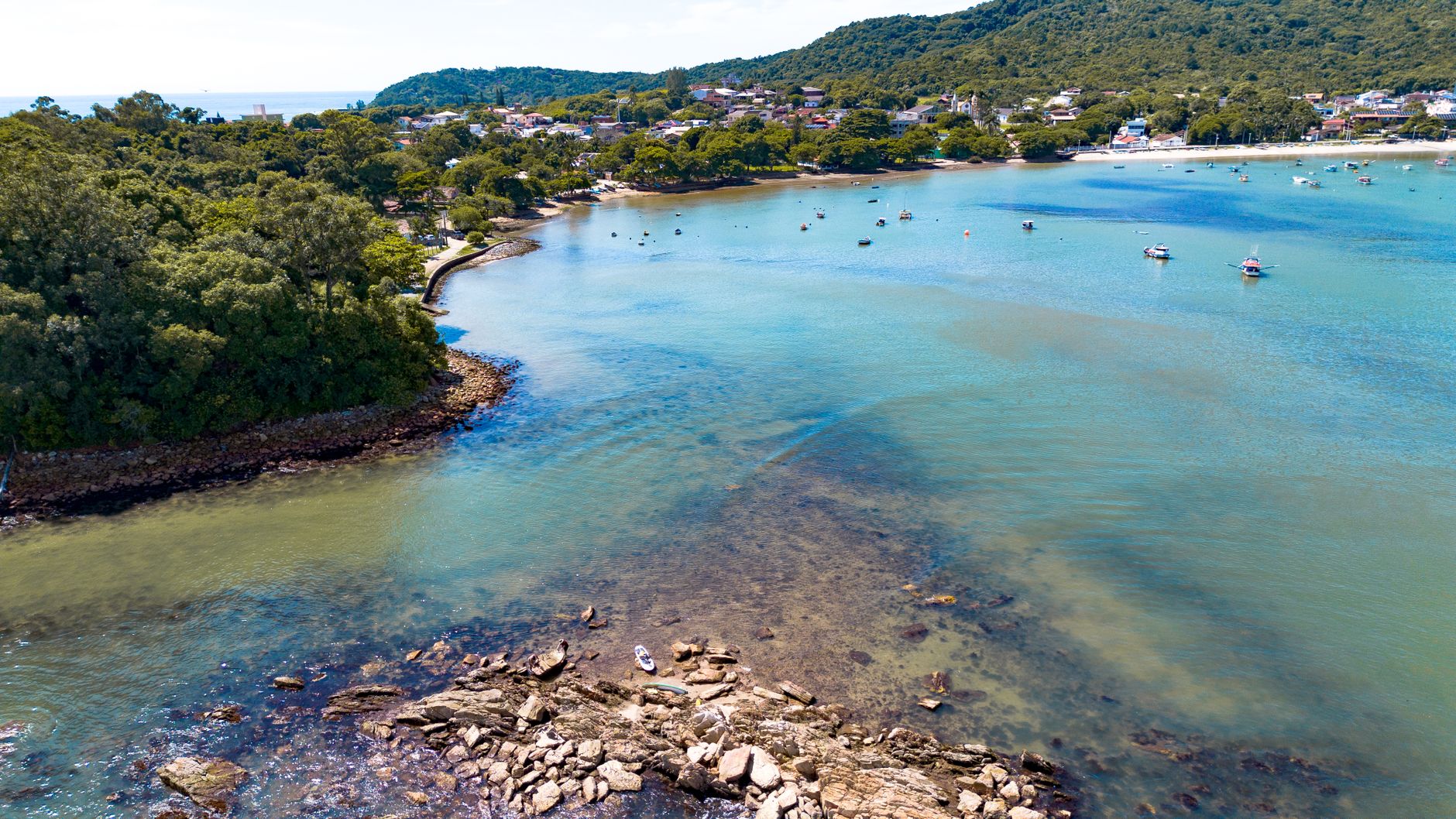
Santa Catarina (Bombinhas, Brazil). It's a small coastal municipality on the Santa Catarina shoreline, in the country's South region, set on a mountainous, forested peninsula that juts into the Atlantic. Despite its small size (one of the smallest municipalities in the state by area), it packs in around 39 beaches of crystal-clear water, hidden coves and transparent sea, which made it the 'diving capital' of southern Brazil. It's part of the Santa Catarina coastal tourist region, close to Balneário Camboriú and Itapema, and it's surrounded by lush Mata Atlântica and by protected areas such as the Reserva Biológica Marinha do Arvoredo. Its permanent population is small, but in summer the figure multiplies several times over with the arrival of tourists
📌Service city
Bombinhas has no airport of its own: the closest and most commonly used is Navegantes International Airport (NVT), some 35-40 km away, which handles domestic flights from the main capitals; Florianópolis's Hercílio Luz International Airport (FLN), a little over an hour away by road, is also used and has more connections. The region has no long-distance bus terminal within Bombinhas itself: the usual approach is to arrive at the Itapema or Balneário Camboriú terminals and finish the journey by local bus, taxi/app or car. The municipality has pousadas, hotels, seafood restaurants, diving and snorkeling operators, boat rentals and tourist services. A car is very practical for getting around, and in summer a transport system runs to ease congestion on the peninsula. The support cities with more urban infrastructure (hospitals, malls, terminals) are Itapema, Balneário Camboriú and Florianópolis
📌Best time to go
Bombinhas is a seaside destination, so its star season is summer (December to March), when the water is warmest, the days are long and sunny and every water activity is running at full tilt; that's also why it's the priciest and busiest time, with the peninsula packed in January and at Carnival. Spring (September to November) and early autumn are an excellent alternative: pleasant weather, a sea that's still enjoyable, better diving visibility on certain days and far fewer tourists. Autumn and winter (May to August) are cool and quieter, ideal for anyone after peace, trails and scenery, though the water gets cold for swimming. For diving and snorkeling, the months with the best visibility tend to fall toward the end of summer and into autumn (to be checked locally, since it depends on the weather and the currents)
📌Suggested days
With 2 days you'll see the essentials: the main beaches such as Bombinhas (the central one), Bombas, Mariscal and Quatro Ilhas, plus the unmissable Praia da Sepultura and a lookout or two. With 3 to 4 days you can take it slowly: add the more secluded beaches (Praia da Tainha, Praia da Lagoinha, Praia do Embrulho), the Mirante Eco 360 and the peninsula's viewpoints, a day of snorkeling or diving in the Reserva do Arvoredo or in Porto Belo, trails through the Mata Atlântica and a boat trip. With 5 to 7 days you can pair Bombinhas with side trips to Porto Belo, the Ilha de Porto Belo, Balneário Camboriú and even Florianópolis, making the most of the best of the Santa Catarina coast
💱 BRL exchange rate
Loading rate…
🌤️ Weather in Bombinhas
Loading weather…

Bombinhas is one of those corners where southern Brazil turns into a paradise of transparent water. On a small mountainous peninsula in Santa Catarina, covered in Mata Atlântica and ringed by the Atlantic, this tiny municipality gathers some 39 beaches of pale sand and crystalline sea, coves tucked between rocks, and forest that comes right down to the shore. Its clear water and marine life made it famous as the country's southern 'diving capital', a magnet for anyone who loves snorkeling, diving and a clean sea.

What sets Bombinhas apart is that mix of preserved nature and picture-postcard sea in a small, walkable space. There are beaches for every taste: the big family ones like Bombas and Bombinhas, the surfer and party ones like Mariscal and Quatro Ilhas, and the more secluded treasures you reach by trail, like the tiny Praia da Sepultura, with its still turquoise water made for snorkeling. Off the coast, the Reserva Biológica Marinha do Arvoredo protects one of the richest marine ecosystems in the South Atlantic, a sanctuary for divers.

This guide covers the essentials of Bombinhas with a practical, warm eye: which beaches to pick depending on what you're after, where to snorkel and dive, which lookouts give the best views over the peninsula, how to get around and how to make the most of the season without the crowds wearing you down. Bombinhas is a place to slow down, put your head under the water, walk between forest and sea and discover a Brazil of clear water that many don't expect to find this far south.

📖 History of Bombinhas

Bombinhas is a young municipality, but its history is rooted in the settlement of the Santa Catarina coast. Before the Europeans, the region was inhabited by Indigenous peoples, among them the Carijós (a Guarani group of the southern coast), and it holds even older traces in the sambaquis, those mounds of shells and remains left by millennia-old fishing and foraging populations along the shore. From the 18th century on, the coast of Santa Catarina was colonized above all by Azorean immigrants (from the Azores islands) and mainland Portuguese, who founded artisanal fishing communities along the shoreline, living off fishing —especially tainha and sardines— and leaving a strong Azorean-rooted culture in the architecture, the religious life, the language and the food. For a long time, the beaches of the Bombinhas peninsula were quiet fishing villages belonging to the municipality of Porto Belo. The great change came with tourism: from the last decades of the 20th century, the beauty of its beaches and the clarity of its water drew visitors and divers, transforming the local economy. Bombinhas broke away from Porto Belo after a referendum in March 1992 (State Law 8,558) and was installed as an independent municipality on 1 January 1993, establishing itself from then on as one of the great seaside destinations of southern Brazil and as the regional 'diving capital', always with the tension between tourist development and the conservation of its nature, today protected in several conservation units. The full story is on our history page.

Read the full history ↓

🏛️ Bombinhas is in Santa Catarina

The southern state of beaches, islands and cool highlands: settled by Azoreans, Germans and Italians, stage of Garibaldi's short-lived Juliana Republic and of the bloody Guerra do Contestado. Land of Florianópolis and its dozens of beaches, of the Blumenau Oktoberfest and of the only corner of Brazil where it regularly snows.

Read the history of Santa Catarina →

🗺️ What to see

1
Praia da Sepultura
A small cove of still turquoise water, reached by a trail, considered the best snorkeling beach in Bombinhas.
Praia da Sepultura is one of the great treasures of Bombinhas and one of the peninsula's most sought-after postcards. It's a small cove of extraordinarily transparent, calm water in a turquoise that looks like it came from the Caribbean, sheltered by rocky points that hold back the swell. That stillness and that clarity make it the favorite spot for snorkeling: with just a mask you'll see colorful fish among the rocks, almost at the shoreline. Its striking name is linked to local legends and stories about old burials or shipwrecks in the area, part of the region's folklore. What's certain is that the beach, given its size and fragility, usually has controlled access: you get there by a short trail from neighboring Praia de Quatro Ilhas (or from the Canto Grande area, depending on the path), crossing a stretch of forest, and in season there may be a visitor cap or a fee to protect the place. The little beach has little shade and limited services, so come prepared. It's ideal for spending a few hours swimming, snorkeling and enjoying the crystal-clear water, rather than for a full day with creature comforts. Getting there: by trail from Quatro Ilhas/Canto Grande (a short walk through the forest). Best time to go and tips: go early to get a spot and better water; bring your snorkel gear, water, sunscreen, some food and comfortable shoes for the trail. Respect the access rules and visitor caps, which are there to protect this fragile gem.
ℹ️ Distance: Cove reached by a short trail from Quatro Ilhas / Canto Grande · Best time to go: Summer and calm days; go early for the visitor cap and the clearest water · Admission: Free access by the trail; in summer there may be a visitor cap. Snorkeling included on boat trips (stop of ~30 min). Check when you visit · Duration: Half a day (swimming and snorkeling)
2
Praia de Bombinhas (the central beach)
The beach that gives the municipality its name, right in the center, with calm, clear water and every service at hand.
Praia de Bombinhas is the central beach and the one that gives the municipality its name. It's a bay of calm, clear water, sheltered from heavy swell, which makes it very pleasant and safe for a family swim. It's right in the heart of town, so every service is a step away: pousadas, seafood restaurants, kiosks, gear rental and boat trip operators. Because of its location and its calm, it's one of the usual starting points for activities on the water: boat trips and launches head from here to the islands and the more secluded beaches, and it's a good place to try stand-up paddle, kayaking or snorkeling near the rocks at either end. The beach combines the convenience of having everything close by with a lovely, transparent sea. The center of Bombinhas, next to this beach, holds much of the municipality's life: it's where you'll find the dive operators, the restaurants and the services. It's a comfortable base for staying and getting around the peninsula. Getting there: it's in the center of Bombinhas; reachable by car, local bus or taxi/app, and on foot from most of the center. Best time to go and tips: it's very busy in summer; spring and autumn are quieter. A good option for combining a calm swim with services; bring small bills for the kiosks and sunscreen.
ℹ️ Distance: Center of Bombinhas; on foot, by car, local bus or taxi/app · Best time to go: Summer for swimming; spring/autumn for more quiet · Admission: Free (public beach) · Duration: Half a day or more
3
Praia de Bombas
The longer, more family-friendly neighboring beach, with calm water, ideal for resting and for kids.
Praia de Bombas is the sister beach of Bombinhas (in fact, the municipality takes its name from the diminutive of Bombas) and one of the longest and most popular on the peninsula. It's a long strip of sand, with generally calm water that's shallow near the shore, which makes it a favorite for families with children and for anyone after a relaxed beach day. Its greater length, compared with the smaller coves, means it rarely feels as packed as others: there's room to walk along the water's edge, sunbathe and enjoy yourself without crowding, even in season. Along the beach and nearby there are kiosks, pousadas and restaurants, with good infrastructure for spending the day. It's a beach for resting and swimming rather than for extreme activities, perfect for pairing with the peninsula's more adventurous beaches. Its calm, family atmosphere makes it ideal for anyone traveling with children or looking for quiet. Getting there: it's next to the center, adjoining Bombinhas; reachable by car, local bus, taxi/app or on foot from nearby areas. Best time to go and tips: summer for full-on swimming; the rest of the year for quiet. Good for a family stay. Bring an umbrella or pick a kiosk, plus sunscreen and water.
ℹ️ Distance: Next to the center, adjoining Bombinhas; car, local bus, taxi/app or on foot · Best time to go: Summer for swimming; the rest of the year for quiet · Admission: Free (public beach) · Duration: Half a day or more
4
Praia de Mariscal
The longest beach in Bombinhas, open and with waves, a favorite of surfers and walkers.
Praia de Mariscal is the longest beach in Bombinhas, a broad strip of sand open to the open sea, which sets it apart from the calm, sheltered coves of the peninsula. The swell here is stronger and more consistent, making it one of the favorite beaches of surfers and of anyone who enjoys a sea with waves, as well as a perfect place for long walks along the shore. Its length and its wilder character give it a different feel, more sporty and more natural, with less crowding than the central beaches. It's ideal for surfing, bodyboarding or simply walking with your eyes on the horizon. Nearby there are pousadas, restaurants and services, mostly toward either end. Because of the waves and currents, take care when swimming and pay attention to the safety notices: it isn't the best beach for small children or for anyone after still water (Bombinhas, Bombas or Sepultura are there for that), but it's wonderful for those who love a sea with energy. Getting there: in the southern part of the peninsula; reachable by car, local bus or taxi/app. Best time to go and tips: good all year for surfing and walking; busier in summer. Bring sunscreen, water and, if you surf, your own gear or rent on site. Mind the currents when you swim.
ℹ️ Distance: Southern part of the peninsula; car, local bus or taxi/app · Best time to go: All year for surfing and walking; busier in summer · Admission: Free (public beach) · Duration: Half a day or more
5
Praia de Quatro Ilhas
A surf beach looking out at four islets, and the starting point of the trail to Praia da Sepultura.
Praia de Quatro Ilhas owes its name to the four islets you can see off its shore, cut out against the horizon. It's a beach of livelier water and good waves, much appreciated by surfers, with pretty scenery and an atmosphere that's somewhat quieter and more refined than the central beaches. Its pale sand and its setting make it one of the most photogenic in Bombinhas. Beyond its own appeal, Quatro Ilhas is a strategic spot: from one end runs the trail that leads to the tiny, paradise-like Praia da Sepultura, which makes it the usual way through for anyone heading off to snorkel in that cove. Combining the two in a single outing is a classic peninsula plan. The beach has kiosks, pousadas and restaurants nearby, and thanks to its swell it's a good place to surf or to watch the surfers while you walk on the sand. For swimming, keep the waves and currents in mind. Getting there: reachable by car, local bus or taxi/app; the trail to Sepultura starts here. Best time to go and tips: lovely all year, especially for surfing; more people in summer. Bring sunscreen, water and comfortable shoes if you're doing the trail to Sepultura. Mind the currents when you swim.
ℹ️ Distance: Bombinhas peninsula; car, local bus or taxi/app. Starting point of the trail to Sepultura · Best time to go: All year, especially for surfing; busier in summer · Admission: Free (public beach) · Duration: Half a day (can be combined with Sepultura)
6
Reserva Biológica Marinha do Arvoredo (diving and snorkeling)
A protected marine sanctuary off the coast, with crystal-clear water and rich underwater life: the diving mecca of the south.
The Reserva Biológica Marinha do Arvoredo is the region's great natural jewel and the reason Bombinhas is known as the 'diving capital' of southern Brazil. It's a federal strictly protected conservation unit, created in 1990, covering a group of islands —the main one is Ilha do Arvoredo, along with Galés, Deserta and the Calhau de São Pedro islet— and the waters around them, off the Santa Catarina coast. Its waters, among the clearest in the south of the country, hold exceptional marine biodiversity: rocky reefs covered in life, shoals of colorful fish, sea turtles, rays, octopus and rich underwater flora, at a point where warm and cold currents meet. That makes it a dream destination for scuba diving and snorkeling, considered one of the best dive sites in Brazil. Because it's a strictly protected biological reserve, access is regulated: diving and visits take place in authorized zones and under authorized conditions, through licensed operators that follow the conservation rules. It isn't a beach you can walk to: access is by sea, on diving or snorkeling outings organized from Bombinhas, Porto Belo or nearby areas. Getting there: by boat, with licensed diving/snorkeling operators that depart from the region. Best time to go and tips: visibility varies with the weather and the currents (it's usually good toward the end of summer and into autumn; check locally). Book with a reputable operator, respect the reserve's rules and, if you don't dive, there are guided snorkeling options. Bring environmentally friendly sunscreen.
ℹ️ Distance: Off the coast, islands to the north; access by sea with operators from Bombinhas/Porto Belo · Best time to go: Best visibility toward the end of summer and into autumn (variable; check locally) · Admission: Outings with licensed operators: intro dive R$ 320–390 (source: submarinescuba.com.br, verified July 2026); certified diving R$ 280–350 per person (range according to traveler blogs, verified July 2026) · Duration: Half a day to a full day (diving/snorkeling outing)
7
Mirante Eco 360
A private panoramic lookout high on the peninsula, with 360-degree views over beaches, islands and Mata Atlântica.
The Mirante Eco 360 is one of the unmissable high points of Bombinhas for anyone who wants to take in the whole peninsula in a single look. It's a lookout (privately run, with an admission fee) set at a high point in the region, from where you get a spectacular panorama of almost 360 degrees: the beaches, the rocky points, the islets, the transparent sea and the green blanket of Mata Atlântica covering the hills. From up there you understand the unique geography of Bombinhas, that peninsula cut about by bays and coves, with the blue of the Atlantic surrounding everything. It's one of the best places for panoramic photos and for watching the sunset over the Santa Catarina coast. The site usually offers walkways, observation platforms and services. Besides the Eco 360, the peninsula has other natural lookouts and trails with views (such as the hills and points that separate the beaches), which reward anyone who does the walks with panoramas. But the Eco 360 is the easiest and most accessible option for a complete view without much physical effort. Getting there: by car or taxi/app up to the lookout grounds (a road up the hill); it's worth confirming opening times and access. Best time to go and tips: sunset is the star moment; clear days give the best visibility. Bring your camera, sunscreen and water. Confirm whether there's an admission fee, the opening times and whether it's worth booking in high season.
ℹ️ Distance: High point on the peninsula; car or taxi/app up to the grounds · Best time to go: Sunset and clear days for the best view · Admission: The Bombinhas Department of Tourism publishes R$ 15 for admission to the lookout and R$ 55 per person for the Jumpline zipline, paid separately (turismo.bombinhas.sc.gov.br, verified August 2026). The operator doesn't publish prices on its website (eco360.org.br) and charges them on site, so confirm before you go. It includes six lookouts; 50% discount for students, retirees aged 60+, teachers and people with disabilities, with documentation · Duration: 1 to 1.5 hours
8
Costões and Mata Atlântica trails
The rocky headlands and paths that link the beaches through the forest, with hidden coves and sea views.
Much of the appeal of Bombinhas lies in its 'costões' —the headlands and rock walls that separate one beach from the next— and in the trails that cross them through the Mata Atlântica. Walking these paths is how you discover the most secluded, unspoiled coves on the peninsula, the ones no car reaches and that reward the effort with crystal-clear water and solitude. From various points, trails set off toward hidden beaches such as Praia da Tainha, Praia da Lagoinha, Praia do Embrulho or Praia do Cardoso, through native forest, with sea views and, with luck, wildlife such as birds and small monkeys. Some walks are short and easy; others take more time and good footwear. The costões are also excellent snorkeling spots, since marine life concentrates among their rocks. Several of these areas are part of conservation units (such as the Parque Natural Municipal da Galheta and other reserves), set up to protect the Mata Atlântica and the coastal ecosystem. It matters to walk them with respect: leave no rubbish, stick to the marked paths and, where appropriate, go with a guide. Getting there: the trails start from various beaches on the peninsula (Quatro Ilhas, Canto Grande and Mariscal, among others); you reach the trailhead by car, local bus or taxi/app. Best time to go and tips: clear days, in the morning or mid-afternoon; bring water, sunscreen, insect repellent, hiking shoes and your snorkel gear for the coves. Check the state of the paths and, for the longer or more isolated ones, consider going with a guide.
ℹ️ Distance: Paths from several beaches on the peninsula; car, local bus or taxi/app to the trailhead · Best time to go: Clear days, morning or mid-afternoon; avoid the rain (slippery paths) · Admission: Access generally free; some protected areas have rules or visitor caps. Guided trails from R$ 80–150 per person (range according to traveler blogs, verified July 2026) · Duration: 1 hour to half a day depending on the trail
9
Wild beaches (Tainha, Lagoinha, Embrulho, Cardoso)
The wildest, most hidden coves in Bombinhas, reachable only by trail or by sea, with transparent water and few people.
For anyone after the wilder, more solitary side of Bombinhas, the peninsula keeps a handful of untouched beaches you can only reach on foot, along trails through the Mata Atlântica, or by sea. They're small coves of pale sand and transparent water, without the infrastructure of the central beaches, where nature is in charge and the sense of discovery is complete. Among the best known are Praia da Tainha (a cove of calm green water, very well preserved), Praia da Lagoinha (small and sheltered, with a small lagoon attached), Praia do Embrulho (remote and little visited) and Praia do Cardoso, among others. Each has its own character, but they share clear water and a setting of forest that comes down to the shore. They're ideal for snorkeling, for sunbathing in peace and for feeling the most authentic stretch of coast. Since they have no services (or very few), you have to come prepared: bring water, food, sunscreen and everything you need, and take your rubbish out with you to keep them clean. Some can be reached by sea on boat or launch trips, which makes it easy to see several in a single outing. Getting there: by trail from the neighboring beaches or by sea on boat trips. Best time to go and tips: calm, clear days; hiking shoes for the walks and snorkel gear. Check the condition and the access of each trail (some are demanding) and respect the protected areas. To see several without walking, a boat trip is a good option.
ℹ️ Distance: Secluded coves on the peninsula; access by trail or by sea (boat trip) · Best time to go: Calm, clear days; summer for swimming, spring/autumn for quiet · Admission: Access generally free by trail; by sea, on boat trips from R$ 80–115 per person (range according to local boat operators, verified July 2026) · Duration: Half a day (one cove or several)
10
Boat trips and the Ilha de Porto Belo
Boat outings to see the beaches and islands from the water, with stops for swimming and snorkeling, including nearby Ilha de Porto Belo.
One of the best ways to discover Bombinhas and its surroundings is from the water, on one of the many boat, schooner or launch trips that leave from the peninsula and from neighboring Porto Belo. These outings let you take in the coast, the costões and the islets from the sea, and usually include stops at spots of calm, transparent water for swimming and snorkeling, a perfect experience even for people who don't dive. A classic destination on these trips is the Ilha de Porto Belo, an island just off the coast, with beaches, trails, an aquarium and interpretive paths, ideal for spending a few hours in an island setting. Other outings run along the various beaches of Bombinhas or head to the authorized zones near the Reserva do Arvoredo for snorkeling. There are options for every taste, from large schooners with groups to private launches. The trips are especially worthwhile in summer and on days of good weather, when the sea is calm and visibility is good. It's a comfortable, panoramic way to get to know the region's jagged geography and to reach coves that are otherwise hard to get to. Getting there: the outings leave from the central area of Bombinhas and from Porto Belo; they're booked with local operators. Best time to go and tips: summer and days with a calm sea; bring sunscreen, water, a hat and snorkel gear (sometimes included). Check what each trip includes, the timings and whether it's worth booking in season. For the Ilha de Porto Belo, confirm the boarding times and the island's hours.
ℹ️ Distance: Departures from the center of Bombinhas and from neighboring Porto Belo · Best time to go: Summer and days with a calm sea and good visibility · Admission: Pirate boat trip to Ilha de Porto Belo R$ 80–85 per adult, R$ 40–60 for children (source: submarinescuba.com.br / piratasdoporto.eco.br, verified July 2026) · Duration: Half a day to a full day
11
The center of Bombinhas and its fishing culture
The heart of the municipality, with its seafood restaurants, dive operators and the legacy of the Azorean fishing villages.
The center of Bombinhas, next to the central beach, is the heart of the municipality and a good place to feel the local pulse beyond the beaches. This is where the pousadas, the restaurants —many specializing in seafood and fresh fish—, the diving and snorkeling operators, the shops and the services are concentrated. It's the natural base for staying, eating and organizing activities. Behind the tourist postcard beats the legacy of the old fishing villages that gave rise to the place. The Azorean and Portuguese roots brought by the 18th-century settlers show in the strong fishing tradition (with the tainha catch as a seasonal event), in the seafood cooking, in the religious festivals and in the spirit of a coastal community. Trying a good plate of seafood facing the sea is one of the unmissable food experiences here. The atmosphere in the center is relaxed and summery, very lively in high season and much quieter in winter. It's a good place to get information, book excursions and enjoy the destination's simple nightlife. Getting there: it's the core of Bombinhas, next to the central beach; reachable by car, local bus or taxi/app, and covered on foot. Best time to go and tips: in summer everything is open and buzzing; in low season many services cut their hours. Take the chance to eat seafood and to book water activities with reputable operators. Bring cash for small shops.
ℹ️ Distance: Core of the municipality, next to the central beach; car, local bus, taxi/app or on foot · Best time to go: Summer (everything open and buzzing); low season quieter · Admission: Free (walking around costs nothing; you pay for what you consume) · Duration: Variable (base for the trip)
Advertisements
What nobody tells you

💵 Prices

Tickets

TypePrice
Public beaches (Bombinhas, Bombas, Mariscal, Quatro Ilhas, etc.)Free (public beaches)
Praia da Sepultura (access by trail)Free access by the trail; in summer there may be a visitor cap for conservation. Check when you visit
Reserva Biológica Marinha do Arvoredo (diving/snorkeling with an operator)Intro dive R$ 320–390; certified diving R$ 280–350 per person (source: submarinescuba.com.br, verified July 2026), with transfer, tanks and gear
Mirante Eco 360R$ 30 per person (source: official site eco360.org.br, verified July 2026); zipline extra R$ 60. Includes the natural history museums
Trails and wild beaches (Tainha, Lagoinha, Embrulho)Access generally free; some protected areas have rules/visitor caps. Guided trails R$ 80–150 per person (range according to traveler blogs, verified July 2026)
Pirate boat / schooner trip (Bombinhas + Ilha de Porto Belo)R$ 80–85 per adult, R$ 40–60 for children (source: submarinescuba.com.br / piratasdoporto.eco.br, verified July 2026); includes a stop at natural pools
Ilha de Porto Belo (visit)Access by sea; usually included in the boat trips (R$ 80–115 per person, range according to traveler blogs, verified July 2026)
Intro dive / diving courseIntro dive R$ 320–390 per person (source: submarinescuba.com.br, verified July 2026); PADI courses from R$ 1,500 depending on the operator (range according to traveler blogs, verified July 2026)
🔄 updated monthlyOfficial / reference values · double-check when buying

Activities and tours

ActivityPriceDurationOperator
Intro dive (mergulho) for beginnersR$ 320–390 per person (source: submarinescuba.com.br, verified July 2026; includes boat transfer, 2 tanks, gear and a snack; ~2 h with 30 min underwater)Half a dayLicensed dive operators in Bombinhas (PatadaCobra, Submarine Scuba and others)
Scuba diving in the Reserva do Arvoredo or nearby sitesR$ 280–350 per person for certified divers (range according to traveler blogs, verified July 2026; 7–8 h outing)Half a day to a full dayLicensed dive operators
Guided snorkeling (Praia da Sepultura, costões or a boat outing)R$ 80–150 per person on a boat trip with snorkeling; gear rental R$ 20–40 (range according to traveler blogs, verified July 2026)2-4 hLocal operators and guides
Pirate boat / schooner trip along the beaches and islandsR$ 80–85 per adult, R$ 40–60 for children (source: submarinescuba.com.br, verified July 2026; ~1 h 30 min of sailing)Half a day to a full dayO Pirata, Piratas do Porto and other boat operators in Bombinhas and Porto Belo
Stand-up paddle and kayaking on calm beachesR$ 30–60 per hour of rental (range according to traveler blogs, verified July 2026)1-2 hRental stands on the beaches
Surf lessons in Mariscal or Quatro IlhasR$ 80–150 per lesson (range according to traveler blogs, verified July 2026)1-2 hLocal surf schools
Guided trails through the Mata Atlântica to the wild beachesR$ 80–150 per person (range according to traveler blogs, verified July 2026)Half a dayLocal trekking guides
Visit to the Ilha de Porto Belo (with boat transfer)R$ 80–115 per adult (range according to traveler blogs, verified July 2026; usually includes stops for swimming)Half a day to a full dayPorto Belo boat operators
🔄 updated monthlyOfficial / reference values · double-check when buying
Advertisements

🚌 How to get there and distances

Getting around

ModePriceDurationNotes
Own or rental carR$ 150–300 per day of rental plus fuel (range according to car rental aggregators, verified July 2026)VariableThe most comfortable way to cover the peninsula and its scattered beaches. In summer there's congestion and it's hard to park in the center and at the most popular beaches; go early
Local bus / seasonal municipal transportR$ 5–6 per leg (range according to traveler blogs, verified July 2026)VariableIn high season a transport system usually runs to ease congestion on the peninsula and connect the beaches; useful for avoiding the parking problem. Check routes and frequencies at the time
Taxi and apps (Uber, 99)R$ 15–50 per journey within the peninsula (range according to traveler blogs, verified July 2026)VariableConvenient for moving between beaches without worrying about parking; availability can be lower than in big cities, especially out of season
Boat / launch (transfers and trips)R$ 80–115 per person on boat trips (source: submarinescuba.com.br, verified July 2026)VariableFor reaching secluded coves, islands and dive sites. Departures from the center of Bombinhas and Porto Belo with boat operators
Bicycle or on footBike rental R$ 30–60 per day (range according to traveler blogs, verified July 2026); on foot, freeVariableThe center and the nearby beaches are covered on foot or by bike; for the more distant beaches and the trails, combine with a car, bus or boat
Intercity bus (from Itapema/Balneário Camboriú)R$ 6–15 depending on the leg (range according to traveler blogs, verified July 2026)VariableConnections from the neighboring terminals to Bombinhas; useful if you arrive by long-distance bus in Itapema or Balneário Camboriú
🔄 updated monthlyOfficial / reference values · double-check when buying

How to get there

RouteAirlines / operatorsAvg. priceDuration
Navegantes Airport (NVT) → Bombinhas (taxi, app or transfer)Taxis/apps and private transfersR$ 120–220 by taxi/private transfer (range according to traveler blogs, verified July 2026)Approx. 45 min to 1 h (about 35-40 km)
Florianópolis Airport (FLN) → Bombinhas (taxi, app, car or transfer)Taxis/apps, private transfers or a rental carR$ 250–400 by taxi/private transfer (range according to traveler blogs, verified July 2026)Approx. 1 h to 1.5 h depending on traffic (about 70-80 km)
Arriving by bus in Itapema or Balneário Camboriú → BombinhasNational bus companies + intercity bus/local taxiIntercity bus R$ 6–15; taxi R$ 60–120 (range according to traveler blogs, verified July 2026)Depending on your origin + a final transfer of 30 to 60 min
Domestic flights to Navegantes (NVT) or Florianópolis (FLN)LATAM, GOL, AzulR$ 300–900 one way depending on origin and how far ahead you book (range according to flight search engines, verified July 2026)Depending on origin (São Paulo approx. 1 h; other capitals variable)
By road from Florianópolis, Curitiba or Porto Alegre (car)Own or rental vehicle (BR-101)Fuel and tolls depending on the route (verified July 2026)Florianópolis approx. 1-1.5 h; Curitiba approx. 3-4 h; Porto Alegre approx. 5-6 h
🔄 updated monthlyOfficial / reference values · double-check when buying

🏨 Where to stay

No exact prices: a scale from $ (budget) to $$$$$ (luxury), with 2-3 options per category.

CategoryPriceRecommended options
Upscale beachfront pousadas and resorts$$$$$Boutique pousadas and upscale hotels with sea views, pools and good service: R$ 500–1,200 a night in high season (range according to Booking.com and Tripadvisor, verified July 2026). In summer and at Carnival, book well ahead
Charming pousadas and holiday homes$$$$$Pousadas with character and houses or apartments for short-term rental in quiet areas: R$ 350–700 a night (range according to Booking.com, verified July 2026), ideal for families and groups after privacy and a kitchen of their own
Mid-range pousadas in Bombas, Bombinhas and Mariscal$$$$$A wide choice of mid-range pousadas and hotels near the main beaches and the center: R$ 250–450 a night, lower in low season (range according to Booking.com, verified July 2026). Bombas and Bombinhas are the most central and practical areas
Budget / hostels and campsites$$$$$Hostels, budget pousadas and campsites: a hostel bed R$ 70–130, a simple pousada R$ 150–250 a night (range according to Booking.com and backpacker blogs, verified July 2026). Very popular with backpackers, surfers and travelers on a tight budget

🍴 Where to eat

TypePriceOptions / signature dish
Seafood and fish (Azorean-rooted cooking)$$$$$The star of Bombinhas: restaurants specializing in seafood and fresh fish facing the sea, with prawns, oysters, mussels, sequência de camarão and grilled fish: R$ 70–160 per person, sequências for two R$ 120–250 (range according to Tripadvisor and traveler blogs, verified July 2026)
International and beach cooking$$$$$Restaurants with international options, pizzas, pasta and contemporary cooking, plus beach kiosks serving sharing plates: R$ 40–90 per person (range according to Tripadvisor, verified July 2026)
Beach kiosks and cheap eats$$$$$Kiosks and shacks on the sand with seafood plates, fried food, açaí, coconut water and caipirinhas, plus lanchonetes and pay-by-weight options in the center: R$ 20–50 per person (range according to traveler blogs, verified July 2026)
Advertisements

📖 History of Bombinhas

Origins, formation and what the sources say.

The first inhabitants: sambaquis and the Indigenous peoples of the coast

Some places are named for what you see; Bombinhas was named for what you hear. The story goes that the first settlers, arriving on this Santa Catarina peninsula, mistook the crash of the waves against the rocks for small bombs going off —'bombinhas'— and that roar of the sea ended up naming the town. But long before anyone put a name to the noise of the waves, this coast was already inhabited by peoples who lived off the sea. The oldest evidence of that human presence is the sambaquis: huge mounds built up from layers of mollusc shells, fish bones, hearth remains and, sometimes, burials, accumulated over thousands of years by populations of fishers, hunters and gatherers who lived along the southern coast of Brazil. These 'shell sites' are one of the great archaeological treasures of the Santa Catarina coast and speak of a very ancient human occupation of the region.

Closer in time, when the first Europeans arrived, the coast was occupied by Tupi-Guarani-speaking peoples. On the Santa Catarina shoreline lived the Carijós, one of the names used for the Guarani groups of the southern coast. They lived off fishing, gathering shellfish, hunting and farming, in a setting of bays, peninsulas and islands that offered abundant resources from the sea.

The place names and the archaeology of the coast preserve that original trace, from before Portuguese colonization. The peninsula that Bombinhas occupies today, with its sheltered coves and its sea rich in life, was part of that coastal landscape, inhabited and used by the peoples of the sea long before the European settlers arrived.

The sambaquis of the Santa Catarina coast
Sambaquis are archaeological mounds of shells and organic remains left by fishing and foraging populations along the southern coast of Brazil over millennia. They are the oldest evidence of human occupation of the Santa Catarina coast and are archaeological heritage of great value. The dating and the interpretation of each sambaqui vary from study to study.
Source: https://es.wikipedia.org/wiki/Sambaqu%C3%AD
The Carijós, a Guarani people of the coast
The sources identify the Carijós as Guarani-speaking groups who inhabited the southern coast of Brazil (Santa Catarina included) at the moment of European contact. The term was used broadly by the colonizers, so its precise ethnic boundaries are a matter of historical nuance.
Source: https://pt.wikipedia.org/wiki/Carij%C3%B3s

Azorean colonization and the fishing villages (18th century)

The great cultural stamp of the Santa Catarina coast, and therefore of the Bombinhas region, comes from Portuguese colonization and, above all, from Azorean immigration. During the 18th century, the Portuguese Crown pushed for the settlement of southern Brazil in order to secure possession of the territory against disputes with Spain. As part of that plan, it encouraged the arrival of families from the Azores and Madeira, who settled along the Santa Catarina coast from the middle of the 18th century.

These Azorean settlers founded numerous communities of fishers and smallholders in the bays, peninsulas and islands of the coast, including the region of present-day Bombinhas and neighboring Porto Belo. They lived off artisanal fishing —with the tainha and sardine catch as their central activities—, subsistence farming and the production of cassava flour. Their culture left a deep and lasting imprint on the simple architecture of the fishermen's houses, on popular religious life, on the festivals, on the way people speak and on a cuisine marked by seafood.

For a long time, the beaches of the Bombinhas peninsula were small, quiet fishing villages, far from the major centers, where life revolved around the sea and the fishing seasons. That fishing and Azorean identity is still, today, part of the soul of the place, underneath the tourist postcard.

18th-century Azorean immigration
The sources agree that the Santa Catarina coast was colonized in the 18th century by immigrants from the Azores (and Madeira), encouraged by the Portuguese Crown to settle and secure southern Brazil. These settlers founded fishing communities and left a marked Azorean cultural legacy in the region.
Source: https://es.wikipedia.org/wiki/Santa_Catarina_(estado)
Fishing culture and the tainha
The culture of the Santa Catarina coast preserves a strong tradition of Azorean-rooted artisanal fishing, in which the tainha catch has a seasonal and almost ritual character. That legacy shows in the food, the festivals and the way the coastal communities are organized.
Source: https://pt.wikipedia.org/wiki/Tainha

From district of Porto Belo to the awakening of tourism

For much of its modern history, the villages of the Bombinhas peninsula did not make up a municipality of their own; they were part of Porto Belo, the neighboring town that was the administrative seat of the area. The region was known for its fishermen and for the beauty of its beaches, but it stayed relatively remote and quiet, far from the mass tourist circuits of the Brazilian coast.

The transformation came in the last decades of the 20th century, when tourism discovered the region. The extraordinary clarity of the water, the number and variety of beaches packed into a small peninsula and the richness of the marine life —especially around the islands that would later be protected as the Reserva do Arvoredo— began to draw summer visitors, surfers and, above all, divers. Bombinhas started to gain a reputation as an exceptional seaside destination within Santa Catarina.

That tourist growth changed the local economy profoundly: from fishing villages it moved to an economy centered on summer tourism, with pousadas, seafood restaurants and dive operators. The rise in visitors brought prosperity, but it also raised the challenge —which continues to this day— of balancing development with the preservation of the natural setting that is, precisely, the place's greatest draw.

Bombinhas as a former district of Porto Belo
The sources indicate that the Bombinhas region belonged to the municipality of Porto Belo before its emancipation. The growth of tourism at the end of the 20th century, drawn by its beaches and crystal-clear water, drove the town's development and, in the end, its administrative separation.
Source: https://pt.wikipedia.org/wiki/Bombinhas

Emancipation: Bombinhas becomes a municipality (1992-1993)

The growth of tourism and the development of the peninsula led, naturally, to a push for administrative autonomy from Porto Belo. On 15 March 1992 the emancipation referendum was held, with a decisive result: 1,454 votes in favor and just 75 against. Days later, State Law no. 8,558 of 30 March 1992 officially created the municipality of Bombinhas, which was installed on 1 January 1993 with Manoel Marcílio dos Santos, 'Maneca', as its first elected mayor.

The new municipality was born small in area —it's one of the smallest in Santa Catarina— but with a very clearly defined tourist identity, built around its beaches, its transparent sea and diving. From its emancipation onward, Bombinhas was able to manage its own development, its infrastructure and, increasingly, the conservation policies for the natural heritage that underpins its economy.

Since then, the municipality has established itself as one of the great seaside destinations of southern Brazil and as the region's 'diving capital'. Managing tourism —with enormous population peaks in summer against a much smaller permanent population— and protecting the environment (with the Reserva do Arvoredo off the coast and various conservation units on land) have become the big themes of local life, in a permanent balancing act between tourist appeal and preservation.

The emancipation of 1992-1993
The Prefeitura de Bombinhas documents that the emancipation referendum was held on 15 March 1992 (1,454 votes in favor, 75 against), that the municipality was created by State Law no. 8,558 of 30 March 1992 and that its official installation took place on 1 January 1993, with Manoel Marcílio dos Santos ('Maneca') as its first mayor.
Source: https://bombinhas.sc.gov.br/pagina-1394/
Where the name 'Bombinhas' comes from
There are two traditional versions: that the crash of the waves against the rocks recalled the bang of small bombs, or that the very fine white quartz sand of the beach makes a crackle underfoot that sounds like 'bombinhas' going off. Neighboring Praia de Bombas, longer and with bigger waves, is said to have taken the augmentative form of the name because of its more intense sounds.
Source: https://bombinhas.sc.gov.br/pagina-5370/

The Reserva do Arvoredo and the 'diving capital' (1990 onward)

If one milestone defines the tourist identity of Bombinhas, it's the creation of the Reserva Biológica Marinha do Arvoredo. In 1990, the Brazilian federal government created this strictly protected marine conservation unit off the Santa Catarina coast, covering a group of islands —Ilha do Arvoredo, the Galés, the Deserta and the Calhau de São Pedro islet— and the waters around them. The aim was to protect one of the richest marine ecosystems in the South Atlantic, a point where waters of different temperatures meet and remarkable biodiversity gathers.

The reserve holds rocky reefs, shoals of fish, sea turtles, rays, octopus and abundant underwater flora and fauna, in water of great clarity. That richness, added to the clarity of the water at the peninsula's beaches and coves, turned Bombinhas into a benchmark destination for diving and snorkeling, earning it the nickname 'diving capital' of southern Brazil. Because it's a strictly protected biological reserve, visits and diving are regulated and take place through licensed operators and in authorized zones, in order to conserve the fragile ecosystem.

The creation of the Reserva do Arvoredo, alongside other protected areas on land (municipal parks and conservation units that shelter the peninsula's Mata Atlântica), reflects the region's commitment to protecting the natural heritage that underpins its appeal. The recent history of Bombinhas is, in large part, the history of that effort to reconcile expanding tourism with the conservation of an exceptional marine and coastal environment.

The creation of the Reserva do Arvoredo in 1990
The sources agree that the Reserva Biológica Marinha do Arvoredo was created in 1990 as a federal strictly protected conservation unit, covering the Arvoredo, Galés and Deserta islands and the Calhau de São Pedro islet, in order to protect a marine ecosystem of high biodiversity. Access is regulated because of its strictly protected status.
Source: https://pt.wikipedia.org/wiki/Reserva_Biol%C3%B3gica_Marinha_do_Arvoredo
Bombinhas as the 'diving capital'
The clarity of the water and the biodiversity of the Reserva do Arvoredo and its surroundings established Bombinhas as one of the main diving destinations in Brazil. The nickname 'diving capital' is a tourism and promotional usage, backed by the quality of the region's dive sites.
Source: https://es.wikipedia.org/wiki/Bombinhas

📚 Bibliography

  • Prefeitura de Bombinhas — «História Município»: https://bombinhas.sc.gov.br/pagina-1394/
  • Prefeitura de Bombinhas — «Bombinhas… Um pouco de história!»: https://bombinhas.sc.gov.br/pagina-5370/
  • Wikipedia (ES) — «Bombinhas»: https://es.wikipedia.org/wiki/Bombinhas
  • Wikipedia (PT) — «Bombinhas»: https://pt.wikipedia.org/wiki/Bombinhas
  • Wikipedia (EN) — «Bombinhas»: https://en.wikipedia.org/wiki/Bombinhas
  • Wikipedia (PT) — «Porto Belo»: https://pt.wikipedia.org/wiki/Porto_Belo
  • Wikipedia (ES) — «Santa Catarina (estado)»: https://es.wikipedia.org/wiki/Santa_Catarina_(estado)
  • Wikipedia (ES) — «Sambaquí»: https://es.wikipedia.org/wiki/Sambaqu%C3%AD
  • Wikipedia (PT) — «Carijós»: https://pt.wikipedia.org/wiki/Carij%C3%B3s
  • Wikipedia (PT) — «Açorianos»: https://pt.wikipedia.org/wiki/A%C3%A7orianos
  • Wikipedia (PT) — «Tainha»: https://pt.wikipedia.org/wiki/Tainha
  • Wikipedia (PT) — «Reserva Biológica Marinha do Arvoredo»: https://pt.wikipedia.org/wiki/Reserva_Biol%C3%B3gica_Marinha_do_Arvoredo
  • ICMBio — «Reserva Biológica Marinha do Arvoredo»: https://www.gov.br/icmbio/pt-br/assuntos/biodiversidade/unidade-de-conservacao/unidades-de-biomas/marinho/lista-de-ucs/rebio-marinha-do-arvoredo

❓ Frequently asked questions

Why is Bombinhas called the 'diving capital'?+
Because of how clear its water is and how rich its marine life, above all around the Reserva Biológica Marinha do Arvoredo, off the coast, considered one of the best dive sites in Brazil. There, among rocky reefs, there are shoals of fish, turtles, rays and a lot of biodiversity. There are options for everyone: from intro dives for beginners to dives for certified divers, and snorkeling in coves like Praia da Sepultura.
What's the best time to visit Bombinhas?+
Summer (December to March) is the star season, with warm water and every water activity at full tilt, but it's also the priciest and busiest (January and Carnival are very full). Spring and early autumn offer pleasant weather, a sea you can still enjoy and far fewer people, an excellent alternative. Winter is quiet and cool, ideal for trails and scenery, though the water gets cold for swimming. For diving, visibility is usually better toward the end of summer and into autumn (check locally).
How do I get around Bombinhas?+
A car is the most practical, since the beaches are spread across the peninsula; but in summer there's heavy congestion and parking trouble, so go early. In high season a municipal transport system usually runs to ease congestion and connect the beaches. There are also taxis and apps, and for the most secluded coves and islands, boat trips. The center and the nearby beaches are covered on foot or by bike.
How do I get to Bombinhas?+
The closest airport is Navegantes (NVT), some 35-40 km away (45 min to 1 h by car/transfer). Another option with more flights is Florianópolis airport (FLN), a little over an hour away. If you're traveling by long-distance bus, the usual approach is to arrive at the Itapema or Balneário Camboriú terminals and finish the trip by local bus, taxi or car. By car, you come in on the BR-101 from Florianópolis, Curitiba or Porto Alegre.
How many days do I need?+
With 2 days you'll see the main beaches (Bombinhas, Bombas, Mariscal, Quatro Ilhas) and the unmissable Praia da Sepultura. With 3 to 4 days you'll enjoy it at a slower pace: add the more secluded coves, the Mirante Eco 360, a day of snorkeling or diving and a trail or two. With 5 to 7 days you can pair Bombinhas with Porto Belo, Balneário Camboriú and even Florianópolis, making the most of the best of the Santa Catarina coast.
Is it a good place for kids and families?+
Yes. Beaches like Bombas and Bombinhas (the central one) have calm water, shallow near the shore, and good infrastructure, ideal for families with children. Praia da Sepultura is perfect for a first go at snorkeling in calm water. For the more adventurous there are the beaches with waves (Mariscal, Quatro Ilhas) and the trails. If you're traveling with children, it's worth picking accommodation near the calm beaches.
What local food should I try in Bombinhas?+
Since it's a town of fishing and Azorean origins, the unmissable things are seafood and fresh fish: prawns (the 'sequência de camarão' is a classic), oysters and mussels, plus grilled fish. The tainha is an emblematic fish of the seasonal catch along the Santa Catarina coast. Add the beach kiosks with sharing plates, açaí and coconut water. Eating seafood facing the sea is one of the experiences of this destination.
Sources consulted (22)
Still planning?
Explore more destinations in Brazil
See all destinations →
Advertisements