Last updated: October 2026
This is the trip that taught me everything I know about leaving with nothing. I was eighteen, had just finished my first year of university, and went to Brazil for a season. I'm telling the whole thing because the useful parts sit in the middle of the disaster.
In first year I traveled to the International Tourism Congress, held every year in a different Argentine city. That year it was San Martín de los Andes, in Neuquén. There I heard some fourth- and fifth-year students talking about going to Brazil to work the season, and I thought exactly one thing:
If these kids can do it, so can I.
I finished first year in November and left. It was 2016.
I let my mom believe I was meeting those students over there. It was a lie. I went alone, with nothing but a one-way ticket and a thousand pesos, which by 2016 was already very little money.
Posadas to Puerto Iguazú by bus, then the international bus to Foz do Iguaçu, which dropped me at the airport. And there I boarded an airplane for the first time in my life. Me — a kid obsessed with airplanes since forever — eighteen years old and I had never flown.
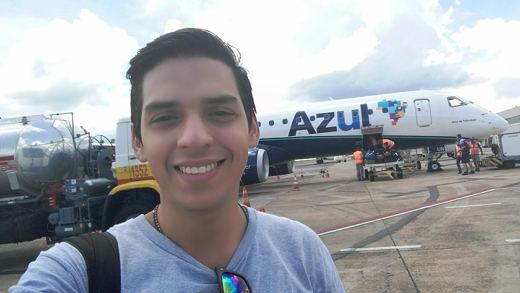
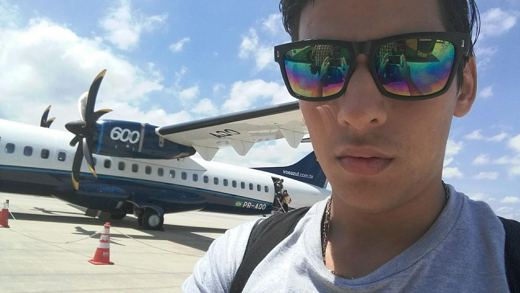
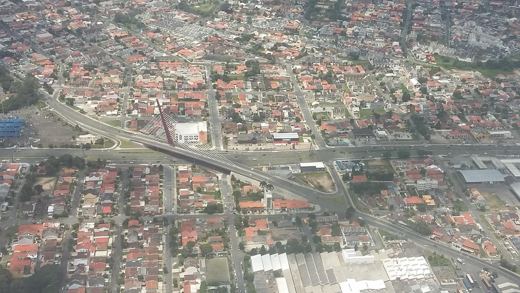
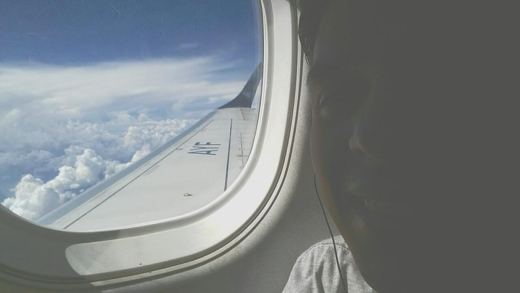
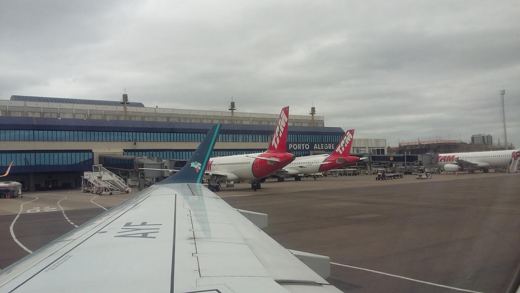
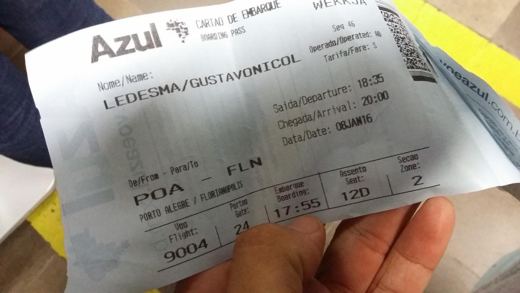
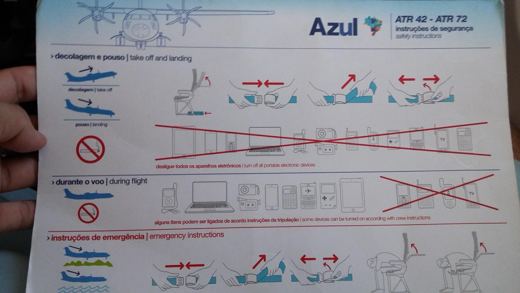
It was three flights with Azul: Foz do Iguaçu → Curitiba, Curitiba → Porto Alegre, Porto Alegre → Florianópolis. The first was on an ATR-72, a small seventy-seat aircraft with the turboprops right there beside you, in plain view. Anyone who has flown one knows what I mean: it's a light aircraft dressed up as an airliner. I felt every bump. It was equal parts funny and terrifying, and it was the best possible beginning.
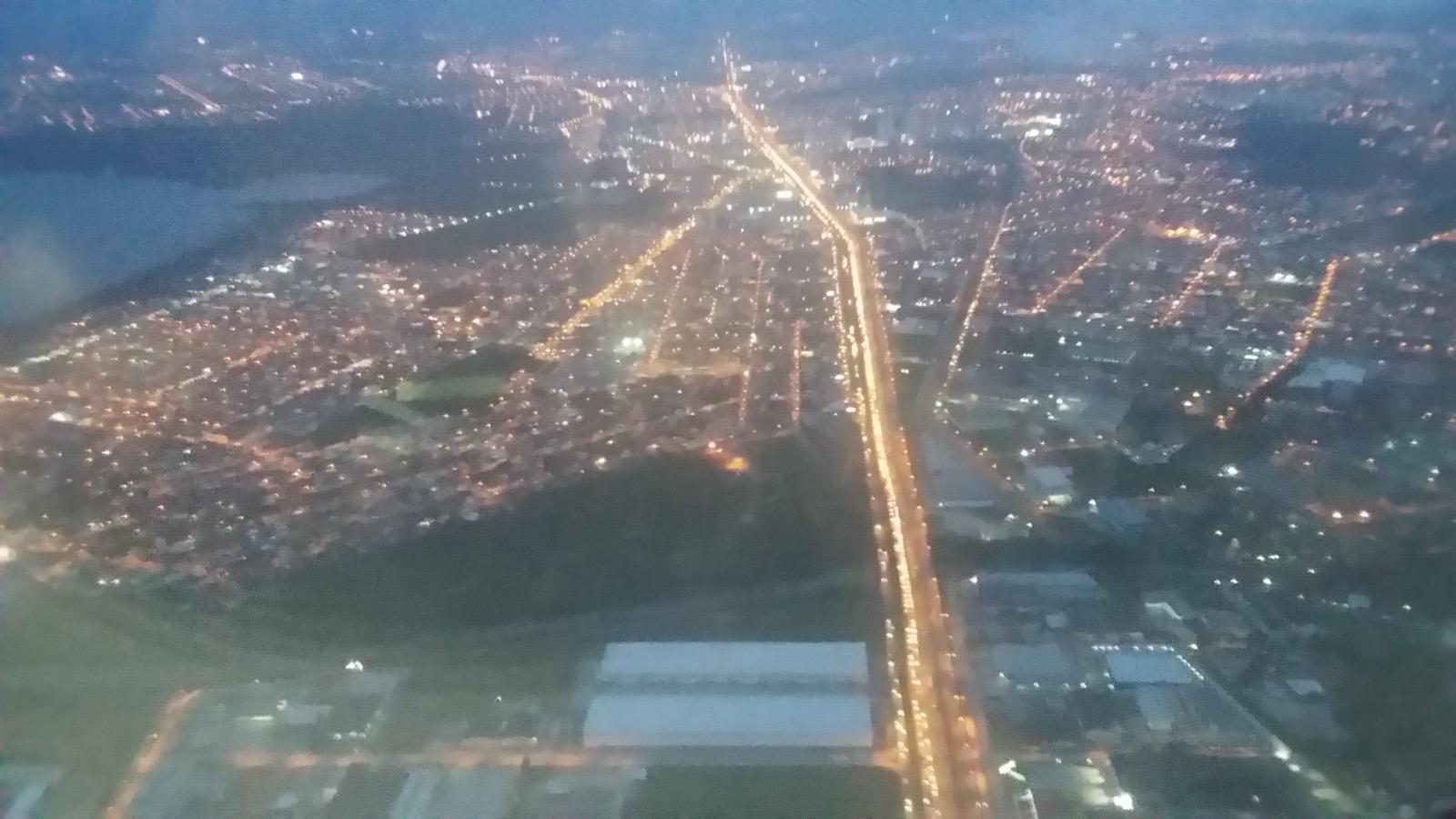
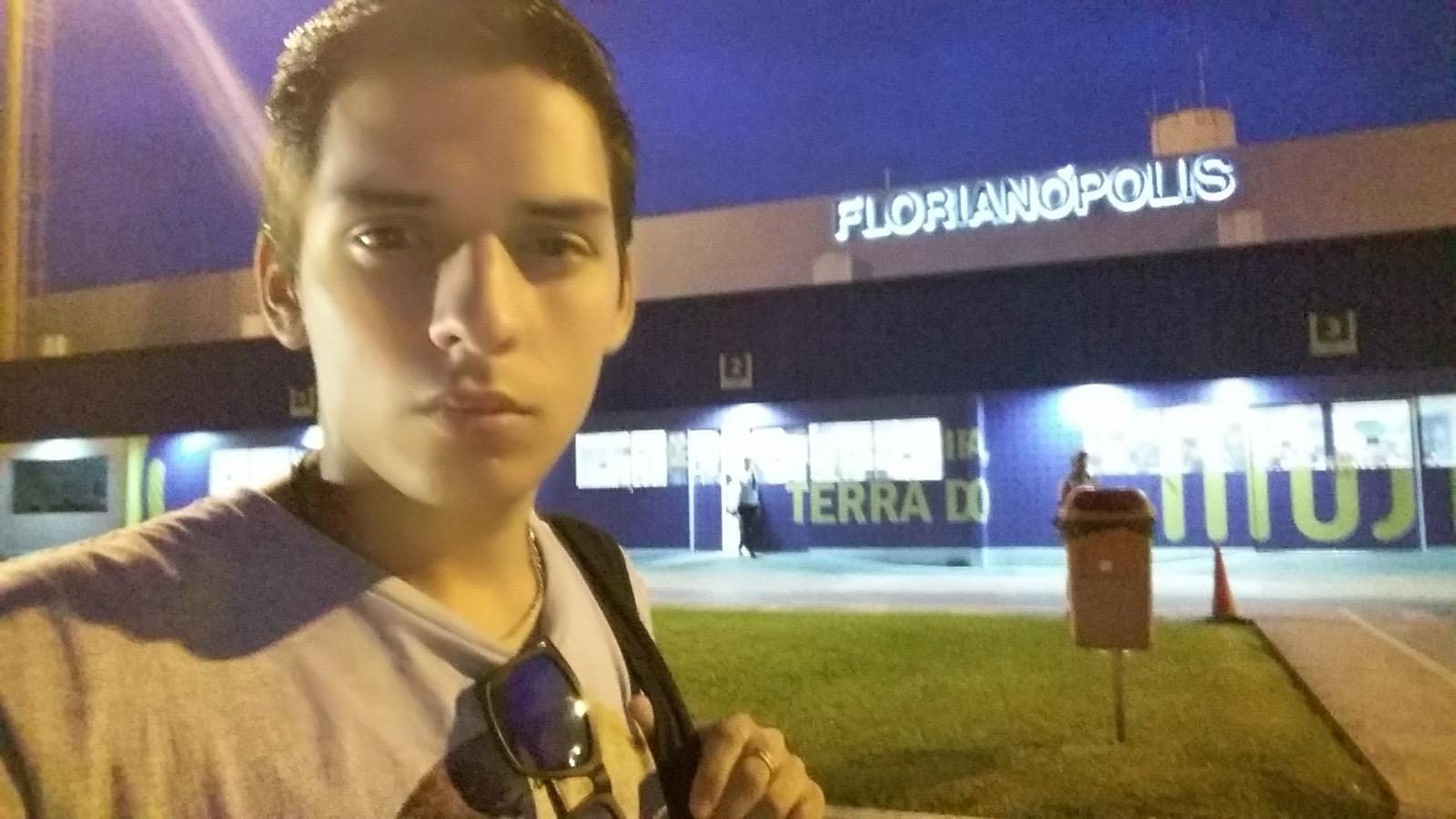
I got to Florianópolis at night and had nowhere to go. Literally. I had booked a hostel for a couple of nights and that was the entire extent of the plan. Taxi, arrived very late, went to sleep.
I woke up at eleven the next morning, and only then did I begin.
I drafted a message saying I was a tourism student from Argentina, a native Spanish speaker, with basic Portuguese and intermediate English. The Portuguese part was a lie: I didn't speak a word.
With that message I started writing to Florianópolis hostels on Facebook, and there are a lot of them. I must have messaged fifty. By the afternoon four or five had answered, and one called me in for an interview.
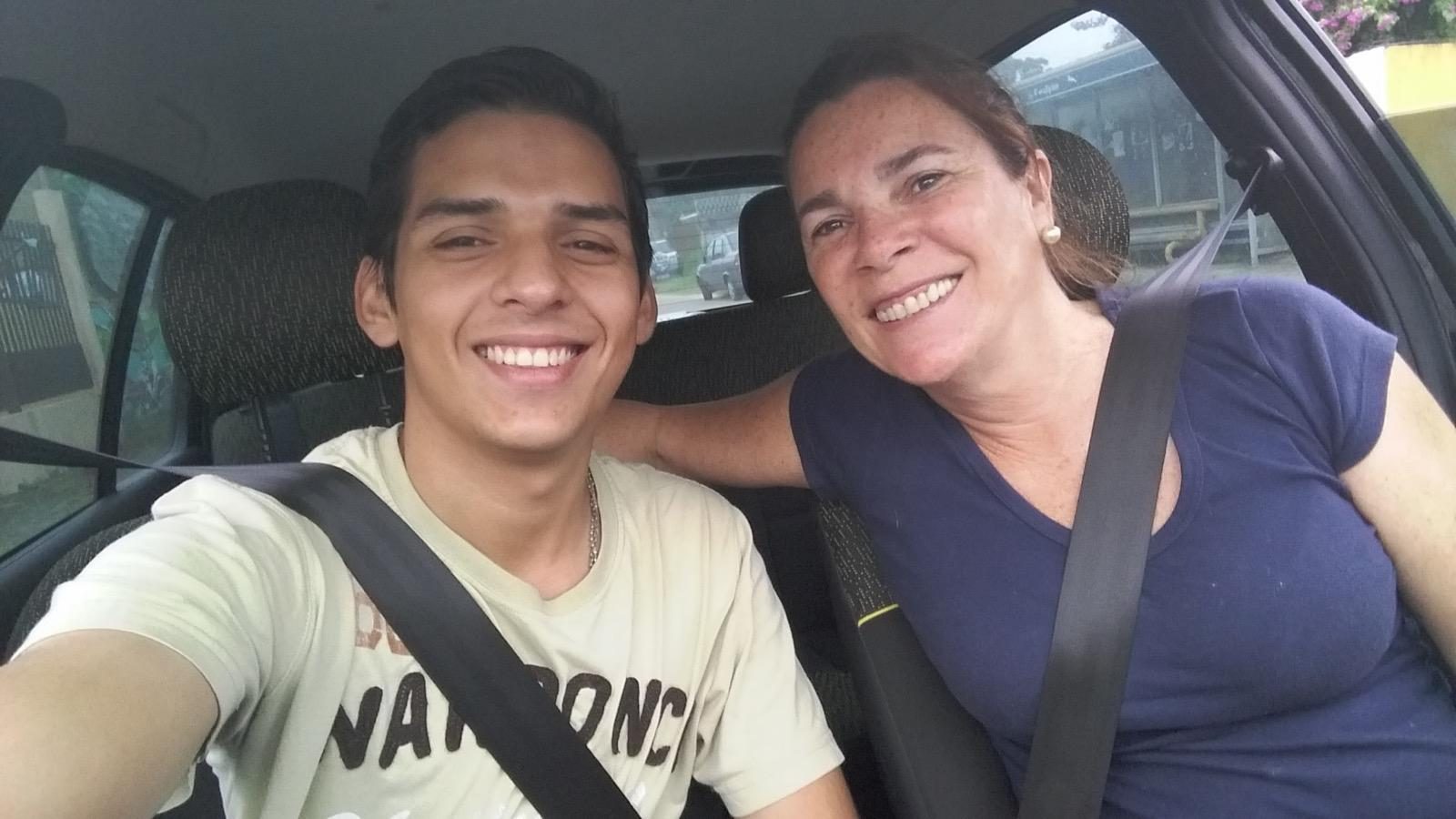
The first was a tiny hostel run by its owner. There I met three girls from Montevideo. She wanted pure volunteering: work in exchange for the bed and nothing else. Even so she treated me wonderfully: she drove me in her own car so I could pick up my suitcase.
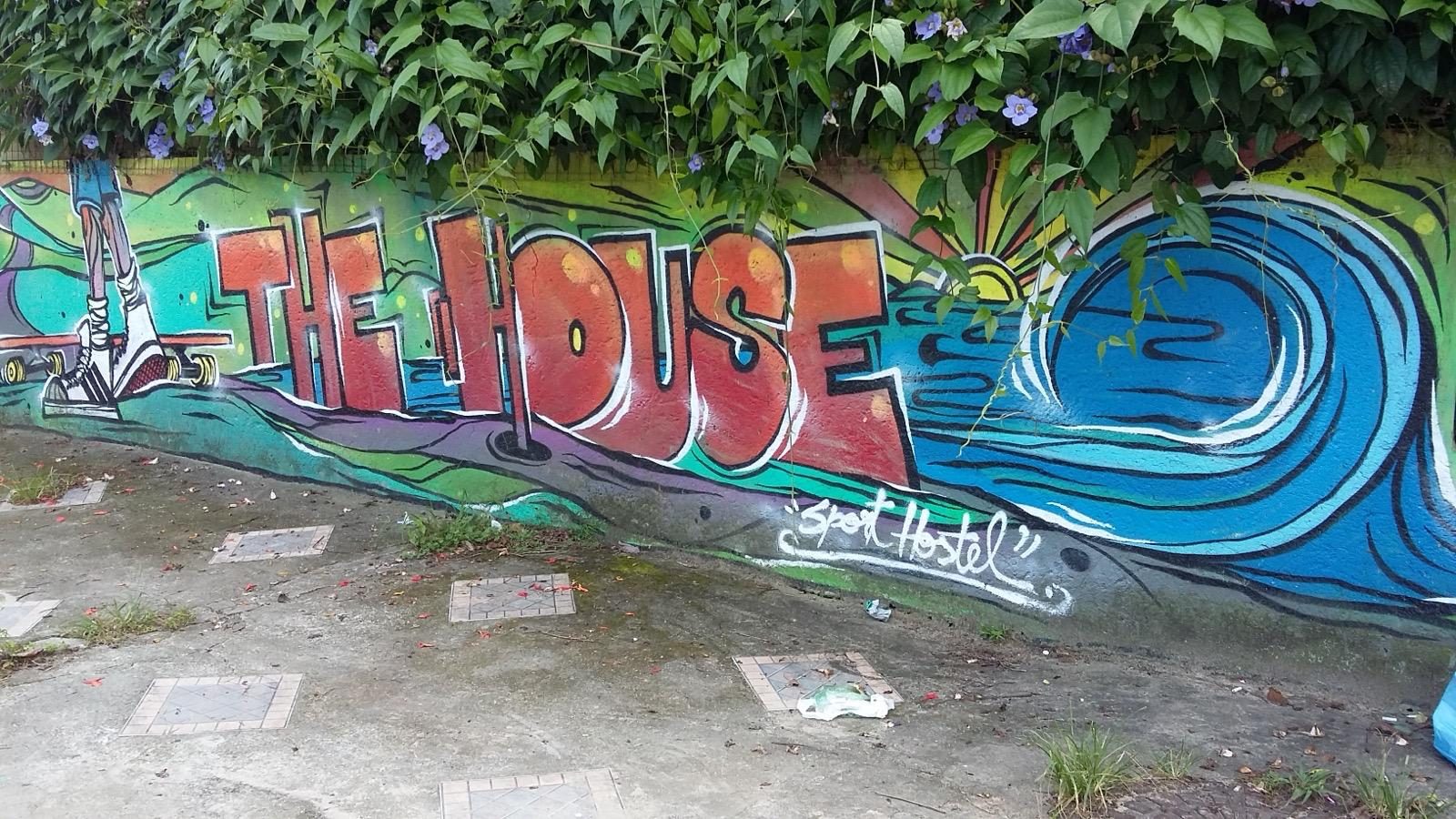
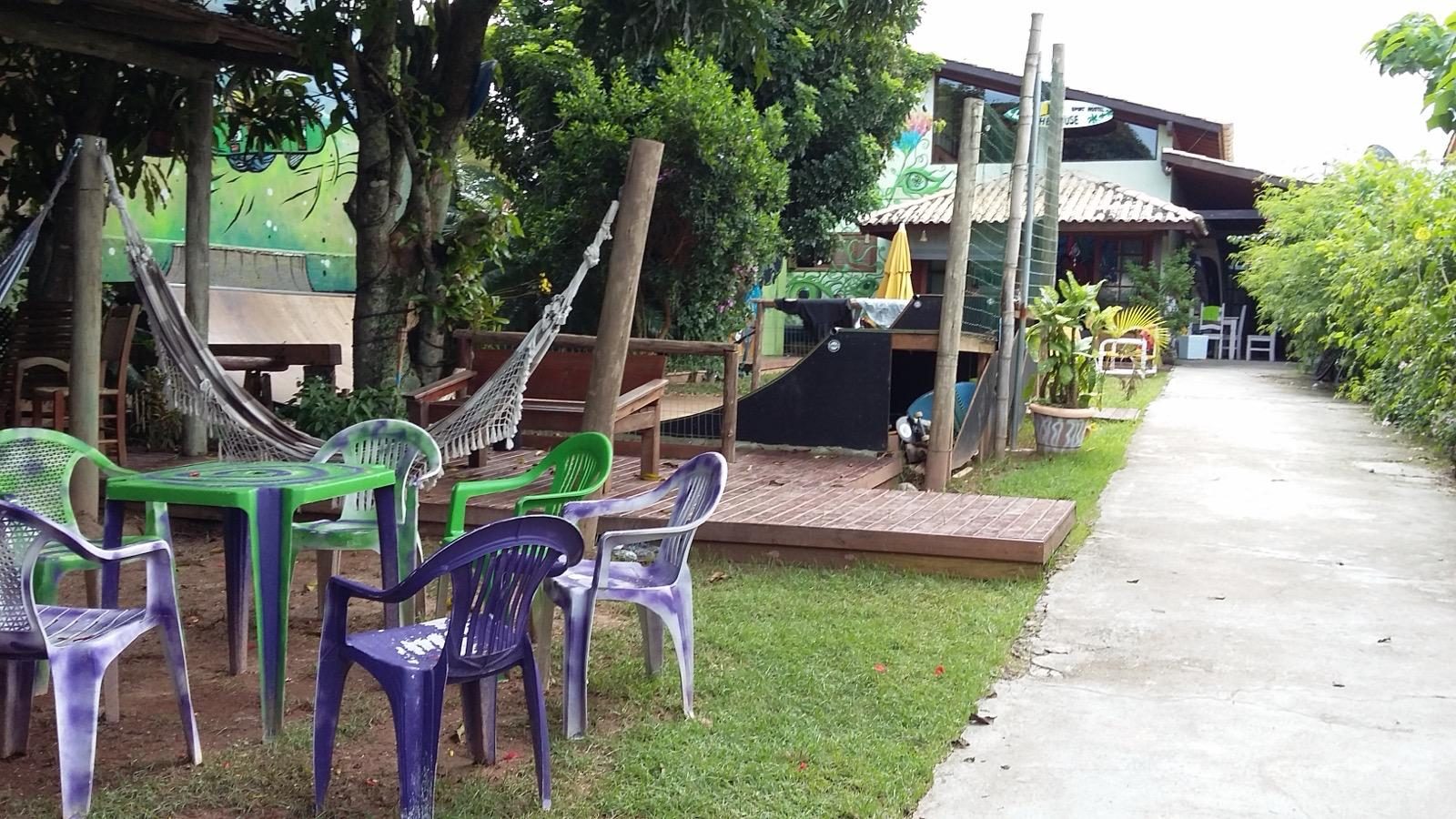
The next day I went to House Sport Hostel, in Campeche. The offer was better: room and board in exchange for five days of work, with the sixth day paid. I got it.
And here something happened that I still remember. I told the first lady they had taken me at the other place, and she didn't just understand: she told me it suited me better because there they could pay me, and she herself drove me to the other hostel, in her car.
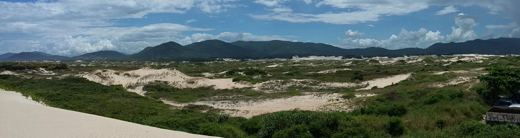
I spent three weeks in Campeche and met people I still have: two Germans I explored the center with and still follow on Instagram, a girl from São Paulo and a guy from the United States who became my buddies. The Joaquina dunes, the Lagoa da Conceição.
My shift started at eight in the evening. That day I was at the Lagoa, my phone had died, and the sun was still high, so I wasn't worried. When I asked the time they told me it was eight thirty at night.
And here's the thing: in Misiones the sun sets early. In my head there was no way it could be eight thirty in the middle of a sunset. I trusted the sun, literally. I arrived late and they told me not to bother with the shift — I was fired.
I fully own my share: I was late and it was my responsibility. What I never understood was the lack of empathy. I was working for free, in exchange for a bed — not even a room — and there wasn't a single question about why.
I asked to stay one more night. That night some men from Entre Ríos were staying there, and we hit it off right away. I told them what had happened and that I had no money. That same night they bought me dinner.
They were driving to Bombinhas and had a spare seat. I went. And on the way I kept doing the same thing as always: messaging hostels. An hour before arriving, Hostel do Mangue Branco replied saying they'd take me in that very night.
When they dropped me off, one of those men handed me 50 reais and said something I will never forget:
You need it more than I do. Everything in life comes back around, so may it multiply for you.
Understand what that meant in that moment. I was about to write to my dad and say: I screwed up, I came here with nothing, I have no money, nothing to eat and no way back. I had nothing. And a man who had known me for one day gave me fifty reais.
At Mangue Branco they asked for six hours instead of four. I had no alternative, so I said yes. But the owner gave me something worth far more than the job: he pointed me to a Facebook group called «Empregos em Bombinhas».
And that's where I discovered the trick, which is the most useful thing this whole trip has to offer you:
Type «Empregos em» — jobs in, in Portuguese — followed by the name of the town, and you'll find Facebook groups full of work, posted around the clock.
It works in any town in Brazil. If you're going there for a season, this is the paragraph that earns its keep.
In one of those groups I saw that a nice hotel was looking for receptionists. I went by bicycle — the hostel had one — and the head of reception wasn't in: it was his day off. The trip had been for nothing.
On the way back, at a roundabout, I saw a pizzeria and thought: might as well ask here too. I walked in, asked if they were hiring, and they said yes. Want to start right now?
I was in flip-flops and shorts. They explained — all in Portuguese, which I barely chewed through — that I'd leave the bike in their storeroom and an employee would take me home to change. I stepped into the garage to see who was taking me and a guy appeared on a big motorbike. Motorbikes in Brazil already scared me, because they ride like maniacs, threading between the cars.
I got on, put the helmet on, buckled it. The guy shot off across the roundabout. Straight ahead there was a petrol station, and out of it came a pickup truck. We hit it square on.
The bike bounced back and we flew, but neither of us let go of it: I was gripping the back and he had the handlebars. The bike came down with us on top. I hit my head and landed on my back. What I saw next was a blur: people coming over to lift us. My foot was under the bike; I stretched it out to free it and twisted it right there, though in the panic I didn't even feel it. They tried to stand me up, I got dizzy and went over backwards.
And that's when I made the mistake:
I took the helmet off. You never do that. If your head is broken, the helmet is holding it together. Never take it off after a motorbike accident.
What truly scared me was looking at the driver and seeing he wasn't moving. Only as they were loading me into the ambulance did I see him move. He was okay.
They took me in with my neck immobilized. Head and leg X-rays: nothing, just the impact. The kid's mother apologized to me and drove me back to the hostel. I limped in and told the owner I'd gotten on a motorbike and we'd hit a pickup.
He asked about the bicycle. That was what mattered to him.
I couldn't walk for three or four days. I wrote to the hotel, explained, and they waited for me. I went to the interview and got it.
It was the Atlântico Hotel & Convenções, in Mariscal, Bombinhas. Nine hundred or a thousand reais a month, plus room and board. After two months of working for a bed, that was another world. The hotel had one unmistakable feature: two buildings, one on each side of the street, joined by a roof that crossed overhead to the reception.
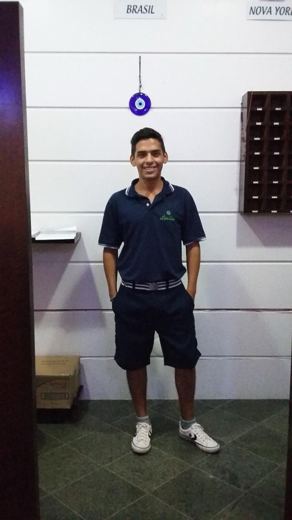
They gave me a uniform and a bed in a shared apartment with people from Foz do Iguaçu. It was quite a shock: the place was a mess, everything got consumed in there and it was filthy. I said nothing. I had only just landed the job. At work, on the other hand, things went very well.
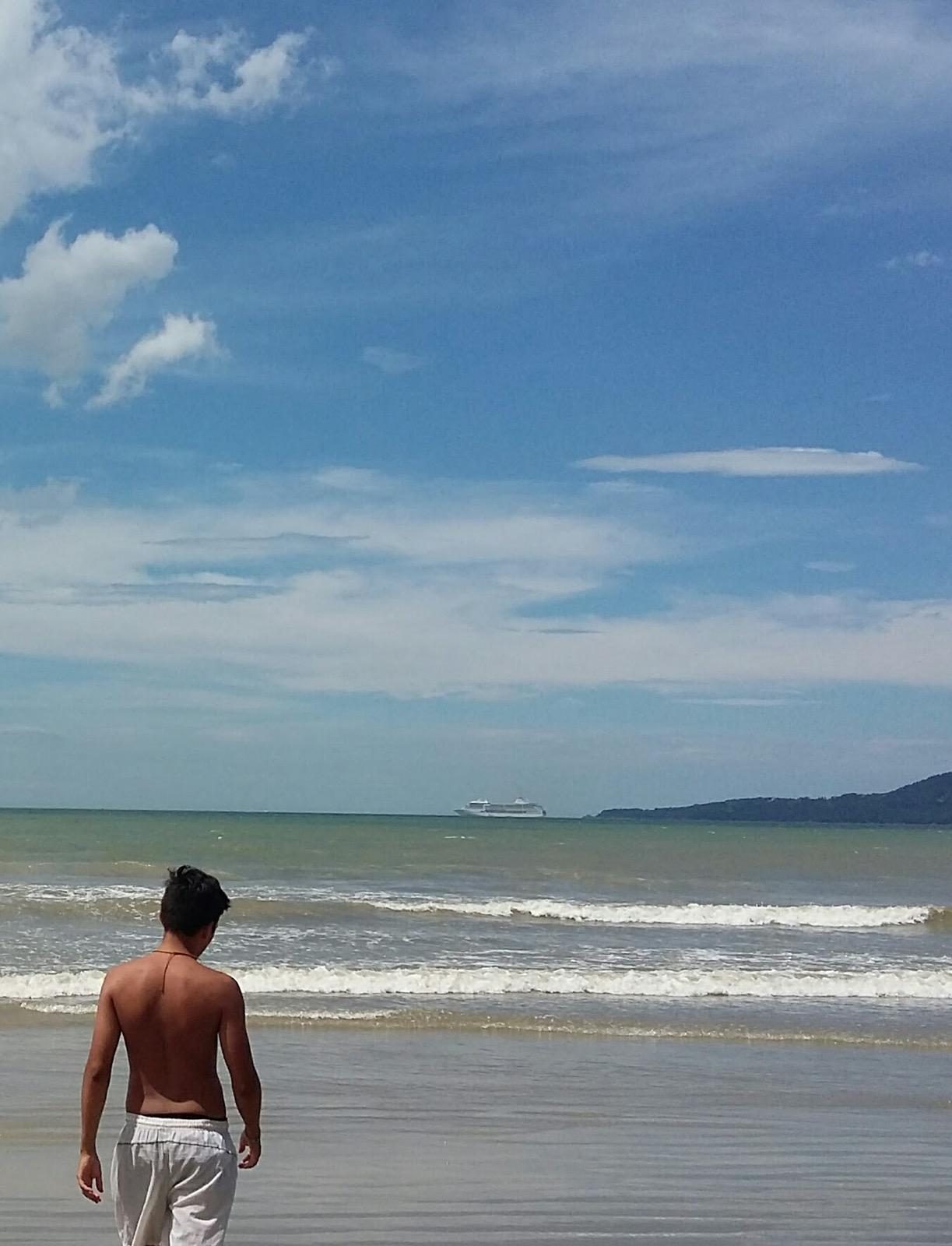
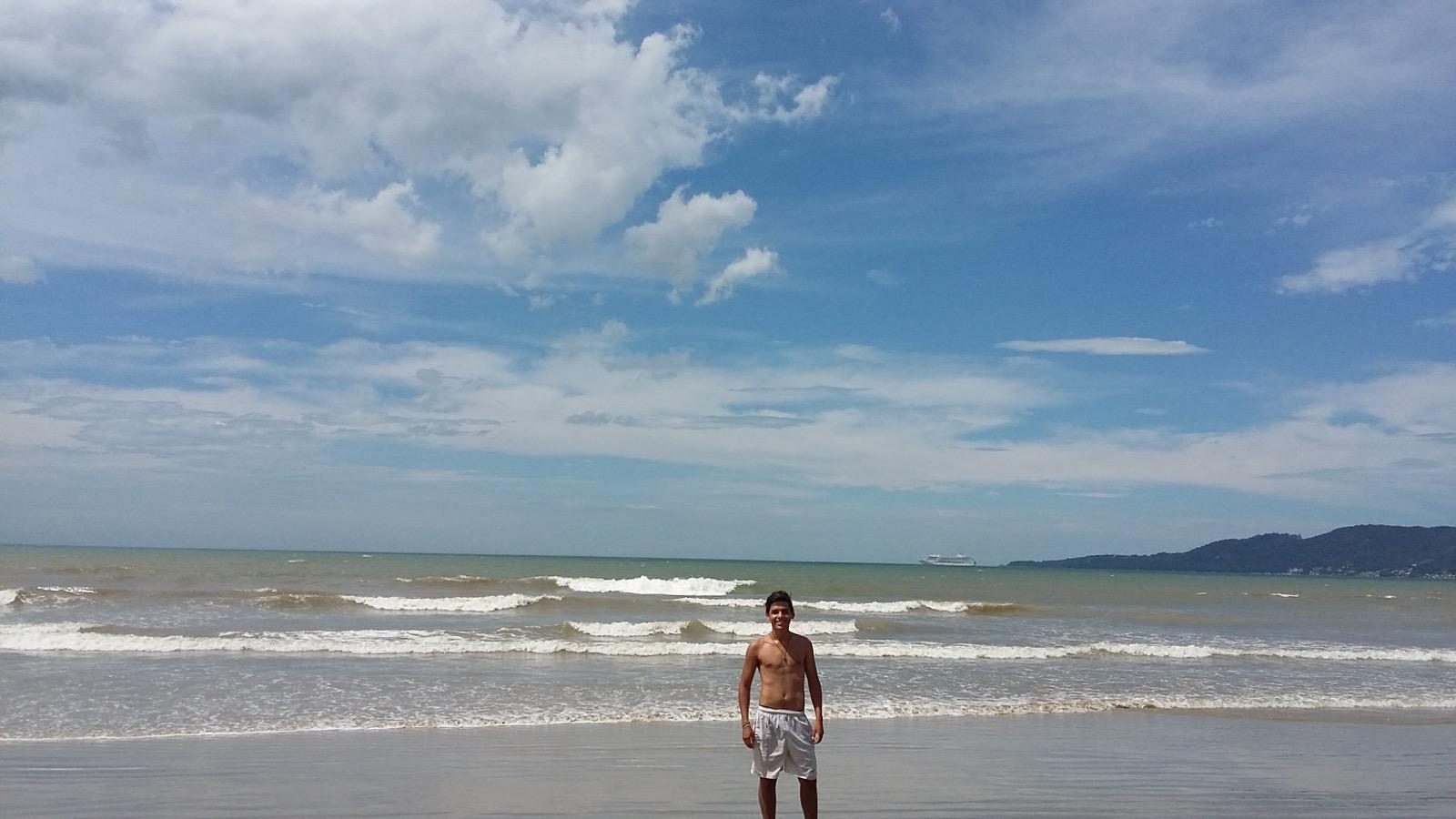
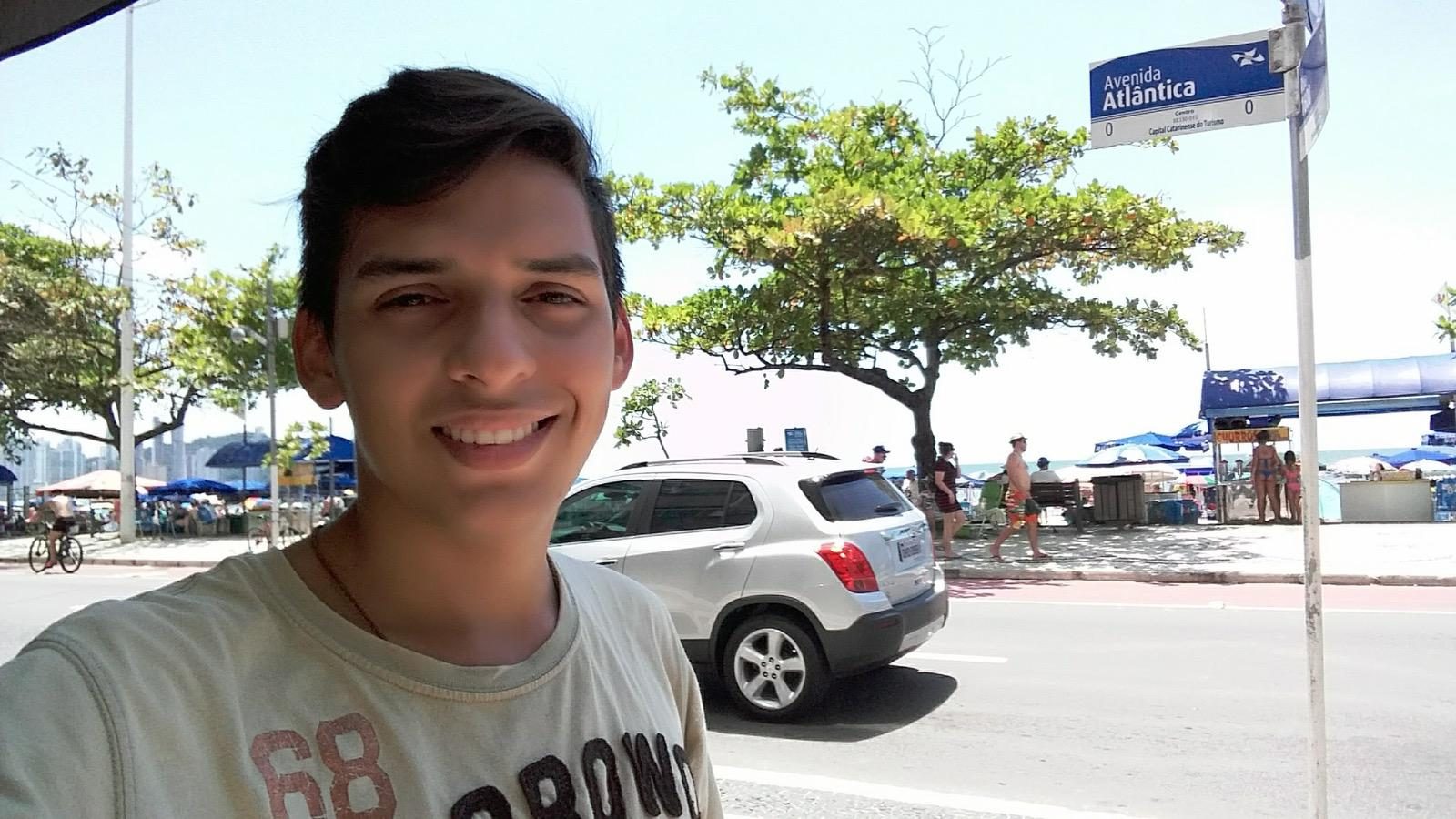
At the hotel I met Meyve, who worked in recreation. We became friends fast, and not by chance: she was studying tourism too, in Blumenau.
As the season wound down they started cutting contracts. Hers ended on a Monday; mine, on the Tuesday. She was going to her aunt's place in Meia Praia and insisted until I said yes.
She left on Tuesday. I had to get there alone on Wednesday, with my suitcase, no internet and no idea how. She left me everything written down: the bus to Porto Belo, which ran once or twice a day, then another toward Balneário Camboriú passing through Meia Praia, getting off on Avenida Nereu Ramos at number 297. I walked one block and she was waiting for me outside, without my having had any way to let her know.
She introduced me to her aunt and her friend Duda. And it turned out the aunt wasn't the aunt: she was Duda's mother. They called each other aunt and niece because they were like sisters. She was a retired teacher who lived on her pension and rented an apartment to spend her retired life there.
I stayed three or four days and then told them that was enough, thank you so much. And the lady said no, stay: that she liked me, that I felt like a son, and that I should come with them to her town.
But first came the thing that still amazes me today: they left and let me keep the apartment to myself. The only one who really knew me was Meyve, from the hotel; the lady had known me three days and trusted me with her home. I'd get up, make myself a coffee, head to the beach.
Then they took me to Timbó, and there I met the lady's brother, who worked for Banco do Brasil inspecting houses under construction. He told me he was leaving very early the next day to cover several towns for work, and that I could come along if I wanted.
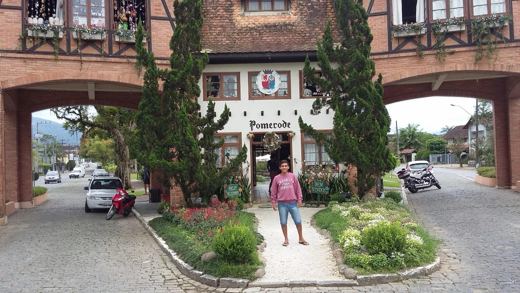
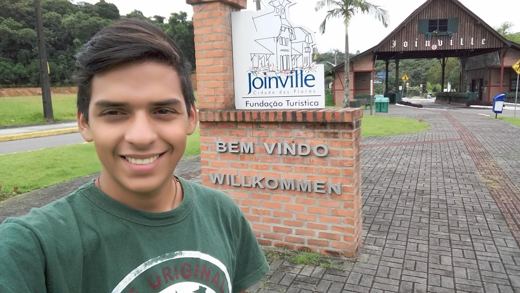
I went. And that's how, without planning it, I did the best route of the whole trip: Timbó, Rodeio, Indaial, Blumenau, Itajaí, Penha, São Francisco do Sul, Joinville, Jaraguá do Sul and Pomerode.
Blumenau is Santa Catarina's German city, home of Brazil's most famous Oktoberfest. That day we only passed through, but later I went back: they took me to the Vila Germânica.
And it turned out Meyve was from Pomerode and Duda from Timbó, adjoining towns, and both studied in Blumenau. Meyve took me to her university and snuck me into a class of her tourism program. An Argentine tourism student sitting in a Brazilian tourism class, barely speaking the language. You can't plan that.
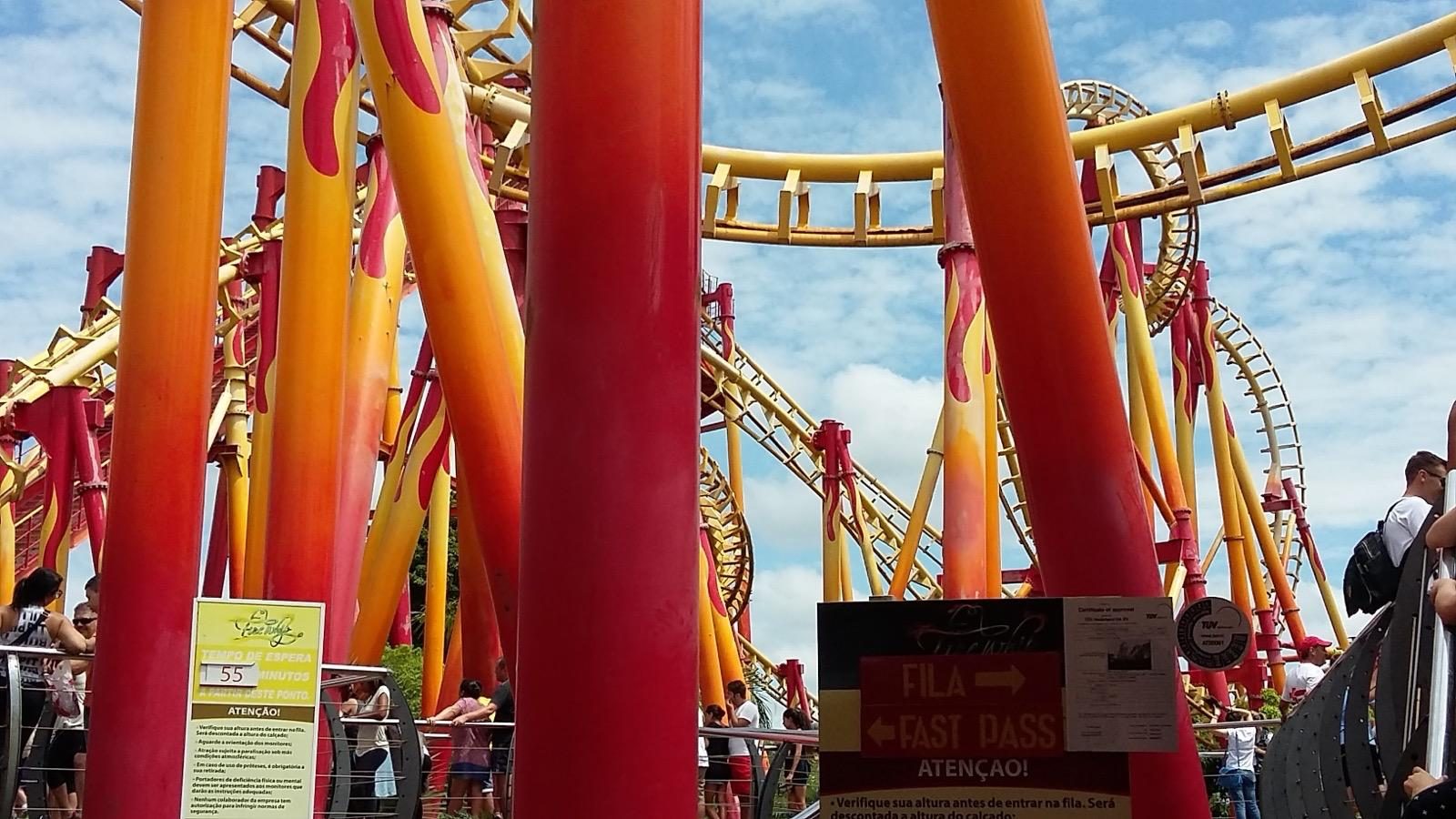
On March 5, my birthday, they took me to Beto Carrero World, in Penha. I had a free ticket and was going no matter what. They dropped me off and I told them I'd figure out the way back.
I started doing the rides alone and kept crossing paths with the same girl. I asked where she was from: Córdoba. I told her I was from Córdoba too. It wasn't true. But I spent the entire day with her and her family, ride after ride.
In the afternoon they asked how I was getting back and I told them the truth: that I didn't know and had no way to let anyone know. They were headed to Bombinhas and it was on their way. That family from Córdoba drove me to the front door of the house in Meia Praia, and I don't have the contact of a single one of them. I'll never be able to thank them.
This wasn't a course: it was a chain. It started at the hostel in Campeche, with the girl from São Paulo and the American. It continued at the hotel, with my reception workmates, practicing all day. And Meyve, Duda and the lady closed the loop, because I asked them to speak to me only in Portuguese and to explain whenever I didn't understand. When it wouldn't come out, we bridged it with English.
I left without a word of it and came back speaking it.
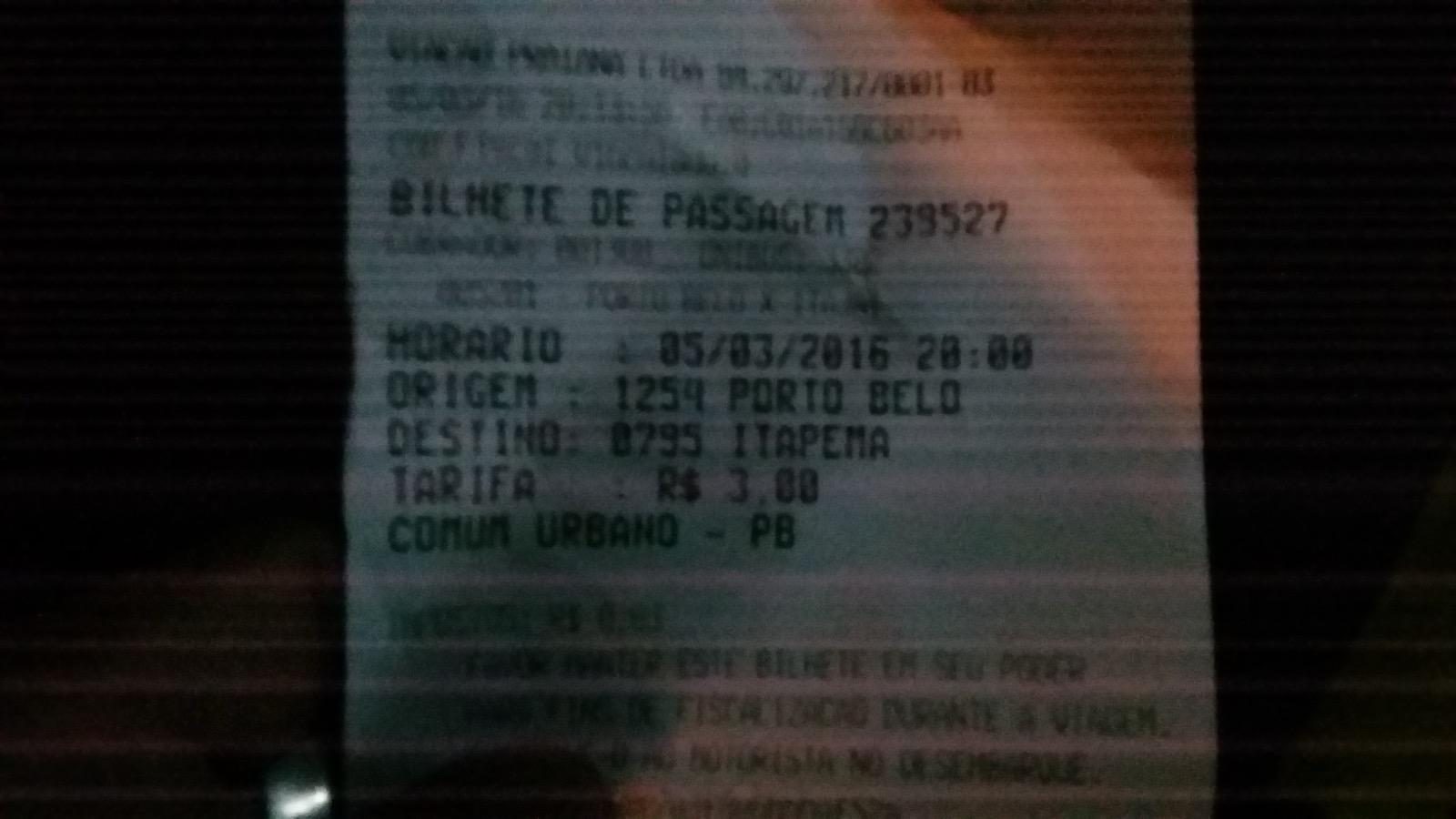
I bought my ticket for March 7, from the Balneário Camboriú terminal to Foz do Iguaçu. I said goodbye and thanked them for everything they had given me, which was a lot.
On March 8 I got home. I wanted to surprise my mom for International Women's Day. And surprise her I did, though to be honest one thing had nothing to do with the other: it just sounded nice in my head.
I had left with a thousand pesos and a one-way ticket. I came back speaking Portuguese.
The stories run in order: this is what happened around this one.