Viajá con Gus
Home › Australia › Launceston
Launceston
🇦🇺 Australia · Tasmania

Launceston

🪪 What do I need to enter Australia?Pick your citizenship and we tell you the visa, the days and the paperwork, with the official source.

By leaving your email and citizenship you agree to receive the documents you asked for and weekly travel news. You can unsubscribe whenever you want. How we handle your data.
Jump to what you need
📌State
Northern Tasmania; the state's second city, on the Tamar River (kanamaluka), on the Country of the Leterremairrener and neighbouring peoples
📌Best time
November to March (summer): mild days of 20-25 °C, ideal for Cataract Gorge and the vineyards. Autumn (March-May) brings beautiful colours and the Junction festival
📌Suggested days
2 to 3 days for the city, Cataract Gorge and a trip out to the Tamar wine valley
📌Getting there
Fly into Launceston Airport (LST) from Melbourne, Sydney and Brisbane; or drive from Hobart (~2,5 h) or from the Devonport ferry (~1,5 h)
📌Getting around
On foot in the centre; Metro Tasmania city buses (free until 30/6/2027); a car for the Tamar vineyards
📌Language and currency
English (and palawa kani, the revived Tasmanian Aboriginal language); Australian dollar (AUD, A$)
💱 AUD exchange rate
Loading rate…
🌤️ Weather in Launceston
Loading weather…

Launceston is Tasmania's Georgian city: one of the best-preserved colonial cities in Australia, with tree-lined streets, 19th-century brick buildings and a big-country-town feel that many people find charming. It sits where the North Esk and South Esk rivers meet to form the Tamar (kanamaluka), and its natural gem, Cataract Gorge, begins just a short walk from the centre.

It's a perfect base for northern Tasmania: from here you can explore the Tamar wine valley, with around 30 cool-climate wineries famous for their sparkling wines and pinots, and easily reach the Bridestowe lavender fields, the east coast and the centre of the island. The city combines nature right around the corner, good food and a cultural scene that's surprising for its size.

With Australia's largest regional museum, a walkable historic centre and Cataract Gorge —home to a chairlift with the longest span in the world, free-roaming peacocks and a riverside swimming pool—, Launceston offers much more than its size suggests. It's a relaxed, easy gateway to northern Tasmania.

📖 History of Launceston

The Tamar area is the Country of the Tasmanian Aboriginal peoples, with the Leterremairrener among the groups of the valley. Launceston was founded in 1806, after a first camp at what is now George Town; it was originally called Patersonia and later took the name Launceston, after the Cornish hometown of Governor Philip Gidley King. More on the Launceston history page.

Read the full history ↓

🏛️ Launceston is in Tasmania

The island south of the mainland, once Van Diemen's Land: home to one of the most feared penal colonies of the empire and the scene of the tragic Black War against the Palawa people. Today it is a haven of wild nature, with more than a third of its area protected as a World Heritage Site.

Read the history of Tasmania →

🗺️ What to see

Tours you can book

If you book from here we earn a commission and you pay no more. Prices and availability come from Civitatis.

1
Cataract Gorge Reserve
The wild gorge a short walk from the centre
Leer más ↓
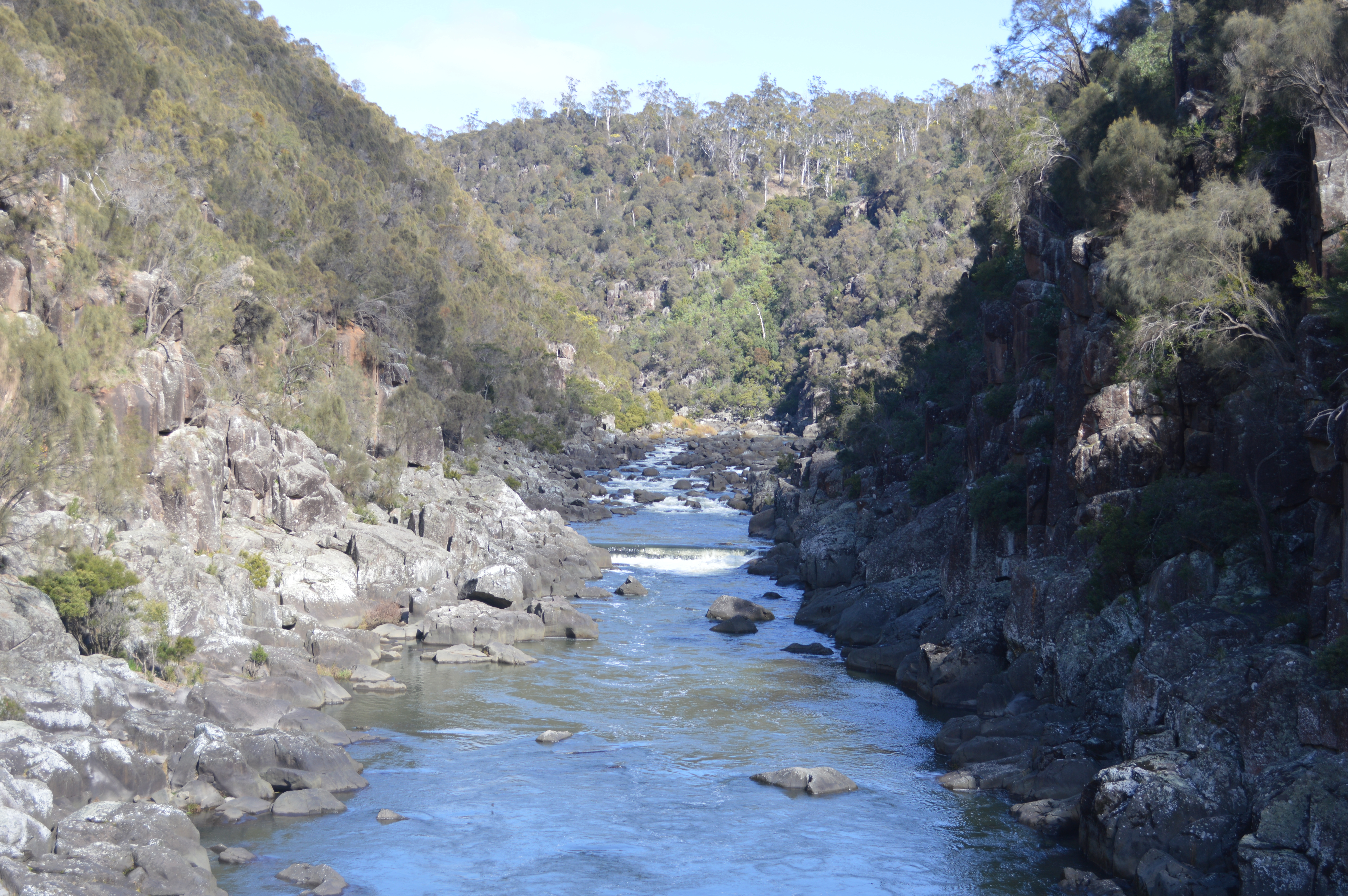
Launceston's pride and joy and a world rarity: a river gorge with dolerite walls just a 15-minute walk from the centre. It has trails along both banks, a suspension bridge, Victorian gardens with free-roaming peacocks, a free public swimming pool by the First Basin, and cafés. Its most famous feature is the chairlift (Gorge Scenic Chairlift), whose 308-metre central span is considered the longest of its kind in the world. You can spend half a day walking, swimming in summer and crossing by chairlift or over the bridge. Free entry to the reserve.
ℹ️ Reserve free; chairlift ~A$21 return / ~A$16 one way, adult. Open daily, usually from 9:00 (fuente: gorgechairlift.com.au, verificado julio 2026)
2
Tamar Valley wine region (Tamar Valley Wine Route)
Tasmania's oldest sparkling wine region
Leer más ↓
North of Launceston lies the heart of Tasmanian wine: a route linking around 30 wineries on both banks of the Tamar River, renowned for their traditional-method sparkling wines, pinot noir and cool-climate rieslings. Wineries such as Josef Chromy, Pipers Brook and Jansz welcome visitors with tastings and restaurants. It's best done by car as a day trip (with a designated driver or on a tour so you can taste) and combines cellar doors with views of vineyards, the river and lavender fields. Many charge a tasting fee that is refunded with a purchase.
ℹ️ Self-guided route; tastings from ~A$10-20 (often refundable with a purchase) (fuente: discovertasmania.com.au, verificado julio 2026)
4
City Park
A Victorian park with monkeys and a mini train
Leer más ↓
A historic park right in the centre, with mature trees, a fountain, a Japanese garden and two much-loved curiosities: a Japanese macaque enclosure (a colony established decades ago) and a miniature steam train that runs almost every day. It's ideal for a break, a picnic or a visit with kids. The train charges a small fee; entry to the park is free.
ℹ️ Park free; mini train ~A$3,50 per ride (runs daily except Mondays and public holidays) (fuente: discovertasmania.com.au, verificado julio 2026)
5
Georgian and Victorian historic centre
One of the best-preserved colonial cities
Leer más ↓
Launceston is an open-air museum of 19th-century architecture. A walk around the centre —Brisbane Street, Charles Street, Civic Square, the old Boag's headquarters, the Old Umbrella Shop (an intact period shop), the Georgian houses and Victorian façades— is a free and charming outing. There are self-guided walks that point out the most notable buildings. The city retains much of its original layout and atmosphere.
ℹ️ Self-guided walk; historic walk leaflets at the visitor centre (fuente: visitnortherntasmania.com.au, verificado julio 2026)
6
Day trips: Cataract Cliff Grounds, Bridestowe lavender and the Gorge at dusk
Nature and lavender fields near the city
Leer más ↓
Beyond the city, Launceston is a base for memorable day trips. The Cataract Cliff Grounds, with their Victorian gardens, are lovely at dusk, when the gorge is lit up. Less than an hour away is Bridestowe Lavender Estate, one of the largest lavender farms in the southern hemisphere, which turns purple in December-January (with paid entry during flowering season). Also nearby: Cataract Gorge lit up at night, Hollybank Forest and the east coast.
ℹ️ Bridestowe: entry ~A$15 adult during flowering season (Dec-Jan); rest of the year, free or reduced entry (fuente: bridestowelavender.com.au, verificado julio 2026)
📶I have never landed without internet. I arrive and my phone connects to the strongest network in the country I am visiting: I can say I landed, sort out transport, book tours and keep posting, at a seriously good price. I always use the Maya eSIM — check their plans by clicking the banner.See plans →Maya Mobile eSIM — connect before you land
What nobody tells you

💵 Prices

Tickets

TypePrice
Cataract Gorge (reserva)Free (verificado julio 2026)
Teleférico del Cataract, ida y vuelta adulto~A$21 (fuente: gorgechairlift.com.au, verificado julio 2026)
QVMAG (entrada general)Free (fuente: qvmag.tas.gov.au, verificado julio 2026)
Trencito de City Park~A$3,50 per ride (fuente: discovertasmania.com.au, verificado julio 2026)
Bridestowe Lavender Estate (temporada de floración)~A$15 adult (fuente: bridestowelavender.com.au, verificado julio 2026)
🔄 updated monthlyOfficial / reference values · double-check when buying

Activities and tours

ActivityPriceDurationOperator
Tamar Valley winery tour (full day)from ~A$150 adult (verificado julio 2026)
Tamar River cruise (Tamar River Cruises)from ~A$40 adult (verificado julio 2026)
Cataract Gorge chairlift, return~A$21 adult (verificado julio 2026)
Trip to Bridestowe lavender farmentry ~A$15 + transfer depending on tour (verificado julio 2026)
🔄 updated monthlyOfficial / reference values · double-check when buying

🚌 How to get there and distances

Getting around

ModePriceDurationNotes
Metro Tasmania city busFree until 30 June 2027 (verificado julio 2026)
On foot-
Car hirefrom ~A$50-80/day plus fuel (verificado julio 2026)
Airport to cityshuttle/taxi ~A$20-40 (verificado julio 2026)
🔄 updated monthlyOfficial / reference values · double-check when buying

How to get there

RouteAirlines / operatorsAvg. priceDuration
Melbourne → Launceston (LST)Jetstar, QantasLink, Virgin Australiafrom ~A$70 one way (verificado julio 2026)~1 h 5 min flight
Hobart → Launceston (car)Own/hire car via the Midland Hwyfuel~2,5 h (~200 km)
Devonport (ferry) → Launceston (car)Own car after the Spirit of Tasmaniafuel~1,5 h (~100 km)
🔄 updated monthlyOfficial / reference values · double-check when buying

🏨 Where to stay

No exact prices: a scale from $ (budget) to $$$$$ (luxury), with 2-3 options per category.

Luxury
Price$$$$$
Recommended options
Peppers Silo Hotel (in old riverside silos) and Change Overnight (from ~A$250-350/night)
Mid-range
Price$$$$$
Recommended options
Hotel Grand Chancellor, Mercure Launceston and Georgian houses converted into boutique hotels (~A$150-230/night)
Budget
Price$$$$$
Recommended options
Launceston Backpackers, Arthouse Hostel and motels in the centre (dorms from ~A$35; rooms from ~A$110)

🍴 Where to eat

TypePriceOptions / signature dish
Cena destacada$$$$$Stillwater (riverside fine dining), Black Cow Bistro (premium steakhouse) and Havilah (mains ~A$35-55)
Casual / brunch$$$$$Pierre's, Bread + Butter and specialty cafés in the centre; James Boag brewery (~A$20-35)
Económico$$$$$Harvest Market (Saturdays), food trucks, pubs and takeaways in the centre (~A$12-22)

📖 History of Launceston

Origins, formation and what the sources say.

The Tamar Valley before the city

Long before a single Georgian house was built, the valley where Launceston now stands was the Country of Aboriginal Tasmanians. The northern groups, among them the Leterremairrener along with the Panninher and the Tyerrernotepanner, had lived in the Tamar region (kanamaluka) and the surrounding lands for thousands of years. Their seasonal hunter-gatherer way of life was finely tuned to the island. Tasmanians were one of the most isolated human populations on the planet, cut off from mainland Australia for around 10,000 years after the Bass Strait formed.

Life followed the seasons and the resources they brought. According to the records, the Leterremairrener spent the winter months near the mouth of the Tamar, around today's George Town. In summer they moved up to the heights of Ben Lomond, then returned to the riverbanks for the mutton-bird (shearwater) season. The land was not an empty space waiting to be 'settled'. It was a cultural landscape known in every detail, with names, stories and uses handed down over generations.

The meeting of the North Esk and South Esk rivers to form the Tamar, along with the surrounding gorges and forests, was part of that world. Cataract Gorge, now the city's star attraction, was also part of Aboriginal Country, with its own meaning. Acknowledging that earlier presence is the starting point for understanding Launceston's history without the myth of 'untouched land'.

1806: from Patersonia to Launceston

European Launceston was born of imperial geopolitics. In the early 19th century, the British feared the French might claim Van Diemen's Land (Tasmania) and decided to secure the north of the island. In 1804 Colonel William Paterson set up a first camp where George Town stands today, at the mouth of the Tamar. A few weeks later the settlement moved to York Town and finally, in 1806, to Launceston's current site, inland where the rivers meet.

The new settlement was first called Patersonia, after its founder. Soon afterwards it was renamed Launceston, this time in honour of Governor Philip Gidley King, who was born in the town of Launceston in Cornwall, England. The name sounds and feels very British, much like the city that would grow up around it.

Relations with the original inhabitants were marked by conflict from the start. As early as 1806, Leterremairrener bands clashed with the settlers, most likely in retaliation for the intrusion and for hunting on their lands without permission. Paterson responded with punitive expeditions, and violence between settlers and Aboriginal people would continue, at varying levels of intensity, over the following decades.

The Black War and the colonial boom

As in the rest of Tasmania, colonial expansion around Launceston came at a devastating human cost for Aboriginal people. Pastoralists occupied the best land, settlers brought disease, and violence ran both ways. In the 1820s and 1830s this led to what became known as the 'Black War'. The colonial government ran campaigns to remove the survivors. Many of the northern Aboriginal people were moved to settlements on Bass Strait islands such as Wybalenna, where large numbers died from disease and from being torn from their land.

Meanwhile, Launceston prospered. As a navigable river port, it became the great trading hub of the island's north and one of the main gateways for settlers, goods and livestock. Wealth from wool, farming and, later, mining in western Tasmania fuelled a remarkable building boom. In the middle and late 19th century the city gained the churches, banks, theatres and Georgian and Victorian houses that make Launceston one of the best-preserved colonial cities in Australia today.

The city led the way in several areas. In 1895 it became one of the first in the southern hemisphere to have electric street lighting, powered by a hydroelectric station in Cataract Gorge itself that harnessed the force of the river. That early link with water power foreshadowed the role hydroelectricity would play in the development of the whole of Tasmania.

The railway also helped make Launceston the capital of the north. In 1871 the line linking it to Deloraine opened, the first in Tasmania, and over time the city became a rail hub whose workshops in the Inveresk district employed a large share of the population. When that industry declined in the 20th century, the same sheds were left standing. Decades later they were reinvented as the city's cultural and university heart, a sign of how Launceston chose to recycle its industrial past rather than tear it down.

Launceston today: heritage, wine and culture

Today Launceston, with around 90,000 people in its metropolitan area, is Tasmania's second city and the cultural and economic capital of the north. Its exceptionally well-preserved historic centre is one of its biggest draws. Walking past Georgian and Victorian façades, with Cataract Gorge just minutes from the centre, gives it a character unlike any other Australian city.

The city has reinvented itself without losing its identity. Old riverside silos have become a design hotel. The Inveresk railway workshops now house the main site of the Queen Victoria Museum and Art Gallery, the largest regional museum in the country, along with a lively university and events precinct. With almost thirty cool-climate wineries, the Tamar Valley has made the region one of the meccas of Australian sparkling wine, and the local food scene lives up to that reputation.

Like the rest of Tasmania, Launceston is also coming to terms with its Aboriginal history. The return of palawa kani names, such as kanamaluka for the Tamar, the presence of First Peoples' culture at the QVMAG and the work of the palawa community are all part of a more honest look at the past. For travellers, knowing that an ancient Aboriginal Country lies beneath the Georgian city, and that this Country is still alive, adds enormously to a visit to this elegant gateway to northern Tasmania.

📚 Bibliography

  • Wikipedia — Launceston, Tasmania — https://en.wikipedia.org/wiki/Launceston,_Tasmania
  • Visit Northern Tasmania — History of Launceston — https://visitnortherntasmania.com.au/about-launceston/history
  • Our Tasmania — Launceston: A Brief History — https://www.ourtasmania.com.au/launceston/launceston-history.html
  • Aboriginal Launceston — Timeline and Living Sites — https://aboriginallaunceston.com.au/timeline-2/
  • Wikipedia — Aboriginal Tasmanians — https://en.wikipedia.org/wiki/Aboriginal_Tasmanians
  • Wikipedia — Black War — https://en.wikipedia.org/wiki/Black_War
  • Queen Victoria Museum and Art Gallery (QVMAG) — https://www.qvmag.tas.gov.au/
  • Encyclopaedia Britannica — Launceston — https://www.britannica.com/place/Launceston-Tasmania

❓ Frequently asked questions

How many days should I spend in Launceston?+
2 to 3 days is enough to see the city and Cataract Gorge, spend a day in the Tamar wine valley and add a trip such as Bridestowe lavender farm or a stretch of the coast. It's a convenient base for northern Tasmania.
Is Cataract Gorge free?+
Yes, the reserve and its trails, gardens and pool are free to access. You only pay for the chairlift (Gorge Scenic Chairlift), about A$21 return for adults, and you can still cross for free over the suspension bridge (fuente: gorgechairlift.com.au, verificado julio 2026).
How do I get around Launceston?+
The centre is easy to explore on foot. Metro Tasmania city buses are free until 30/6/2027, although services are limited. For the Tamar Valley and day trips, it's best to hire a car or join a tour.
Is the Tamar Valley worth it?+
Very much so, especially if you like wine. It's Tasmania's oldest wine region, famous for its cool-climate sparkling wines and pinot noir, with around 30 wineries open to visitors. A tour lets you taste without worrying about driving.
When is the best time to go?+
November to March, with mild days ideal for Cataract Gorge, swimming at the First Basin and touring the vineyards. Autumn (March-May) brings beautiful colours, and the Bridestowe lavender blooms in December-January.

More places in Australia

Longreach y el OutbackLos GrampiansLos KimberleyLos Pináculos (Nambung)Margaret RiverMcLaren Vale
See every place in Australia →The history of Australia →
Sources consulted (6)
Still planning?
Explore more destinations in Australia
See all destinations →