Viajá con Gus
HomeArgentinaMercedes (Corrientes)
Mercedes (Corrientes)
🇦🇷 Argentina · The Northeast

Mercedes (Corrientes)

Jump to what you need
📌Province/State
Corrientes, Argentina. Mercedes is a city in the center-south of the province, the seat of the department of the same name. It is famous for two reasons: it is the main overland gateway to the Esteros del Iberá (heading for Colonia Carlos Pellegrini) and it is home to the shrine of the Gauchito Gil, Argentina's most celebrated folk saint, a few kilometers away on National Route 123.
📌Best time to go
Autumn, winter and spring (April to October) bring the most pleasant weather for exploring the area and the wetlands. Summer is very hot and humid. The big date is January 8, the anniversary of the Gauchito Gil's death, when the shrine draws crowds of pilgrims from all over the country (in full heat): an impressive phenomenon of popular faith, but with huge numbers of people and services stretched to the limit.
📌Suggested days
The city and the Gauchito Gil shrine can be covered in half a day to a day. Mercedes is usually a stop or a base on the way to the Iberá (Colonia Carlos Pellegrini is about 120 km away on an improved road). Anyone combining the city, the shrine and the wetlands gives the area 2 to 4 days.
📌Currency
Argentine peso (ARS). Bring cash, especially for the road to the Iberá and the shrine; do not count on ATMs in the rural area. In the Iberá many lodges charge in dollars or accept bank transfer.
📌Getting there
Mercedes sits on RN 123, some 250 km from the city of Corrientes and about 750 km from Buenos Aires. It has a bus terminal with long-distance services. The nearest airport is Corrientes (CNQ). The road (RP 40) to Colonia Carlos Pellegrini, in the Iberá, starts from Mercedes.
💱 ARS exchange rate
Loading rate…
🌤️ Weather in Mercedes (Corrientes)
Loading weather…

Mercedes is one of the key cities of central Corrientes and a crossroads in more than one sense. On one hand, it is the main overland gateway to the Esteros del Iberá, the great Corrientes wetland: the road to Colonia Carlos Pellegrini, the tourist heart of the wetlands, starts here. On the other, a few kilometers away stands the shrine of the Gauchito Gil, the most important center of popular devotion in Argentina, where hundreds of thousands of the faithful make a pilgrimage every year.

The city itself is a typical inland Corrientes town: quiet, with tree-lined streets, its plaza, its historic buildings and deep roots in gaucho and Guaraní tradition. This is chamamé country, land of mate, chipá and warm hospitality. But what puts it on the traveler's map is that double status as gateway to the Iberá and capital of faith in the Gauchito Gil, a figure who sums up much of the country's popular religiosity.

This guide covers the essentials of Mercedes with a practical, warm eye: what the city is like, how to visit the Gauchito Gil shrine and understand the phenomenon, how to organize the trip to the Iberá from here, where to eat and sleep, and how to get around. Mercedes is at once a destination of popular faith and the antechamber to one of the great natural wonders of the Litoral.

📖 History of Mercedes (Corrientes)

Mercedes was founded in 1832 in central Corrientes, on land with a long Guaraní presence and later given over to cattle estancias. It grew as a farming and ranching center and a communications hub of the provincial interior. Its national fame is tied above all to the figure of the Gauchito Gil (Antonio Mamerto Gil Núñez), a local gaucho turned folk saint after his death (according to tradition, on January 8, 1878), whose shrine, on RN 123 near the city, draws crowds of devotees, especially every January 8. Mercedes is also the historic gateway to the Esteros del Iberá. The full story is on our history page.

Read the full history ↓

🏛️ Mercedes (Corrientes) is in Corrientes

Founded in 1588 as San Juan de Vera de las Siete Corrientes, it is the most Guaraní and most federalist province in Argentina: cradle of chamamé, declared Intangible Cultural Heritage of Humanity, setting of the outbreak of the War of the Triple Alliance and home of the Esteros del Iberá, where the jaguar roars again after seventy years.

Read the history of Corrientes →

🗺️ What to see

1
Shrine of the Gauchito Gil
The most important center of popular devotion in Argentina, a few kilometers from Mercedes.
The shrine of the Gauchito Gil, on National Route 123 about 8 km from Mercedes, is the heart of the most widespread popular devotion in Argentina. There, on the site tied to the death of Antonio Gil, stands a cluster of chapels, altars and structures covered in offerings: red flags and cloths (the Gauchito's color), plaques of thanks, photos, candles, flowers, football shirts and every kind of object left by the faithful in fulfillment of a promise. Red dominates everything, in a unique display of popular faith. Devotees come all year round to ask for or give thanks for favors, but the big date is January 8, the anniversary of the Gauchito's death, when hundreds of thousands of pilgrims from all over the country converge on the shrine in a mass celebration, with music, food, stalls and an intense atmosphere of faith and festivity. Along Argentine highways, the small red altars to the Gauchito Gil are an omnipresent sight, and this shrine is their epicenter. Getting there: on RN 123, a few kilometers from Mercedes; by car, remís or tour. Best time: all year; January 8 to experience the big celebration (with enormous crowds and extreme heat). Tips: go respectfully (this is a place of faith for many people), bring water and sun protection, and if you go on January 8, expect crowds, heat and stretched services. It is a fascinating cultural phenomenon whatever your own beliefs.
ℹ️ Distance: On RN 123, about 8 km from Mercedes (car, remís or tour) · Best time: All year; January 8 for the big celebration (huge crowds) · Entry: Free open access (it is a popular shrine) · Duration: 1 to 2 hours (far longer on January 8)
2
The city of Mercedes (historic center and culture)
The heart of this inland Corrientes town, with its plaza, its architecture and its traditional feel.
Walking through Mercedes means getting to know an inland Corrientes town, quiet and rooted in its traditions. Its center is laid out around the main plaza, with the church and the public and historic buildings, and it is easy to cover on foot. The tree-lined streets, the traditional houses and the unhurried pace tell you this is a provincial town where life goes at an easy speed. Mercedes is gaucho and Guaraní country: chamamé, the music of the Litoral, plays in its peñas and festivals; mate and tereré accompany the day; and the local crafts — in leather, silver and weaving — reflect Corrientes identity. The city also has its rural side, with the cattle and crop farming of the region very much present. Strolling, chatting with people and trying the local food is the best way to get to know it. Getting there: the center is easy to cover on foot. Best time: any time; traditional festivals and chamamé liven up the calendar. Tips: take the chance to try chipá, mbeyú and river fish, buy crafts and, if it coincides, go to a chamamé peña. It is a good place to feel the pulse of inland Corrientes.
ℹ️ Distance: Central Mercedes; walkable · Best time: All year; traditional festivals and chamamé · Entry: Free (walking around the city) · Duration: Half a day
3
Gateway to the Esteros del Iberá (road to Colonia Carlos Pellegrini)
The starting point for the classic trip to the great Corrientes wetland and its wildlife.
Mercedes is, historically, the main overland gateway to the Esteros del Iberá, one of the largest wetlands in the world and one of Argentina's great natural wonders. The road (RP 40, largely improved) that leads to Colonia Carlos Pellegrini, the village on the shore of the Iberá lagoon that is the tourist heart of the wetlands, starts here, some 120 km away. Many travelers use Mercedes as a base or a stop before heading into the Iberá. The Esteros del Iberá are a wildlife paradise: capybaras, caimans, marsh deer, howler monkeys, maned wolves and spectacular birdlife, all seen on boat safaris, horse rides, walks and boardwalk trails. Cruising the wetlands among the wildlife, especially at dawn and dusk, is unforgettable. Mercedes provides the services and the connection for setting out on that adventure. Getting there: from Mercedes, along RP 40 to Colonia Carlos Pellegrini (car, transfers, tours). Best time: autumn to spring for the weather; morning and dusk for the wildlife. Tips: check the state of the road (especially after rain), book accommodation in Pellegrini ahead in season, and consider hiring transfers or tours from Mercedes if you do not have a suitable vehicle.
ℹ️ Distance: Colonia Carlos Pellegrini (Iberá) about 120 km from Mercedes on an improved road (RP 40) · Best time: Autumn to spring; morning and dusk for the wildlife · Entry: Access to Iberá Park is free (source: Parques Nacionales, verified July 2026); boat trip (water safari) US$ 12–25 per person for the shared 2 h outing (range from Pellegrini operators and traveler surveys, verified July 2026) · Duration: Full day to several days
4
Cruz de los Milagros and the Gauchito chapel (around the shrine)
The cluster of chapels, crosses and plaque-covered walls surrounding the main shrine.
Around the main shrine of the Gauchito Gil there stretches a whole village of faith: chapels built by devotees, walls covered in marble plaques thanking him for favors granted, crosses, red flags flying everywhere and stalls selling prayer cards, candles, ribbons and souvenirs. The whole thing grew spontaneously, offering after offering, until it formed a devotional landscape unique in the country. Walking through this area — reading the plaques, looking at the offerings, watching the pilgrims arrive to keep their word — is one of the most intense experiences here, whatever your own beliefs. It is a direct window onto Argentine popular religiosity, its language of colors, objects and promises. Getting there: it is part of the shrine grounds, on RN 123. Best time: all year. Tips: respect the sacred character of the place for the faithful; you can support the stalls by buying a candle or a prayer card.
ℹ️ Distance: Shrine grounds, RN 123, 8 km from Mercedes · Best time: All year · Entry: Free open access · Duration: Included in the shrine visit
5
Parish church and central plaza of Mercedes
The civic and religious heart of the town, with its church and its tree-lined plaza.
The main plaza of Mercedes, shaded and peaceful, is the center of civic life, ringed by the parish church, the town hall and historic buildings. It is where the pulse of the town beats: people drinking tereré in the shade, children playing, the movement of any ordinary day in an inland Corrientes town. The church and the public buildings around it bear witness to the growth of Mercedes since its founding in the 19th century as a ranching center and road junction. Walking the plaza and its surroundings is the best introduction to the town before heading out to the shrine or the Iberá. Getting there: right downtown, on foot. Best time: dusk, when the heat eases and the plaza fills with life. Tips: use the nearby bakeries to try freshly made chipá.
ℹ️ Distance: Central Mercedes · Best time: Dusk · Entry: Free · Duration: 30 to 60 minutes
6
Horse rides and estancia life in the countryside
The chance to experience Corrientes gaucho culture at estancias and farms in the area.
The countryside around Mercedes, of open fields, wetlands and scrub, is a land of ranching and gaucho tradition. Some estancias and farms in the area offer days in the country, horse rides and contact with Corrientes rural life: watching the work with the cattle, riding out across the wetlands, sharing an asado and the music of chamamé. It is an authentic way to get to know the deeper identity of the region, beyond the shrine and the Iberá. The culture of the horse, mate and rural hospitality is the soul of this land. Getting there: in the countryside around Mercedes and on the road to the Iberá (ask operators and accommodation). Best time: autumn to spring, with cooler weather. Tips: book ahead and check what the experience includes (food, length, transfers).
ℹ️ Distance: Countryside around Mercedes and on the road to the Iberá · Best time: Autumn to spring · Entry: Horse rides and days in the country about US$ 25–60 per person depending on the operator (verified July 2026) · Duration: Half day to full day
Advertisements
What nobody tells you

💵 Prices

Tickets

TypePrice
Shrine of the Gauchito GilFree (a popular shrine, open access; source: a site of popular faith with no paying administration, verified July 2026)
Walking around the city of MercedesFree
Access to Iberá Park (Colonia Carlos Pellegrini)Free, open entry (source: Parques Nacionales / Corrientes Ministry of Tourism, verified July 2026); tours are booked separately
Boat safari (Iberá lagoon, Pellegrini)US$ 12–25 per person for the shared 2-hour outing (range from Pellegrini operators and traveler surveys, verified July 2026)
Transfer / tour Mercedes – Colonia Carlos Pellegrini (Iberá)Shared transfer US$ 25–45 per person one way; private US$ 90–150 per vehicle (range from local tour agencies, verified July 2026)
🔄 updated monthlyOfficial / reference values · double-check when buying

Activities and tours

ActivityPriceDurationOperator
Visit to the Gauchito Gil shrineFree (open access)1 to 2 hOn your own or with a local guide/tour
City tour of MercedesUS$ 15–30 per person (range from local guides and agencies, verified July 2026)Half dayLocal guides and Mercedes agencies
Boat safari on the Iberá lagoonUS$ 12–25 per person for the shared 2 h outing (range from Pellegrini operators and traveler surveys, verified July 2026)About 2 hoursLicensed guides in Colonia Carlos Pellegrini
Horse ride across the wetlands / day in the countryUS$ 25–60 per person (range from estancias and inns in Pellegrini, verified July 2026)Half day to full dayEstancias and operators in Pellegrini and Mercedes
Night safari (wildlife watching)US$ 20–35 per person (range from local operators, verified July 2026)1.5 to 2 hGuides in Colonia Carlos Pellegrini
🔄 updated monthlyOfficial / reference values · double-check when buying
Advertisements

🚌 How to get there and distances

Getting around

ModePriceDurationNotes
On foot (downtown)FreeVariesThe center of Mercedes is easy to cover on foot
Own or rented carUS$ 45–80 per day, mid-range category (range from rental aggregators in the city of Corrientes, verified July 2026)VariesUseful for the shrine and the road to the Iberá; for Pellegrini, check the state of the road (RP 40) after rain
Remís and taxi in townTrips within town $2,500–5,000 ARS; to the shrine and back with waiting time $15,000–30,000 ARS (range from local forums, verified July 2026)VariesFor getting around town and out to the Gauchito Gil shrine
Transfers to Colonia Carlos Pellegrini (Iberá)Shared transfer US$ 25–45 per person; private US$ 90–150 per vehicle (range from operators and lodges, verified July 2026)About 3 hTransfer services and minibuses to the Iberá gateway; arrange with operators and lodges
🔄 updated monthlyOfficial / reference values · double-check when buying

How to get there

RouteAirlines / operatorsAvg. priceDuration
Corrientes city → MercedesNuevo Expreso, Ersa, Itatí, Crucero del NorteUS$ 17–20 / about $24,000–26,000 ARS (source: Busbud and Plataforma10, verified July 2026)About 3 to 3.5 h (some 250 km)
Buenos Aires → Mercedes (Corrientes)Flechabus, Crucero del Norte, Vía Tac, Rápido Tata, Crucero del SurUS$ 47–87 depending on the service and how far ahead you book (source: Busbud, verified July 2026)About 10 to 12 h
Mercedes → Colonia Carlos Pellegrini (Esteros del Iberá)Car, transfers, minibuses (local operators)Transfer US$ 25–45 per person; public minibus from about $25,000 ARS (range from local operators, verified July 2026)About 3 h (some 120 km) on an improved road
Flight to Corrientes (CNQ) + transfer to MercedesAerolíneas Argentinas (flight); car or bus southAirfare varies + 3 h overland transferFlight + 3 to 3.5 h
🔄 updated monthlyOfficial / reference values · double-check when buying

🏨 Where to stay

No exact prices: a scale from $ (budget) to $$$$$ (luxury), with 2-3 options per category.

CategoryPriceRecommended options
Budget lodgings and inns in Mercedes$$$$$US$ 25–45 a night (range from booking aggregators and traveler forums, verified July 2026). For tight budgets or overnight stops on the way to the Iberá
Mid-range hotels and guesthouses in Mercedes$$$$$US$ 45–80 a night, practical as a base for the shrine and the trip to the Iberá (range from Booking.com and Tripadvisor, verified July 2026)
Inns and lodges in the Iberá (Colonia Carlos Pellegrini)$$$$$US$ 80–180 per person per night at mid-range inns, many with full board and excursions (e.g. Posada Iberá Porá, packages from $45,000 ARS; range from agencies such as La Panacea Viajes and Yacaré Tours, verified July 2026). Book ahead
Premium nature lodges in the Iberá$$$$$US$ 250–500 per person per night; 3-night packages with full board and excursions from $430,000 ARS per person (range from Yacaré Tours, verified July 2026). A luxury experience deep in nature

🍴 Where to eat

TypePriceOptions / signature dish
Cafés, bakeries and cheap eats$$$$$US$ 4–10 per person at cafés, bakeries with fresh chipá and cheap diners downtown (range from traveler forums, verified July 2026). Ideal for breakfast and afternoon tea
Corrientes and Litoral cooking$$$$$US$ 8–18 per dish: river fish (surubí, dorado, pacú), chipá, mbeyú, cassava and dishes with Guaraní roots at eateries in town (range from traveler blogs, verified July 2026)
Parrillas and criollo food$$$$$US$ 12–25 per person: asado, empanadas and classic criollo cooking at parrillas in Mercedes (range from Tripadvisor, verified July 2026)
Lodge dining rooms in the Iberá$$$$$US$ 18–35 per person for individual meals when there is space for non-guests; the lodges and inns of Pellegrini usually offer full board with carefully prepared regional cooking (range from local inn websites, verified July 2026)
Advertisements

📖 History of Mercedes (Corrientes)

Origins, formation and what the sources say.

From the Paiubre to Mercedes: a cattle town in the heart of Corrientes

On any Argentine road, from La Quiaca to Ushuaia, sooner or later a little red altar appears with flags flapping in the wind. All those thousands of altars point, like a compass of faith, to one place: a spot eight kilometers from Mercedes, in the center of Corrientes province. But before it became the capital of Argentine popular devotion, this town was simply 'el Paiubre', a corner of open fields, wetlands and scrub on old Guaraní land, where cattle were everything.

Its founding was a victory for stubborn locals. In 1825, a group of residents asked for permission to found a town beside the Paiubre stream; the request went nowhere and they tried again in 1829, until on August 19 of that year the provincial government ordered a site chosen for the settlement. It was definitively created in 1832, under the government of Pedro Ferré, on 100 hectares donated by don José María Gómez. Since no decree fixes the exact date, Mercedes celebrates its anniversary every July 5, the day in 1832 when Nuestra Señora de las Mercedes was solemnly proclaimed patron saint of the fledgling settlement. The present name was confirmed with the blessing of its church, on July 23, 1835, though people in Corrientes still fondly call Mercedes 'the land of the Paiubre'.

The town grew as a service center and a communications hub of the Corrientes interior, articulating the movement of the region's big cattle estancias. Its layout, around a central plaza with the church and the public buildings, follows the classic model of inland Argentine towns. And its identity combines Guaraní roots — present in the language, the place names and the culture — with the gaucho tradition of the fields: chamamé, mate and tereré, crafts and food with Guaraní roots (chipá, mbeyú, river fish) are all part of the local soul. On that rural, traditional bedrock would grow the phenomenon that gave Mercedes its national fame: devotion to the Gauchito Gil.

The Gauchito Gil: the birth of a folk saint

The figure that made Mercedes famous across Argentina is the Gauchito Gil, whose name was, according to tradition, Antonio Mamerto Gil Núñez. The popular account describes him as a Corrientes gaucho of the second half of the 19th century, in an era of civil wars and forced conscription. There are many versions of his life: some present him as a persecuted farmhand, others as a kind of generous bandit who robbed the rich to help the poor, or as a deserter who refused to take part in fratricidal fighting.

The core of the legend is his death, which tradition dates to January 8, 1878. According to the story, Antonio Gil was captured and executed — his throat cut — hanging from a tree, near Mercedes. Before dying, he is said to have told his executioner that if he prayed in his name, his sick son would be saved. The executioner, on returning home to find his son gravely ill, is said to have invoked the Gauchito and the boy was miraculously cured. Grateful, he gave him a Christian burial and began spreading word of his miraculous power. That is how the devotion was born.

Since then, faith in the Gauchito Gil has never stopped growing, spreading from Corrientes across the country and beyond. Although the Catholic Church does not officially recognize him as a saint, the Gauchito has become one of the most venerated folk saints in Argentina, a symbol of the popular religiosity of the poor. His color is red, and people ask him for favors of every kind and thank him for them. The small red altars at the side of Argentine roads, everywhere you look, are living proof of a devotion whose epicenter lies a few kilometers from Mercedes.

The versions of the Gauchito Gil's life
There are multiple versions of Antonio Gil's life: persecuted farmhand, deserter from the civil wars, generous Robin Hood-style bandit. His story is passed down above all by oral tradition and lacks firm historical documentation, so the biographical details are the subject of varying accounts.
Source: https://es.wikipedia.org/wiki/Gauchito_Gil

The shrine, the pilgrimage and the gateway to the Iberá

Over the decades, the site tied to the death of the Gauchito Gil, on what is now National Route 123 near Mercedes, turned into a popular shrine of extraordinary scale. Chapels, altars and structures were added that today overflow with offerings: red flags and cloths, plaques of thanks, photos, candles, shirts, toys and every kind of object left by the faithful in fulfillment of a promise. The shrine is a striking visual and cultural phenomenon, with red dominating everything.

The great pilgrimage takes place every January 8, the anniversary of the Gauchito's death, when hundreds of thousands of pilgrims from all over the country converge on the shrine in a mass celebration, with music, food, stalls and an intense atmosphere of faith and festivity. It is one of the largest expressions of popular religiosity in Argentina, and for a few days it turns Mercedes into the spiritual center for thousands of believers.

But Mercedes has another historic role too: gateway to the Esteros del Iberá. From the town runs the road to Colonia Carlos Pellegrini, the village on the shore of the Iberá lagoon that is the tourist heart of the great Corrientes wetland. For a long time this was the main overland access to the wetlands, and Mercedes worked as a base and service point for travelers heading into one of the most extraordinary ecosystems in South America. So the town brings together two worlds: the most fervent popular faith in the country and the antechamber to one of its great natural wonders, at a crossroads that defines its identity.

Rewilding and the tourism revival of the Iberá

From the 1990s onwards, the Esteros del Iberá went through a deep transformation that would also change the role of Mercedes as its gateway. The creation of the Iberá Provincial Nature Reserve (1983) and, above all, the arrival of large-scale conservation projects — driven by the Conservation Land Trust of the American philanthropist Douglas Tompkins and, later, by Fundación Rewilding Argentina — put the wetland at the center of worldwide attention.

These projects bought vast stretches of land, took them out of cattle ranching and launched an ambitious rewilding program, reintroducing species that had disappeared from the region: the giant anteater, the pampas deer, the collared peccary, the red-and-green macaw and, most emblematically, the jaguar, the great South American cat, reintroduced to the Iberá after decades of local extinction. In 2018 the land donation that gave rise to Iberá National Park was completed, adding to the provincial park and forming one of the country's most important protected areas.

That environmental revival drove strong growth in nature tourism, with Colonia Carlos Pellegrini as its epicenter and Mercedes as its gateway. The town, known for decades mainly for the Gauchito Gil and its ranching tradition, thus established itself as the base for an ecotourism destination with international reach. Today Mercedes brings together those layered identities: old Guaraní and gaucho land, the most fervent popular faith in Argentina, and the antechamber to one of the great wildlife sanctuaries of South America.

📚 Bibliography

  • Wikipedia (ES) — «Mercedes (Corrientes)»: https://es.wikipedia.org/wiki/Mercedes_(Corrientes)
  • Wikipedia (ES) — «Gauchito Gil»: https://es.wikipedia.org/wiki/Gauchito_Gil
  • Wikipedia (ES) — «Esteros del Iberá»: https://es.wikipedia.org/wiki/Esteros_del_Iber%C3%A1
  • Wikipedia (ES) — «Antonio Gil»: https://es.wikipedia.org/wiki/Antonio_Gil
  • Turismo Corrientes (oficial): https://www.corrientes.tur.ar/
  • Ministerio de Turismo de Corrientes — Esteros del Iberá: https://corrientes.tur.ar/producto/esterosdelibera/
  • Fundación Rewilding Argentina — Proyecto Iberá: https://www.rewildingargentina.org/
  • Parques Nacionales — Parque Nacional Iberá: https://www.argentina.gob.ar/parquesnacionales/ibera
  • Cámara de Turismo de los Esteros del Iberá: https://www.camaraturismoibera.com.ar/

❓ Frequently asked questions

Why is Mercedes famous?+
For two main reasons: it is the historic overland gateway to the Esteros del Iberá (on the road to Colonia Carlos Pellegrini) and it is home to the shrine of the Gauchito Gil, the most important center of popular devotion in Argentina, a few kilometers from town on RN 123.
Who is the Gauchito Gil?+
Antonio Mamerto Gil Núñez was, according to tradition, a 19th-century Corrientes gaucho who became a folk saint after his death (on January 8, 1878, as the story goes). Although he has not been canonized by the Catholic Church, he is the object of enormous popular devotion across the country, symbolized by the red altars at the roadside. His shrine, near Mercedes, is its epicenter.
When is the big Gauchito Gil celebration?+
On January 8, the anniversary of his death, when hundreds of thousands of pilgrims from all over Argentina converge on the shrine in a mass celebration, in the middle of summer. It is an impressive phenomenon of popular faith, but be ready for huge crowds, extreme heat and stretched services.
How much does it cost to get from Mercedes to the Esteros del Iberá?+
Colonia Carlos Pellegrini, the tourist gateway to the Iberá, is about 120 km from Mercedes along RP 40, largely improved (about 3 hours). A shared transfer costs roughly US$ 25–45 per person and a private one US$ 90–150 per vehicle (verified July 2026); there is also a public minibus. Entry to the park is free and boat trips (water safaris) run around US$ 12–25 per person. Book accommodation in Pellegrini ahead in season.
Does visiting the Gauchito Gil shrine cost anything?+
No. Access to the shrine is free all year round. You only spend money if you want to buy candles, prayer cards, ribbons or souvenirs at the stalls, or if you hire a remís/tour to get there (return trip with waiting time from Mercedes, about $15,000–30,000 ARS, verified July 2026).
When is the best time to visit?+
Autumn, winter and spring (April to October), with more pleasant weather for exploring the town and the wetlands. Summer is very hot and humid. If you want to experience the Gauchito Gil festival, January 8 is the date, heat and crowds included.
Sources consulted (11)
Still planning?
Explore more destinations in Argentina
See all destinations →
Advertisements
Image credits
Photos from Wikimedia Commons, each under its own licence (CC BY, CC BY-SA or public domain). Open each file to see its author and licence.
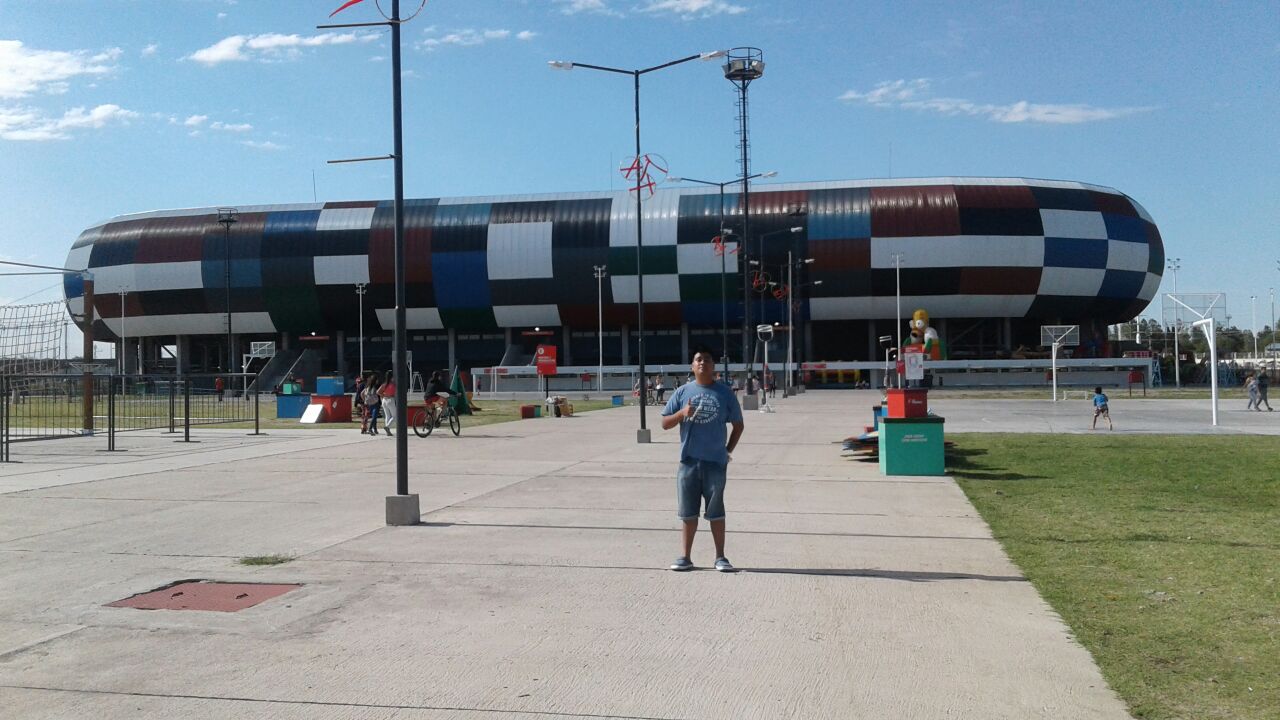
Estadio La Pedrera Villa Mercedes