Viajá con Gus
HomeArgentinaComodoro Rivadavia
Comodoro Rivadavia
🇦🇷 Argentina · Patagonia

Comodoro Rivadavia

Jump to what you need
📌Province
Chubut (south of the province, on the San Jorge Gulf)
📌Best time to go
Spring and summer (October to March); it is a windy city all year round
📌Suggested days
1 to 2 days
📌Currency
Argentine peso (ARS)
💱 ARS exchange rate
Loading rate…
🌤️ Weather in Comodoro Rivadavia
Loading weather…

Comodoro Rivadavia is the most populated city in Chubut and one of the largest in Patagonia, sitting on the San Jorge Gulf in the south of the province. It is Argentina's 'oil capital': here, in 1907, oil was discovered for the first time in the country, an event that shaped its history and its identity as an energy city.

Beyond its industrial and port profile, Comodoro is a service center and the transport hub of southern Patagonia, with an airport and connections toward Santa Cruz, the Andes and the coast. Its surroundings offer draws such as Cerro Chenque (a lookout over the city and the gulf), beaches, the National Oil Museum and the nearby town of Rada Tilly, the southernmost seaside resort in the country.

This guide covers the essentials: the museums tied to oil, Cerro Chenque and the lookouts, the beaches and Rada Tilly, the Sarmiento petrified forest in the region, how to get there and get around, and practical tips for using the city as a base or a stopover on a Patagonian trip.

📖 History of Comodoro Rivadavia

Founded in 1901 as the shipping port for the produce of the Sarmiento Colony, Comodoro Rivadavia had its fate changed on 13 December 1907, when a drilling operation looking for water struck oil, the country's first discovery. From then on the city grew to the rhythm of black gold, drawing immigrants from all over the world and becoming Argentina's oil capital.

Read the full history ↓

🏛️ Comodoro Rivadavia is in Chubut

The heart of Atlantic and Andean Patagonia: Tehuelche and Mapuche land, setting of the only large Welsh colony in the Americas, cradle of Argentine oil at Comodoro Rivadavia, home to the whales of Península Valdés and to the thousand-year-old forest of Los Alerces.

Read the history of Chubut →

🗺️ What to see

1
Cerro Chenque
The hill that dominates the city, a lookout over the San Jorge Gulf.
Cerro Chenque is the landform that defines Comodoro's shape: the city spreads out at its foot and around it. From its lookouts you get wide views of the city, the port and the San Jorge Gulf. Its name comes from a Mapuche-Tehuelche word meaning cemetery or graves, after its ancient use by the Indigenous peoples. It is the city's natural balcony.
ℹ️ Free, open access from the upper part of the city; lookouts with views over the gulf. Bring a windproof layer
2
National Oil Museum
A museum telling the story of the discovery and of the Argentine oil industry.
The National Oil Museum, in the General Mosconi neighborhood (near the site of the first well, at Petrolero San Lorenzo 250, km 3), tells the story of the 1907 oil find and of the development of the industry that transformed Patagonia. Founded by YPF in 1987 and run by the Universidad Nacional de la Patagonia San Juan Bosco, it is the only museum in Latin America devoted exclusively to oil. It displays machinery, tools, photographs and reconstructions that help you understand the oil epic and the lives of the workers.
ℹ️ Petrolero San Lorenzo 250, Gral. Mosconi neighborhood (km 3). Hours: Tuesday to Friday 9-17, Saturday 10-18 (closed Monday; ask about Sundays). Admission free or very low cost depending on the season
3
Rada Tilly and the gulf beaches
The southernmost seaside resort in the country and the shores of the San Jorge Gulf.
A few kilometers to the south is Rada Tilly, considered the southernmost seaside village in the world, with a broad beach where the huge tides make it possible to go land sailing (sailing on wheels) on the sand. Comodoro and its surroundings also offer beaches and a costanera (waterfront promenade), ideal for a stroll and for enjoying the gulf. Marine wildlife and birds round out the coastal appeal.
ℹ️ Rada Tilly about 15 km away; bus from Comodoro AR$ 3,576 (verified July 2026). Land sailing depends on the tide; ask operators
4
Sarmiento Petrified Forest (José Ormachea)
A trip to the petrified forests of western Chubut.
Comodoro is a base for visiting the Sarmiento region, some 150 km to the west, home to the 'José Ormachea' Sarmiento Petrified Forest Protected Natural Area: fossilized trunks around 65 million years old in a desert landscape of striking multicolored beauty. It is a full-day trip combining paleobotany, geology and the lunar scenery of the Patagonian interior.
ℹ️ Sarmiento about 150 km away; protected area open roughly 10-18. Admission is ticketed; check the current fee. Full-day trip or an overnight in Sarmiento
5
Costanera, port and oil neighborhoods
The San Jorge Gulf waterfront and the mark left by oil culture.
Comodoro's costanera, facing the San Jorge Gulf, is a good urban walk for taking in the sea and the port and enjoying the Patagonian sunsets. The city also keeps the stamp of the old 'camps' or oil neighborhoods (such as Km 3, Km 5, Km 8), born around the wells, which tell the story of the workers who arrived from all over the world. Walking these neighborhoods, with their kilometer names, is how you understand the way oil shaped the geography and identity of the city.
ℹ️ Open access. The costanera and the neighborhoods can be covered on foot or by bus. Windy: bring warm layers
6
Punta del Marqués (Nature Reserve)
A coastal reserve near Rada Tilly with sea lions and birds.
The Punta del Marqués Nature Reserve, on the coast near Rada Tilly, protects a South American sea lion haul-out and a panoramic lookout over the San Jorge Gulf. It is a very accessible nature outing from Comodoro, ideal for watching marine wildlife and birds and enjoying wide views of the Patagonian shore. It has an interpretation center and trails.
ℹ️ Near Rada Tilly (about 15-20 km from Comodoro). Cheap or free access depending on the season; check the hours. Bring binoculars and warm layers
Advertisements
What nobody tells you

💵 Prices

Tickets

TypePrice
Cerro Chenque and the costaneraFree, open access (source: Comodoro Turismo, verified July 2026)
National Oil MuseumFree or very low cost: the museum had free admission until 28 February 2026 and usually charges a minimal fee, the equivalent of US$ 2–5 (source: El Comodorense and Tripadvisor reviews, verified July 2026). Hours: Tuesday to Friday 9-17, Saturday 10-18 (closed Monday)
Sarmiento Petrified Forest (José Ormachea)About US$ 3–8 per person (range according to blogs specializing in Patagonia —Interpatagonia, El Agreste Turismo—, since Chubut Patagonia does not publish a specific fee online; verified July 2026). Daily admission in high season
Punta del Marqués Nature ReserveFree or very low cost depending on the season (range US$ 1–3; source: Comodoro tourism blogs, verified July 2026)
🔄 updated monthlyOfficial / reference values · double-check when buying

Activities and tours

ActivityPriceDurationOperator
Museum circuit and city tourUS$ 20–45 per person for the city tour with an operator; on your own, just the cost of admissions (range according to local tour operators, verified July 2026)Half a dayOn your own / local operators
Beach day and land sailing in Rada TillyUS$ 15–35 with land-sailing gear included; the beach itself is free (range according to Rada Tilly operators and traveler forums, verified July 2026)Half a dayRada Tilly operators
Trip to the Sarmiento Petrified ForestUS$ 40–90 per person with transfer + admission (range according to agencies in Comodoro and Sarmiento, verified July 2026)Full dayComodoro / Sarmiento operators
Visit to the Punta del Marqués Reserve (sea lions)US$ 15–30 with transfer included (range according to local operators, verified July 2026)Half a dayLocal operators or on your own
🔄 updated monthlyOfficial / reference values · double-check when buying
Advertisements

🚌 How to get there and distances

Getting around

ModePriceDurationNotes
Urban public transport (buses)Minimum city fare AR$ 2,654; Rada Tilly–Comodoro leg AR$ 3,576 (source: Disposición 27/2026, Subsecretaría de Autotransporte de Chubut, via La Posta Comodorense and ADNSur, verified July 2026)VariableA bus network covering the city, the oil neighborhoods and Rada Tilly. Paid with a local card
Taxi / ride-hailing appUS$ 3–8 for a short city trip (range estimated from comparable Patagonian taxi fares, verified July 2026)VariableAvailable in the city; handy for the airport and short transfers
Own or rented carFrom US$ 40–70 a day; fuel not included (range according to rental comparison sites such as Kayak/Rentcars for Patagonia, verified July 2026)VariableRecommended for trips to Sarmiento, Punta del Marqués and the region
🔄 updated monthlyOfficial / reference values · double-check when buying

How to get there

RouteAirlines / operatorsAvg. priceDuration
Buenos Aires → Comodoro Rivadavia (by air)Aerolíneas Argentinas, Flybondi, JetSMARTFrom US$ 87–90 one way on promotional fares (source: Expedia and Jetcost, verified July 2026); in high season or booking late it can top US$ 150–200Approx. 2.5 h flight (Gral. Mosconi Airport, CRD)
Trelew / Puerto Madryn → Comodoro Rivadavia (National Route 3)Long-distance buses (Andesmar, Don Otto, Marga), carAbout US$ 20–40 (range according to long-distance ticket sales platforms, verified July 2026)Approx. 5-6 h
Río Gallegos → Comodoro Rivadavia (National Route 3)Long-distance buses, carAbout US$ 35–65 (range according to long-distance ticket sales platforms, verified July 2026)Approx. 8-9 h
🔄 updated monthlyOfficial / reference values · double-check when buying

🏨 Where to stay

No exact prices: a scale from $ (budget) to $$$$$ (luxury), with 2-3 options per category.

CategoryPriceRecommended options
Budget (hostels and simple hotels)$$$$$US$ 40–60 a night; hostels and budget hotels downtown, practical for a stopover (range based on Booking.com and Tripadvisor, verified July 2026)
Mid-range (3-star and aparthotels)$$$$$US$ 60–100 a night; three-star hotels and aparthotels aimed at business travel (oil industry) and people passing through (range based on Booking.com and Expedia, verified July 2026)
Upper-end (4-star and chains)$$$$$US$ 100–180 a night; four-star hotels and chains (e.g. Lucania Palazzo, Austral) downtown and in the coastal area, with full services (range based on Booking.com and Expedia, verified July 2026)

🍴 Where to eat

TypePriceOptions / signature dish
Fish and seafood from the gulf$$$$$US$ 12–25 per dish; seafood from the San Jorge Gulf in restaurants in the city and along the coast (range based on Tripadvisor reviews, verified July 2026)
Grills and Patagonian cooking$$$$$US$ 9–18 per dish; Patagonian lamb, grills and Argentine cooking, a wide urban offering (range based on Tripadvisor reviews and food blogs, verified July 2026)
International and immigrant cooking$$$$$US$ 8–16 per dish; variety linked to the strong immigration (Spanish, Italian, Arab, Bolivian) (range based on traveler forums, verified July 2026)
Cafés and craft breweries$$$$$US$ 3–8 per order; cafés and craft breweries downtown (range based on local reviews, verified July 2026)
Advertisements

📖 History of Comodoro Rivadavia

Origins, formation and what the sources say.

A port for the Sarmiento Colony (1901)

A crew of workers drills into the ground looking for drinking water for a thirsty town. A few meters down, instead of water, a black, viscous liquid starts to well up. Nobody celebrates at the time: it is 13 December 1907, and what they have just found, without knowing it, is going to change the economic history of an entire country. That is how the oil story of Comodoro Rivadavia began, almost by accident.

But the town already existed before that well. It had been founded in 1901, on the shore of the San Jorge Gulf, for an eminently practical purpose: to serve as the shipping port for the produce of the Sarmiento Colony, a farming settlement in the interior of Chubut that needed a way out for its goods. On the arid Patagonian steppe, access to the sea was key to the region's economic development.

In its early years, the fledgling town was a modest settlement tied to the port and to the ranching and farming going on around it. Cerro Chenque, the hill that dominates the site, and the shore of the gulf framed a small settlement exposed to the strong Patagonian winds, with nothing to hint at the extraordinary turn its history would take a few years later.

That founding past as a service port would soon be eclipsed by a find that would change not only Comodoro's fate but that of the whole Argentine economy. The town would go from being a maritime outlet for farm produce to the epicenter of a new era: the age of oil.

1907: the oil that changed Patagonia

13 December 1907 marked a before and after in the history of Comodoro Rivadavia and of Argentina. A drilling operation looking for water — always a scarce resource on the steppe — unexpectedly struck oil. It was the country's first oil discovery, and it would open the door to an industry that would transform the national economy across the 20th century.

The find set off dizzying growth. Camps, installations and workers' neighborhoods sprang up around the fields, and the town began receiving waves of workers and immigrants from the most varied origins — Spaniards, Italians, Arabs, Slavs, Chileans, Bolivians and many more — drawn by the oil work. Comodoro became a melting pot, a reflection of that labor epic.

Oil production later passed largely into the hands of the state company YPF, created in good part on the basis of these fields, and oil became the soul of the city: its economy, its identity, its urban landscape of wells and refineries. Comodoro Rivadavia thus took hold as Argentina's 'oil capital', a title that still defines its character today.

The great energy city of Patagonia

The 20th century consolidated Comodoro Rivadavia as the largest city in Chubut and one of the main cities in all of Patagonia. Oil and gas activity — with its cycles of boom and bust tied to international prices and to energy policy — drove sustained population and economic growth, attracting investment, infrastructure and services.

The city also developed a major port and became the logistics and transport hub of southern Patagonia, with an airport connecting it to the rest of the country. Its population, the product of decades of internal and foreign migration, gave it a cosmopolitan, hard-working character, reflected in its varied food scene and in its cultural and educational institutions, among them a university campus of regional importance.

Today, alongside its energy and industrial profile, Comodoro offers attractions tied to its history (the National Oil Museum), to its geography (Cerro Chenque, the San Jorge Gulf, nearby Rada Tilly) and to its surroundings (the petrified forests of Sarmiento). The 'oil capital' thus combines its industrial past with its role as a big urban center and the service gateway to central Patagonia.

YPF, the camps and a working-class identity

After the 1907 discovery, production largely stayed in the hands of the state, first through the Dirección General de Yacimientos Petrolíferos Fiscales and, from 1922, through YPF (Yacimientos Petrolíferos Fiscales), the world's pioneering state oil company, created in good part on the basis of the Comodoro fields. YPF organized production and, with it, the life of the city: it built camps, housing, schools, hospitals and clubs for the workers, shaping a society deeply marked by the culture of oil work.

That setup gave rise to Comodoro's distinctive 'kilometer neighborhoods' — Km 3, Km 5, Km 8 and others — named for their distance from downtown along the lines that linked the wells. Each camp had its own community, its immigrants from different origins and its own identity. For decades the presence of the state oil company structured the economy, the urban geography and the daily life of the city, in a singular Patagonian take on the 'company town'.

The privatization of YPF in the 1990s and the industry's later ups and downs changed that model, with heavy social costs, but the mark of the oil culture and of those camps is still the deepest trait of Comodoro's identity, visible in the names of the neighborhoods, in the collective memory and in the National Oil Museum.

The oil strikes and working-class consciousness

The oil boom did not arrive without conflict. As early as the 1920s the Unión General de Obreros Petroleros (UGOP) was organizing strikes from underground, and in 1929 it carried out two walkouts involving most of the oil companies operating in the area. Those early protests made it clear that behind the epic of 'black gold' there were thousands of workers demanding better conditions in a hostile territory cut off from the rest of the country.

The most remembered conflict broke out in 1932, when a new strike — driven in good measure by communist militants — spread to several oil companies in Comodoro. The response was harsh repression: a railway company went as far as defending its installations with an English ship stationed off the coast, and numerous foreign workers were deported for taking part in the protest. Women and workers organized solidarity funds to support the families of those who had been fired, in a little-known but decisive chapter of Argentine union history.

Those struggles laid the groundwork for a very strong working-class identity, which would deepen decades later with the oil unionism of the first Peronist governments. The Sindicato de Petroleros y Gas Privados de Comodoro Rivadavia, heir to those first organizations, is still today one of the most influential social and political actors in the city, with a capacity to mobilize that rarely goes unnoticed in Comodoro life.

The city of wind: from curse to clean energy

If oil is Comodoro's historical symbol, wind is its most everyday feature. The city is considered the windiest in Argentina, with an average speed of around 40-60 km/h and gusts that routinely top 100 km/h. During the historic storm of November 2025, the industrial instruments at the Cerro Dragón field, near the city, recorded a sustained wind of 312 km/h and a maximum gust of 352 km/h — readings from oil-company equipment, not official ones, but telling as to the violence of the phenomenon in southern Chubut. The explanation lies in Patagonia's position within the belt of westerly atmospheric circulation, where cold Antarctic air masses collide with warmer air of tropical origin; the area's uneven relief, with plateaus and valleys, channels and further accelerates those currents.

For decades that relentless wind was told almost as a curse: the 'city of wind' where walking down the street is hard work, where the trees grow bent, and where occasional storms — like those of 2025, with gusts of over 120 km/h, damage and school closures — are a reminder of its force. But in recent decades that same feature has turned into a resource: Comodoro and its region have become one of Argentina's most important wind-power hubs, with farms of turbines that use the Patagonian wind to produce clean electricity, complementing — and, in the local imagination, even conversing with — the city's old oil identity.

For anyone visiting Comodoro, the wind is, in practice, the first fact about the place: always bring windproof clothing, bear in mind that it can affect trips to the coast or to the petrified forest, and understand that the constant gusting is not a minor detail but part of the identity of a city that learned to live with — and now to profit from — one of the fiercest winds on the planet.

📚 Bibliography

  • Wikipedia (ES) — «Comodoro Rivadavia»: https://es.wikipedia.org/wiki/Comodoro_Rivadavia
  • Wikipedia (ES) — «Museo Nacional del Petróleo (Argentina)»: https://es.wikipedia.org/wiki/Museo_Nacional_del_Petr%C3%B3leo_(Argentina)
  • Wikipedia (ES) — «YPF»: https://es.wikipedia.org/wiki/YPF
  • Wikipedia (ES) — «Golfo San Jorge»: https://es.wikipedia.org/wiki/Golfo_San_Jorge
  • Wikipedia (ES) — «Rada Tilly»: https://es.wikipedia.org/wiki/Rada_Tilly
  • Chubut Turismo (oficial): https://chubut.tur.ar/
  • Comodoro Turismo (official): https://comodoroturismo.gob.ar/
  • Museo Nacional del Petróleo (UNPSJB): https://comodoroturismo.gob.ar/lista/museo-nacional-del-petroleo/
  • El Comodorense — Récord de viento en Cerro Dragón (nov 2025): https://www.elcomodorense.net/record-de-viento-en-cerro-dragon-rafagas-extremas-superan-los-350-km-h/
  • Historia Regional — Huelga petrolera de 1932: https://historiaregional.org/ojs/index.php/historiaregional/article/view/154
  • ADNSur — El viento en Comodoro Rivadavia: https://www.adnsur.com.ar/sociedad/por-que-comodoro-rivadavia-es-tan-ventosa--el-origen-del-viento-y-los-secretos-del-clima-patagonico_a68e6b3a4de78cad3c887328d

❓ Frequently asked questions

What is there to see in Comodoro Rivadavia in one day?+
One day is enough for the essentials: go up Cerro Chenque for the panoramic view of the San Jorge Gulf, visit the National Oil Museum (Tuesday to Friday 9-17, Saturday 10-18), walk the costanera and close the afternoon on the beach at Rada Tilly, 15 km away. With a second day you can add the Punta del Marqués Reserve (sea lions) or the trip to the Sarmiento Petrified Forest.
Why is Comodoro Rivadavia the oil capital?+
Because that is where oil was discovered for the first time in Argentina, on 13 December 1907, during a drilling operation looking for water. That find gave rise to YPF years later, shaped the history of the city and of the country, and made it the center of the Argentine oil industry.
How much does it cost to visit Comodoro Rivadavia?+
Many attractions are free (Cerro Chenque, the costanera, the beaches). The National Oil Museum is free or very low cost (it was free until February 2026; verified July 2026), and the Sarmiento Petrified Forest has ticketed admission (about US$ 3–8). The city bus costs AR$ 2,654 for the minimum fare (verified July 2026, source: Subsecretaría de Autotransporte de Chubut). Check the figures when you visit, since they change with inflation.
How do you get to Comodoro Rivadavia from Buenos Aires?+
The fastest way is to fly to General Mosconi Airport (CRD): about 2.5 hours' flight with Aerolíneas Argentinas, Flybondi or JetSMART, from US$ 87–90 one way on promotional fares (verified July 2026 according to Expedia/Jetcost). You can also come by long-distance bus along National Route 3 (over 24 hours from Buenos Aires) or by car. Comodoro is the great transport hub of southern Patagonia.
What is Rada Tilly and how do you get there from Comodoro?+
It is a seaside village about 15 km south of Comodoro, considered the southernmost in the world, with a broad beach where the huge tides make it possible to go land sailing (sailing on wheels on the sand). You get there by bus (AR$ 3,576 a ticket, verified July 2026) or by car in 15-20 minutes. It is the most popular coastal attraction in the area.
Is the National Oil Museum worth it?+
Yes, especially for understanding the city's identity. It is the only museum in Latin America devoted exclusively to oil: it tells the story of the 1907 discovery and the epic of the industry with original machinery, photographs and reconstructions, near the site of the first well (Petrolero San Lorenzo 250, km 3). It opens Tuesday to Friday 9 to 17 and Saturday 10 to 18; closed Monday.
When is the best time to visit Comodoro Rivadavia?+
From October to March (spring and summer), when temperatures are more pleasant for the beach at Rada Tilly and for excursions. Bear in mind that Comodoro is a windy city all year round —gusts of over 60 km/h are common—, so it is always worth bringing a windproof layer, even in summer.
Sources consulted (13)
Still planning?
Explore more destinations in Argentina
See all destinations →
Advertisements
Image credits
Photos from Wikimedia Commons, each under its own licence (CC BY, CC BY-SA or public domain). Open each file to see its author and licence.
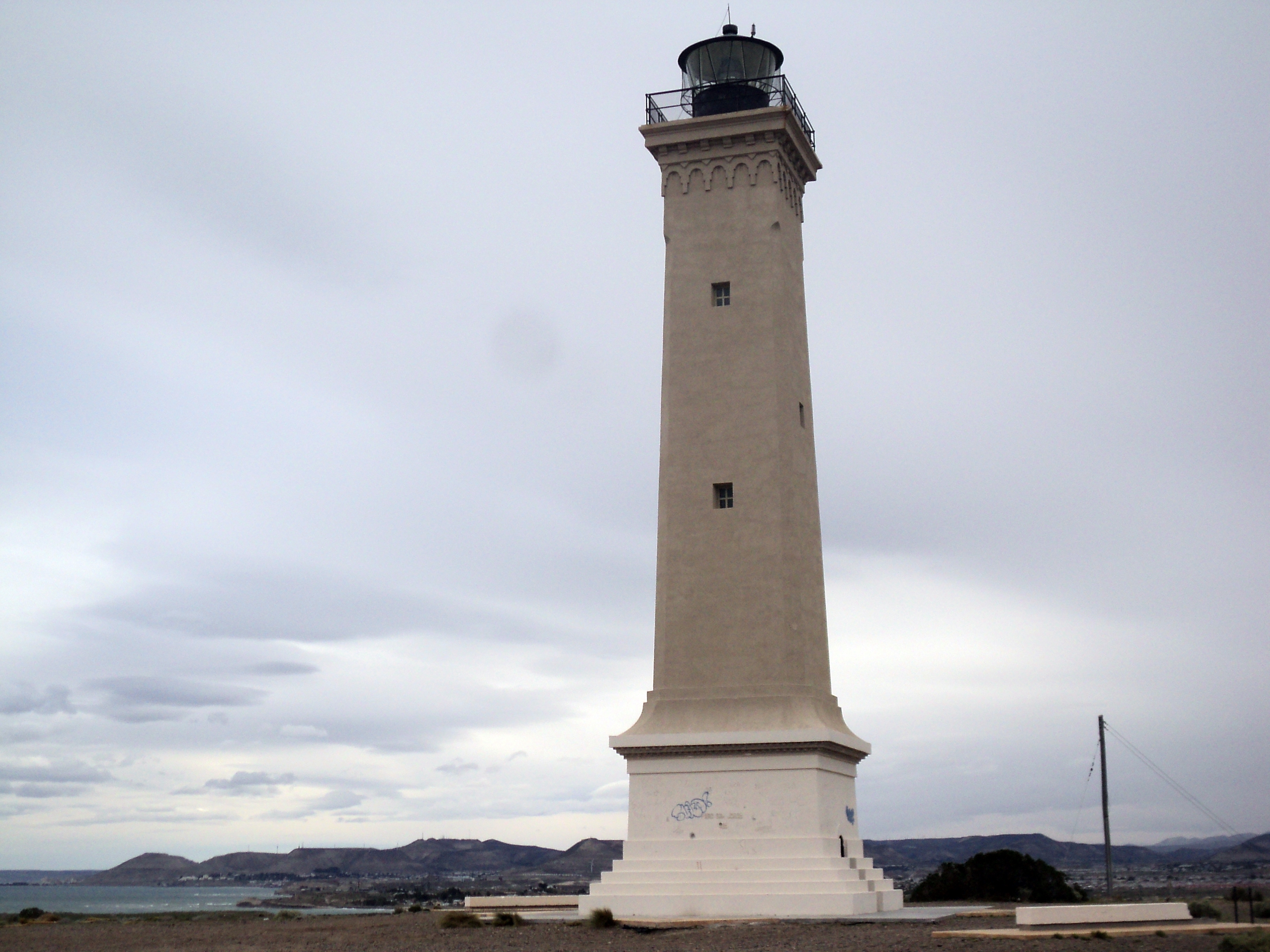
Faro comodoro