Viajá con Gus
Home › Zambia › Lower Zambezi National Park
Lower Zambezi National Park
🇿🇲 Zambia · The Lower Zambezi and Lake Kariba

Lower Zambezi National Park

🪪 What do I need to enter Zambia?Pick your citizenship and we tell you the visa, the days and the paperwork, with the official source.

By leaving your email and citizenship you agree to receive the documents you asked for and weekly travel news. You can unsubscribe whenever you want. How we handle your data.
Jump to what you need
📍Region
Lower Zambezi National Park covers around 4,092 km² in south-eastern Zambia, along the northern bank of the Zambezi River, opposite Zimbabwe's Mana Pools National Park (a World Heritage Site). The landscape runs from the wide river, with its islands and channels, across a floodplain of acacia woodland to the steep Rift Valley escarpment that closes off the park to the north. It is one of Zambia's top safari destinations, famous for canoe safaris among elephants and hippos. It was declared the world's first carbon-neutral national park.
📌Best time
The dry season, from May/June to October, is the best time and the only period when most camps are open. In these months wildlife gathers along the river, the tracks are firm and the heat is more bearable (June and July are cool; October is very hot but brings spectacular sightings). In the rainy season (November to March) the park partly floods, many lodges close and the internal tracks become impassable. For canoe safaris and tigerfish fishing, the dry-season window is ideal.
📌Suggested days
Most people stay 3 or 4 nights at a lodge in the park or in the neighbouring Chiawa area, enough time to combine 4x4 game drives, a canoe outing or multi-day canoe safari, a sunset boat cruise, tigerfish fishing and a guided walk or two. Many travellers pair the Lower Zambezi with South Luangwa (land-based safari) or Victoria Falls to put together a full 8- to 12-day Zambia circuit.
📌Getting there
The most comfortable way is by light aircraft: Proflight and charters fly from Lusaka (about 30-40 min) to the Jeki and Royal airstrips, inside or on the edge of the park, where the lodges pick you up; there are also connections with Mfuwe (South Luangwa) and Livingstone. By road, it's about 5-6 hours from Lusaka to the entrance (via Chirundu or the Chongwe/Kingfisher gate), plus several hours on internal tracks; you need a 4x4 and it's only feasible in the dry season. Some visitors also arrive by boat from Chirundu.
📌Getting around
There is no public transport inside the park: everything is arranged through your lodge or operator. Activities include open 4x4 game drives, motorboat trips on the Zambezi, canoeing (one of the park's great experiences, gliding silently past hippos and elephants) and guided walks with armed rangers. Self-driving is possible for experienced travellers with a 4x4 and camping gear, but it takes preparation: there is no fuel and there are no supplies inside the park.
📌Language and currency
The official language is English, spoken by guides and lodge staff. The currency is the Zambian kwacha (ZMW); as of July 2026 it's around 18-19 ZMW to the dollar (check before you travel). In practice, almost all tourism in the park — lodges, entry fees, activities — is priced and paid in US dollars or by card through the operator; it's worth carrying US dollars in cash for tips and extras. There are no ATMs or banks inside the park: you need to have everything sorted in advance.
💱 ZMW exchange rate
Loading rate…
🌤️ Weather in Lower Zambezi National Park
Loading weather…

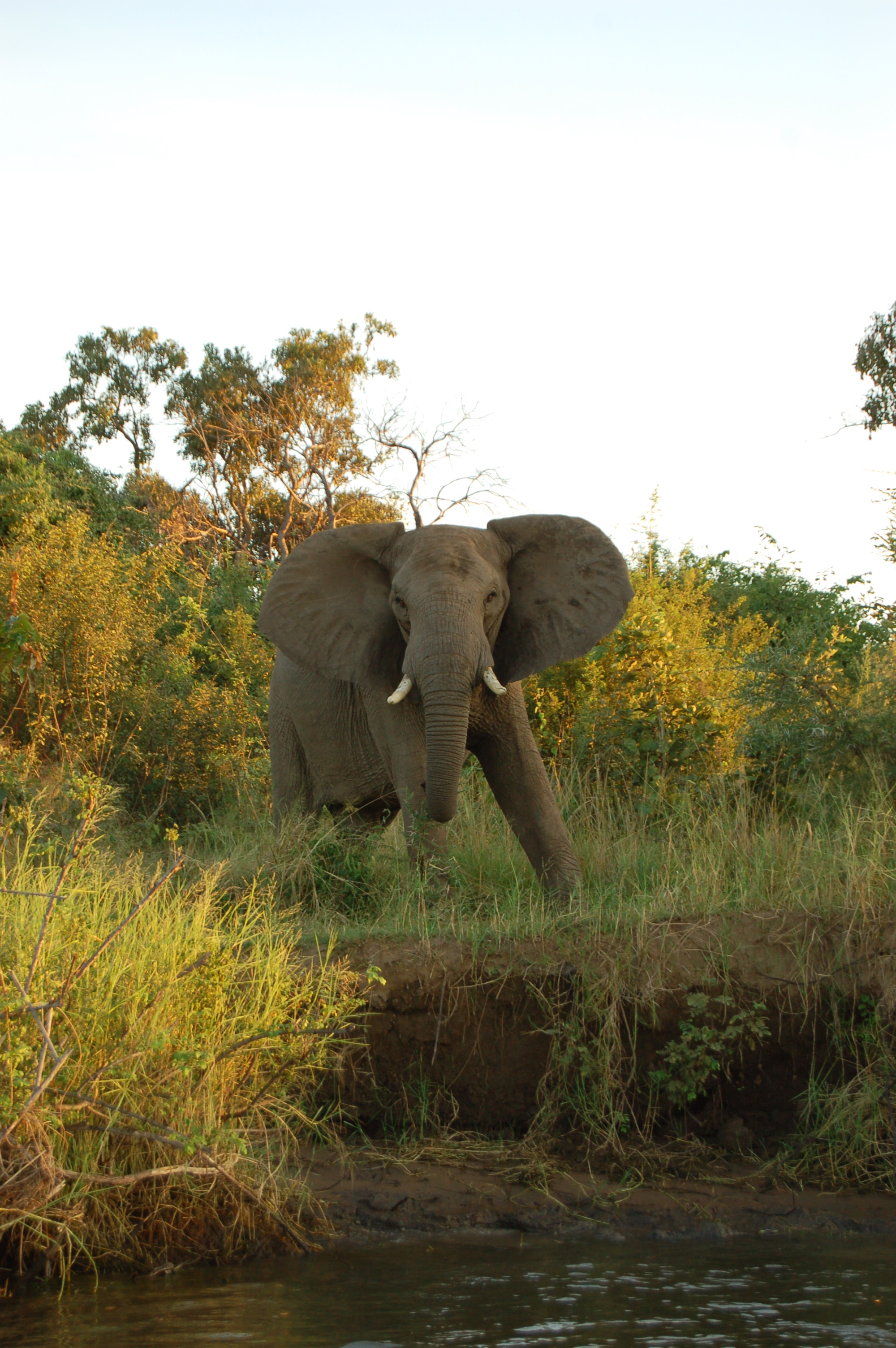
Lower Zambezi National Park is one of African safari's best-kept secrets: wild, uncrowded and offering a unique way to experience wildlife from the water. It stretches along the northern bank of the Zambezi River in south-eastern Zambia, right opposite Zimbabwe's renowned Mana Pools. Here the classic 4x4 safari sits alongside something far more intimate: gliding by canoe through the river's channels, in silence, past herds of elephants swimming across and hippos snorting just a few metres away.

The park brings together three worlds: the great Zambezi River with its islands and sandbanks, the floodplain of winterthorn acacia woodland where buffalo, antelope and elephants graze, and the mountainous Rift Valley escarpment that closes it off to the north. Its 4,000 km² are home to large herds of elephants, lions, leopards, African wild dogs, buffalo and more than 350 bird species. It was also the world's first national park to be declared carbon-neutral, thanks to a pioneering project to conserve its forests.

This guide explains how to visit the Lower Zambezi: when to go, how to get there by light aircraft or by road, which activities not to miss — the canoe safari, tigerfish fishing, sunset cruises — and how to combine it with South Luangwa or Victoria Falls. It's a park for anyone after nature in its purest form, far from the crowds, with the murmur of the Zambezi always in the background.

📖 History of Lower Zambezi National Park

For centuries the Lower Zambezi valley was the territory of riverside peoples and, in the 20th century, a private hunting reserve of Zambia's president, which kept it pristine and safe from mass tourism. It was only declared a national park in 1983. That late protection left behind one of Africa's last great wilderness areas, opposite Zimbabwe's Mana Pools, with which it forms a huge cross-border Zambezi ecosystem. In 2016, thanks to a forest conservation project (Lower Zambezi REDD+), it became the planet's first carbon-neutral national park. Its natural and human history is covered on our history page.

Read the full history ↓

🏛️ Lower Zambezi National Park is in the Lower Zambezi and Lake Kariba

Where the great Zambezi River widens towards the south: canoe safaris among elephants and hippos, and one of the largest man-made lakes in the world, created by a colossal dam.

Read the history of The Lower Zambezi and Lake Kariba →

🗺️ What to see

Tours nearby, in Lusaka

They depart from Lusaka, 124 km away. If you book from this link we earn a commission and you pay no more.

1
Canoe safari on the Zambezi
The park's star experience: gliding by canoe through the river's channels, in silence, among hippos, elephants and birds.
Leer más ↓
The canoe safari is what makes the Lower Zambezi unique and one of the great safari experiences in all of Africa. Instead of the noise of an engine, you glide silently through the Zambezi's channels and side branches, right at water level, with an expert guide in charge. From the canoe you get close-up views of hippos (at a safe distance), elephants swimming across, crocodiles sunning themselves and an incredible variety of waterbirds, with the Rift Valley escarpment as a backdrop. There are options for everyone: from a couple of hours on the water to multi-day canoe safaris, with nights at mobile camps on the river's islands and sandbanks. It's a low-impact form of conservation — zero emissions, zero noise — very much in line with the park's carbon-neutral spirit. The feeling of being at the animals' level, with no metal barrier in between, is unforgettable. Getting there: arranged from any lodge in the park or the Chiawa area. Best time: dry season (May-October), when the river is calmer. Tips: always follow your guide's instructions; canoes keep their distance from hippos and elephants, the most dangerous animals on the river.
ℹ️ Distance: On the Zambezi River itself, in front of the lodges · Best time: Dry season (May-October) · Admission: Included in lodge packages; multi-day canoe safaris with specialist operators (verified July 2026) · Duration: From 2-3 h to several days
2
4x4 safari across the floodplain
Open-vehicle drives through winterthorn acacia woodland, with large herds of elephants, lions and leopards.
Leer más ↓
The classic open 4x4 game drive is still one of the best ways to explore the Lower Zambezi. Drives cross the floodplain covered in winterthorn acacias, whose pods attract large herds of elephants, and skirt lagoons and river branches where wildlife gathers in the dry season. Lions, leopards (the park has a good population), huge herds of buffalo, waterbuck and impala are common sightings and, with luck, the rare African wild dog. Night drives, allowed in Zambia with a spotlight, reveal animals that are hard to see by day: hunting leopards, genets, civets, porcupines and other nocturnal species. The low number of vehicles means many sightings feel almost private, something increasingly rare in African parks. The park has no giraffes or rhinos (the latter were wiped out by poachers), but it does have a remarkably rich river-linked wildlife. Getting there: from the park's lodges. Best time: dry season (May-October); mornings and late afternoons are the best times. Tips: bring warm layers for early-morning drives in winter, and binoculars; night drives are one of Zambia's specialities.
ℹ️ Distance: Inside the park, from the lodges · Best time: Dry season (May-October); sunrise and sunset · Admission: Non-resident park entry approx. USD 25/day + vehicle USD 15/day (DNPW; check, verified July 2026) · Duration: 3 to 4 hours per drive
3
Sunset boat cruise on the Zambezi
A motorboat trip on the great river as the sun goes down, among hippos and elephants, drink in hand under fiery skies.
Leer más ↓
The sunset boat cruise is one of the Lower Zambezi's most enjoyable rituals. In the late afternoon, the lodges' boats head out onto the wide Zambezi as the sun sinks behind the escarpment and the river turns gold and red. It's the moment to watch hippos emerge from the water, elephants come down to drink on the banks and flocks of birds return to roost, all with a glass in hand. Unlike the canoe, the motorboat covers more distance and can safely approach large pods of hippos and the river's islands. It's a relaxed activity, ideal for families and photographers, and a perfect way to round off the day before dinner at the lodge. For many, the sunset light over the Zambezi is the image they remember most from the park. Getting there: departs straight from the lodges' jetties. Best time: whenever the lodge is open; especially magical in the dry season. Tips: bring a light jacket (it gets cool on the water), a camera and insect repellent for the evening.
ℹ️ Distance: Zambezi River, in front of the lodges · Best time: Dry season (May-October); at sunset · Admission: Included in the stay at most lodges (verified July 2026) · Duration: 1.5 to 2 hours
4
Tigerfish fishing
The Zambezi is one of the world's best rivers for catching the hard-fighting tigerfish, on a catch-and-release basis.
Leer más ↓
The Zambezi River is famous among sport anglers for the tigerfish, a silver predator with razor-sharp teeth and extraordinary strength, considered one of the hardest-fighting freshwater fish in the world. The Lower Zambezi is one of the best places on the planet to catch it, almost always on a catch-and-release basis to protect the species. Lodges offer guided fishing trips by boat, with all the gear, for experts and beginners alike. Tigerfish high season usually runs from August to November, when the water drops and clears. Every September, fishing competitions are also held on the Zambezi. Even if you're not an angler, trying your luck with the tigerfish is a perfect excuse to spend a few hours on the river. Getting there: from the lodges, with a guide and gear. Best time: August to November for tigerfish. Tips: check the catch-and-release rules and permits; many lodges include them in the package.
ℹ️ Distance: Zambezi River, from the lodges · Best time: August to November (tigerfish season) · Admission: Fishing trips with gear from the lodge; ask about permits (verified July 2026) · Duration: Half day
5
Walking safari
Walks with armed rangers to read tracks, plants and insects — the essence of the Zambian safari.
Leer más ↓
Zambia is the birthplace of the walking safari, and the Lower Zambezi offers guided walks that let you experience the bush with all your senses. Accompanied by a professional guide and an armed ranger, you walk across the plain learning to read tracks, recognise medicinal plants, follow animal trails and pick up the small details that go unnoticed from a vehicle: dung, termite mounds, birds, insects. It isn't about chasing big animals but about understanding the ecosystem and feeling the vulnerability and thrill of being on foot in the land of lions and elephants. It's a quiet, low-impact activity that many consider the most intense part of a safari. Walks are done in small groups and always under strict safety rules. Getting there: from the lodges, early in the morning. Best time: dry season (May-October), with cool morning temperatures. Tips: wear neutral-coloured clothing and comfortable shoes, and follow the guide's instructions to the letter.
ℹ️ Distance: Inside the park, from the lodges · Best time: Dry season (May-October); early morning · Admission: Included at many lodges; with a guide and armed ranger (verified July 2026) · Duration: 2 to 3 hours
6
The Rift Valley escarpment and the winterthorn woodlands
The park's backdrop: the steep mountain escarpment and the acacia woodlands that sustain its wildlife.
Leer más ↓
The Lower Zambezi's landscape is part of its magic. To the north, the steep Rift Valley escarpment, covered in mopane woodland and baobabs, rises like a natural wall that frames the plain and gives the park its dramatic character. This mountain barrier concentrates the wildlife in the fertile strip along the river, which makes sightings easier. The plain is dominated by winterthorn acacia woodland (Faidherbia albida), a remarkable tree that produces leaves and pods in the middle of the dry season, just when food is scarce, sustaining elephants, antelope and baboons. These open woodlands, with their filtered light, are among the most photogenic settings in African safari and the heart of the park's great elephant herds. Getting there: you'll see it on any safari in the park. Best time: whenever the park is open; dry-season light brings out the colours. Tips: ask your guide to explain the winterthorn's cycle — it's key to understanding why there is so much wildlife in the Lower Zambezi.
ℹ️ Distance: The whole park, between the river and the escarpment · Best time: Dry season (May-October) · Admission: Explored as part of the park's activities (verified July 2026) · Duration: Enjoyed on every outing
📶I have never landed without internet. I arrive and my phone connects to the strongest network in the country I am visiting: I can say I landed, sort out transport, book tours and keep posting, at a seriously good price. I always use the Maya eSIM — check their plans by clicking the banner.See plans →Maya Mobile eSIM — turn travel mode on
What nobody tells you

💵 Prices

Tickets

TypePrice
Entrada al parque (no residente internacional, adulto)Approx. USD 25 per person/day (DNPW rates; check when visiting, verified July 2026)
Tarifa de vehículo (registrado en Zambia, por día)Approx. USD 15 per vehicle/day (DNPW; check, verified July 2026)
Niños 5-13 años50% of the adult rate; under-5s free (DNPW, verified July 2026)
NotaAlmost all lodges include entry fees and activities in the package; confirm what your rate covers (verified July 2026)
🔄 updated monthlyOfficial / reference values · double-check when buying

Activities and tours

ActivityPriceDurationOperator
Canoe safari (half day)Included in lodge packages; standalone outings from about USD 60-120 per person (verified July 2026)2 to 4 hoursChiawa/Lower Zambezi lodges and operators
Multi-day canoe safari with mobile campDepends on the operator; 3-5 day expeditions with nights on islands (verified July 2026)3 to 5 daysSpecialist canoe operators
4x4 safari (game drive)Included at most lodges; drives from USD 60-120 per person (verified July 2026)3 to 4 hoursPark lodges
Sunset boat cruiseIncluded in the stay at almost all lodges (verified July 2026)1.5 to 2 hoursPark lodges
Tigerfish fishing (with gear)Trips from about USD 80-150 per boat; catch and release (verified July 2026)Half dayPark lodges
Walking safari with rangersIncluded at many lodges (verified July 2026)2 to 3 hoursProfessional park guides
🔄 updated monthlyOfficial / reference values · double-check when buying

🚌 How to get there and distances

Getting around

ModePriceDurationNotes
Light-aircraft flight Lusaka → Jeki / RoyalDepends on season and operator (Proflight/charters); lodge transfer from the airstrip (verified July 2026)30-40 min flightThe fastest and most comfortable way to get there; lodges meet you at the airstrip
Lodge 4x4 (internal transfers and game drives)Included in the stay (verified July 2026)VariableThe only ground transport inside the park; there is no public transport
Motorboat on the ZambeziIncluded in lodge activities (verified July 2026)VariableUsed for cruises, fishing and river transfers; sometimes to get in from Chirundu
Self-drive in a 4x4 (experienced drivers only)Fuel and gear at your own expense; park fees extra (verified July 2026)VariableDry season only, with a 4x4 and camping gear; there's no fuel or supplies inside. Experience required
🔄 updated monthlyOfficial / reference values · double-check when buying

How to get there

RouteAirlines / operatorsAvg. priceDuration
Lusaka → Jeki / Royal airstrips (light aircraft)Proflight Zambia, chartersDepends on season and route (verified July 2026)30-40 min flight + lodge transfer
Lusaka → Chongwe/Kingfisher gate by road (4x4)Own vehicle or lodge transferFuel; a 4x4 is essential (verified July 2026)5-6 h to the gate + internal tracks
Lusaka → Chirundu → park by boatLodge river transfersDepends on the operator (verified July 2026)Drive to Chirundu (2-3 h) + boat trip along the river
Mfuwe (South Luangwa) or Livingstone → Lower Zambezi (light aircraft)Proflight / chartersDepends on route and season (verified July 2026)Connecting flights to build a circuit
🔄 updated monthlyOfficial / reference values · double-check when buying

🏨 Where to stay

No exact prices: a scale from $ (budget) to $$$$$ (luxury), with 2-3 options per category.

Luxury lodges on the river
Price$$$$$
Recommended options
From around USD 600-1.500+ per person/night with full board and activities; examples include Chongwe River Camp, Anabezi, Sausage Tree Camp, Chiawa Camp and Old Mondoro, on the Zambezi
Mid-to-upper-range lodges and tented camps
Price$$$$$
Recommended options
Approx. USD 350-600 per person/night all-inclusive; comfortable tented camps with game drives, canoeing and river cruises, inside the park or in the Chiawa area
Simple camps and camping (outside/on the edge)
Price$$$$$
Recommended options
Camping from around USD 20-40 per person; some sites in the Chiawa management area or near Chirundu, for self-drivers with their own gear

🍴 Where to eat

TypePriceOptions / signature dish
Comida de lodge (pensión completa)$$$$$Included in the rate; high-quality bush cooking, riverside dinners, safari breakfasts and light lunches
Comida de bush / campamento de canoa$$$$$Included on expeditions; meals cooked over the fire on islands and sandbanks in the Zambezi
Autoabastecimiento (autoconductores)$$$$$There are no shops inside the park; buy all your supplies in Lusaka or Chirundu before you go in

📖 History of Lower Zambezi National Park

Origins, formation and what the sources say.

The great river and the Rift Valley

The story of the Lower Zambezi begins with geology. The park sits on the lower stretch of the Zambezi River, the fourth-longest river in Africa. It rises in north-western Zambia, feeds Victoria Falls and empties into the Indian Ocean much further east. In this section, the Zambezi runs along the floor of a huge valley carved out by the Great Rift Valley system, the same fracture in the Earth's crust that cuts through Africa from north to south.

That geology explains the park's landscape. To the north, a steep escarpment of mountains, the Zambezi Escarpment, rises like a wall. At its foot lies a broad floodplain built up from the river's sediments over thousands of years. And in the middle runs the Zambezi itself, wide and calm, dotted with islands and channels. This mix of a mountain barrier, a fertile plain and a great river is what supports the park's extraordinary concentration of wildlife.

For thousands of years, the valley was home to abundant wildlife and to riverside peoples who lived from fishing, hunting and farming along the banks. The river was both a source of life and a natural border. Today it separates Zambia from Zimbabwe, but for centuries it was a route for travel and trade between the peoples on both banks, long before colonial borders existed.

A hunting reserve that saved the wilderness

Unlike other African parks that were protected early on, Zambia's Lower Zambezi became a national park late, and that delay ended up saving it. For much of the 20th century, the area was a controlled hunting area. After independence in 1964, it served in particular as a private hunting reserve linked to the Zambian presidency.

That special status kept the area closed to mass tourism and exploitation, and it survived as one of the last great untouched expanses in the region. While other parts of Africa came under pressure from development, farming and commercial hunting, the Lower Zambezi stayed a wild corner, with its elephant herds and winterthorn forests almost intact.

It was not until 1983 that the Zambian government officially declared an area of about 4.092 km² on the north bank of the river as Lower Zambezi National Park. Around the park, the Chiawa Game Management Area was set up as a buffer zone where conservation, tourism and local communities exist side by side. That late protection is why the park still has a wild character that many others have lost.

An ecosystem shared with Mana Pools

The Lower Zambezi is not an island. It is part of a vast cross-border ecosystem along the Zambezi River. Directly opposite, on the south bank of the river in Zimbabwe, lies Mana Pools National Park, which Unesco declared a World Heritage Site in 1984 for its beauty and natural richness. Elephants, buffalo and lions cross the river and move freely between the two parks. Together, they protect one of the most important wilderness areas in southern Africa.

This ecological continuity means that conserving the Zambezi has to be a joint effort between Zambia and Zimbabwe. Decisions about water management, anti-poaching work and tourism on one bank affect the other. The river that separates the two countries is, in terms of nature, what unites them most.

Over the decades, the park has faced the threats typical of the region. Ivory poaching decimated the elephants in the 1970s and 1980s and wiped out the rhinos completely. More recently, open-pit mining projects on the escarpment drew strong opposition from environmentalists. Defending the Lower Zambezi against those projects became a landmark cause for conservation in Zambia.

The world's first carbon-neutral national park

In 2016, the Lower Zambezi reached a milestone that brought it international attention: it was declared the world's first carbon-neutral national park. The recognition came thanks to the Lower Zambezi REDD+ Project, an initiative that brings together tour operators, local communities and conservation organisations to protect the valley's forests and prevent deforestation.

The idea behind it is that standing forests store huge amounts of carbon. Conserving them instead of cutting them down avoids greenhouse gas emissions, and those 'carbon credits' can be certified and sold to fund conservation and local development. On top of that, the park's lodges run largely on solar power and follow low-impact practices, in keeping with activities as clean as the canoe safari.

This model turned the Lower Zambezi into a case study in how nature tourism can pay for protecting an ecosystem and benefit the communities living around it. The mix of conservation, tourism income and carbon credits was put forward as a way for the park to support itself and remain a wildlife refuge over the long term.

The Lower Zambezi today: low-impact safari

Today the Lower Zambezi is one of Zambia's most highly rated safari destinations, precisely because of what its late protection and its conservation model managed to preserve: pristine nature, few visitors and a low-impact way of exploring it. The undisputed star is the canoe safari, which lets you glide along the river in silence, but the park also offers 4x4 safaris, sunset cruises, guided walks and its famous tiger fishing.

The park still faces challenges: poaching pressure, mining projects on the escarpment and the management of the Zambezi's water, which dams and climate change are affecting more and more. Organisations such as Conservation Lower Zambezi work to protect the wildlife and support development in neighbouring communities, a balance between conservation and development that is always delicate.

For travellers, the result of this history is a privilege. You get to explore one of the last great wild areas in Africa, facing the mountains of Mana Pools, among herds of elephants swimming across the river, knowing that your visit helps sustain a pioneering conservation model. The Lower Zambezi shows that sometimes the best thing you can do with a piece of nature is simply to let it be.

📚 Bibliography

  • Wikipedia (EN) — «Lower Zambezi National Park»: https://en.wikipedia.org/wiki/Lower_Zambezi_National_Park
  • Zambia Tourism — Lower Zambezi National Park: https://www.zambiatourism.com/destinations/national-parks/lower-zambezi-national-park/
  • Lower Zambezi — Park reference site: https://www.lowerzambezi.com/
  • Venture to Zambia — «Lower Zambezi Park now Carbon Neutral»: https://www.venture-to-zambia.com/blog/lower-zambezi-park-now-carbon-neutral
  • National Geographic — Conservation and camps in the Lower Zambezi: https://www.nationalgeographic.com/travel/article/conservation-luxury-camps-zambia-lower-zambezi-national-park
  • Unesco — «Mana Pools National Park»: https://whc.unesco.org/en/list/302/
  • Conservation Lower Zambezi — Conservation organisation: https://conservationlowerzambezi.org/
  • Wikipedia (EN) — «Zambezi»: https://en.wikipedia.org/wiki/Zambezi
  • Robin Pope Safaris — Lower Zambezi: https://www.robinpopesafaris.net/regions/lower-zambezi-national-park/
  • African Bush Camps — «Lower Zambezi safari»: https://africanbushcamps.com/lower-zambezi-safari/

❓ Frequently asked questions

What sets the Lower Zambezi apart from other parks in Zambia?+
Its hallmark is the canoe safari: gliding silently down the Zambezi River, right at water level, among hippos and elephants, something almost no other park offers with this intensity. Add to that the mix of river, floodplain and mountain escarpment, the low number of visitors and the fact that it was the world's first carbon-neutral park. If South Luangwa is the king of walking safaris and leopards, the Lower Zambezi is the park of water and elephants.
When should I go, and is it open all year?+
The best time is the dry season, from May/June to October, when wildlife gathers along the river and the tracks are firm. Most lodges open only in those months and close during the rainy season (November to March), when the park partly floods and the internal tracks become impassable. For canoe safaris and tigerfish fishing, the dry window (especially August-October) is ideal.
Is a canoe safari among hippos and crocodiles safe?+
Yes, as long as you go with professional guides and follow the rules. Guides know the river, keep their distance from hippos (the most dangerous animal) and choose the right routes and times. Canoe safaris on the Lower Zambezi have an excellent safety record. The golden rule is to do exactly what the guide says and never approach hippos or crocodile-lined banks on your own.
How do I get to the park?+
The most comfortable way is by light aircraft from Lusaka (30-40 min) to the Jeki or Royal airstrips, with Proflight or charters; the lodge meets you at the airstrip. By road, it's 5-6 hours from Lusaka to the gate (via Chirundu or the Chongwe/Kingfisher gate) plus several hours on internal tracks, always in a 4x4 and only in the dry season. There are also boat transfers from Chirundu. You can combine it by air with South Luangwa or Livingstone.
Are there elephants, lions and leopards? What about rhinos?+
Yes to the first three: the Lower Zambezi is famous for its large elephant herds, and it has lions, leopards, buffalo, African wild dogs, hippos and crocodiles. It has no rhinos (they were wiped out by poachers decades ago) and no giraffes. It's a park of big game tied to the river, with more than 350 bird species, ideal both for a classic safari and for experiencing wildlife from the water.

More places in Zambia

Parque Nacional Mosi-oa-TunyaParque Nacional North LuangwaParque Nacional South LuangwaCataratas KalamboCataratas Victoria (Mosi-oa-Tunya)Chipata
See every place in Zambia →The history of Zambia →
Sources consulted (7)
Still planning?
Explore more destinations in Zambia
See all destinations →