Liuwa Plain National Park is one of Africa's great open spaces: a plain of endless horizons in Zambia's remote west, where the sky seems to fill everything and the view disappears into a sea of grass. It is a destination for people looking for solitude and unspoilt nature, far from the tourist trail: there are hardly any other vehicles here, and the sense of vastness and silence is its greatest treasure.
Liuwa is the setting for Africa's second-largest wildebeest migration: tens of thousands of these antelope gather on the plain with the first rains, followed by hyenas, cheetahs and lions. It is also a land with a unique conservation history: it was protected by the Lozi king as early as the 19th century, and it became famous for 'Lady Liuwa', the park's last lioness, whose solitude moved the world and sparked a wildlife revival led by the organisation African Parks.
This guide covers Liuwa: when to go to see the migration, how to reach this far-flung corner of Barotseland via Mongu and Kalabo or by light aircraft, what wildlife and landscapes to expect, and what it is like to explore one of the most untouched and moving plains on the continent. It is not a place you pass through but one you seek out on purpose, and it rewards you with one of the most authentic nature experiences in Africa.
Liuwa Plain is one of Africa's oldest conservation areas: back in the 1880s, the Lozi king (Litunga) Lubosi Lewanika declared these plains a protected area, placing his royal hunting grounds in the care of his people. After decades of neglect and poaching in the 20th century, the park was left with a single famous lioness, 'Lady Liuwa'. In 2003, the organisation African Parks took over its management together with the Department of National Parks and the Barotse royal establishment, and began an extraordinary recovery: lions were reintroduced, the wildebeest migration was protected and the wildlife bounced back. That story, from Lozi royalty to Lady Liuwa and the revival, is told on our history page.
Read the full history ↓Zambia's vast and little-visited west: the country's largest and oldest park, the Busanga Plains with their tree-climbing lions, and the remote Lozi plains where the wildebeest migrate.
Read the history of Kafue and the west →No exact prices: a scale from $ (budget) to $$$$$ (luxury), with 2-3 options per category.
Origins, formation and what the sources say.
Liuwa Plain lies at the heart of Barotseland, the land of the Lozi people, in the remote west of Zambia. This is a world shaped by water: the great Zambezi floodplain, which floods and dries out every year, has structured the life, economy and culture of the Lozi for centuries. The Liuwa plains, set slightly apart from the main river channel, are part of this vast landscape of grasslands and seasonal wetlands of the upper Zambezi.
The Lozi people built one of the most sophisticated traditional kingdoms in southern Africa here, ruled by the Litunga (king), with a complex political system and a deep relationship with the cycle of the floods. Its most famous ceremony, the Kuomboka, re-enacts every year the move of the Litunga from his palace on the flooded plain to his residence on higher ground, in a procession of royal barges. The word 'liuwa' means, precisely, 'plain' in the Lozi language.
In this setting, hunting and conservation were built into the king's authority. The plains rich in wildlife were royal hunting grounds, and their use was regulated by the royal family. It was from that tradition that, in the 19th century, one of the earliest acts of conservation in Africa emerged.
In the 1880s, the Litunga Lubosi Lewanika, one of the great kings of Lozi history, made a remarkable decision: he declared the Liuwa plains a protected area, handing what had been his royal hunting grounds over to the care of his people, who became custodians of the wildlife. This gesture makes Liuwa one of the oldest conservation areas on the continent, with more than 130 years of protection behind it.
This protection, born of traditional authority rather than colonial administration, is a unique case. Long before European-style national parks existed, the Lozi royal family had set up a system of regulated use and wildlife conservation based on custom and on respect for the king. The people of the area became guardians of the plain and its animals.
When Zambia gained independence in 1964, Liuwa was officially recognised as a protected area within the state system, and later as a national park. However, that formal status did not come with the resources needed to protect it, and the link between conservation and the Lozi royal family, which had worked for generations, weakened. The hard years were beginning.
During the last decades of the 20th century, Liuwa Plain, like so many African parks, suffered from neglect and the spread of poaching. Its extreme remoteness —on the far western edge of the country, near Angola, at a time also marked by the Angolan civil war spilling over into the region— left it unprotected. Wildlife was decimated: the large herbivores declined and the predators almost disappeared.
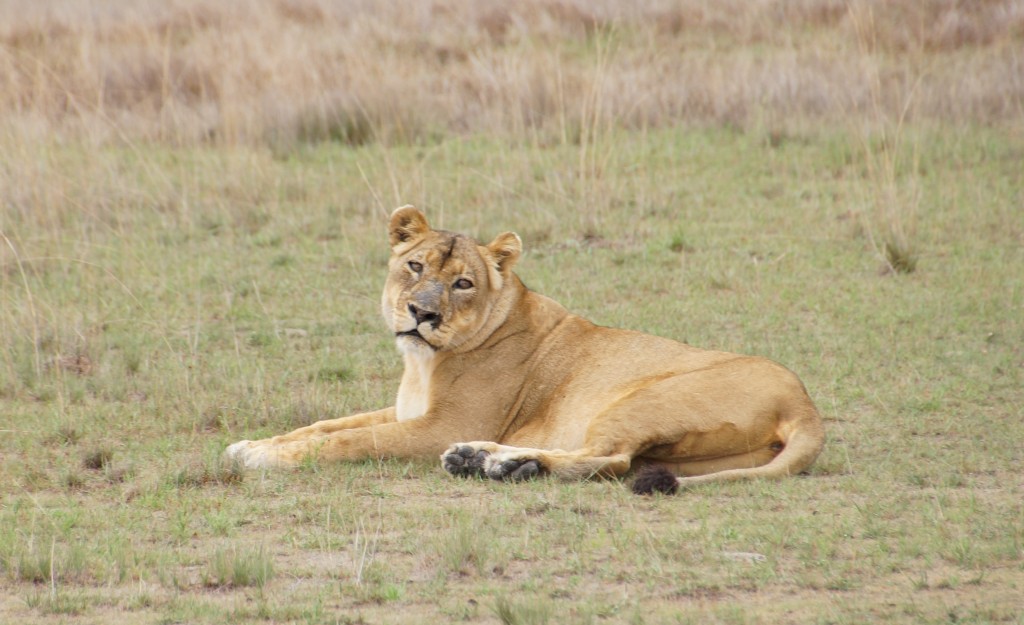
The most moving symbol of that decline was a lioness. In the early 2000s, after years of killing, Liuwa was left, by all accounts, with a single lioness: a female who lived completely alone, with no pride, no males, no cubs. Conservationists called her 'Lady Liuwa'. For years, this lioness roamed the immense plain alone, searching for company that did not exist, a bleak image of what poaching had done to the park.
The story of Lady Liuwa, the 'last lioness of Liuwa', was told in the National Geographic documentary 'The Last Lioness' and went around the world. Her solitude put a face to the crisis of African wildlife and, paradoxically, became the starting point of the park's revival: her story drew attention, resources and the will to save Liuwa.
In 2003 came the decisive turning point. African Parks, an organisation specialising in rescuing protected areas in crisis, took over the management of Liuwa Plain in a three-way partnership: with the Zambian government's Department of National Parks and Wildlife (DNPW) and, crucially, with the Barotse Royal Establishment (BRE), the Lozi royal house. This reconnected modern conservation with the tradition of King Lewanika, who had protected the plain more than a century earlier.
The new management brought an extraordinary recovery. Anti-poaching efforts were stepped up, the wildebeest migration —the second largest in Africa— was protected, and lions were reintroduced to rebuild a viable population: first, lionesses were brought in to join Lady Liuwa, who came to live with company before dying of natural causes in 2017, and then the pride grew and began to breed. Other species were also reintroduced and support was given to local communities, who still live in and around the park.
That human presence is another distinctive feature of Liuwa: it is not an empty park, but one where thousands of Lozi people live in villages within its boundaries, in a coexistence between people and wildlife that the park seeks to make sustainable. The Liuwa model —conservation, traditional royalty and communities— became an example cited across Africa.
Today Liuwa Plain National Park is one of the great stories of hope in African conservation: a place that was on the brink of losing everything and came back to life. Its wildebeest migration once again fills the plain every rainy season; its lions, heirs of Lady Liuwa, are breeding; its hyena clans, cheetahs, wild dogs and spectacular flocks of birds make it a vibrant and unique ecosystem.
The park is still remote and difficult to visit, and that is part of its charm: whoever makes it to Liuwa finds one of the most pristine and least crowded plains in Africa, with vast skies, silence and a sense of space that is almost impossible to find elsewhere. The combination of epic nature, Lozi royal history and conservation revival gives it a special depth.
From King Lewanika's hunting grounds in the 19th century to the solitude of Lady Liuwa and the revival led by African Parks and the Barotse royal family, the story of Liuwa shows that, with will, knowledge and respect for communities and their traditions, even a place reduced to a single lioness can fill with life again. For the traveller who dares to reach this far corner of Zambia, Liuwa offers not just a safari, but a living lesson in resilience.