Viajá con Gus
HomeVenezuelaSanta Elena de Uairén
Santa Elena de Uairén
🇻🇪 Venezuela · Guayana and La Gran Sabana

Santa Elena de Uairén

Jump to what you need
📌State
Bolívar (Brazilian border, southeastern Venezuela). Santa Elena de Uairén is the last town of any size before the Brazilian border, opposite the Brazilian town of Pacaraima.
📌Best time to go
Dry season (December to April) for the Gran Sabana's roads and the best conditions for the Roraima trek. In the rainy season (May to November) the dirt tracks get difficult and the rivers rise, though the waterfalls are fuller.
📌Suggested days
1-2 days in town as a logistical base, plus 3 to 6 days if you add Gran Sabana tours or the Roraima trek.
📌Currency
Bolívar (VES); the US dollar and the Brazilian real circulate in practice in shops and tourism services given how close Brazil is. Bring cash in small dollar bills.
💱 VES exchange rate
Loading rate…
🌤️ Weather in Santa Elena de Uairén
Loading weather…

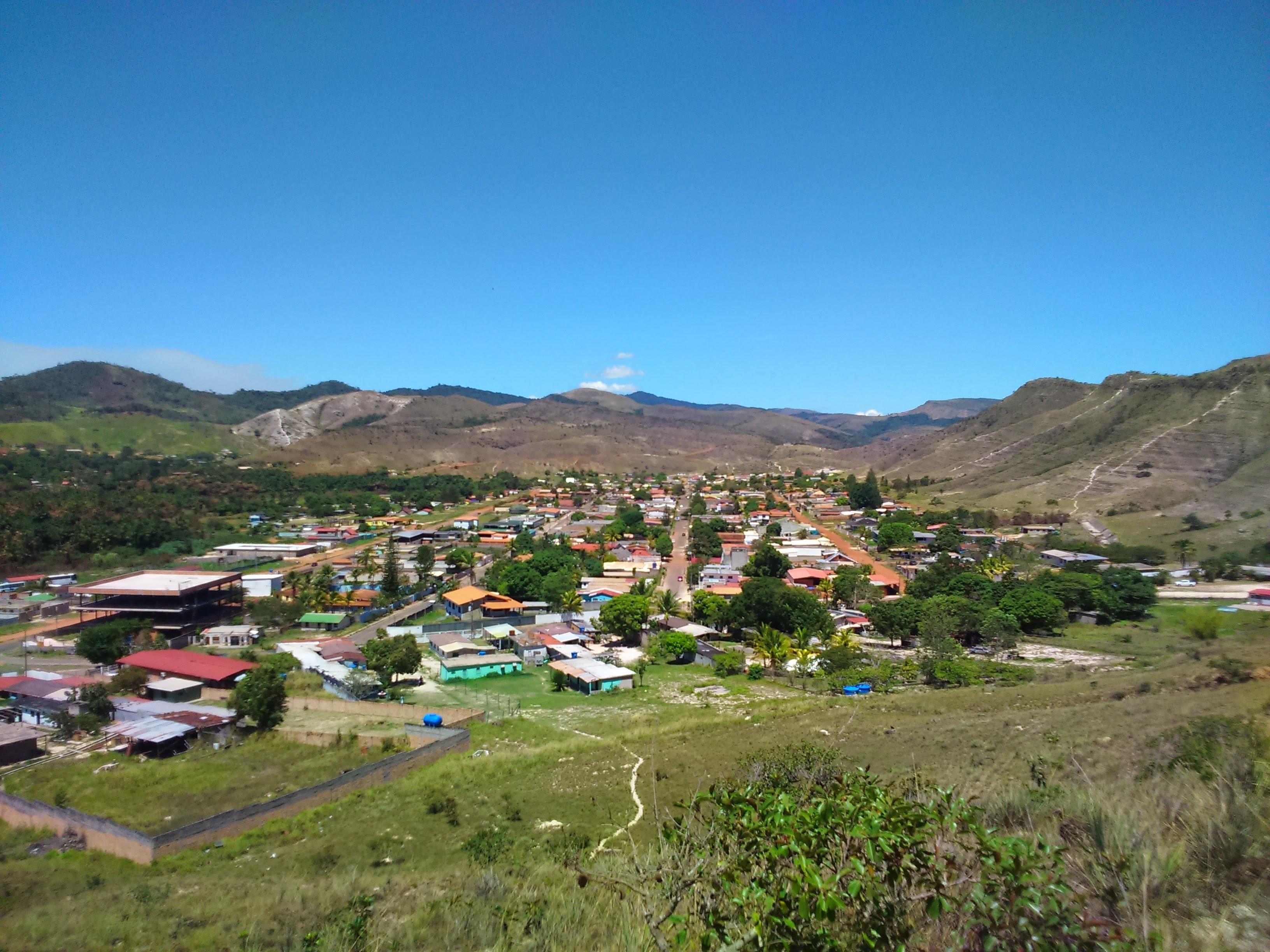
Santa Elena de Uairén is the southernmost town of any size in populated Venezuela, in the far southeast of Bolívar state, right on the Brazilian border (the Brazilian town of Pacaraima is on the other side). It's the main base and southern gateway to the Gran Sabana and Canaima National Park, and the starting point for most trips to the tepuis, waterfalls and wonders of the region.

It's a town with a border feel, a mix of Venezuelan, Pemón and Brazilian cultures, where tour agencies, guesthouses, restaurants, services and all the movement of a border crossing come together. Gran Sabana tours, Mount Roraima expeditions and trips to the waterfalls around it all start here.

This guide covers the essentials of Santa Elena de Uairén: its role as the base for the Gran Sabana and Roraima, what to see in town and around it, how to organize the trips, where to sleep and eat, and how to get around on this southern Venezuelan frontier.

📖 History of Santa Elena de Uairén

Santa Elena de Uairén grew up in the 20th century around diamond and gold mining and the border crossing with Brazil, in Pemón territory. Today it's the tourist base for the Gran Sabana and Mount Roraima, inside Canaima National Park. The full story is on our history page.

Read the full history ↓

🏛️ Santa Elena de Uairén is in Bolívar

Venezuela's largest state: home of the tepuis and Angel Falls — the world's tallest waterfall — of La Gran Sabana and the Pemón people, of Bolívar's Angostura Address, of Orinoco gold, of the Guri dam and the heavy industry of Ciudad Guayana.

Read the history of Bolívar →

🗺️ What to see

1
Base for the Gran Sabana and Roraima
The starting point for trips across the Gran Sabana, the tepuis and the waterfalls.
The main reason to come to Santa Elena de Uairén is to use it as a base for exploring the Gran Sabana and Canaima National Park. The town concentrates the tour agencies and operators that organize trips across the region: multi-day 4x4 tours of the grasslands and waterfalls, trekking expeditions to Mount Roraima (6 days on average, with compulsory Pemón guides) and outings to the various waterfalls and attractions. This is the place to get information, hire guides and services, stock up and plan your trips. Practically every traveler crossing the Gran Sabana passes through Santa Elena, which gives it its character as the tourist capital of the far south. Getting there: the town is the region's hub; trips leave from here. Best time: dry season for the roads. Tips: compare operators and check that they include Pemón guides where required; stock up on cash, fuel and supplies before heading into the savanna.
ℹ️ Base for the tours. Agencies in town. 5-day Gran Sabana tour: US$ 250-350 per person (2025, check on arrival).
2
The town and the Brazilian border
A border atmosphere of mixed cultures, a market and frontier life.
Santa Elena de Uairén has the particular character of a border town. The Brazilian border and the town of Pacaraima are a few kilometers away, which gives Santa Elena a mix of cultures and languages (Spanish and Portuguese), cross-border trade and a cosmopolitan, easygoing air for its size. Its stone church - the parish of Santa Elena - and its square are the town's landmarks. Walking its streets, its market and its shops, where Venezuelan and Brazilian goods sit alongside Pemón crafts, gives you the pulse of frontier life. It's also where you complete the immigration formalities to cross into Brazil or to enter from there (the SAIME checkpoint on the Venezuelan side). Getting there: the town is walkable. Best time: all year. Tips: carry valid documents if you're crossing the border; cash is essential; use the usual common sense in border areas.
ℹ️ Border town with Brazil (Pacaraima, about 15 km away). Walkable. Free.
3
Nearby waterfalls and attractions (Quebrada de Jaspe, El Pauji)
Waterfalls and wild corners a short distance from town.
There are accessible natural attractions around Santa Elena de Uairén. To the north, on Highway 10 (Troncal 10), is the celebrated Quebrada de Jaspe (Kako Parú), where water runs over a bed of red jasper, one of the most photographed spots in the Gran Sabana. To the southwest, along a secondary road, is the El Pauji area, a picturesque pocket of grassland, forest, waterfalls and viewpoints such as 'El Abismo', much loved for its peace and beauty. These places can be visited on day trips from Santa Elena and complement the bigger Gran Sabana circuits. Each has its own charm: the color of the jasper, the landscapes of El Pauji or the waterfalls nearby. Getting there: by vehicle or tour from Santa Elena; some along dirt tracks. Best time: dry season for access. Tips: bring swimwear for the waterfalls, water and sunscreen; check the state of the secondary roads.
ℹ️ Quebrada de Jaspe (35 km north) and El Pauji (70 km southwest). Day trip: US$ 40-70 per person (2025, check on arrival).
4
Salto Kamá and Salto Aponwao
Two of the most impressive waterfalls in the Gran Sabana, visitable on a day trip from Santa Elena.
Salto Kamá and Salto Aponwao (also called Chinak-Merú) are two of the most spectacular waterfalls in the Gran Sabana and classics of the trips from Santa Elena de Uairén. Salto Aponwao, with a drop of more than 100 meters, is one of the highest and most photographed falls in the region, reached by crossing the river in a dugout canoe to a viewpoint facing the water. Salto Kamá, easier to reach and lower, lets you walk down to the base and enjoy its pools for swimming, in a setting of savanna and gallery forest. The two falls are usually combined on the same full-day tour from Santa Elena. Getting there: on an organized 4x4 tour from Santa Elena, with stretches of dirt track. Best time: all year, though the flow is heavier in the rainy season. Tips: bring swimwear, shoes you don't mind soaking and sunscreen; the canoe crossing to Aponwao usually carries an extra charge included in the tour.
ℹ️ 70-90 km from Santa Elena along Highway 10 and dirt turn-offs. Full-day tour: US$ 60-100 per person (2025, check on arrival).
5
Mount Roraima (multi-day expedition)
The world's most famous tepui, the inspiration for Arthur Conan Doyle's 'The Lost World', climbable on a trek of around 6 days.
Mount Roraima is, without question, the great star of the region and one of the most extraordinary treks in South America. This sandstone plateau with near-vertical walls rises some 2,800 meters above sea level, and its flat summit covers more than 30 km²: it's the highest and most famous tepui in the Gran Sabana, and it inspired Arthur Conan Doyle's novel 'The Lost World'. Its summit holds a landscape unlike anywhere else on the planet: rock formations eroded into fantastical shapes, lagoons of crystal-clear water, endemic carnivorous plants and an almost lunar microclimate. The standard expedition lasts about 6 days and 5 nights, starting from the Pemón community of Paraitepui (reached by vehicle from Santa Elena), and combines long walks across the savanna with the demanding climb up the 'ramp', the only relatively accessible route to the summit without climbing gear. You must book with a registered operator using Pemón guides, porters and cooks. Getting there: from Santa Elena de Uairén, on an organized tour to Paraitepui and from there on foot. Best time: dry season (December to April), though it can rain on the summit at any time. Tips: you need decent fitness, camping and wet-weather gear, and you should book in advance because access to the summit is regulated.
ℹ️ Departure from Paraitepui (1.5-2 h from Santa Elena by vehicle). Full expedition: US$ 650 per person for the 6-day trek (source: Osprey Expeditions, verified 07/08/2026).
6
Pemón communities and Indigenous crafts
Contact with Pemón culture, its communities and its traditional crafts around Santa Elena.
Around Santa Elena de Uairén and across the Gran Sabana there are numerous Pemón communities, the Indigenous people who have lived in this region since ancient times. Visiting one of these communities - often as part of savanna tours or on the way to Roraima, such as Paraitepui - lets you see their way of life up close, their crafts in plant fibers, ceramics and textiles, and their traditional cooking based on casabe made from bitter cassava. The town of Santa Elena also has outlets selling Pemón crafts, a good option for taking home a genuine souvenir of the region and supporting the communities directly. Responsible tourism, with Pemón guides formally hired, is now an important source of income for these communities. Getting there: in the town of Santa Elena (markets and craft shops) or in passing on tours toward the Gran Sabana and Roraima. Best time: all year. Tips: buy crafts directly from Pemón artisans or at community outlets where you can; ask where the pieces come from.
ℹ️ In town and in Gran Sabana communities. Crafts from US$ 3-20 depending on the piece (2025, check on arrival).
Advertisements
What nobody tells you

💵 Prices

Tickets

TypePrice
5-day Gran Sabana tour (all inclusive: 4x4 transport, meals, camping)US$ 250-350 per person (2025; minimum 4 people; check on arrival)
Mount Roraima expedition, 6 days / 5 nights (Pemón guide, porters, meals, camping gear)US$ 650 per person for the 6-day trek (US$ 750 for 7 days, US$ 850 for 8) (source: Osprey Expeditions, verified 07/08/2026; may vary by operator and group size)
Day trip to Quebrada de Jaspe / El PaujiUS$ 40-70 per person (2025; check on arrival)
Day trip to Salto Kamá and Salto AponwaoUS$ 60-100 per person (2025; check on arrival)
Canaima National Park entry (conservation fee)Generally included in the tour price; check with your operator (2025, check on arrival)
🔄 updated monthlyOfficial / reference values · double-check when buying

Activities and tours

ActivityPriceDurationOperator
4x4 tour of the Gran Sabana (5 days)US$ 250-350 per person (2025; check on arrival)5 days / 4 nightsSanta Elena agencies such as Sabanero Tours, Araguato Expeditions (check they're still operating)
Trek to Mount RoraimaUS$ 650 per person for the 6-day trek (source: Osprey Expeditions, verified 07/08/2026)About 6 daysAgencies with registered Pemón guides (compulsory; check)
Trip to El PaujiUS$ 40-70 per person (2025; check on arrival)Full dayLocal operators in Santa Elena (check)
Trip to Salto Kamá and AponwaoUS$ 60-100 per person (2025; check on arrival)Full dayLocal operators in Santa Elena (check)
🔄 updated monthlyOfficial / reference values · double-check when buying
Advertisements

🚌 How to get there and distances

Getting around

ModePriceDurationNotes
On footFreeVariableThe town is small and walkable; the square, the stone church and the agencies are all a short distance apart
Taxi / moto-taxiUS$ 1-3 per ride in town (source: local reference rates, verified July 2026)VariableFor getting around town, to the bus terminal and to the border at Pacaraima (Brazil, about 15 km away). Santa Elena has NO city bus network and no transport app: agree the fare before you get in and pay in CASH. Given how close Brazil is, the dollar, the Brazilian real and the bolívar all circulate in practice; bring small notes
App for orientation (real time)Free (the app)There's no local app and no real-time Moovit coverage (Moovit mainly works in Caracas). In this remote area Google Maps is useful for orienting yourself and plotting routes along Highway 10, but signal is patchy: download the offline map and arrange transfers with the agencies over WhatsApp (source: Moovit/Google Maps coverage in Venezuela, verified July 2026)
Intercity bus (Highway 10)Ciudad Bolívar/Puerto Ordaz-Santa Elena approx. US$ 15-30 (source: Rome2Rio and local lines, verified July 2026)Approx. 8-12 hDay and overnight buses arrive from Ciudad Bolívar, Puerto Ordaz, Maturín and Puerto La Cruz. Private lines such as Expresos Los Llanos and Expreso Occidente operate, plus the state company's red buses; fares are paid in cash (some companies accept mobile payment or transfer)
Border crossing to Pacaraima / Boa Vista (Brazil)Approx. US$ 10-20 for the cross-border leg (source: local border transport, verified July 2026)Immigration formalities + 2-3 h to Boa VistaTaxis and buses cover the stretch to the SAIME checkpoint (Venezuelan side) and the border at Pacaraima; from there you can connect to Boa Vista. Paid in cash (bolívares, reais or dollars). Carry valid travel documents
4x4 / tour vehicleIncluded in the price of the tour you bookVariableFor trips across the Gran Sabana; going without a guide isn't advisable on most stretches. Fuel is scarce: fill up in Santa Elena before setting off
🔄 updated monthlyOfficial / reference values · double-check when buying

How to get there

RouteAirlines / operatorsAvg. priceDuration
Ciudad Bolívar / Puerto Ordaz → Santa Elena (Highway 10)Intercity buses (Expresos Los Llanos and similar); carUS$ 15-30 per person by bus (2025, estimate; check on arrival)About 8-12 h
Boa Vista (Brazil) → Pacaraima → Santa ElenaBuses; car; border taxisApprox. US$ 10-20 for the cross-border leg (2025, estimate; check on arrival)Depending on border formalities, 2-3 h from Boa Vista
Flight to Santa Elena (local airport)Regional flights (intermittent service; check before planning)Varies with availability (2025; check on arrival)Variable
🔄 updated monthlyOfficial / reference values · double-check when buying

🏨 Where to stay

No exact prices: a scale from $ (budget) to $$$$$ (luxury), with 2-3 options per category.

CategoryPriceRecommended options
Tourist posadas and hotels in town$$$$$US$ 25-45 a night; posadas and hotels geared to Gran Sabana tourism, with air conditioning or a fan and breakfast included in several cases
Mid-range family posadas$$$$$US$ 15-25 a night; practical family-run guesthouses as a base, rooms with a private bathroom
Budget and backpacker accommodation$$$$$US$ 8-15 a night; cheap posadas and guesthouses for tight budgets, single or shared rooms

🍴 Where to eat

TypePriceOptions / signature dish
Criollo and local cooking$$$$$US$ 5-10 a dish; Venezuelan criollo dishes, chicken, grilled meats and local food at restaurants and diners in the center
Brazilian cooking$$$$$US$ 6-12 a dish; with the border so close, several places in town serve Brazilian food and churrasco
Pemón and river food$$$$$US$ 4-8 a dish; casabe, river fish and local specialities at small diners
Advertisements

📖 History of Santa Elena de Uairén

Origins, formation and what the sources say.

Founded in Pemón country

Santa Elena de Uairén is a relatively young town, established in the 20th century in the far southeast of Venezuela, in the heart of the ancestral territory of the Pemón people. Its formal founding is dated 13 November 1931, the work of Friar Bienvenido Arriotia and the explorer Lucas Fernández Peña, who set up a mission and settlement beside the Uairén river, from which the town takes part of its name.

The area, until then inhabited almost exclusively by Pemón communities, began to draw missionaries, settlers and prospectors because of its natural resources, in one of the most isolated parts of the country. Its distance from the population centers of northern Venezuela and its closeness to Brazil shaped Santa Elena's frontier character from the outset.

For decades access was extremely difficult, which kept the region relatively cut off from the rest of Venezuela. The building and improvement of Highway 10 (Troncal 10), linking northern Bolívar state with the Brazilian border across the Gran Sabana - with decisive paving from the 1970s and 1980s - was key to integrating Santa Elena with the rest of the country and to its later tourism development.

The Pemón people and the Gran Sabana

Long before missionaries and settlers arrived, the Gran Sabana was - and still is - the ancestral territory of the Pemón, an Indigenous people of the Carib language family who live in southeastern Venezuela and in border areas of Brazil and Guyana. The Pemón developed a deep knowledge of their landscape of tepuis, grasslands and gallery forests, with a rich worldview that treats the tepuis as sacred, tied to spirits and to stories about the origin of the world.

Pemón culture is organized in communities scattered across the savanna, with a traditional economy of conuco farming (shifting cultivation, especially of bitter cassava for casabe), hunting, fishing and gathering. With the arrival of tourism, many Pemón took on roles as guides, porters and service providers, work that is now legally required for expeditions such as the one to Mount Roraima, in recognition of their knowledge of the territory and as a way of ensuring direct economic benefits for the communities.

The coexistence of Pemón culture, criollo settlers and, more recently, international tourism has given Santa Elena and its region a distinctive cultural character, where Spanish, Pemón and - thanks to the nearby border - Portuguese all coexist.

Mining, the border and growth

The growth of Santa Elena de Uairén was tied to two factors: mining and its status as a border crossing. Southeastern Bolívar state is rich in minerals, and mining - for gold and diamonds, above all from the mid-20th century - drew prospectors and workers from across Venezuela and abroad, boosting the local economy, though also with significant environmental and social impacts on Pemón territory.

At the same time, its position on the Brazilian border made Santa Elena a point of transit and trade between the two countries. Its proximity to the Brazilian town of Pacaraima and, beyond it, to Boa Vista (capital of the Brazilian state of Roraima), created constant economic and cultural exchange, reflected in the mix of languages, goods and customs that characterizes the town.

That combination of mining, cross-border trade and the presence of the Pemón people gradually produced a diverse, dynamic population, a cultural melting pot in the middle of one of the most extraordinary landscapes on the continent. Santa Elena thus established itself as the main urban center of the far south of Bolívar state.

The creation of Canaima National Park and its World Heritage listing

Canaima National Park was created in 1962 and in time became one of the largest national parks in the world (some 30,000 km², comparable in size to Belgium), taking in most of the Gran Sabana and its tepuis, Mount Roraima included. The park was created to protect a unique ecosystem: plateaus of Precambrian sandstone more than a billion years old, considered among the oldest geological formations on the planet, together with an exceptional biodiversity of endemic species.

In 1994, UNESCO declared Canaima National Park a World Heritage Site in recognition of its outstanding natural value: the sheer-walled tepuis rising above the savanna like 'islands in the sky', the waterfalls (among them Angel Falls, the highest uninterrupted waterfall in the world at 979 meters), and flora and fauna with extremely high levels of endemism thanks to the geological isolation of the summits.

That international protection cemented the region's appeal for nature and adventure tourism, and Santa Elena de Uairén, as the park's southern gateway, became the natural starting point for exploring this geological and biological jewel.

Gateway to the Gran Sabana and Roraima

As recognition of the natural value of the Gran Sabana and Canaima National Park grew, Santa Elena de Uairén found in tourism one of its main economic callings from the closing decades of the 20th century. Its position as the last town of any size before the border and as the southern gateway to the Gran Sabana made it the natural base for travelers arriving overland from Ciudad Bolívar or from Brazil.

Tour agencies, posadas, hotels and restaurants sprang up in town to receive people coming to explore the Gran Sabana, climb Mount Roraima or see the region's waterfalls and tepuis. Roraima expeditions in particular usually set off from here or from the nearby Pemón community of Paraitepui, always with Indigenous guides, in line with national park regulations.

Today Santa Elena de Uairén combines its character as a border and mining town with that of the tourist capital of Venezuela's far south. It's the point where travelers stock up, hire guides and plan their adventures before heading into one of the most astonishing landscapes on the planet, alongside the Pemón, the historic guardians of these lands.

📚 Bibliography

  • Wikipedia (ES) — «Santa Elena de Uairén»: https://es.wikipedia.org/wiki/Santa_Elena_de_Uair%C3%A9n
  • Wikipedia (ES) — «Gran Sabana»: https://es.wikipedia.org/wiki/Gran_Sabana
  • Wikipedia (ES) — «Monte Roraima»: https://es.wikipedia.org/wiki/Monte_Roraima
  • Wikipedia (ES) — «Pemón»: https://es.wikipedia.org/wiki/Pem%C3%B3n
  • Wikipedia (ES) — «Parque nacional Canaima»: https://es.wikipedia.org/wiki/Parque_nacional_Canaima
  • Wikipedia (ES) — «Estado Bolívar»: https://es.wikipedia.org/wiki/Bol%C3%ADvar_(estado)
  • UNESCO World Heritage Centre — Canaima National Park: https://whc.unesco.org/en/list/701/
  • Wikipedia (ES) — «Salto Ángel»: https://es.wikipedia.org/wiki/Salto_%C3%81ngel

❓ Frequently asked questions

Why go to Santa Elena de Uairén?+
It's the main base and southern gateway to the Gran Sabana and Canaima National Park. Gran Sabana tours, Mount Roraima expeditions and trips to the region's waterfalls and attractions all start here.
Where is it and how do I get there?+
It's in the far southeast of Bolívar state, right on the Brazilian border (opposite Pacaraima). You get there along Highway 10 from Ciudad Bolívar or Puerto Ordaz (a long haul of 8 to 12 hours), or by crossing from Brazil via Boa Vista and Pacaraima. There are also regional flights, though service is intermittent (check before you plan).
Is it the base for climbing Roraima?+
Yes. The trekking expeditions to Mount Roraima, of about 6 days and with compulsory Pemón guides, are organized from Santa Elena de Uairén or from the nearby community of Paraitepui. The agencies offering these expeditions are in town, with a reference price of US$ 650 per person for the 6-day trek (source: Osprey Expeditions, verified 07/08/2026).
What's the town like?+
It's a border town, with a mix of Venezuelan, Pemón and Brazilian cultures, cross-border trade and a cosmopolitan, easygoing air. It has its church, its square, its market and the services you need to prepare for trips into the Gran Sabana.
What should I sort out before heading into the Gran Sabana?+
Stock up in Santa Elena on cash in dollars, fuel and supplies, since services out on the savanna are scarce. For trips to remote tepuis and waterfalls you have to hire Pemón guides. In the dry season (December to April) the roads are in better condition.
How much does a typical Gran Sabana tour cost?+
A multi-day 4x4 tour (transport, meals and camping included) runs between US$ 250 and 350 per person for a 5-day itinerary, depending on the operator and group size. Single-day trips to nearby waterfalls such as Kamá and Aponwao cost between US$ 60 and 100 per person. 2025 prices, confirm when booking.
How do you pay for transport, and is there an app for getting around Santa Elena?+
Santa Elena de Uairén has no city buses and no real-time transport app (Moovit only covers Caracas well). In town you walk or take a taxi/moto-taxi (US$ 1-3), always paying in CASH and agreeing the fare beforehand; with Brazil so close, dollars, reais and bolívares all circulate. Use Google Maps with the map downloaded offline, as signal is patchy. Transfers into the Gran Sabana are arranged with the agencies over WhatsApp. (Verified July 2026.)
How do you cross into Brazil from Santa Elena de Uairén?+
The Brazilian border is about 15 km away, at Pacaraima. Taxis and buses cover the stretch to the SAIME immigration checkpoint (Venezuelan side) and the Brazilian post; from Pacaraima you can connect to Boa Vista (about 2-3 hours). The cross-border leg costs around US$ 10-20, payable in cash (bolívares, reais or dollars). Carry valid travel documents and check the crossing's opening hours and requirements before you travel. (Verified July 2026.)
Sources consulted (10)
Still planning?
Explore more destinations in Venezuela
See all destinations →
Advertisements
Image credits
Photos from Wikimedia Commons, each under its own licence (CC BY, CC BY-SA or public domain). Open each file to see its author and licence.
Santa Elena de Uairen, Bolívar, Venezuela - panoramio (6)