📌Island
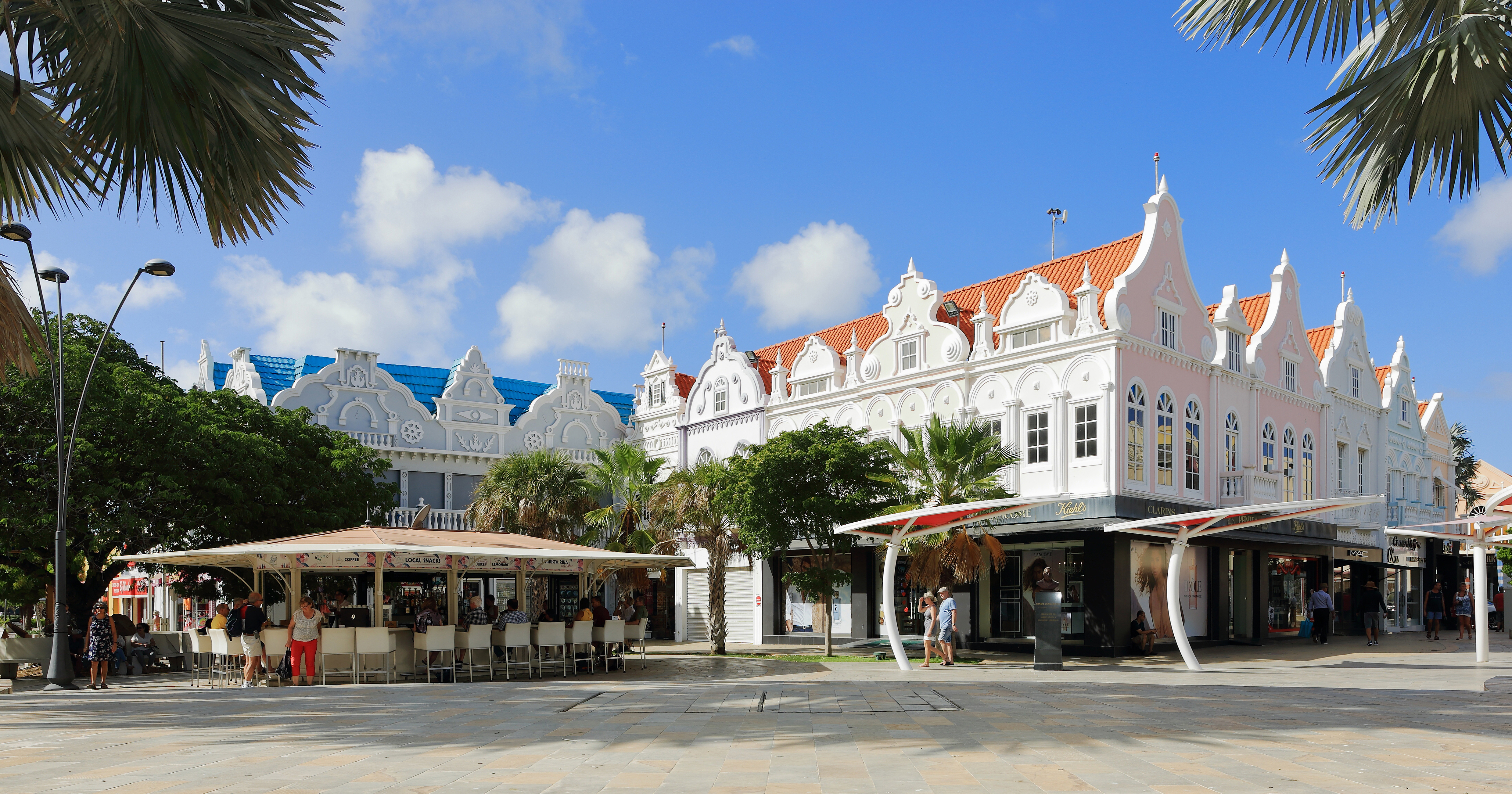
Oranjestad is the capital of Aruba, an island in the southern Caribbean off the Paraguaná Peninsula in Venezuela. Since 1986 Aruba has been one of the four countries that make up the Kingdom of the Netherlands. It is not part of the European Union or the Schengen Area, though. It has its own entry rules, its own currency (the Aruban florin) and a mandatory embarkation card. According to the 2020 census, Oranjestad's two districts (West and Oost) have 28.658 inhabitants, and the whole island has 108.166. The city grew up in the late 18th century around Paardenbaai (Horses Bay) and Fort Zoutman, built in 1798 and the oldest structure on the island. Today it's known for its Dutch-style façades painted in pastel colours, Main Street with its free streetcar, the cruise port, and how close it is to Eagle Beach and Palm Beach, the white-sand beaches where most of the hotels are. It's the natural base for exploring the whole island: Arikok National Park, the Natural Pool, the California Lighthouse and Baby Beach are all less than an hour away by car. People speak Papiamento, Dutch, Spanish and English.
📌Currency
The official currency is the Aruban florin (AWG or Afl.). According to the Central Bank of Aruba, it has been pegged to the US dollar since 1986 at 1,79 florins per dollar. The dollar is accepted almost everywhere, and many tourist prices are listed directly in USD. Watch which exchange rate each place uses: Arubus charges USD 2,60 or AWG 4,50 per ticket, and the official taxi fare table uses 1,80. Visa and Mastercard are accepted in hotels, restaurants and shops. For buses, kiosks and food stalls, it's best to carry small notes.
📌Visa and entry
Aruba is not in Schengen, so European rules don't apply. Every visitor must fill in the ED Card (embarkation and disembarkation card) at edcardaruba.aw before flying. If you arrive by air, you also pay the USD 20 Sustainability Fee there. Argentines, Chileans, Uruguayans, Colombians, Mexicans and Brazilians are not on the official list of countries that need a visa. Venezuelans, Bolivians, Cubans and Dominicans do need one. Peruvians have to check with the consulate (see FAQ). A yellow fever vaccination is also required for travellers arriving from several South American countries.
📌Best time to visit
Aruba is dry almost all year round. It gets about 500 mm of rain a year, and the short rainy season runs from September to January, with brief showers. The northeast trade winds blow steadily and take the edge off the heat. The high tourist season falls in the northern hemisphere winter (December to April), when hotel and car rental prices go up. According to Kayak, the lowest fares usually show up in August and October.
💱 EUR exchange rate
Loading rate…
🌤️ Weather in Oranjestad
Loading weather…
Oranjestad is a small capital you can walk around in a morning: pink, light-blue and yellow Dutch façades, a fort from 1798, a streetcar that doesn't charge a fare and a port where enormous cruise ships dock. But hardly anyone comes just for the city. They come because from here you can take a bus to Eagle Beach and Palm Beach, two of the most photographed beaches in the Caribbean, and drive a car or 4x4 to the wild side of the island, the one facing the Atlantic.
What makes Aruba interesting is the contrast. On the south and west sides you get a turquoise sea with no waves and white sand. On the north side there's a dry landscape of cacti, diorite boulders, caves with Indigenous paintings and a wind-battered coast. In a single day you can snorkel over a German ship sunk in 1940, climb the California Lighthouse at sunset and have keshi yena for dinner, the stuffed cheese dish inherited from colonial times.
It's not a cheap destination: prices are in dollars, and the beachfront resorts charge accordingly. But you can plan a sensible trip. The beaches are public and free, the bus costs USD 2,60, the Archaeological Museum and the rock formations charge no admission, and there are simple apartments in Noord. Before you travel, fill in the ED Card, check whether you need a visa or a yellow fever vaccination, and pack sunscreen, because the sun is strong.
📖 History of Oranjestad
Before the Europeans arrived, Aruba was home to the Caquetío, an Arawakan-speaking people who came from western Venezuela between the years 850 and 1000. Alonso de Ojeda sailed through the area in 1499, and the Spanish ended up calling these islands 'islas inútiles' ('useless islands') because there was no gold. Aruba became one big ranch for free-roaming cattle. The Dutch took the island in 1636, and for a long time it remained cattle country with very few settlers. The city came much later. Around 1795 or 1796, when trade restrictions were eased, merchants and craftspeople settled by Paardenbaai, which offered better access for ships. Fort Zoutman went up in 1798, built by enslaved Africans with materials supplied by Indigenous people, and the island's commander moved to the settlement, then called Playa. In 1824, during a visit by Governor Cantz'laar, the town was renamed Oranjestad in honour of William I of the Netherlands. Gold was discovered on the island that same year. In 1868 the Willem III Tower opened, serving as the town's lighthouse and clock. The big change came in the 20th century with the oil refineries of the Lago Oil and Transport Company and the Arend Petroleum Company. The population grew, and merchants built grand houses in Oranjestad. In 1986 Aruba separated from the Netherlands Antilles and became an autonomous country within the Kingdom of the Netherlands, with its own florin. Since then tourism has been the backbone of the economy, and in 2012 the capital opened its streetcar line along Main Street.
🗺️ What to see
Tours you can book
A local guide tells you in half an hour what no sign at the site will ever explain. We look ours up on Civitatis: guided in Spanish and booked online with no fuss. They have 13 activities in Oranjestad. Three are below so you get the idea: tap any of them and they all open.
If you book from here we earn a commission and you pay no more. Prices and availability come from Civitatis.
1
Downtown Oranjestad and Main Street (Caya G. F. Betico Croes) with the free streetcar
Streets lined with pastel-coloured Dutch façades, squares and shops, served by a historic streetcar that charges no fare.
Leer más ↓
Downtown Oranjestad is where you see that Aruba is part of the Kingdom of the Netherlands: buildings with curved Dutch gables, painted pink, white and light blue, lined up along the harbour and Main Street. The street's official name is Caya G. F. Betico Croes, after the politician who drove the push for autonomy in 1986. Plaza Daniel Leo and the Royal Plaza, opposite the pier, are the best-known postcard views.
The streetcar links the cruise terminal with the far end of Main Street. It runs along Schelpstraat, up the shopping street and back along Havenstraat. It's a 1,9 km single-track line, opened on 22 December 2012 and operated by Arubus. Its cars, one of them an open-top double-decker, run on lithium batteries and hydrogen fuel cells, with no overhead wires.
According to VisitAruba, it runs from 10 am to 5 pm and doesn't operate on Sundays. Times change with the season, so check at the information booth opposite the cruise terminal. Explore downtown early, before the worst of the heat and before the cruise passengers arrive in large numbers.
ℹ️ Distance: Downtown Oranjestad, opposite the cruise terminal · Best time to visit: Early morning, Monday to Saturday · Admission: Free: the streetcar charges no fare (source: visitaruba.com, verified October 2026) · Duration: 2 to 3 hours
2
Fort Zoutman and Willem III Tower (Historical Museum of Aruba)
Aruba's oldest structure, from 1798, with its lighthouse tower from 1868. The Historical Museum is inside.
Leer más ↓
Fort Zoutman was built in 1798 to defend the bay against pirates and enemies of the Dutch Crown. It was built by enslaved Africans, using materials supplied by Indigenous people doing forced labour for the West India Company. It is the oldest structure on the island, and UNESCO recognises it as a 'Site of Memory of the Slave Route in the Latin Caribbean'. It is named after Rear Admiral Johan Arnold Zoutman.
The Willem III Tower was added in 1868 and housed the town's lighthouse and bell. It was first lit on 19 February that year, the birthday of King William III. After restoration work between 1974 and 1980, the complex reopened in 1983 as the Historical Museum of Aruba, with rooms on the island's history. Both have been protected monuments since 2011.
According to VisitAruba, it's open Monday to Friday from 9 am to 6 pm and on Saturdays from 10 am to 2 pm. It's closed on Sundays. Other guides list different hours, so check before you go. The Bon Bini Festival, with music and local food, used to be held in the courtyard on Tuesday evenings, but it hasn't been confirmed that it will continue in 2026.
ℹ️ Distance: Zoutmanstraat, downtown Oranjestad, a short walk from Main Street · Best time to visit: All year; Monday to Saturday · Admission: USD 5 (source: visitaruba.com, verified October 2026). Pay at the entrance · Duration: 1 hour
3
Eagle Beach
A wide public beach with white sand and calm water, wind-bent fofoti trees and low-rise hotels behind it.
Leer más ↓
Eagle Beach is the beach that shows up in almost every photo of Aruba: a very wide strip of fine white sand with turquoise water and no strong waves. It sits on the outskirts of Oranjestad in the low-rise hotel area, so it's quieter and roomier than Palm Beach. Arubus describes it as a beach and neighbourhood of Oranjestad.
Like every beach in Aruba, it's public and free. The hotels rent out loungers and umbrellas, but you can bring your own shade. Its classic postcard shots feature the fofoti trees, their trunks bent by the constant northeast wind.
Getting there: Arubus line 10 connects downtown Oranjestad with the hotel area and stops at Eagle Beach. A taxi from Oranjestad costs USD 16 according to the official 2026 fare table. There isn't much natural shade, so bring water, a hat and sunscreen.
ℹ️ Distance: Low-rise hotel area, northwest of downtown; Arubus line 10 · Best time to visit: All year; morning or sunset · Admission: Free (public beach) · Duration: Half a day or a full day
4
Palm Beach
The big-resort beach: still water, water sports, piers with bars and plenty going on day and night.
Leer más ↓
Palm Beach is the beach of the high-rise hotel area, in the Noord district. It has white sand, calm water that's ideal for swimming and a wide range of activities: kayaking, paddleboarding, banana boats, catamaran cruises and pirate ships leaving from the piers. Behind the beach runs a promenade with restaurants, shopping centres and casinos.
It's busier than Eagle Beach. If you want some peace, walk towards either end or go early. Access is public, although the loungers and palapas usually belong to the hotels.
Getting there: Arubus line 10 runs from downtown Oranjestad to Palm Beach for USD 2,60 each way. By taxi, the official 2026 fare is USD 22 from Oranjestad and USD 41 from the airport. Many snorkelling trips to the Antilla wreck leave from the piers on this beach, so you can do both on the same day.
ℹ️ Distance: High-rise hotel area, in Noord; Arubus line 10 · Best time to visit: All year; go early if you want space · Admission: Free (public beach) · Duration: Half a day or a full day
5
Arikok National Park (Parke Nacional Arikok)
The park that protects about 20 % of the island: hills, caves with Indigenous paintings, dunes and a wild Atlantic coastline.
Leer más ↓
Arikok National Park, officially created in 2000, covers the northeast of Aruba and protects about 20 % of the island's land. This is where you see dry Aruba: columnar cacti, hills of diorite and lava, abandoned plantations, the remains of gold mines and a north coast with heavy surf. It's home to the Aruba rattlesnake, an endangered endemic species.
The classic stops are the Fontein and Quadirikiri caves (the first one has Indigenous rock paintings), Boca Prins beach and its dunes, and the Natural Pool (see separate entry). Many roads are dirt or rock. A regular car only gets you to some areas, and you need a 4x4 for the roughest parts. Quad bikes (ATVs), UTVs and motorcycles are banned in the protected areas.
You enter through the San Fuego visitor centre, open daily from 8 am to 3:30 pm according to the park, or through the Vader Piet entrance. There's no lighting, so you have to leave before dark. Bring plenty of water, closed shoes and a cap.
ℹ️ Distance: Northeast of the island; main entrance at San Fuego (Santa Cruz) · Best time to visit: Early morning, all year · Admission: USD 22 adults; under-17s free; discount for residents of Aruba, Bonaire and Curaçao (source: arubanationalpark.org, verified October 2026) · Duration: Half a day to a full day
6
Natural Pool (Conchi)
A natural seawater pool enclosed by volcanic rocks on the north coast, inside Arikok. You can only get there by 4x4.
Leer más ↓
The Natural Pool, which Arubans call Conchi, is a natural pool formed by a ring of volcanic rocks on the north coast, inside Arikok National Park. Atlantic waves crash against the rocks and refresh the water inside, where you can swim and snorkel among small fish.
Getting there is what makes it special. There's no public transport and the track is loose rock, suitable only for 4x4 vehicles or, for the well prepared, on foot. That's why most people go on a jeep safari with operators such as Pelican Adventures, ABC Tours or Cross Aruba Tours, which usually include the caves and sometimes Baby Beach. Park admission is paid separately if the tour doesn't include it.
Rangers may close the pool for safety when the sea is rough. Bring water shoes, as the rocks are sharp and slippery. From the car park you have to go down a staircase and across a stretch of rocks.
ℹ️ Distance: North coast, inside Arikok National Park · Best time to visit: When the sea is calm; early morning · Admission: Included in the park pass: USD 22 adults, under-17s free (source: arubanationalpark.org, verified October 2026) · Duration: Half a day including transfers
7
Renaissance Island and Flamingo Beach
The Renaissance resort's private island, famous for the flamingos strolling on the sand. Access is for guests or with a pass.
Leer más ↓
Renaissance Island is a private islet off Oranjestad owned by the Renaissance Wind Creek Aruba Resort. You get there by a launch that leaves from the resort's marina, right downtown. It has a calm-water beach, cabanas, a spa, a restaurant and a bar, and it's famous for Flamingo Beach, where flamingos wander among the visitors.
What you need to know: according to VisitAruba, the island is reserved for resort guests, and day passes are only sold to non-guests when hotel occupancy isn't high. We found no official rate published for 2026. Travel guides report passes of about USD 125 to 130 per adult, with very limited places that sell out quickly. The surest way in is to stay at the Renaissance.
If flamingos are what you're after, De Palm Island, another private island to the southeast, also has flamingos and sells tickets with food and drinks included from USD 119. Respect the animals: don't chase them or feed them unless the staff allow it.
ℹ️ Distance: Opposite downtown Oranjestad; launch from the Renaissance marina · Best time to visit: All year; book as soon as places open up · Admission: Free for Renaissance guests; day pass for non-guests subject to availability, ~USD 125–130 (source: travel guides, no official rate published for 2026, verified October 2026) · Duration: Half a day or a full day
8
National Archaeological Museum of Aruba (Museo Arqueologico Nacional Aruba)
A modern downtown museum that tells the story of 5.000 years of Indigenous presence on the island through artefacts, pottery and tools.
Leer más ↓
The National Archaeological Museum of Aruba occupies a group of restored buildings at Schelpstraat 42, two streets behind the Royal Plaza. It's the best place to understand who lived in Aruba before the Europeans: the Archaic settlers and, from around the year 1000, the Caquetío, who came from Venezuela and spoke an Arawakan language.
The collection brings together pottery, tools and everyday objects. It explains how people lived on such a dry island, how they traded with the mainland and what happened to the Indigenous population after the Spanish arrived. It really helps to visit before going to the Arikok caves or to Ayo, where there are rock paintings.
According to VisitAruba and the museum itself, it's open Monday to Friday from 9 am to 5 pm. It also opens on some national holidays (25 January and 18 March, from 10 am to 2 pm). Other guides list different hours, so call +297 582 8979 before you go. It's air-conditioned, which you'll appreciate at midday.
ℹ️ Distance: Schelpstraat 42, downtown Oranjestad · Best time to visit: Midday (to escape the heat) · Admission: Free according to travel guides (source: islaguru.com and visitaruba.com, verified October 2026) · Duration: 1 to 1,5 hours
9
California Lighthouse
The stone lighthouse at the northwest tip, overlooking dunes, a rocky coast and Arashi Beach. You can climb to the top.
Leer más ↓
The California Lighthouse, which Arubans simply call Faro, stands on a limestone plateau at Hudishibana, near Arashi Beach and the Sasariwichi dunes, at the northwest tip of the island. It's the tallest structure in Aruba. It was built between 1914 and 1916 and is named after the British steamship S.S. California, which was wrecked off this coast on 23 September 1891.
The building materials were carried by donkey from Oranjestad, because there were no roads. The last lighthouse keeper left in 1962, and the keepers' house is now an Italian restaurant. The lighthouse was restored in 2016.
You can climb a narrow spiral staircase to the balcony, which looks out over the whole west coast. According to guides and traveller reviews, it costs around USD 5 in cash. It gets crowded at sunset. It pairs well with a swim at Arashi Beach: the official taxi fare between Arashi and the lighthouse is USD 5, and Arubus line 10 goes to Arashi.
ℹ️ Distance: Northwest tip of the island, near Arashi Beach · Best time to visit: Sunset · Admission: Outside free; climbing the lighthouse ~USD 5 in cash (source: outdoorproject.com and traveller reviews, verified October 2026) · Duration: 45 minutes to 1 hour
10
Alto Vista Chapel
A small yellow chapel on a hill in the north, on the site of the island's first church, from 1750.
Leer más ↓
Alto Vista Chapel is a small Catholic church painted bright yellow. You can spot it from far away among the cacti and sand on the north coast, northeast of Noord. It stands where, in 1750, the Venezuelan missionary Domingo Antonio Silvestre, who came from Santa Ana de Coro, built Aruba's first church, with stone walls and a thatched roof.
The current chapel dates from 1952. It was designed by the Dutch engineer J. A. Hille, who kept the layout and orientation of the original. Inside is a Spanish cross considered one of the oldest pieces of European art in the Dutch Caribbean. Outside there are stone benches in a semicircle, and along the access road you'll pass a series of Stations of the Cross.
On Good Friday, the island's Catholics make a pilgrimage on foot from Oranjestad to the chapel. It's about 8 km from the California Lighthouse. The last stretch is a dirt road, but you can get there in a regular car if you drive carefully. It's a place of prayer, so keep your voice down and dress respectfully.
ℹ️ Distance: Northeast of Noord, about 8 km from the California Lighthouse · Best time to visit: Morning or sunset · Admission: Free · Duration: 30 to 45 minutes
12
Baby Beach
A shallow, sheltered lagoon at the south-eastern tip, with calm water that's ideal for kids and for first-time snorkellers.
Leer más ↓
Baby Beach is a shallow, well-sheltered man-made lagoon next to Mangle Cora, in Seroe Colorado, at the south-eastern tip of Aruba. It gets its name because the water is so calm that it's safe even for the littlest kids. For the same reason it's a good place to try snorkelling for the first time: there are colourful fish close to the shore, but stay within the marked area and don't head out to open sea, where there's a current.
Locals and tourists both come here, especially at weekends. Shade is scarce: bring an umbrella or get there early.
How to get there by public transport, according to Arubus: line 10 from the hotel area to the Oranjestad terminal; from there L1, L2 or L3 to San Nicolás; and in San Nicolás, line 900 to Baby Beach. That's three buses at USD 2,60 each, so the USD 15 day pass is worth it. By taxi, the official fare from the airport is USD 60.
ℹ️ Distance: South-eastern tip, past San Nicolás (Seroe Colorado) · Best time: Morning, all year round · Admission: Free (public beach) · Duration: Half a day
13
Antilla Wreck
A German cargo ship scuttled in 1940 off Malmok; you can see it from the surface, and it's one of the best-known snorkelling and diving spots.
Leer más ↓
The Antilla was an electric-powered cargo ship belonging to the German shipping line Hamburg America Line, launched in Hamburg in March 1939, with a gross register tonnage of 4.363. When the Second World War broke out it was stranded in Aruban waters, and on 10 May 1940, the day Germany invaded the Netherlands, its crew sank it so it wouldn't fall into Dutch hands.
Today it lies on its side off the north-west coast, near Malmok, covered in coral, sponges and fish. Part of the hull sits at a shallow depth, so you can see it from the surface with a snorkel; divers can explore it inside and out.
You can only get there by boat. Snorkelling trips leave from the Palm Beach piers: Jolly Pirates, for example, has an afternoon trip that, according to the description published on Expedia, stops at the Malmok and Boca Catalina reefs and the Antilla. If you're not a strong swimmer, ask for a life vest: there can be currents out there.
ℹ️ Distance: Off Malmok, north-west coast; boats from Palm Beach · Best time: Morning, when visibility is better · Admission: Boat tour only: Jolly Pirates from USD 76 for the afternoon trip (source: jolly-pirates.com, verified October 2026) · Duration: 3 to 4 hours for the trip
💵 Prices
Tickets
| Type | Price |
|---|
| ED Card + Tarifa de Sostenibilidad (Sustainability Fee) | USD 20 per person arriving by air, once per calendar year on the same passport; children under 8 and same-day visitors are exempt. Card only (Visa, Mastercard, Discover). Paid when you fill in the ED Card at edcardaruba.aw (source: aruba.com, verified October 2026) |
| Parque Nacional Arikok (incluye Natural Pool, cuevas y Boca Prins) | USD 22 adults; under-17s free; discount for residents of Aruba, Bonaire and Curaçao with local ID. Day pass at the San Fuego and Vader Piet entrances (source: arubanationalpark.org, verified October 2026) |
| Fuerte Zoutman / Museo Histórico de Aruba | USD 5 (source: visitaruba.com, verified October 2026). Paid at the fort entrance |
| Museo Arqueológico Nacional de Aruba | Free according to travel guides (source: islaguru.com, verified October 2026); confirm on +297 582 8979 |
| Faro California (subida al balcón) | ~USD 5 in cash to climb up; the outside is free (source: outdoorproject.com and traveller reviews, verified October 2026) |
| Renaissance Island (pase de día para no huéspedes) | ~USD 125–130 per adult, only when resort occupancy allows (source: travel guides such as atastefortravel.ca; the latest dated price is from 2023 and no official rate is published, verified October 2026). Free for Renaissance Wind Creek guests |
| De Palm Island (isla privada con flamencos, comida y bebida incluidas) | From USD 119 admission (source: depalmisland.com, verified October 2026). Bought online |
| Tranvía del centro (streetcar) | Free (source: visitaruba.com, verified October 2026) |
| Playas (Eagle Beach, Palm Beach, Baby Beach, Arashi) | Free (public beaches) |
| Casibari, Ayo y Capilla de Alto Vista | Free (no admission) |
🔄 updated monthlyOfficial / reference values · double-check when buying
Activities and tours
Jeep safari to the Natural Pool and the Indigenous caves
PricePelican Adventures USD 95 adult / USD 85 child; ABC Tours USD 108 morning / USD 92 afternoon; AGW Tours (with Baby Beach) USD 89 adult / USD 69 child (source: myarubaguide.com comparison, verified October 2026). Check whether park admission is included
Afternoon pirate-ship snorkelling trip (Malmok, Boca Catalina and the Antilla wreck)
PriceFrom USD 76 per person, with open bar (source: jolly-pirates.com, verified October 2026)
Morning snorkelling with BBQ lunch
PriceFrom USD 98 per person, with BBQ and open bar (source: jolly-pirates.com, verified October 2026)
PriceFrom USD 59 per person; adults-only version with dinner and DJ from USD 110 (source: jolly-pirates.com, verified October 2026)
Island bus tour (lighthouse, Alto Vista, rock formations)
PriceUSD 55 per person (source: myarubaguide.com comparison, verified October 2026)
All-inclusive UTV trip to the Natural Pool with cliff jumping
PriceFrom USD 310 per 2-seater vehicle (source: myarubaguide.com comparison, verified October 2026)
Sea Trek: underwater helmet walk at De Palm Island
PriceFrom USD 55, on top of island admission; ages 8 and up (source: depalmisland.com, verified October 2026)
🔄 updated monthlyOfficial / reference values · double-check when buying
🚌 How to get there and distances
Getting around
Arubus buses (lines 1, 2, 3A, 10, 900 and others)
PriceUSD 2,60 or AWG 4,50 per ride; retour (return) ticket USD 5 or AWG 8,75; day pass USD 15 or AWG 26,25 (source: arubus.com, verified October 2026)
NotesState-owned company. Lines leave from the Oranjestad and San Nicolás terminals. Line 10 links the centre with Eagle Beach, Palm Beach and Arashi; line 2 stops at the airport; line 900 runs from San Nicolás to Baby Beach. You pay in cash on board. Passes are sold in hotel shops and at the ticket office of the Oranjestad terminal (Monday to Friday, 6 to 14 h).
PriceUSD 8,75 for the card, with ID (source: arubus.com, verified October 2026)
NotesTourists can get one too. Apply online or at the office at Sabana Blanco 67 (Monday to Friday, 8 to 16 h). Worth it if you'll use the bus a lot; for a short week, cash or passes are enough.
NotesLinks the cruise terminal with Main Street. According to VisitAruba it runs from 10 to 17 h and doesn't run on Sundays; hours change with the season.
Taxi with official fixed fares
PriceOranjestad → Eagle Beach USD 16; Oranjestad → Palm Beach USD 22; minimum USD 10; USD 5 surcharge on Sundays, from 23 to 7 h and on public holidays (official table in force since 20 May 2026; source: visitaruba.com and taxi.aw, verified October 2026)
NotesThere are no meters: the fare is fixed per route for up to 4 passengers. For 5 to 7 passengers, add USD 3 per extra person. Ask the price before you get in and check other routes at taxi.aw.
Price~USD 51–65 per day for a compact at the airport (source: vipcars.com and Expedia, aggregators, verified October 2026)
NotesIt's the most practical way to see the island in 2 or 3 days. You need a 4x4 for the Natural Pool and Arikok's rough roads. Prices go up from December to April.
🔄 updated monthlyOfficial / reference values · double-check when buying
How to get there
Queen Beatrix International Airport (AUA) → central Oranjestad by taxi
Avg. priceUSD 26 or AWG 46,80 to Oranjestad; USD 37 to Eagle Beach; USD 41 to Palm Beach (official 2026 table; source: visitaruba.com, verified October 2026)
Queen Beatrix Airport (AUA) → Oranjestad terminal by bus
Avg. priceUSD 2,60 or AWG 4,50 (source: arubus.com, verified October 2026); for Eagle or Palm Beach, change to line 10 and pay for another ticket
Flights from South America to Aruba (AUA)
Airlines / operatorsCopa (Panama), Avianca, Wingo and LATAM (Bogotá; Wingo also from Medellín and Barranquilla), LATAM Perú (Lima), Aerolíneas Argentinas (Buenos Aires-Ezeiza; Córdoba and Mendoza in season), Arajet (Santo Domingo)
Avg. priceExample: Bogotá–Aruba return with Copa from USD 488 (source: copaair.com, promotional fare published for September-October 2026, verified October 2026)
Cruise to the port of Oranjestad
Avg. priceThe fare depends on the cruise line; same-day visitors are exempt from the USD 20 Sustainability Fee (source: aruba.com, verified October 2026)
🔄 updated monthlyOfficial / reference values · double-check when buying
🏨 Where to stay
No exact prices: a scale from $ (budget) to $$$$$ (luxury), with 2-3 options per category.
Apartments and simple hotels in Noord / Eagle Beach
Recommended optionsThe cheapest options are apartments a few blocks from the beach: Palm Beach Retreat from USD 97 and White Beach Apartments from USD 107 a night (source: Kayak, October 2026 dates, verified October 2026). In Oranjestad there are guesthouses such as ALOE B&B, which Travelocity listed from USD 182 (verified October 2026). They usually have a kitchen, which helps you save. Prices rise sharply from December to April.
Boutique and mid-range hotels in Noord
Recommended optionsAruba Lagunita from USD 210 and Aruba Boutique & Art Hotel (BW Signature Collection) from USD 306 a night (source: Kayak, October 2026 dates, verified October 2026). They're close to Arubus line 10 for getting to Palm Beach and the centre. In high season (December to April), book months ahead.
Large chain hotels in Palm Beach
Recommended optionsTRYP by Wyndham Aruba (adults only) from USD 354 and Radisson Blu Aruba from USD 391 a night (source: Kayak, October 2026 dates, verified October 2026). They're in the high-rise area, with restaurants, casinos and water sports a few steps away. Watch out for resort fees added when you pay.
Luxury and all-inclusive resorts
Recommended optionsRenaissance Wind Creek Aruba Resort, in central Oranjestad with free access to Renaissance Island: from USD 258 a night for its simplest room and up to about USD 1.584 for executive rooms (source: Kayak, verified October 2026). In Palm Beach, the all-inclusive Joia Aruba by Iberostar from USD 795 and Riu Palace Antillas (adults only) from USD 991 (source: Kayak, October 2026 dates, verified October 2026). According to Kayak, August and October tend to be the cheapest months.
🍴 Where to eat
Pastechi y snacks locales (el desayuno arubeño)
Options / signature dishPastechi is a fried pastry filled with cheese, meat, chicken or fish. The Pastechi House (Caya G. F. Betico Croes 42, Oranjestad) sells them from USD 2,50, with items up to USD 10 (source:
aruba.com, verified October 2026). At snack trucks and stalls, a quick meal costs around AWG 10–20, about USD 6–12 (source:
travelwithhello.com blog, verified October 2026).
Pescado frito de pescadores: Zeerovers (Savaneta)
Options / signature dishAn Aruban classic: the day's fish and shrimp, fried, served with funchi (polenta) and plantain, and sold by weight rather than by the plate. A couple who ordered two portions of fish, shrimp and sides paid about USD 36 (source:
atastefortravel.ca blog, a traveller's experience, verified October 2026). Bring cash in case they don't take cards.
Cocina criolla: keshi yena y cabrito stoba
Options / signature dishKeshi yena is Gouda or Edam cheese stuffed with spiced beef or chicken, olives and raisins, then baked. Cabrito stoba is a goat stew served with funchi or rice. A main course costs about AWG 35–60, or roughly USD 20–35 (source:
travelwithhello.com blog, verified October 2026). Typical places to try them are Papiamento Restaurant and The Old Cunucu House, both in Noord.
Cena en casa tradicional: The Old Cunucu House y Gasparito
Options / signature dishThe Old Cunucu House is in a traditional Aruban country house (cunucu) with a veranda.
aruba.com lists a range of USD 35,50 to 109,75 (source:
aruba.com, verified October 2026). Gasparito, in Noord, is known for its chicken Gasparito made from a family recipe. One guide puts the average main course at USD 25, and it's closed on Sundays (source:
remichel.com, travel guide, verified October 2026).
❓ Frequently asked questions
Do I need a visa for Aruba if I'm from Latin America?+
It depends on your citizenship. The official list on aruba.com doesn't include Argentina, Chile, Uruguay, Colombia, Mexico, Brazil or Ecuador, so citizens of those countries don't need a visa. Venezuelans do (since 15 January 2021, for the whole Caribbean part of the Kingdom), and so do Bolivians, Cubans, Dominicans, Haitians, Guyanese and Surinamese. Peruvians: Peru isn't on the aruba.com list, but VisitAruba includes Peruvians among those who are exempt if they hold a valid US, Canadian, UK or Irish visa. Check with the Dutch consulate before you travel. Anyone with a valid multiple-entry Schengen visa is exempt. Tourists can stay for up to 30 days, which can be extended, but never for more than 180 days a year.
What is the ED Card and how much does it cost to enter Aruba?+
The ED Card (Embarkation and Disembarkation Card) is a required form that you fill in online at edcardaruba.aw before your trip. If you arrive by air, you also pay the Sustainability Fee there: USD 20 per person, by Visa, Mastercard or Discover only (source: aruba.com, verified October 2026). You pay it once per calendar year on the same passport. If you renew your passport, you pay again. Children under 8 and anyone arriving and leaving on the same day are exempt. You may also be asked for your onward ticket, your accommodation booking and proof that you have enough money for your stay. Note that this is separate from the European ETIAS.
Will I be asked for a yellow fever vaccination?+
You might be. Since 1 March 2018, Aruba has required the international yellow fever vaccination certificate from passengers arriving from at-risk countries. According to the airport, the South American ones are Bolivia, Peru, Ecuador, Colombia, Brazil, Venezuela, Paraguay, Panama, French Guiana, Guyana, Suriname and Trinidad and Tobago. Chile and Uruguay aren't affected, and Argentina has been temporarily exempt since 1 February 2019. You need to get the vaccine at least 10 days before you travel. If you have a layover in Panama or Bogotá, check the conditions on airportaruba.com before you book.
Should I pay in florins or dollars? Can I use my card?+
Both currencies are used. The Aruban florin has been pegged at 1,79 to the dollar since 1986, and US dollars are accepted almost everywhere: hotels, tours and taxis all list their prices in USD. Your change may come in florins, so spend them before you leave. If you bring dollars in small bills, you don't need to change money into florins. Visa and Mastercard work in hotels, restaurants and supermarkets. The Sustainability Fee can only be paid by card. Bring cash for the bus, food stalls and the climb up the California Lighthouse.
Is it worth renting a car, or is the bus enough?+
If you're staying at Eagle Beach or Palm Beach and want the beach and the town centre, Arubus is enough: route 10 runs through the hotel area and on to Oranjestad for USD 2,60, and a day pass costs USD 15. Getting to Baby Beach takes three different routes. To see Arikok, Alto Vista, the rock formations and the north coast, renting a car for a day or two gives you a lot of freedom. A compact car costs about USD 51–65 a day on booking sites. You can't reach the Natural Pool in a regular car: you need a 4x4 or a tour. Traffic drives on the right.
How many days do I need, and when is the low season?+
In 4 or 5 days you can see the main sights: one day for central Oranjestad and Eagle Beach, one for Arikok and the Natural Pool, one for the lighthouse, Alto Vista and the rock formations, one for a boat trip and snorkelling at the Antilla, and a free day for Baby Beach. With a week, you can do it all at a relaxed pace. High season runs from December to April, when hotels and car rentals cost more. The island is dry most of the year, with about 500 mm of rain and a short rainy season from September to January that brings brief showers. According to Kayak, August and October usually have the cheapest hotels.
More places in Netherlands
Sources consulted (43)
- Wikipedia (EN) — «Oranjestad, Aruba»: https://en.wikipedia.org/wiki/Oranjestad,_Aruba
- Wikipedia (EN) — «Aruba»: https://en.wikipedia.org/wiki/Aruba
- Wikipedia (EN) — «Fort Zoutman»: https://en.wikipedia.org/wiki/Fort_Zoutman
- Wikipedia (EN) — «SS Antilla (1939)»: https://en.wikipedia.org/wiki/SS_Antilla_(1939)
- Central Bank of Aruba — «The Aruban florin»: https://cbaruba.org/the-aruban-florin
- City Population — «Aruba: Census Regions (CBS Aruba 2020 data)»: https://www.citypopulation.de/en/aruba/cities/
- Aruba Conservation Foundation — «Parke Nacional Arikok»: https://arubanationalpark.org/
- VisitAruba — «Fort Zoutman / Historical Museum»: https://www.visitaruba.com/things-to-do/sightseeing/museums/the-historical-museum-of-aruba
- VisitAruba — «National Archaeological Museum of Aruba»: https://www.visitaruba.com/national-archaeological-museum-of-aruba
- VisitAruba — «Renaissance Island»: https://www.visitaruba.com/things-to-do/aruba-beaches/renaissance-island/
- Wikipedia (EN) — «California Lighthouse»: https://en.wikipedia.org/wiki/California_Lighthouse
- Wikipedia (EN) — «Alto Vista Chapel»: https://en.wikipedia.org/wiki/Alto_Vista_Chapel
- Wikipedia (EN) — «Arikok National Park»: https://en.wikipedia.org/wiki/Arikok_National_Park
- My ArubaGuide — «Conchi (Natural Pool)»: https://myarubaguide.com/discover/conchi-natural-pool
- Outdoor Project — «California Lighthouse»: https://outdoorproject.com/node/94223
- Islaguru — «Aruba Museum Guide»: https://islaguru.com/articles/guide-to-arubas-museums
- Aruba.com — «Requisitos de visa»: https://www.aruba.com/es/planea-tu-visita/como-llegar-a-aruba/requisitos-de-visa
- Aruba.com — «Sustainability Fee / Tarifa de Sostenibilidad»: https://www.aruba.com/es/sustainability-fee
- Aruba Online ED Card — «Aruba Online ED Card»: https://www.edcardaruba.aw/
- VisitAruba — «Entry Requirements and Visas»: https://www.visitaruba.com/traveling-to-aruba/entry-requirements-and-visas/
- Aruba Airport — «Yellow Fever Vaccine»: https://airportaruba.com/yellow-fever-vaccine
- Arubus — «Fares & Passes»: https://arubus.com/fares-passes/
- Arubus — «FAQ»: https://arubus.com/faq/
- Arubus — «Routes & Schedules»: https://arubus.com/routes-schedules-new/
- Arubus — «Popular Destinations»: https://arubus.com/popular-destinations/
- VisitAruba — «Aruba Taxi & Limo Guide (Updated May 2026)»: https://www.visitaruba.com/getting-around/taxis-and-limos/
- VisitAruba — «Streetcar / Trolley»: https://www.visitaruba.com/getting-around/streetcar-trolley/
- Wikipedia (EN) — «Trams in Oranjestad»: https://en.wikipedia.org/wiki/Trams_in_Oranjestad
- Wikipedia (EN) — «Queen Beatrix International Airport»: https://en.wikipedia.org/wiki/Queen_Beatrix_International_Airport
- Copa Airlines — «Vuelos desde Bogotá a Aruba»: https://www.copaair.com/es/vuelos-desde-bogota-a-aruba
- VIP Cars — «Car Rental Aruba»: https://www.vipcars.com/car-rental/aruba
- Jolly Pirates — «Aruba snorkeling tours & sunset sail»: https://jolly-pirates.com/
- De Palm Island — «De Palm Island Aruba»: https://www.depalmisland.com/
- My ArubaGuide — «Pelican Safari: piscina natural y cuevas indígenas»: https://www.myarubaguide.com/es/reservar-tours/pelican-safari-piscina-natural-cuevas-indigenas
- A Taste for Travel (blog) — «Luxury cabana at Renaissance Aruba private island»: https://www.atastefortravel.ca/7082-luxury-cabana-renaissance-aruba-private-island
- Kayak — «Hotels in Noord»: https://www.kayak.com/Noord-Hotels.46628.hotel.ksp
- Kayak — «Renaissance Wind Creek Aruba Resort»: https://www.kayak.com/Oranjestad-Hotels-Renaissance-Wind-Creek-Aruba-Resort.47106.ksp
- Travelocity — «Oranjestad Guest Houses»: https://www.travelocity.com/Oranjestad-Guest-Houses.d450-aaGuestHouses.Travel-Guide-Accommodation
- Aruba.com — «The Pastechi House»: https://www.aruba.com/es/explora/the-pastechi-house
- Aruba.com — «The Old Cunucu House»: https://www.aruba.com/us/explore/the-old-cunucu-house
- Hello Travel (blog) — «Aruba Food Guide: Must-Try Dishes, Prices, and Tips»: https://www.travelwithhello.com/blog/aruba-food-dining-guide
- A Taste for Travel (blog) — «Zeerovers Aruba: A Seafood Restaurant You Don't Want to Miss»: https://www.atastefortravel.ca/9096-zeerovers-aruba-seafood-restaurant
- Remichel — «Aruba Dining»: https://www.remichel.com/travel/Dining.html