Viajá con Gus
Home › New Zealand › Marlborough
Marlborough
🇳🇿 New Zealand · South Island

Marlborough

🪪 What do I need to enter New Zealand?Pick your citizenship and we tell you the visa, the days and the paperwork, with the official source.

By leaving your email and citizenship you agree to receive the documents you asked for and weekly travel news. You can unsubscribe whenever you want. How we handle your data.
Jump to what you need
📌State
Region in the north-east of the South Island; famous for its world-renowned Sauvignon Blanc and the maze-like Marlborough Sounds. Base towns: Blenheim (the main town), Renwick (heart of the vineyards) and Picton (ferry port)
📌Best time to visit
Summer and early autumn (Dec-Apr): sunshine (Marlborough is one of the sunniest areas in the country), vineyards at their best and the grape harvest around March. Spring is lovely too. It's one of the sunniest and driest places in NZ
📌Suggested days
2 days minimum: one for wine tasting and one for the Marlborough Sounds. 3-4 days for a relaxed pace, with cycling between wineries, kayaking in the Sounds and sections of the Queen Charlotte Track
📌Getting there
Interislander or Bluebridge ferry from Wellington to Picton (~3-3.5 h). Blenheim Airport (Woodbourne) has domestic flights. By car on SH1 from Kaikoura/Christchurch or SH6 from Nelson. Coastal Pacific train to Picton
📌Getting around
A rental car is the most practical way to reach the wineries and the Sounds. In Renwick, lots of people tour the vineyards by bike. Wine tours with transport are available. In the Sounds: water taxis and cruises. Handy app: Google Maps
📌Language and currency
English and te reo Māori; New Zealand dollar (NZD, NZ$). Cards and contactless payment accepted at wineries, restaurants and ferries
💱 NZD exchange rate
Loading rate…
🌤️ Weather in Marlborough
Loading weather…

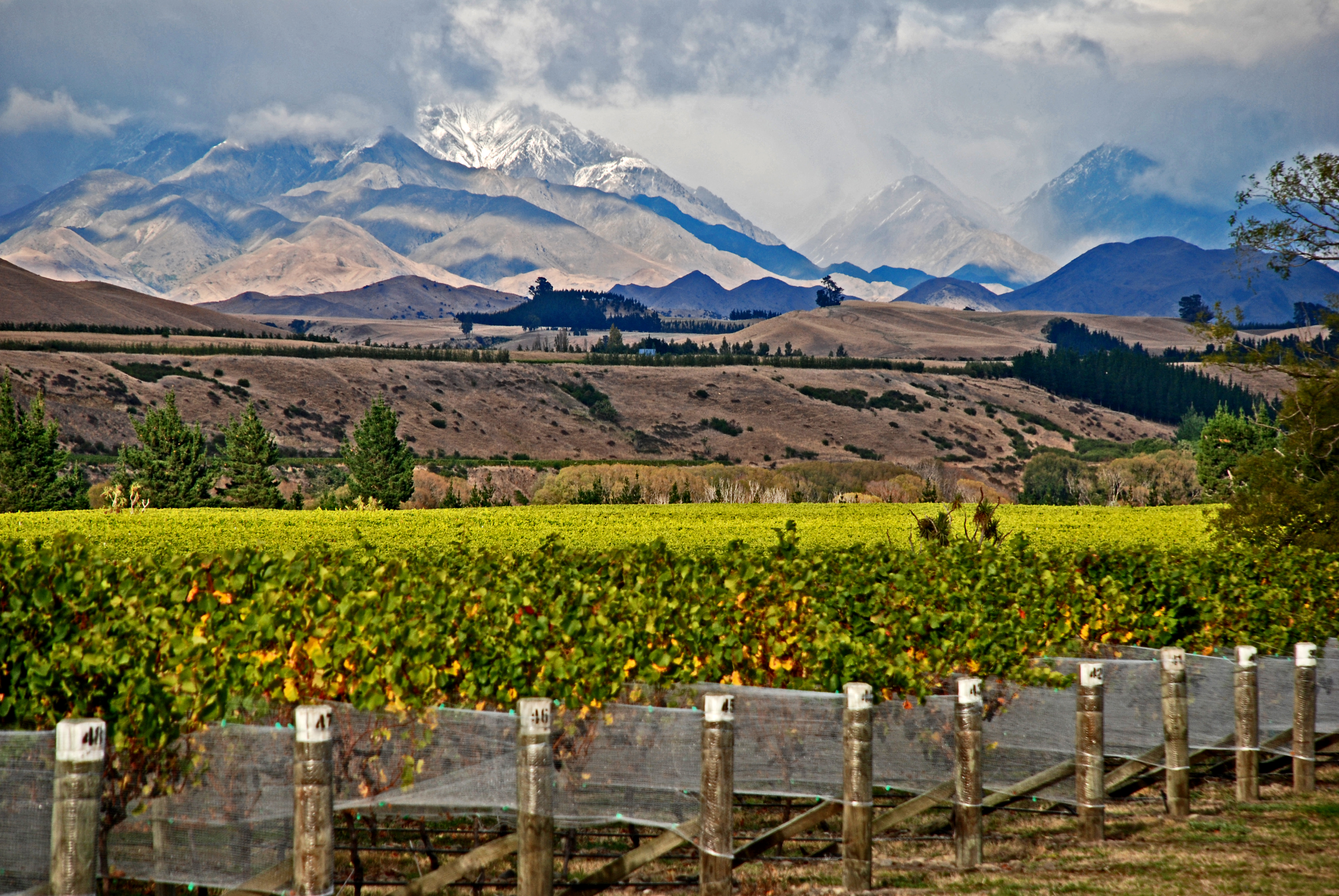
Marlborough is New Zealand's wine region par excellence and one of the sunniest in the country: it was here, on the sun-drenched plains in the north-east of the South Island, that the Sauvignon Blanc that put New Zealand wine on the world map was born. With more than 30 cellar doors (tasting rooms) spread across vineyards stretching all the way to the mountains, Marlborough produces around 75% of the country's wine and is a must-visit pilgrimage for any wine lover. But the region is much more than grapes.

Marlborough's other great treasure is the Marlborough Sounds: a maze of more than 1,500 km of coastline shaped by valleys flooded by the sea, with hidden bays, islands, marine reserves and native forest. From Picton, the port where the North Island ferries arrive, you can reach this paradise of calm water for sailing, kayaking, spotting dolphins and seals, or walking the Queen Charlotte Track, a 70 km trail between lookouts and coves. The combination of sunny wine country and green fiords is unique.

Marlborough is a land with deep history. The Sounds and the Wairau Valley were Māori territory of iwi such as Ngāti Toa, Rangitāne, Ngāti Kuia and others, and it was here in 1843 that the Wairau Affray took place, the first armed clash between settlers and Māori after the Treaty of Waitangi. Only in 1973 were the first commercial vines planted, changing the region forever. Today Marlborough combines world-class wine tasting, the serene beauty of the Sounds and food from both sea and vineyard that make it unmissable.

📖 History of Marlborough

Marlborough covers the Wairau Valley and the Marlborough Sounds, ancestral land of iwi such as Rangitāne, Ngāti Kuia, Ngāti Toa and other peoples of Te Tau Ihu. The Sounds were one of the first places James Cook explored in the South Island (Ship Cove/Meretoto, from 1770). In 1843, in the Wairau Valley, the first armed clash between British settlers and Māori after the Treaty of Waitangi took place. The region thrived on farming and fruit, but its big transformation came in 1973, when the Montana winery planted the first commercial vines; Marlborough Sauvignon Blanc would go on to conquer the world. The full story is on the history page.

Read the full history ↓

🗺️ What to see

Tours nearby, in Wellington

They depart from Wellington, 73 km away. If you book from this link we earn a commission and you pay no more.

1
Wine tasting and cellar doors (Renwick and the Wairau)
More than 30 tasting rooms for the world's best Sauvignon Blanc
Leer más ↓
This is Marlborough's star experience. The region has more than 30 cellar doors open to the public, most of them clustered around Renwick and along the Wairau and Awatere valleys. You can taste at iconic wineries such as Cloudy Bay (one of the most renowned in the country, on Jacksons Road), Brancott Estate (Montana's successor, with the region's most impressive cellar door and restaurant and views over the vineyards), Saint Clair, Framingham or Forrest. Many offer tasting flights, a restaurant and wine sales. You can visit them by car, by bike (Renwick is flat and perfect for cycling between wineries) or on a guided tour with transport. An absolute must.
ℹ️ Tastings: many wineries charge a tasting fee (~NZ$10-25, sometimes refundable with a purchase); some are free. Cloudy Bay and Brancott have a cellar door and restaurant (source: Marlborough NZ / wineries, verified July 2026)
2
Marlborough Sounds and Queen Charlotte cruise
A maze of green fiords with bays, islands and dolphins
Leer más ↓
The Marlborough Sounds are the other big draw: more than 1,500 km of coastline formed by valleys drowned by the sea, a labyrinth of calm waterways, forested peninsulas and islands. Cruises and water taxis leave from Picton to explore Queen Charlotte Sound, deliver mail to isolated homes (the famous 'mail boat cruise'), visit wildlife reserves such as Motuara Island and spot dolphins, seals and birds. It's a serene, green landscape, very different from the sunny wine country of the valley, and one of the most relaxing experiences in the South Island. Ideal for a day on the water, kayaking or simply taking it all in.
ℹ️ Sounds cruises from ~NZ$90-160 per person depending on the route; full-day mail boat cruise varies (range; Picton operators, verified July 2026)
3
Queen Charlotte Track
70 km coastal trail between the lookouts and coves of the Sounds
Leer más ↓
The Queen Charlotte Track is one of the region's great trails: a route of about 70 km along the ridges and coast of Queen Charlotte Sound, between Ship Cove/Meretoto (where Cook landed) and Anakiwa, with spectacular views of the maze of the Sounds on both sides. You can walk or ride it (much of it is suitable for mountain biking), either in full over 3-5 days staying in lodges and campsites, or in day sections using water taxis that drop you off and pick you up in the bays. A luggage transfer service between accommodation lets you walk light. It's one of the best ways to experience the Sounds in depth, combining walking and time on the water.
ℹ️ Free-access trail; the water taxi (transfer to Ship Cove/between bays) and luggage transfer are paid (from ~NZ$90-150 depending on the service). DOC campsites charge a fee (source: DOC / Picton operators, verified July 2026)
4
Omaka Aviation Heritage Centre
World War aviation museum with cinematic displays
Leer más ↓
In Blenheim, the Omaka Aviation Heritage Centre is one of the best aviation museums in the southern hemisphere, partly thanks to the involvement of Peter Jackson and his effects team (Weta): its historic First and Second World War aircraft are displayed in dramatic, lifelike scenes, with human figures, sets and film-style staging. The 'Knights of the Sky' (WWI) and 'Dangerous Skies' (WWII) exhibitions are fascinating even if you're not into aviation. An excellent half-day plan, especially if the weather isn't cooperating. Open every day.
ℹ️ Knights of the Sky (WWI): NZ$30 adulto; Dangerous Skies (WWII): NZ$25 adulto; combinado NZ$49 adulto. Abre 9:00-17:00 (fuente: Omaka Aviation Heritage Centre, verificado julio 2026)
5
Kayaking and wildlife in the Sounds
Paddle calm water among forest, dolphins and seals
Leer más ↓
The sheltered waters of the Marlborough Sounds are ideal for sea kayaking, even for beginners. From Picton and nearby bays, operators run guided half-day or full-day trips, as well as multi-day expeditions camping in remote bays. You paddle past forested peninsulas, slip into quiet coves and, with luck, see dolphins, New Zealand fur seals, penguins and seabirds. It's an intimate, peaceful way to get to know the Sounds, very different from a cruise. There are also wildlife-watching boat trips and visits to bird sanctuaries such as predator-free Motuara Island.
ℹ️ Guided kayaking from ~NZ$95-180 per person depending on duration; Motuara Island visit with cruise varies (range; Picton operators, verified July 2026)
6
Picton and the ferry port
The charming gateway town to the Sounds and the North Island
Leer más ↓
Picton is the port town where the Interislander and Bluebridge ferries arrive from Wellington, and the natural gateway to the Marlborough Sounds. It's a small, pleasant place with a waterfront promenade (the foreshore), cafés, seafood restaurants, a small maritime museum and the historic hull of the Edwin Fox (one of the oldest surviving emigrant ships in the world). Cruises, water taxis and kayaks leave from its marina for the Sounds. Many travellers just pass through Picton on their way off the ferry, but it's worth stopping: it's a lovely base for exploring the region.
ℹ️ Walking around Picton and the foreshore is free. Edwin Fox Maritime Museum has a low admission fee. Ferries to Wellington with Interislander/Bluebridge (source: Marlborough NZ, verified July 2026)
7
Food from sea and vineyard
Green-lipped mussels, salmon and lunches among the vines
Leer más ↓
Marlborough is a feast for the palate. The Sounds produce the famous green-lipped mussel, and the region farms king salmon in the cold waters of the sounds; both are stars of the local table, along with fresh fish. In the valley, many wineries have restaurants where you can have lunch among the vines paired with their wines: cellar door restaurants are an experience in themselves. Add farmers' markets, olive oil and the area's gourmet produce, and Marlborough becomes a complete food destination, where wine is only the beginning.
ℹ️ Lunch at a winery restaurant ~NZ$30-55 per dish; mussel and salmon tastings on Sounds tours (range; operators/wineries, verified July 2026)
📶I have never landed without internet. I arrive and my phone connects to the strongest network in the country I am visiting: I can say I landed, sort out transport, book tours and keep posting, at a seriously good price. I always use the Maya eSIM — check their plans by clicking the banner.See plans →Maya Mobile eSIM — download, install, go
What nobody tells you

💵 Prices

Tickets

TypePrice
Cata en cellar door (tasa de degustación)~NZ$10-25 (often refundable with a purchase); some free (source: Marlborough wineries, verified July 2026)
Omaka Aviation Heritage Centre (WWI, adulto)NZ$30 (WWII NZ$25; combined NZ$49) (source: Omaka Aviation Heritage Centre, verified July 2026)
Crucero por los Marlborough Soundsfrom ~NZ$90-160 per person (source: Picton operators, verified July 2026)
Queen Charlotte Track (sendero)Free; water taxi and luggage transfer are paid (source: DOC / operators, verified July 2026)
🔄 updated monthlyOfficial / reference values · double-check when buying

Activities and tours

ActivityPriceDurationOperator
Full-day wine tour (with lunch)from ~NZ$100-180 per person (range; Sounds Connection / Explore Marlborough, verified July 2026)
Bike hire to tour the vineyards in Renwickfrom ~NZ$40-60 per day (range; Wine Tours by Bike / operators, verified July 2026)
Sounds cruise / mail boat cruisefrom ~NZ$90-160 per person (range; Picton operators, verified July 2026)
Guided sea kayaking in Queen Charlotte Soundfrom ~NZ$95-180 per person (range; operators, verified July 2026)
Queen Charlotte Track day walk with water taxitaxi/transfer from ~NZ$90-150 per person (range; Picton operators, verified July 2026)
🔄 updated monthlyOfficial / reference values · double-check when buying

🚌 How to get there and distances

Getting around

ModePriceDurationNotes
Rental car / own vehicleFuel + rental
Cycling the vineyards (Renwick)from ~NZ$40-60/day
Wine tours with transportfrom ~NZ$100-180
Ferry, water taxi and cruises in the Soundsdepending on the service
🔄 updated monthlyOfficial / reference values · double-check when buying

How to get there

RouteAirlines / operatorsAvg. priceDuration
Wellington → Picton by ferryInterislander / BluebridgeFoot passenger from ~NZ$50-101 (cheaper in winter); with a car from ~NZ$135 (varies, verified July 2026)~3 to 3 h 30 min
Kaikoura/Christchurch → Blenheim by carOwn vehicle (SH1)Fuel (Christchurch ~NZ$60-80 one way)Kaikoura ~1 h 45 min; Christchurch ~4 h 30 min
Nelson → Blenheim by carOwn vehicle (SH6)Fuel (~NZ$25-35 one way)~2 h (110-140 km)
Christchurch → Picton by trainCoastal Pacific (KiwiRail, seasonal)depending on booking (verified July 2026)~5-6 h (scenic coastal route)
🔄 updated monthlyOfficial / reference values · double-check when buying

🏨 Where to stay

No exact prices: a scale from $ (budget) to $$$$$ (luxury), with 2-3 options per category.

Luxury
Price$$$$$
Recommended options
Marlborough Lodge, Bay of Many Coves (in the Sounds), Château Marlborough (Blenheim); approx. NZ$300-700/night
Mid-range
Price$$$$$
Recommended options
Chateau Marlborough, Picton Yacht Club Hotel, motels in Blenheim and Renwick; approx. NZ$150-280/night
Budget
Price$$$$$
Recommended options
Buccaneer Lodge (Picton), Blenheim Bridge Top 10, backpackers; dorm/cabin from ~NZ$35-120/night

🍴 Where to eat

TypePriceOptions / signature dish
Restaurantes de bodega y alta cocina$$$$$Rock Ferry, Wairau River, Brancott Estate, Arbour (Renwick); menus ~NZ$40-70
Bistró y mariscos$$$$$Restaurants on the Picton foreshore, cafés in Blenheim; dishes ~NZ$25-45 (mussels and salmon)
Casual y mercado$$$$$Food trucks, fish & chips, farmers' markets; ~NZ$12-25

📖 History of Marlborough

Origins, formation and what the sources say.

The Wairau and the Sounds: Māori land

Long before the vineyards and the ferries, the region we now call Marlborough was highly prized Māori territory: the sunny Wairau valley, with its river and plains, and the intricate maze of the Marlborough Sounds — in te reo māori, Te Tau Ihu, 'the prow of the canoe'. The Sounds, with their thousand sheltered bays, marine resources and waterways, and the fertile, bright Wairau valley sustained different peoples for centuries.

Iwi such as Rangitāne, Ngāti Kuia, Ngāti Apa and others have ancient roots in the region. As in the rest of Te Tau Ihu, the map changed in the early 19th century with the migrations led from the north by Te Rauparaha and his allies during the Musket Wars: Ngāti Toa, Ngāti Rārua, Te Ātiawa and other iwi established a strong presence in the area. The Sounds and the Wairau were rich in mahinga kai — fish, shellfish, birds and the famous mussel — and in trade routes.

Cook Strait, which separates the two islands, was not a barrier but a water highway for Māori, who crossed it by waka. The Sounds in particular were a world of inhabited bays, pā on the headlands and sacred sites. When the first Europeans appeared, they found a populated, well-known region with a rich history of its own written into the land and the water.

Cook at Ship Cove/Meretoto

The Marlborough Sounds hold a special place in the history of early contact between Europeans and Māori, because they were one of Captain James Cook's favourite bases in New Zealand. In January 1770, during his first voyage, Cook brought his ship Endeavour into a sheltered cove in Queen Charlotte Sound that he named Ship Cove, known to Māori as Meretoto. The spot was ideal: fresh water, timber, plenty of fish and shelter.

Cook returned to Ship Cove/Meretoto again and again over his three voyages, using it as a base to repair his ships, resupply and rest. There he had encounters — sometimes friendly, sometimes tense — with local Māori, planted gardens with European vegetables, and from a nearby hill confirmed for the first time that a strait — the one that now bears his name — separated New Zealand's two main islands. It was in the Sounds, in 1770, that Cook formally took possession of the territory for the British Crown, an act loaded with future consequences.

Ship Cove/Meretoto is today a historic site and the starting point of the Queen Charlotte Track. Those 18th-century encounters — between the English navigator and the peoples of the Sounds — were the prologue to a history of contact that, decades later, would turn far more conflictual when the newcomers were no longer passing explorers but settlers determined to keep the land.

The Wairau Affray, 1843

The most dramatic episode in Marlborough's colonial history took place on 17 June 1843 in the Wairau valley: the first serious armed clash between British settlers and Māori after the signing of the Treaty of Waitangi, and the only one to happen in the South Island. It was a brutal warning of where the territorial ambitions of colonisation could lead.

The New Zealand Company, based in neighbouring Nelson, claimed land in the fertile Wairau valley that the Ngāti Toa chiefs Te Rauparaha and Te Rangihaeata considered theirs and never sold: they had controlled it since the 1830s, after defeating its previous occupants. When Company surveyors began measuring the valley, the chiefs peacefully expelled them and burned a hut built with local materials. In response, a magistrate and Captain Arthur Wakefield led an armed party of settlers from Nelson to arrest Te Rauparaha. In the confrontation, a shot killed Te Rongo, Te Rangihaeata's wife, and tragedy followed: 22 settlers died — several executed after surrendering, Wakefield among them — along with four Māori.

The official inquiry by Governor Robert FitzRoy concluded that the settlers had acted illegally in trying to arrest the chiefs over a land dispute that was not theirs to settle, and did not blame Māori. It was a brave verdict, and an unpopular one among the settlers. The Wairau Affray temporarily halted the Company's expansion and left a deep wound, but in time the disputed valley would pass into European hands, and on those same plains, more than a century later, the wine empire would grow.

From wool to the province of Marlborough

After Wairau, colonisation of the north-east of the South Island advanced more gradually. The wide, open, sunny spaces of the Wairau valley and the surrounding hills proved ideal for sheep farming: wool became the region's economic engine during the 19th century, with large stations (runs) covering vast areas. Blenheim, on the Wairau, and Picton, in the Sounds, grew as service centres and ports.

In 1859 the region split from Nelson Province and became the province of Marlborough, named in honour of the Duke of Marlborough. Blenheim — named after the 1704 Battle of Blenheim — established itself as the main town, while Picton served as the port and link to the North Island. Over time the economy diversified: alongside wool and livestock came fruit, cherry growing and, in the Sounds, mussel and salmon farming.

For much of the 20th century, Marlborough was a fairly quiet farming region, better known for its sunshine, wool and fruit than for anything else. Picton was, above all, the arrival point for the ferry from Wellington. Few imagined that the same sunny plains producing wool and cherries were about to undergo one of the biggest agricultural transformations in New Zealand's history.

1973: the wine revolution

The year that changed Marlborough forever was 1973. Until then, the region was known for its abundant sunshine and for growing barley and lucerne, not for wine. That year, the Montana winery — the country's largest — made a visionary and risky decision: to plant commercial vineyards in the Wairau valley, betting that its sunny, dry climate with cool nights and well-drained alluvial soils could produce great wines. It was, in the industry's own words, the most important decision in the short history of New Zealand wine.

The bet paid off spectacularly, above all with one grape: Sauvignon Blanc. Marlborough's version — intensely aromatic, with citrus, herbaceous and tropical fruit notes, vibrant and fresh — turned out to be a captivating new style that won over critics and drinkers worldwide in the 80s and 90s. Wineries such as Cloudy Bay became international icons. The region went through a planting frenzy: vineyards spread across the Wairau, the Awatere and other valleys, replacing the old crops.

Within a few decades, Marlborough went from a quiet farming region to producing around 75% of New Zealand's wine and becoming a byword worldwide for the finest Sauvignon Blanc. The transformation reshaped the region's landscape, economy and identity. On the same Wairau plains where blood had been spilled over land in 1843 grew the rows of vines that made Marlborough famous.

Marlborough today: wine, Sounds and memory

Modern Marlborough lives off its two great treasures. On one side, wine: more than 30 cellar doors, a world-class industry, winery restaurants, bike tours through the vines and a global reputation that draws Sauvignon Blanc pilgrims from all over the planet. On the other, the Marlborough Sounds: the green maze of bays, islands and calm water where you can sail, kayak, spot dolphins and walk the Queen Charlotte Track in Cook's footsteps to Ship Cove/Meretoto.

Add to those two pillars the food — green-lipped mussels, king salmon, fresh fish — the excellent Omaka aviation museum and the sunny climate that bathes the whole region. Picton is still the ferry gateway from the North Island, and Blenheim the wine capital. It is one of the most well-rounded regions in the South Island for combining flavour, scenery and relaxation.

And, as across Te Tau Ihu, history remains in dialogue. The Waitangi Tribunal settlement for the iwi of the northern South Island acknowledged historical grievances — including those linked to Wairau and the loss of land — and gave the region's Māori peoples a fairer place in the story. The te reo names — Meretoto, Te Tau Ihu — are being heard again. Marlborough, land of sunny wine and serene sounds, is also learning to tell the deeper story of those who first knew the Wairau valley and the maze of the Sounds.

📚 Bibliography

  • Marlborough region — Te Ara Encyclopedia of New Zealand — https://teara.govt.nz/en/marlborough-region
  • Wairau Affray — Wikipedia — https://en.wikipedia.org/wiki/Wairau_Affray
  • Te Rauparaha — Wikipedia — https://en.wikipedia.org/wiki/Te_Rauparaha
  • The Wairau Affray — The Prow — https://www.theprow.org.nz/maori/wairau-affray/
  • Marlborough's Wine History — Marlborough Wine — https://www.marlboroughwinenz.com/press-releases/marlboroughs-wine-history
  • Wine Timeline — Marlborough Wine — https://www.marlboroughwinenz.com/winetimeline
  • Ship Cove / Meretoto — Department of Conservation — https://www.doc.govt.nz/parks-and-recreation/places-to-go/marlborough/places/queen-charlotte-sound-totaranui/
  • James Cook — Te Ara Encyclopedia of New Zealand — https://teara.govt.nz/en/european-discovery-of-new-zealand/page-4
  • Te Tau Ihu tribes — Te Ara Encyclopedia of New Zealand — https://teara.govt.nz/en/te-tau-ihu-tribes
  • Marlborough wine region — Wikipedia — https://en.wikipedia.org/wiki/Marlborough_wine_region

❓ Frequently asked questions

How many days do I need in Marlborough?+
2 days minimum: one for wine tasting around Renwick and the Wairau Valley, and another for the Marlborough Sounds (a cruise, kayaking or a section of the Queen Charlotte Track). If you want a more relaxed pace (cycling between wineries, exploring the Sounds at leisure, visiting the Omaka aviation museum), allow 3 to 4 days. Many people arrive by ferry in Picton and start from there.
How do I get around the Marlborough wineries?+
There are three ways. By rental car, with total freedom (but be careful with drinking and driving). By bike, the most popular option: Renwick is flat and the wineries are close together, ideal for cycling from cellar door to cellar door. Or on a wine tour with a driver, who picks you up in Blenheim, Picton, the airport or the ferry and takes you to several wineries with lunch, so you can taste without a care (from ~NZ$100-180, verified July 2026).
How do I get to Marlborough from the North Island?+
The classic way is the ferry: Interislander or Bluebridge cross Cook Strait from Wellington to Picton in about 3 to 3.5 hours, one of the most beautiful ferry trips in the world. As a foot passenger, fares start from ~NZ$50-101 (cheaper in winter), and with a car from ~NZ$135. There are also domestic flights to Blenheim. From the south you can drive on SH1 (Kaikoura, Christchurch) or take the Coastal Pacific train (verified July 2026).
What are the Marlborough Sounds and are they worth it?+
They're a maze of more than 1,500 km of coastline formed by valleys flooded by the sea: a labyrinth of calm waterways, bays, islands and native forest. They're well worth it: cruises, water taxis and kayaks leave from Picton to explore Queen Charlotte Sound, see dolphins and seals, visit bird sanctuaries and walk the Queen Charlotte Track. It's a serene, green landscape that contrasts with the sunny vineyards, and one of the loveliest parts of the South Island.
Why is Marlborough Sauvignon Blanc so famous?+
Because it redefined the global style of that grape. The first commercial vines were only planted in 1973, when the Montana winery took a chance on Marlborough; the sunny, dry climate with cool nights proved ideal, and the local Sauvignon Blanc (intense and aromatic, with citrus and herbaceous notes) won over the world in the 1980s and 90s. Today Marlborough produces around 75% of New Zealand's wine and is synonymous with the best Sauvignon Blanc on the planet (verified July 2026).

More places in New Zealand

Milford SoundMonte Cook (Aoraki)Napier (Hawke's Bay)NelsonParque Nacional Abel TasmanParque Nacional Tongariro
See every place in New Zealand →The history of New Zealand →
Sources consulted (7)
Still planning?
Explore more destinations in New Zealand
See all destinations →