Pátzcuaro is one of the most beautiful and endearing Pueblos Mágicos in Mexico, a colonial town of white houses with red-tiled roofs and wooden beams, set beside the lake of the same name, in the heart of the Purépecha region of Michoacán. Its uniform architecture, its stately squares and its calm atmosphere make it a gem of the Michoacán highlands, deeply tied to Indigenous heritage and to the legacy of Bishop Vasco de Quiroga.
Pátzcuaro is, above all, the epicenter of the Día de Muertos celebration in Mexico. On the night of 1 to 2 November, the Purépecha communities of the lake, above all on the island of Janitzio, hold vigil for their dead in cemeteries lit by thousands of candles and decorated with cempasúchil flowers, one of the most moving and authentic experiences the country has to offer. But beyond those dates, the town is a delight all year round.
This guide covers the essentials of Pátzcuaro: its squares and the Basilica, the Casa de los Once Patios and Purépecha crafts, the lake and its islands (Janitzio), the craft villages around it (Tzintzuntzan, Santa Clara del Cobre, Quiroga) and the rich cooking of Michoacán. It is a destination to enjoy slowly, eating whitefish by the lake and soaking up one of the most fascinating living cultures in Mexico.
Pátzcuaro was an important center of the Purépecha state and, after the conquest, the first capital of Michoacán under Bishop Vasco de Quiroga, 'Tata Vasco', who organized the Indigenous communities around crafts that survive to this day. When the capital moved to Valladolid (Morelia), Pátzcuaro kept its traditional character. It is a Pueblo Mágico and the home of the famous Día de Muertos celebration on the lake. The full story is on our history page.
Read the full history ↓The Purépecha province of lakes, volcanoes and tradition: a kingdom that resisted the Mexica, land of Pátzcuaro and its Night of the Dead, of colonial Morelia and of the priest Morelos, hero of Independence.
Read the history of Michoacán →They depart from Morelia, 49 km away. If you book from this link we earn a commission and you pay no more.
No exact prices: a scale from $ (budget) to $$$$$ (luxury), with 2-3 options per category.
Origins, formation and what the sources say.
In 1478, the most feared army in Mesoamerica ran into a wall. The Mexica tlatoani Axayácatl had marched west at the head of tens of thousands of warriors to subdue the Purépecha; he returned to Tenochtitlan decimated and humiliated, with barely a fraction of his host. That Aztec disaster took place at the gates of a high, cold lake ringed by mountains: Lake Pátzcuaro, the heart of one of the few peoples of ancient Mexico the Mexica never managed to conquer.
The Purépecha, or Tarascans, had built a genuine empire there, a rival of the Mexica and almost as large, held up by a technological secret: they were the best metalworkers in Mesoamerica, masters of copper and bronze, forging weapons and tools their enemies did not have. Their capital was Tzintzuntzan —'place of hummingbirds'—, on the shore of the lake, where the yácatas rose: unusual pyramidal platforms of mixed plan, rectangular and circular, dedicated to the solar cult of Curicaueri. Pátzcuaro, together with Ihuatzio and Tzintzuntzan, was part of the sacred core of the lake; its name is associated with the idea of a 'place of stones' or seat of the gods, the door through which the sky and the underworld communicated.
Purépecha society revolved around the cazonci, the supreme lord, and produced a dazzling material culture: ceramics, featherwork, feather mosaics, lacquerware and copper. But the wall that had stopped the Aztecs would not hold against what was coming from the east. When Tenochtitlan fell in 1521, the last cazonci, Tzintzicha Tangaxoan II, chose a negotiated submission to the Spanish to avoid war. It was in vain: years later the bloodthirsty conquistador Nuño de Guzmán had him tortured and executed in 1530, unleashing on the lake a violence that came close to destroying the people of the hummingbird forever.
The colonial history of Pátzcuaro is marked by an exceptional figure: Vasco de Quiroga, affectionately called 'Tata Vasco' by the Purépecha. After the abuses committed in the region by the conquistador Nuño de Guzmán, the Crown sent Quiroga, first as a judge and then as the first bishop of Michoacán, to reorganize and protect the Indigenous population.
Quiroga, influenced by humanist ideas and by Thomas More's 'Utopia', took on an ambitious social project. He set up his seat in Pátzcuaro, which he made the first ecclesiastical capital of Michoacán, and organized the Indigenous communities of the lake into 'hospital-towns' and around specialized crafts: he assigned each settlement an art or trade —copper to Santa Clara, lacquerware to Pátzcuaro and Uruapan, ceramics and reed weaving to other villages—, laying the foundations of the extraordinary craft tradition that survives today.
He designed the region's great church (the origin of today's basilica) and pushed for the education and welfare of Indigenous people. His legacy runs so deep that the organization of the lake's craft villages, their devotion and much of their cultural identity go straight back to the work of Tata Vasco, remembered as an exceptional protector in an age of abuses.
Through the 16th century, Pátzcuaro had a period of great importance as the capital of Michoacán under Vasco de Quiroga. After the bishop's death, however, the center of civil and ecclesiastical power moved to nearby Valladolid (the future Morelia), which offered better conditions for Spanish settlement. Pátzcuaro lost its rank as capital, but that very fact helped preserve its traditional character and its colonial look.
Over the centuries, Pátzcuaro kept its uniform architecture of white houses with red tile roofs and wooden beams, its stately squares and its close ties to the Purépecha communities of the lake. It kept alive the craft production organized by Quiroga and the religious and festive traditions of the region, among them the Día de Muertos celebration, which around Lake Pátzcuaro took on a particularly intense and deeply rooted form.
Being relatively off the main modern routes helped the urban and historic fabric reach the present almost intact, making Pátzcuaro one of the most authentic colonial towns in Mexico.
In modern times, Pátzcuaro and its lake have established themselves as one of the great cultural destinations in Mexico, in large part thanks to the Día de Muertos celebration. On the islands and in the lakeside villages, especially on Janitzio, on the night of 1 to 2 November the Purépecha communities hold vigil for their dead in cemeteries decorated with candles, cempasúchil flowers and offerings, in a ritual of deep meaning that blends pre-Hispanic and Catholic traditions.
This celebration, known worldwide and recognized by UNESCO as part of the intangible cultural heritage of humanity (as the Mexican Día de Muertos tradition), draws large numbers of visitors every year. Alongside it, the region's craft wealth —copper, lacquerware, textiles, ceramics— and Michoacán cooking add to the appeal of the place.
In the 21st century, Pátzcuaro was added to the Pueblos Mágicos program, which recognizes its historical, architectural and cultural value. Today it combines the charm of a wonderfully preserved colonial town, the strength of a living Indigenous culture and its standing as the epicenter of one of the most emblematic traditions in Mexico.
The Plaza Chica in Pátzcuaro does not carry the name of Gertrudis Bocanegra by chance: it was there, against one of the square's own trees, that this woman was shot on 11 October 1817, one of the most dramatic episodes of the War of Independence in Michoacán. Born in Pátzcuaro around 1765, the daughter of a well-off family and a reader of banned Enlightenment writers, Bocanegra took up the insurgent cause alongside her husband and her son, both of whom died fighting for independence.
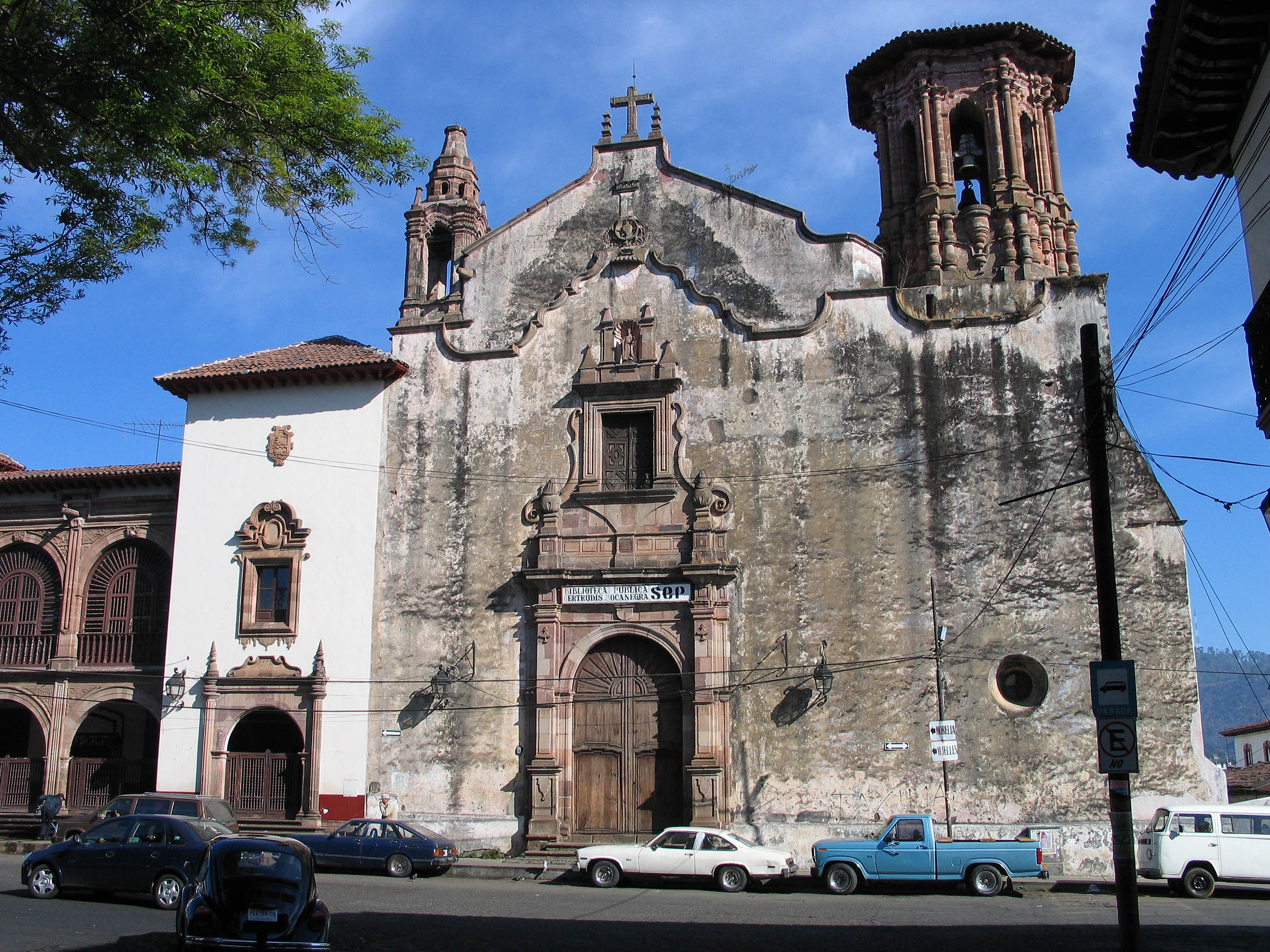
She became a courier and liaison for the rebels, weaving a clandestine network of informants and messengers that connected the insurgents across the region. In 1817 she was sent to Pátzcuaro to try to turn the royalist garrison from within; betrayed and captured, she was tortured to make her give up the names of her accomplices. She did not talk. The viceroyalty sentenced her to death and executed her publicly in the main square of her hometown, meaning to cow the population. The effect was the opposite: her silence and her resolve made her a symbol, and today the 'Plaza Chica' and the library housed in the old church of San Agustín carry her name.
That library holds another historical treasure: the great mural Juan O'Gorman painted between 1941 and 1942 on the apse wall, a vivid summary of the whole history of Michoacán, from Purépecha splendor and the pre-Hispanic market of Pátzcuaro through the conquest, the work of Vasco de Quiroga and the revolutionary struggles. Looking at it means reading, at a single glance, the centuries this text covers.
The history of Pátzcuaro did not end in the books: it is still being written today, and not always with a happy ending. Lake Pátzcuaro, sacred to the Purépecha and an engine of life for millennia, is going through a serious environmental crisis: deforestation, water extraction, sediment and recent droughts have dropped its level alarmingly, leaving jetties high and dry and threatening the whitefish and the achoque (an endemic salamander that lives only in these waters and that local nuns have helped save from extinction). The lake that stopped the Aztecs is now fighting its own battle to survive.
And yet the legacy Vasco de Quiroga organized almost five centuries ago is still alive and beating. In Santa Clara del Cobre the hammers still shape pots and jugs of embossed copper, as in the 16th century; in Tzintzuntzan clay is molded and reed is woven; in Pátzcuaro and Uruapan boxes and trays are lacquered with the maque technique; in every village around the lake the trade the utopian bishop assigned lives on. This continuity —extremely rare anywhere in the world— makes the region a living museum of Mesoamerican and colonial craft.
That double character, an astonishingly living cultural heritage and a fragile natural setting, is what defines Pátzcuaro today. Recognized as a Pueblo Mágico and visited every 1 and 2 November by thousands of people looking for the magic of Día de Muertos on Janitzio, the town is trying to balance tourism, the conservation of its lake and the dignity of its Purépecha communities. Understanding that tension is understanding why Pátzcuaro is not just a pretty colonial town, but one of the places where Mexico is still, genuinely, an Indigenous and living country.