Chihuahua is a city of desert, history and northern character. Capital of Mexico's largest state, it spreads across a highland valley ringed by arid hills, with a historic center of quarried stone, baroque churches and Porfirian mansions that speak of its mining and ranching past. It's a city of wide streets, hard sun and plain-spoken people, where grilled beef, Mennonite cheese and cowboy boots are part of the everyday scenery.
But what makes Chihuahua unmissable is its weight in Mexican history. This is where the priest Miguel Hidalgo, father of independence, was jailed and executed, and the cell where he spent his last days is still preserved. And this is where Francisco 'Pancho' Villa, the legendary leader of the Revolution, had his headquarters; his house —the Quinta Luz— is now a museum that keeps even the car he was murdered in. Walking Chihuahua means walking through two of the country's most decisive chapters.
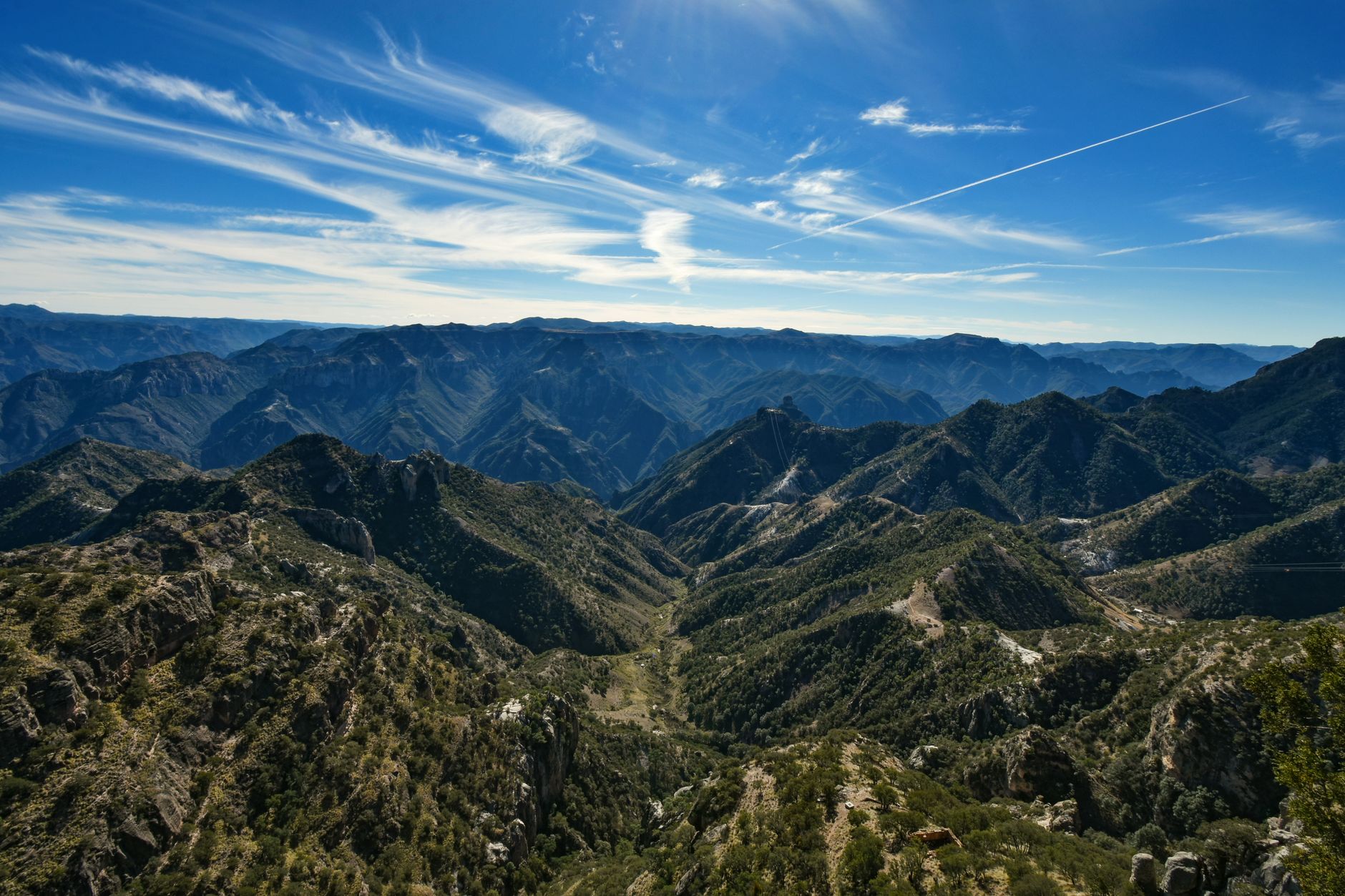
This guide covers the essentials of Chihuahua with a practical eye: what to see in its historic center, how to follow the trail of Hidalgo and Villa, where to eat the best beef in the north and, above all, how to use the city as a springboard to the Chepe train and the Copper Canyon, that canyon system longer and deeper than the Grand Canyon which is the great treasure of the Sierra Tarahumara.
The region was inhabited by desert and mountain peoples, among them the Rarámuri (Tarahumara), the Conchos and, farther north, the cultures of Paquimé. The city was formally founded on October 12, 1709 as San Felipe el Real de Chihuahua, driven by the silver mining boom in the Santa Eulalia area. During the colonial period it grew as a mining town, and its cathedral and baroque churches went up. In 1811, after the capture of the independence leaders at Acatita de Baján, Miguel Hidalgo was taken to Chihuahua, tried and executed by firing squad on July 30 of that year; his cell is preserved in what is today the Palacio Federal. Through the 19th century, Chihuahua was the capital of the huge northern state and the stage for the wars against the Apaches and the struggles between liberals and conservatives. Its great moment came with the Mexican Revolution (1910): the state was one of its epicenters and the city served as headquarters for Francisco 'Pancho' Villa and his famous División del Norte. The Quinta Luz, Villa's house, is today the Historical Museum of the Revolution. In the 20th century, Chihuahua consolidated itself as a ranching, mining, forestry and industrial center (with major growth of maquiladoras), keeping its northern identity and its role as the gateway to the Sierra Tarahumara. The full story is on our history page.
Read the full history ↓If you book from here we earn a commission and you pay no more. Prices and availability come from Civitatis.
No exact prices: a scale from $ (budget) to $$$$$ (luxury), with 2-3 options per category.
Origins, formation and what the sources say.
Long before the Spanish arrived, the vast territory of what is today Chihuahua was inhabited by various peoples adapted to a hard environment, between the highland desert and the mountains. In the mountains lived (and still live) the Rarámuri or Tarahumara, famous for their long-distance running culture and their life in the canyons. In the lowlands and the valleys lived the Conchos, the Tobosos and other groups, while to the north, centuries earlier, the great culture of Paquimé (Casas Grandes) had flourished, with its earthen architecture and its long-distance trade.
The name 'Chihuahua' is itself of Indigenous origin, though its exact meaning is disputed. The most widespread readings link it to local languages and usually translate it as 'dry, sandy place', 'next to the meeting of the rivers' or 'place where the waters meet', among other versions. The uncertainty about the meaning reflects the linguistic and cultural complexity of the region, where several peoples lived side by side before colonization.
The relationship between the original peoples and the colonizers was conflictive for centuries, with long wars (especially against the Apaches, who would reach the region later) that shaped the history of the north. Today the Rarámuri remain a living, fundamental presence in Chihuahuan identity, above all in the Sierra Tarahumara.
The founding of the city is directly tied to silver mining. In the late 17th and early 18th centuries, the discovery of rich silver deposits in the nearby Santa Eulalia area drew miners, traders and officials to this valley in the desert highlands. To bring order to that growing population, on October 12, 1709 the Real de Minas de San Francisco de Cuéllar was formally founded, and shortly afterward it was renamed San Felipe el Real de Chihuahua.
The town grew fast thanks to the wealth of the mines. Silver financed the great works that still set the historic center apart, especially the imposing Cathedral, whose construction began in 1725 and was partly sustained by a tax on the ore extracted. The city became an administrative, commercial and religious center of Nueva Vizcaya, the enormous province of the New Spanish north, and a key stop on the Camino Real de Tierra Adentro, the route that connected central Mexico with its northern territories.
During the colonial period, Chihuahua was also a bastion against raids by the nomadic peoples of the north and a departure point for expeditions toward Texas and New Mexico. Its strategic position on the northern frontier would shape its fate in the centuries that followed.
The episode that gave Chihuahua a central place in Mexican history happened in 1811, during the war of independence. After the first victories of the movement launched by the priest Miguel Hidalgo y Costilla in 1810, the insurgent forces suffered defeats and their leaders tried to flee north to regroup. In March 1811 they were captured in an ambush at the wells of Acatita de Baján, in what is today the state of Coahuila.
The main insurgent leaders —among them Hidalgo, Ignacio Allende, Juan Aldama and Mariano Jiménez— were taken to Chihuahua, seat of the region's military authorities, to be tried. Allende, Aldama and Jiménez were shot in June 1811. Hidalgo, as a priest, also had to go through an ecclesiastical process of defrocking before he could be executed. He was held in a cell of the former Jesuit College (today the Palacio Federal), where, according to tradition, he wrote some verses thanking his jailers.
Miguel Hidalgo was executed by firing squad in Chihuahua on July 30, 1811, in the courtyard of what is today the Palacio de Gobierno, a spot marked by the so-called 'Altar a la Patria'. The heads of Hidalgo and the other three leaders were sent to Guanajuato and displayed at the Alhóndiga de Granaditas as a warning. That execution closed the first stage of independence, but the fight went on until it was completed in 1821.
For much of the 19th century, Chihuahua was a frontier region marked by insecurity and conflict. After independence, the huge state of Chihuahua was left exposed to raids by nomadic peoples, especially the Apaches and the Comanches, who ravaged haciendas and towns. The authorities went as far as offering rewards for the capture of raiders, in a long and bloody war that shaped life in the north for decades.
In the middle of the century, the war between Mexico and the United States (1846-1848) hit the region directly: American troops went so far as to occupy the city of Chihuahua, and the 1848 Treaty of Guadalupe Hidalgo drastically cut the national territory in the north. Later, during the War of the Reform and the French intervention, Chihuahua played a symbolic role: President Benito Juárez, pursued by Maximilian's imperial forces, established the seat of his roving government in the city of Chihuahua at different times between 1864 and 1866, turning it for a while into the capital of the Republic in resistance.
Those years forged the Chihuahuan character: a frontier society, used to the harshness of the desert and to defending its territory, ranching and mining, with a strong sense of independence that would resurface forcefully in the 20th century.
If one chapter defines the image of Chihuahua in the Mexican imagination, it's the Revolution. The state was one of the great epicenters of the uprising that began in 1910 against the long dictatorship of Porfirio Díaz. Francisco 'Pancho' Villa (Doroteo Arango), one of the most legendary leaders in Mexican history, came from here, and here his famous army was formed, the División del Norte.
During the armed struggle, the city of Chihuahua was taken several times and served as Villista headquarters at different moments. Villa controlled and administered it, financing his cause, and from the northern region he fought decisive battles. The strength of the División del Norte was such that Villa became, for a time, one of the most powerful figures in the country, even symbolically occupying the presidency alongside Emiliano Zapata. The famous 'punitive expedition' of the United States army, which in 1916-1917 chased Villa fruitlessly across Chihuahuan territory after his attack on Columbus (New Mexico), made his legend even bigger.
After the armed phase ended, Villa retired to the Canutillo hacienda, in Durango, but kept his family home in Chihuahua, the Quinta Luz, where his wife Luz Corral lived. Villa was killed in an ambush in Parral in 1923. Today the Quinta Luz is the Historical Museum of the Revolution and keeps the bullet-riddled car he died in, one of the most striking objects of Mexico's revolutionary heritage.
After the Revolution, Chihuahua gradually turned into a modern city without losing its northern stamp. Through the 20th century it grew as the capital of a ranching, mining and forestry state, and later it joined industrialization in a big way, with the arrival of numerous maquiladoras —manufacturing plants tied to trade with the United States— that made the region one of the industrial poles of northern Mexico and drew heavy internal migration.
A milestone that changed the city's connection with its surroundings was the completion, in the early 1960s, of the Chihuahua al Pacífico Railway, one of the most ambitious feats of railway engineering in the Americas, which after decades of work managed to link Chihuahua with the port of Topolobampo, on the Pacific, crossing the Sierra Tarahumara with its many tunnels and bridges. That railway, known today as the Chepe, made Chihuahua the great gateway to the Copper Canyon and to one of the most spectacular landscapes in the country.
In recent decades the city has faced the challenge of the insecurity that hit northern Mexico, but it has also bet on cultural and historical tourism and on its role as a base for exploring the mountains. Its historic center, with the cathedral, the palaces and the sites of Hidalgo and Villa, coexists with a dynamic city that looks at once to its heroic past and to its industrial and tourist future.