Viajá con Gus
Home › Eswatini › Ngwenya
Ngwenya
🇸🇿 Eswatini · Mbabane and the north-western Highveld

Ngwenya

🪪 What do I need to enter Eswatini?Pick your citizenship and we tell you the visa, the days and the paperwork, with the official source.

By leaving your email and citizenship you agree to receive the documents you asked for and weekly travel news. You can unsubscribe whenever you want. How we handle your data.
Jump to what you need
📍Region
Ngwenya is a small town in north-western Eswatini, in the Hhohho region, right on the Ngwenya/Oshoek border with South Africa, the country's busiest land crossing. Its name means 'crocodile' in siSwati, after the shape of the hill that dominates the area. It lies about 25-30 km west of the capital, Mbabane, in the heart of the mountainous Highveld. It brings together two very different highlights: the Ngwenya iron ore mine, considered the oldest in the world, and the famous Ngwenya Glass recycled glass factory. It is also the gateway to the country for anyone arriving from Johannesburg.
📌Best time to go
Ngwenya is pleasant to visit all year round thanks to its mild highland climate. The dry season (May to September) is the most comfortable, with cool, clear days, ideal for the walk to the mine and Lion Cavern and for views over the Highveld. In summer (November to March) it can be hot at midday, with afternoon storms. Visit the glass factory on a weekday, when the glassblowers are working and you can watch them in action from the walkway; at weekends the shop is open but there is no production.
📌Suggested days
Half a day is enough for the essentials: the Ngwenya glass factory (one hour) and the mine with its visitor centre and Lion Cavern (a one- to two-hour walk). With a full day you can add Sibebe Rock or the Malolotja mountains, which are close by. Many travellers stop at Ngwenya on the first or last day of their trip, since it sits right on the entry border from South Africa.
📌Getting there
Ngwenya is on the MR3 road linking the Oshoek border with Mbabane. If you are coming from South Africa, you cross at the Ngwenya/Oshoek post, the country's busiest, and the glass factory and the mine are just a few kilometres away. From Mbabane it is about 25-30 km (30-40 min) by car or taxi. There is no convenient public transport to the mine, so your best options are a hire car, a taxi or an organised tour; kombis run along the main road but do not go into the sites.
📌What to see
The two unmissable sights are the Ngwenya Mine (the oldest in the world, with its visitor centre and the walk to Lion Cavern) and the Ngwenya Glass factory, where 100% recycled glass is blown and you can watch the artisans at work. The factory complex also has cafés and other craft workshops. Everything lies within or next to the mine area, managed by the Eswatini National Trust Commission (ENTC), which charges an admission fee to enter the mining zone.
📌Language and currency
siSwati and English are spoken; English is easily understood at the factory and the visitor centre. The currency is the lilangeni (emalangeni; SZL or E), pegged to the South African rand, which is also accepted everywhere. In mid-2026 the rate is around 18 emalangeni to the dollar. You can pay by card at the glass factory; for the mine entrance it is best to bring some cash in emalangeni or rand.
💱 SZL exchange rate
Loading rate…
🌤️ Weather in Ngwenya
Loading weather…

Ngwenya, on Eswatini's north-western border, holds two stories that could hardly be more different, and together they make it a fascinating stop: the world's oldest iron ore mine, where humans were already extracting minerals tens of thousands of years ago, and a glassblowing factory that today turns used bottles into works of art exported around the world. Humanity's most distant past and today's creativity, just a short distance apart.

On Bomvu Ridge, above the town, is Lion Cavern: an ancient excavation where, according to archaeologists, iron ore (specularite and haematite) was mined more than 40,000 years ago, making it the oldest known mining operation on the planet. An excellent visitor centre, opened in 2005, tells this story with dioramas, minerals and even an old steam locomotive. A few kilometres away, the Ngwenya Glass factory blows 100% recycled glass and puts on one of the country's best-loved craft spectacles.

This guide covers Ngwenya with a practical eye: how to visit the mine and Lion Cavern, how to see the glassblowers in action, what to buy, how much everything costs and how to combine Ngwenya with Sibebe Rock and the Malolotja mountains, both very close. Thanks to its location on the country's busiest border, Ngwenya is both the first image of Eswatini for many travellers and one of the most memorable.

📖 History of Ngwenya

On Ngwenya's Bomvu Ridge, humans were already mining iron ore more than 40,000 years ago to obtain pigments such as red ochre and shiny specularite, used as cosmetics and in rituals: that is why its Lion Cavern is considered the oldest mining site in the world. Millennia later, the same mountain was home to an industrial iron mine that operated in the 20th century, with its ore exported by rail. And at its foot, in 1979, the Ngwenya Glass factory was born, a Swedish cooperation project that today blows recycled glass. The full story —from the Stone Age to today's glass— is told on our history page.

Read the full history ↓

🏛️ Ngwenya is in Mbabane and the north-western Highveld

The cool granite Highveld where Mbabane, the capital, stands, next to the world's oldest mine at Ngwenya and the almost untouched mountains of Malolotja.

Read the history of Mbabane and the north-western Highveld →

🗺️ What to see

1
Ngwenya Mine and Lion Cavern
The oldest mine in the world: an excavation where iron ore was extracted more than 40,000 years ago, with a walk to the historic Lion Cavern.
Leer más ↓
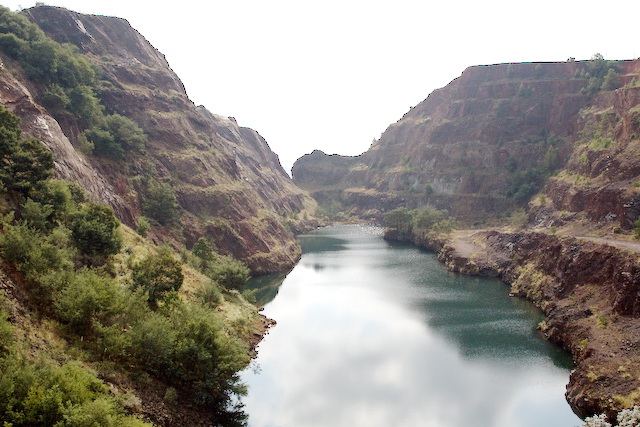
On Bomvu Ridge ('red hill', after the colour of the iron), the Ngwenya Mine is one of the most astonishing sites in Africa: there, in the cave known as Lion Cavern, humans were already mining iron ore more than 40,000 years ago, making it the oldest known mining operation on the planet. They weren't after metal for tools —that would come much later— but minerals such as haematite and specularite, with their metallic sheen, to make red ochre and pigments used as ceremonial cosmetics and in rituals. Today you can walk to Lion Cavern along a trail from the visitor centre, with views over the huge open pit of the 20th-century iron mine that operated on the same mountain. The walk is short but has some climbs, and offers panoramic views of the Highveld and even of South Africa. Getting there: past the glass factory there is an ENTC gate where you pay the admission fee to the mining area. Best time: dry season, early in the day. Tips: bring water and comfortable shoes; ask at the visitor centre about a guide for Lion Cavern.
2
Ngwenya Mine Visitor Centre
Museum opened in 2005 explaining prehistoric and modern mining, with minerals, dioramas and a 1913 steam locomotive.
Leer más ↓
The Ngwenya visitor centre, opened in 2005, is an excellent stop for understanding the site's incredible history before heading up to Lion Cavern. It displays samples of the different minerals mined here, archive photographs from the early days of mining, a life-size diorama of a working Iron Age iron smelter and even an old British-built steam locomotive, brought to Swaziland in 1913 for the ore railway. It is a small but very well put-together museum that links the mine's two great chapters: the prehistoric extraction of pigments tens of thousands of years ago and the 20th-century industrial iron mining, whose ore was exported by train. Great for families and for putting the walk into context. Getting there: at the entrance to the mine area, after paying the ENTC fee. Best time: all year. Tips: start at the visitor centre and then head up to Lion Cavern to make the most of the context.
3
Ngwenya Glass Factory (100% recycled glass)
The country's most famous glassblowing workshop, where you can watch the glassblowers create animal figures from recycled bottles.
Leer más ↓
The Ngwenya Glass factory is one of Eswatini's best-loved visits. Here 100% recycled glass —made mostly from used bottles collected all over the country— is blown into the famous African animal figures (elephants, giraffes, rhinos), glasses, vases and design pieces that are exported around the world. It began in 1979 as a Swedish cooperation project, with Swazi artisans trained at the renowned Kosta Boda glassworks in Sweden, and since 1987 it has been revived and run by the Prettejohn family. From a walkway above the workshop you can watch the glassblowers shape the red-hot glass (on weekdays, when the factory is active), in a mesmerising display of fire, breath and form. You can buy the pieces directly in the shop, and the project is a model of fair trade and sustainability, employing dozens of workers on a decent wage. Getting there: next to the border road, before the mine gate. Best time: Monday to Friday to see the glassblowers. Tips: the walkway only operates on weekdays; at weekends the shop is open but there is no production.
4
Ngwenya Glass craft complex
Around the factory, cafés and other craft workshops make the place a complete stop for shopping and a break.
Leer más ↓
The success of Ngwenya Glass led to a small craft and services complex growing up around it. Next to the factory and its shop there are cafés and restaurants where you can grab a bite with a view of the surroundings, plus several workshops and boutiques from other artisans: ceramics, textiles, jewellery, homeware and souvenirs, many of them fair trade and locally made. It is a pleasant place to spend a couple of hours, combining shopping with a coffee and resting before or after the walk to the mine. For anyone entering or leaving the country via the Ngwenya/Oshoek border, it is an almost obligatory stop and a good way to take home quality Swazi crafts. Getting there: on the same grounds as the glass factory. Best time: all year, during the day. Tips: a good spot for a last coffee and last-minute shopping before crossing into South Africa, or a first one on arrival.
5
Half an hour away, the second-largest granite monolith in the world, ideal for combining with Ngwenya in one day.
Leer más ↓
About 30-40 minutes from Ngwenya, past Mbabane, rises Sibebe Rock, an enormous granite dome considered the second-largest monolith in the world after Australia's Uluru. You climb it on foot along a steep but non-technical route, with a community guide, to a summit with vast views over the Highveld. It is the perfect combination for a full day: the physical adventure of Sibebe and the art and history of Ngwenya, two very different sides of north-western Eswatini. Many travellers do the hike in the morning and leave the glass factory and the mine for the afternoon, or the other way round. Getting there: about 30-40 min by car east of Ngwenya, past Mbabane. Best time: dry season for the hike. Tips: see the Sibebe Rock page for the logistics of the climb and the guide.
6
A few kilometres to the north: mountains, waterfalls and the longest zip-line canopy tour in southern Africa.
Leer más ↓
Very close to Ngwenya, to the north, the Malolotja Nature Reserve begins: 18,000 hectares of mountains, highland grasslands, gorges and waterfalls with hardly anyone around. It is one of the country's great nature destinations, with hundreds of kilometres of trails, rare birds such as the blue swallow and the spectacular zip-line canopy tour over the Silotshwane gorge, the longest in southern Africa. Ngwenya Mountain (1,829 m), the second-highest in Eswatini, lies right inside the reserve and gives its name to the whole area. Combining Ngwenya with Malolotja lets you bring together, within a few kilometres, the oldest mine in the world, recycled glass and the best hiking in the country. Getting there: about 10-15 km north of Ngwenya on the road to Piggs Peak. Best time: dry season for hiking and zip-lining. Tips: see the Malolotja page for admission, the canopy tour and trails.
📶I have never landed without internet. I arrive and my phone connects to the strongest network in the country I am visiting: I can say I landed, sort out transport, book tours and keep posting, at a seriously good price. I always use the Maya eSIM — check their plans by clicking the banner.See plans →Maya Mobile eSIM — turn travel mode on
What nobody tells you

💵 Prices

Tickets

TypePrice
Mina de Ngwenya y Lion Cavern (zona de la mina)About E70 per person / approx. USD 4 (ENTC, at the gate past the glass factory, verified July 2026)
Centro de visitantes de la minaIncluded in admission to the mine area (verified July 2026)
Fábrica Ngwenya Glass (visita y pasarela)Free admission; you only pay for what you buy (verified July 2026)
Talleres y tiendas del complejo artesanalFree admission; purchases depending on the item (verified July 2026)
🔄 updated monthlyOfficial / reference values · double-check when buying

Activities and tours

ActivityPriceDurationOperator
Walk to Lion Cavern and mine visitIncluded in the admission of about E70 (verified July 2026)1 to 2 hoursENTC (Ngwenya visitor centre)
Watch the glassblowers from the walkwayFree (weekdays); purchases from about E100 per piece (verified July 2026)30 min to 1 hNgwenya Glass
Shopping for fair-trade crafts and glassDepending on the item; glass figures from about E100-400 (verified July 2026)1 to 2 hoursNgwenya Glass and workshops in the complex
Ngwenya + Sibebe or Malolotja combinedDepending on transport; inexpensive admission at each site (verified July 2026)Full dayLocal operators / independently
🔄 updated monthlyOfficial / reference values · double-check when buying

🚌 How to get there and distances

Getting around

Hire car
PriceFrom about USD 40-60 per day (verified July 2026)
DurationPer day
Notes
The most practical option; Ngwenya is on the MR3, with easy access to the factory and the mine, and to Sibebe and Malolotja
Taxi from Mbabane
Duration30-40 min
Price
One way from about E250-450 depending on the route (approx. USD 14-25, verified July 2026)
Notes
Agree on the fare and arrange your return; there aren't always taxis waiting at the mine
Kombis along the border road
PriceE10-30 per trip (verified July 2026)
DurationVariable
Notes
They run along the MR3 between Mbabane and the border, but don't go into the mine or the factory; you have to walk the last stretch
Organised tour
PriceDepending on the operator (verified July 2026)
DurationHalf day to full day
Notes
Convenient for combining the mine, the glass factory and Sibebe or Malolotja with transfers included
🔄 updated monthlyOfficial / reference values · double-check when buying

How to get there

RouteAirlines / operatorsAvg. priceDuration
Ngwenya/Oshoek border (from South Africa) → NgwenyaOwn or hire car, taxis, minibusesDepending on transport (verified July 2026)A few minutes; the factory and the mine are next to the border
Mbabane → NgwenyaTaxi, own car, kombisTaxi from about E250-450; kombi E10-30 (verified July 2026)30-40 min (25-30 km on the MR3)
Johannesburg (South Africa) → NgwenyaTransMagnific, Melula Travel (minibuses), own carRegular services; budget option (verified July 2026)About 4-4.5 h to the Ngwenya/Oshoek border
🔄 updated monthlyOfficial / reference values · double-check when buying

🏨 Where to stay

No exact prices: a scale from $ (budget) to $$$$$ (luxury), with 2-3 options per category.

In Mbabane (mid-range and business)
Price$$$$$
Recommended options
Approx. E1,100-2,500 per night (USD 60-140); hotels such as the Mountain Inn or the Royal Villas, 25-30 km away, a good base with amenities
Nature and camping (Hawane / Malolotja)
Price$$$$$
Recommended options
From about E250-900 (USD 14-50); Hawane Resort, cabins and camping at Malolotja, very close to Ngwenya, ideal for hikers
In Ezulwini (resorts and boutique)
Price$$$$$
Recommended options
From about E2,000-5,000+ per night (USD 110-280); resorts in the valley, about 40-50 min away, if you're after more luxury
Budget (guesthouses)
Price$$$$$
Recommended options
From about E400-900 per night (USD 22-50); simple guesthouses in and around Mbabane

🍴 Where to eat

TypePriceOptions / signature dish
Cafés del complejo de Ngwenya Glass$$$$$About E80-200 per person (USD 4-11); cafés and light meals next to the factory, handy for a break
Cocina suazi y parrilla (en Mbabane)$$$$$About E100-300 per person (USD 6-17); pap, grilled meat and stews in restaurants in the nearby capital
Internacional y de hotel (Mbabane/Ezulwini)$$$$$From about E250-500 per person (USD 14-28); international cuisine at the Mountain Inn and the valley resorts
Provisiones para picnic (Swazi Plaza, Mbabane)$$$$$About E60-150 per person (USD 3-8); buy water and snacks in Mbabane for the walk to the mine

📖 History of Ngwenya

Origins, formation and what the sources say.

Lion Cavern: Stone Age mining

Ngwenya's story begins deep in prehistory. On Bomvu Ridge ('red hill' in siSwati, named for the iron that shows at the surface), archaeologists have documented one of the oldest known human activities: mining for minerals more than 40,000 years ago, and by some datings even earlier. That evidence, found mainly in the cave known as Lion Cavern, makes Ngwenya the oldest known mine in the world, a record few sites in Africa can challenge.

It's worth understanding what those first miners were after. They weren't mining iron to make tools, because ironworking wouldn't arrive for tens of thousands of years. They wanted minerals with a metallic sheen, such as haematite and, above all, specularite, a form of iron ore that glitters as if it had silvery scales. From these they made pigments: red ochre and shimmering powders that, mixed with fat, were used to paint the body, decorate objects and carry out rituals.

This ceremonial use of the mineral lasted for millennia. For centuries, glittering specularite was a cosmetic and a status symbol reserved for chiefs in southern Africa. So long before cities, writing or farming existed, people in this part of the continent were already running mining operations, with excavations, stone tools and the hauling of material. It can be seen as one of humanity's first 'industries'.

en.wikipedia.org · Ngwenya Minesntc.org.sz · Ngwenya mine📄 2023

The archaeological rediscovery

Pigment mining at Ngwenya carried on, on and off, throughout prehistory and history, but its true age only came to light in the 20th century. In the 1960s and 1970s, while modern iron mining was under way on the same mountain, archaeologists studied the ancient workings. Among them was the South African Peter Beaumont. They collected stone tools and other remains, and scientific dating showed them to be tens of thousands of years old.

Those finds put Ngwenya on the world map of archaeology. Lion Cavern and the workings around it showed that mining was neither a recent invention nor something only 'advanced' civilisations did. It is a practice rooted in the African Stone Age. Old dates, tools and tunnels together made Ngwenya a case study cited around the world on how our species first began to exploit natural resources.

Because of its value, Ngwenya Mine and Lion Cavern are on Eswatini's tentative list for UNESCO World Heritage, as an exceptional record of the relationship between people and minerals since the dawn of humanity. In a sense, the site tells the story not only of Eswatini but of the whole human species.

en.wikipedia.org · Ngwenya Mineworldheritagesite.org

The 20th-century iron mine

Thousands of years after those first miners, the same hill was mined again, this time on an industrial scale. In the mid-20th century, while Swaziland was still under British administration, a large open-pit iron mine was developed at Ngwenya to work the mountain's rich deposits. High-grade ore was dug out of the huge pit you can still see today from the trail to Lion Cavern.

Getting the iron out required infrastructure: roads, facilities and, above all, a railway that carried the ore to the coast of Mozambique, to the port of Maputo (then Lourenço Marques), for export. Mining was one of the country's main sources of income and jobs in the middle decades of the 20th century, and it left its mark on the landscape in the form of the great open pit that cuts into the mountain.

Over time the most profitable deposits ran out and the industrial mine wound down. The hill's double life, a pigment quarry tens of thousands of years ago and a modern iron mine in the 20th century, is exactly what the Ngwenya visitor centre tells today. It opened in 2005 and has dioramas, mineral samples, archive photographs and an old British steam locomotive from 1913, a reminder of the days of the ore railway.

en.wikipedia.org · Ngwenya Minesntc.org.sz · Ngwenya mine📄 2023

Ngwenya Glass: from recycling to art

At the foot of the mountain with the world's oldest mine, a very different and equally fascinating story began in the 20th century: the story of Ngwenya Glass. The factory opened in 1979 through a Swedish aid project, which brought in the machinery, built the workshop and trained Swazi craftspeople in the ancient art of glassblowing. Two local glassblowers even travelled to Sweden and spent nine months learning at the famous Kosta Boda, one of the most prestigious glassworks in the world.

From 1981 to 1985 the factory was run entirely by Swazis, but then it closed. Its glass elephant figures, however, had won over the Prettejohn family, farmers from South Africa's Eastern Cape. They knew nothing about glassblowing but decided to reopen the factory in June 1987. Since then, Ngwenya Glass has made all its pieces from 100% recycled glass: used bottles and jars collected all over Eswatini come back to life as animal figures, glasses, vases and design pieces.

Today the factory employs dozens of people at fair wages and is a benchmark for fair trade and sustainability across the region. Its products are exported all over the world, and its complex, next to the Ngwenya/Oshoek border post, has become one of the most popular visits in the country. Travellers can watch the glassblowers at work and take home a one-of-a-kind piece made from recycled waste. So in one corner of north-western Eswatini, humanity's first 'industry' sits alongside one of the most creative examples of today's circular economy.

shop.ngwenyaglass.co.sz · Aboutthefairtraderstore.com.au · Ngwenya glass about the makers

📚 Bibliography

  • Wikipedia (EN) — «Ngwenya Mine»: https://en.wikipedia.org/wiki/Ngwenya_Mine
  • Swaziland National Trust Commission / ENTC — Ngwenya Mine and Lion Cavern: https://web.archive.org/web/20230612083412/http://www.sntc.org.sz/tourism/ngwenya_mine.php
  • UNESCO — Ngwenya Mines (tentative list): https://www.worldheritagesite.org/tentative/id/5421
  • The Kingdom of Eswatini — Ngwenya Mine & Lion Cavern: https://www.thekingdomofeswatini.com/north-west-eswatini/ngwenya-mine-lion-cavern/
  • Ngwenya Glass — About: https://shop.ngwenyaglass.co.sz/about
  • The Fair Trader — Ngwenya Glass: About the Makers: https://thefairtraderstore.com.au/pages/ngwenya-glass-about-the-makers
  • The Kingdom of Eswatini — Ngwenya Glass: https://www.thekingdomofeswatini.com/arts-craft-artisans-providers/ngwenya-glass/
  • ShowCaves — Ngwenya Mine: https://www.showcaves.com/english/other/mines/Ngwenya.html
  • Mbare Blog — Ngwenya, Recycled Glass from Eswatini: https://mbare.com/blog/ngwenya-recycled-glass-from-eswatini/

❓ Frequently asked questions

Why is the Ngwenya Mine said to be the oldest in the world?+
Because at Lion Cavern, on Ngwenya's Bomvu Ridge, archaeologists found evidence that humans were already mining iron ore more than 40,000 years ago. They weren't after metal —that would come much later— but minerals with a metallic sheen such as specularite and haematite, to make red ochre and pigments used as ceremonial cosmetics and in rituals. That age, tens of thousands of years, makes it the oldest known mining operation on the planet.
When is the best time to visit the glass factory to see the glassblowers?+
On weekdays, Monday to Friday, when the factory is in full production and you can watch the artisans blowing the red-hot glass from the walkway. At weekends the shop and the complex are open, but there are no glassblowers working because there is no production. If you want to see the process live, plan your visit on a weekday; if you only want to shop, any day will do.
How much does it cost to enter the mine and the factory?+
The Ngwenya Glass factory is free to enter: you only pay for what you buy. For the mine and Lion Cavern you pay an ENTC fee of around E70 per person (about USD 4) at the gate past the glass factory, which includes access to the visitor centre and the walk. It's best to bring cash in emalangeni or rand for the mine entrance.
How do I combine Ngwenya with other visits?+
Ngwenya combines beautifully in one day with Sibebe Rock (30-40 min away, past Mbabane) and the Malolotja mountains (a few kilometres to the north). A classic plan is to do the Sibebe hike or the Malolotja trails in the morning and leave the glass factory and the mine for the afternoon. Since Ngwenya is on the entry border from South Africa, many people visit it on the first or last day of their trip.
Can I pay in rand and by card?+
Yes. The local currency is the lilangeni (emalangeni), pegged to the South African rand, and the rand is accepted throughout Eswatini as if it were the local currency. At the glass factory you can pay for purchases by card. For the mine entrance it's best to bring some cash in emalangeni or rand. In mid-2026 the rate is around 18 to the dollar.

More places in Eswatini

Arte rupestre de NsangwiniCascadas de PhophonyanePiggs PeakRoca de SibebeValle de EzulwiniParque Nacional Hlane Royal
See every place in Eswatini →The history of Eswatini →
Sources consulted (7)
Still planning?
Explore more destinations in Eswatini
See all destinations →
Image credits
Photos from Wikimedia Commons, each under its own licence (CC BY, CC BY-SA or public domain). Open each file to see its author and licence.
Ngwenya Mine