Viajá con Gus
HomeUnited StatesMackinac Island
Mackinac Island
🇺🇸 United States · Midwest and Great Lakes

Mackinac Island

Jump to what you need
📌State
Michigan
📌Best time
Summer and early fall (June-October): the best weather and every service open. In winter almost everything closes
📌Suggested days
1 to 2 days
📌Currency
US dollar (USD)
💱 USD exchange rate
Loading rate…
🌤️ Weather in Mackinac Island
Loading weather…

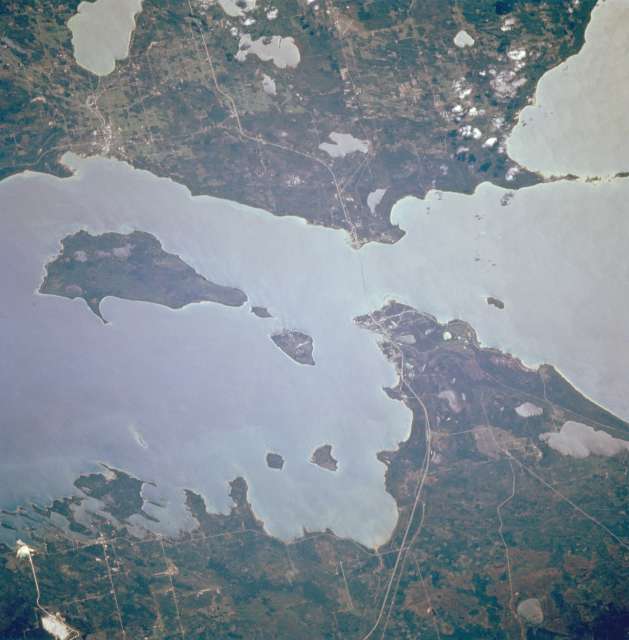
Mackinac Island is a small, charming island in Lake Huron, in the Straits of Mackinac that separate Michigan's two peninsulas, famous across the United States for one almost magical quirk: cars are banned on it. Since the end of the 19th century, getting around has been done exclusively on foot, by bicycle or in horse-drawn carriages, which turns the place into a journey back in time, with an unhurried pace and a Victorian atmosphere frozen in place.

For the traveler, Mackinac (pronounced 'MACK-in-aw') is a relaxing, picturesque escape. The island keeps grand historic hotels such as the majestic Grand Hotel, with the longest porch in the world; a colonial fort up on the hill; streets full of candy shops (it is famous for its handmade fudge); and a perimeter you can ride around on a bike along the lakeshore. Almost the whole island is part of a state park with forests, rock formations and lookouts.

This guide walks you through the essentials of Mackinac Island with a practical eye: how to get there by ferry and get around without cars, the bike ride around the island, the Grand Hotel and the Victorian downtown, Fort Mackinac and the state park, the famous fudge, where to sleep and eat, and the tips for enjoying one of the most singular and nostalgic places in the American Midwest.

📖 History of Mackinac Island

A sacred place for the Anishinaabe peoples (from whose name, evoking a great turtle, 'Mackinac' derives), the island was a strategic center of the fur trade and the scene of disputes between the French, the British and the Americans, who left behind Fort Mackinac. In the late 19th century it became an elegant summer destination, and in 1898 it banned automobiles, a rule that still stands today and defines its unique character.

Read the full history ↓

🏛️ Mackinac Island is in Michigan

The state of the Great Lakes and the automobile: Ojibwe and Ottawa land, cradle of Detroit and of Ford, split into two peninsulas of forests, lighthouses and fresh water, with historic Mackinac Island.

Read the history of Michigan →

🗺️ What to see

1
Around the island by bike (M-185)
The roughly 13 km shoreline ride around the island, with no cars.
Riding around the perimeter of Mackinac Island by bike is the essential and most characteristic experience of the place. Highway M-185, which hugs the entire coast, has the distinction of being the only state highway in the United States where automobiles are not allowed: you can only travel it by bike, on foot or by carriage. The full loop is about 13 kilometers (8 miles), completely flat, along the shore of Lake Huron, with constant views of the clear water, the imposing Mackinac Bridge in the distance, beaches, forests and rock formations. Along the way you pass Arch Rock, a natural limestone arch above the lake and one of the island's icons. It takes between one and two hours depending on your pace and stops. There are numerous bike rental stands in town, right by the ferry dock. It is a relaxing, scenic ride suitable for everyone. Getting there: bike rental on Main Street, near the dock. Best time: summer and early fall; early morning to avoid the crowds in high season. Tips: bring water and sunscreen (little shade on some stretches); the cheaper bike shops tend to be a few blocks farther from the main dock.
ℹ️ Bike rental: approx. US$ 15-17/hour, US$ 30-40 half day, US$ 60 for the full day (2025). Flat loop of about 13 km. No cars anywhere on the island.
2
Grand Hotel
The majestic historic hotel from 1887, with the longest porch in the world.
The Grand Hotel is the most emblematic building on Mackinac Island and one of the great historic hotels of the United States. Opened in 1887, this imposing white Victorian hotel stands on a hill overlooking the island, and boasts the longest porch (front veranda) in the world, a spectacular gallery of columns and rocking chairs, decked with flags and geraniums, from which you look out over the lake. The hotel has hosted presidents and celebrities and was the setting for films such as 'Somewhere in Time'. It keeps an elegant, period atmosphere, with gardens, salons and a strict evening dress code. Staying there is expensive, but visitors who are not guests can enter the hotel and its porch by paying an admission fee, ideal for a drink and the views. Getting there: on foot or by carriage from town, up the hill. Best time: any day, from 9:00 to 18:00. Tips: admission includes a map and a self-guided tour; the evening dress code requires jacket and tie for men after 18:30.
ℹ️ Daytime admission for non-guests (2025): US$ 14 adults, US$ 7 children 6-12, free up to age 5. Open 9:00-18:00. Evening dress code.
3
Fort Mackinac
The historic military fort on the hill, with harbor views and reenactments.
Fort Mackinac is a historic military fort crowning the hill above the town and the harbor, its white buildings visible from almost anywhere on the island. Founded by the British during the American Revolutionary War and later in American hands, it was the scene of fighting in the War of 1812 and guarded the straits for more than a century. Today it is an open-air museum, part of Mackinac Island State Park, with restored buildings that show what military life was like, exhibits, interpreters in period uniform and cannon and musket firing demonstrations. From its walls you get excellent views of the harbor, the town and Lake Huron. It is an interesting visit for understanding the island's strategic history. Getting there: walk up from town (there is a path and stairways) or take a carriage. Best time: any day in season (May to October); demonstrations run throughout the day. Tips: admission to the fort includes access to other Mackinac State Historic Parks sites (Biddle House, Art Museum); comfortable shoes are a good idea for the climb.
ℹ️ Admission 2025-26: approx. US$ 15-16,50 adults, US$ 10 children 5-17, free up to age 4; includes other historic sites in town. 7-day pass for 2 adults and household minors: approx. US$ 95. Check seasonal hours (May-October).
4
The town, the shops and the fudge
The Victorian downtown with its shops and the famous handmade fudge tradition.
The town of Mackinac Island, around the harbor where the ferries arrive, keeps a charming Victorian atmosphere, with pedestrian streets (traveled by bikes and carriages), period houses and businesses, hotels and restaurants. The main street is packed with shops, but above all with fudge: the island is enormously famous for this chocolate-and-cream confection, so much so that tourists are jokingly called 'fudgies'. The fudge shops make the candy in full view of the public, on big marble tables, in an irresistible spectacle (and aroma); tasting and buying fudge is practically compulsory. Strolling through town, watching the horse-drawn carriages, buying sweets and soaking up the car-free rhythm is an essential part of the visit. Getting there: this is where the ferries dock; everything is on foot. Best time: all day; liveliest around midday and in the afternoon in summer. Tips: a half-kilo slab of fudge usually runs US$ 15-20; try several shops, each has its own recipe and die-hard fans.
ℹ️ Free access to the town. Fudge approx. US$ 15-20 per pound (450 g) at shops such as Murdick's, Ryba's or Joann's, 2025. Numerous fudge shops on Main Street.
5
Mackinac Island State Park and Arch Rock
The state park that covers most of the island, with forests and rock formations.
More than 80% of Mackinac Island is protected as a state park (Mackinac Island State Park), Michigan's first state park and a former national park. The interior of the island is a world of forests, trails, lookouts and curious limestone formations sculpted by erosion. The most famous is Arch Rock, a spectacular natural rock arch about 50 meters above Lake Huron, reachable from the shoreline highway or on inland trails. Other notable formations are Sugar Loaf and Skull Cave. The network of car-free trails and paths lets you explore the interior on foot, by bike or on horseback, away from the bustle of town and enjoying the nature and the panoramic views. Getting there: on trails from town or combined with the M-185 bike loop. Best time: all day; morning to avoid the heat. Tips: access to the state park's natural formations is free, unlike the fort and the museums, which charge admission.
ℹ️ Free access to the park and the natural formations (Arch Rock, Sugar Loaf). Car-free trails and paths. Ideal to combine with the bike ride.
6
Fort Holmes, British Landing and Wings of Mackinac
The highest point on the island, the historic War of 1812 beach and a butterfly conservatory.
A short walk uphill from Fort Mackinac leads to Fort Holmes, the highest point on the island (originally built by the British in 1812), where a 360-degree view opens over both Great Lakes, the island itself and the Mackinac Bridge in the distance: one of the least crowded and most complete lookouts around. At the opposite end of the island, on highway M-185, British Landing is the beach where British troops came ashore for the surprise attack that let them take the island at the start of the War of 1812; today it is a quiet picnic area and a regular stop for people cycling around the island. In the middle of the island, near the Grand Hotel, the Wings of Mackinac Butterfly Conservatory is a glass greenhouse where hundreds of tropical and native butterflies fly freely among plants and flowers, a relaxing experience that is very popular with children and different from the island's other, more historical offerings. Getting there: Fort Holmes on foot from Fort Mackinac; British Landing on M-185 (a stop on the bike loop); Wings of Mackinac at Surrey Hill, near the Grand Hotel. Best time: any day in season (May-October). Tips: combine Fort Holmes with the visit to Fort Mackinac (same climb); British Landing is a good place to stop for a bite on the bike loop.
ℹ️ Fort Holmes and British Landing: free access. Wings of Mackinac: admission approx. US$ 8-9 adults, US$ 5 children (2025); tours of 1,5-2 h. Check seasonal hours.
Advertisements
What nobody tells you

💵 Prices

Tickets

TypePrice
Round-trip ferry to the island (Shepler's / Arnold Transit)US$ 39 adults and US$ 27 children (Shepler's) or US$ 37 adults and US$ 25 children (Arnold Transit, formerly Star Line), round trip, plus a US$ 3 online fee; operates from April 21 to October 31 (source: Shepler's / Arnold Transit, verified July 2026)
Bike rental (per hour / per day)US$ 15-17/hour; US$ 30-40 half day; US$ 60 for the full day (2025; check when you visit)
Fort Mackinac (admission)US$ 15-16,50 adults, US$ 10 children 5-17, free up to age 4 (2025-26; includes other historic sites; check when you visit)
Grand Hotel (admission for non-guests)US$ 14 adults, US$ 7 children 6-12, free up to age 5 (2025; check when you visit)
Carriage Tour (horse-drawn carriage ride, 1h45)Approx. US$ 41 adults (2025; check when you visit)
State park and Arch RockFree (open access)
🔄 updated monthlyOfficial / reference values · double-check when buying

Activities and tours

ActivityPriceDurationOperator
Around the island by bikeUS$ 15-17/hour; US$ 60 for the day (2025)1-2 hBike rentals in town (Main Street)
Horse-drawn carriage ride (Carriage Tour)Approx. US$ 41 adults (2025)1 h 45 minMackinac Island Carriage Tours
Guided visit to Fort MackinacIncluded in admission, US$ 15-16,50 (2025-26)1-2 hMackinac State Historic Parks (official)
Hiking in the interior (Arch Rock, Sugar Loaf)Free2-3 hOn your own
🔄 updated monthlyOfficial / reference values · double-check when buying
Advertisements

🚌 How to get there and distances

Getting around

ModePriceDurationNotes
On footFreeVariableThe town and many points are walkable; the island is small
BicycleUS$ 15-17/hour; US$ 60 for the day (2025)VariableThe ideal way to get around the island; with no cars, bikes rule
Horse-drawn carriagePublic Carriage Tour approx. US$ 41 adults; private carriage taxis from US$ 15-20 for a short trip (2025)VariableCarriage taxis and tours, the only 'motorized' transport allowed
FerryUS$ 37-39 round trip for adults (source: Shepler's / Arnold Transit, verified July 2026)16-25 min from the mainlandThe only way to get there (tourists cannot bring cars aboard). You buy it on the ferry company's website (Shepler's or Arnold Transit) by card, or at the ticket office on the dock. There is no transport app or bus on the island: here 'public transport' means the ferries, the bikes and the horse-drawn carriages
🔄 updated monthlyOfficial / reference values · double-check when buying

How to get there

RouteAirlines / operatorsAvg. priceDuration
Mackinaw City (mainland) → island (ferry)Shepler's Ferry, Star Line (Arnold Transit)US$ 37-39 round trip for adults (2025-26)15-20 min
St. Ignace (mainland) → island (ferry)Shepler's Ferry, Star Line (Arnold Transit)US$ 37-39 round trip for adults (2025-26)15-20 min
Detroit → Mackinaw City (by car)Own or rental carRental from US$ 45-70/day + fuelApprox. 4,5-5 h
Regional airport (Pellston, PLN) → Mackinaw CityCar / transferTransfer/taxi approx. US$ 40-60Approx. 30 min
🔄 updated monthlyOfficial / reference values · double-check when buying

🏨 Where to stay

No exact prices: a scale from $ (budget) to $$$$$ (luxury), with 2-3 options per category.

CategoryPriceRecommended options
Historic luxury$$$$$US$ 400-800 a night; Grand Hotel (iconic, from 1887, with full board included in the rate), Mission Point Resort
Mid-range period hotels$$$$$US$ 200-350 a night; Victorian hotels and inns in town (Island House Hotel, Chippewa Hotel)
B&Bs and inns$$$$$US$ 130-220 a night; bed & breakfasts and small inns in historic houses; book ahead in summer

🍴 Where to eat

TypePriceOptions / signature dish
Fudge (the local sweet)$$$$$US$ 15-20 per pound (450 g); Murdick's, Ryba's, Joann's Fudge; the island's most famous treat, made in full view
Lake fish$$$$$US$ 20-35 per plate; Great Lakes whitefish, a regional specialty, in the town's restaurants
Victorian and hotel dining rooms$$$$$US$ 40-70 per person; restaurants in the grand hotels (Grand Hotel) and period dining rooms
Casual spots and cafés$$$$$US$ 12-25 per person; cafés, pubs and casual places on the main street for a quick meal between outings
Advertisements

📖 History of Mackinac Island

Origins, formation and what the sources say.

Sacred ground and the fur trade

On Mackinac Island, the most common sound is not a car engine but the clatter of horses' hooves on the pavement. This is no tourist reenactment: on this island automobiles have been banned by law since 1898, and that one gesture turned it into a Victorian time capsule in the heart of the Great Lakes. But long before the carriages and the fudge, the island was already a place charged with meaning.

Mackinac Island, in the Straits of Mackinac that link Lakes Huron and Michigan, held deep spiritual significance for centuries for the Anishinaabe peoples (among them the Ojibwe). For them, the island and the region were a sacred place; the name 'Mackinac' comes from an Indigenous word evoking the shape of a great turtle, an animal with sacred connotations in their worldview. The straits area was an important gathering and fishing point.

With the arrival of the Europeans, the Straits of Mackinac proved to be a strategic foothold for the Great Lakes fur trade, controlling the passage between the lakes and the routes inland. The French and then the British established trading posts in the area. The island and the nearby shore became a hub of the lucrative fur traffic, where European traders, French-Canadian voyageurs and Native peoples converged.

That strategic position made Mackinac a prize coveted by the colonial powers and, later, by the young United States, which would shape its military history. The fur trade, dominated in part by John Jacob Astor's American Fur Company in the early 19th century, gave the island a first era of economic prosperity before its tourist transformation.

The fort and the wars over the straits

The strategic value of the Straits of Mackinac took physical shape in the building of Fort Mackinac. The British raised it on the island during the American War of Independence, moving the garrison from the mainland to protect it better. After independence, the fort passed into American hands, though the British briefly retook it at the start of the War of 1812, in one of the first actions of that conflict, by way of a surprise attack.

During the War of 1812 the island was the scene of fighting over its control, including an American attempt to retake it in 1814. In the end, the peace treaties returned Mackinac to the United States, which kept a military garrison there for much of the 19th century. Fort Mackinac, with its distinctive white buildings on the hill, guarded the straits until the end of that century.

As the strategic importance of the straits declined, the island's fate began to change. After the fort was permanently closed as a military installation in the late 19th century, its grounds and those around it were turned over to conservation and public enjoyment, laying the foundations for the island's new calling: tourism and summer holidays.

The car-free summer destination

In the late 19th century, Mackinac Island became an elegant summer destination for the prosperous Midwestern middle class, looking to escape the heat and noise of the cities in cool, picturesque surroundings. In 1875, much of the island was declared a national park (the country's second after Yellowstone), and later, in 1895, it became Michigan's first state park. During this period grand summer hotels were built, among them the majestic Grand Hotel, opened in 1887, along with numerous Victorian residences and cottages.

The island's most singular and defining episode came in 1898 when, faced with complaints that the newly arrived automobiles were frightening the horses and ruining the atmosphere of the place, the local authorities banned motor vehicles. Far from being temporary, that rule stayed in place permanently: to this day, Mackinac Island remains a car-free island, where you travel only on foot, by bicycle or in horse-drawn carriages (with a handful of emergency exceptions).

That decision froze the island's Victorian atmosphere and became its greatest attraction. Through the 20th century, Mackinac has thrived as a nostalgic and charming tourist destination, famous for its Grand Hotel, its handmade fudge, its carriages and its car-free state highway. Much of its historic core was declared a National Historic Landmark, preserving one of the most singular and endearing corners of the country.

Mackinac in the popular imagination and its present day

Over the 20th century, Mackinac Island earned a place in American popular culture well beyond Michigan. The romantic film 'Somewhere in Time' (1980), starring Christopher Reeve and Jane Seymour and shot almost entirely at the Grand Hotel, turned the island into a pilgrimage site for fans of the movie, who still gather every year at a convention devoted to it. The building of the Mackinac Bridge, opened in 1957 and one of the longest suspension bridges in the world, made it enormously easier for visitors to reach the area from both Michigan peninsulas, driving mass tourism toward the straits region, though the bridge itself does not touch the island (which is still reachable only by ferry).

In recent decades, Mackinac Island has managed to balance its tourist calling —which draws more than a million visitors a year, above all between June and October— with the strict preservation of its historic identity: the ban on automobiles, architectural control of the Victorian core and protection of the state park that covers most of the island. The local economy depends almost entirely on seasonal tourism, with a small permanent population (a few hundred people) that multiplies many times over in the warm months.

Today Mackinac Island is, above all, a symbol of a different way of traveling: without the rush or the noise of an engine, with the clatter of horses' hooves on the pavement as its soundtrack, it offers every visitor a deliberately anachronistic experience that remains, paradoxically, one of the great tourist attractions of the American Midwest well into the 21st century.

📚 Bibliography

  • Wikipedia (ES) — «Isla Mackinac»: https://es.wikipedia.org/wiki/Isla_Mackinac
  • Wikipedia (EN) — «Mackinac Island»: https://en.wikipedia.org/wiki/Mackinac_Island
  • Wikipedia (EN) — «Fort Mackinac»: https://en.wikipedia.org/wiki/Fort_Mackinac
  • Wikipedia (EN) — «Somewhere in Time (film)»: https://en.wikipedia.org/wiki/Somewhere_in_Time_(film)
  • Wikipedia (EN) — «Mackinac Bridge»: https://en.wikipedia.org/wiki/Mackinac_Bridge
  • Mackinac State Historic Parks (official): https://www.mackinacparks.com/
  • Mackinac Island Tourism Bureau (official): https://www.mackinacisland.org/
  • Grand Hotel (official): https://www.grandhotel.com/

❓ Frequently asked questions

Is it true there are no cars on Mackinac Island?+
Yes. Since 1898 automobiles have been banned on the island (with very few emergency exceptions). All transport is on foot, by bicycle or in horse-drawn carriages. That gives it its unique, unhurried, nostalgic atmosphere, like a trip back to the 19th century. It is the place's great hallmark.
How do you get to the island?+
Only by ferry, from the mainland towns of Mackinaw City or St. Ignace, on a 15 to 20 minute crossing (approx. US$ 37-39 round trip per adult in 2025-26). Tourists cannot take their car to the island, so you leave it on the mainland (there are parking lots next to the terminals). Several ferry companies operate in season (mainly spring to fall).
How many days should I stay?+
Many people visit on a day trip (a round-trip ferry outing), which is enough to ride around the island, walk the town, try the fudge and see the fort. But spending a night on the island is highly recommended: once the day-trippers leave, a quiet, magical atmosphere settles in. With 2 days you can enjoy it without rushing.
What is the best time to visit?+
Summer and early fall (June to October) are the best time: good weather, ferries running and every service, hotel and shop open. The island has a sharply defined tourist season; in winter almost everything closes and it is left nearly isolated, with very few residents and no regular ferries.
What is fudge and why is it so famous?+
Fudge is a creamy chocolate (or other flavor) confection made by hand on big marble tables, in full view of the public. Mackinac Island is enormously famous for its fudge, so much so that tourists are nicknamed 'fudgies'. A half-kilo slab runs around US$ 15-20. Trying it and buying some is practically compulsory; the fudge shops perfume the whole main street.
Is the Grand Hotel worth seeing if I'm not staying there?+
Yes. The Grand Hotel, from 1887, boasts the longest porch in the world and is a Victorian icon. Staying there is expensive (from around US$ 400 a night), but non-guests can enter the hotel and its famous porch by paying an admission fee (US$ 14 adults, 2025), ideal for a drink, a stroll through its gardens and the lake views. Remember the evening dress code.
Sources consulted (9)
Still planning?
Explore more destinations in United States
See all destinations →
Advertisements
Image credits
Photos from Wikimedia Commons, each under its own licence (CC BY, CC BY-SA or public domain). Open each file to see its author and licence.
Straits of Mackinac