Viaja con Gus
Home › United Arab Emirates › Dubai
Dubai
🇦🇪 United Arab Emirates · Dubai

Dubai

🪪 What do I need to enter United Arab Emirates?Pick your citizenship and we tell you the visa, the days and the paperwork, with the official source.

By leaving your email and citizenship you agree to receive the documents you asked for and weekly travel news. You can unsubscribe whenever you want. How we handle your data.
Jump to what you need
📍Region
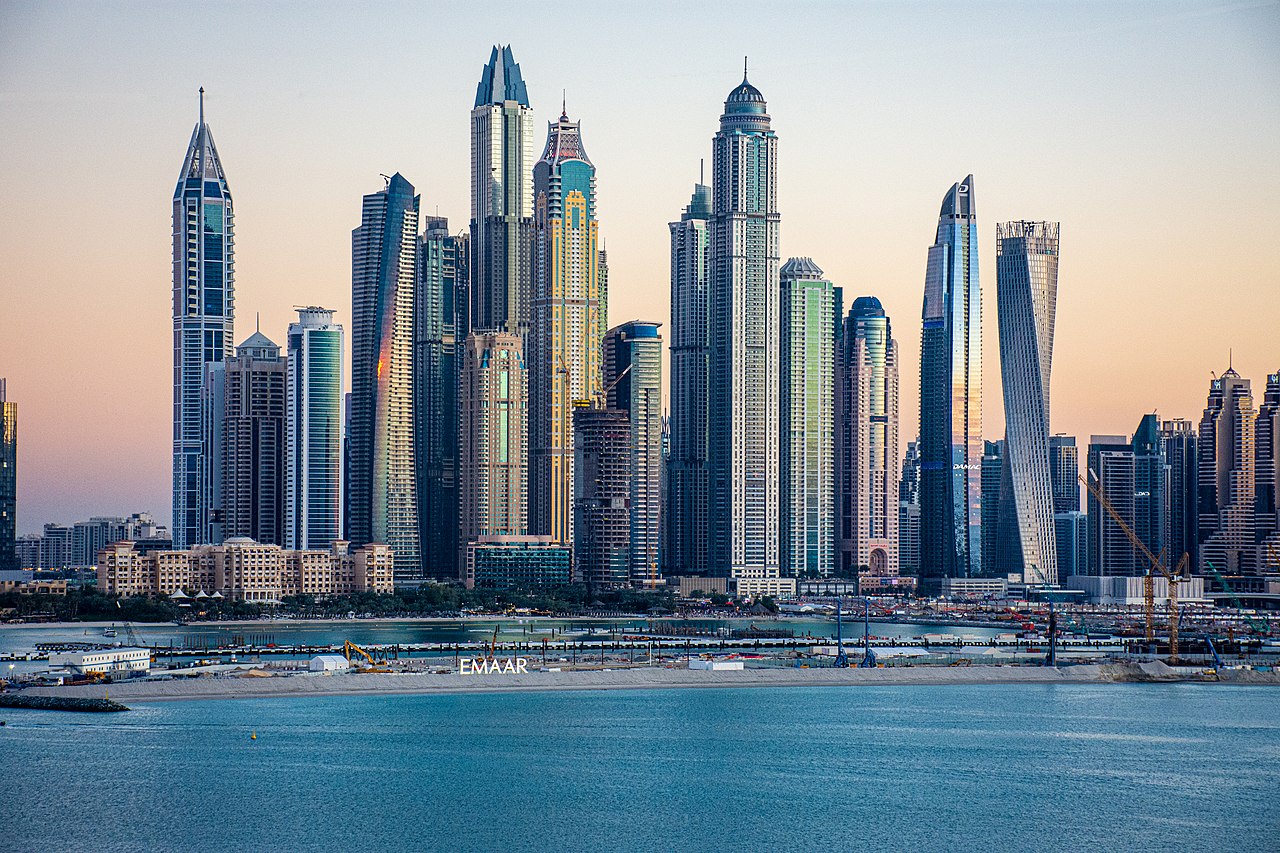
Dubai is the most famous emirate in the United Arab Emirates and the country's largest and most cosmopolitan city, on the shores of the Persian Gulf. In barely half a century it went from a village of fishermen and pearl divers to a record-breaking metropolis: the tallest building in the world (the Burj Khalifa), palm-shaped artificial islands, gigantic malls and a futuristic skyline that sits alongside the souks, the Creek and the historic Al Fahidi neighbourhood. It's a city of superlatives, heat, luxury and contrasts, home to more than 200 nationalities, where almost nothing has been 'there forever'.
📌Best time
The best season is winter, from November to March, with warm, pleasant days (20-28 °C), clear skies and cool nights: this is when you can enjoy the beach, the desert, rooftop terraces and outdoor sightseeing. From May to September the heat is extreme and stifling (40-48 °C, with high humidity by the sea), and life happens almost entirely indoors with air conditioning. The shoulder months (April and October) are hot but bearable. December-January coincide with the Dubai Shopping Festival, with discounts, lights and events.
📌Suggested days
With 3 days you can see the essentials: go up the Burj Khalifa, explore the Dubai Mall and its aquarium, watch the dancing fountain, do a desert safari with a Bedouin dinner, stroll around the Marina and JBR, and cross the Creek by abra (small boat) to the gold and spice souks in Old Dubai. With 4 or 5 days you can add Palm Jumeirah and Atlantis, the historic Al Fahidi neighbourhood, the Museum of the Future, a trip to Abu Dhabi or the Hatta mountains, and time for the beach and pools. Dubai combines very well with Abu Dhabi and the northern emirates.
📌Getting there
Dubai has one of the busiest airports in the world, Dubai International (DXB), just 5 km from the centre. It's the hub of Emirates and flydubai, with direct flights to almost everywhere on the planet (including connections to South America via Europe or São Paulo). There's a second airport, Al Maktoum (DWC), in the south, used mostly by low-cost airlines. From DXB to the centre you can take the metro (Red Line, direct to Burj Khalifa/Dubai Mall) or a taxi (about 15-20 min to Downtown). By road, Dubai is ~1h30 from Abu Dhabi and very close to Sharjah by motorway.
📌Getting around
The Dubai Metro (Red and Green lines, ultra-modern and driverless) is comfortable, cheap and air-conditioned, and connects the airport, Downtown, the Marina and many attractions; you pay with the Nol card (rechargeable) or with contactless Nol. It's complemented by the Marina tram, RTA buses and the abras that cross the Creek for 1 AED. Taxis (cream-coloured) are plentiful, metered and cheap for the distances the metro doesn't cover, as are the Careem and Uber apps. Renting a car makes sense for excursions (Hatta, the desert, the other emirates); in the city, distances are large and it's too hot to walk much.
📌Language and currency
The official language is Arabic, but English is the lingua franca and is spoken everywhere (hotels, shops, taxis, restaurants). The currency is the UAE dirham (AED, sometimes written Dhs or د.إ), pegged to the US dollar at a fixed rate of approximately 3,67 AED to 1 USD (so 1 AED ≈ 0,27 USD). Cards are accepted almost everywhere; it's worth carrying some cash for the abras, the souks, tips and taxis. Many prices in tourist brochures are quoted directly in dollars or euros. Verified July 2026.
💱 AED exchange rate
Loading rate…
🌤️ Weather in Dubai
Loading weather…

Few cities in the world impress as quickly as Dubai. In a single day you can go up the tallest building on the planet, ski on snow inside a shopping mall in the middle of the desert, sandboard down a dune at sunset and have dinner in a skyscraper with the Persian Gulf at your feet. It's a city that set out to be the biggest, the tallest and the most luxurious at everything, and that in half a century went from a handful of mud houses by the Creek to a global metropolis of glass and steel. It dazzles, it overwhelms and it never leaves you indifferent.

But Dubai isn't just records and extravagance. Behind the malls and skyscrapers an older soul survives: the wind-tower alleys of Al Fahidi, the wooden abras that cross the Creek for a few cents, the scent of the spice souk, the glitter of the gold souk and the memory of the pearl divers and merchants who made the city rich long before oil. That contrast between the ancient and the hyper-futuristic is perhaps the most fascinating thing about the place.

This guide helps you get around this two-sided Dubai in a practical way: when to go so you don't melt in the heat, how to use the metro and the Nol card, what the Burj Khalifa, the desert and the parks really cost, what to book in advance, how to cross to Old Dubai by abra and what to respect in a Muslim Gulf country. Whether you come for the luxury, the beach, the desert or out of curiosity, Dubai has plenty to surprise you with.

📖 History of Dubai

Dubai began as a modest village of fishermen and pearl divers on the shores of a saltwater inlet, the Creek, inhabited for centuries and already mentioned in the 18th century. In 1833, the Bani Yas tribe, led by the Al Maktoum family —which still rules the emirate—, settled by the Creek and founded modern Dubai. During the 19th and early 20th centuries the city lived off maritime trade and pearl diving, until Japanese cultured pearls sank that business in the 1930s. It was a shrewd free port that attracted merchants from Persia and India. Everything changed with oil, discovered in 1966: driven by Sheikh Rashid bin Saeed Al Maktoum, Dubai invested its new wealth in infrastructure, and when the United Arab Emirates federation was born in 1971, it was already a rising commercial power. Aware that its oil was limited, it bet on tourism, trade, aviation and finance, building within a few decades the skyline, the artificial islands and the records that make it world-famous today. We tell that dizzying story, from pearls to skyscrapers, on our history page.

Read the full history ↓

🗺️ What to see

Tours you can book

If you only have one day, take a guided tour on the first one: it sets up the rest of your trip and saves you a lot of walking. We look ours up on Civitatis: guided in Spanish and booked online with no fuss. They have over 50 activities in Dubai. Three are below so you get the idea: tap any of them and they all open.

If you book from here we earn a commission and you pay no more. Prices and availability come from Civitatis.

1
Burj Khalifa
The tallest building in the world, at 828 metres, with dizzying observation decks over the whole city and the desert.
Leer más ↓
The Burj Khalifa is the ultimate symbol of Dubai and the tallest building in the world: 828 metres and 163 floors of steel and glass rising above Downtown like a needle. Opened in 2010, it's named after Sheikh Khalifa of Abu Dhabi, whose financial help rescued Dubai during the 2009 crisis. Its silhouette, inspired by a desert flower and Islamic geometry, is recognisable from miles around. The star attraction is going up to the 'At the Top' observation decks. The classic one is on floors 124 and 125 (at 452 m), with an open-air terrace, telescopes and 360º views over the skyscrapers, Palm Jumeirah, the Gulf and the desert. To go higher there's 'At the Top SKY', on floor 148 (at 555 m), one of the highest observation decks on the planet, with a more exclusive service. The most sought-after time is sunset, when the city shifts from gold to night lights, but it's also the most expensive and the first to sell out. It's best to buy your ticket online several days in advance and choose a time slot: the sunset slots ('prime hours') cost quite a bit more and go fast. At the foot of the tower are the Dubai Mall and the lake with the Dubai Fountain, so you can combine everything in one afternoon and evening.
ℹ️ Distance: In Downtown Dubai, next to the Dubai Mall; metro Red Line, Burj Khalifa/Dubai Mall station (with walkway) or taxi · Best time: Sunset for the best light (more expensive and sells out sooner); book online in advance · Admission: At the Top (floors 124/125): from ~150 AED in a regular slot and ~250 AED in 'prime hours'; At the Top SKY (floor 148): ~400-550 AED (verified July 2026) · Duration: 1 to 2 hours
2
The Dubai Mall, the aquarium and the fountain
One of the largest shopping malls in the world, with a giant aquarium, an ice rink and the dancing fountain.
Leer más ↓
The Dubai Mall isn't just a shopping centre: it's a city under one roof and one of the most visited attractions on the planet. It has more than 1.200 shops, hundreds of restaurants, a cinema, an Olympic-size ice rink, an indoor theme park and even an indoor waterfall. Even if you're not into shopping, it's worth exploring for its sheer scale and because it connects directly to the Burj Khalifa. Its big star is the Dubai Aquarium & Underwater Zoo: a huge tank with thousands of marine animals —sharks, giant rays, an albino crocodile— that you can see for free from the mall through one of the largest glass panels in the world, or pay admission to walk through the underwater tunnel and visit the underwater zoo upstairs. It's ideal with kids. As night falls, head out to the outdoor promenade by the lake to see the Dubai Fountain, the most famous (and one of the largest) dancing fountains in the world: illuminated jets of water that 'dance' to music every half hour, with the Burj Khalifa as a backdrop. The show is free and spectacular; you can also watch it from a small boat on the lake.
ℹ️ Distance: Downtown Dubai, at the foot of the Burj Khalifa; metro Burj Khalifa/Dubai Mall station · Best time: Fountain: evening shows every 30 min from about 18:00; the mall is open all day · Admission: Mall and fountain: free. Aquarium seen from the mall: free; tunnel + underwater zoo from ~140 AED (verified July 2026) · Duration: Half a day (or more if you go shopping)
3
The desert: safari and Bedouin dinner
The must-do excursion: dune bashing in a 4x4, camels, sandboarding and dinner under the stars at a desert camp.
Leer más ↓
Although Dubai is a city of skyscrapers, it's surrounded by desert, and heading out to the dunes is one of the most memorable experiences. The classic is the afternoon 'desert safari': you're picked up from your hotel in a 4x4, which heads into the reddish dunes and does 'dune bashing', a thrilling roller-coaster ride over the sand. Then comes a stop to watch the sunset over the dunes, sandboarding, a short camel ride and arrival at a Bedouin-style camp. At the camp there's a buffet dinner with grilled food, tea, Arabic coffee, henna, water pipe (shisha) and shows: belly dancing, whirling tanoura dancing and a fire show. It's touristy, yes, but it works: the combination of dunes, sunset, food and starry sky leaves a great impression. There are also morning safaris (cooler, with quad bikes and sandboarding) and premium options with more exclusive, less crowded camps. For a bit extra you can do a safari in the Dubai Desert Conservation Reserve (the nature reserve), with activities such as falconry, wildlife spotting or a gourmet dinner, pricier but more carefully run. It's best to book with a well-reviewed company, confirm what's included and bring a light jacket (it gets cool at night) and closed shoes.
ℹ️ Distance: Dunes ~40-60 min from the centre; almost all tours include hotel transfer · Best time: All year; November to March is most pleasant; sunset for the afternoon safari · Admission: Shared afternoon safari with dinner from ~120-250 AED per person depending on category; VIP and nature reserve options cost more (verified July 2026) · Duration: About 6 hours (mid-afternoon to night)
4
Palm Jumeirah and Atlantis
The iconic palm-shaped artificial island, crowned by the Atlantis resort and its water park.
Leer más ↓
Palm Jumeirah is one of Dubai's boldest projects: a palm-shaped artificial island, reclaimed from the sea with sand and rock, covered in luxury villas, hotels and beaches. You travel along a central avenue (with a monorail running through it), and at the far end, on the 'crescent' that wraps around the palm, stands the great Atlantis, The Palm resort, with its unmistakable pink façade. Atlantis is a destination in itself: besides the hotel, it has the Aquaventure water park (one of the largest in the world, with dizzying slides and rivers), the Lost Chambers aquarium (with the ruins of an underwater 'Atlantis'), beaches and a line-up of celebrity-chef restaurants. Next door is Atlantis The Royal, even more luxurious, with a much-photographed infinity pool. To see it all from above there's The View at The Palm, an observation deck at the top of one of the towers. Even if you're not staying there, you can visit the Palm: ride the monorail, go to a beach club, eat at one of its restaurants or spend the day at Aquaventure. It's postcard Dubai, luxury and engineering taken to the extreme. You can get there by taxi, by car or by combining metro + tram + monorail.
ℹ️ Distance: West of the city, near Dubai Marina; by taxi/car or metro (Red Line) + tram + Palm monorail · Best time: All year; the water park and beaches are best in the cool season (Nov-Mar) · Admission: Exploring the Palm: free (monorail ticket separate). Aquaventure from ~300-350 AED; The View at The Palm from ~100 AED (verified July 2026) · Duration: Half a day to a full day
5
Dubai Marina and JBR
The seaside skyscraper district, with a waterfront promenade, yachts, restaurants and JBR beach.
Leer más ↓
Dubai Marina is one of the city's most eye-catching and modern districts: an artificial canal more than 3 km long lined with residential skyscrapers, with a waterfront promenade (Marina Walk) full of cafés, restaurants and moored yachts. At night, with the illuminated towers reflected in the water, it's a lovely place to walk, have dinner or a drink. You can cruise the canal on a dhow (traditional boat) or a yacht. Right next to the Marina is JBR (Jumeirah Beach Residence), with The Walk and The Beach: a pedestrian seafront promenade with shops, restaurants and a wide, well-equipped public beach, perfect for spending the day. From here you can see the giant Ain Dubai wheel (the tallest observation wheel in the world, on Bluewaters Island, though it's worth checking whether it's operating). Many boat trips and water activities also leave from here. This whole area —Marina, JBR and Bluewaters— is the relaxed, beachy side of Dubai, very different from record-breaking Downtown. It's a great spot for sunset, for dining outdoors in the cool season and for feeling the city's cosmopolitan rhythm. It's easy to reach by metro (Red Line stations) plus the Marina tram.
ℹ️ Distance: Southwest of the city; metro Red Line (Damac/DMCC) + Marina tram, or taxi · Best time: Sunset and evening; JBR beach is best in the cool season · Admission: Walking around the Marina and JBR: free; JBR public beach: free. Boat trips from ~50-100 AED (verified July 2026) · Duration: Half a day or an afternoon and evening
6
Old Dubai: the Creek, abras and souks
The historic heart by the Creek, with the gold and spice souks and the little boats that cross the water.
Leer más ↓
To discover Dubai before the skyscrapers, you need to cross to Old Dubai, on the shores of the Creek, the saltwater inlet around which the city was born. In the Deira and Bur Dubai districts, the age-old commercial life is still buzzing: bustling alleys, traders from Iran, India and all over the Arab world, and the famous souks. The Gold Souk dazzles with shop windows loaded with jewellery; the Spice Souk fills the air with saffron, incense, nuts and herbs; and there are also textile and perfume souks. The best way to cross from one bank to the other is by abra, the traditional wooden boats that link Deira and Bur Dubai for just 1 AED per trip: a short, cheap crossing and one of the most authentic experiences in the city. Dinner cruises on dhows also leave from the waterfront. In Bur Dubai is the historic Al Fahidi neighbourhood (Al Bastakiya): a restored maze of mud-and-coral houses with wind towers (the Gulf's old-time 'air conditioning'), art galleries, cafés and museums. Here you'll find the Dubai Museum, in the old Al Fahidi Fort, and the Sheikh Mohammed Centre for Cultural Understanding, which offers talks and meals to help you understand Emirati culture. It's Dubai on a human scale, ideal for walking in the morning or at sunset.
ℹ️ Distance: On the shores of the Creek (Deira and Bur Dubai); metro (Green and Red lines) or taxi; cross by abra · Best time: Early morning or at sunset (to avoid the heat); all year · Admission: Souks and Al Fahidi neighbourhood: free. Abra: 1 AED per trip. Neighbourhood museums: inexpensive, a few AED (verified July 2026) · Duration: Half a day
7
Museum of the Future
The ring-shaped building covered in calligraphy, one of the most beautiful in the world, dedicated to tomorrow.
Leer más ↓
The Museum of the Future is one of Dubai's most original and photographed buildings: a huge hollow silver ring, clad in stainless steel with verses of Arabic calligraphy by Sheikh Mohammed cut into its surface, rising next to Sheikh Zayed Road. Opened in 2022, it has been named by several lists as one of the most beautiful buildings on the planet, and it's already a city icon. Inside it isn't a traditional museum: it's an immersive, carefully crafted experience, divided into themed floors that imagine what life will be like in the coming decades —a space station, a future with restored nature, wellness and technology labs— with spectacular installations, digital art and interaction. It's designed for curious adults and kids alike, and it's one of the most 'Instagrammable' visits in Dubai. It's best to book your ticket online in advance because time slots sell out. It combines well with Emirates Towers and Downtown, which are nearby. The building itself, lit up at night, is worth stopping by even if only to see it from outside.
ℹ️ Distance: Next to Sheikh Zayed Road, near Downtown; metro Emirates Towers/Museum of the Future station, or taxi · Best time: All year (it's indoors and air-conditioned); book a time slot online · Admission: ~150-160 AED adults; under-3s free (verified July 2026) · Duration: 1,5 to 2 hours
8
Dubai Frame and other city views
The gigantic golden 'frame' that frames old and new Dubai, with a glass floor high above.
Leer más ↓
The Dubai Frame is a structure as simple as it is clever: a huge golden frame 150 metres high, in Zabeel Park, conceived as a metaphor for the city. From its top bridge, you look one way and see Old Dubai (Deira, the Creek, the historic neighbourhoods) and the other way the futuristic Dubai of skyscrapers: past and present 'framed' in a single glance. The visit includes a ground floor with exhibits on Dubai's history and future, a lift up to the glass walkway at 150 m —with a stretch of transparent floor that turns from opaque to see-through beneath your feet— and the panoramic views. It's cheaper than the Burj Khalifa and offers a different, very insightful perspective on the city, especially at sunset. Dubai is full of observation decks: besides the Burj Khalifa, the Dubai Frame and The View at The Palm, there are observatories in other towers and experiences like Sky Views (with a glass slide and an outdoor edge walk) in Downtown. To choose, think about what you want to see: the records from above (Burj Khalifa), the old/new contrast (Frame) or the palm and the sea (The View).
ℹ️ Distance: Zabeel Park, between Old Dubai and Downtown; metro (Green/Red Line) or taxi · Best time: Sunset to see both sides of the city in good light; all year · Admission: ~50 AED adults, ~20 AED children (verified July 2026) · Duration: 1 to 1,5 hours
📶I have never landed without internet. I arrive and my phone connects to the strongest network in the country I am visiting: I can say I landed, sort out transport, book tours and keep posting, at a seriously good price. I always use the Maya eSIM — check their plans by clicking the banner.See plans →Maya Mobile eSIM — download, install, go
What nobody tells you

💵 Prices

Tickets

TypePrice
Burj Khalifa At the Top (pisos 124/125), franja normalFrom ~150 AED adults; 'prime hours' (sunset) ~250 AED, 2026
Burj Khalifa At the Top SKY (piso 148)~400-550 AED, 2026
Dubai Aquarium & Underwater Zoo (túnel + zoo)From ~140 AED; seen from the mall, free, 2026
Museo del Futuro (Museum of the Future)~150-160 AED adults; under-3s free, 2026
Dubai Frame~50 AED adults, ~20 AED children, 2026
The View at The Palm (mirador de la Palm)From ~100 AED, 2026
Aquaventure (parque acuático de Atlantis)From ~300-350 AED, 2026
Dubai Fountain (fuente danzante) y zocos del Viejo DubáiFree; abra across the Creek 1 AED, 2026
🔄 updated monthlyOfficial / reference values · double-check when buying

Activities and tours

ActivityPriceDurationOperator
Afternoon desert safari with Bedouin dinnerFrom ~120-250 AED per person (shared); VIP and nature reserve options cost more, 2026~6 hDesert safari operators (book based on reviews)
Going up the Burj Khalifa (At the Top)From ~150 AED; sunset from ~250 AED, 20261-2 hAt the Top / Emaar (book online)
Aquaventure water park (Atlantis, Palm)From ~300-350 AED, 2026Half day or full dayAtlantis, The Palm
Dhow dinner cruise on the Creek or in the MarinaFrom ~100-200 AED per person, 20262 to 3 hVarious cruise companies (check)
Abra ride across the Creek (Old Dubai)1 AED per trip (public); private hire ~120 AED/hour, 20265-10 min per tripPublic RTA abras
Admission to the Museum of the Future~150-160 AED, 20261.5-2 hMuseum of the Future (book a time slot)
Beach day at JBR or at a beach club on the PalmPublic beach free; beach clubs from ~100-300 AED, 2026Half day or full dayPublic beaches and clubs
Ski Dubai (skiing and snow at the Mall of the Emirates)From ~250 AED (Snow Park) depending on package, 20262 h or moreSki Dubai (Mall of the Emirates)
🔄 updated monthlyOfficial / reference values · double-check when buying

🚌 How to get there and distances

Getting around

Dubai Metro (Red and Green lines) + Nol card
DurationVariable
Price
Silver Nol 25 AED (with 19 AED credit); fares by zone ~3-7.5 AED; daily cap 14 AED, 2026
Notes
Modern, driverless and air-conditioned. It connects the airport, Downtown, the Marina and many attractions. You pay with a rechargeable Nol card or contactless Nol. There are Gold Class cabins (more expensive) and cabins for women and children
Dubai Tram
PriceIncluded in the Nol card (zone-based fare), 2026
DurationVariable
Notes
Runs through Dubai Marina and JBR and connects with the metro (Red Line) and the Palm Monorail
Taxi (RTA, cream-coloured) and apps (Careem, Uber)
DurationVariable
Price
Flag fall ~5-12 AED depending on time + ~2.5 AED/km; from DXB to Downtown ~50-70 AED, 2026
Notes
Plentiful, metered and fairly cheap. Ideal for anything the metro doesn't cover. Careem (local) and Uber work very well and save you haggling over the fare
Abra (small wooden boat across the Creek)
1 AED per trip (public), 2026
Duration5-10 min
Notes
The cheapest and most authentic way to cross the creek between Deira and Bur Dubai, right by the souks. You pay the boatman in cash
Rental car
PriceFrom ~120-200 AED/day depending on category, 2026
DurationVariable
Notes
Useful for day trips (Hatta, the desert, Abu Dhabi, the northern emirates). In the city, watch out for the automatic Salik tolls and paid parking. Traffic drives on the right and the motorways are excellent
🔄 updated monthlyOfficial / reference values · double-check when buying

How to get there

RouteAirlines / operatorsAvg. priceDuration
DXB Airport → Downtown/city centre by metroDubai Metro, Red Line (Nol card)~5-7.5 AED with Nol, 2026~25-30 min direct to Burj Khalifa/Dubai Mall
DXB Airport → city centre by taxiRTA taxis, Careem, Uber~50-70 AED to Downtown, 202615-20 min (longer at rush hour)
Dubai ↔ Abu DhabiE100/E101 bus (intercity coach), car or taxi/transferBus ~25 AED approx.; car via the E11 motorway, 2026~1 h 30 min - 2 h
Dubai ↔ SharjahIntercity buses, taxi or carBus cheap; taxi varies, 202630-45 min (depending on traffic, which can be heavy)
🔄 updated monthlyOfficial / reference values · double-check when buying

🏨 Where to stay

No exact prices: a scale from $ (budget) to $$$$$ (luxury), with 2-3 options per category.

Iconic luxury (Palm, Downtown, beach)
Price$$$$$
Recommended options
From ~800-2,500+ AED a night, 2026. Big resorts and record-breaking hotels: Atlantis The Palm and The Royal, Burj Al Arab, Address Downtown next to the Burj Khalifa, beach hotels in Jumeirah and on the Palm, with spas, infinity pools and views over the Gulf
Mid-range (4 stars, good location)
Price$$$$$
Recommended options
~300-700 AED a night, 2026. A wide choice of comfortable hotels in Downtown, the Marina, Deira and Bur Dubai, many with a pool and close to the metro; excellent value by the city's standards
Aparthotels and family hotels
Price$$$$$
Recommended options
~250-600 AED a night, 2026. Aparthotels with a kitchen and living room, ideal for families and long stays, in areas such as Barsha, JLT, the Marina and Downtown, many with pool and gym access
Budget (hostels and simple hotels)
Price$$$$$
Recommended options
Hostel bed from ~60-120 AED; budget room ~150-300 AED, 2026. Backpacker-style hostels and simple hotels, mostly in Old Dubai (Deira, Bur Dubai), near the souks and well connected by metro

🍴 Where to eat

Comida callejera y del sur de Asia (Viejo Dubái)
Price$$$$$
Options / signature dish
Dishes ~15-40 AED, 2026. In Deira and Bur Dubai you'll find Indian and Pakistani curries, shawarma, biryani and Persian food at rock-bottom prices and with authentic flavour, a reflection of the huge community from the subcontinent
Cocina árabe y libanesa
Price$$$$$
Options / signature dish
Dishes ~40-100 AED, 2026. Mezze, hummus, tabbouleh, kebabs and charcoal grills in Lebanese, Syrian and Emirati restaurants; a good way to try the region's cooking in a pleasant setting
Restaurantes internacionales y con vista
Price$$$$$
Options / signature dish
Dishes ~80-200 AED, 2026. Food from all over the world in the Marina, JBR and Downtown, with terraces facing the water or the Burj Khalifa; ideal for dining outdoors in the cooler season
Alta cocina y restaurantes de chefs famosos
Price$$$$$
Options / signature dish
Set menus from ~300-800+ AED, 2026. Dubai is packed with Michelin stars and restaurants by international chefs in luxury hotels, on the Palm and in Downtown, with signature dinners and spectacular views for a special night out

📖 History of Dubai

Origins, formation and what the sources say.

A creek, some pearls and a fishing village

It's hard to picture today, among glass skyscrapers and artificial islands, but Dubai was born from something as modest as a saltwater creek. The Creek —Khor Dubai in Arabic— is an inlet of the sea that runs some fourteen kilometres inland and separates the city's two oldest neighbourhoods, Deira and Bur Dubai. For centuries, that creek was the place's only reason for being: a natural, sheltered harbour where boats could anchor, nets could dry and divers could set out.

Because Dubai's first fortune wasn't oil, it was pearls. The warm, shallow waters of the Persian Gulf held some of the world's great pearl oyster beds, and for generations the men of the coast earned their living by diving. Every summer, crews set out in their dhows for months at a time; the divers went down again and again, with no equipment, a clip on their nose and a stone tied to their foot, holding their breath to prise oysters from the seabed. It was gruelling, dangerous work, badly paid and buried in debt, but it drove the economy of the whole region until well into the 20th century.

Around the Creek grew a small settlement of fishermen, divers and merchants. The neighbourhoods of Bur Dubai and Deira, with their mud-and-coral houses and their wind towers —the ingenious 'air conditioners' that caught the breeze and cooled the rooms—, are the historic heart of that early Dubai, the one you can still explore on foot or cross by abra for one dirham.

1833: the Al Maktoum and the bet on free trade

Modern Dubai has a fairly clear birth date: 1833. That year, some eight hundred members of the Bani Yas tribe, led by Sheikh Maktoum bin Butti Al Maktoum, broke away from the neighbouring emirate of Abu Dhabi and settled at the mouth of the Creek. In doing so they founded the Al Maktoum line, the dynasty that still rules Dubai today, almost two centuries later.

From very early on, Dubai's rulers showed a commercial instinct that would shape the city's character. The whole coast —the so-called Trucial States— had been under British influence and protection since treaties signed in the 19th century to curb piracy and secure the route to India. Within that framework, Dubai understood before anyone else that its future lay in being an open, welcoming port for merchants.

The masterstroke came in the early 20th century. When the authorities in the Persian port of Lingah, across the Gulf, raised taxes, Dubai's ruler responded by scrapping tariffs and barriers to trade, and invited merchants to settle in his city. Many Persian and Indian merchant families crossed the Gulf and put down roots in Dubai, bringing capital, contacts and commercial know-how. That free-port policy —low taxes, open arms to immigration and business— made Dubai the great marketplace of the coast and laid the foundations for everything that followed. The city was already, in essence, what it still is: a place made for trade.

The collapse of pearling and the discovery of oil

The first big blow to Dubai came from an unexpected place: Japan. In the 1920s and 1930s, the development of Japanese cultured pearls —mass-produced and cheap— sank the price of the Gulf's natural pearls. On top of that disaster came the worldwide Great Depression. Within a few years, the industry that had sustained Dubai and the whole region for centuries collapsed, and the city fell into harsh poverty. Many families emigrated; those who stayed survived on trade, fishing and smuggling through the Creek.

For decades, Dubai kept betting on what it knew how to do: trade. Under the long rule of Sheikh Saeed bin Maktoum and, above all, his son Sheikh Rashid bin Saeed Al Maktoum —often called the 'father of modern Dubai'—, the city invested in its port and in dredging the Creek so larger ships could come in. Rashid had one obsession: modernising infrastructure to attract business.

And then, in 1966, everything changed. Oil was discovered in the offshore Fateh field, off the coast of Dubai. The first exports began in 1969. The emirate never had as much oil as its neighbour Abu Dhabi, but what it had arrived at the right moment and in the right hands. Instead of handing it out or squandering it, Sheikh Rashid poured it into projects that would multiply wealth: a deep-water port, the airport, roads, the free zone. Oil wasn't Dubai's destiny, but the fuel to reinvent itself once again.

1971: the federation of the United Arab Emirates is born

In the late 1960s, the United Kingdom announced it would withdraw from the Persian Gulf and end the protection treaties it held with the Trucial emirates. The small coastal territories were suddenly left to fend for themselves in a turbulent region. The answer was union. Driven above all by Sheikh Zayed bin Sultan Al Nahyan of Abu Dhabi, and backed by Sheikh Rashid of Dubai, the creation of a federal state was negotiated.

On 2 December 1971, the United Arab Emirates officially came into being, a federation bringing together Abu Dhabi, Dubai, Sharjah, Ajman, Umm al Quwain and Fujairah; Ras al Khaimah joined a few months later, in early 1972. Sheikh Zayed was the country's first president —a post he would hold until his death in 2004— and Abu Dhabi, the largest and most oil-rich emirate, became the capital. Dubai, the federation's second power, gained decisive weight: by tradition, the ruler of Dubai would be the country's vice president and prime minister.

That federation of seven emirates, each with its own ruling family, proved surprisingly stable and prosperous. The combination of Abu Dhabi's huge oil wealth and Dubai's commercial drive shaped a young state that, in barely half a century, went from a handful of coastal villages to one of the most modern and wealthy countries in the Middle East. For Dubai, being part of the Emirates gave it the stability and backing to launch, fearlessly, into its most ambitious transformation.

From pearls to skyscrapers: a total reinvention

Aware that its oil would run out —today it accounts for a tiny share of its economy—, Dubai made a bold decision: not to live off crude, but to use it to build something else. Driven first by Sheikh Rashid and then by his son, Sheikh Mohammed bin Rashid Al Maktoum, the emirate set out to become a global hub for trade, tourism, aviation, logistics and finance. The strategy was to diversify until oil no longer mattered.

The milestones came at dizzying speed. The Jebel Ali free zone was created, home to one of the largest man-made ports in the world. The airline Emirates, founded in 1985, turned Dubai into an air hub linking continents and made its airport one of the busiest on the planet. Then came the megaprojects that made the city world-famous: the sail-shaped Burj Al Arab hotel (1999), the artificial islands of the Palm Jumeirah, gigantic malls and, in 2010, the Burj Khalifa, the tallest building in the world at 828 metres. The city filled up with superlatives.

The path wasn't a straight line: the 2009 financial crisis hit the Dubai of bricks and easy credit hard, and it took a bailout from neighbouring Abu Dhabi —hence the great tower bears the name of Sheikh Khalifa—. But the city recovered and kept growing, with new icons such as the Museum of the Future and Expo 2020 (held in 2021-2022). Today Dubai is a global metropolis of more than three million people, where over two hundred nationalities live side by side and 90% of the population is foreign. Behind the glitter there are still shadows —the weight of the migrant labour that built the city, the limits on freedoms, the sustainability of so much luxury in the middle of the desert—. But the underlying story is astonishing: within the lifetime of a single elderly person, Dubai went from diving for pearls beside a creek to brushing the clouds. Few cities in the world have reinvented themselves so fast and on such a grand scale.

📚 Bibliography

  • Wikipedia (ES) — «Dubái»: https://es.wikipedia.org/wiki/Dub%C3%A1i
  • Wikipedia (EN) — «Dubai»: https://en.wikipedia.org/wiki/Dubai
  • Wikipedia (EN) — «History of Dubai»: https://en.wikipedia.org/wiki/History_of_Dubai
  • Wikipedia (EN) — «Al Maktoum»: https://en.wikipedia.org/wiki/Al_Maktoum
  • Wikipedia (EN) — «Rashid bin Saeed Al Maktoum»: https://en.wikipedia.org/wiki/Rashid_bin_Saeed_Al_Maktoum
  • Wikipedia (EN) — «Trucial States»: https://en.wikipedia.org/wiki/Trucial_States
  • Wikipedia (ES) — «Emiratos Árabes Unidos»: https://es.wikipedia.org/wiki/Emiratos_%C3%81rabes_Unidos
  • Wikipedia (EN) — «United Arab Emirates»: https://en.wikipedia.org/wiki/United_Arab_Emirates
  • Wikipedia (EN) — «Burj Khalifa»: https://en.wikipedia.org/wiki/Burj_Khalifa
  • UNESCO — «Khor Dubai» (tentative list): https://whc.unesco.org/en/tentativelists/5662/

❓ Frequently asked questions

How many days do I need to see Dubai?+
With 3 days you can cover the essentials: the Burj Khalifa and the Dubai Mall with its fountain, a desert safari with dinner, the Marina and JBR, and Old Dubai with the souks and the abra crossing. With 4 or 5 days you can add the Palm Jumeirah and Atlantis, the historic Al Fahidi district, the Museum of the Future, some beach time and a trip to Abu Dhabi or Hatta. Dubai pairs very well with Abu Dhabi and the northern emirates, so many people spend a week or ten days to see it all at a relaxed pace.
When is the best time to visit Dubai?+
Winter, from November to March, is the best time: warm, pleasant days (20-28 °C), clear skies and cool nights, ideal for the beach, the desert and terraces. From May to September the heat is extreme (40-48 °C with high humidity) and life moves almost entirely indoors into air-conditioned spaces. April and October are hot but bearable. If you're into shopping and events, December-January bring the Dubai Shopping Festival. Bear in mind that during Ramadan many opening hours change and eating in public during the day is more discreet.
How do I get around Dubai? Metro or taxi?+
The Dubai Metro is comfortable, cheap and air-conditioned, and connects the airport, Downtown, the Marina and many attractions; you pay with the Nol card (the Silver card costs 25 AED including credit) and trips cost between 3 and 7.5 AED depending on zones, with a daily cap of 14 AED. For anything the metro doesn't cover there are taxis (metered and cheap) and the Careem and Uber apps. For trips to the desert, Hatta or the other emirates, it's best to rent a car or take a tour. Walking long distances isn't practical because of the heat and how spread out everything is.
What cultural precautions should I take in Dubai?+
Dubai is very cosmopolitan and relaxed by Gulf standards, but it's still a Muslim country and it's worth respecting certain rules. Dress modestly in public areas, souks and especially mosques (shoulders and knees covered); at beaches, pools and clubs swimwear is perfectly fine. Alcohol is served in hotels and licensed venues, not on the street, and getting drunk in public is frowned upon. Avoid overly effusive displays of affection in public. During Ramadan, people don't eat or drink in public during the day. With common sense and respect you won't have any problems: it's a safe destination and very used to tourism.
Do I need to book the Burj Khalifa and attractions in advance?+
Yes, especially in high season (winter) and for the Burj Khalifa. 'At the Top' tickets for the sunset slot ('prime hours') are the most sought-after and sell out days in advance, as well as being considerably more expensive; buying them online ahead of time saves you money and queues. The Museum of the Future also works with time slots that fill up, so it's best to get your ticket online. The desert safari and water parks can be booked one or two days ahead. Many combos and passes (such as multi-attraction passes) help you save if you plan to see a lot.
Is Dubai expensive? How can I save money?+
Dubai has a reputation for being expensive, but you can enjoy it on very different budgets. Luxury accommodation and restaurants are pricey, but there are mid-range and budget hotels, and eating in Old Dubai (Indian curries, shawarma) is dirt cheap. The metro is inexpensive, many of the best 'attractions' are free (the souks, the dancing fountain, public beaches, strolling the Marina, the abra crossing for 1 AED) and there's no VAT on almost anything apart from 5% on some items. The big expenses are attraction tickets (Burj Khalifa, parks, safari): pick the ones that interest you most and look for combos. With some planning, Dubai can be surprisingly affordable.

More places in United Arab Emirates

FujairahHattaIsla SaadiyatIsla YasRas al KhaimahSharjah
See every place in United Arab Emirates →The history of United Arab Emirates →
Sources consulted (17)
Still planning?
Explore more destinations in United Arab Emirates
See all destinations →