Viajá con Gus
Home › United Arab Emirates › Al Ain
Al Ain
🇦🇪 United Arab Emirates · Abu Dhabi and its islands

Al Ain

🪪 What do I need to enter United Arab Emirates?Pick your citizenship and we tell you the visa, the days and the paperwork, with the official source.

By leaving your email and citizenship you agree to receive the documents you asked for and weekly travel news. You can unsubscribe whenever you want. How we handle your data.
Jump to what you need
📍Region
Al Ain is the second city of the emirate of Abu Dhabi. It lies inland, next to the border with Oman, about 130-160 km from both the capital and Dubai. Known as the 'garden city' of the Emirates, it is a green oasis in the middle of the desert: palm groves watered by ancient channels (falaj), mud-brick forts, the Jebel Hafeet mountain and a pace of life far calmer and more traditional than in the big coastal cities. It is the birthplace of Sheikh Zayed, the father of the nation, and Unesco has listed its historic centre and oases as a World Heritage Site. They were the first site in the country to receive that recognition.
📌Best time to visit
The best season is winter, from November to March. Days are pleasant (around 20-28 °C) and nights are cool, which is ideal for walking through the oases, driving up Jebel Hafeet and touring the forts. Because it is inland, Al Ain is drier than the coast (less humid and a little cooler at night). In summer (May to September), though, the heat is extreme, often above 40 °C, and outdoor sightseeing becomes very hard going. The shaded oases offer a refuge even on hot days.
📌Suggested days
You can see Al Ain in 1 well-planned day, often as a day trip from Abu Dhabi or Dubai: the main oasis, Al Jahili Fort, the camel market and the drive up Jebel Hafeet at sunset. With 2 days you can add more oases and forts, the Al Ain National Museum, Hili Archaeological Park, the zoo and the hot springs at the foot of the mountain, all at a much gentler pace. It is an ideal place to get away from the bustle and discover the country's roots.
📌Getting there
Al Ain is very well connected by motorway, about 90 minutes to 2 hours by car from both Abu Dhabi and Dubai. The most convenient way to get there is a rental car, which lets you reach its fairly spread-out sights, or an organised tour. There are also cheap intercity buses from Abu Dhabi and Dubai to the Al Ain bus station. The city has a small airport (AAN), but almost all travellers arrive overland from the coast.
📌Getting around
Al Ain is a sprawling city with its sights spread out, so getting around by car (a rental or a taxi) is the most practical option. Taxis are cheap and metered, and it is common to agree with a driver to take you around the different sights for the day. There is no metro or tram. You can only get up Jebel Hafeet by vehicle, along the famous mountain road. Once you are at the oases and the historic centre you can walk, and you can also cycle around some of the oases.
📌Language and currency
The official language is Arabic. English is widely used in hotels, shops and attractions, though a little less in traditional Al Ain than in Dubai. The currency is the UAE dirham (AED), which is pegged to the US dollar at a fixed rate of about 3.67 AED to 1 USD (1 AED ≈ 0.27 USD). Cards are accepted almost everywhere, but it is worth carrying some cash for taxis, the camel market and small purchases. Verified July 2026.
💱 AED exchange rate
Loading rate…
🌤️ Weather in Al Ain
Loading weather…

After the skyscrapers of Dubai and the grand monuments of Abu Dhabi, Al Ain is a breath of fresh air. This inland 'garden city', far from the coast, is a green oasis where time slows down. It has endless palm groves watered by ancient channels, sand-coloured mud-brick forts, camels, and a mountain that rises abruptly out of the desert. It is the most traditional and authentic side of the Emirates, and also its historic heart, because this is where Sheikh Zayed, the father of the nation, was born and grew up.

For thousands of years Al Ain was a vital stop on the caravan routes between Oman and the Gulf. That was thanks to its springs and to an ingenious irrigation system, the falaj, which brings water from the mountains through underground channels. Unesco listed the oasis, its forts and its archaeological sites, some of them thousands of years old, as a World Heritage Site, the first place in the Emirates to receive that status. Walking under the palms, with water murmuring along the channels, takes you back to the country as it was before oil.

This guide helps you plan your visit. It covers how to get there from the coast, which oases and forts to see and when to drive up Jebel Hafeet for the best sunset. It also explains how the camel market works, what each sight costs (many of the best ones are free) and how to combine Al Ain with Abu Dhabi, Dubai or the desert. A day in Al Ain completely changes the picture most people have of the Emirates.

📖 History of Al Ain

Al Ain (meaning 'the spring') is one of the oldest continuously inhabited places on the Arabian Peninsula. Archaeological remains more than 4,000 years old, from the Bronze Age, have been found at sites such as Hili and Jebel Hafeet, including circular tombs and the earliest uses of the falaj irrigation system. Its plentiful fresh water in the middle of the desert made it a key stop for caravans travelling between Oman and the Gulf coast for thousands of years, as well as a lush grove of date palms. The region was a stronghold of the Bani Yas tribe and of the ruling Al Nahyan family, who used it as an inland retreat from the humid heat of the coast. Sheikh Zayed bin Sultan Al Nahyan, the future founder and first president of the Emirates, was born here around 1918. He governed Al Ain as his family's representative before taking charge of Abu Dhabi in 1966 and founding the country in 1971. Zayed had a special fondness for Al Ain and gave it particular attention, 're-greening' it with huge plantations. In 2011, the oasis, forts and archaeological sites of Al Ain became the first World Heritage Site in the Emirates. We tell that long history, from the Bronze Age to Sheikh Zayed, on our history page.

Read the full history ↓

🏛️ Al Ain is in Abu Dhabi and its islands

The capital and the country's richest emirate: from the Liwa oasis and the founding on the island to oil, the Grand Mosque, the Louvre on Saadiyat and Formula 1 on Yas.

Read the history of Abu Dhabi and its islands →

🗺️ What to see

Tours nearby, in Hatta

They depart from Hatta, 76 km away. If you book from this link we earn a commission and you pay no more.

1
Al Ain Oasis (World Heritage Site)
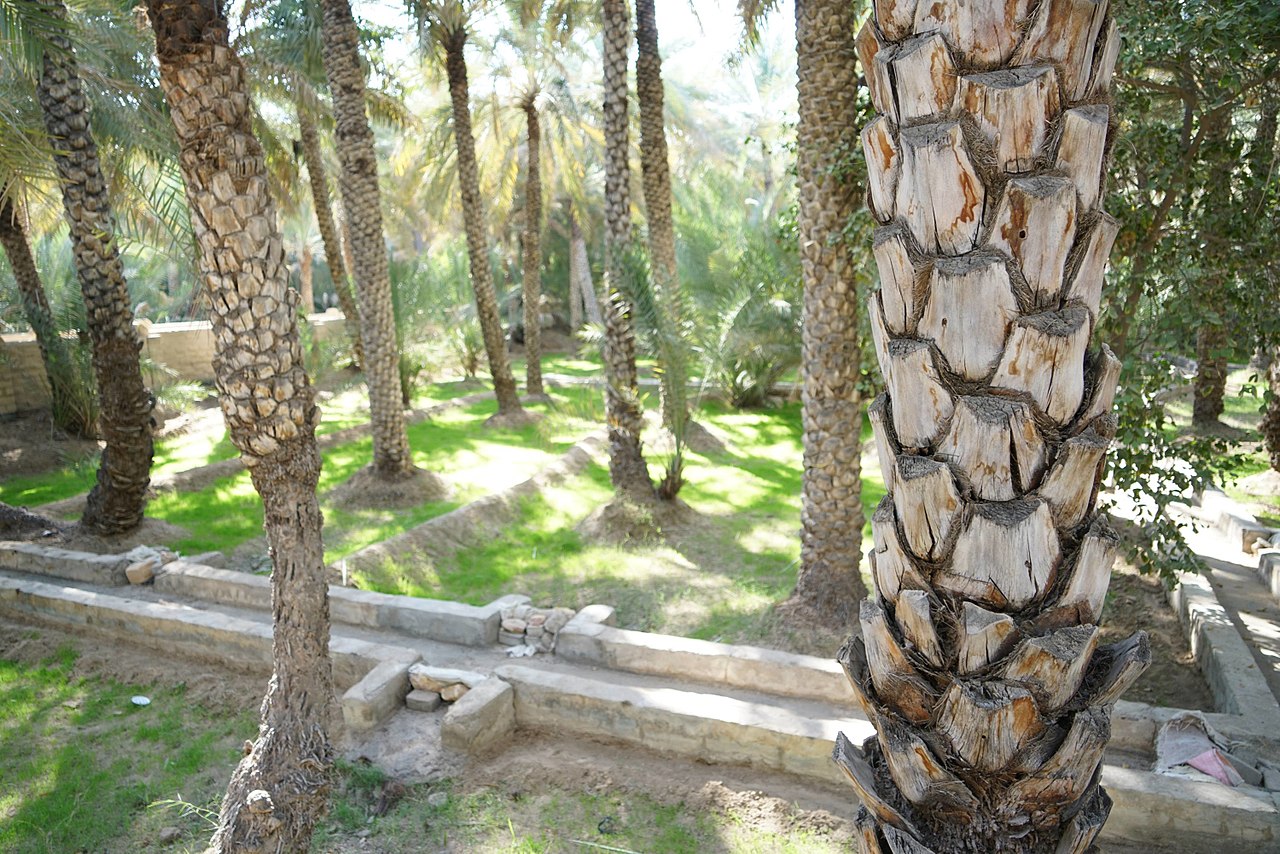
A vast palm grove with more than 140,000 date palms watered by ancient channels, with shady paths right in the city centre.
Leer más ↓
Al Ain Oasis is the heart of the city and its greatest treasure. This gigantic palm grove covers about 1,200 hectares and holds more than 140,000 date palms, right in the city centre. Walking its paths in the cool shade of the palms, with water running through the channels, is a peaceful and beautiful experience. It is quite literally an oasis of calm amid the desert and the heat. The most fascinating part is its irrigation system, the falaj (aflaj in the plural). This network of channels, many of them underground, brings water from the mountains and shares it out among the palm plots using an age-old method of water turns allocated to each family. This ingenious system made farming in the desert possible for thousands of years. It is one of the reasons Unesco listed the oasis as a World Heritage Site in 2011, the first in the Emirates. The oasis has a visitor centre (Eco-Centre) that explains its history, its ecology and the falaj system, and it has several entrances. Admission is free. It is ideal to explore on foot or by bike, especially in the morning or at sunset. Several smaller oases are scattered around the city (such as Al Qattara, Al Jimi and Hili), and they are part of the same heritage site.
ℹ️ Distance: Right in the centre of Al Ain, next to the historic centre; reach it by car or taxi and explore on foot or by bike · Best time to visit: Morning or sunset; all year round (shady even in summer) · Admission: Free; visitor centre (Eco-Centre) free (verified July 2026) · Duration: 1 to 2 hours
2
Jebel Hafeet
The highest mountain in the emirate, with a record-breaking road that climbs to 1,240 m and spectacular views over the desert and Oman.
Leer más ↓
Jebel Hafeet is Al Ain's signature mountain and one of the highest in the Emirates, at about 1,240 metres. It rises abruptly from the desert plain on the border with Oman. Driving to the summit is one of the city's top things to do. The road up is spectacular, with perfectly paved bends snaking up the slope, and it regularly features among the world's best driving roads. The views from the lookouts along the way and at the top are superb. You can see the green oasis of Al Ain, the vast desert, the reddish dunes and, in the distance, the mountains of Oman. The highlight is sunset, when the sun turns the whole landscape gold and red and then the city lights come on far below. At the top there is a hotel and a viewing terrace where you can have a drink with a view. At the foot of the mountain are the Green Mubazzarah hot springs. This park has natural hot springs, gardens, lakes and picnic areas, and it is very popular with local families. You need a vehicle to get up Jebel Hafeet (your own car or a taxi), and the drive and the lookouts are free. Bring water and, in winter, something warm, because it gets cool at the top.
ℹ️ Distance: About 30 km south of central Al Ain; you can only get up by car or taxi via the mountain road · Best time to visit: Sunset for the best views; winter for the weather; all year round · Admission: Drive up and lookouts free; Green Mubazzarah hot springs free or a minimal fee (verified July 2026) · Duration: 2 to 3 hours (including the drive up and the sunset)
3
Al Jahili Fort
One of the largest and most beautiful mud-brick forts in the country, dating from the 19th century, with an exhibition on the explorer Wilfred Thesiger.
Leer más ↓
Al Jahili Fort is one of the largest and most impressive historic forts in the Emirates. Sheikh Zayed bin Khalifa Al Nahyan ('Zayed the Great') built it in the late 19th century as a summer residence for the ruling family and to protect the city and its precious palm groves. Its sand-coloured mud walls, round towers and multi-storey stepped tower are a lovely example of the region's traditional earthen architecture. Today the restored fort is a cultural centre and free to visit. You can wander its courtyards, walls and towers and get a sense of what life and defence were like in the oasis. It houses an interesting permanent exhibition on the British explorer Wilfred Thesiger. In the mid-20th century he crossed the formidable Rub' al Khali desert ('the Empty Quarter') on foot and by camel with Bedouin companions, and he left an extraordinary record in photographs and writing of that world before oil. Al Jahili is part of the group of Al Ain forts and historic buildings recognised by Unesco. It combines very well with the nearby oasis and with the city's other forts. It is a short but very evocative visit, ideal for understanding the oasis's defensive and farming past.
ℹ️ Distance: Near the oasis and the historic centre; by car or taxi · Best time to visit: Morning or afternoon (because of the heat); usually closed one day a week (check) · Admission: Free (verified July 2026) · Duration: 1 hour
4
Al Ain Camel Market
One of the last traditional camel markets in the country, a lively scene of buying, selling, haggling and Bedouin life.
Leer más ↓
Al Ain Camel Market is one of the last traditional camel markets left in the Emirates. It offers a unique window into the Bedouin culture that still thrives beneath the country's modern surface. In a dusty compound on the edge of the city, people buy and sell all kinds of camels (for racing, breeding, milk or meat) among pens, trucks, traders and the noise of haggling. A visit is an authentic and very photogenic experience. You will see camels of every size and colour and soak up the atmosphere of a trade that goes back centuries. The sellers, many of them from Pakistan or Afghanistan, are usually friendly and may even invite you to get close to the animals or climb on for a photo. Go in the morning, when it is busiest. This is a real working place, not a tourist set-up, so go with respect and common sense. There is no admission fee, but someone will often offer to act as a 'guide' or ask for a tip for showing you the animals or for photos, so agree beforehand whether you will give anything. It is one of the most genuine and unusual experiences in the whole country.
ℹ️ Distance: On the outskirts of Al Ain (Bawadi/Mezyad area); by car or taxi · Best time to visit: In the morning (7:00-12:00), when it is busiest; all year round · Admission: Free; possible tips for informal 'guides' (agree beforehand) (verified July 2026) · Duration: 45 min to 1 hour
5
Al Ain National Museum and Sultan Fort
The oldest museum in the Emirates, covering the history, archaeology and ethnography of the oasis, next to Sheikh Sultan's fort.
Leer más ↓
Al Ain National Museum is the oldest museum in the Emirates, founded in 1969 by Sheikh Zayed himself. It stands next to the oasis and the Sultan bin Zayed Fort (Eastern Fort). Its archaeology, ethnography and history collections tell the story of life in the region from prehistory to the founding of the country. They include finds from Bronze Age and Iron Age sites, weapons, jewellery, coins, tools, old photographs and objects from Bedouin and oasis life. It is a highly recommended stop for putting everything you see in Al Ain into context. It helps you understand the falaj system, the importance of pearls and dates, local traditions and the figure of Sheikh Zayed. Next to the museum is Sultan Fort (Eastern Fort), a small mud-brick fort that is part of the complex and where, according to tradition, Sheikh Zayed was born. Al Ain is full of historic forts. Besides Al Jahili and Sultan Fort there are Muraijib, Al Qattara, Hili and others, many of them restored, open to visitors and almost all free. Together with the oases and the archaeological sites, they make up the ensemble that Unesco recognised as a World Heritage Site. Check opening hours and possible closures for renovation before you go, as some museums take turns closing for works.
ℹ️ Distance: Next to the oasis and the historic centre; by car or taxi · Best time to visit: Morning or afternoon; check opening hours and closures for renovation (check) · Admission: Free or a token fee (a few AED); check beforehand for possible renovation works (verified July 2026) · Duration: 1 to 1.5 hours
6
Hili Archaeological Park
One of the most important Bronze Age sites on the Arabian Peninsula, with tombs dating back 4,000 years.
Leer más ↓
Hili Archaeological Park protects one of the most important prehistoric sites in the Emirates and on the entire Arabian Peninsula. It preserves the remains of Bronze Age settlements and tombs from about 4,000-5,000 years ago, from the time of the Umm an-Nar civilisation. They show that this area was inhabited and farmed far earlier than most people imagine. The star attraction is the Hili Grand Tomb, a reconstructed circular stone tomb several metres across. Its entrances are decorated with reliefs of people and animals, and it is one of the most impressive prehistoric monuments in the region. Around it are other archaeological remains, including traces of some of humanity's earliest falaj irrigation systems, now set within a pleasant landscaped public park. The park combines archaeological interest with green spaces and picnic areas, so it is both a heritage site and a place where local families spend time. It is part of the ensemble listed by Unesco as a World Heritage Site. If you are interested in the country's deep history, it is a fascinating and uncrowded visit that shows the oldest roots of this land.
ℹ️ Distance: In the Hili area, north of Al Ain; by car or taxi · Best time to visit: Morning or sunset; winter for the weather; all year round · Admission: Very cheap park entry (a few AED); check (verified July 2026) · Duration: 1 hour
7
Al Ain Zoo and Sheikh Zayed Desert Learning Centre
A large zoo and safari with desert and African wildlife, plus a modern educational centre dedicated to Sheikh Zayed.
Leer más ↓
Al Ain Zoo is one of the largest and best-kept zoos in the region, with more than 4,000 animals in spacious enclosures. Many are desert and African species, including endangered ones such as the Arabian oryx and big cats. The oryx is the peninsula's emblematic antelope, which came close to extinction and recovered thanks to breeding programmes. The zoo has a safari area where you tour open ground with animals in a vehicle, which is very popular with families. Inside the grounds is the Sheikh Zayed Desert Learning Centre, a modern, sustainable, award-winning educational centre. It is devoted to desert nature, local culture and, above all, the life and legacy of Sheikh Zayed, with interactive galleries on desert life, the history of Abu Dhabi and its transformation. It is an educational and very well-designed visit, ideal for kids and adults alike. The zoo is a good way to spend half a day, especially with children or when it is very hot and you want a more organised activity. Different ticket types are available depending on whether they include the safari or the learning centre. The zoo is on the edge of the city, at the foot of the Jebel Hafeet area, so you can combine it with the drive up the mountain.
ℹ️ Distance: South of the city, on the way to Jebel Hafeet; by car or taxi · Best time to visit: Morning (cooler, and the animals are more active); winter; all year round · Admission: Basic entry ~30 AED adults, ~10 AED children; with learning centre ~60 AED; safari from ~200 AED (verified July 2026) · Duration: Half a day
8
The smaller oases and the historic centre
Palm groves and forts scattered across the city (Al Qattara, Al Jimi, Al Muwaiji), where the traditional country was born.
Leer más ↓
Besides the great Al Ain Oasis, the city keeps several smaller oases in its different neighbourhoods: Al Qattara, Al Jimi, Al Muwaiji and Hili. All are watered by the same falaj system and all are part of the World Heritage Site. Each has its own charm, with paths among the palms, small mosques, traditional houses and the feel of a village frozen in time. Exploring them at a relaxed pace is a lovely way to experience the most authentic Al Ain, away from the crowds. In the Al Muwaiji neighbourhood is Al Muwaiji Fort, restored and turned into a museum space with close ties to the ruling family. Sheikh Khalifa, the country's president for many years, was born there, and it tells the story of the Al Nahyan family and the succession. Al Qattara and Al Jimi also have arts and crafts centres, forts and historic houses that show traditional life, pottery, weaving and oasis farming. This whole ensemble of oases, forts and aflaj is what makes Al Ain unique in the Emirates. It is not the city of records but the city of origins, of the country's Bedouin and farming roots. Many of these visits are free and very quiet. Check opening hours (several sites close one day a week) and bring water, a hat and comfortable shoes.
ℹ️ Distance: Spread across Al Ain's different neighbourhoods; best visited by car or taxi · Best time to visit: Morning and sunset; winter; all year round · Admission: Oases and most forts: free; check opening hours and closures (verified July 2026) · Duration: Half a day combining several
📶I have never landed without internet. I arrive and my phone connects to the strongest network in the country I am visiting: I can say I landed, sort out transport, book tours and keep posting, at a seriously good price. I always use the Maya eSIM — check their plans by clicking the banner.See plans →Maya Mobile eSIM — turn travel mode on
What nobody tells you

💵 Prices

Tickets

TypePrice
Oasis de Al Ain y oasis menores (Patrimonio Unesco)Free, 2026
Jebel Hafeet (subida y miradores)Free; Green Mubazzarah hot springs free or minimal, 2026
Fuerte Al Jahili y la mayoría de los fuertes históricosFree, 2026
Mercado de camellos de Al AinFree (possible informal tips), 2026
Museo Nacional de Al Ain / fuertes-museoFree or a few AED; check for renovation works, 2026
Parque arqueológico de HiliVery cheap entry (a few AED), 2026
Al Ain Zoo (entrada básica)~30 AED adults, ~10 AED children; with safari from ~200 AED, 2026
🔄 updated monthlyOfficial / reference values · double-check when buying

Activities and tours

ActivityPriceDurationOperator
Walk or bike ride through Al Ain OasisFree, 20261-2 hAl Ain Oasis (free access)
Drive up Jebel Hafeet at sunsetFree (by car/taxi), 20262-3 hMountain road (car or taxi)
Visit to the camel marketFree, 202645 min-1 hAl Ain Camel Market
A day at Al Ain Zoo with safari or learning centreFrom ~30 AED; safari from ~200 AED, 2026Half dayAl Ain Zoo
A dip in the hot springs at Green MubazzarahFree or minimal admission, 20261-2 hGreen Mubazzarah (foot of Jebel Hafeet)
Day trip to Al Ain from Dubai or Abu DhabiBy car or tour; admission mostly free, 2026Full dayRental car or organised tour
Tour of historic forts and oases (Unesco route)Most are free, 2026Half dayAl Ain sites (car or taxi)
Wadi Adventure (rafting and artificial surfing) or Al Ain ParadiseDepending on the park, from approx. ~100 AED, 2026Half dayAl Ain parks (check)
🔄 updated monthlyOfficial / reference values · double-check when buying

🚌 How to get there and distances

Getting around

Rental car
From ~120-200 AED/day, 2026
DurationVariable
Notes
The most comfortable way to get around Al Ain, where the attractions are spread out and there is no metro. Essential for driving up Jebel Hafeet. Excellent motorways and roads
Taxi (metered) and apps
PriceCheap flag fall and per-km rate; full-day trip negotiable, 2026
DurationVariable
Notes
Cheap and practical; many travellers agree with a driver to take them to the different sights over the day, including the drive up the mountain
Intercity bus from Abu Dhabi / Dubai
PriceCheap (a few to ~25 AED depending on origin), 2026
Duration~2 h
Notes
Comfortable buses connecting Al Ain with the capital and with Dubai; once in the city, a taxi or car is the best way to get around
Al Ain city bus
Very cheap (Hafilat card), 2026
DurationVariable
Notes
Local bus network, cheap but limited and slow for visitors short on time; a taxi or car is better
Cycling in the oases
PriceFree/cheap rental depending on location, 2026
DurationVariable
Notes
Some oases and parks can be explored by bike along their shady paths; a lovely way to enjoy the palm groves
🔄 updated monthlyOfficial / reference values · double-check when buying

How to get there

RouteAirlines / operatorsAvg. priceDuration
Abu Dhabi → Al Ain by carRental car or taxi/transferDepending on service; E22 motorway, 2026~1 h 30 min - 2 h (~150 km)
Dubai → Al Ain by carRental car or taxi/transferDepending on service; E66/E77 motorway, 2026~1 h 30 min - 2 h (~130 km)
Abu Dhabi / Dubai → Al Ain by busIntercity buses (Al Ain terminal)Cheap, a few to ~25 AED, 2026~2 h
Organised day tripTour operators in Abu Dhabi/DubaiDepending on the tour, 2026Full day
🔄 updated monthlyOfficial / reference values · double-check when buying

🏨 Where to stay

No exact prices: a scale from $ (budget) to $$$$$ (luxury), with 2-3 options per category.

Luxury (mountain and city)
Price$$$$$
Recommended options
From ~500-1,200+ AED per night, 2026. Luxury hotels such as the landmark one at the top of Jebel Hafeet (with desert views) and resorts in the city, with spa, pools and gardens; fewer than on the coast but very well kept
Mid-range (4 stars)
Price$$$$$
Recommended options
~250-500 AED per night, 2026. A good choice of comfortable hotels in the city, many with a pool, ideal for one or two nights exploring the oases and the mountain
Budget and family
Price$$$$$
Recommended options
~150-300 AED per night, 2026. Simple hotels and apartments in the city, good value by the country's standards; Al Ain is usually cheaper than Dubai or Abu Dhabi for accommodation
Camping and nature
Price$$$$$
Recommended options
Depending on the option, 2026. Around Jebel Hafeet and Green Mubazzarah there are picnic areas and camping options for those looking for nature and the outdoors; check facilities and permits

🍴 Where to eat

Comida del sur de Asia y callejera
Price$$$$$
Options / signature dish
Dishes ~15-40 AED, 2026. Indian and Pakistani curries, biryani, shawarma and cheap food in the working-class neighbourhoods; generous and tasty, a reflection of the oasis's working community
Cocina árabe y emiratí
Price$$$$$
Options / signature dish
Dishes ~30-90 AED, 2026. Mezze, grills, machboos and regional cooking in pleasant restaurants around the city; a good way to try the traditional flavours of the interior
Restaurantes con vista en Jebel Hafeet
Price$$$$$
Options / signature dish
Dishes ~60-150 AED, 2026. At the top of the mountain, terraces and hotel restaurants with panoramic views over the desert and the oasis, ideal for a meal or a coffee at sunset
Cafés y opciones familiares en los malls
Price$$$$$
Options / signature dish
Dishes ~40-120 AED, 2026. Al Ain's shopping centres bring together chains, cafés and international restaurants with air conditioning, handy on the hottest days

📖 History of Al Ain

Origins, formation and what the sources say.

The spring: 4,000 years of life in the desert

The name says it all: Al Ain means 'the spring'. In a country where fresh water is scarce and precious, this inland oasis was a small miracle for thousands of years. Its springs and underground water tables brought life to the middle of the desert. It's no coincidence that it is one of the oldest continuously inhabited places on the whole Arabian Peninsula.

Archaeologists have found settlements and tombs in Al Ain from the Bronze Age, more than 4,000 years old, at sites such as Hili, Jebel Hafeet and Bidaa Bint Saud. Circular stone tombs found on the slopes of the mountain gave their name to a whole period, the Hafit culture. At Hili stands the 'Great Tomb', a stone burial monument carved with reliefs of people and animals. It is striking both for its age and for how sophisticated it is. The people who lived here already farmed, raised animals and traded with Mesopotamia and the Indus Valley.

One of the great inventions that made life possible here was the falaj, a system of channels, many of them underground. It brought water down from the mountains and shared it among the palm groves in turns that go back thousands of years. The aflaj of Al Ain are among the oldest in the world. Thanks to them, the oasis thrived as a date-growing garden and as a key stop for caravans travelling between Oman and the Gulf coast. Water, the palm tree and the caravan: these three pillars are what Al Ain's history was built on.

Caravan oasis and stronghold of the Bani Yas

For centuries, Al Ain and the neighbouring Buraimi oasis were a crossroads in the desert. Buraimi is now in Oman, and the two form a single natural whole. Camel caravans stopped here for water, shade and trade on their way between inland Arabia, Oman and the coast. The oasis grew plenty of dates, the staple food of the desert. It supported a settled life of farming and herding, very different from the seafaring, pearl-diving life of the coast.

From the 18th and 19th centuries, the region was firmly tied to the powerful Bani Yas tribe and its ruling clan, the Al Nahyan family, the same family that ruled Abu Dhabi on the coast. For the Al Nahyan sheikhs, Al Ain was much more than an oasis. It was their inland retreat, cool and dry compared with the humid heat of the coast, and a farming and strategic base. In the late 19th century, Sheikh Zayed bin Khalifa Al Nahyan, known as 'Zayed the Great', tightened the family's hold on the oasis. He had mud-brick forts built to protect it, such as the imposing Al Jahili.

The forts had two jobs: defending the oasis from raids and controlling how the water and palm groves were shared, since those were the place's real wealth. Life revolved around the falaj, the date harvest, camels and the tribes. It was a traditional, frugal and deeply rooted world. It stayed almost unchanged until well into the 20th century, when oil began to change everything.

Birthplace of Sheikh Zayed, father of the nation

Al Ain holds a unique place in the history of the Emirates: it is the birthplace of Sheikh Zayed bin Sultan Al Nahyan, the country's founder and first president. Zayed was born in Al Ain around 1918 into the ruling family. He grew up in the oasis among palm groves, forts, camels and Bedouin. That childhood in the desert, far from luxury, shaped his character for good, along with his love of the land, nature and tradition.

In 1946, while still very young, Zayed was appointed the Al Nahyan family's representative, or governor, in the Al Ain region, a post he held for twenty years. This is where he made his name and earned his standing. He had the falaj irrigation system restored and extended to bring more water to farmers, and he encouraged new plantations. He also showed a remarkable gift for ruling fairly, listening to people and settling disputes. His frugal, down-to-earth leadership in Al Ain made him a well-loved figure long before he came to power on the coast.

That farming, tribal Al Ain was Zayed's school. He took charge of the whole emirate of Abu Dhabi in 1966, and in 1971 he founded the United Arab Emirates and became its president. He carried the lessons of the oasis with him: the importance of water and of caring for the land, and authority built on respect. His drive to 'green' the desert came from here. Al Ain remained close to his heart. He filled it with plantations, parks and trees, which is why it is known as the 'garden city'.

The Buraimi dispute and the border with Oman and Saudi Arabia

Al Ain's modern history also has a chapter of international tension: the Buraimi dispute. The Al Ain and Buraimi oases are split between what are now the Emirates and Oman. They became a prize in the mid-20th century, just as the oil era began. Until then the desert's borders had been vague, but suddenly they were worth a great deal.

In 1952, Saudi Arabia claimed and occupied part of the Buraimi oasis, citing historical rights. On one side was Saudi Arabia, backed at the time by American oil interests. On the other were Abu Dhabi and Oman, backed by Britain. Years of tension and negotiation followed, along with a failed international arbitration. In 1955, forces of the Trucial States, with British support, drove out the Saudi garrison and handed control of the oasis back to Abu Dhabi and Oman.

In the end, the border between the Emirates and Oman around Al Ain and Buraimi was settled. Today the two oases live side by side peacefully, on either side of a line you barely notice. The Buraimi dispute is a reminder of how oil transformed not only the region's economy but also its politics and geography. Precise borders had to be drawn where once there had only been desert, tribes and shared wells.

Al Ain today: World Heritage Site and garden city

Today Al Ain is a modern city of several hundred thousand people, with an identity all its own within the Emirates. It is quieter, greener and more traditional than Dubai or Abu Dhabi. Sheikh Zayed's legacy is everywhere: in the miles of trees and gardens he had planted, in the date plantations and in the care given to the oases and forts. There's a reason it's called the country's 'garden city'.

The big recognition came in 2011, when UNESCO made the 'Cultural Sites of Al Ain' a World Heritage Site. The listing covers the oases with their falaj irrigation system, the historic forts and the archaeological sites of Hafit, Hili and Bidaa Bint Saud. It was the first site in the Emirates to receive the honour. It recognises thousands of years of human life in the desert and the water engineering that made it possible. The city has carefully restored its oases, forts and museums to preserve that heritage.

For visitors, Al Ain is a chance to see the other face of the Emirates: its roots rather than its skyscrapers and world records. You can walk among the palms to the sound of water in the channels, watch the sunset from Jebel Hafeet, or explore a mud-brick fort or the camel market. Each one is a glimpse of the country as it was before oil, the world Sheikh Zayed came from. Well into the 21st century, Al Ain is above all what it has always been: a spring of life in the middle of the desert.

📚 Bibliography

  • Wikipedia (ES) — «Al Ain»: https://es.wikipedia.org/wiki/Al_Ain
  • Wikipedia (EN) — «Al Ain»: https://en.wikipedia.org/wiki/Al_Ain
  • UNESCO — «Cultural Sites of Al Ain (Hafit, Hili, Bidaa Bint Saud and Oases Areas)»: https://whc.unesco.org/en/list/1343/
  • Wikipedia (EN) — «Hili Archaeological Park»: https://en.wikipedia.org/wiki/Hili_Archaeological_Park
  • Wikipedia (EN) — «Al Jahili Fort»: https://en.wikipedia.org/wiki/Al_Jahili_Fort
  • Wikipedia (EN) — «Zayed bin Sultan Al Nahyan»: https://en.wikipedia.org/wiki/Zayed_bin_Sultan_Al_Nahyan
  • Wikipedia (EN) — «Al-Buraimi»: https://en.wikipedia.org/wiki/Al-Buraimi
  • Wikipedia (EN) — «Trucial States»: https://en.wikipedia.org/wiki/Trucial_States
  • Wikipedia (EN) — «Jebel Hafeet»: https://en.wikipedia.org/wiki/Jebel_Hafeet
  • Experience Abu Dhabi / Visit Al Ain (official): https://visitalain.ae/en

❓ Frequently asked questions

Is Al Ain worth visiting? What makes it different?+
Very much so, especially if you want to see the most traditional and authentic side of the Emirates, far from the skyscrapers and malls. Al Ain is the 'garden city': a green oasis in the middle of the desert, with ancient palm groves watered by channels (falaj), mud-brick forts, a spectacular mountain (Jebel Hafeet) and a real camel market. It is the birthplace of Sheikh Zayed and the first site in the country to be declared a Unesco World Heritage Site. It offers a calm break steeped in history that is a complete contrast to Dubai and Abu Dhabi, and on top of that many of its best sights are free.
Can you visit Al Ain in a day from Dubai or Abu Dhabi?+
Yes, and that's the most common way to do it. Al Ain is an hour and a half to two hours by motorway from both Dubai and Abu Dhabi, so you can do it as a day trip, by rental car, on an organised tour or by intercity bus. In a well-planned day you can see Al Ain Oasis, Al Jahili Fort, the camel market (in the morning) and drive up Jebel Hafeet for sunset. If you want to add the zoo, more oases, the museums and the hot springs, it's worth staying overnight and taking it easy.
How do I get around Al Ain? Do I need a car?+
Al Ain's attractions are quite spread out and there is no metro or tram, so the ideal is to get around by car (rental or taxi). The drive up Jebel Hafeet can only be done by vehicle along the mountain road. If you don't drive, a very popular option is to agree with a taxi driver to take you to the different sights over the day, including the camel market and the mountain, for a negotiated price. Once at the oases, you explore them on foot or by bike. There are city buses, but they are slow and impractical for visitors short on time.
When is the best time to visit Al Ain?+
Winter, from November to March, with pleasant days (around 20-28 °C) and cool nights, ideal for walking through the oases, going up Jebel Hafeet and touring the forts. Being inland, Al Ain is drier than the coast and nights can get quite cool. In summer (May to September) the heat is extreme (over 40 °C) and outdoor sightseeing becomes very hard, although the oases, with their palm shade, are still a refuge. For the camel market and walks, mornings are always best.
How much does it cost to visit Al Ain?+
It's one of the cheapest destinations in the Emirates, because many of its best attractions are free: Al Ain Oasis and the smaller oases, the drive up Jebel Hafeet and its viewpoints, Al Jahili Fort and most of the historic forts, the camel market and the hot springs at Green Mubazzarah. There is a (modest) admission fee at Al Ain Zoo —from about 30 AED, more if you add the safari— and token fees at some parks or museums. The biggest expense is usually transport (car or taxi). Verified July 2026.
What is the falaj system in Al Ain's oases?+
The falaj (aflaj in the plural) is an ingenious, ancient irrigation system, typical of Oman and the interior of the Emirates, that made farming possible in the middle of the desert for thousands of years. It consists of a network of channels, many of them underground, that collect water from aquifers or the mountains and carry it by gravity to the palm groves, where it is shared out among the plots following strict water rotations between families. The aflaj of Al Ain are among the oldest in the world and one of the reasons Unesco declared the oasis a World Heritage Site in 2011. The oasis visitor centre explains very well how it works.

More places in United Arab Emirates

Desierto de LiwaDubáiFujairahHattaIsla SaadiyatIsla Yas
See every place in United Arab Emirates →The history of United Arab Emirates →
Sources consulted (16)
Still planning?
Explore more destinations in United Arab Emirates
See all destinations →