GO! Assistance has 50% off in October and, with our link, you get an extra 20%.
Pick origin, destination, dates and ages and see the price of your travel assistance in a minute.
Affiliate link: we earn a commission.
Soroa is one of those green corners of western Cuba that surprise you with their freshness and beauty in the middle of the Sierra del Rosario. Nicknamed 'the Rainbow of Cuba' for the mist and the rainbows that usually form over its waterfall, it's a small nature paradise a little over an hour from Havana, inside the first Biosphere Reserve recognized by UNESCO on the island.
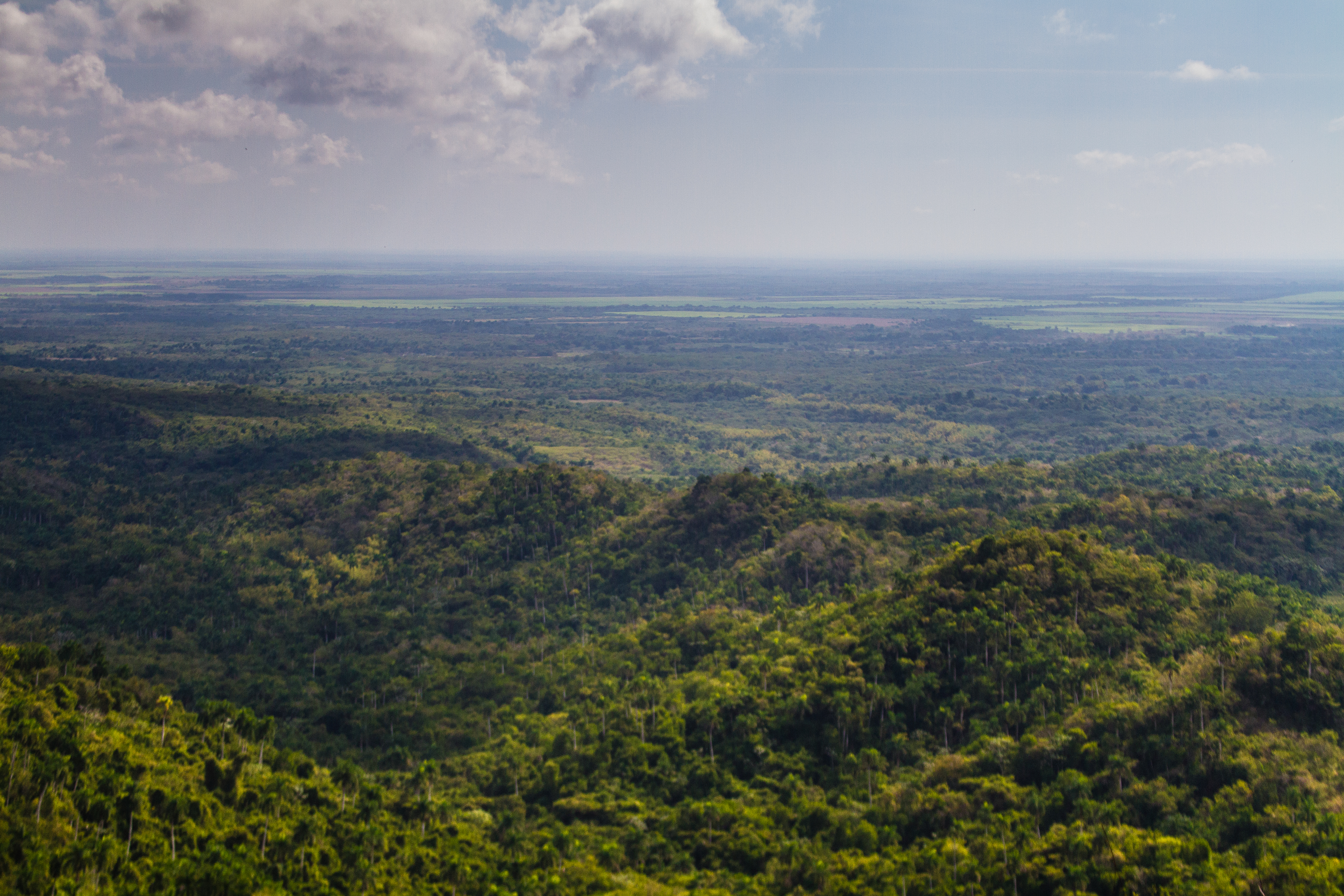
Its great jewel is the orchid garden, one of the most important in Cuba and Latin America, with hundreds of orchid species —many endemic— spread over a hillside garden with views of the range. A few steps away, a trail drops to the Salto de Soroa, a waterfall several meters high that falls into a pool where you can swim, and a path climbs to the Castillo de las Nubes, a lookout with spectacular panoramas of the mountain forest.
This guide covers the essentials of Soroa with a practical, warm eye: how to visit the orchid garden, how to reach the waterfall and swim, which views not to miss, how to get there from Havana or Pinar del Río and how to combine it with neighboring Las Terrazas. It's an ideal destination for anyone looking for nature, mountain coolness and a green, quiet face of Cuba, far from the bustle of the beaches and the cities.
Soroa takes its name from a family of Basque-French origin, the Soroas, who settled in the area in the 19th century and owned land and coffee groves there. Like much of the Sierra del Rosario, the region lived through the boom of the coffee estates founded at the beginning of the 19th century by French settlers who arrived after the Haitian revolution, an operation based on enslaved labor that left traces in the landscape and ruins scattered around the range. In the first half of the 20th century, Soroa developed as a place of rest and a mountain resort, taking advantage of its cool climate, its waters and its natural beauty; some buildings date from that era, such as the so-called Castillo de las Nubes, a residence-lookout on top of a hill. The great attraction of the place, the Soroa orchid garden, was created in the mid-20th century on the initiative of the lawyer and botany enthusiast Tomás Felipe Camacho, who gathered there a remarkable orchid collection in memory of his wife and daughter; over time the garden passed into the hands of Cuban institutions and consolidated itself as one of the most important orchid gardens in the country. In 1985, the Sierra del Rosario was declared by UNESCO the first Biosphere Reserve in Cuba, which reinforced the protection of Soroa's setting and its development as an ecotourism destination. The full history is on our history page.
Read the full history ↓A young province in the west, created in 2011, that joins tobacco and coffee country to the Sierra del Rosario: here are Las Terrazas and Soroa, the cradle of Cuban ecotourism, and the ruins of the nineteenth-century French coffee estates such as the famous Angerona.
Read the history of Artemisa →They depart from Vinales, 75 km away. Affiliate link: we earn a commission.
Abroad, getting sick is more than a bad day. In many destinations public healthcare depends on appointments, queues and availability, and private care is paid upfront. An emergency can cost thousands of USD, right when you are far from home and on a tight budget. That is why I recommend you never leave without travel assistance.
I recommend GO! Assistance because it covers what matters: medical care, emergencies, medication and hospitalization depending on the plan. It protects you 24 hours a day, anywhere in the world, with real-time solutions on the ground. GO! 365 ECO and GO! 365 give you USD 45,000 of global coverage: the first with a USD 100 deductible, the second with none.
If you quote from Argentina, in October GO! also offers 12 interest-free instalments on all its products.
GO! Assistance has 50% off in October and, with our link, you get an extra 20%.
Pick origin, destination, dates and ages and see the price of your travel assistance in a minute.
I have never been left without internet on a trip. I land and my phone connects to the strongest network in the country I am visiting: I can let people know I arrived, sort out transport, book tours and keep posting content at a super affordable price (really cheap!). I always use the Maya Mobile eSIM, check out its plans by clicking the banner. See Maya Mobile plans →
Affiliate link: we earn a commission.
No exact prices: a scale from $ (budget) to $$$$$ (luxury), with 2-3 options per category.
Origins, formation and what the sources say.
One of the most important orchid gardens in Latin America was born of grief. In the mid-20th century, a Canary Islands lawyer named Tomás Felipe Camacho, broken by the death of his wife and daughter, planted hundreds of orchids on a cool hillside in western Cuba in their memory. That intimate tribute ended up becoming the orchid garden that today gives fame to Soroa, the green enclave they call 'the Rainbow of Cuba'. But the history of this corner of the Sierra del Rosario begins long before the orchids, with a family, some coffee groves and a mountain that came close to losing its forest forever.
The name Soroa comes from a family that settled in the area in the 19th century. According to the most widespread tradition, they were the Soroas, a family of Basque-French origin who came to these mountains of western Cuba and acquired land in the range, where they devoted themselves, like so many other landowners in the region, to growing coffee. The surname was tied forever to the place, which came to be known simply as 'Soroa'.
This way of naming places and estates after the surname of the owning families was common in rural 19th-century Cuba. In the case of Soroa, the place name ended up designating not only the old property, but the whole natural enclave we know today, with its orchid garden, its waterfall and its lookouts. It's a short, sonorous name that, over time, became synonymous with one of the most famous green corners of western Cuba.
Beyond the specific details about the Soroa family —which, as usually happens with these origins, mix with oral tradition—, what is certain is that the name anchors the place in the history of the settlement and agricultural exploitation of the Sierra del Rosario in the 19th century, a history marked by coffee groves and by the arrival of European settlers in these mountains.
Soroa is part of the Sierra del Rosario, a region that at the beginning of the 19th century experienced intense coffee development. The leading role in that boom belonged to French settlers who came to Cuba fleeing the Haitian revolution —the former French colony of Saint-Domingue—, where they had lost their plantations. These settlers found in the cool, humid slopes of the range ideal conditions for growing coffee.
Along these mountains numerous coffee estates were established, worked by enslaved people brought from Africa. Manor houses were built for the planters, drying floors where the beans were dried in the sun, mills and barracks for the enslaved. For some decades, coffee was a prosperous crop and the Sierra del Rosario —including the Soroa area— lived through a time of relative agricultural wealth, integrated into the plantation economy that characterized colonial Cuba.
Over time, coffee growing in the area declined, displaced by sugar and hit by crises and natural events, and many plantations were abandoned. The logging associated with the coffee estates and other operations also left an increasingly eroded landscape, a problem that would only be reversed more than a century later with the great reforestation project of the range. Today, the ruins of old coffee estates scattered around the region —and, very especially, the restored complex of the nearby Cafetal Buenavista, in Las Terrazas— are the testimony of that past.
In the first half of the 20th century, Soroa changed vocation. Its cool climate, its waters, its waterfall and the beauty of its mountain setting turned it into a place of rest and an emerging mountain resort, frequented by those seeking to escape the heat of the plains and the city. The area began to receive visitors and to acquire some buildings designed for leisure and rest.
From that era dates one of the most characteristic buildings in the place: the Castillo de las Nubes, a picturesque residence-lookout built on top of a hill, with a shape evoking a small castle or tower. It was conceived as a rest house, taking advantage of the privileged views over the Sierra del Rosario. Over time, the Castillo de las Nubes has worked at different moments as a hotel, restaurant or visiting point, and it has become one of the symbols of Soroa, especially for its panoramas.
This stage as a resort and holiday spot laid the foundations of the touristic Soroa we know today. The idea of a mountain enclave devoted to rest and contact with nature, around its waterfall and its lookouts, was kept and reinforced in the following decades, when the creation of the orchid garden, which would give the place international fame, was added to these attractions.
The attraction that gave Soroa international fame, its orchid garden, was born in the mid-20th century thanks to one person's passion. Its creator was Tomás Felipe Camacho, a lawyer of Canary Islands origin and a botany enthusiast, who decided to create on his land in Soroa an orchid garden as a tribute to the memory of his deceased wife and daughter. What began as a personal project became, over the years, one of the most important orchid collections in Cuba.
Camacho brought together in the garden, laid out on a hillside with terraces and paths, hundreds of orchid species, both native to Cuba and brought from other parts of the world, along with numerous ornamental plants. The orchid garden became a center for growing, exhibiting and conserving these flowers, and its beauty attracted visitors and specialists. After the death of its founder and with the changes in Cuba, the garden passed into the hands of State institutions.
Over time, the orchid garden became linked to the University of Pinar del Río, which manages it as a research, conservation and teaching center, as well as a tourist attraction. Today it is considered one of the most important orchid gardens in Cuba and Latin America, and the main reason many travelers visit Soroa. Camacho's work turned an intimate tribute into botanical heritage of national value.
The setting of Soroa received top-level recognition in 1985, when UNESCO, through its Man and the Biosphere Programme (MAB), declared the Sierra del Rosario a Biosphere Reserve, the first in Cuba to obtain that category. The distinction recognized the success of the range's environmental recovery —which had reversed centuries of deforestation and erosion thanks to the great reforestation project begun in 1968— and the value of its biodiversity, with numerous species endemic to Cuba.
The biosphere reserve status reinforced the protection of Soroa's natural setting and integrated it into a globally recognized conservation framework, shared with the nearby community of Las Terrazas. The range became a protected space, with trails, research areas and rules aimed at making tourist visits compatible with preserving the ecosystem. Soroa, with its orchid garden, its waterfall and its lookouts, thus consolidated itself as one of the ecotourism destinations of western Cuba.
Today Soroa combines its historical appeal —the orchid garden, the Castillo de las Nubes, the traces of the coffee past— with the natural richness of the Sierra del Rosario. For the traveler it represents a nature getaway a little over an hour from Havana, usually combined with Las Terrazas, offering a green, cool and quiet face of Cuba, very different from that of the beaches and the big cities. The history of Soroa is, to a large extent, the story of how a passion for nature and conservation turned an old coffee-growing spot into a garden and an ecological destination.