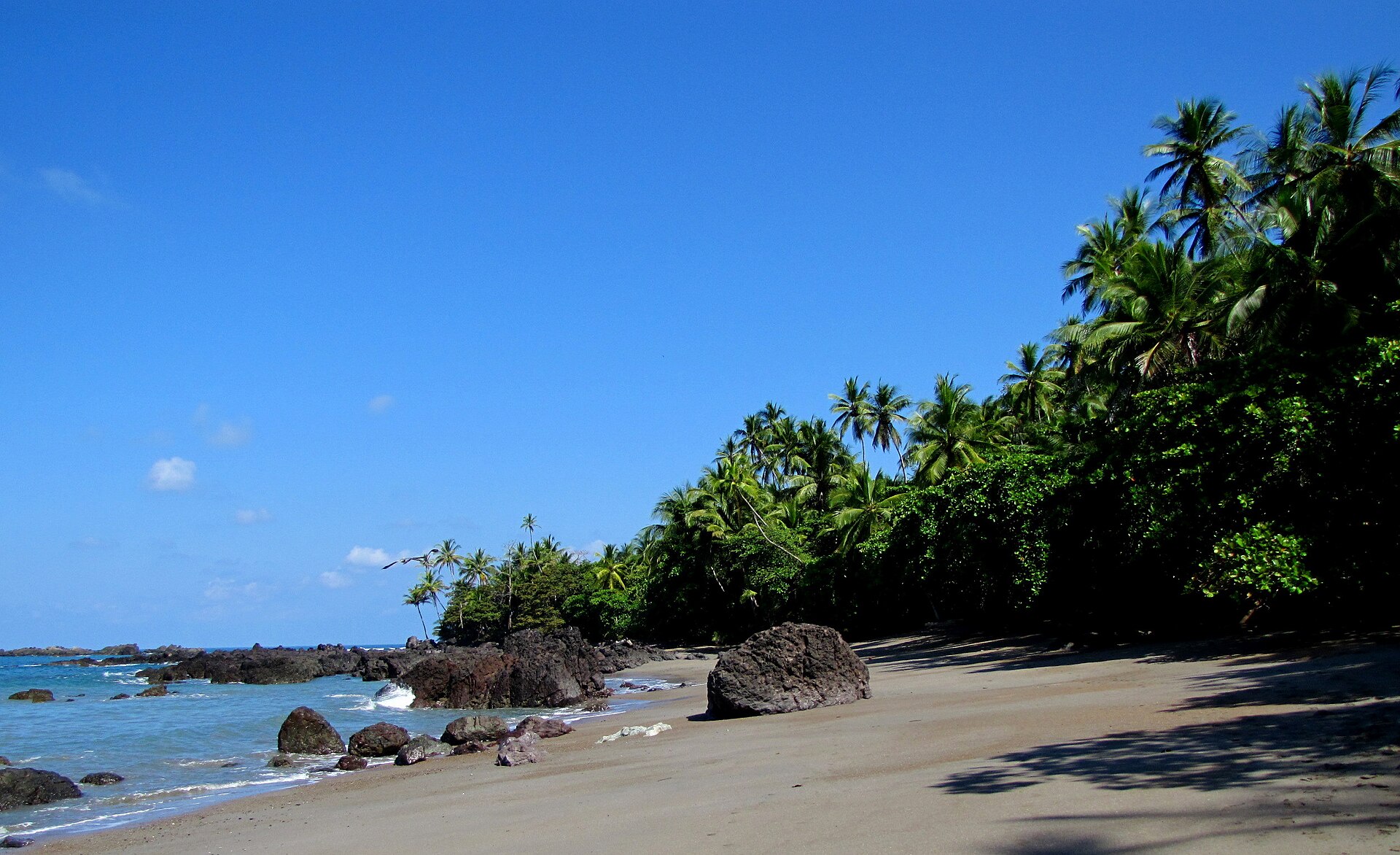
If Costa Rica is a sanctuary of biodiversity, the Osa Peninsula is its wildest, most beating heart. In this remote corner of the South Pacific, where the tropical rainforest meets the sea, an astonishing amount of life is packed together: the country's four monkey species live here, along with tapirs, jaguars and other cats, peccaries, sloths, scarlet macaws crossing the sky in screeching flocks, and an endless list of species that make this one of the most biodiverse places on the planet.
The soul of the peninsula is Corcovado National Park, one of the last great stretches of lowland tropical rainforest on the Central American Pacific, famous for its untouched nature and for the difficulty and the reward of going into it. Getting here isn't as simple as reaching other beaches in the country —it takes a light aircraft, a boat or long stretches of dirt road— but that remoteness is exactly what has preserved its pristine character.
This guide runs through the essentials of the Osa Peninsula and Corcovado with a practical, warm eye: how to visit the park (always with a guide and a booking), what wildlife to expect, what to do from Puerto Jiménez and Bahía Drake, how to enjoy the Golfo Dulce and Isla del Caño, how to get around this remote region and how to get there. It's a destination for anyone after the purest, deepest nature in Costa Rica, far from everything, in one of the last great paradises on Earth.
The Osa Peninsula and the Golfo Dulce were inhabited in pre-Columbian times by Indigenous peoples of southern Costa Rica, linked to the cultures that produced the famous stone spheres of the Diquís (today a UNESCO World Heritage Site), found in the neighboring region. The peninsula was for a long time a remote, wild territory, and also the setting of a gold rush: at different times, gold prospectors (oreros) pushed into the jungle in search of the metal, an activity that came to threaten the ecosystem. The great conservation feat came in 1975, when Corcovado National Park was created to protect this extraordinary tropical rainforest from the deforestation, cattle ranching, logging and gold mining closing in on it. The creation of the park was tied to the Costa Rican conservation movement; it's worth remembering that Olof Wessberg, a pioneer of the country's national parks, was murdered in 1975 precisely while campaigning for the protection of the Osa area. Over the years, Corcovado and the peninsula became one of the great icons of world ecotourism, famous for their biodiversity. Today the region combines the strict protection of its nature with low-impact tourism based on eco-lodges, local guides and wildlife watching. The full story is on our history page.
Read the full history ↓The country's longest coastal province, from the Central Pacific to the deep south: from the historic coffee port of Puntarenas to the cloud forests of Monteverde, from the beaches of Manuel Antonio to the wild jewel of the Osa Peninsula and Corcovado, 'the most biologically intense place on Earth'.
Read the history of Puntarenas →They depart from Uvita, 61 km away. If you book from this link we earn a commission and you pay no more.
No exact prices: a scale from $ (budget) to $$$$$ (luxury), with 2-3 options per category.
Origins, formation and what the sources say.
The Osa Peninsula and the Golfo Dulce region, in the South Pacific of Costa Rica, were inhabited in pre-Columbian times by Indigenous peoples linked to the cultures of the south of the country, the same ones that produced one of the most enigmatic archaeological legacies in the Americas: the stone spheres of the Diquís. These spheres, carved with astonishing precision and ranging in size from a few centimeters to more than two meters, are concentrated in the Diquís Delta, in the neighboring region, and the sites where they are found were declared a UNESCO World Heritage Site.
Spheres and remains have been found even on Isla del Caño, off the peninsula, which shows that these societies were skilled navigators and occupied both the coast and the islands. The peoples of southern Costa Rica developed remarkable goldwork (they worked gold with great mastery) and a complex social organization, drawing on the richness of the jungle, the rivers and the sea of this lush region.
After the Spanish conquest, the Indigenous populations of the South Pacific, as across much of the country, suffered a drastic decline. The Osa Peninsula, because of its distance and its impenetrable jungle, remained for centuries a wild, thinly populated territory, off to one side of the country's centers. That remoteness, which for so long was an obstacle to its development, would end up being the key to its conservation.
One of the most singular chapters in the modern history of the Osa Peninsula is gold mining. The region always had a reputation for gold —it's no accident that the pre-Columbian cultures of the south worked the metal— and through the 20th century, in successive waves, gold prospectors known as 'oreros' pushed into the jungle of Osa in search of the coveted metal, taking it from the rivers and the earth by hand.
The oreros' activity intensified in certain periods, drawing people from all over in search of a fortune and giving rise to a hard, adventurous life in the jungle. Puerto Jiménez, the peninsula's main town, had that air of a gold prospectors' town in its history, tied to logging as well. Mining, though, came at an environmental cost: deforestation, rivers polluted with sediment and mercury, and pressure on the wildlife all threatened the fragile ecosystem.
The conflict between gold mining and conservation became especially sharp when Corcovado National Park was created, since oreros were operating inside and around its boundaries. The authorities had to face the difficult problem of protecting the jungle while dealing with the presence of the prospectors, in a process that was not free of tension. The story of the oreros is part of the narrative and the folklore of the peninsula, and it's still recalled locally today.
The event that decided the fate of the peninsula and saved it from destruction was the creation of Corcovado National Park in 1975. In those years, the tropical rainforest of Osa was under threat from advancing deforestation, cattle ranching, logging and gold mining, which were eating away at one of the most valuable ecosystems on the continent. The decision to protect Corcovado was an act of conservationist vision that had international repercussions.
The creation of the park was part of the extraordinary conservation movement Costa Rica built from the sixties and seventies on, which led the country to create one of the most admired networks of national parks in the world. National and international scientists, aware of the unique value of Osa's biodiversity, pushed for and supported the protection of this jungle. Corcovado thus became a key piece of the Costa Rican protected area system.
The fight to conserve the region also had a tragic side that ties it to the history of the country's parks. Olof Wessberg, the Swedish-born conservationist who had driven the creation of Costa Rica's first protected area (Cabo Blanco, in 1963), was murdered in 1975 precisely while campaigning for the protection of the Osa Peninsula area. His death, bound up with the defense of this nature, became a symbol of the commitment —and the risks— of the conservation cause in these wild lands.
With Corcovado protected, the Osa Peninsula gradually revealed its true dimension to the world: that of one of the most biodiverse places on the planet. Despite occupying a minuscule fraction of the Earth's surface, the region concentrates an extraordinary share of the world's biodiversity, with thousands of plant species, hundreds of birds, dozens of mammals, amphibians, reptiles and countless insects. It's the realm of the country's four monkey species, of tapirs, of cats such as the jaguar and of the spectacular scarlet macaws.
That richness drew scientists from all over the world, who turned Corcovado and Osa into a natural laboratory of international renown, and it drew National Geographic magazine, which spread the famous description of Corcovado as one of the most 'biologically intense places on Earth'. That fame, together with the pristine beauty of the jungle and the coast, positioned the Osa Peninsula as a first-rate ecotourism destination, coveted by nature lovers, photographers and scientists.
Unlike mass destinations, Osa developed a low-impact, high-value form of tourism, based on eco-lodges built into the jungle, local naturalist guides, wildlife watching and regulated access to the protected areas. The distance and the difficulty of getting there, far from being a problem, became part of the appeal and a natural barrier that helps preserve the place. Today, Osa is a byword for wild nature at its fullest.
Today the Osa Peninsula represents one of the great achievements and, at the same time, one of the great challenges of Costa Rican conservation. Corcovado National Park, alongside other protected areas in the region (such as the Golfo Dulce Forest Reserve, Piedras Blancas National Park and the Isla del Caño Biological Reserve), forms a valuable corridor of nature that the authorities, the communities and environmental organizations work to preserve.
The region has bet on a model of low-impact nature tourism, in which many local residents —including former oreros or their descendants— have become naturalist guides, lodge hosts and guardians of the jungle, finding in conservation an economic alternative to extractive activities. Regulated access to Corcovado, with compulsory guides and limited places, aims to balance enjoyment of the park with its protection.
The challenges are real: the pressure of poaching and illegal gold mining, fires, the advance of activities on the edges of the protected areas, and the need for tourism to genuinely benefit the communities without degrading the ecosystem. The story of the Osa Peninsula is, in the end, the most extreme and purest version of the Costa Rican dilemma: how to protect one of the richest natural areas on the planet, in one of its most remote corners, and at the same time let people live off it and show it to the world without destroying it. The future of one of the last great paradises on Earth hangs on that delicate balance.