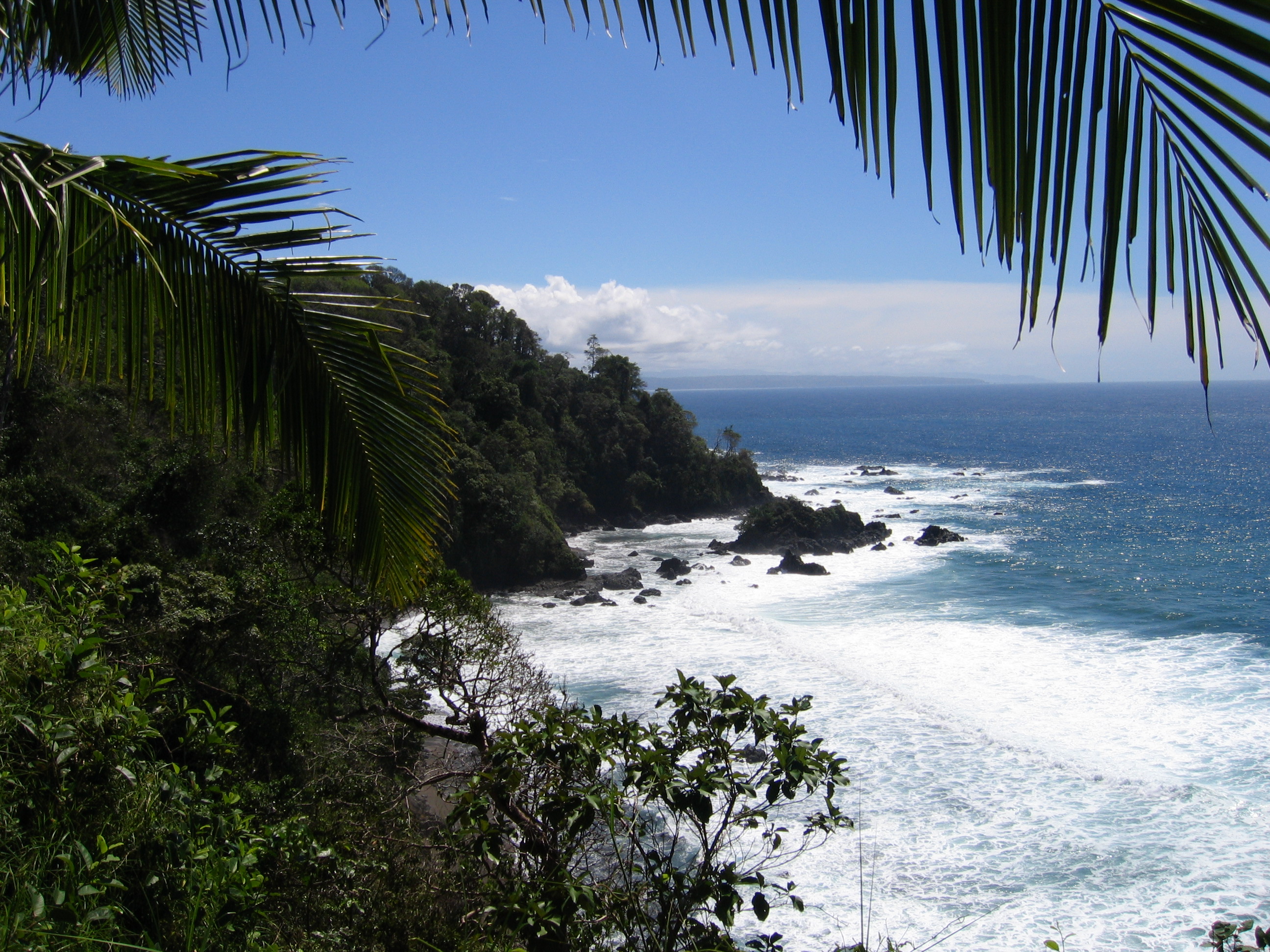
Isla del Caño Biological Reserve is a small island and its protected marine zone off the Osa Peninsula, in Costa Rica's South Pacific. It is one of the country's best snorkeling and diving destinations: its clear water and reefs hold abundant marine life — schools of tropical fish, turtles, rays, reef sharks — that turns every dive into a show, in a protected setting that is hard to reach.
Beyond its biological value, the island has a strong archaeological and mysterious side: it was a burial and ceremonial site for pre-Columbian peoples, and some of the enigmatic Diquís stone spheres, the ones that made southern Costa Rica famous, were found here. Because it is a strict reserve, going ashore is heavily restricted and the visit centers on marine activities in the surrounding waters.
This guide covers the essentials of Isla del Caño with a practical eye: the snorkeling and diving, how and where you get there from (mainly Bahía Drake, and also Uvita/Sierpe), the reserve's rules, the best time to go and some tips. A must for anyone who loves the underwater world and is visiting the Osa region.
In pre-Columbian times Isla del Caño was a sacred burial and ceremonial site for the Indigenous peoples of southern Costa Rica, linked to the culture that carved the famous Diquís stone spheres, several of which were found on the island. In 1976 it was declared a Biological Reserve to protect both its archaeological heritage and its exceptional marine ecosystems, today among the best in the country for diving. The full story is on our history page.
Read the full history ↓The country's longest coastal province, from the Central Pacific to the deep south: from the historic coffee port of Puntarenas to the cloud forests of Monteverde, from the beaches of Manuel Antonio to the wild jewel of the Osa Peninsula and Corcovado, 'the most biologically intense place on Earth'.
Read the history of Puntarenas →They depart from Uvita, 53 km away. If you book from this link we earn a commission and you pay no more.
No exact prices: a scale from $ (budget) to $$$$$ (luxury), with 2-3 options per category.
Origins, formation and what the sources say.
Long before it became a diving destination, Isla del Caño was a sacred place for the Indigenous peoples of southern Costa Rica. Archaeological research has documented that the island was used in pre-Columbian times as a burial and ceremonial site, a ritual space set apart from everyday life by the sea, which in many cultures reinforces its sacred character.
Several of the famous Diquís stone spheres were found on the island, sculptures of granite or gabbro carved with remarkable precision into almost perfectly spherical shapes, in a range of sizes. These spheres, made by the society that lived in the Diquís delta in the southwest of the country, are one of the great archaeological puzzles of the Americas: their exact purpose — status markers, astronomical alignments, ritual symbols — is still debated.
The sites with Diquís stone spheres in the delta were declared a UNESCO World Heritage Site in 2014, in recognition of their universal value. The presence of these pieces on Isla del Caño, far from where they were produced on the mainland, reinforces the idea that the island held a special meaning for those societies, which must have carried them across the sea, a fact that adds mystery to this small piece of island territory.
Isla del Caño is a small island of 3.26 square kilometers lying some 16-20 kilometers west of the Osa Peninsula, in Costa Rica's South Pacific; around it, a marine reserve of about 52 square kilometers protects its waters. Geologically it is tied to the dynamics of the Costa Rican Pacific coast, a region shaped by the convergence of tectonic plates (the Cocos plate subducting beneath the Caribbean plate) that has modeled the coasts, peninsulas and islands of this part of the country.
The island is mountainous and covered in rainforest, with trees that in places grow very tall. Its slopes drop to a rocky coast and cliffs, with a few beaches. But its greatest geological and ecological wealth is underwater: around the island lie some of the few well-formed coral reefs on Costa Rica's Pacific side, along with pinnacles and rock formations that support exceptional marine life.
That combination of relatively clear water — uncommon in a tropical Pacific loaded with river sediment — with reefs and rocky bottoms is what turned Isla del Caño into an internationally known dive site. The distance from the coast and the currents around it help keep the water clear for much of the year, especially in the dry season.
In 1976, Isla del Caño and a wide stretch of the waters around it were declared a Biological Reserve, one of the strictest protection categories in Costa Rica's protected-areas system. The aim was twofold: to protect the island's exceptional archaeological heritage, and to preserve its unusual marine and land ecosystems.
The marine zone of Isla del Caño stands out for holding several of the few well-developed coral reefs on Costa Rica's Pacific side, an ocean where coral is far less common than in the Caribbean. These reefs, along with the rocky bottoms and pinnacles, support rich biodiversity: tropical fish, sea turtles, rays, reef sharks and, in its waters and on the crossing from the mainland, dolphins and migrating whales.
Because it is a strict reserve, going ashore is tightly restricted and regulated, and visits focus on marine activities (snorkeling and diving) with authorized operators and under conservation rules. Its closeness to Bahía Drake and the Osa Peninsula made Isla del Caño one of the major draws of the southern Pacific, combining protection of its nature and heritage with regulated tourism, in line with the conservationist model that defines Costa Rica.
Protecting the island was also meant to stop looting. Like so many sites with stone spheres and pre-Columbian graves, Isla del Caño suffered for decades at the hands of huaqueros — treasure hunters — who dug up burials looking for gold and ceramics. Turning the island into a biological reserve, with landing all but banned, was a way to shield what was left of that legacy, now studied with scientific methods rather than ripped out with a shovel.
The success of Isla del Caño as a diving and snorkeling destination — tied to the ecotourism boom on the Osa Peninsula — raised the same challenge as in other Costa Rican protected areas: balancing visitors with conservation. The fragility of Pacific coral reefs, sensitive to being stepped on, touched, exposed to non-biodegradable sunscreen and to warming water, led to strict rules for tours: a limited number of boats and visitors, a ban on touching or removing wildlife and coral, and the requirement to operate with guides and companies authorized by SINAC.
In recent decades the reefs of Isla del Caño — like so many around the world — have gone through bleaching events (coral losing its color) linked to rising sea temperatures during phenomena such as El Niño, which has made protecting them all the more important. The reserve is part of the Área de Conservación Osa, which also takes in Corcovado National Park and other areas of very high biodiversity, in one of the most valuable natural regions on the planet.
Today a visit to Isla del Caño is an example of the Costa Rican model of nature tourism: access to the sea is allowed for snorkeling and diving, generating income and jobs in a remote area such as Bahía Drake, but under rules meant to preserve both the archaeological heritage — protected on land — and the marine ecosystems. The island's story, from pre-Columbian sacred sanctuary to biological reserve and diving mecca, sums up the challenge of caring for a natural and cultural treasure in a time of growing tourism.