Viajá con Gus
HomeCosta RicaPlaya Conchal
Playa Conchal
🇨🇷 Costa Rica · Guanacaste (North Pacific)

Playa Conchal

Jump to what you need
📌Province
Guanacaste (North Pacific), canton of Santa Cruz, next to the village of Brasilito
📌Best time to go
Dry season (December to April): calm sea, clearer water and better visibility for snorkeling
📌Suggested days
1 to 2 days, easily combined with Flamingo, Tamarindo and other North Pacific beaches
📌Currency
Costa Rican colón (CRC); the dollar (USD) is widely accepted
💱 CRC exchange rate
Loading rate…
🌤️ Weather in Playa Conchal
Loading weather…

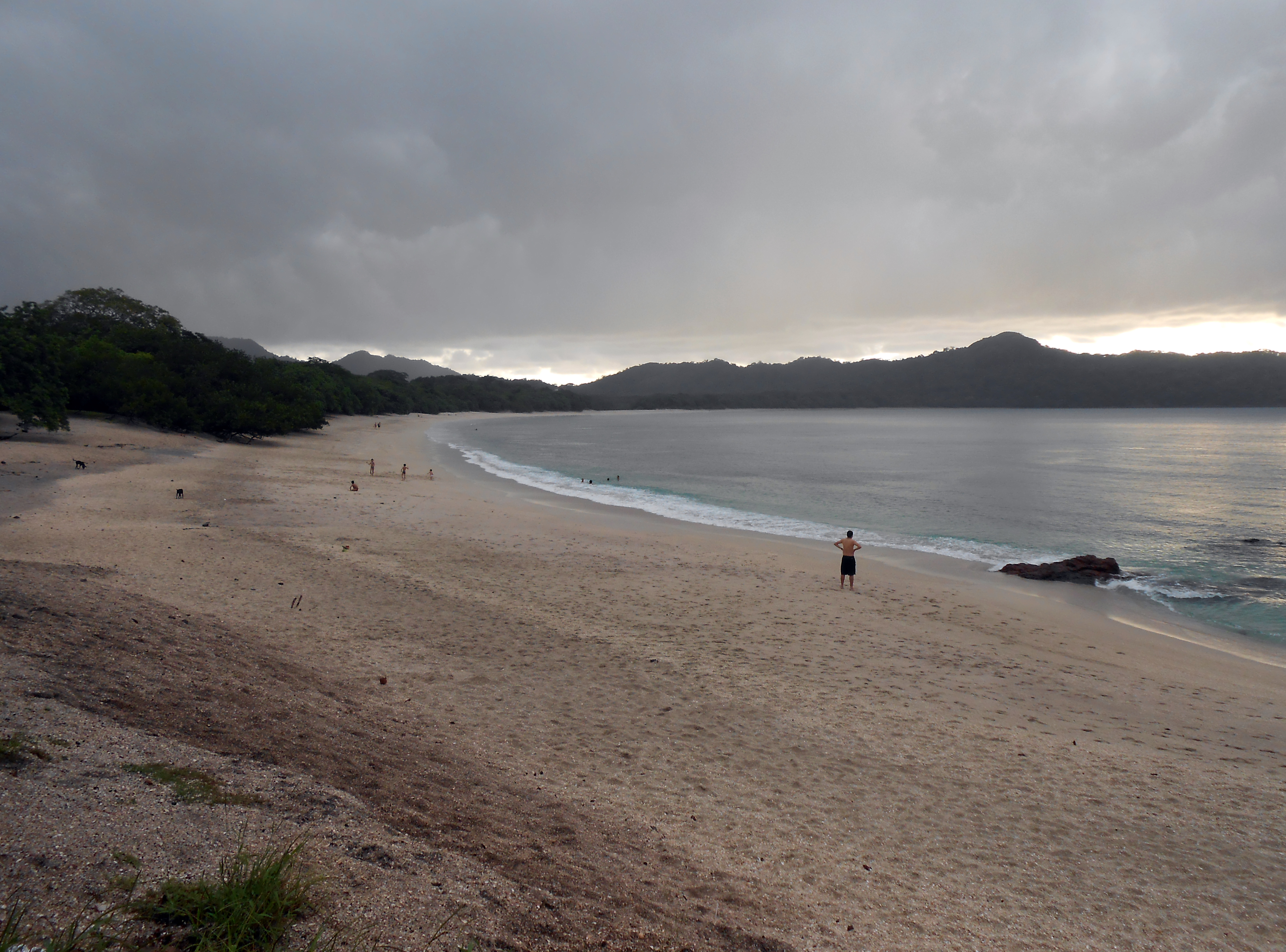
Playa Conchal is one of the most beautiful and most unusual beaches in Costa Rica, on the North Pacific coast of Guanacaste, next to the village of Brasilito. The name says it all: instead of fine sand, much of its shoreline is made up of millions of seashell fragments crushed over millennia, which give the beach a whitish, pearly look and the water a turquoise clarity that's rare in the region.

That combination of shell 'sand' and calm, crystalline water makes it one of the best beaches in the country for swimming and snorkeling, in a setting of tropical dry forest. Conchal is tied to the tourism development of the area —one of Guanacaste's big resort complexes sits right beside it— but it remains a public beach, open to everyone, whether you walk in from neighboring Brasilito or arrive by boat.

This guide covers the essentials of Playa Conchal with a practical eye: what the beach is like and why its 'sand' is so special, how to get in (on foot from Brasilito or by sea), what water activities the area offers (snorkeling, kayaking, paddleboarding, catamaran trips), where to stay and eat nearby and what to keep in mind, since this is a beach with no services of its own. Conchal is ideal to combine with Playa Flamingo, Tamarindo and the rest of the North Pacific beaches.

📖 History of Playa Conchal

Playa Conchal owes its name and its character to the huge build-up of crushed seashells that make up much of its shoreline, a natural phenomenon produced by the waves and the nearby reefs. Historically part of the cattle-ranching coast of Guanacaste, the area was transformed in the late 20th century by the growth of tourism and the building of large hotel complexes next to the beach, which nonetheless keeps its status as a public beach. The full story is on our history page.

Read the full history ↓

🏛️ Playa Conchal is in Guanacaste

The North Pacific province that in 1824 voted to be Costa Rican: land of the sabanero and of tropical dry forest, cradle of the national folklore, home to steaming volcanoes and founding battles, and to the great sun, surf and longevity beaches of the Nicoya Peninsula.

Read the history of Guanacaste →

🗺️ What to see

1
The shell beach and its turquoise water
A shoreline made of millions of crushed shells and a clear, calm sea, ideal for swimming.
Conchal's great draw is the beach itself. Unlike Guanacaste's grayish volcanic-sand or golden-sand beaches, here the shoreline is largely made up of tiny fragments of white, pink and pearly shells, piled up over millennia by the waves and the nearby reefs. The result is a bright, almost white strip that contrasts with the turquoise blue of an unusually clean and clear sea. The water at Conchal is usually calm and shallow near the shore, which makes it excellent for swimming, floating and snorkeling, above all at the ends of the bay, where there are rock formations with colorful fish. It's one of the most photographed beaches in the country and a magnet for anyone who loves a calm, crystalline sea. Getting there: the usual way is to walk south from Brasilito beach along the coast (about 20-30 minutes), or to arrive by boat/ATV. Best time: dry season for clearer water. Tips: bring everything you need (there are no services on the beach), water, your own shade (an umbrella), water shoes (the shells can be uncomfortable to walk on) and respect the beach's public but fragile character.
ℹ️ Access: Free; on foot from Brasilito (20-30 min) or by boat/ATV · Services: No services on the beach itself; bring water, shade and water shoes · Tip: Taking shells is prohibited: they are part of the protected ecosystem
2
Snorkeling and water sports
Snorkeling on the rocky sections, kayaking and paddleboarding in the calm water of the bay.
Conchal's clear, calm water is ideal for snorkeling, especially at the rocky ends of the bay, where colorful fish gather and, depending on conditions, other marine species. It's one of the best beaches in the area for this, above all in the dry season, when visibility improves. The area also offers other water activities that you book in Brasilito, Flamingo or with operators around the region: kayaking, stand-up paddleboarding, catamaran trips with snorkeling stops, fishing and wildlife-watching tours. Many visitors combine a beach day at Conchal with a boat trip to other nearby beaches and reefs. Getting there: activities are organized from the neighboring beaches (Brasilito, Flamingo). Best time: dry season for better visibility. Tips: bring your own snorkel gear or rent it in the nearby villages; check the state of the sea and the currents; use biodegradable sunscreen.
ℹ️ Snorkeling: Best at the rocky ends; gear rental US$ 8–15/day (source: Brasilito/Flamingo operators, verified July 2026) · Kayak/paddle: Rental US$ 15–25 per hour from Brasilito/Flamingo (verified July 2026) · Tip: Best visibility in the dry season (Dec-Apr)
3
Catamaran tour along the coast
Catamaran trips with snorkeling, lunch and sunset along the nearby beaches and reefs.
One of the most popular experiences in the area is the catamaran tour that leaves from Flamingo or the nearby bay and runs along the Guanacaste coast, with stops to snorkel on reefs and in clear-water bays, time to swim and, on the afternoon departures, a spectacular sunset over the Pacific. They usually include a guide, snorkel gear, meals or snacks and an open bar. On the way it's common to spot dolphins and, in season (July to October and December to March), humpback whales, as well as sea turtles. It's a comfortable, festive way to see the coast from the water and take in several beaches in a single day. Many operators offer free pickup from hotels in Conchal, Brasilito, Flamingo and Tamarindo. Getting there: departures from Flamingo and Brasilito bay; with hotel pickup. Best time: year-round; sharper sunsets in the dry season. Tips: book ahead in high season, bring biodegradable sunscreen, a swimsuit and a light layer for the ride back at sunset.
ℹ️ Price: From US$ 89–99 per person (half day with snorkeling, food and drinks; source: Tour Guanacaste and Flamingo Adventures, verified July 2026) · Duration: Sunset tour approx. 14:00 to 18:00 · Includes: Guide, snorkel gear, food/snacks, drinks and hotel transfer
4
Brasilito, the neighboring coastal village
The gateway to Conchal, with seafood sodas, fishers and an authentic local feel.
Brasilito is the small coastal village next to Conchal and its main way in. It keeps a more authentic local feel than other Guanacaste destinations, with its seaside plaza, sodas, seafood restaurants and fishing boats. Its own beach, of darker sand and slightly bigger surf, is pleasant, and the path to Conchal starts at its southern end. It's the ideal service base for enjoying Conchal without the limits of a beach with no infrastructure: here you'll find food, lodging, rentals and tours. The seafront plaza, with its trees and its quiet atmosphere, is a good place to watch the sunset and eat fresh fish at a fair price. Getting there: Brasilito is connected by road to Santa Cruz and the rest of Guanacaste. Best time: dry season. Tips: leave the car in Brasilito and walk to Conchal; make the most of the local sodas for cheap, authentic food.
ℹ️ Distance: Next door to Conchal; the path leaves from the southern end of Brasilito beach · Access: Open; a village with sodas, restaurants, cabinas and rentals · Tip: The service base for Conchal; cheap fresh fish in the sodas
5
Playa Flamingo and its marina
The elegant neighboring beach, with light sand, a viewpoint and a modern marina.
A few minutes north of Conchal and Brasilito is Playa Flamingo, one of the most exclusive beaches in Guanacaste, with whitish sand and calm water, surrounded by villas and high-end hotels on a hill with spectacular views. It's famous for its beauty, its viewpoint and its sunsets, and for having a modern marina, the base for the region's fishing and boat tours. From the Flamingo marina depart sport-fishing trips, catamarans, diving trips to the Islas Catalinas and wildlife-watching tours. The beach itself is ideal for swimming and relaxing. It's a perfect complement to a day at Conchal and a good place for dinner with sea views. Getting there: by car or taxi from Conchal/Brasilito (a few minutes). Best time: dry season. Tips: go up to the viewpoint for the best view; book the boat tours at the marina in advance.
ℹ️ Distance: A few minutes north of Conchal/Brasilito · Access: Free public beach; marina with boat tours · Tip: The Flamingo viewpoint: one of the best sunsets on the North Pacific coast
6
Diving at the Islas Catalinas
One of the best dive sites in Costa Rica, with manta rays and abundant marine life, near Flamingo.
Off the coast of Flamingo and Conchal lie the Islas Catalinas, a group of rocky islets that make up one of Costa Rica's most celebrated dive destinations. Their nutrient-rich waters draw spectacular marine life: they're famous for sightings of giant manta rays (above all between November and May), eagle rays, turtles, reef sharks, moray eels and huge schools of fish. Diving and snorkeling trips to the Catalinas leave from the Flamingo marina and from operators in the area, with options for certified divers and try-dives for beginners. It's a must for anyone who loves the underwater world, and it pairs very well with the calm of Conchal. Getting there: on a dive or snorkel tour from Flamingo (boat, about 20-30 min). Best time: November to May for manta rays and better visibility. Tips: book with authorized operators; try-dives need no previous experience; use biodegradable sunscreen.
ℹ️ Distance: Islets off Flamingo; a 20-30 min boat ride from the marina · Price: Diving, 2 dives US$ 120–150; snorkeling from US$ 60–80 per person (source: Scuba Diving Flamingo and Flamingo Adventures, verified July 2026) · Tip: Giant manta rays from Nov to May; great for divers and snorkelers alike
Advertisements
What nobody tells you

💵 Prices

Tickets

TypePrice
Beach access (public)Free (open access; attended parking in Brasilito ~¢3,000 / US$ 5)
Snorkel gear rentalUS$ 8–15 per day (in Brasilito or Flamingo; verified July 2026)
Catamaran tour with snorkeling and foodFrom US$ 89–99 per person (half day; source: Tour Guanacaste / Planet Dolphin, verified July 2026)
Diving at the Islas Catalinas (2 dives)US$ 120–150 per person; snorkeling US$ 60–80 (source: Scuba Diving Flamingo / Flamingo Adventures, verified July 2026)
Sport fishing (shared/private boat)From US$ 450–600 for a half day per boat; private charters higher (source: Flamingo marina operators, verified July 2026)
🔄 updated monthlyOfficial / reference values · double-check when buying

Activities and tours

ActivityPriceDurationOperator
Swimming and snorkeling at the beachFree (with your own gear); rental US$ 8–15 (verified July 2026)VariableOn your own / Brasilito rentals
Catamaran tour (snorkeling and sunset)From US$ 89–99 per person (verified July 2026)Half day (approx. 4 h)Flamingo Adventures, Tour Guanacaste, Planet Dolphin and marina operators
Kayak / stand-up paddleboardUS$ 15–25 per hour (verified July 2026)1-2 hBrasilito/Flamingo operators
Diving at the Islas CatalinasUS$ 120–150 (2 dives); try-dive/Discover Scuba from US$ 130 (verified July 2026)Half dayScuba Diving Flamingo, Flamingo Adventures and Flamingo dive centers
Sport fishingFrom US$ 450 for a half day per boat (verified July 2026)Half day to full dayCharters at the Flamingo marina
🔄 updated monthlyOfficial / reference values · double-check when buying
Advertisements

🚌 How to get there and distances

Getting around

ModePriceDurationNotes
On foot from BrasilitoFree20-30 minThe most common way to reach Conchal, following the coast south from the end of Brasilito beach
ATV / boatBoat taxi US$ 5–15 per person depending on the runVariableAn alternative for reaching the beach with gear or by sea; useful with families or when carrying things
Local taxiUS$ 5–15 between Brasilito, Conchal and Flamingo/PotreroA few minutesYou can drive as far as Brasilito and go on from there on foot or by short taxi ride
Public bus (Tralapa)Approx. ¢1,400 (~US$ 2.30) per legVariableThe Liberia–Tamarindo bus passes through Flamingo, Brasilito and Matapalo; cheap but with infrequent departures
🔄 updated monthlyOfficial / reference values · double-check when buying

How to get there

RouteAirlines / operatorsAvg. priceDuration
Liberia (LIR airport) → Brasilito / Conchal by private shuttleTropical Tours, LIR Transfers and similarUS$ 90–120 for a private transfer (verified July 2026)About 1 to 1.5 h
Liberia (LIR) → Flamingo/Conchal area by public busTralapa (via Liberia–Tamarindo)Approx. ¢1,400 (~US$ 2.30) per personAbout 2 h
Santa Cruz → Brasilito / Playa ConchalCar, local bus or taxiBus approx. US$ 1–2; taxi US$ 20–30About 40 min
Tamarindo → Brasilito / ConchalCar or taxiTaxi approx. US$ 25–40About 30-40 min
🔄 updated monthlyOfficial / reference values · double-check when buying

🏨 Where to stay

No exact prices: a scale from $ (budget) to $$$$$ (luxury), with 2-3 options per category.

CategoryPriceRecommended options
Luxury beachfront resort$$$$$US$ 400–900 a night; the big all-inclusive complex next to Playa Conchal (Westin Reserva Conchal, formerly Paradisus) and The Westin Golf Resort, with a private beach area, golf and full services
Boutique hotels and villas (Flamingo/Potrero)$$$$$US$ 150–300 a night; boutique hotels, condos and villas with a pool and sea views in Flamingo, Potrero and around
Mid-range hotels and cabinas (Brasilito)$$$$$US$ 75–130 a night; e.g. Hotel Brasilito (~US$ 75–127), hotels and cabinas with breakfast near the beach, a good service base
Budget / hostels and cabinas$$$$$US$ 30–65 a night; simple cabinas and hostels in Brasilito and around, some with dorm rooms

🍴 Where to eat

TypePriceOptions / signature dish
Seafood and local food (Brasilito)$$$$$US$ 6–15 a dish; seafront sodas and seafood restaurants in Brasilito with ceviche, whole fish, casado and rice with shrimp
International and beach cooking (Flamingo)$$$$$US$ 12–28 a dish; international, Italian and seafood restaurants in Flamingo and Brasilito, several with sea views
High-end and resort restaurants$$$$$US$ 25–50 a dish; restaurants in the resorts and boutique hotels of the area, some open to the public with a reservation
Sodas and local fast food$$$$$US$ 4–9; casados, gallo pinto, empanadas and smoothies in sodas around Brasilito and the area, the cheapest option
Advertisements

📖 History of Playa Conchal

Origins, formation and what the sources say.

A beach made of shells

Playa Conchal is, above all, a natural phenomenon. Its defining feature —a shoreline made not of fine sand but of millions of seashell fragments— is the result of a long geological and biological process. Off the beach and in the bay there are formations and reefs that hold abundant marine life, especially shelled mollusks. Over millennia, those shells, once the animals died, were washed toward the coast, battered and ground down by the waves until they piled up on the shore as a strip of calcareous fragments.

This material, lighter and more reflective than volcanic or quartz sand, gives Conchal its characteristic whitish, pearly color, with pink and golden tones depending on the light. The calcareous nature of the substrate and the presence of the reefs also add to the remarkable clarity and turquoise color of the water, both unusual in a region where darker-sand beaches dominate.

The process continues today: the waves keep depositing and grinding shells, in a dynamic balance. That's why removing shells is prohibited and why respecting the beach matters: every shell a visitor takes away subtracts from a landscape nature took thousands of years to build. Conchal is a reminder that some of the most beautiful beaches are made not of ground rock but of the remains of life in the sea.

From cattle coast to tourism boom

Like almost all of the Guanacaste coast, the Conchal and Brasilito area was for centuries part of a rural landscape tied to cattle ranching and small-scale fishing. Guanacaste, with its sabanero culture and its big haciendas, traditionally looked inland rather than out to a sea that, except for fishers and coastal communities, did not have the economic value it would later acquire. Brasilito was a small fishing village next to a quiet beach.

Everything changed in the last decades of the 20th century, when Costa Rica established itself as an international tourist destination and the North Pacific coast of Guanacaste became one of the fastest-growing areas. The opening of Liberia international airport brought the region closer to North American markets, and beaches such as Tamarindo, Flamingo and Conchal moved to the foreground. Conchal's singular beauty, with its turquoise water and its shell sand, made it a natural target for tourism.

Beside the beach one of Guanacaste's large hotel and residential complexes was built, with a resort, a golf course and villas, transforming the surroundings. That development brought jobs and investment, but also tensions over access, water and conservation, a debate common to the whole coast. Conchal thus ended up at the center of Guanacaste's shift from cattle country to a top-tier tourist destination.

A public beach, a fragile natural setting

Despite the heavy tourism development around it, Playa Conchal keeps a legal status that is key in Costa Rica: it is a public beach. Costa Rican law establishes that the maritime-terrestrial zone, beaches included, is public domain and freely accessible, and it prohibits private appropriation of the strip of sand. So even though an exclusive resort stands next to Conchal, anyone can enjoy the beach, mainly by walking in from neighboring Brasilito.

This tension between private development and public access has been the subject of debate and of episodes defending the right of way to the beach, a sensitive issue all along the Guanacaste coast. Conchal's public status is a reminder of the Costa Rican model, which combines openness to tourism with protection of common goods.

At the same time, Conchal is a fragile ecosystem. Its shell 'sand', its clear water and its reefs depend on a natural balance that mass tourism can upset. The advice not to remove shells, not to use sunscreens that harm reefs and to respect marine wildlife is part of the effort to conserve one of the country's most singular coastal landscapes, so that it goes on being both one of its most beautiful beaches and something that belongs to everyone.

The Chorotega people and the annexation of Guanacaste

The human history of this coast goes back long before tourism. Before the Spanish arrived, the Nicoya Peninsula and the northwest of Costa Rica —including the Santa Cruz area where Conchal lies— were inhabited by the Chorotega, a people of Mesoamerican roots who migrated from the north and who mastered maize farming, polychrome pottery and a complex web of chiefdoms. Their cultural legacy lives on in the pottery of villages such as Guaitil and San Vicente, near Santa Cruz, where ceramics are still made using pre-Columbian techniques.

After the conquest, the region was folded into the governorship of Nicaragua within the Spanish empire, and for centuries its economy revolved around the big cattle haciendas. Out of that world came the figure of the sabanero (the Guanacaste cowboy), the marimba traditions, the folk dances and the cultural identity that sets Guanacaste apart from the rest of Costa Rica today.

A decisive milestone came on 25 July 1824, when the Partido de Nicoya —then under Nicaraguan influence— decided by popular will to join Costa Rica, in the famous Anexión del Partido de Nicoya. That act, remembered with the motto 'De la patria por nuestra voluntad' ('To the homeland by our own will'), brought this whole region into the country and is celebrated every year as a national holiday. Knowing that history helps you understand that behind the beauty of beaches like Conchal beats one of the richest and oldest cultural identities in Costa Rica.

The sea that named the beach: reefs, mantas and turtles

The story of Playa Conchal makes no sense without the sea that created it. The same currents that grind the shells feed one of the richest marine ecosystems on Costa Rica's Pacific side. A few kilometers offshore rise the Islas Catalinas, a group of rocky volcanic islets that have become one of the most famous dive destinations in Central America. Between November and May, when the trade winds stir the water and bring cold, nutrient-rich water up from the bottom, big schools of fish arrive at these islands and, above all, giant Pacific manta rays, whose wingspans can exceed four meters. That seasonal phenomenon draws divers from all over the world and is one of the reasons the Flamingo and Conchal area became a boating hub.

The waters of the bay are also part of sea turtle routes. On the nearby North Pacific beaches —Playa Grande, inside Parque Nacional Marino Las Baulas, and other stretches of sand in the region— leatherback turtles (the largest sea turtle in the world), olive ridleys and green turtles nest. The nearby estuary mouths and mangroves, such as those around Tamarindo, raise juveniles of many species and support waterbirds. This whole biological web explains why the water at Conchal is so clear: a healthy sea, with living reefs and little sedimentation, is a sea you can see through.

The flip side of that richness is its fragility. Coral bleaching from warming water during El Niño years, fishing pressure and coastal urban growth all threaten the balance that makes the beach unique. Costa Rica has responded with protected areas, fishing closures and regulation of the maritime-terrestrial zone, but conservation also depends on how visitors behave: don't take shells or wildlife, use biodegradable sunscreen that doesn't harm coral, and keep your distance from marine life on snorkeling and diving trips. Understanding that sea is understanding why Conchal exists and why it deserves care.

📚 Bibliography

  • Wikipedia (EN) — «Playa Conchal»: https://en.wikipedia.org/wiki/Playa_Conchal
  • Wikipedia (ES) — «Provincia de Guanacaste»: https://es.wikipedia.org/wiki/Provincia_de_Guanacaste
  • Wikipedia (ES) — «Anexión del Partido de Nicoya»: https://es.wikipedia.org/wiki/Anexi%C3%B3n_del_Partido_de_Nicoya
  • Wikipedia (ES) — «Chorotegas»: https://es.wikipedia.org/wiki/Chorotegas
  • Wikipedia (ES) — «Cantón de Santa Cruz»: https://es.wikipedia.org/wiki/Cant%C3%B3n_de_Santa_Cruz_(Costa_Rica)
  • Wikipedia (ES) — «Zona marítimo terrestre (Costa Rica)»: https://es.wikipedia.org/wiki/Zona_mar%C3%ADtimo_terrestre
  • Instituto Costarricense de Turismo (ICT) — Visit Costa Rica: https://www.visitcostarica.com/
  • SINAC — Sistema Nacional de Áreas de Conservación: https://www.sinac.go.cr/
  • Bill Beard Costa Rica — Catalina Islands Dive Sites: https://www.billbeardcostarica.com/blog/catalina-islands-dive-sites/
  • Wikipedia (ES) — «Parque nacional Marino Las Baulas de Guanacaste»: https://es.wikipedia.org/wiki/Parque_nacional_Marino_Las_Baulas_de_Guanacaste

❓ Frequently asked questions

Why is the sand at Conchal so special?+
Because much of its shoreline isn't sand in the usual sense but millions of seashell fragments crushed by the waves and supplied by the nearby reefs over millennia. That gives it a whitish, pearly look and adds to the turquoise clarity of the water. Taking shells is prohibited, as they are part of the ecosystem.
How do you get to Playa Conchal, and is it the resort's private beach?+
The most common way is to walk south from Brasilito beach, about 20 to 30 minutes; you can also arrive by boat or ATV. It isn't private: in Costa Rica all beaches are public, so Conchal is open to anyone. What's private are the resort's own facilities, not the beach.
How much does a catamaran or diving tour from the area cost?+
A half-day catamaran tour with snorkeling, food and drinks costs from about US$ 89 per person, with hotel pickup. Diving at the Islas Catalinas (two dives) runs around US$ 110–150, and guided snorkeling US$ 60–80. It's worth booking in high season.
Can you snorkel at Conchal?+
Yes, it's one of the best beaches in the area for swimming and snorkeling, thanks to its calm, clear water. The best spots are at the rocky ends of the bay, where colorful fish gather. Visibility improves in the dry season. Gear can be rented in Brasilito or Flamingo for US$ 8–15.
Are there services on the beach?+
Practically none. Conchal is a natural beach with no tourist infrastructure of its own, so bring water, your own shade (an umbrella), food and everything else you need, and stock up in Brasilito. Water shoes help for walking on the shells.
How do I get there from Liberia airport and what does it cost?+
Liberia (LIR) is 1 to 1.5 hours away. A private shuttle to the Conchal/Flamingo area costs about US$ 90–120; the Liberia–Tamarindo public bus, which passes through Brasilito and Flamingo, costs just ~US$ 2.30 but takes about 2 hours and runs infrequently. Many people rent a car to move around freely.
Sources consulted (10)
Still planning?
Explore more destinations in Costa Rica
See all destinations →
Advertisements
Image credits
Photos from Wikimedia Commons, each under its own licence (CC BY, CC BY-SA or public domain). Open each file to see its author and licence.
Playa Conchal