Viajá con Gus
HomeCosta RicaMontezuma
Montezuma
🇨🇷 Costa Rica · Puntarenas (Nicoya Peninsula)

Montezuma

Jump to what you need
📌Province
Puntarenas, at the southern tip of the Nicoya Peninsula. Montezuma is a small coastal village with a bohemian feel, about 40 minutes from Santa Teresa/Mal País and very close to the Cabo Blanco Absolute Nature Reserve, the first protected area in Costa Rica
📌Best time to go
Dry season (December to April) for the beaches, safer trails and the Isla Tortuga tour with a calm sea. In the rainy season (May to November) the waterfalls run harder but the river can rise dangerously and the gravel roads get tricky; greener surroundings and fewer people
📌Suggested days
2 to 3 days for the waterfalls, the beaches, a tour to Isla Tortuga or Cabo Blanco and the village atmosphere; more if you combine it with Santa Teresa/Mal País
📌Currency
Costa Rican colón (CRC); the dollar (USD) is widely accepted in hotels, tours and restaurants. Bring cash: ATMs in the village are scarce and sometimes run out of money
💱 CRC exchange rate
Loading rate…
🌤️ Weather in Montezuma
Loading weather…

Montezuma is a picturesque, bohemian coastal village at the southern tip of the Nicoya Peninsula, known for its waterfalls, its beaches of white sand and rock, its alternative scene and its laid-back spirit. Affectionately nicknamed 'Montefuma' for its historic hippie and artistic reputation, it keeps a countercultural, natural charm that sets it apart from the big Guanacaste resorts.

The village, small and walkable, looks out over clear water and natural pools, with streets full of cafés, vegetarian and international restaurants, craft shops, yoga schools and hotels with character. But its hallmark is the nature around it: the spectacular Montezuma waterfalls, with their swimming holes; untouched beaches a short walk away; and the nearby Cabo Blanco Absolute Nature Reserve, the oldest in the country.

This guide covers the essentials of Montezuma with a practical eye: the waterfalls and their pools, the beaches and the village atmosphere, the trips to Cabo Blanco and Isla Tortuga, the yoga and the bohemian life, how to reach the remote tip of Nicoya and what to keep in mind. Montezuma is ideal for backpackers, couples and travelers after nature, an alternative spirit and beaches without the crowds of other destinations.

📖 History of Montezuma

Montezuma, at the southern tip of the Nicoya Peninsula, was a quiet fishing village that from the closing decades of the 20th century turned into an iconic bohemian, hippie and environmentalist refuge in Costa Rica, drawn around its waterfalls, its beaches and the nearby Cabo Blanco Absolute Nature Reserve, the first protected area in the country. The full story is on our history page.

Read the full history ↓

🏛️ Montezuma is in Puntarenas

The country's longest coastal province, from the Central Pacific to the deep south: from the historic coffee port of Puntarenas to the cloud forests of Monteverde, from the beaches of Manuel Antonio to the wild jewel of the Osa Peninsula and Corcovado, 'the most biologically intense place on Earth'.

Read the history of Puntarenas →

🗺️ What to see

1
Montezuma waterfalls
A set of falls in the jungle with natural pools for swimming, a short walk from the village.
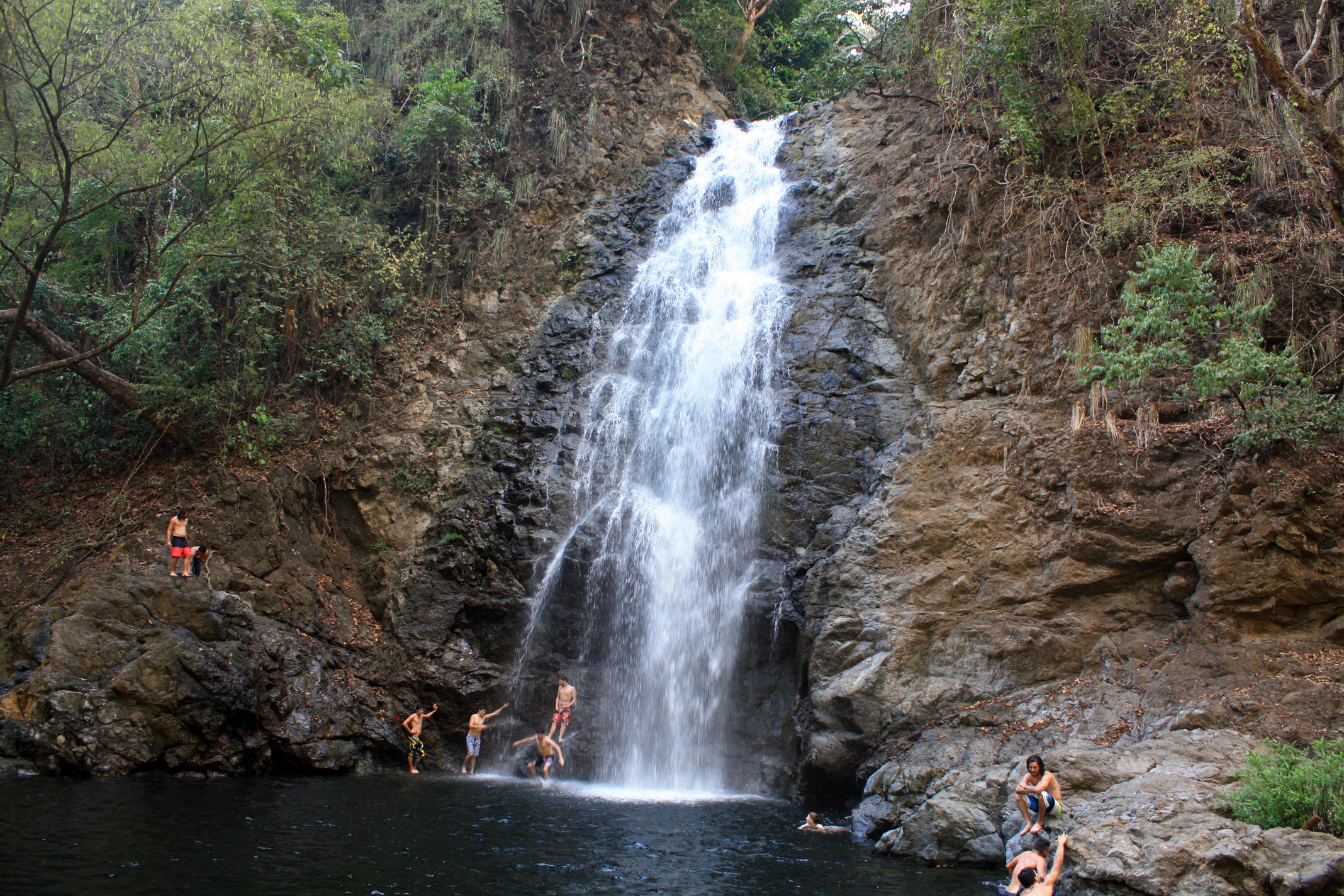
The Montezuma waterfalls are the village's most famous draw: a series of stepped falls dropping through the jungle and forming natural pools you can swim in. The first and most accessible waterfall, with its big pool, is reached on a walk from the village following the course of the river, on a trail that takes some effort and care because of the slippery rocks. Further up there are more falls and pools, harder to reach. It is a magical spot, surrounded by tropical vegetation, ideal for cooling off and enjoying nature. Some bold visitors jump from the rocks into the pools, a dangerous practice that has caused accidents, so a lot of caution is advised. There is also an access option through a private property (Sun Trails, with a zip-line nearby) that makes it easier to reach the upper falls. Getting there: on foot from the village, along the river trail (about 20-30 minutes to the first waterfall). Best time to go: dry season for safer trails; in the rains the river can rise dangerously. Tips: footwear with good grip, great care on the rocks, do not jump into the pools and follow the safety notices.
ℹ️ Distance: A 20-30 min walk from the village to the first waterfall · Entry: Free along the river trail; parking approx. ₡2,000 (US$ 4). Access via Sun Trails approx. ₡2,000 (US$ 4) per person · Tip: Slippery rocks: do not jump into the pools
2
Montezuma beaches and tide pools
White-sand beaches, rocks and natural pools stretching out on both sides of the village.
Montezuma is ringed by beautiful beaches, quite unlike the long beaches of Guanacaste. Beside the village, the coast alternates stretches of white sand with rock formations and tide pools where you can swim and watch marine life. Walking north you reach more solitary, untouched beaches, such as Playa Grande, with its sandy stretches and, depending on the tide, another waterfall that drops almost into the sea (Cataratas El Chorro), a spectacular rarity. The feel of these beaches is natural and barely developed, ideal for walking, looking for secluded corners and enjoying the sea without crowds. The surf varies: there are calm areas for swimming and others with more power, so ask locally. The sunsets and the jungle setting that reaches all the way to the sand are part of the charm. Getting there: the beaches are walked from the village, north and south. Best time to go: dry season. Tips: check tides and currents before swimming; bring water and sun protection to the more distant beaches (no services); the walk to Playa Grande and El Chorro is well worth it.
ℹ️ Access: On foot from the village; free · Don't miss: To the north: Playa Grande and the El Chorro waterfall (tide permitting) · Tip: Check currents and tides before swimming
3
Cabo Blanco Absolute Nature Reserve
The first nature reserve in Costa Rica, at the tip of the peninsula, with forest and wildlife.
A short distance from Montezuma lies the Cabo Blanco Absolute Nature Reserve, at the southern end of the Nicoya Peninsula. It is the first protected area created in Costa Rica (1963) and a symbol of the birth of the country's conservation movement. It protects a transitional moist and dry tropical forest and a coast with abundant marine life and birds, including an island off the cape where seabirds nest. A trail (a few kilometers long, with demanding stretches) crosses the forest to a beautiful beach at the point, rewarding the walker with nature, wildlife (monkeys, coatis, birds) and sea views. Because it is an 'absolute' reserve, access is regulated, limited to about 40 visitors a day, and part of the area stays closed to visits for maximum protection. Getting there: from Montezuma, by car, taxi or tour, to the reserve entrance (near Cabuya/Mal País). Best time to go: dry season. Tips: it opens Wednesday to Sunday (closed Monday and Tuesday); bring water and hiking shoes and set out early to complete the trail; respect the reserve's strict rules.
ℹ️ Entry: US$ 12 foreign adults (+13% VAT), US$ 5 children; residents ₡1,600 / ₡500 (source: SINAC / Visit Costa Rica, verified July 2026) · Hours: Wednesday to Sunday, 8:00 to 16:00 (closed Monday and Tuesday); capacity of ~40 visitors/day, book ahead · Distance: Near Cabuya, 30-40 min from Montezuma
4
Isla Tortuga
Full-day trips to an islet of turquoise water with snorkeling, kayaking and beach time.
From Montezuma there are trips to Isla Tortuga, an islet of turquoise water and white sand off the peninsula, considered one of the paradises of the area. The full-day tours usually include the boat, lunch, snorkeling, kayaking and beach time. It is one of the most popular excursions in the area, ideal for combining marine nature and rest on an idyllic beach. Book ahead, especially in high season. Getting there: the tour is booked in the village and leaves by boat from the Montezuma area. Best time to go: dry season, with a calmer sea. Tips: bring biodegradable sunscreen, a swimsuit and a waterproof camera; book ahead.
ℹ️ Price: Approx. US$ 78–98 per person for adults (US$ 48–70 children), full day with lunch; very small groups (2-3 pax) may pay more (source: Zuma Tours, Tours Paradise, Two Weeks in Costa Rica, verified July 2026) · Duration: Full day (leaves ~9:00, back ~16:00), lunch included · Includes: Boat, snorkeling, lunch and beach time
5
Yoga, wellness and the bohemian scene
Yoga schools and retreats, alternative living, cafés and healthy restaurants in the village.
Montezuma is famous for its bohemian, alternative atmosphere: yoga schools and retreats, wellness practices, an active arts scene, vegetarian and international cafés and restaurants, and a laid-back spirit inherited from its hippie past. Strolling the village, taking a yoga class facing the sea or enjoying the music and the quiet nightlife are all part of the experience. Several hotels and centers (such as Ylang Ylang and others) offer drop-in classes and multi-day retreats, as well as wellness workshops. It is one of the corners of the Costa Rican Pacific where the culture of slow travel and environmental awareness is strongest. Getting there: classes and activities are booked in the village. Best time to go: year-round. Tips: make the most of the healthy food scene and the slow pace; check the timetable for drop-in classes if you are not after a full retreat.
ℹ️ Yoga class: Approx. US$ 12–20 for a drop-in class; retreat prices vary with length · Scene: Vegetarian cafés and restaurants, art and quiet nightlife · Tip: Book retreats ahead in high season
6
Montezuma canopy / zip-line
A zip-line over the jungle next to the waterfalls, the classic adventure option in the area.
Next to the Montezuma waterfalls, the company Sun Trails runs a canopy (zip-line) circuit that flies over the jungle and combines with access to the upper falls. The route includes several cables and platforms among the trees, with views of the tropical vegetation and the sea in the distance. It is a gentle adrenaline activity, suitable for most people, with guides and safety gear. It is usually combined with a visit to the waterfalls in the same half-day outing. Getting there: the base is at the start of the waterfall trail, steps from the village. Best time to go: year-round (better in the dry season). Tips: comfortable clothes, closed shoes and follow the guides' instructions.
ℹ️ Price: Approx. US$ 40–55 per person (includes canopy + access to the upper falls, 2025). Check when you book · Duration: 2 to 3 hours · Operator: Sun Trails (next to the waterfalls)
Advertisements
What nobody tells you

💵 Prices

Tickets

TypePrice
Montezuma waterfalls (access along the river)Free (open access along the river trail); parking approx. ₡2,000 (US$ 4)
Waterfalls via private property (Sun Trails)Approx. ₡2,000 (US$ 4) per person for the upper trails (2025)
Cabo Blanco Absolute Nature Reserve (entry)US$ 12 foreign adults (+13% VAT), US$ 5 children; residents ₡1,600 / ₡500 (source: SINAC / Visit Costa Rica, verified July 2026; open Wed-Sun, capacity ~40/day)
Isla Tortuga tourApprox. US$ 78–98 per person for adults (US$ 48–70 children), full day with lunch, snorkeling and beach (source: Zuma Tours / Tours Paradise, verified July 2026)
Canopy / zip-line (Sun Trails)Approx. US$ 40–55 per person (with access to the waterfalls, 2025)
🔄 updated monthlyOfficial / reference values · double-check when buying

Activities and tours

ActivityPriceDurationOperator
Walk to the waterfalls and a swim in the poolsFree (access along the river); parking ₡2,000Half a daySelf-guided
Isla Tortuga tour (snorkeling and beach)Approx. US$ 78–98 per person for adults (US$ 48–70 children), full day with lunchFull dayZuma Tours, Cocozuma Traveller and Montezuma operators
Trail in the Cabo Blanco ReserveEntry approx. US$ 12 (Wed-Sun); optional guide US$ 25–40Half a daySelf-guided / local guides
Guided waterfall tour (from Montezuma)Approx. US$ 45 per person from Montezuma; US$ 75 from Santa TeresaHalf a dayTropical Tours and similar
Yoga classes and retreatsApprox. US$ 12–20 for a drop-in class; retreat prices varyVariableSchools and hotels in the village (Ylang Ylang and others)
Canopy / zip-line (Sun Trails)Approx. US$ 40–55 per person (with access to the waterfalls)2-3 hSun Trails, next to the waterfalls
🔄 updated monthlyOfficial / reference values · double-check when buying
Advertisements

🚌 How to get there and distances

Getting around

ModePriceDurationNotes
On footFreeVariableThe village, the beaches and the waterfalls are all covered on foot
Taxi / shuttleApprox. US$ 5–15 within the area; to Cabo Blanco or Santa Teresa US$ 20–40VariableFor Cabo Blanco, Mal País/Santa Teresa and transfers; agree the fare beforehand
Your own vehicle (4x4 recommended)Rental approx. US$ 45–90 a day depending on categoryVariableThe roads at the tip of Nicoya are partly gravel
Ferry + transfer (from Puntarenas via Paquera)Foot-passenger ferry approx. ₡810 per person; car with driver about ₡11,400 (source: Naviera Tambor / ARESEP, verified July 2026)VariableVia the ferry to Paquera (about a 70 min crossing) and then the road to Montezuma; the ferry runs several times a day
🔄 updated monthlyOfficial / reference values · double-check when buying

How to get there

RouteAirlines / operatorsAvg. priceDuration
Puntarenas → ferry to Paquera → MontezumaNaviera Tambor ferry + bus/taxiFoot-passenger ferry approx. ₡810–1,000; taxi/bus Paquera-Montezuma approx. US$ 5–15 by busApprox. 2.5-3 h in total (ferry included)
San José → Montezuma (via the Puntarenas ferry)Direct bus (Transportes Cóbano) or car + ferryDirect bus approx. US$ 12–18 (ferry included in the fare)Approx. 5-6 h
Santa Teresa / Mal País → MontezumaCar, taxi or shuttleTaxi approx. US$ 25–40; shared shuttle cheaperApprox. 45 min - 1 h
🔄 updated monthlyOfficial / reference values · double-check when buying

🏨 Where to stay

No exact prices: a scale from $ (budget) to $$$$$ (luxury), with 2-3 options per category.

CategoryPriceRecommended options
Boutique hotels and eco-lodges$$$$$US$ 130–300 a night; boutique hotels and nature lodges facing the sea or in the jungle. E.g.: Ylang Ylang Beach Resort, Hotel Amor de Mar, Anamaya Resort
Guesthouses and mid-range hotels$$$$$US$ 55–110 a night; guesthouses, B&Bs and mid-range hotels with A/C and hot water in the village. E.g.: El Sano Banano Village Hotel, Hotel Montezuma Pacific, Hotel El Jardín
Hostels and budget$$$$$US$ 10–18 per bed in a shared dorm; private rooms US$ 24–55. Backpacker hostels and cabinas. E.g.: Luminosa Montezuma Hostel, Pension Lucy, Hostel Montezuma

🍴 Where to eat

TypePriceOptions / signature dish
Vegetarian and healthy cooking$$$$$US$ 8–18 per dish; vegetarian, vegan and organic restaurants and cafés, a reflection of the bohemian scene. E.g.: El Sano Banano, Ylang Ylang Restaurant (organic, vegan)
Seafood and typical food (sodas)$$$$$US$ 6–14 per dish; sodas and restaurants with fish, ceviche and casado. E.g.: Soda Las Gemelas, Cocolores
International and chef-driven cooking$$$$$US$ 15–35 per dish; international, Italian and fine dining run by foreign residents. E.g.: Ubin by Keilor Sánchez, Puggo's, Playa de los Artistas
Advertisements

📖 History of Montezuma

Origins, formation and what the sources say.

A remote village at the tip of Nicoya

Costa Ricans jokingly call it 'Montefuma', a nod to its hippie reputation: few villages in Costa Rica carry a nickname that says so much about their history. But long before the yoga classes and the vegan cafés, Montezuma, at the southern end of the Nicoya Peninsula, was one of the most remote and hardest-to-reach corners of the Costa Rican Pacific. For generations it was a small, isolated village of fishers and farmers, connected to the rest of the country only by rough roads and by sea. That isolation, far from the main routes, preserved both its natural setting —waterfalls, untouched beaches and forest— and a simple way of life tied to the sea.

The Nicoya Peninsula, a territory of Chorotega roots and later of mestizo culture, historically looked more to cattle and fishing than to tourism. The southern tip, where Montezuma sits, was especially cut off. That remoteness, an economic limitation at the time, would later become part of its appeal: a natural, barely touched corner at the end of the peninsula.

Montezuma's setting, with its river forming waterfalls before reaching the sea, its beaches of white sand and rock and its forest running down to the coast, had a singular beauty. On that foundation of remote fishing village and intact nature would be built, decades later, the bohemian and environmentalist identity that gave the place its international fame.

Cabo Blanco and the cradle of conservation

Very close to Montezuma, one of the founding chapters of Costa Rica's environmental history took shape. In 1963 the Cabo Blanco Absolute Nature Reserve was created, the country's first protected area, at the very tip of the Nicoya Peninsula. Its establishment was due in large part to the drive of the couple formed by Olof Wessberg and Karen Mogensen, Scandinavian immigrants who, alarmed by the deforestation advancing over the area's forests, fought to protect that corner of jungle and coast.

The creation of Cabo Blanco marked the birth of the Costa Rican protected-area system, which in time would make Costa Rica a world reference in conservation. Because of its 'absolute' category, the reserve keeps a very strict protection regime, with limited access, to preserve its ecosystems as fully as possible. The story of Wessberg and Mogensen, and Wessberg's later murder while he was fighting for new protected areas, ranks among the most significant accounts in the country's environmental movement.

Montezuma's closeness to this pioneering reserve steeped the village in an ecological sensibility from early on. Living next to the country's first protected area reinforced, in the local culture and in those who arrived later, a regard for nature that would be an essential part of Montezuma's identity.

The birth of bohemian Montezuma

From the closing decades of the 20th century, Montezuma went through a transformation that would turn it into an iconic destination. Its natural beauty —waterfalls, beaches, forest— and its out-of-the-way feel drew alternative travelers, hippies, artists, backpackers and people seeking a life closer to nature, both Costa Ricans and foreigners. The village filled with vegetarian cafés and restaurants, craft shops, yoga schools and an artistic, countercultural scene that gave it an unmistakable stamp.

Out of that spirit came its affectionate nickname, 'Montefuma', a reference to its laid-back reputation and its easygoing atmosphere. Montezuma established itself as one of the reference points of alternative and ecological tourism in Costa Rica, a place where surfing and the beach coexisted with wellness, spirituality, environmental awareness and an unhurried pace of life.

Today Montezuma combines that bohemian legacy with a broader tourist offering —from hostels to boutique hotels and eco-lodges— without losing its essence. Better access roads and the closeness of booming Santa Teresa brought it into the circuit at the tip of Nicoya, but the village keeps its character as a natural, alternative refuge. Its history, from remote fishing village to neighbor of the country's first reserve and bohemian mecca, makes it unique on the Costa Rican tourist map.

Karen Mogensen and Nicolás Wessberg: the conservation legacy

The history of Montezuma is closely tied to that of Karen Mogensen, a Dane, and Olof 'Nicolás' Wessberg, a Swede, a couple of Scandinavian immigrants who settled in the area at the tip of Nicoya in the mid-1950s. Drawn by the exuberance of the tropical forest and alarmed by the rapid advance of the deforestation that was beginning to sweep the peninsula, they devoted their lives to defending nature.

After three years of international campaigning, they managed to raise the first funds —close to 30,000 dollars, with the support of environmental organizations in Sweden and Denmark— to buy the land that in 1963 would become the Cabo Blanco Absolute Nature Reserve, the first protected area in the country. Wessberg was murdered in 1975 on the Osa Peninsula while pushing for the creation of new protected areas, an episode that shook the emerging Costa Rican environmental movement. Karen Mogensen carried on the fight for decades and left an indelible mark: today a nature reserve bears her name.

That legacy shaped Montezuma's identity for good. Living next to the country's first reserve steeped the village in an early ecological sensibility which, added to its natural beauty, would be the ground on which its reputation as a bohemian and sustainable refuge would grow.

From bohemian village to sustainable destination

From the 1980s onward, Montezuma began to turn into a tourist destination thanks to pioneering businesses and to a kind of traveler quite unlike the big-resort crowd. One milestone was the opening of lodgings and cafés with an alternative spirit and environmental awareness: on the site where Karen Mogensen had run a small hotel in the center of the village, El Sano Banano operates today, and foreign residents launched projects such as Ylang Ylang Beach Resort, which over time added donation programs to expand the area's conservation land.

Over the following decades, the village drew alternative travelers, artists, backpackers and yoga practitioners, Costa Ricans and foreigners alike, who reinforced its countercultural character. Vegetarian restaurants, yoga schools, wellness retreats and an active arts scene appeared, while the range of places to stay widened from the simplest hostels to boutique hotels and eco-lodges.

The gradual improvement in access —the Paquera ferry, the peninsula's roads— and the closeness of booming Santa Teresa brought Montezuma into the tourist circuit at the tip of Nicoya, without the village losing its essence. Today it combines its conservationist and bohemian legacy with a nature and wellness tourism that keeps it one of the most singular corners of the Costa Rican Pacific.

📚 Bibliography

  • Wikipedia (EN) — «Montezuma, Costa Rica»: https://en.wikipedia.org/wiki/Montezuma,_Costa_Rica
  • Wikipedia (ES) — «Reserva Natural Absoluta Cabo Blanco»: https://es.wikipedia.org/wiki/Reserva_Natural_Absoluta_Cabo_Blanco
  • Wikipedia (ES) — «Península de Nicoya»: https://es.wikipedia.org/wiki/Pen%C3%ADnsula_de_Nicoya
  • SINAC — Reserva Natural Absoluta Cabo Blanco: https://www.sinac.go.cr/
  • Instituto Costarricense de Turismo (ICT) — Visit Costa Rica: https://www.visitcostarica.com/
  • Wikipedia (EN) — «Olof Wessberg»: https://en.wikipedia.org/wiki/Olof_Wessberg
  • Montezuma Costa Rica — Conservation Pioneers: https://montezuma-costarica.com/sustainable-founders/
  • ASEPALECO — Karen Mogensen Nature Reserve: https://www.asepalecocostarica.org/about
  • Montezuma Costa Rica — about our town: https://montezuma-costarica.com/about-our-town-montezuma-costa-rica/
  • El Sano Banano Hotel & Restaurant: https://elsanobanano.com/
  • Nicoya Peninsula — Montezuma History: https://nicoyapeninsula.com/montezuma/montezuma-history/

❓ Frequently asked questions

How much does it cost to enter the waterfalls and Cabo Blanco?+
The Montezuma waterfalls are free to access along the river trail, although parking costs about ₡2,000 (US$ 4) and access through the private Sun Trails property to the upper falls is around ₡2,000 (US$ 4) per person. The Cabo Blanco Reserve costs US$ 12 for foreign adults (plus 13% VAT), US$ 5 for children and ₡1,600 for residents (verified July 2026); it opens Wednesday to Sunday from 8:00 to 16:00, with a capacity of about 40 people a day.
Can you swim in the waterfalls?+
Yes, the waterfalls form natural pools you can swim in, especially the first one, about 20-30 minutes on foot from the village. Take great care: the rocks are slippery and jumping into the pools from height is dangerous and has caused accidents. In the rainy season the river can rise to risky levels.
How do you get to Montezuma and how much does it cost?+
It sits at the remote southern tip of the Nicoya Peninsula. The most common way from San José is a direct bus (Transportes Cóbano, about US$ 12–18 with the ferry included) or driving via the Puntarenas–Paquera ferry (foot-passenger ferry ₡810–1,000) and continuing by road. The full trip takes around 5-6 hours. It also connects by land with Santa Teresa and Mal País.
How much is the Isla Tortuga tour from Montezuma?+
Full-day tours to Isla Tortuga run around US$ 78–98 per person for adults (and about US$ 48–70 for children), depending on the operator (Zuma Tours, Tours Paradise and others); very small groups may pay a bit more. They leave around 9:00 and return at 16:00, and include the boat, lunch, snorkeling and beach time. Book ahead, especially in high season and when the sea is calm.
What is the Cabo Blanco Reserve?+
It is the Cabo Blanco Absolute Nature Reserve, the first protected area created in Costa Rica (1963), driven by Karen Mogensen and Olof 'Nicolás' Wessberg. It protects forest and coast with rich wildlife; a trail leads to a beach at the point. Because it is 'absolute', access is regulated, limited to about 40 visitors a day, and it closes Monday and Tuesday.
Is it a backpacker destination or also one for families?+
It is very popular with backpackers, couples and lovers of yoga and the alternative scene, with a good choice of hostels from US$ 10–18 a bed. But there are also boutique hotels and eco-lodges facing the sea, and families who enjoy the waterfalls and beaches. Its character is more natural and bohemian than resort-like.
Sources consulted (8)
Still planning?
Explore more destinations in Costa Rica
See all destinations →
Advertisements
Image credits
Photos from Wikimedia Commons, each under its own licence (CC BY, CC BY-SA or public domain). Open each file to see its author and licence.
Waterfall in Montezuma - panoramio