Viajá con Gus
HomeColombiaNevado del Ruiz
Nevado del Ruiz
🇨🇴 Colombia · Andean

Nevado del Ruiz

Jump to what you need
📌Department
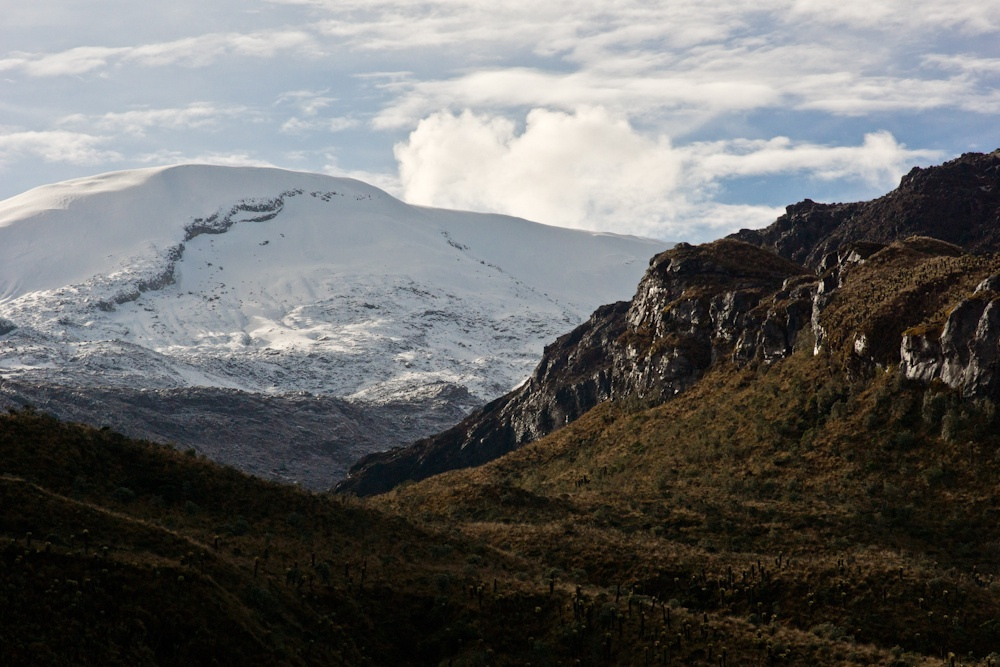
Nevado del Ruiz is an active snowcapped volcano in the Cordillera Central of the Andes, on the border between the departments of Caldas and Tolima, inside Los Nevados National Park. At around 5,300 meters, it is the highest volcano in the park and one of the most active in Colombia. Tourist access depends on the level of volcanic activity, monitored by the Servicio Geológico Colombiano (SGC), so it may be restricted or closed.
📌Service city
The base city is Manizales (capital of Caldas, with a nearby airport), from where excursions to Los Nevados National Park and the area's hot springs depart. It can also be reached from Pereira and, on the Tolima side, from Murillo and Líbano. The park is a protected area managed by Parques Nacionales Naturales de Colombia: entry requires coordination, an authorized guide and, in many cases, advance booking.
📌Best time to go
The high-mountain climate is cold and changeable all year, with sub-zero temperatures at the summit. The driest and clearest periods (best for visiting the páramo and the snowcaps) tend to fall around December-February and July-August. The visit depends above all on the volcanic alert status: as of July 2026 the volcano has been on yellow alert (level III) since June 2023, with access allowed only via the Brisas sector as far as the Valle de las Tumbas (4,450 m), by vehicle and without reaching the snow or the glacier. If the SGC raises the alert, access is closed for safety, so always check the status before planning.
📌Suggested days
The visit to this sector of Los Nevados National Park is normally done as a one-day excursion from Manizales (with a very early start), combined with the area's hot springs. It's worth staying 2 to 3 nights in Manizales or nearby to acclimatize to the altitude and add hot springs, páramo and other activities of the Eje Cafetero.
💱 COP exchange rate
Loading rate…
🌤️ Weather in Nevado del Ruiz
Loading weather…

Nevado del Ruiz is one of Colombia's great volcanoes: a snowcapped mass of more than 5,300 meters in the Cordillera Central, the heart of Los Nevados National Park, where páramo and glaciers coexist in an awe-inspiring high-mountain landscape. It's an active volcano, closely watched by the Servicio Geológico Colombiano, and its name is engraved in the country's memory by the Armero tragedy of 1985.

For travelers, Nevado del Ruiz and Los Nevados National Park offer an experience of extreme and beautiful nature: páramos of frailejones, glacial lagoons, fumaroles, hot springs and, when conditions allow, the sight of the snowcaps. As of July 2026 the volcano is on yellow alert (level III) and the park can be visited, but only via the Brisas sector and as far as the Valle de las Tumbas (4,450 m), by vehicle and with an authorized guide, without reaching the snow. Access depends on the volcanic alert level and on park rules, so planning —and flexibility— are key.

This guide covers Nevado del Ruiz with a practical and cautious eye: how and when this sector of the park can be visited, what to bear in mind about altitude and volcanic activity, the area's hot springs, how to get there from Manizales and what precautions to take. It's a serious mountain destination that demands respect, up-to-date information and authorized guides.

📖 History of Nevado del Ruiz

Nevado del Ruiz is an active volcano that has erupted throughout history. The most remembered and tragic eruption came on 13 November 1985: it melted part of the glaciers and unleashed enormous mudflows (lahars) that buried the town of Armero (Tolima), causing around 23,000 deaths, one of the greatest natural catastrophes in Colombian history. Since then the volcano has been permanently monitored by the Servicio Geológico Colombiano. Los Nevados National Park, which protects it, was created in 1973. The full story —the volcano's geology, the Armero tragedy and the current monitoring— is on our history page.

Read the full history ↓

🏛️ Nevado del Ruiz is in Caldas

Heart of the Coffee Region and of the Coffee Cultural Landscape: land of the Antioquian colonisation, of Manizales perched on its mountain ridge with its fair and its theatre festival, of the Nevado del Ruiz volcano and of the memory of the Armero disaster.

Read the history of Caldas →

🗺️ What to see

1
Los Nevados National Park (Ruiz sector)
The high-mountain protected area with páramos, glaciers and the volcano, accessible only according to the volcanic alert.
Nevado del Ruiz is the heart of Los Nevados National Park, a high-mountain protected area covering páramos, superpáramos, glaciers and volcanoes in the Cordillera Central. A visit to the Ruiz sector (on the Caldas side, from Manizales) allows you, when it's open, to walk the frailejón páramo, see fumaroles and lagoons and, depending on conditions and the rules in force, approach the volcano's zone. It's essential to understand that access to the volcano's area depends on the volcanic alert level set by the Servicio Geológico Colombiano (SGC). When the alert is at levels indicating greater activity, entry to the Ruiz sector is closed for safety and visits are limited to other parts of the park or its surroundings. So always check the current status before planning, and book the excursion with authorized operators and guides. Entry to the park requires coordination with Parques Nacionales Naturales de Colombia, an authorized guide and, in many cases, advance booking, plus payment of admission. The altitude (over 4,000 meters in the visitable areas) calls for acclimatization and care with altitude sickness. Getting there: on an excursion from Manizales (very early start). Best time: clear days in the dry seasons, whenever the alert allows. Tips: heavy warm clothing, sun protection, hydration, go slowly because of the altitude and follow your guide.
ℹ️ Distance: The park's Ruiz sector, accessible from Manizales (day excursion) · Best time: Dry seasons and clear days, if the volcanic alert allows · Admission: Entry to Los Nevados National Park (2026 rates): $24,500 COP Colombian adults/residents (25–65), $12,500 COP children and young people (5–25), $68,000 COP non-resident foreigners; + ecotourism services $22,000 COP (Unión Temporal Operación Nevados) and compulsory assistance insurance $5,000 COP. Entry only via the Brisas sector as far as the Valle de las Tumbas, by vehicle and with an authorized guide (source: Parques Nacionales and La Patria, verified July 2026; check the alert with the SGC before going) · Duration: Full day (excursion from Manizales)
2
Frailejón páramo and glacial lagoons
The high-mountain ecosystem of frailejones, lagoons and views of the snowcaps, a jewel of Andean biodiversity.
One of the most beautiful experiences in Los Nevados National Park, even when access to the volcano's summit is restricted, is walking the high-mountain páramo. Páramos are unique ecosystems of the tropical Andes, natural water sponges dominated by frailejones (Espeletia), furry plants with silvery leaves and yellow flowers that grow extremely slowly and can live for centuries. Walking among them, with mist sliding past and the snowcaps behind, is an unforgettable experience. The park holds lagoons of glacial origin, such as Laguna del Otún and others, with cold waters and spectacular settings, plus streams, glacial valleys and volcanic formations. The high-altitude wildlife includes the Andean condor, deer, the (elusive) spectacled bear and páramo birds. It's a silent, fragile world of enormous ecological value that supplies water to much of the region. Páramo hikes are done with a guide, at a slow pace because of the altitude, well wrapped up and respecting the frailejones (which must not be stepped on or touched). Getting there: within the park, depending on which sectors are open, from Manizales or Pereira. Best time: clear days in the dry season. Tips: prior acclimatization, thermal and waterproof clothing, strong sun protection (radiation at altitude is intense), water and a slow pace.
ℹ️ Distance: Sectors of Los Nevados National Park (depending on what's open) · Best time: Clear days in the dry season · Admission: Entry to Los Nevados National Park (2026 rates): $24,500 COP Colombian adults/residents (25–65), $12,500 COP children and young people (5–25), $68,000 COP non-resident foreigners; + ecotourism services $22,000 COP (Unión Temporal Operación Nevados) and compulsory assistance insurance $5,000 COP. Entry only via the Brisas sector as far as the Valle de las Tumbas, by vehicle and with an authorized guide (source: Parques Nacionales and La Patria, verified July 2026; check the alert with the SGC before going) · Duration: Half a day to a full day
3
Hot springs of the area (Otoño, El Ruiz, Santa Rosa)
Volcanic hot springs nearby, ideal for unwinding after the mountain.
The region's volcanic activity has a kindly face: the hot springs. Around Nevado del Ruiz and on the road to the park there are several complexes of volcanic thermal waters, where visitors can relax in hot pools ringed by mountains, a perfect contrast to the cold of the high cordillera. It's one of the most pleasurable and popular activities in the area, and it's usually combined with the park excursion. Among the best known are the hot springs along the road to the volcano (such as Termales del Otoño and other complexes near Manizales) and the Termales de Santa Rosa de Cabal, near Pereira, famous for their pools at the foot of a waterfall. They offer pools at different temperatures, sometimes a spa and other services, and are suitable for the whole family. The hot springs are an excellent reward after a day in the mountains, they help with the cold and the fatigue, and they're a good alternative when access to the volcano is closed. Getting there: around Manizales and Santa Rosa de Cabal, by transport or on an excursion. Best time: year-round; especially welcome after a cold day. Tips: bring swimwear, a towel and sandals; check the opening hours and prices of each complex.
ℹ️ Distance: Around Manizales and Santa Rosa de Cabal · Best time: Year-round (ideal after the mountain) · Admission: Hot springs day pass: Santa Rosa de Cabal approx. $49,000–60,000 COP adults and $25,000–35,000 COP children (2025); other complexes near Manizales at similar rates (check when visiting) · Duration: Half a day
4
Valle de las Tumbas and the Arenas crater (views of the volcano)
The open sector of the Ruiz, a lunar landscape of volcanic sands with views toward the Arenas crater, when the alert allows.
The Valle de las Tumbas is, as of July 2026, the highest point you're allowed to reach on Nevado del Ruiz: under the yellow alert in force, entry is via the Brisas sector and the route ends in this valley at around 4,450 meters. It's an overwhelming, almost lunar landscape: broad volcanic sand flats in ochre and gray, dotted with frailejones and rock formations, with the icy wind and thin air of high mountains. From here, on clear days, you take in the bulk of the volcano; the Arenas crater, the Ruiz's main focus of activity, lies outside the permitted area, as do the snow and the glacier. Under the current alert, the route is done by vehicle (so evacuation can be quick if needed) with stops and short walks, always with an authorized guide and strictly following safety instructions, since this is an active volcano. The sensation of standing in this high-altitude desert, among distant fumaroles and absolute silence, is one of the most striking experiences in the Eje Cafetero. It's essential to remember that access depends on the Servicio Geológico Colombiano's alert level and may be suspended from one day to the next. Getting there: on an excursion from Manizales, entering via the Brisas sector. Best time: clear days in the dry season, if the alert allows. Tips: heavy layered clothing, strong sun protection, hydration and a slow ascent because of the altitude.
ℹ️ Distance: Las Tumbas sector, within Los Nevados National Park (entry via the Brisas sector from Manizales) · Best time: Clear days in the dry season, if the alert allows · Admission: Included in park entry and the guided tour (see admission rates); a guide is compulsory (2025) · Duration: Included in the full-day excursion
5
Laguna del Otún (páramo trekking)
A high-altitude glacial lagoon in Los Nevados National Park, the goal of serious páramo trekking, reached from the Pereira side.
Laguna del Otún is a sheet of water of glacial origin sitting above 3,900 meters inside Los Nevados National Park, in the upper basin of the Otún river. It's one of the great goals of páramo trekking in the region: a high-altitude landscape of frailejones, lagoons and, on the horizon, the snowcaps. Although the classic approach starts on the Risaralda side (El Cedral / La Pastora), it forms part of the same Ruiz massif and of Los Nevados National Park. Reaching the lagoon means a long walk made demanding by the altitude, which many do over one or two days with an overnight stay in refuges. It requires good physical condition, prior acclimatization and, above all, going with authorized guides and operators, as well as respecting the protected area's rules. It's an experience for those who enjoy mountains and demanding treks, not a casual stroll. Getting there: with an authorized operator, generally from Pereira or El Cedral. Best time: dry season, clear days. Tips: serious warm gear, waterproofs, hydration, a slow pace because of the altitude and a booking with a Los Nevados National Park operator.
ℹ️ Distance: Above 3,900 m, in Los Nevados National Park (access from El Cedral / La Pastora) · Best time: Dry season, clear days · Admission: Trekking with an authorized operator from about COP 250,000–450,000 depending on days and group (2025; check) · Duration: 1 to 2 days (demanding)
6
Towns of the Coffee Cultural Landscape (Manizales and around)
The base of the trip: Manizales and the coffee towns of Caldas and Risaralda, a World Heritage Site, ideal for acclimatizing.
Since a visit to Nevado del Ruiz requires acclimatization to altitude and depends on the volcanic alert, most travelers spend several nights in Manizales and the towns of the Coffee Cultural Landscape, declared a World Heritage Site by UNESCO in 2011. Manizales, perched high on the cordillera, offers its neo-Gothic cathedral, lookouts, the Bolívar Cóndor monument and a lively university and food scene. The surroundings gather postcard coffee towns and traditional haciendas where you can follow the whole coffee process —from bean to cup—, walk the coffee plots, taste single-origin coffees and sleep among green mountains. It's the warm, welcoming side of the trip, the perfect complement to the high mountains of the Ruiz. These towns and farms are also the best plan B when access to the volcano is closed, along with the area's hot springs. Getting there: Manizales is the base; the towns and farms are around it. Best time: year-round. Tips: use the stay to acclimatize before heading up to the páramo; book a coffee experience and enjoy the mild valley climate.
ℹ️ Distance: Manizales (base) and the coffee towns of Caldas and Risaralda · Best time: Year-round · Admission: Wandering the towns is free; a coffee farm experience from about COP 30,000–80,000 per person (2025) · Duration: 1 to several days
Advertisements
What nobody tells you

💵 Prices

Tickets

TypePrice
Entry to Los Nevados National Park (Brisas sector → Valle de las Tumbas)2026 rates: $24,500 COP Colombian adults/residents (25–65), $12,500 COP children and young people (5–25), $68,000 COP non-resident foreigners (source: Parques Nacionales and La Patria, verified July 2026)
Ecotourism services + assistance insurance (compulsory)$22,000 COP ecotourism services (Unión Temporal Operación Nevados) + $5,000 COP assistance insurance per person (source: Parques Nacionales, verified July 2026)
Guided day excursion to the Ruiz sector from Manizales (with transport, guide, admissions)$150,000–450,000 COP per person depending on the operator; premium versions with hot springs and meals from $500,000 COP (2025)
Hot springs day pass (Santa Rosa de Cabal)Approx. $49,000–60,000 COP adults, $25,000–35,000 COP children; parking $6,000 COP (2025)
🔄 updated monthlyOfficial / reference values · double-check when buying

Activities and tours

ActivityPriceDurationOperator
Excursion to Los Nevados National Park (Ruiz/Las Tumbas sector) by 4x4 with a guide$150,000–450,000 COP per person, all inclusive (2025)Full dayAuthorized operators in Manizales (check the SGC alert status)
Walk through the frailejón páramo (open sectors)Included in many tours; with a local guide from about $80,000–150,000 COP (2025)Half a day to a full dayAuthorized park guides
Day pass at the area's hot springs (Santa Rosa de Cabal or Otoño)$49,000–60,000 COP adults for a day pass (2025)Half a dayHot springs complexes of Santa Rosa de Cabal and Manizales
Condor spotting and páramo wildlifeIncluded in nature tours; guided outings from about $100,000 COP (2025)Half a dayNature guides of the Eje Cafetero
🔄 updated monthlyOfficial / reference values · double-check when buying
Advertisements

🚌 How to get there and distances

Getting around

ModePriceDurationNotes
Excursion / 4x4 transport from ManizalesIncluded in the tour ($150,000–450,000 COP all in) (2025)Variable (very early departure)Access to the high mountains requires suitable vehicles and a pre-dawn start; entry is only permitted on a vehicle tour with an authorized guide. Book 3–5 days ahead
Private car / transport to the hot springsBus + admission combo to Santa Rosa de Cabal from Pereira/Manizales approx. $60,000–90,000 COP (2025)VariableThe hot springs in the area are reached by car or by transport from Manizales or Santa Rosa de Cabal
🔄 updated monthlyOfficial / reference values · double-check when buying

How to get there

RouteAirlines / operatorsAvg. priceDuration
Manizales → Los Nevados National Park (Ruiz/Las Tumbas sector)Authorized operators and excursions (Rutas Andes, Cattleya, others)$150,000–450,000 COP per person, full tour (2025)Approx. 1.5 to 2 h to the entry sector
Pereira / Santa Rosa de Cabal → the park and the hot springsLocal operators of the Eje Cafetero$60,000–200,000 COP depending on the activity and package (2025)Variable
Flights to Manizales or Pereira from Bogotá/MedellínAvianca, LATAM, Latino/EasyFlyAirfare varies, often from $150,000–400,000 COP each way (2025)Depends on origin (under 1 h flight from Bogotá)
🔄 updated monthlyOfficial / reference values · double-check when buying

🏨 Where to stay

No exact prices: a scale from $ (budget) to $$$$$ (luxury), with 2-3 options per category.

CategoryPriceRecommended options
Budget hostels in Manizales$$$$$Hostels and cheap lodgings for backpackers in the city: a dorm bed from about $40,000–60,000 COP, privates from about $90,000 COP (2025)
Hotels in Manizales$$$$$Mid-range hotels, the usual base for excursions to Los Nevados: approx. $150,000–300,000 COP a night for a double (2025)
Mountain hotels and refuges (on the road to the volcano)$$$$$Lodgings and refuges on the road to the volcano and near the park, for an early start into the high mountains: approx. $150,000–350,000 COP a night (2025)
Coffee farms and haciendas (Coffee Cultural Landscape)$$$$$Coffee farms and haciendas of Caldas and Risaralda, with rural charm: approx. $250,000–600,000 COP a night, some more (2025)

🍴 Where to eat

TypePriceOptions / signature dish
Agua de panela, coffee and hot drinks$$$$$Essential for warming up in the high mountains; available at stops and refuges: a hot drink from about $3,000–6,000 COP (2025)
Traditional paisa food and hot broths$$$$$Broths, sancochos, bandeja paisa and hearty dishes for the cold, in Manizales and the area: a dish from about $15,000–30,000 COP (2025)
Restaurants and cafés in Manizales$$$$$Regional and international cooking and specialty coffee shops in the city: dishes from about $25,000–50,000 COP (2025)
Food at the hot springs complexes$$$$$Restaurants and cafeterias inside the hot springs complexes: lunches from about $20,000–40,000 COP (2025)
Advertisements

📖 History of Nevado del Ruiz

Origins, formation and what the sources say.

A volcano capped with ice in the Cordillera Central

Nevado del Ruiz, known to Indigenous peoples as Cumanday ('white mountain'), is an active stratovolcano in the Cordillera Central of the Andes, on the border between the departments of Caldas and Tolima. At around 5,300 meters, it is the highest volcano in Los Nevados National Park and one of the most northerly and most active in Colombia. Its summit was covered by an ice cap that, like those of other tropical snowcaps, has retreated markedly in recent decades because of climate change.

Geologically, the Ruiz is a volcano with a long eruptive history, with eruptions recorded across the centuries. Its particular danger comes from the combination of volcanic activity and ice: when an eruption melts part of the summit glaciers, the water mixes with ash and loose material and forms lahars (flows of mud and debris) that race down the river channels, destroying everything in their path. Those lahars are the volcano's most feared threat.

The Ruiz is part of a volcanic cluster that includes other snowcaps in the area and sits on the cordillera's fault system. Its high-mountain setting —páramos, superpáramos and glaciers— is of enormous ecological value and supplies water to much of the region, besides being an awe-inspiring natural stage.

Cumanday: the Indigenous name and eruptions before 1985

Long before it was called Nevado del Ruiz, the Indigenous peoples of the region —among them Quimbaya- and Pijao-affiliated communities on the slopes of the Cordillera Central— knew the mountain as Cumanday, usually translated as 'white mountain' or 'white summit'. The volcano and its snows were part of the sacred and everyday landscape of these peoples, who inhabited the fertile valleys around it long before the Spanish arrived in the 16th century.

The Ruiz is no dormant volcano: it has a long record of historic eruptions. Chronicles and geological studies document major eruptive episodes in 1595 and in 1845, the latter also accompanied by lahars that came down the Lagunilla river valley and caused deaths and destruction in the very area where Armero would later be built. In other words, the 1985 catastrophe was not an isolated event but the repetition of a pattern the volcano had already shown centuries earlier.

That geological memory —moderate eruptions but devastating lahars from meltwater— is precisely what volcanologists were warning about in 1985 and what underpins today's permanent monitoring. The name Cumanday is still used with pride in the region as a reminder of the ancestral bond with the mountain.

The precedent of 1845
Geological studies note that the 1845 eruption had already generated lahars along the Lagunilla river with fatal consequences in the area of the future Armero, which makes 1985 the repetition of a known pattern. The exact death toll of 1845 varies according to historical sources.
Source: https://es.wikipedia.org/wiki/Nevado_del_Ruiz

The Armero tragedy (1985)

On 13 November 1985, Nevado del Ruiz caused one of the greatest natural catastrophes in Colombian history and one of the deadliest volcanic eruptions of the 20th century. That night, a relatively moderate eruption melted part of the summit ice cap and unleashed enormous lahars that swept down the river channels, above all the Lagunilla, heading into Tolima.

The mudflows, which advanced for hours, reached the city of Armero, in the valley, in the small hours and buried it almost completely. Around 23,000 people died, most of them residents of Armero, in a tragedy that shocked the world. The image of Omayra Sánchez, a girl trapped in the mud for days, became one of the most painful symbols of the disaster.

The tragedy was especially bitter because it was, to a great extent, avoidable: in the preceding months there had been signs that the volcano was reactivating and warnings from scientists, but the lack of coordination, clear information and evacuation measures prevented the population from being brought to safety. Armero thus became a worldwide case study in volcanic risk management and left a painful lesson: the importance of monitoring, communication and preparedness in the face of natural disasters.

A catastrophe that could have been avoided
The sources agree that the 1985 eruption was moderate in volcanic terms, but the lahars it melted caused some 23,000 deaths in Armero. Various analyses note that the lack of coordination, communication and timely evacuation decisively worsened the tragedy, which is considered largely preventable.
Source: https://es.wikipedia.org/wiki/Tragedia_de_Armero

The 21st-century reactivation and the yellow alert

After decades of relative calm following 1985, Nevado del Ruiz began showing signs of activity again in the 21st century. Since 2012 the Servicio Geológico Colombiano has raised the alert to yellow (changes in the volcano's behavior) and, in various episodes —with notable peaks in 2012, 2017 and, very markedly, in 2023—, increases in seismicity, ash and gas emissions and even recommendations for precautionary evacuation of nearby communities were recorded.

In March and April 2023, the volcano went through one of the most uncertain periods of recent years: seismicity spiked and the authorities came close to moving to an orange alert, keeping the region on tenterhooks and reinforcing risk management plans in the surrounding municipalities. Activity eventually stabilized, but the episode made clear that the Ruiz remains a fully active volcano under close watch.

This condition of near-permanent yellow alert is why tourist access to the volcano's area is restricted and only limited sectors (such as Las Tumbas) can be entered, always with an authorized guide and by vehicle, and why a visit may be suspended from one day to the next. For travelers, it means that planning a visit to the Ruiz requires checking the SGC's current alert status and accepting that the volcano has the last word.

A volcano under constant watch
Since 2012 the SGC has kept Nevado del Ruiz at alert levels reflecting activity, with critical episodes such as that of 2023. Risk interpretation and evacuation decisions are based on instrumental monitoring, though precisely predicting an eruption remains impossible.
Source: https://www.sgc.gov.co/volcanes

Monitoring, Los Nevados National Park and visiting today

The Armero tragedy marked a turning point in volcano monitoring in Colombia. In the wake of the disaster, permanent surveillance of Nevado del Ruiz and the country's other volcanoes was strengthened, today under the Servicio Geológico Colombiano (SGC), which runs volcanological observatories and a system of alert levels (green, yellow, orange, red) that inform the authorities and the public about the volcano's state.

The Ruiz is protected within Los Nevados National Park, created in 1973, one of Colombia's emblematic protected areas, which safeguards páramos, glaciers, lagoons and a rich Andean biodiversity, besides being a vital water source for the Eje Cafetero region. Parques Nacionales Naturales de Colombia manages access, entry rules and conservation of the area.

For visitors, this means that the possibility of exploring the volcano's sector depends directly on the volcanic alert status and on the authorities' decisions: in periods of greater activity, access to the Ruiz area is closed for safety. When it is open, visits are made with authorized guides, bookings and payment of admission. Nevado del Ruiz is thus at once an extraordinary nature destination and a permanent reminder of the power of the earth and of the importance of respecting the warnings of science.

📚 Bibliography

  • Wikipedia (ES) — «Nevado del Ruiz»: https://es.wikipedia.org/wiki/Nevado_del_Ruiz
  • Wikipedia (ES) — «Tragedia de Armero»: https://es.wikipedia.org/wiki/Tragedia_de_Armero
  • Wikipedia (ES) — «Armero (Tolima)»: https://es.wikipedia.org/wiki/Armero_(Tolima)
  • Wikipedia (ES) — «Parque Nacional Natural Los Nevados»: https://es.wikipedia.org/wiki/Parque_nacional_natural_Los_Nevados
  • Wikipedia (ES) — «Omayra Sánchez»: https://es.wikipedia.org/wiki/Omayra_S%C3%A1nchez
  • Servicio Geológico Colombiano — «Volcanes»: https://www.sgc.gov.co/volcanes
  • Servicio Geológico Colombiano — Observatorio Vulcanológico de Manizales: https://www.sgc.gov.co/
  • Parques Nacionales Naturales de Colombia: https://www.parquesnacionales.gov.co/
  • Colombia.travel — Parque Los Nevados: https://colombia.travel/es
  • UNGRD — Gestión del riesgo Nevado del Ruiz: https://portal.gestiondelriesgo.gov.co/

❓ Frequently asked questions

Can you go up Nevado del Ruiz in 2026?+
Yes, but with restrictions. As of July 2026 the volcano has been on yellow alert (level III) since June 2023, and Los Nevados National Park allows entry only via the Brisas sector, by vehicle and with an authorized guide, as far as the Valle de las Tumbas (4,450 m). You don't reach the snow, the glacier or the Arenas crater, and the route is done by vehicle so that evacuation can be quick if needed. Since the Ruiz is an active volcano, if the SGC raises the alert access closes completely, so check the current status before planning.
Is it dangerous, being an active volcano?+
The volcano has been permanently monitored by the SGC since the Armero tragedy (1985). The authorities close access when the alert calls for it, so the main recommendation is to respect the restrictions, go only with authorized operators and guides, and check the alert status before your visit. Never enter closed areas.
How does the altitude affect you?+
The visitable areas of the park are above 4,000 meters, where altitude sickness (soroche) is common: headache, dizziness, shortness of breath. Acclimatize for a few days in Manizales, ascend slowly, drink water, avoid alcohol and tell your guide about any discomfort. This isn't a destination to rush up.
What do I do if the volcano is closed?+
Even when the volcano sector is restricted, the area has plenty to offer: walks through the frailejón páramo in the park's open sectors, the hot springs nearby (like Santa Rosa de Cabal or the complexes near Manizales), birdwatching and the towns of the Coffee Cultural Landscape. The hot springs are always a good plan.
What's the best time to visit?+
The driest and clearest periods are usually December-February and July-August, better for seeing the páramo and the snowcaps. But the decisive variable is the volcanic alert: a visit is only possible when the SGC and Parques Nacionales open access. The high-mountain climate is cold and changeable all year.
What should I take into the high mountains?+
Heavy layered warm clothing (it's bitterly cold, with sub-zero temperatures at altitude), waterproofs, hat and gloves, strong sun protection (radiation is intense), sunglasses, water and some energy food. Mountain footwear. And, above all, the patience to go slowly because of the altitude and follow your guide's instructions.
Sources consulted (14)
Still planning?
Explore more destinations in Colombia
See all destinations →
Advertisements
Image credits
Photos from Wikimedia Commons, each under its own licence (CC BY, CC BY-SA or public domain). Open each file to see its author and licence.
Nevado del Ruiz nos saludo 4