Viajá con Gus
Home › Cape Verde › Brava
Brava
🇨🇻 Cape Verde · Fogo and Brava (the volcanic south)

Brava

🪪 What do I need to enter Cape Verde?Pick your citizenship and we tell you the visa, the days and the paperwork, with the official source.

By leaving your email and citizenship you agree to receive the documents you asked for and weekly travel news. You can unsubscribe whenever you want. How we handle your data.
Jump to what you need
📍Region
Brava is the smallest inhabited island in Cabo Verde and the westernmost of the Sotavento group, in the south of the archipelago, facing neighbouring Fogo. It's called 'the island of flowers' because its cool, humid highland climate keeps it green and in bloom for much of the year. With no airport in use, the only way in is by ferry from Fogo, which has kept it remote, quiet and authentic: a refuge of mountains, hikes and total calm, and the birthplace of morna and of the poet Eugénio Tavares.
📌Best time to go
From November to June, in the dry season, when trails are firm and the weather is good for walking. In the wetter months (August-October) the island is especially green and full of flowers, though there can be fog and rain. Brava is cool all year round because of its altitude: Nova Sintra, the capital, sits at about 500 m and is usually milder and more humid than the rest of the country. Bring a warm layer and a light rain jacket.
⛰️Altitude and geography
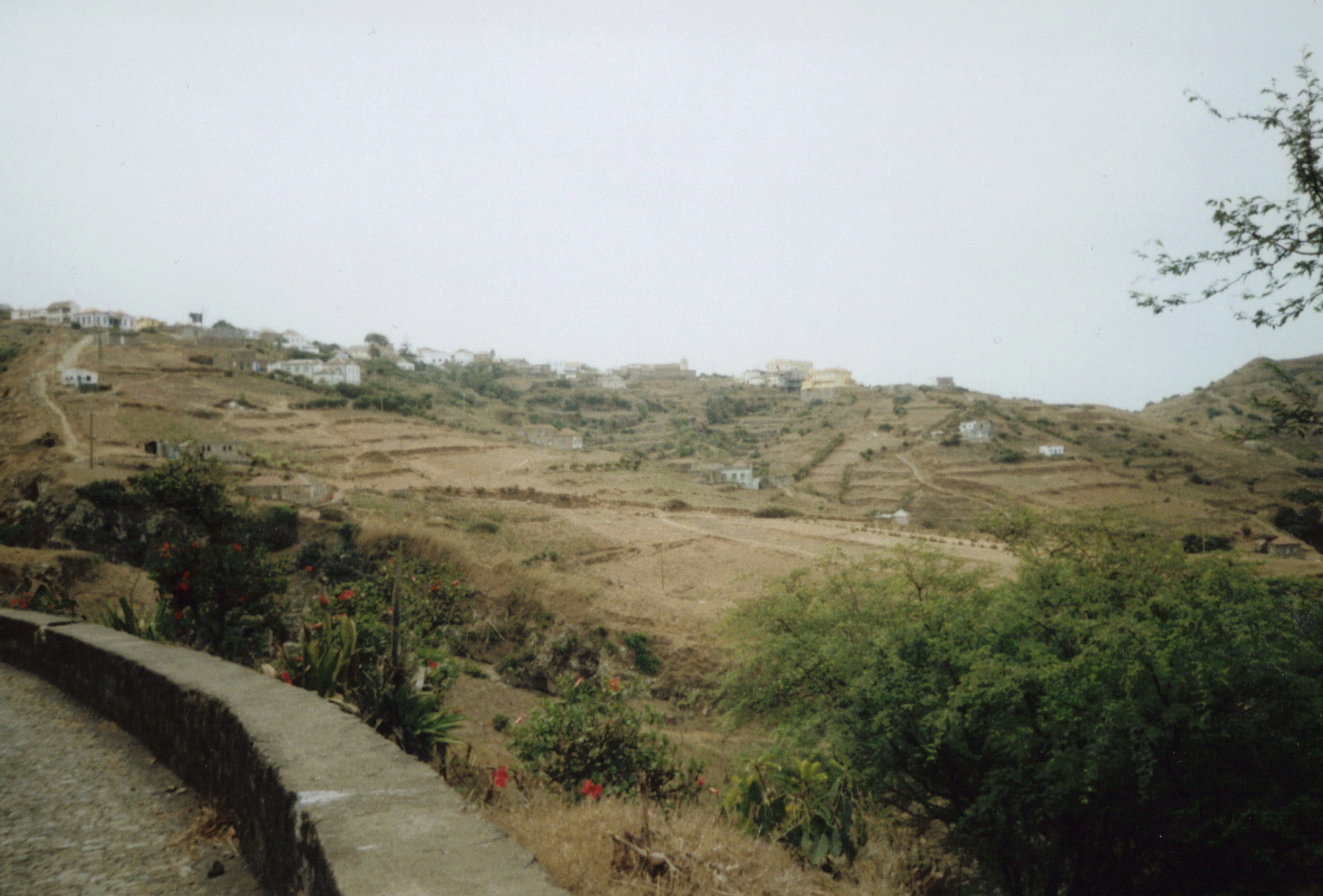
Brava is mountainous and compact: just about 64 km², crowned by peaks over 900 m (Monte Fontainhas is around 976 m). The capital, Nova Sintra, sits on an inland plateau at about 500 m, among gardens and flowers; the port of Furna is at sea level, and the village of Fajã d'Água lies on a beautiful bay to the west. The landscape alternates ridges, green valleys and a jagged coastline with natural pools.
📌Suggested days
2 or 3 days are enough to enjoy Brava properly: explore Nova Sintra, walk down to Fajã d'Água, climb to a viewpoint or two and visit villages and natural pools. Since you depend on the ferry from Fogo (which doesn't run daily), plan your dates carefully and leave some slack in case the sea changes the schedule. This is a place to slow down, not to rush.
📌Language and currency
People speak Sotavento Creole and Portuguese; as the island sees few tourists, less English is spoken than on the beach islands. The currency is the Cape Verdean escudo (CVE), pegged to the euro (1 EUR = 110,265 CVE); in July 2026 the dollar is around 97 CVE. Nova Sintra has a bank/ATM or two, but bring enough cash: almost everything is paid in cash and services are limited.
📌Getting there
Brava has no working airport (the small airfield closed because of strong winds), so the only way in is the ferry from the island of Fogo. The boat (Kriola/CV Interilhas type) links São Filipe or Vale de Cavaleiros with the port of Furna, on Brava, in about 40-50 minutes, several times a week. From Furna, an aluguer climbs the 99-bend road up to Nova Sintra. Fogo is reached by plane from Praia.
💱 CVE exchange rate
Loading rate…
🌤️ Weather in Brava
Loading weather…

Brava is Cabo Verde's hidden gem: the smallest inhabited island in the country, the most remote and, for many, the most beautiful. It's called 'la ilha das flores', the island of flowers, because its cool, humid highland climate keeps it green and in bloom while the rest of the archipelago looks dry and brown. With no airport and reachable only by ferry from neighbouring Fogo, Brava escaped mass tourism and keeps a slow pace, an old-world feel and an authenticity that wins you over.

It's an island of mountains and gentle walks among flowers, vegetable plots and villages of colourful little houses. Its capital, Nova Sintra, is a charming town on an inland plateau, with gardens, a square dedicated to the poet Eugénio Tavares — the island's great bard and father of morna — and a cool climate that, they say, recalls the Portuguese Sintra it was named after. Down on the coast, the bay of Fajã d'Água is one of the loveliest spots in the country.

This guide tells you how to reach Brava by ferry from Fogo, how to get around the island by aluguer along its 99-bend road, which hikes and villages you shouldn't miss, where to swim in natural pools, and where to sleep and eat in a place where everything is small-scale. Brava isn't for those looking for luxury or postcard beaches: it's for those who want calm, nature, poetry and the most genuine Cabo Verde.

📖 History of Brava

Brava was settled mainly from the 17th and 18th centuries, when many people from neighbouring Fogo fled to the small island to escape the volcano's eruptions and the droughts. Its cool climate and relative fertility made it a green refuge. In the 19th century it became a whaling port: its men signed on to American whaling ships, and Brava built a very close bond with New England that lasts to this day. It is also the birthplace of Eugénio Tavares, national poet and a leading figure of morna. The full story is told on our history page.

Read the full history ↓

🏛️ Brava is in Fogo and Brava (the volcanic south)

The south of fire and flowers: the island of Fogo, with its active volcano and its lava wine, and tiny Brava, the island of flowers and of the morna poets, reachable only by boat.

Read the history of Fogo and Brava (the volcanic south) →

🗺️ What to see

Tours you can book

If you book from here we earn a commission and you pay no more. Prices and availability come from Civitatis.

1
Nova Sintra (the capital)
A charming mountain town on a plateau at about 500 m, with clean streets, colourful houses, flower-filled gardens and a central square dedicated to the poet Eugénio Tavares. Its cool, humid climate and relaxed atmosphere make it one of the most pleasant island capitals in the country. The ideal base for exploring Brava.
2
Fajã d'Água
A spectacular bay on the west coast, considered one of the most beautiful in Cabo Verde: an arc of blue sea at the foot of green mountains, with a fishing village, scattered houses and natural pools. You get there by aluguer or on foot from Nova Sintra, and it's the island's must-see landscape.
3
Port of Furna
The port where you arrive on and leave Brava, in an inlet surrounded by mountains, with a small fishing community. It's the island's gateway and a picturesque spot to watch the ferry come in, the boats and seafaring life; the 99-bend road to Nova Sintra starts here.
4
Nossa Senhora do Monte viewpoint and chapel
A hilltop sanctuary near Nova Sintra, a pilgrimage site and an exceptional viewpoint over the island, the sea and neighbouring Fogo. It's also the starting point of the hike down to Fajã d'Água, one of the prettiest on Brava.
5
Nossa Senhora do Monte → Fajã d'Água hike
A downhill trail of approximately 1,5 hours from the heights to the bay of Fajã d'Água, through green landscapes, flowers and sea views. One of the best ways to see the island's interior and coast on foot, suitable for walkers in reasonable shape.
6
Coastal natural pools
At Fajã d'Água and other spots along the coast there are rock pools and natural seawater pools among the volcanic rocks, perfect for a calm swim away from the waves. They're the best way to cool off on an island with no big sandy beaches.
7
Eugénio Tavares' house and legacy
Brava is the birthplace of Eugénio Tavares (1867-1930), Cabo Verde's national poet and one of the great figures of morna. Nova Sintra honours his memory and preserves his legacy; learning his story helps you understand the poetic and musical soul of the island.
8
Rural villages and flower gardens
Wandering through Brava's small inland villages — among vegetable plots, flowers, stone walls and colourful little houses — is a quiet pleasure. The green, flowering island invites you to walk with no fixed route, chat with locals and enjoy the slow pace of the most authentic Cabo Verde.
📶I have never landed without internet. I arrive and my phone connects to the strongest network in the country I am visiting: I can say I landed, sort out transport, book tours and keep posting, at a seriously good price. I always use the Maya eSIM — check their plans by clicking the banner.See plans →Maya Mobile eSIM — download, install, go
What nobody tells you

💵 Prices

Tickets

TypePrice
Caminatas por senderos públicosFree; no ticket office (verified July 2026)
Piscinas naturales y miradoresFree access (2026)
Guía local para caminatas (por grupo)Around 2.500-4.000 CVE per day (~USD 25-40), 2026; to be arranged in Nova Sintra
Ferry Fogo ↔ Brava (por trayecto)1.500 CVE (~€14 / USD 15) for non-nationals and 950 CVE for nationals (official CV Interilhas fare table, Despacho n.º 01/2024 of the Government of Cabo Verde, verified 08/08/2026)
🔄 updated monthlyOfficial / reference values · double-check when buying

Activities and tours

ActivityPriceDurationOperator
Nossa Senhora do Monte → Fajã d'Água hikeFree on your own; with a guide from around 2.500 CVE per person (~USD 25), 20261,5 to 2,5 hoursOn your own or with a local guide
Aluguer tour of the island (Nova Sintra, Fajã, villages)Vehicle hire from around 4.000-7.000 CVE per half day (~USD 40-70), 2026Half dayLocal aluguer drivers
Swimming in the natural pools of Fajã d'ÁguaFree; transport extra (2026)As long as you likeOn your own
Cultural walk through Nova Sintra and the legacy of Eugénio TavaresFree on your own; local guide by arrangement (2026)1 to 2 hoursLocal guides / on your own
🔄 updated monthlyOfficial / reference values · double-check when buying

🚌 How to get there and distances

Getting around

Aluguer (shared minibus/pick-up)
DurationFurna-Nova Sintra 15-20 min
Price
Furna-Nova Sintra around 100-200 CVE per person (~USD 1-2); other routes similar (2026)
Notes
The island's everyday transport; they leave when full, mostly timed to the ferry's arrival. Cash only.
Chartered aluguer (private)
DurationBy arrangement
Price
Half day from around 4.000-7.000 CVE for the vehicle (~USD 40-70), 2026
Notes
The most comfortable way to get around Brava, given there are few vehicles and limited schedules; the cost is split among the group.
On foot
Free
DurationVariable
Notes
Brava is small and many of its best experiences (hikes, villages, Fajã) are enjoyed on foot along trails and quiet roads.
Taxi
PriceBy arrangement; very limited supply (2026)
DurationVariable
Notes
There are few taxis; the aluguer is the usual option. Always agree on the price beforehand.
🔄 updated monthlyOfficial / reference values · double-check when buying

How to get there

Fogo (São Filipe / Vale de Cavaleiros) → Furna (Brava) by ferry
Airlines / operatorsCV Interilhas ('Kriola'-type vessel)
DurationAbout 40-50 minutes; several times a week (not daily)
Avg. price
1.500 CVE for non-nationals (~€14 / USD 15) and 950 CVE for nationals per journey (official CV Interilhas fare table, Despacho n.º 01/2024 of the Government of Cabo Verde, verified 08/08/2026)
Furna → Nova Sintra along the 99-bend road
Airlines / operatorsAluguer or taxi
Avg. priceAluguer around 100-200 CVE per person (~USD 1-2), 2026
Duration15 to 20 minutes
Praia (Santiago) → Fogo (São Filipe) by plane
Airlines / operatorsDomestic flights (BestFly and others)
Avg. priceOne way from around 6.000-12.000 CVE (~USD 60-120), 2026
DurationAbout 30-40 minutes (prior connection to reach Fogo)
Praia → Fogo by ferry (alternative way to Fogo)
Airlines / operatorsCV Interilhas
DurationSeveral hours; subject to sea conditions
Avg. price
4.450 CVE for non-nationals and 2.980 CVE for nationals per journey (official CV Interilhas fare table, Despacho n.º 01/2024 of the Government of Cabo Verde, verified 08/08/2026)
🔄 updated monthlyOfficial / reference values · double-check when buying

🏨 Where to stay

No exact prices: a scale from $ (budget) to $$$$$ (luxury), with 2-3 options per category.

Guesthouses and residenciais in Nova Sintra
Price$$$$$
Recommended options
Around 2.500-5.000 CVE a night (~USD 25-50); simple, welcoming places to stay in the capital, the best base for the island
Rural lodgings and houses in Fajã d'Água
Price$$$$$
Recommended options
Around 2.500-5.000 CVE a night (~USD 25-50); houses and guesthouses facing the bay, ideal for switching off by the sea
Homestays (community tourism)
Price$$$$$
Recommended options
From around 1.500-3.000 CVE a night (~USD 15-30); rooms in local homes, with a family welcome and home cooking; the island's supply is limited, so book ahead

🍴 Where to eat

Cocina criolla de Brava
Price$$$$$
Options / signature dish
Dishes from around 500-1.000 CVE (~USD 5-10); cachupa, fresh fish and seafood, stewed goat and island vegetables in small restaurants in Nova Sintra and Fajã
Comida casera en alojamientos
Price$$$$$
Options / signature dish
Set meals from around 700-1.500 CVE (~USD 7-15); home-cooked food made with local produce; give advance notice, given the island's small scale
Tascas, cafés y puestos
Price$$$$$
Options / signature dish
From around 200-500 CVE (~USD 2-5); coffee, sandwiches, sweets and grogue in simple bars in town and at the port of Furna

📖 History of Brava

Origins, formation and what the sources say.

An island discovered and made a refuge

Brava, the smallest of Cape Verde's inhabited islands and the westernmost of the Sotavento (Leeward) group, was sighted by Portuguese navigators in the 15th century, in the early days of the archipelago's colonisation. At first it stayed almost empty. It was small and mountainous and of little economic interest to the crown, so it stayed in the shadow of the larger islands, above all Santiago, where colonial power was concentrated.

Permanent settlement came to Brava later, largely thanks to its neighbour Fogo. Whenever the Fogo volcano erupted, as in the great eruption of the 17th century, many of its inhabitants crossed the narrow channel to take refuge on Brava, which was safer and had a gentler climate. These waves of people from Fogo were joined by families fleeing drought, drawn by the small island's cool, damp climate and its relative fertility.

This is how Brava took shape as a refuge island: green, quiet and a little out of the way, settled by people escaping fire and hunger. That origin shaped its reserved character and its strong identity. Far from the main routes and without the commercial importance of other islands, Brava developed a culture of its own, intimate and closely bound to the land and the sea.

The whalers and the bond with New England

In the 19th century, Brava lived through a chapter that would mark its history forever: the whaling era. The great whaling ships of New England, from ports such as New Bedford and Nantucket in Massachusetts, crossed the Atlantic on voyages lasting years and called at Cape Verde for supplies and crew. The men of Brava, skilled sailors, signed on to those ships in large numbers.

Many people from Brava set off for America this way and ended up settling in New England, forming one of the oldest and largest Cape Verdean communities in the United States. The bond between Brava and Massachusetts grew so close that the little island ended up, in a way, with one foot on each side of the Atlantic. Families were split, letters and remittances crossed the ocean, and people came and went between the world of flowers and the world of American factories.

That bond left a deep mark. Brava is said to be, proportionally, one of the islands with the most emigrants in the United States, and American English and customs brought back from there seeped into everyday life. Emigration partly emptied the island, but it also connected it to the world and fed the 'sodade', the longing of those who leave and those who wait, that runs through its culture and its music.

Eugénio Tavares and the poetic soul of the island

Brava is, above all, a land of poets and music. Its most famous son is Eugénio Tavares (1867-1930), one of the great figures of Cape Verdean culture. A poet, journalist and composer, he wrote much of his work in Creole, championing the people's language at a time when official culture was Portuguese. He is considered one of the fathers of morna, Cape Verde's most emblematic musical genre, melancholy and sentimental.

His mornas, among them the famous 'Morna de despedida' or 'Hora di bai' (the hour of leaving), sing of the pain of separation, of love and of 'sodade', giving voice to the experience of a people shaped by emigration. Tavares turned Brava, and all of Cape Verde, into the stuff of poetry, and he became a symbol of Cape Verdean identity and sensibility. Nova Sintra, the island's capital, honours his memory in its main square.

That cultural prestige gave Brava a symbolic weight far greater than its size. In Cape Verde, the little island of flowers is seen as a place of refinement, poetry and music, the birthplace of artists and of a lyrical tradition that is still alive. Getting to know Eugénio Tavares is understanding why Brava holds such a special place in the country's heart.

Isolation, climate and the island of flowers

Geography has always shaped life on Brava. Its small size, mountainous terrain and remote position kept it isolated and dependent on the sea for everything. Unlike other islands, it never had a big commercial port or any major economic development. Its economy rested on subsistence farming, fishing and, above all, remittances from emigrants in America.

In return, nature gave it a privileged climate. High up and exposed to the moisture of the trade winds, Brava is cool and green for much of the year, with gardens and flowers that earned it the nickname 'ilha das flores', the island of flowers. That lushness, rare in such a dry country, made it a kind of Atlantic garden, proudly tended by its inhabitants around Nova Sintra and the villages of the interior.

The attempt to connect the island by air failed. The small airport that was eventually built had to close because of strong, dangerous winds, which left the ferry from Fogo as the only way in once again. Far from being only a drawback, this lasting isolation protected Brava from mass tourism and the frantic pace of the modern world, preserving its quiet, authentic character.

Brava today: calm, nature and roots

After Cape Verde's independence in 1975, Brava stayed what it had always been: a small, green, out-of-the-way island, kept going largely by its diaspora. Emigration continued to shape its population, with many people from Brava living in the United States and coming back to visit, and life on the island kept its unhurried rhythm, tied to the land, fishing and the seasons.

In recent decades, a very low-key kind of tourism has begun to discover Brava as a destination for nature and authenticity. Its visitors are walkers, independent travellers and lovers of peace and quiet looking for the exact opposite of a beach resort. The island offers walks among flowers, the bay of Fajã d'Água, natural pools, charming villages and the poetic legacy of Eugénio Tavares, all on a human scale and without crowds.

Brava is still one of Cape Verde's best-kept secrets: the smallest island, the most remote and, many say, the most beautiful. Living at its slow pace, breathing its cool, flower-scented air, listening to a morna at sunset and feeling the strong presence of emigration and 'sodade' is a glimpse into the most intimate and poetic soul of the archipelago. Those who make it there, past ferries and winding roads, almost always leave wanting to come back.

📚 Bibliography

  • Cabo Verde Tourism — Brava Island: https://www.visit-caboverde.com/en/islands/brava-island
  • Wikipedia (ES) — «Brava (Cabo Verde)»: https://es.wikipedia.org/wiki/Brava_(Cabo_Verde)
  • Wikipedia (EN) — «Brava, Cape Verde»: https://en.wikipedia.org/wiki/Brava,_Cape_Verde
  • Wikipedia (EN) — «Eugénio Tavares»: https://en.wikipedia.org/wiki/Eug%C3%A9nio_Tavares
  • Wikipedia (ES) — «Morna»: https://es.wikipedia.org/wiki/Morna
  • Wikipedia (ES) — «Historia de Cabo Verde»: https://es.wikipedia.org/wiki/Historia_de_Cabo_Verde
  • Wikipedia (EN) — «Cape Verdean Americans»: https://en.wikipedia.org/wiki/Cape_Verdean_Americans
  • Alma de Viajante — Visitar a Ilha Brava: https://www.almadeviajante.com/visitar-ilha-brava-cabo-verde/
  • Britannica — «Cabo Verde»: https://www.britannica.com/place/Cabo-Verde

❓ Frequently asked questions

How do you get to Brava?+
Only by ferry from the island of Fogo: Brava's airport is closed because of strong winds. The boat links São Filipe or Vale de Cavaleiros (Fogo) with the port of Furna (Brava) in about 40-50 minutes, several times a week (not every day). Fogo is reached by plane from Praia. Plan your dates carefully and leave some slack, because the sea can change the ferry schedule.
Why is it called 'the island of flowers'?+
Because of its climate: Brava is cool and humid thanks to its altitude, which keeps it green and in bloom for much of the year, in contrast with the drier, more arid islands of the archipelago. Gardens, bougainvillea and flowers everywhere, especially around Nova Sintra, earned it that affectionate nickname. It's one of the greenest and mildest islands in Cabo Verde.
What is there to do on Brava? Are there beaches?+
Brava is a mountain island, not a beach one: its strengths are hiking, flower-filled villages, viewpoints and peace and quiet. It has no big sandy beaches, but it does have natural seawater pools among the rocks, especially at Fajã d'Água, which are perfect for a swim. It's a place to walk, disconnect and enjoy the most authentic Cabo Verde, not for sun-and-beach tourism.
How many days should I stay?+
Two or three days let you see the island properly: Nova Sintra, Fajã d'Água, a hike and the natural pools. Since the ferry doesn't run daily, you need to fit your dates around the boat schedule and leave some slack. Brava rewards travellers who aren't in a hurry and let themselves go with its slow rhythm.
Are there ATMs and good services?+
Nova Sintra has a bank or ATM, but services are limited and almost everything is paid in cash. Bring enough escudos (or euros to exchange) for accommodation, meals, aluguers and a guide. There are few hotels and restaurants, so in high season it's best to book your accommodation and let restaurants know you're coming.

More places in Cape Verde

Chã das Caldeiras y Pico do FogoCidade VelhaMindelo (São Vicente)Monte GordoPedra de LumePonta do Sol y Fontainhas
See every place in Cape Verde →The history of Cape Verde →
Sources consulted (7)
Still planning?
Explore more destinations in Cape Verde
See all destinations →