Viajá con Gus
Home › Botswana › Chobe National Park
Chobe National Park
🇧🇼 Botswana · Chobe and the northeast

Chobe National Park

🪪 What do I need to enter Botswana?Pick your citizenship and we tell you the visa, the days and the paperwork, with the official source.

By leaving your email and citizenship you agree to receive the documents you asked for and weekly travel news. You can unsubscribe whenever you want. How we handle your data.
Jump to what you need
📌What it is
Chobe National Park is Botswana's third-largest park (around 11,700 km²) and one of the most famous in Africa, renowned for having the largest concentration of elephants on the planet: the region is estimated to be home to more than 100,000. It stretches across the north-east of the country, from the Chobe River (the border with Namibia's Caprivi Strip) to the Linyanti wetlands and the legendary Savuti region. It was Botswana's first national park, proclaimed in 1967, and it is the heart of safari in the north.
📌Best time to go
The dry season, from May to October, is the best: wildlife gathers along the rivers and waterholes, and the elephant herds on the Chobe peak from August to October. The weather is pleasant, with cool nights. From November to March the rains arrive: the landscape turns green, the young are born, migratory birds arrive and Savuti hosts the zebra migration, but wildlife disperses and some roads become impassable.
📍Regions of the park
Chobe has four very different areas: the Chobe Riverfront (the strip along the river next to Kasane, the most accessible and the one with the most elephants); the Savuti region (marsh and channel in the centre, famous for its lions and elephants); the Linyanti wetlands (to the west, next to Namibia); and the dry Nogatsaa/Ngwezumba area in the interior. Each has its own character and wildlife.
📌Language
The national language is Setswana and the official one is English, spoken throughout the tourism sector. Many guides come from the Chobe region and local communities, and know the wildlife extremely well.
📌Currency
The currency is the Botswana pula (BWP), at around 13.5 to the dollar in July 2026. Park fees are paid to the DWNP (in pula, or in cash in dollars/rand at the gates). Lodges quote in dollars and are usually all-inclusive. Bring cash for park fees, cruises and tips and, if you're self-driving, for fuel and supplies from Kasane or Maun.
📌Suggested days
With 2 nights in the river area (based in Kasane) you can enjoy the essentials: a Chobe cruise and game drives along the riverfront. To see Savuti and Linyanti you need to add several more days, as they are remote and reached by difficult tracks or light aircraft. Many people combine Chobe with the Okavango Delta and Victoria Falls in a grand northern circuit.
📌Getting there
The main gate (Sedudu) is minutes from Kasane, which has an airport (BBK) with flights from Johannesburg, Cape Town, Maun and Gaborone. The Chobe Riverfront is easy to reach from Kasane; Savuti and Linyanti are reached by sand tracks in a 4x4 (from Maun/Moremi or Kasane) or by light aircraft to the camps' airstrips. Victoria Falls is just over an hour from Kasane across the border.
💱 BWP exchange rate
Loading rate…
🌤️ Weather in Chobe National Park
Loading weather…

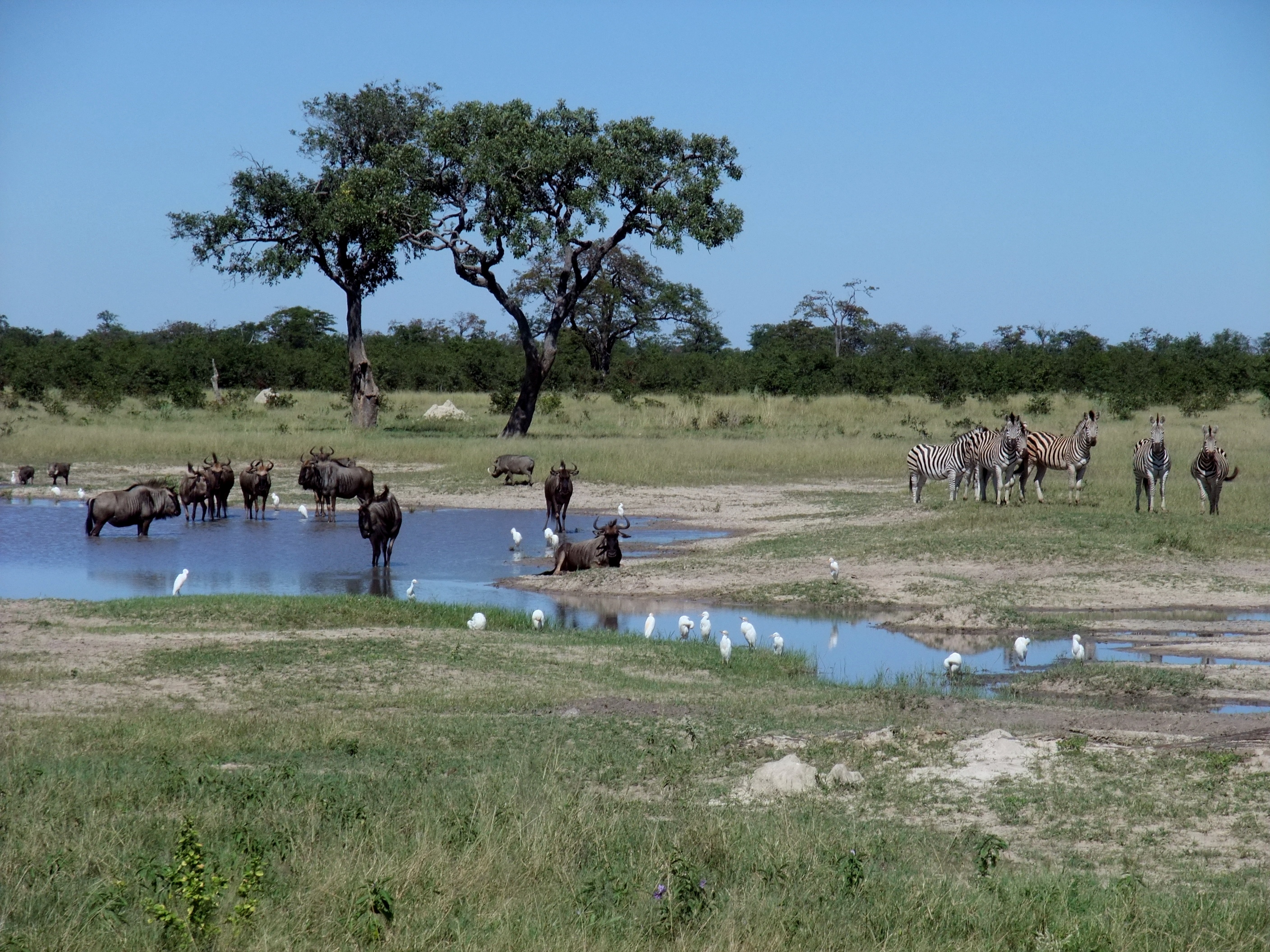
Chobe National Park is synonymous with elephants. Nowhere else in the world do you see so many: the region is home to more than a hundred thousand, and in the dry season the herds gather on the Chobe River in breathtaking numbers, coming down to drink, bathe and swim across to the islands. But Chobe is much more than elephants: it is a vast and varied park, with lions that hunt buffalo, leopards, hippos, crocodiles, and one of the best water-based safari experiences in Africa.

The park has four faces. The Chobe Riverfront, next to Kasane, is the most famous and accessible, with its river cruises and huge concentrations of wildlife. The Savuti region, in the centre, is a land of legendary lions and a mysterious channel that flows and dries up for decades at a time. The Linyanti wetlands, to the west, hide some of the best wild dog sightings. And the dry interior of Nogatsaa completes a mosaic of landscapes that ranges from water to desert.

This guide explores Chobe with a practical eye: its regions, the river cruise and game drives, the wildlife you can see, park fees, how to get there and how to combine it with the Delta and Victoria Falls. Botswana's first national park and a jewel of African safari, Chobe offers something few places can match: the chance to see wildlife in almost prehistoric abundance, with the river, the savannah and the huge northern sky as the backdrop.

📖 History of Chobe National Park

Chobe National Park was Botswana's first national park, proclaimed in 1967, just a year after independence, over a region of extraordinary wildlife that people had already sought to protect since colonial times. Its name comes from the Chobe River, and its fame grew alongside its countless elephants and the Savuti region, the setting of celebrated documentaries about lions. With the tourism boom at nearby Victoria Falls, Chobe became one of the most visited safari destinations in Africa. Its full story is told on our history page.

Read the full history ↓

🏛️ Chobe National Park is in Chobe and the northeast

The kingdom of the elephants: where four countries meet beside the Chobe River, Botswana's first national park holds the largest concentration of elephants on the planet, just a step away from Victoria Falls.

Read the history of Chobe and the northeast →

🗺️ What to see

Tours nearby, in Victoria Falls

If you only have one day, take a guided tour on the first one: it sets up the rest of your trip and saves you a lot of walking. We look ours up on Civitatis: guided in Spanish and booked online with no fuss. They have 10 activities in Victoria Falls. Have a look below: tap any of them to see them all.

They depart from Victoria Falls, 140 km away. If you book from this link we earn a commission and you pay no more.

1
The elephants of the Chobe River
The largest concentration of elephants on the planet: huge herds that come down to the river to drink, bathe and swim across.
Leer más ↓
Chobe is home to one of the largest elephant populations in the world: the region holds more than a hundred thousand, and the spectacle of watching them gather at the river in the dry season is unforgettable. From August to October, when the inland water sources dry up, hundreds of elephants come down to the Chobe riverfront at once to drink, bathe, wallow in the mud and swim across to the islands, with the calves swimming protected among the adults. It is one of the most impressive sights in African nature. Chobe's elephants belong to the savannah subspecies, the largest on Earth, and here you see them up close both from the boats and from the 4x4s. They are so abundant that in a single afternoon you can see several different herds. Alongside them come buffalo in large numbers, and behind them their predators: in some areas Chobe's lions have even learned to hunt young elephants. Getting there: to the Chobe Riverfront, minutes from Kasane, by cruise or game drive. Best time: August to October for the biggest concentrations; May to October in general. Tips: the best way to see them is to combine a river cruise (to watch them drink and swim) with a game drive (to get close by land); bring a telephoto lens and patience.
ℹ️ Distance: Chobe Riverfront, minutes from Kasane · Best time to go: August to October (peak); May to October in general · Price: Park fee BWP 270/day non-resident + cruise or game drive (verified July 2026) · Duration: 3-4 h cruise or game drive
2
Chobe River cruise
A water safari on the river, the most comfortable and spectacular way to see elephants, hippos, crocodiles and birds at sunset.
Leer más ↓
The Chobe River cruise is one of the great experiences of African safari and the park's star activity. You travel by boat along the river — the natural border between Botswana and Namibia's Caprivi Strip — looking for wildlife coming down to the water. The parade is constant: elephants swimming across, hippos surfacing and snorting, crocodiles basking in the sun, buffalo, water-loving antelope such as puku and red lechwe, and a wonderfully rich birdlife, all crowned by sunsets that set the sky and the water ablaze. There are shared cruises on medium-sized boats and private or photographic options on small boats with swivel seats, perfect for getting close to wildlife at water level. The sunset cruise, about three hours long, is the classic; there are also morning departures. Paired with a game drive on land, it lets you see the same wildlife from two perspectives. Getting there: the jetties are in Kasane, at the entrance to the riverfront. Best time: May to October; peak wildlife August-October. Tips: choose a small boat if you're a photographer; bring a hat, sun protection and something warm for the return trip at dusk.
ℹ️ Distance: Jetties in Kasane, on the Chobe · Best time to go: May to October; peak August-October · Price: Shared from USD 35-55; private/photo from USD 110-140 per person (verified July 2026) · Duration: About 3 hours
3
Game drive on the Chobe Riverfront
A 4x4 safari along the river strip, the richest area of the park, among herds of elephants, buffalo and predators.
Leer más ↓
The Chobe Riverfront is the park's accessible jewel: the strip of savannah, woodland and floodplain along the river, with the highest density of wildlife. A morning or afternoon game drive in an open 4x4 covers this area among huge herds of elephants and buffalo, with excellent chances of seeing lions (sometimes mid-hunt), leopards, hyenas, giraffes, zebras, kudu, impala, puku and the rare roan antelope. Being so close to Kasane means you can do outings of just a few hours without long transfers. It is one of the most productive safaris in Africa thanks to the abundance and concentration of animals near the water. The dawn game drive is ideal for predators, which are more active in the cool; the sunset one, for the herds coming down to the river. Combining land and water (game drive + cruise) is the perfect formula in Chobe. Getting there: Sedudu gate, minutes from Kasane; operators pick you up at your hotel. Best time: May to October. Tips: get up early for the dawn game drive; keep your distance from the elephants, which are plentiful here and can be territorial; bring warm layers for cold winter outings.
ℹ️ Distance: Sedudu gate, minutes from Kasane · Best time to go: May to October · Price: 3 h game drive from USD 45-70 per person + park fee (verified July 2026) · Duration: 3 to 4 hours
4
Chobe's legendary central sector, land of big lion prides, elephants and the enigmatic Savuti Channel.
Leer más ↓
Savuti (or Savute) is one of the most legendary safari regions in Africa. Located in the centre of the park, it is a vast marsh fed by the enigmatic Savuti Channel, a watercourse that — because of tectonic movements — appears and disappears for decades at a time, leaving scientists baffled. Savuti is famous for its large lion prides, some of which have learned to hunt young elephants, and for its huge concentrations of elephants in the dry season, as well as cheetahs, hyenas and spectacular wildlife in the rainy season, when the migrating zebras arrive. The setting of countless nature documentaries, Savuti offers a wilder and more remote safari than the riverfront, with open savannah, rocky hills with rock paintings and a feeling of total isolation. It is reached by demanding sand tracks or by light aircraft to its camps. Getting there: by 4x4 from Maun/Moremi or Kasane (difficult tracks) or by light aircraft to the Savuti camps. Best time: May to October for lions and elephants; November to March for the zebra migration. Tips: it is a remote area, ideal for a mobile safari or camping; it requires planning and, for self-drive, experience in deep sand.
ℹ️ Distance: Centre of the park; by track or light aircraft · Best time to go: May-October (predators); Nov-March (zebra migration) · Price: Park fee BWP 270/day non-resident + camp or safari (verified July 2026) · Duration: 2 or more nights
5
The north-west corner of the park, next to Namibia, with dense elephant herds in the dry season and great wild dog sightings.
Leer más ↓
At the far north-western end of Chobe, along the border with Namibia, lie the Linyanti wetlands, formed by the river of the same name and its system of channels, lagoons and riverine forest. It is one of the richest and least crowded areas of the park and its surroundings, with dense elephant herds that gather at the water in the dry season, hippos, and some of the best African wild dog sightings on the whole continent, as well as lions, leopards and a wide variety of antelope and birds. Much of Linyanti's tourism takes place in exclusive private concessions around the park, with high-end camps and very few people, which makes for an intimate, top-quality safari. The area is more remote and exclusive than the riverfront, and is reached mainly by light aircraft. Getting there: by light aircraft to the Linyanti camps, or by very demanding 4x4 tracks. Best time: May to October, with wildlife concentrated at the water. Tips: ideal for those looking for exclusivity and wild dogs; it is often combined with the Delta and Savuti on light-aircraft circuits.
ℹ️ Distance: North-west of the park, next to Namibia; by light aircraft or track · Best time to go: May to October · Price: Exclusive camps (all-inclusive); park areas with a fee of BWP 270/day (verified July 2026) · Duration: 2 or more nights
6
Combined excursion with Victoria Falls
Chobe's proximity to Victoria Falls lets you combine the greatest wonder of water with the best elephant safari.
Leer más ↓
One of Chobe's great advantages is how close it is to Victoria Falls, just over an hour from Kasane across the Kazungula border. This lets you combine two colossal experiences on the same trip: the roar of the largest curtain of water in the world and the best elephant safari in Africa. Many itineraries link a few nights in Chobe with a visit to the falls (Zimbabwe or Zambia side), on one of the most classic and spectacular circuits in the south of the continent. Some operators also offer day trips to Chobe from Victoria Falls: travellers staying on the Zimbabwean or Zambian side cross into Botswana for a cruise and a game drive in a single day. Either way, the combination of Chobe and the falls is one of the reasons this corner of Africa is so popular. Getting there: from Kasane (Chobe's base) to the falls via Kazungula. Best time: safari May to October; peak flow at the falls March to June. Tips: bring your passport and the relevant visa (or the KAZA visa); coordinate the border crossings carefully with an operator.
ℹ️ Distance: Victoria Falls just over 1 h from Kasane (Chobe's base) · Best time to go: Safari May-October; falls flow March-June · Price: Day trip from Kasane from USD 150-220; visa extra (verified July 2026) · Duration: Full day (falls)
📶I have never landed without internet. I arrive and my phone connects to the strongest network in the country I am visiting: I can say I landed, sort out transport, book tours and keep posting, at a seriously good price. I always use the Maya eSIM — check their plans by clicking the banner.See plans →Maya Mobile eSIM — turn travel mode on
What nobody tells you

💵 Prices

Tickets

TypePrice
Entrada al parque (adulto/día, tres bandas oficiales)BWP 270 for non-residents, BWP 205 for residents of Botswana or nationals of a SADC country and BWP 30 for citizens of Botswana (First Schedule of the parks regulations, Category A: Chobe and Moremi only; table published by the Botswana Tourism Organisation)
Entrada niño (8 a 18 años)50 % of the adult fee — BWP 135 for non-residents —; children under 8 enter free (footnote to the DWNP First Schedule)
Vehículo liviano (menos de 3.500 kg, por día)In Chobe, BWP 30 for vehicles registered in Botswana and BWP 115 for foreign-registered ones; trailers and caravans pay BWP 15 and BWP 60 (First Schedule of the parks regulations, table published by the Botswana Tourism Organisation)
Camping DWNP dentro del parque (Savuti, Linyanti, Ihaha)Public campsites (concession-run) cost around USD 30-50 per person/night; advance booking required (verified July 2026)
🔄 updated monthlyOfficial / reference values · double-check when buying

Activities and tours

ActivityPriceDurationOperator
Chobe River cruise (sunset)Shared from USD 35-55; private/photo from USD 110-140 per person (verified July 2026)About 3 hoursKasane operators and lodges
Game drive on the Chobe RiverfrontFrom USD 45-70 per person + park fee (verified July 2026)3 to 4 hoursKasane operators
Safari in Savuti (camp or mobile)Depends on the camp; mobile safari from USD 250-500 per person/day (verified July 2026)2 or more nightsCamps and mobile operators
Safari in Linyanti (exclusive camps)From around USD 600-1.500+ per person/night all-inclusive (verified July 2026)2 or more nightsLinyanti private concessions
Self-drive with camping in the parkFee BWP 270/day + camping USD 30-50 pp/night + 4x4 hire (verified July 2026)Several daysIndependent / hire in Kasane or Maun
Day trip to Victoria FallsFrom USD 150-220 per person; visa extra (verified July 2026)Full dayKasane operators
🔄 updated monthlyOfficial / reference values · double-check when buying

🚌 How to get there and distances

Getting around

Lodge/operator game drive and cruise
PriceDepends on the activity (see above) (verified July 2026)
Duration3 to 4 hours
Notes
The most comfortable way to explore the riverfront; open 4x4s and guided boats
Self-drive 4x4 in the park
PriceHire from around USD 120-250 per day (verified July 2026)
DurationVariable
Notes
The riverfront is easy to drive; Savuti and Linyanti call for experience in deep sand and good planning (fuel, water, campsite bookings)
Light aircraft to Savuti/Linyanti camps
PriceFrom about USD 150-300 per leg (verified July 2026)
DurationShort flight from Maun or Kasane
NotesThe usual way to reach the park's remote areas and concessions
Transfers from Kasane/airport
PriceOften included by the lodges (verified July 2026)
DurationA few minutes
Notes
The riverfront sits right next to Kasane; the lodges arrange transfers
🔄 updated monthlyOfficial / reference values · double-check when buying

How to get there

RouteAirlines / operatorsAvg. priceDuration
Kasane (BBK airport) → Chobe Riverfront (Sedudu gate)Kasane operators and lodgesTransfer included or cheap; park entry extra (verified July 2026)A few minutes
Maun/Moremi → Savuti overland (4x4)Your own 4x4, mobile safarisFuel or package; entry fees extra (verified July 2026)Several hours on sand tracks
Maun or Kasane → Savuti/Linyanti by light aircraftMack Air, Wilderness Air and othersFrom about USD 150-300 per leg (verified July 2026)Short flight
Victoria Falls (Zimbabwe/Zambia) → Chobe (day trip)Victoria Falls operatorsDepends on the excursion; border crossing (verified July 2026)Just over 1 h plus border formalities
🔄 updated monthlyOfficial / reference values · double-check when buying

🏨 Where to stay

No exact prices: a scale from $ (budget) to $$$$$ (luxury), with 2-3 options per category.

Luxury lodges (riverfront and concessions)
Price$$$$$
Recommended options
From about USD 250-1.500+ per person/night; lodges overlooking the Chobe River and exclusive camps in Linyanti and Savuti, with cruises and game drives included
Mid-range lodges and hotels (Kasane base)
Price$$$$$
Recommended options
Approx. USD 90-250 per night; comfortable places to stay in Kasane with a pool and activity booking, ideal for exploring the riverfront
Guided mobile safari (Savuti/Linyanti/Chobe)
Price$$$$$
Recommended options
From about USD 250-500 per person/day; the crew sets up camp every night; a great way to explore the park's remote areas
DWNP public campsites
Price$$$$$
Recommended options
From about USD 30-50 per person/night; (concession-run) campsites at Ihaha (riverfront), Savuti and Linyanti; book ahead and bring your own gear from Kasane or Maun

🍴 Where to eat

Cocina de lodge y campamento
Price$$$$$
Options / signature dish
Included in all-inclusive rates; multi-course meals, safari brunch and sundowners at dusk over the river or in the bush
Restaurantes de Kasane
Price$$$$$
Options / signature dish
USD 8-35 per person; from local eateries serving seswaa and river fish to lodge terraces with international cuisine
Self-catering (provisiones desde Kasane/Maun)
Price$$$$$
Options / signature dish
Campers buy everything in Kasane or Maun before going in; there is nowhere inside the park to buy food or fuel

📖 History of Chobe National Park

Origins, formation and what the sources say.

The Chobe River and its extraordinary wildlife

The park's history begins with its river. The Chobe is an unusual waterway: it rises in the highlands of Angola (where it is called the Cuando or Kwando), flows south, spreads out into the Linyanti wetlands on Botswana's border with Namibia, and finally runs east as the Chobe River until it joins the Zambezi near Kasane. That system of rivers and wetlands, surrounded by land that grows drier to the south, acts as a magnet for wildlife in north-eastern Botswana.

For centuries, that abundance supported large wildlife populations and the peoples who lived by hunting, fishing and herding in the region. Elephants in particular found a paradise here: permanent water in the river and vast woodlands and savannahs to feed in. The Chobe region thus became one of the last great refuges of Africa's megafauna, with a density of animals that amazed travellers.

When European explorers and hunters arrived in the 19th century (among them David Livingstone, who travelled the nearby Zambezi), the fame of Chobe's wildlife grew, but so did hunting pressure. In the early 20th century, ivory and trophy hunting and outbreaks of rinderpest hit the region's wildlife hard, as in so many parts of Africa. The idea of protecting this natural treasure began to gain ground.

en.wikipedia.org · Chobe National Parken.wikipedia.org · Chobe River

The first attempts at protection

The idea of protecting Chobe's wildlife goes back to colonial times. As early as the first half of the 20th century, under the British Bechuanaland Protectorate, there were proposals to create a reserve in the region, driven by awareness of how exceptionally rich its wildlife was and how much danger it faced. In 1931 a game reserve was proposed for the area, but the plans fell through, partly because of tsetse fly outbreaks and other difficulties of the time.

In the following decades the pressure on wildlife continued, both from hunting and from forestry projects that logged the region's valuable woodlands. Even so, Chobe's extraordinary concentration of animals was still plain to see, and the push for conservation kept growing. The region wasn't just rich in elephants but in a huge variety of species, from lions and leopards to rare antelopes and spectacular birdlife.

Only in the early 1960s, as Bechuanaland moved towards independence, were the protection plans taken up again in earnest. A wildlife reserve was marked out in the Chobe area as a first step towards a fully fledged national park. The young nation about to be born quickly understood that its wildlife was a unique heritage and a valuable resource, and decided to protect it.

en.wikipedia.org · Chobe National Parkbritannica.com · Chobe National Park

1967: Botswana's first national park

In 1966 Bechuanaland became independent and the Republic of Botswana was born. Just a year later, in 1967, the new country officially proclaimed Chobe National Park, its first national park. It was an early and meaningful statement: a newborn and still very poor nation chose, among its very first measures, to protect its natural heritage. The park took in the rich strip along the Chobe River and vast areas of the interior, eventually covering about 11,700 km² and becoming one of the largest in the country.

Creating the park also involved difficult and sometimes painful decisions, such as resettling communities that lived within its boundaries, among them groups of Basarwa (San) hunter-gatherers. It's a tension common to the history of many African parks, between nature conservation and the rights of local people, and it is part of Chobe's story.

Over time, Botswana developed a conservation and tourism policy that would become a model for the continent. Made wealthy after independence by the discovery of diamonds, the nation adopted a 'low volume, high value' tourism model: few visitors, high prices and heavy investment in protecting wildlife. Chobe, with its extraordinary abundance of animals, became one of the jewels of that system and one of the most renowned safari destinations in Africa.

en.wikipedia.org · Chobe National Parken.wikipedia.org · Botswana

Savuti, its lions and documentary fame

If the riverfront made Chobe famous for its elephants, it was the Savuti region that cemented its place in the world's imagination through nature documentaries. Savuti, in the centre of the park, is a land of savannah and marsh dominated by the enigmatic Savuti Channel, a watercourse that flows and then dries up for decades at a time in an unpredictable way, a phenomenon that has puzzled scientists and is attributed to subtle tectonic movements in the region.

Those extreme swings turned Savuti into a dramatic stage of life and death, ideal for documentaries. Famous films were shot here about the lions of Savuti (some of which developed the astonishing ability to hunt young elephants in the dry season, when food is scarce) and about the age-old rivalry between lions and hyenas. National Geographic and BBC documentaries brought images of Savuti into millions of homes, and Chobe's fame along with them.

Savuti showed the world Chobe's wildest and most spectacular side: great herds of elephants gathering around scarce water, large and bold lion prides, cheetahs on the open plains, and the zebra migration that crosses the region in the rainy season. That epic character, added to the abundance of the riverfront, finally made Chobe a byword for African safari at its finest.

en.wikipedia.org · Chobe National Parken.wikipedia.org · Savuti

Chobe today: elephants, tourism and challenges

Today Chobe National Park is one of the most visited and celebrated safari destinations in Africa, and the jewel of northern Botswana. Its proximity to Kasane, with its international airport, and to Victoria Falls makes it very accessible, and its river cruises and game drives among elephant herds draw travellers from all over the world. Together with the Okavango Delta, Moremi, Savuti and Linyanti, it forms part of one of the planet's great nature circuits.

Botswana is home to Africa's largest elephant population (around 130,000 animals, many of them in the Chobe region), which is a huge conservation success but also a challenge. The abundance of elephants creates tensions: conflicts with communities and farming, pressure on vegetation, and an intense political debate over how to manage the population, including the controversial issue of hunting, which the country banned in 2014 and then partially reopened in 2019. Chobe sits at the centre of those debates.

The park also faces the challenges of climate change, the variability of water in its rivers (which rise in Angola), growing tourism pressure and the need to balance conservation, local communities and development. Even so, Chobe remains what it has been since 1967: a sanctuary where wildlife unfolds in an almost prehistoric abundance, a testament to Botswana's early commitment to its natural world, and one of the last great places where people can witness the full spectacle of African wildlife.

en.wikipedia.org · Chobe National Parken.wikipedia.org · African bush elephant

📚 Bibliography

  • Wikipedia (EN) — «Chobe National Park»: https://en.wikipedia.org/wiki/Chobe_National_Park
  • Wikipedia (EN) — «Chobe River»: https://en.wikipedia.org/wiki/Chobe_River
  • Wikipedia (EN) — «Savuti»: https://en.wikipedia.org/wiki/Savuti
  • Wikipedia (EN) — «Botswana»: https://en.wikipedia.org/wiki/Botswana
  • Britannica — «Chobe National Park»: https://www.britannica.com/place/Chobe-National-Park
  • Botswana Tourism Organisation — Chobe National Park: https://www.botswanatourism.co.bw/
  • Expert Africa — Chobe National Park: https://www.expertafrica.com/botswana/chobe-national-park
  • Wikipedia (EN) — «David Livingstone»: https://en.wikipedia.org/wiki/David_Livingstone
  • Great Plains / Botswana elephant conservation: https://en.wikipedia.org/wiki/African_bush_elephant
  • Chobe National Park (co.za) — Park information: https://chobenationalpark.co.za/chobe-national-park-information/

❓ Frequently asked questions

Why is Chobe famous for its elephants?+
Because it is home to one of the largest elephant populations in the world: more than a hundred thousand are estimated to live in the region. In the dry season, especially from August to October, hundreds of them gather at once on the Chobe River to drink, bathe and swim across, a spectacle you won't see anywhere else. Botswana as a whole has the largest elephant population in Africa, and Chobe is its great showcase.
What is the best way to go on safari in Chobe?+
In the river area (riverfront), the ideal is to combine a cruise on the Chobe —to see the wildlife from the water, with elephants swimming and incredible sunsets— with a 4x4 game drive on land. Both leave easily from Kasane. To see the remote areas of Savuti and Linyanti you need to add days and arrive by light aircraft or by 4x4 with experience, staying in camps or joining a mobile safari.
Can you self-drive Chobe?+
Yes. The Chobe Riverfront is easy to drive in a 4x4 (and you can reach the gate in a normal car from Kasane), but Savuti and Linyanti demand a well-equipped 4x4, experience in deep sand, advance campsite bookings and enough fuel, water and food to be self-sufficient, because there are no services inside. If you'd rather not, you can opt for game drives and cruises with an operator, a mobile safari or a flight to a camp. It's best to book ahead in high season.
How much does it cost to enter Chobe National Park?+
The official fee schedule charges by band: BWP 270 per person per day for non-residents, BWP 205 for Botswana residents or nationals of a SADC country, and BWP 30 for Botswana citizens. The vehicle is paid separately: BWP 30 per day if it is registered in Botswana and BWP 115 if it has foreign plates. In February 2026 the ministry proposed an increase, but in April 2026 the official agency BOPA reported that it had been temporarily suspended. If you go with an all-inclusive lodge or book cruises and game drives, entry is usually included or added to the price of the activity.
Can I combine Chobe with Victoria Falls and the Delta?+
Yes, it's the most common option and makes up one of Africa's great circuits. Chobe (Kasane base) is just over an hour from Victoria Falls, so many people combine safari and falls. And to the west it links up with Savuti, Moremi Game Reserve and the Okavango Delta, the whole of Botswana's wild north. You can do it by air (comfortable), on a mobile safari or self-drive for the more adventurous.
Besides elephants, what animals can you see in Chobe?+
Loads. Large herds of buffalo, hippos and crocodiles in the river, lions (the ones in Savuti even hunt young elephants), leopards, cheetahs, hyenas, and in Linyanti some of the best wild dog sightings in Africa. There are giraffes, zebras, kudus, impalas, pukus, red lechwes and the rare roan and sable antelope, plus spectacular birdlife. It is one of the parks with the most and densest wildlife on the whole continent.

More places in Botswana

Parque Nacional Nxai PanReserva de MoremiReserva del Kalahari CentralSalinas de MakgadikgadiSantuario de Rinocerontes KhamaSavuti
See every place in Botswana →The history of Botswana →
Sources consulted (10)
Still planning?
Explore more destinations in Botswana
See all destinations →