Viajá con Gus
HomeArgentinaTermas de Reyes
Termas de Reyes
🇦🇷 Argentina · The North

Termas de Reyes

Jump to what you need
📌Location
Termas de Reyes is a thermal spa complex and a mountain settlement in Jujuy province, set in the gorge of the Reyes river, within the yungas cloud forest, some 19 km west of San Salvador de Jujuy (the provincial capital). You reach it on Provincial Route 4, which winds up through a canyon of green walls to the complex, at some 1,750 metres above sea level
📌The thermal waters
The great draw is the natural hot springs, which come out of the mountain at high temperature (between 35 °C and 40 °C in the pools) and are channelled to the complex and to the river's natural waterfalls. These are mineral waters, traditionally valued for their relaxing properties and for their unique setting among mountains and subtropical vegetation. The contrast between the hot water and the cool air of the gorge is part of the experience
📌Best time to go
It can be visited all year. Winter (May to September) is dry with clear skies, mild days and cold nights: the cold air heightens the pleasure of the hot water. Summer (December to March) is the rainy season in the Argentine northwest, with the yungas at its greenest but with the risk of the river rising and roads being affected. Always bring swimwear, warm layers and suitable footwear
📌Opening hours
The pool complex usually opens from 10:00 to 19:00 every day; check when you visit, since it can change with the season and the state of the river
📌Suggested days
It can be visited on a day trip from San Salvador de Jujuy (a half-day or full-day excursion, making the most of the pools, the setting and the food). Anyone who wants to rest and enjoy the spa and the waters at leisure can stay 1 or 2 nights at the historic hotel or in accommodation nearby. It pairs very well with a tour of the Jujuy capital and the Quebrada de Humahuaca
💱 ARS exchange rate
Loading rate…
🌤️ Weather in Termas de Reyes
Loading weather…

A few kilometres from San Salvador de Jujuy, hidden in a mountain canyon covered in yungas cloud forest, the Termas de Reyes are one of the loveliest and most relaxing corners of northwestern Argentina. It is the place where hot water rising from the earth meets the intense green of subtropical vegetation, the waterfalls of the Reyes river and the cool air of the gorge, in a combination that wins over everyone who arrives.

The complex, presided over by a historic mountain hotel, offers pools of mineral thermal water, spa services and the chance to bathe in a privileged natural setting, ringed by hills and the exuberance of the yungas. It is a destination for rest and wellbeing, ideal to combine with a visit to the Jujuy capital and the province's great attractions, such as the Quebrada de Humahuaca.

This guide covers the essentials of Termas de Reyes with a practical eye: how to get there from the capital, when to go, what the thermal complex offers, how to enjoy the waters and the yungas setting, and where to sleep and eat. It is the gateway to Jujuy's thermal tradition and an oasis of calm high in the mountains.

📖 History of Termas de Reyes

The name says it all: the Andean curacas ('kings') of Casabindo came to these sacred waters along the Inca Road in search of wellbeing, and the Spanish conquistadors named the place Termas de los Reyes. After centuries of local use, modern development arrived in the 1930s: in 1932 the Italian immigrant Mazueli built the first house facing the spring, in 1933 the present cliffside road was opened and in November 1938 the Gran Hotel Casino Termas de Reyes opened, the work of the Córdoba architect Jaime Roca, built with stones carried up on muleback. The hotel passed to the Eva Perón Foundation (a residential school from 1946), reopened in 1958, closed in 1975 and was completely refurbished after being privatised in 1999. Today it is one of the most emblematic thermal destinations in northern Argentina. The full story is on our history page.

Read the full history ↓

🏛️ Termas de Reyes is in Jujuy

The northernmost province, the Andean roof of Argentina: land of the Quebrada de Humahuaca and the Inca road, of the Omaguaca pucarás, of the heroic Jujuy Exodus of 1812 and of the sugar mills, with a living Andean culture of carnival, coplas and seven-colored hills.

Read the history of Jujuy →

🗺️ What to see

1
The thermal complex and its pools
The heart of the place: pools of mineral thermal water rising from the mountain, in the middle of the yungas.
The Reyes thermal complex is the whole point of the visit. Its natural hot springs, which surface from the mountain at high temperature, are channelled into pools where visitors can soak and enjoy their relaxing effects. The hot mineral water, at temperatures between 35 °C and 40 °C, is best enjoyed in contrast with the cool air of the high gorge. The complex has pools of different kinds and services built around thermal bathing and wellbeing. The experience of soaking in hot water surrounded by the intense green of the yungas cloud forest, the hills and the sound of the Reyes river is what sets this place apart from other thermal centres in the country. It is a destination designed for rest, relaxation and looking after your body, in a privileged natural setting. Many visitors combine it with a visit to the Jujuy capital on a half-day or full-day getaway. Getting there: by car or on an excursion from San Salvador de Jujuy on RP 4 (some 19 km of climbing). Best time: all year; winter heightens the pleasure of hot water in cold air. Tips: bring swimwear, a towel, flip-flops and warm layers; general admission costs $5,500 ARS per person (verified July 2026; confirm the current rate when you visit).
ℹ️ Distance: Some 19 km west of San Salvador de Jujuy (RP 4) · Best time to go: All year; winter sharpens the hot water / cold air contrast · Admission: $5,500 ARS per person, every day from 10 to 19 h, no booking needed; under-3s free (source: villatermaldereyes.com.ar / Todo Jujuy, verified July 2026) · Duration: Half a day or more
2
The historic Termas de Reyes hotel
The emblematic Gran Hotel Casino of 1938, the work of the Córdoba architect Jaime Roca, a symbol of Jujuy's thermal tradition.
The historic hotel at the Termas de Reyes is one of the great symbols of the place. The building, stately in style and set into the mountain, was designed by the Córdoba architect Jaime Roca together with the master builder Santiago Lucarde, and opened in November 1938 as the Gran Hotel Casino Termas de Reyes: the stones for its construction were carried up the gorge on muleback. It was one of the few grand tourist hotels in the country outside Buenos Aires in its day. Its history tracks that of 20th-century Argentina: in 1946 it came under the Eva Perón Foundation and operated as a residential school, reopened as a hotel in 1958, got its casino back in 1960, closed in 1975 and, after being privatised in 1999, was completely refurbished into today's hotel and thermal spa. Its architecture and its position, commanding the gorge of the Reyes river, make it inseparable from the landscape and the identity of the complex. Staying at the hotel, or just stopping by, lets you live the classic Jujuy thermal experience, with the combination of comfort, hot springs and nature that made it famous. Getting there: inside the thermal complex (RP 4 from the capital). Best time: all year. Tips: to stay, book well ahead, especially in high season and on long weekends; the Hotel Spa Termas de Reyes (4 stars) runs around US$ 75–150 a night depending on the season.
ℹ️ Distance: In the Termas de Reyes complex · Best time to go: All year · Admission: Hotel Spa 4★: US$ 75–226 a night depending on the season and how far ahead you book, range according to Booking.com, Kayak and Expedia (verified July 2026); the best rates are in low season (Nov-Dec) and from Tuesday to Wednesday · Duration: 1 to 2 nights to enjoy it
3
The yungas cloud forest and the Reyes river gorge
The lush subtropical mountain forest that surrounds the springs, with waterfalls and trails.
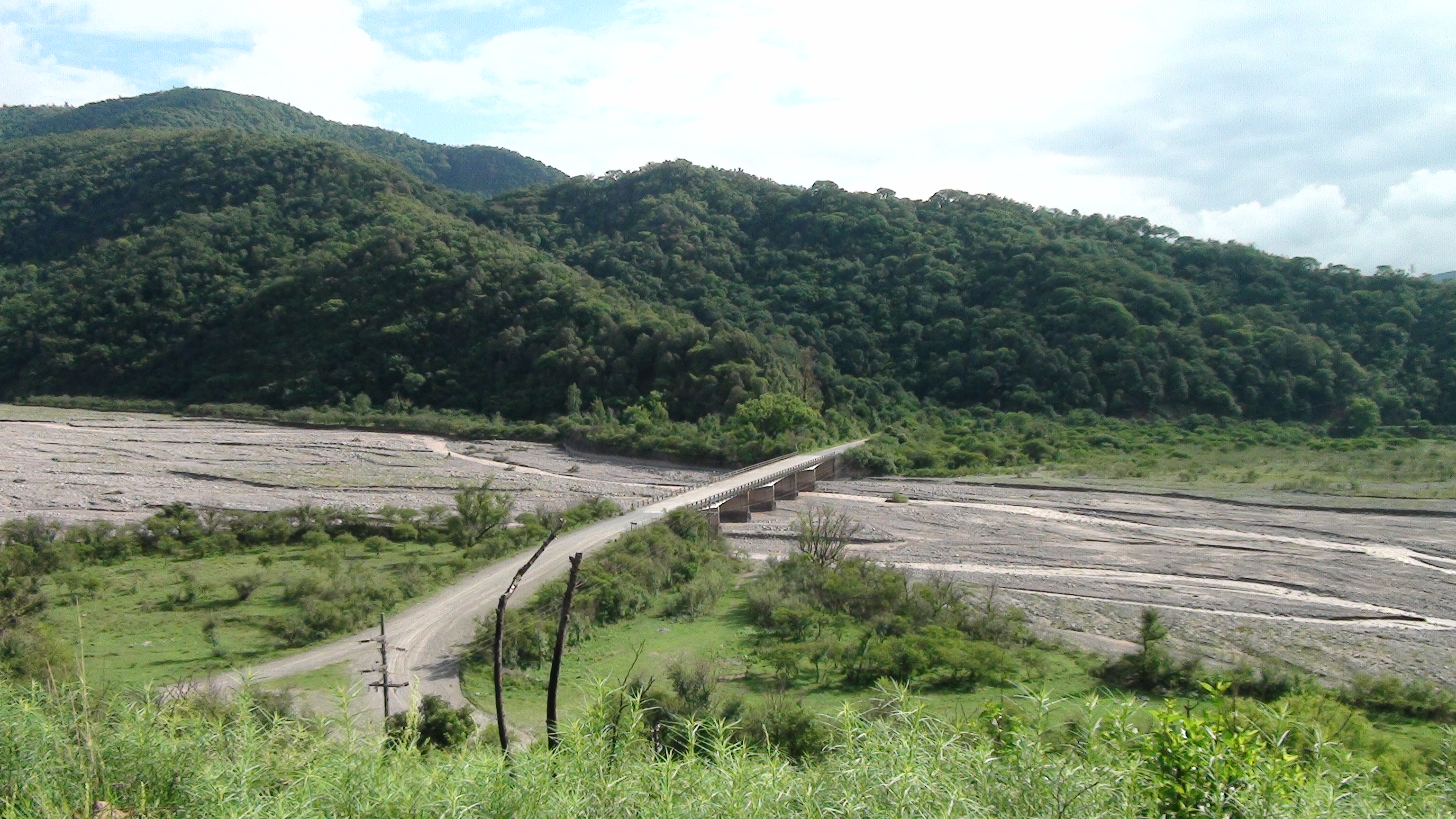
The natural setting is one of the greatest treasures of Termas de Reyes. The complex sits in the middle of the yungas cloud forest (also called mountain forest), a humid subtropical ecosystem that covers the slopes of eastern Jujuy with lush vegetation: tall trees, ferns, lianas, mosses and great biodiversity of birds and wildlife. The gorge of the Reyes river, up which the road to the complex climbs, offers canyon landscapes, green walls, waterfalls and cascades. The river, fed by rain and mountain meltwater, comes down the gorge with force, creating corners of great beauty. There are viewpoints and places to stop and take in the landscape on the way up. This combination of thermal water and yungas cloud forest is what makes the place unique: few thermal centres in the country sit in such lush subtropical vegetation. It is a paradise for anyone who loves nature and photography. Getting there: on RP 4 from the capital, which runs through the gorge. Best time: the yungas is greenest and fullest in summer, but that is also the rainy season with possible flooding; winter is drier and safer for the roads. Tips: drive carefully on the way up; respect the notices about the state of the river and the roads.
ℹ️ Distance: The Reyes river gorge, on RP 4 (the road to the springs) · Best time to go: Yungas at its lushest in summer (rains); roads safer in winter (dry) · Admission: Free (the landscape and the public roads; the complex charges for access) · Duration: Variable (included in the visit to the complex)
4
Trails, trekking and birdwatching in the yungas
Mountain walks, high-altitude trekking, birdwatching and mountain biking around the complex.
Beyond the pools, Termas de Reyes is an excellent starting point for outdoor activities in the yungas. The setting allows walks on mountain trails, high-altitude trekking toward the hills that ring the gorge, mountain biking and, above all, birdwatching, since the Jujuy mountain forest is one of the environments with the greatest bird diversity in the country. The trails set out from the complex and its surroundings, crossing the subtropical vegetation and offering views of the canyon and the Reyes river. Some routes are short and suitable for anyone; others, more demanding, climb the slopes to natural viewpoints. It is worth hiring local guides for the longer treks and for wildlife spotting. Combining a thermal soak in the morning with a walk in the afternoon (or the other way round) is one of the fullest ways to make the most of the place. Getting there: the access points start at the complex and the Reyes area. Best time: winter and autumn for dry paths; spring and summer for the greenest yungas. Tips: bring trekking shoes, water and sunscreen; check the state of the trails before setting out.
ℹ️ Distance: From the complex and the Reyes settlement (RP 4) · Best time to go: All year; paths firmer in the dry season · Admission: Public trails free; trekking guides approx. $15,000–35,000 ARS per person (range according to local guides, verified July 2026) · Duration: 1 to 4 hours depending on the trail
5
San Salvador de Jujuy and its historic centre
The Jujuy capital, 19 km away, with its Casa de Gobierno, the Cathedral with its Baroque pulpit and the Church of San Francisco.
Only 19 km away, San Salvador de Jujuy is the natural base for visiting the springs and an attraction in itself. Founded in 1593, the provincial capital keeps a historic centre with the Casa de Gobierno (which holds the flag donated by General Belgrano), the Cathedral —famous for its carved and gilded Baroque pulpit, a jewel of colonial art in the Argentine northwest— and the Church of San Francisco. The city offers museums, markets, regional Jujuy cooking and the daily life of a capital in northern Argentina. It is a good place to stay if you would rather be in the city and visit the springs on a day trip, and to stock up before heading into the Quebrada de Humahuaca. The short distance between the capital and the springs makes it very easy to combine both plans in a single getaway. Getting there: 19 km on RP 4 (the springs) and connections to all of Jujuy from the capital. Best time: all year. Tips: most museums and churches are free or cheap to enter; check opening hours, since some close at midday.
ℹ️ Distance: 19 km from Termas de Reyes (RP 4) · Best time to go: All year · Admission: Churches and the historic centre free; museums cheap (check when you visit) · Duration: Half a day to a day
6
A base for the Quebrada de Humahuaca and the Salinas Grandes
Termas de Reyes as a resting point for touring the great landscapes of Jujuy.
Termas de Reyes is an excellent resting point at the start or the end of a long tour of Jujuy. From the capital you reach the Quebrada de Humahuaca (a UNESCO World Heritage Site since 2003), with Purmamarca and its Cerro de los Siete Colores, Tilcara and its Pucará, Humahuaca, the Salinas Grandes and the high puna. Many travellers add a day of thermal relaxation to a circuit taking in these destinations, since Reyes is barely 19 km from San Salvador, on the road out toward the quebrada. The combination of hot water, yungas and the coloured landscapes of the quebrada and the puna sums up much of the diversity of Jujuy. Getting there: from the capital you take the roads toward the quebrada (RN 9) and the Salinas (RN 52, the Lipán climb). Best time: all year, depending on the destination; bear the altitude in mind. Tips: the Quebrada is comfortably covered in 2 or 3 days; watch your hydration and altitude sickness in the puna and the salt flats.
ℹ️ Distance: The circuits around Jujuy start from the capital, 19 km from the springs · Best time to go: All year, depending on the circuit · Admission: Varies: the Pucará de Tilcara and other sites charge; roads and viewpoints are free · Duration: 2 to 3 days for the Quebrada and the puna
Advertisements
What nobody tells you

💵 Prices

Tickets

TypePrice
Access to the thermal complex and pools$5,500 ARS per person, every day 10 to 19 h, no booking; under-3s free (source: villatermaldereyes.com.ar, verified July 2026)
A stay at the Hotel Spa Termas de Reyes (4★)US$ 75–226 a night depending on the season and the room type, range according to Booking.com, Kayak and Expedia (verified July 2026)
Spa services (massages, treatments)$15,000–40,000 ARS per session depending on the service, range according to guest reviews (verified July 2026)
The landscape of the gorge and the yungasFree (public roads and viewpoints)
🔄 updated monthlyOfficial / reference values · double-check when buying

Activities and tours

ActivityPriceDurationOperator
A day at the springs and pools in the complex$5,500 ARS per person (source: villatermaldereyes.com.ar, verified July 2026)Half a day to a dayComplejo Termas de Reyes
Half-day excursion from San Salvador de Jujuy to the springs$25,000–45,000 ARS per person with transfer, range according to local agencies (verified July 2026)Half a dayJujuy agencies
Guided trekking and birdwatching in the yungas$15,000–35,000 ARS per person, range according to local guides (verified July 2026)2 to 4 hoursLocal guides from Reyes and the capital
Circuit: the springs + the Jujuy capital + the Quebrada de Humahuaca (several days)US$ 200–500 per person depending on the programme and its length, range according to Jujuy agencies (verified July 2026)2 to 4 daysJujuy agencies
🔄 updated monthlyOfficial / reference values · double-check when buying
Advertisements

🚌 How to get there and distances

Getting around

ModePriceDurationNotes
Own or rented carFuel; rental US$ 40–70 a day, range according to local agencies (verified July 2026)Approx. 30-40 min from the capitalThe most practical way to get there and to combine it with other attractions in Jujuy. RP 4 is a mountain road; drive carefully
Excursions and transfers from the capital$25,000–45,000 ARS per person there and back, range according to Jujuy agencies (verified July 2026)Half a day (with time at the springs)Agencies in San Salvador de Jujuy offer transfers and excursions to the springs. Useful if you do not drive
Taxis and remises (car services) from the capital$20,000–35,000 ARS per trip (one way), range according to local car service rates (verified July 2026)Approx. 30-40 minAn option for one-off transfers from San Salvador de Jujuy; agree the return trip in advance
Public transport (bus)$1,733.90 ARS per leg (source: municipal fare schedule, May 2026, verified July 2026)VariableThere are bus services to the settlement with limited frequency; check availability and timetables
🔄 updated monthlyOfficial / reference values · double-check when buying

How to get there

RouteAirlines / operatorsAvg. priceDuration
San Salvador de Jujuy → Termas de Reyes (on RP 4)Own car, excursion, taxi/car service or busBus $1,733.90 ARS (source: municipal fare schedule, verified July 2026); taxi/car service $20,000–35,000 ARS; excursion $25,000–45,000 ARS per person (range according to local agencies)Approx. 30 to 40 min (some 19 km of climbing)
Jujuy airport (Gobernador Horacio Guzmán) → Termas de ReyesCar, transfer or taxi (via the capital)Transfer/taxi $35,000–55,000 ARS depending on the operator, range according to local agencies (verified July 2026)Approx. 1 to 1.5 h (the airport is south of the capital)
Salta → Termas de Reyes (via San Salvador de Jujuy)Coach to the capital (Balut, Andesmar) and then RP 4Bus Salta–Jujuy $8,000–15,000 ARS + the transfer to the springs, range according to companies in the region (verified July 2026)Approx. 2.5 to 3 h in total
Quebrada de Humahuaca (Purmamarca, Tilcara) → Termas de ReyesCar or coach to the capital and then RP 4Bus from the Quebrada $4,000–10,000 ARS + the transfer, range according to regional companies (verified July 2026)Depends on where you start, going through San Salvador de Jujuy
🔄 updated monthlyOfficial / reference values · double-check when buying

🏨 Where to stay

No exact prices: a scale from $ (budget) to $$$$$ (luxury), with 2-3 options per category.

CategoryPriceRecommended options
The historic hotel / the Termas spa (upper category)$$$$$US$ 75–226 a night, range according to Booking.com, Kayak and Expedia (verified July 2026). The emblematic Hotel Spa Termas de Reyes (4★), the work of Alejandro Bustillo, with panoramic thermal pools, a gym and mountain views. Book well ahead in high season
Cabins and lodgings in the Reyes settlement$$$$$$38,000 ARS a night on average (approx. US$ 30-40), range according to AlquilerArgentina and cabin listing sites (verified July 2026). Cabins, inns and lodgings in Reyes and nearby, some with a barbecue shelter and a yungas setting; a good base for being close to the springs and to nature
Hotels in San Salvador de Jujuy$$$$$US$ 30–80 a night, range according to Booking.com (verified July 2026). A wide choice of hotels in the capital, 19 km away (chains, central and boutique hotels) for anyone who would rather stay in the city and visit the springs on a day trip
Hostels and budget options in the capital$$$$$US$ 12–30 per person a night, range according to Hostelworld and Booking.com (verified July 2026). Hostels, dorms and cheap lodgings in San Salvador de Jujuy, ideal for backpackers touring the Argentine northwest

🍴 Where to eat

TypePriceOptions / signature dish
The complex restaurant and mountain dining$$$$$$12,000–25,000 ARS per dish, range according to guest reviews (verified July 2026). The hotel and the complex offer food with a view of the gorge, ideal for combining a day at the springs with lunch in the yungas setting
Regional Jujuy cooking in the capital$$$$$$6,000–14,000 ARS per dish, range according to diner reviews (verified July 2026). Classics of the Argentine northwest and of Jujuy: empanadas, locro, tamales, humita, quinoa, llama and Andean dishes in restaurants and peñas in San Salvador
Cheap eateries and canteens$$$$$$3,500–8,000 ARS for the menu of the day, range according to local eateries (verified July 2026). Eateries, markets and canteens in the capital and the area with home cooking, empanadas and simple dishes at good prices
Regional produce and sweets$$$$$$2,000–8,000 ARS, range according to markets and regional shops (verified July 2026). Jams, goat cheeses, preserves, alfajores and Andean products typical of Jujuy, to try and to take home
Advertisements

📖 History of Termas de Reyes

Origins, formation and what the sources say.

The 'kings' who gave it its name: curacas, Incas and sacred waters

Long before a stately hotel looked out over the gorge, this water was already a matter for kings. Literally: according to a tradition recorded since colonial times, the curacas —the Indigenous chiefs who governed the peoples of the Jujuy puna under the rule of the Inca Empire— came to these hot springs from Casabindo, in the Cochinoca department, some 150 kilometres to the north. They travelled the empire's celebrated road network, the Qhapaq Ñan or Inca Road, in search of bodily wellbeing, and they held these waters to have magical powers and a sacred character. When the Spanish conquistadors reached the area, they took up that reference and named the place 'Termas de los Reyes'. Usage shortened it: Termas de Reyes.

The region of today's San Salvador de Jujuy and the Reyes river gorge was, long before the conquest, the territory of Andean peoples. Jujuy was an area of great cultural complexity, at the crossroads of the high puna, the temperate valleys and the yungas cloud forest that covers the eastern slopes. Peoples of Omaguaca and Atacama root, along with other Andean groups, lived and moved through there, in contact with the great cultures of the altiplano.

These peoples knew and used the resources of the mountains, among them the hot springs that surface at various points across the northwest thanks to the geothermal activity of the Andes. The thermal waters of Reyes, which centuries later would make the place famous, have their roots in that ancestral knowledge of the land: the tourist who slips into the pools today repeats, without knowing it, a rite more than five hundred years old.

The curacas of Casabindo and the name 'Reyes'
The traditional version, current since colonial times, holds that the curacas ('kings') based at Casabindo, ruled by the Incas, travelled the Inca Road to these sacred waters, and that the Spanish took the name 'Termas de los Reyes' from that royal patronage. Wikipedia attributes the visits to Atacama curacas. This is ethnohistorical tradition rather than documentary record: take it as the founding story of the name.
Source: http://www.tierratermal.tur.ar/marco/un-poco-de-historia-de-termas-de-reyes.html

The founding of Jujuy and the colonial period

The city of San Salvador de Jujuy was founded in 1593 by Francisco de Argañarás y Murguía, after several earlier attempts were thwarted by Indigenous resistance. The city was established at a strategic point on the road linking the Río de la Plata with Alto Perú (today's Bolivia and, beyond it, the mining centre of Potosí), which made it a key staging post on the Camino Real through the colonial period.

Through the colonial era and the wars of independence, Jujuy was a frontier city, the scene of conflict and of one celebrated act of heroism: the Jujuy Exodus of 1812, when, on the orders of General Manuel Belgrano, the entire population abandoned the city and destroyed anything that might serve the enemy, in order to slow the royalist advance. That feat is one of the great landmarks of Jujuy history.

The Reyes river gorge and its settlement lay close to the colonial city, part of its immediate natural surroundings. The hot springs there went on being known and visited —by the late 19th century there were already rough facilities for bathers— but organised tourist use would come only in the 20th century.

The founding of 1593
San Salvador de Jujuy was definitively founded in 1593 by Francisco de Argañarás, after earlier failed attempts, as a staging post on the Camino Real to Alto Perú. The details of the earlier foundings and the context are documented in the colonial history of the Argentine northwest.
Source: https://es.wikipedia.org/wiki/San_Salvador_de_Jujuy

The thermal waters and the yungas setting

The great natural draw of Reyes is its hot springs, which come out of the mountain at high temperature as a result of the geothermal activity of the Andes. These mineral waters, channelled into pools and present in the river's natural waterfalls, have traditionally been valued for their relaxing properties and for the wellbeing that soaking in them produces.

What makes the place exceptional is its setting: the springs sit in the middle of the yungas cloud forest, a humid subtropical ecosystem covering the eastern slopes of the Jujuy mountains. The yungas is a green, exuberant world of tall trees, ferns, lianas and enormous biodiversity, very different from the arid image many people associate with the northwest.

The gorge of the Reyes river, up which the road to the springs climbs, combines walls of forest, waterfalls and the flow of the river coming down from the mountains. That conjunction of hot thermal water and cool subtropical forest is what sets Termas de Reyes apart from other thermal centres in the country, and what captivated the people who developed it as a destination.

The geothermal origin of the waters
The thermal waters of Reyes come out hot thanks to geothermal activity associated with the Andes, and they are mineralised. Their healing properties are cited on the strength of tradition and of the usual claims made for thermal bathing; treat the medicinal claims as indicative, not as a medical prescription.
Source: https://es.wikipedia.org/wiki/Termas_de_Reyes

Mules, cliffside roads and a casino: the Gran Hotel of 1938

The leap of the Termas de Reyes from a bathers' spot to a first-rate destination took barely six years, and it was a feat of mountain engineering. In 1932, an Italian immigrant by the name of Mazueli put up a wooden house facing the thermal spring: he was the pioneer of lodging at the site. The following year, in 1933, landslides forced the abandonment of the old access route along the Reyes river and work began on the difficult construction of a new road, the present one, which climbs the cliffsides and winds between the hills.

On that foundation the greater work went up: the Gran Hotel Casino Termas de Reyes, designed by the Córdoba architect Jaime Roca together with the master builder Santiago Lucarde. The stones for its construction were carried up the gorge on muleback, and the bricks came from the Guerrero brickworks. In November 1938 the hotel opened with a grand reception: it was one of the few grand tourist hotels in Argentina outside Buenos Aires, casino included, and it put the Jujuy springs on the map of national tourism.

The building's later history tracked the country's swings. In 1946 it began operating as a residential school for children, under the Eva Perón Foundation. Restored, it reopened as a hotel in 1958 —that year it hosted an international Rotary congress— and in 1960 its casino started up again. In 1975 it closed its doors and spent decades with its splendour switched off, until in 1999 it was leased to a local company, Las Almonas S.A., which took on the full refurbishment that turned it into today's four-star hotel and thermal spa.

Termas de Reyes today: rest in the Jujuy yungas

Today Termas de Reyes is still one of the most emblematic thermal destinations in northwestern Argentina and a classic of what Jujuy has to offer visitors. The complex, with its thermal pools at 35 to 40 degrees, its spa services and its historic 1938 hotel, draws people looking for rest, wellbeing and contact with the unique setting of the yungas cloud forest and the Reyes river gorge.

Its closeness to San Salvador de Jujuy —barely 19 kilometres— makes it an easy getaway, ideal both for a day visit and for a stay of several nights. Many travellers combine it with a tour of the Jujuy capital and of the province's great attractions, such as the Quebrada de Humahuaca, declared a World Heritage Site in 2003.

The history of Termas de Reyes sums up that of nature and wellbeing tourism in northern Argentina rather well: sacred waters visited by the Andean 'kings' since the days of the Inca Empire, a 19th-century bathers' spot, a grand 1930s hotel casino built with materials carried on muleback, and a present of spa treatments and thermal pools that keeps its greatest treasure intact: the combination of hot water, lush forest and mountains that makes it unmistakable.

📚 Bibliography

  • Tierra Termal E.V.T. — «Un poco de historia de Termas de Reyes»: http://www.tierratermal.tur.ar/marco/un-poco-de-historia-de-termas-de-reyes.html
  • Wikipedia (ES) — «Termas de Reyes»: https://es.wikipedia.org/wiki/Termas_de_Reyes
  • La Nación — «Termas de Reyes, los baños que los incas elegían en Jujuy»: https://www.lanacion.com.ar/lifestyle/termas-reyes-banos-incas-elegian-jujuy-nid2331181/
  • La Nación — «Termas de Reyes: las aguas sagradas de un valle histórico de Jujuy»: https://www.lanacion.com.ar/turismo/termas-reyes-aguas-sagradas-valle-historico-jujuy-nid2302582/
  • El Tribuno de Jujuy — «Jujuy 1959: un viaje al pasado a través del archivo fílmico de Termas de Reyes»: https://eltribunodejujuy.com/informacion-general/2025-1-30-16-1-0-jujuy-1959-un-viaje-al-pasado-a-traves-del-archivo-filmico-de-termas-de-reyes
  • Wikipedia (ES) — «San Salvador de Jujuy»: https://es.wikipedia.org/wiki/San_Salvador_de_Jujuy
  • Wikipedia (ES) — «Éxodo jujeño»: https://es.wikipedia.org/wiki/%C3%89xodo_juje%C3%B1o
  • Wikipedia (ES) — «Yungas»: https://es.wikipedia.org/wiki/Yungas
  • Wikipedia (ES) — «Omaguacas»: https://es.wikipedia.org/wiki/Omaguacas
  • Ministerio de Cultura y Turismo de Jujuy — «Termas de Reyes»: https://www.turismo.jujuy.gob.ar/termas-de-reyes/

❓ Frequently asked questions

How much does it cost to enter the Termas de Reyes?+
General admission to the pool complex is $5,500 ARS per person, with no booking needed, and under-3s do not pay (source: villatermaldereyes.com.ar, verified July 2026). The complex opens every day from 10:00 to 19:00. Since prices move with inflation, check the current rate when you visit.
Where are the Termas de Reyes?+
In Jujuy province, in the gorge of the Reyes river, some 19 km west of San Salvador de Jujuy (the capital), in the middle of yungas cloud forest, at some 1,750 metres of altitude. You get there on Provincial Route 4, which climbs through a mountain canyon.
How do I get to the Termas de Reyes?+
The most practical way is by car from San Salvador de Jujuy on RP 4 (some 30 to 40 minutes of climbing). There are also excursions and transfers from the capital (approx. $25,000–45,000 ARS per person), taxis and car services (approx. $20,000–35,000 ARS a trip) and, with limited frequency, public transport. Check timetables and drive carefully on the mountain road.
When is the best time to go?+
You can go all year. Winter (May to September) is dry with clear skies, and the cold air heightens the pleasure of the hot water. Summer is the rainy season in the Argentine northwest, with the yungas at its greenest but with the risk of the river rising and roads being affected. Always bring swimwear, warm layers and suitable footwear.
Can you visit on a day trip or is it better to stay?+
Both work. You can visit on a day trip from the capital (half a day or a full day) to enjoy the pools and the setting. Anyone after rest and a spa can stay 1 or 2 nights at the Hotel Spa Termas de Reyes (4★, approx. US$ 75–150 a night) or in cabins nearby. It pairs very well with the capital and the Quebrada de Humahuaca.
What makes the place special?+
The unique combination of natural hot springs (35 °C to 40 °C) rising from the mountain with the lush setting of the yungas cloud forest, the waterfalls of the Reyes river and a historic mountain hotel from 1938, the Gran Hotel Casino designed by the Córdoba architect Jaime Roca. Tradition holds that Andean curacas ('kings') came to these sacred waters along the Inca Road: hence the name. It is one of the most emblematic thermal destinations in northern Argentina.
Why are they called Termas de Reyes?+
After the Andean 'kings'. According to the tradition recorded by the chroniclers, the curacas —Indigenous chiefs ruled by the Incas, based at Casabindo, some 150 km to the north— travelled the road network of the Inca Empire (the Qhapaq Ñan) to these hot springs, which they held to have healing powers and a sacred character. The Spanish conquistadors took up that reference and named the place 'Termas de los Reyes', which usage shortened to Termas de Reyes.
Sources consulted (16)
Still planning?
Explore more destinations in Argentina
See all destinations →
Advertisements
Image credits
Photos from Wikimedia Commons, each under its own licence (CC BY, CC BY-SA or public domain). Open each file to see its author and licence.
Dr Manuel Belgrano, Jujuy, Argentina - panoramio