Viajá con Gus
Home › Angola › Tundavala
Tundavala
🇦🇴 Angola · The desert south: Namibe and Huíla

Tundavala

🪪 What do I need to enter Angola?Pick your citizenship and we tell you the visa, the days and the paperwork, with the official source.

By leaving your email and citizenship you agree to receive the documents you asked for and weekly travel news. You can unsubscribe whenever you want. How we handle your data.
Jump to what you need
📍Region
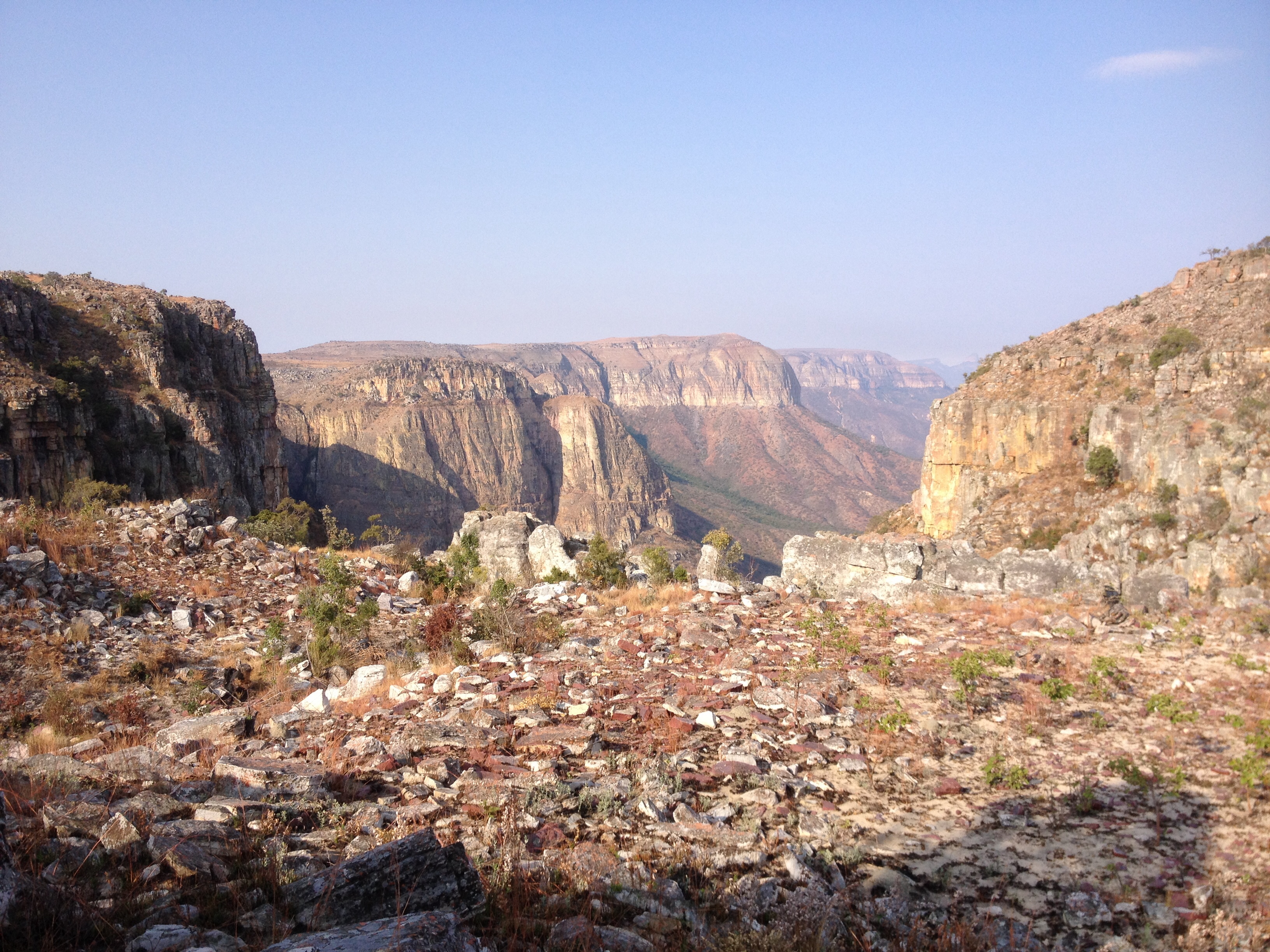
The Fenda da Tundavala is a stunning natural viewpoint in the Serra da Chela, in Huíla province, about 18 km northwest of the city of Lubango. Here the Angolan plateau, at over 2,200 metres above sea level, breaks off abruptly into a dizzying chasm with sheer walls and drops of more than a thousand metres to the lowlands below. It is one of the most spectacular viewpoints in Africa and in 2014 it was chosen as one of the Seven Natural Wonders of Angola. Its name, 'fenda', means 'crack' or 'fissure' in Portuguese.
📌Best time to go
The best time to visit Tundavala is the dry season, from May to September (the cacimbo), with clear skies and maximum visibility, when the view stretches for dozens of kilometres. In the rainy season (October-April) the landscape turns green, but mist and clouds are common and can hide the viewpoint completely. At over 2,200 metres it is cool at the top and usually windy, so bring a warm layer whatever the season, especially at sunrise and sunset.
📌Suggested days
Tundavala is a half-day trip from Lubango: in about 2-3 hours you get there, enjoy the viewpoint and head back. It pairs perfectly with the Serra da Leba and the city's viewpoints (Cristo Rei) for a full day of scenery. As it is only 18 km from Lubango, there's no need to stay overnight at the site itself: the city is your base. Many travellers include it in a 4-6 day circuit through the southern highlands and the Namibe desert.
📌Getting there
You reach it from Lubango on a paved road of about 18 km that climbs into the Serra da Chela; the drive takes around 30-40 minutes. There is no regular tourist public transport, so the usual options are a car with driver, an organised tour or a rental vehicle. Your base is always Lubango, which is in turn connected to Luanda by plane (approx. 1.5 h) and to Namibe via the Serra da Leba.
📌Getting around
At the viewpoint itself you get around on foot between the various lookout points along the cliff edge. Many stretches have no railings, so walk carefully and don't get too close to the drop. To get there and back you need a vehicle (car with driver or a tour from Lubango). Bring comfortable shoes, water, sun protection and a warm layer, as the highland weather is changeable.
📌Language and currency
The official language is Portuguese. The currency is the Angolan kwanza (AOA); as of 2025 the rate is around 915 to the dollar (very volatile, check before you go). There are no services or formal shops at the viewpoint (sometimes there are informal vendors), so bring cash in kwanzas from Lubango for any spending, tips for the guide or purchases. The visit itself is free.
💱 AOA exchange rate
Loading rate…
🌤️ Weather in Tundavala
Loading weather…

The Fenda da Tundavala is one of Angola's great natural wonders and one of the most breathtaking viewpoints on the whole African continent. Just 18 kilometres from Lubango, the Angolan plateau breaks off here into a dizzying chasm: sheer walls dropping more than a thousand metres to the lowlands, a geological spectacle that takes your breath away.

Peering over the edge of the Fenda is an experience that's hard to forget: the bottomless precipice, the absolute silence broken only by the wind, birds gliding over the void and the vastness of a landscape that stretches until it fades into the horizon. It's no coincidence that in 2014 it was chosen as one of the Seven Natural Wonders of Angola. A local tradition invites you to throw a stone and count the seconds it takes to reach the bottom.

This guide explains how to visit Tundavala from Lubango: how to get there, what to expect at the viewpoint, what precautions to take in a place without railings, and how to combine it with the Serra da Leba and the rest of the southern highlands. A must for lovers of nature and extreme landscapes, in the heart of Angola at its most magnificent.

📖 History of Tundavala

The Fenda da Tundavala is a geological formation in the Serra da Chela, on the edge of the great escarpment that separates the Angolan plateau from the southwestern lowlands. Here the plateau, at over 2,200 metres, plunges into cliffs of more than a thousand metres shaped by millions of years of erosion and fractures in the rock. A place of legends for the peoples of Huíla, during the civil war it was sadly associated with dark episodes, and today it is a natural symbol of Angola, chosen in 2014 as one of its Seven Natural Wonders. Its geological and cultural history is told on our history page.

Read the full history ↓

🏛️ Tundavala is in the desert south: Namibe and Huíla

Where the Namib Desert drops into the Atlantic and the Huíla plateau breaks off in thousand-metre cliffs: dunes, age-old welwitschias, the Cristo Rei of Lubango and the viewpoints of Tundavala and Serra da Leba.

Read the history of The desert south: Namibe and Huíla →

🗺️ What to see

1
The main viewpoint of the Fenda
The edge of the great chasm, with drops of more than a thousand metres and views that fade into the horizon.
Leer más ↓
The heart of the visit is the main viewpoint, where the plateau drops away vertically and the Fenda's chasm opens up. From here you can take in the precipice of more than a thousand metres, the rock walls, the huge fissure that gives the place its name and the lowlands stretching out to the horizon. The sense of vertigo and vastness is total: it's one of those places where the scale of nature makes the visitor feel tiny. There are several lookout points along the edge, some on rock outcrops that jut out over the void. Many stretches have no railings, so move with caution. The light at sunrise and sunset brings out the colours of the rock and the landscape, and with clear skies the visibility is astonishing. It's the viewpoint par excellence, the whole reason for the trip to Tundavala. Getting there: 18 km from Lubango on a paved road. Best time to go: dry season, with clear skies. Tips: take extreme care at the edge; bring a warm layer for the wind and altitude.
ℹ️ Distance: 18 km from Lubango (Serra da Chela) · Best time to go: Dry season (May-September); sunrise or sunset · Admission: Free access · Duration: 1 to 2 hours
2
The seasonal waterfalls
Waterfalls that tumble down the cliff in the rainy season, adding drama to the landscape.
Leer más ↓
In the rainy season (October to April), the water running across the plateau spills over the edge of the Fenda, forming seasonal waterfalls that plunge into the void of the cliff. It's an extra spectacle that makes the landscape even more dramatic, although at that time of year mist is also common and can hide the views. Watching water plunge more than a thousand metres is a powerful sight. In the dry season, on the other hand, the falls disappear and the landscape becomes more arid and open, with better visibility to appreciate the sheer size of the chasm. Each season has its charm: the rains bring greenery and waterfalls but a risk of fog; the dry season brings clear skies and endless panoramas. Knowing this seasonality helps you choose when to go depending on what you're after. Getting there: at the Fenda viewpoint itself. Best time to go: for the waterfalls, the rainy season (with luck and no fog); for the views, the dry season. Tips: if you go in the rainy season, get there early to avoid the midday fog.
ℹ️ Distance: At the Fenda viewpoint · Best time to go: Waterfalls: rainy season; views: dry season · Admission: Free access · Duration: Part of the visit to the viewpoint
3
Flora, fauna and birds of the cliff
The highland vegetation and the raptors and soaring birds that live on the edge of the escarpment.
Leer más ↓
The area around Tundavala, at over 2,200 metres, has highland vegetation adapted to wind and cold, with rock-dwelling plants growing between the stones and mountain scrub. It's a small escarpment ecosystem, different from both the plateau and the lowlands, with species typical of these rocky, exposed environments. One of the natural highlights of the place is the birdlife: raptors and soaring birds ride the cliff's updrafts to fly and hunt, and watching them circle over the chasm is part of Tundavala's magic. For birdwatchers and nature lovers, the viewpoint offers, besides the scenery, the chance to observe the life that thrives on this extreme edge of the plateau. Getting there: at the viewpoint and its surroundings. Best time to go: all year round; good light in the morning. Tips: bring binoculars for the birds; don't damage the vegetation along the edge.
ℹ️ Distance: Around the viewpoint · Best time to go: All year round · Admission: Free access · Duration: Part of the visit
4
Tundavala as part of the great circuit of southern highland viewpoints, together with the Serra da Leba and the Cristo Rei.
Leer más ↓
Tundavala is rarely visited on its own: it's part of the great circuit of southern highland wonders along with the Serra da Leba (the hairpin-bend road that winds down towards Namibe) and Lubango's viewpoints, led by the Cristo Rei. All three can be combined in one or two days from the city, making up one of the most impressive scenic routes in Africa. A classic plan is to spend a morning or an afternoon at Tundavala and another at the Serra da Leba, with the Cristo Rei and the Lubango Letters as an urban extra. This combination helps you understand the geography of the Angolan escarpment: how the plateau breaks off abruptly (Tundavala) and how people managed to overcome that drop with a remarkable road (Serra da Leba). Together they tell the story of the plateau's edge. Getting there: all from Lubango, by car with driver or on a tour. Best time to go: dry season. Tips: set aside at least two days in Lubango to see them at a relaxed pace; hire a driver who knows the routes.
ℹ️ Distance: All a short distance from Lubango · Best time to go: Dry season (May-September) · Admission: Free access · Duration: 1 to 2 days for the full circuit
📶I have never landed without internet. I arrive and my phone connects to the strongest network in the country I am visiting: I can say I landed, sort out transport, book tours and keep posting, at a seriously good price. I always use the Maya eSIM — check their plans by clicking the banner.See plans →Maya Mobile eSIM — skip roaming fees, unlimited data
What nobody tells you

💵 Prices

Tickets

TypePrice
Acceso a la Fenda da TundavalaFree (2025; check whether a fee or parking charge applies when you visit)
Guía local (opcional)Tip or fee to be agreed, from a few hundred to a few thousand kwanzas (2025)
Excursión desde Lubango (transporte)Car with driver or tour from about US$ 40-100 depending on duration and combination (2025)
🔄 updated monthlyOfficial / reference values · double-check when buying

Activities and tours

ActivityPriceDurationOperator
Half-day trip to the viewpoint from LubangoCar with driver / tour from about US$ 40-80 (2025)Half day (2-3 h on site)Lubango agencies and drivers
Tundavala + Serra da Leba circuit in one dayCar with driver from about US$ 80-120 per day (2025)Full dayLocal agencies and drivers
Landscape photography at sunrise or sunsetFree; transport extra (2025)1 to 2 hIndependently / with a driver
Birdwatching and natureFree; guide optional (2025)1 to 2 hLocal guides
🔄 updated monthlyOfficial / reference values · double-check when buying

🚌 How to get there and distances

Getting around

Car with driver from Lubango
PriceHalf day from about US$ 40-80; full day US$ 80-120 (2025)
Duration30-40 min each way
Notes
The usual way to get there; best with a driver who knows the route and can combine Tundavala with the Serra da Leba
Organised tour
Depends on agency and group (2025)
DurationHalf day or full day
Notes
Convenient if you don't want to arrange transport yourself; usually includes several viewpoints
On foot at the viewpoint
Free
DurationDuring the visit
Notes
The lookout points along the edge are explored on foot; take care, many stretches have no railings
🔄 updated monthlyOfficial / reference values · double-check when buying

How to get there

RouteAirlines / operatorsAvg. priceDuration
Lubango → Fenda da TundavalaCar with driver, tour or own vehicleDepends on transport (2025)30 to 40 min (18 km)
Luanda → Lubango (flight) and then on to TundavalaTAAG to Lubango; local driver to the viewpointFlight + transfer (2025)1.5 h flight + 40 min
Namibe → Lubango (Serra da Leba) → TundavalaCar with driver / interprovincial transportDepends on service (2025)3-4 h to Lubango + 40 min to the viewpoint
🔄 updated monthlyOfficial / reference values · double-check when buying

🏨 Where to stay

No exact prices: a scale from $ (budget) to $$$$$ (luxury), with 2-3 options per category.

Upscale hotels in Lubango (base)
Price$$$$$
Recommended options
From about US$ 90-180 per night; Tundavala has no accommodation of its own, so you stay in Lubango, 18 km away, in the city's comfortable hotels
Mid-range hotels in Lubango
Price$$$$$
Recommended options
Approx. US$ 50-90 per night; decent places to stay in central Lubango, a base for the trip
Budget guesthouses in Lubango
Price$$$$$
Recommended options
From about US$ 30-50 per night; simple options in Lubango for tight budgets

🍴 Where to eat

Sin servicios en el mirador (llevar picnic)
Price$$$$$
Options / signature dish
There are no restaurants at the Fenda; bring water and something to eat from Lubango. Sometimes there are informal vendors
Cocina angoleña en Lubango
Price$$$$$
Options / signature dish
US$ 6-15 per person; funge, muamba, goat and plateau dishes in the city, before or after the trip
Cocina portuguesa e internacional en Lubango
Price$$$$$
Options / signature dish
US$ 15-30 per person; restaurants in central Lubango with a Portuguese heritage and international dishes

📖 History of Tundavala

Origins, formation and what the sources say.

The Great Escarpment: how the Fenda was formed

The Fenda da Tundavala is, above all, a work of geology. It sits on the edge of the Great Escarpment that runs along the west of southern Africa, the line of cliffs where the continent's interior plateau drops sharply towards the narrow coastal plain. In the Serra da Chela, near Lubango, the escarpment reaches one of its most dramatic points: the Angolan plateau rises above 2.200 metres here and falls almost sheer to around 1.000 metres, a vertical drop of more than a thousand metres.

This abrupt break in the landscape is the result of millions of years of geological processes: the uplift of the continent, the fracturing of the ancient rocks of the African basement, and the relentless erosion of water and wind, which carved out fissures and broke off blocks of rock over the ages. The rocks of the Serra da Chela are very old, among the oldest on the planet, and the 'fenda' —the crack that gives the place its name— is one of those colossal fractures opened in the stone.

The result is a dizzying landscape: vertical walls, bottomless chasms, rocky ledges hanging over the void and, in the rainy season, waterfalls tumbling down the cliff. Tundavala is, in essence, a window onto the deep structure of the African continent, a place where you can 'read' how the plateau breaks away from the coast. That is why it is both a scenic wonder and a site of geological interest.

The peoples of Huíla and the legends of Tundavala

Long before it became a tourist attraction, the Serra da Chela and the Fenda da Tundavala were part of the world of the peoples of the Huíla plateau, above all the Nyaneka-Humbi communities and other pastoral groups of southern Angola. For these cultures, great natural features —mountains, chasms, waterfalls— were often charged with spiritual meaning and stories, and Tundavala, with its bottomless abyss, was a natural place for legends and reverent respect.

Oral tradition links the site to stories and beliefs, as you would expect of a place so imposing and so dangerous. The name itself and the fascination with the depth of the crack —the habit of throwing a stone and counting the seconds until it reaches the bottom— reflect the way people have always tried to measure and understand the immensity of this landscape.

During the colonial era, the Fenda also became known and valued by the Portuguese of nearby Sá da Bandeira (today Lubango), who made it part of the region's symbolic landscape. Its fame as an exceptional viewpoint kept growing, although its real tourism potential would only fully develop in recent decades, with Angola at peace.

The shadow of war

Tundavala's recent history also has a dark chapter, tied to the decades of conflict Angola went through. During the struggle for independence and, above all, during the long civil war (1975-2002), remote and hard-to-reach places such as the cliffs of the Serra da Chela became associated, in popular memory, with tragic episodes of political violence. The sheer depth of the abyss fed grim stories about the fate of people in those years of terror.

These associations are part of the region's historical memory and sit alongside the natural beauty of the place. It is a reminder that many of Angola's most beautiful landscapes also bear the mark of a painful past, that of a country that went through long wars and enormous suffering before reaching peace in 2002.

With the end of the conflict, Tundavala fully regained its status as a natural wonder and tourist destination, leaving the shadows of war behind. Today it is above all a symbol of the grandeur of the Angolan landscape, although knowing its full history helps you appreciate the depth —human depth too— of the place.

One of the Seven Natural Wonders of Angola

In 2014, as part of an initiative to highlight and promote the country's natural heritage, the Fenda da Tundavala was chosen as one of the Seven Natural Wonders of Angola. The recognition made official what travellers and the people of Huíla had known for a long time: that this viewpoint is among the most spectacular landscapes not only in Angola but in all of Africa. The distinction boosted its promotion as a tourist destination and its role as an emblem of the south of the country.

Since then, viewing points have been set up on the edge of the abyss, and Tundavala has become a must-see stop on any trip around the Lubango region, together with the Serra da Leba and the Cristo Rei. It features in Angola's tourism imagery and draws both domestic visitors and the few international tourists who make it to the south.

This status reflects Angola's growing interest in its nature as a tourism resource and as a source of national pride. The Fenda, with its imposing geology and dizzying scenery, has become an icon, a place that sums up the grandeur of Angola's territory and its potential as a nature destination.

Tundavala today: a balcony over Africa

Today the Fenda da Tundavala is one of the great attractions of southern Angola and an unforgettable experience for anyone who makes it to Lubango. Leaning out over its abyss of more than a thousand metres, feeling the high-altitude wind, watching birds glide over the void and taking in the landscape as it fades into the horizon is, quite literally, like standing on a balcony over Africa. It is a place that combines the thrill of vertigo with the calm of vast open space.

The visit is easy —a half-day trip from Lubango— and pairs wonderfully with the Serra da Leba and the city's viewpoints, making up one of the most impressive scenic circuits on the continent. The absence of crowds and mass tourism infrastructure keeps it wild and authentic, something many travellers especially appreciate.

Tundavala sums up, in a single spot on the map, the power of the Angolan landscape: the deep geology of the continent, the memory of the peoples of Huíla, the shadows of a wartime past and the pride of a country rediscovering and celebrating its nature. A place where the Earth shows its true scale and where the traveller stands, in silence, before the grandeur of the abyss.

📚 Bibliography

  • Wikipedia (EN) — «Tundavala Gap»: https://en.wikipedia.org/wiki/Tundavala_Gap
  • Wikipedia (PT) — «Fenda da Tundavala»: https://pt.wikipedia.org/wiki/Fenda_da_Tundavala
  • Turismo Angola — Fenda da Tundavala (the site is no longer online)
  • Rede Angola — Roteiros: Tundavala: https://www.redeangola.info/roteiros/tundavala/
  • Welcome To Angola — Aventuras na Fenda da Tundavala: https://welcometoangola.co.ao/en/directorio/fenda-da-tundavala/
  • Ciências-Geologia — Fenda da Tundavala: https://ciencias-geologia.blogspot.com/2013/09/fenda-da-tundavala.html
  • Sítio do Pica-pau Angolano — A Fenda da Tundavala: https://sitiodopicapauangolano.wordpress.com/2012/03/16/a-fenda-da-tundavala/
  • Wikipedia (EN) — «Serra da Chela»: https://en.wikipedia.org/wiki/Serra_da_Chela
  • Got2Globe — Lubango and its surroundings: https://got2globe.com/es/editorial/parte-superior-de-angola-de-la-ciudad-de-lubango/
  • Britannica — «Huíla»: https://www.britannica.com/place/Huila-province-Angola

❓ Frequently asked questions

What exactly is the Fenda da Tundavala?+
It's a huge natural viewpoint in the Serra da Chela, 18 km from Lubango, where the Angolan plateau (at over 2,200 metres) breaks off abruptly into a dizzying chasm, with sheer walls and drops of more than a thousand metres to the lowlands. 'Fenda' means 'crack' in Portuguese. It is one of the most spectacular viewpoints in Africa and in 2014 it was chosen as one of the Seven Natural Wonders of Angola.
Is the viewpoint dangerous?+
It's safe if you act sensibly, but you need to be very careful: many stretches of the edge have no railings and the drops are more than a thousand metres. Keep away from the edge, watch children closely and don't try balancing on the rock outcrops. The strong highland wind adds to the risk. With common sense, it's a perfectly enjoyable visit.
How do I get to Tundavala?+
You get there from Lubango on a paved road of about 18 km, in 30-40 minutes, usually by car with driver or on an organised tour, as there is no regular tourist transport. Your base is Lubango, connected to Luanda by plane (1.5 h) and to Namibe via the Serra da Leba. The usual plan is to combine Tundavala with the Serra da Leba on the same day or over two days.
When is the best time to go?+
In the dry season (May–September), with clear skies and maximum visibility, when the view stretches for dozens of kilometres. In the rainy season (October–April) the landscape turns green and seasonal waterfalls tumble down the cliff, but mist often covers the viewpoint. It's cool and windy up top all year round, so bring something warm. Sunrise and sunset give the best light.
How much time do I need, and what can I combine it with?+
The viewpoint itself takes 1 to 2 hours, and with the round trip it makes a half-day outing from Lubango. It pairs perfectly with the Serra da Leba (the road with its hairpin bends) and with Lubango's viewpoints such as the Cristo Rei, for one or two days of grand landscapes. Many people include it in a circuit through the southern highlands and the Namibe desert.

More places in Angola

BenguelaCabindaCataratas de KalandulaIlha de LuandaLobitoLuanda
See every place in Angola →The history of Angola →
Sources consulted (6)
Still planning?
Explore more destinations in Angola
See all destinations →
Image credits
Photos from Wikimedia Commons, each under its own licence (CC BY, CC BY-SA or public domain). Open each file to see its author and licence.
Tundavala Gap