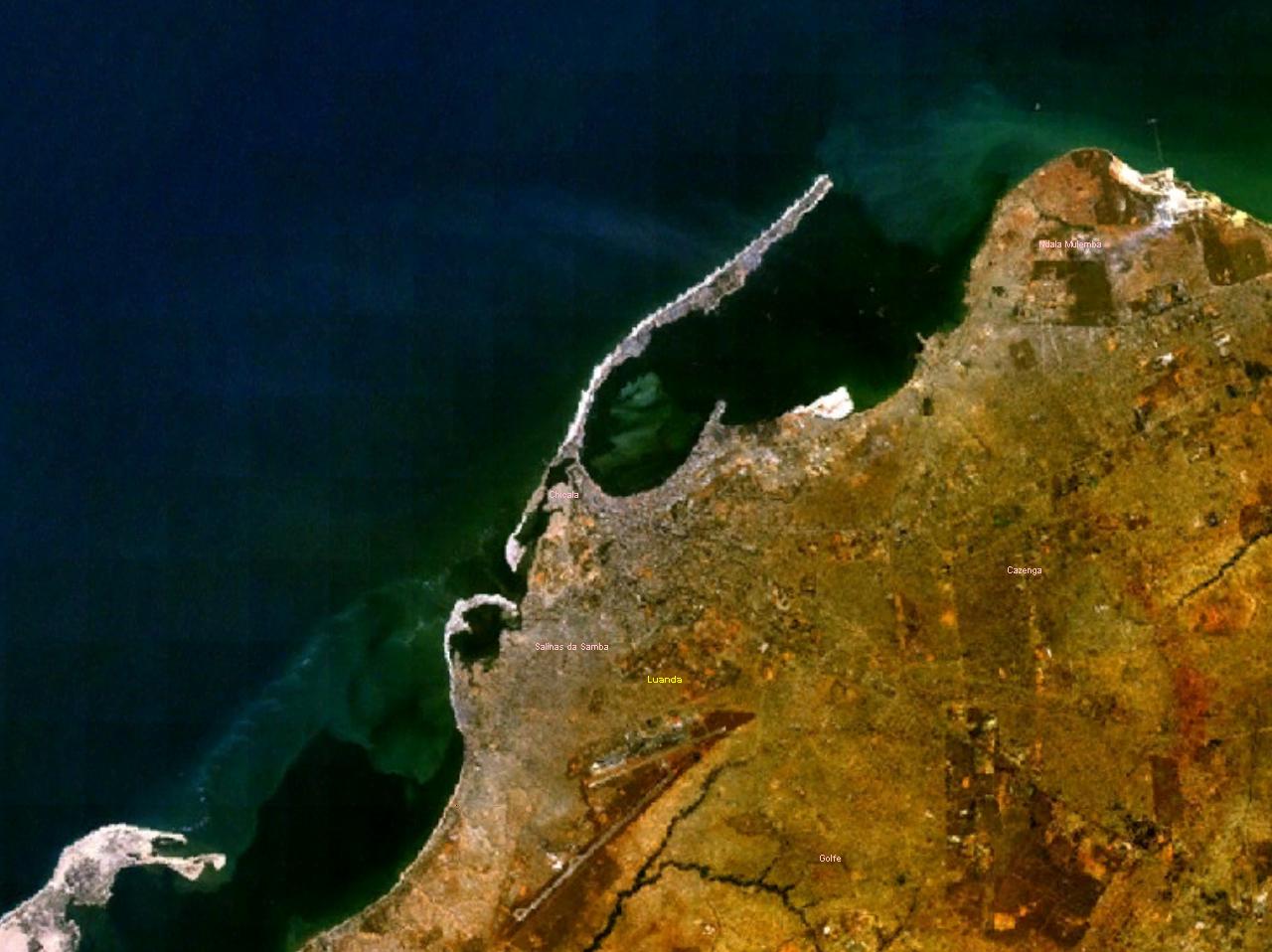
Ilha de Luanda, or Ilha do Cabo, is the Angolan capital's beach escape and playground. It's a narrow strip of sand that closes off Luanda Bay. On one side is the open Atlantic with its waves, on the other the calm waters of the bay, and in the background the city's skyline of high-rises. People from Luanda come here to swim, sunbathe, eat fresh fish and dance until dawn.
The island is famous for its food. It's the best place in Luanda to eat mufete, Angola's signature dish: grilled fish with plantain, sweet potato, cassava and beans in palm oil, served in the 'jangos' and restaurants along the seafront. There's also fresh seafood (lobster, prawns, clams), live music and a kizomba and semba nightlife that made the island's bars famous.
This guide explains how to make the most of Ilha de Luanda: where the best beaches are, what to eat and how, how to get around safely and how to combine it with a visit to the historic centre. It's the perfect getaway to slow down, dip your toes in the Atlantic and see why this strip of sand is the heart of the capital's leisure life.
Ilha do Cabo mattered long before the Portuguese arrived. In its waters people gathered the 'nzimbu' shells that served as currency in the Kingdoms of Kongo and Ndongo, so whoever controlled the island controlled the region's money supply. That was one of the reasons the Portuguese founded Luanda right across from it, in 1576. For centuries it was an Axiluanda fishing village, and over time it became the capital's area for beaches, restaurants and nightlife. Its northern tip still has a traditional fishing quarter, a living reminder of those origins.
Read the full history ↓Angola's Atlantic capital, founded in 1576 as the great slaving port of the South Atlantic, is today a metropolis of bay, fortresses and kizomba, with beaches and savannah close by.
Read the history of Luanda and around →No exact prices: a scale from $ (budget) to $$$$$ (luxury), with 2-3 options per category.
Origins, formation and what the sources say.
Long before Ilha do Cabo became a strip of beaches and restaurants, it played a decisive economic role across the whole region. In the shallow waters around the island, people gathered small sea shells called 'nzimbu', which served as everyday currency in the Kingdom of Kongo and in Ndongo. These shells paid for tributes, goods and labour across a vast area of west-central Africa.
That made the island something like a natural mint: whoever controlled its sandbanks controlled, in practice, the production of the region's money. Gathering 'nzimbu' was regulated and was a coveted privilege. The island's original inhabitants, Kimbundu-speaking fishermen known as the Axiluanda ('people of the sea'), lived off fishing and this shell economy.
When the Portuguese reached the coast in the 16th century, they quickly understood the strategic value of the place. Controlling the island and its bay meant controlling both an excellent natural harbour and the production of the local currency. It is no coincidence that in 1576 Paulo Dias de Novais founded the city of Luanda right across from the island: geography and the 'nzimbu' economy made this strip of sand a key piece in the birth of the Angolan capital.
Through the centuries of colonial rule, Ilha do Cabo remained, above all, a fishing community. The Axiluanda kept their boats, their nets and their traditions facing the Atlantic, while across the bay the city of Luanda grew with its fortresses, churches and warehouses tied to trade and the slave trade. The island supplied the city with fish and kept an identity of its own, somewhat removed from the colonial bustle.
Over time, and especially in the 20th century, its closeness to the capital turned the island into the city's natural beach resort. The long tongue of sand, with the open sea on one side and the calm bay on the other, was the perfect place for Luanda's residents to swim, sunbathe and eat fresh fish. The first restaurants, bars and 'jangos' began to appear, and the island became famous for its seafood, especially mufete.
The sand isthmus joining it to the mainland meant that, over the years, the 'island' stopped being one in the strict sense, and you could drive there over land. Even so, it kept its name and its character as a seaside escape, different from the city centre. The northern tip kept its traditional fishing community, while the rest filled up with the leisure life of a growing capital.
In independent Angola, and above all after the end of the civil war in 2002, Ilha de Luanda established itself as the capital's great leisure hub. Its seafront restaurants became temples of mufete, the country's signature dish —grilled fish with plantain, sweet potato, cassava and beans in palm oil— and the go-to place for fresh Atlantic seafood. Eating on the island, with your feet almost in the sand, is one of the experiences most loved by locals and visitors alike.
The island is also one of the epicentres of Luanda's nightlife and music scene. Its bars and clubs play kizomba and semba, two genres born in Angola that went on to conquer the world: semba, a festive, ancestral rhythm that many consider the root of Brazilian samba, and kizomba, a slow, sensual dance that became popular worldwide. The island also offers one of the best views of the Marginal's skyscraper skyline, spectacular at sunset and at night.
Today Ilha do Cabo sums up, in just a few kilometres of sand, much of Luanda's soul: its pre-Portuguese origins tied to shell money, its fishing tradition still alive at the northern tip, its seafood and its music and nightlife. For travellers, it is the most relaxed and tasty way to get to know the Angolan capital, between a dip in the Atlantic, a long mufete lunch and the sound of kizomba.
Despite modernisation and tourism, Ilha de Luanda still has, at its northern end, an Axiluanda fishing community that keeps centuries-old traditions alive. The Axiluanda —whose name means 'people of the sea'— still go out fishing in their boats, mend their nets and hold on to an identity of their own, with their language, their customs and their ancestral bond with the Atlantic. Their presence is a reminder that, before the bars and clubs, the island was a fishing village for generations.
This coexistence between the traditional village and the modern leisure zone is not free of tension. Luanda's urban growth, pressure from property development and tourism, pollution in the bay and waterfront redevelopment projects pose challenges for the fishing community and for the fragile ecosystem of the sand spit. As on so many urban coastlines around the world, the island has to balance development, heritage and sustainability.
For the curious traveller, visiting the fishing quarter at the northern tip is a way to round off a trip to the island beyond the beach and the mufete: it is a glimpse of Luanda's oldest roots, of those 'people of the sea' who gave the city its very name and who, against all odds, still make their living from the Atlantic in the shadow of the skyscrapers.