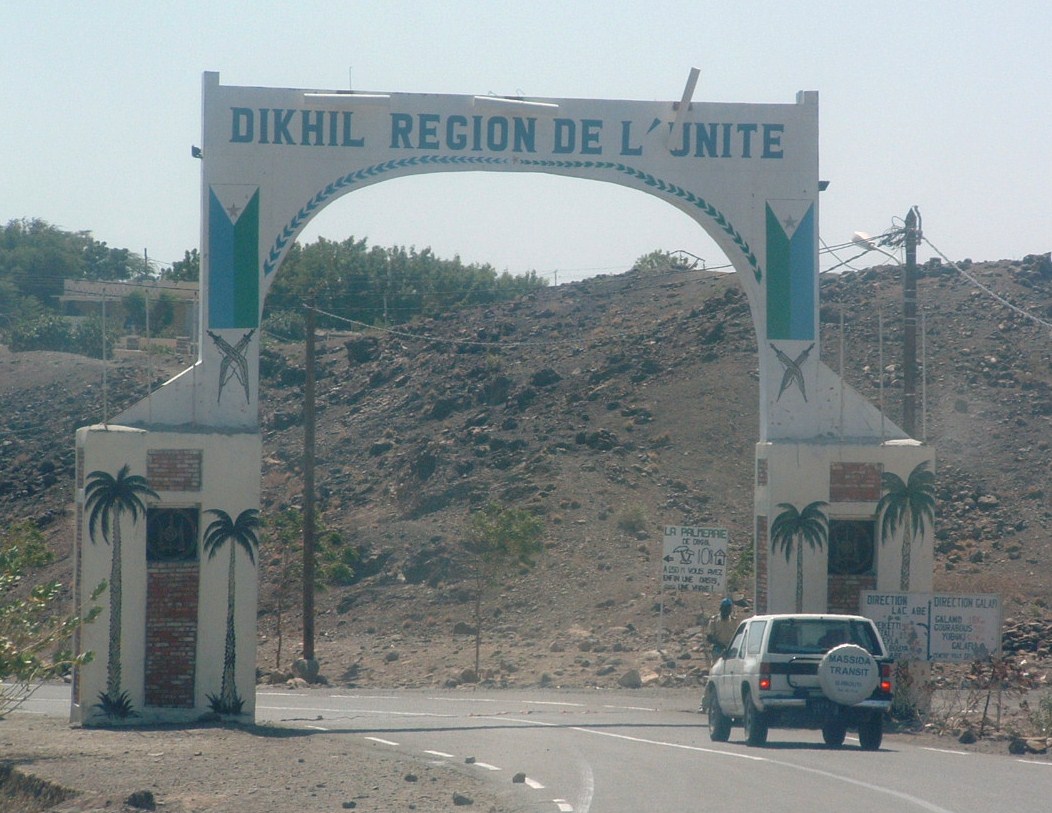
Dikhil is the main town of south-western Djibouti, a crossroads between deserts where Afar and Somali cultures mix. For travellers it is, above all, the gateway to Lake Abbé: this is the last stop with services before taking the tracks towards the lunar landscape of smoking chimneys. But Dikhil has a life of its own too, with a lively market, a historic mosque and the genuine atmosphere of a frontier town.
Its name means 'well' or 'watering point', which sums up why it exists: a meeting place in arid lands, where herders, traders and caravans come together. Surrounded by plains and deserts —the Grand Bara is not far away—, Dikhil is a convenient base for exploring the south of the country, with more services than the inland villages while keeping the authentic flavour of deep Djibouti.
This guide tells you how to make the most of Dikhil: how to get there along the south-western road, what to see in town (its market, its mosque, its crossroads atmosphere), how to use it as a base for Lake Abbé and other excursions in the region, when to go to escape the heat, and what to expect from a town that is much more than just a place to pass through.
Dikhil grew up as a watering point and crossroads in the arid south-west of Djibouti, on land shared by Afar and Somali people. During the French colonial period it became established as an administrative centre for the interior: an airstrip was built in 1933 and, around 1936, the road linking it to Ali Sabieh and the capital was extended; its first school opened in the 1940s. As the seat of one of the country's regions, Dikhil has always been a market town and a waypoint towards the Ethiopian border and Lake Abbé. More context on our history page.
Read the full history ↓Steam chimneys in a lunar landscape, endless plains and crossroads towns near Ethiopia: southern Djibouti is the country's most desert-like and cinematic corner.
Read the history of The desert south: Lake Abbé and the Grand Bara →No exact prices: a scale from $ (budget) to $$$$$ (luxury), with 2-3 options per category.
Origins, formation and what the sources say.
The name Dikhil says it all: it means 'well' or 'water point'. In a region as arid as south-western Djibouti, where rain is scarce and the heat is extreme, a place with water is reason enough for a settlement to spring up. Dikhil grew up as one of those vital spots where nomadic herders and caravans could water their animals and stock up on supplies, at the crossroads of the routes linking the Ethiopian interior with the coast of the Gulf of Tadjoura and the Red Sea.
The area has been lived in and travelled through since ancient times by the Afar and Somali peoples, the country's two main communities, who live side by side and mix here. That dual identity shapes Dikhil's character: it is a cultural border town as well as a geographical one, where the languages, customs and trade of both worlds meet. The Dikhil Region, with the town as its capital, covers a large part of southern and south-western Djibouti, including natural wonders such as Lake Abbe.
Like so many places in the Horn of Africa, Dikhil's deep history is bound up with herding, caravan trade and the mobility of its people. It is not a town of ancient monuments but a human crossroads whose importance comes from its position: where there is water and the roads meet, people gather.
As the French colony took shape (French Somaliland, with Djibouti as its capital from 1894), the interior of the territory was gradually brought into the colonial administration, and Dikhil grew in importance as the centre of the south-west. Its strategic position, on the axis linking the coastal capital with the Ethiopian border, made it a point of control, trade and services for the whole surrounding region.
Modernisation came gradually. In 1933 an airstrip was built in Dikhil, a sign of colonial interest in connecting the interior. Three years later, around 1936, the road linking it to Djibouti City via Ali Sabieh was extended, bringing the town into the territory's transport network. In the 1940s an elementary school opened, another step towards settling the population and building a stable urban centre around the old water point.
Throughout the 20th century, Dikhil consolidated its role as a regional hub: a market for the herders of the surrounding area, a stop on the route to Ethiopia and the seat of local administration. Its life kept revolving around trade, nomadic livestock herding and the movement of people and goods between the coast and the Ethiopian highlands, a crossroads role it still plays today.
Geography has made Dikhil a permanent crossroads. The main overland route between Djibouti and Ethiopia passes through here, a trade corridor of enormous importance for both countries: Ethiopia, a landlocked giant, channels much of its foreign trade through the port of Djibouti, and the routes crossing the south of the country (by road and by the modern Addis Ababa–Djibouti railway) are vital arteries of that relationship. On that axis, Dikhil is a landmark.
For travellers, the town is above all the gateway to Lake Abbe, the spectacular landscape of smoking limestone chimneys that has become one of Djibouti's great tourist icons. Dikhil is the last town with services before heading along the desert tracks towards the lake, which is why it features on the itinerary of almost every excursion to this natural wonder, whether as a lunch stop or as a base for spending the night.
So Dikhil's old role as a water point and meeting place in the desert lives on today in its role in tourism: it is still the place where travellers stop, stock up and gather momentum before heading on into the unknown. The travellers have changed (once salt caravans, now tourists in 4x4s too), but the town's essence as the threshold to the deep south remains.
In independent Djibouti, Dikhil is one of the most important towns in the interior and the capital of a vast desert region. Life revolves around the market, where spices, fabrics, traditional clothing, handicrafts and farm produce are traded, and where you can clearly sense the mix of Afar and Somali cultures that defines the country. The mosque, one of its best-loved buildings, anchors the community's religious life.
Like so many towns in the Global South, Dikhil faces the challenges of aridity, water scarcity, rising heat and the need for opportunities for its young people. Trade with Ethiopia, livestock and, to a lesser extent, tourism to Lake Abbe are its main resources. It is a working town and a place of passage, with no great luxuries, but with a vitality and authenticity that many travellers value precisely because it is so unpretentious.
Visiting Dikhil means getting to know the Djibouti that lies beyond the capital and the postcard landscapes: the towns of the interior, the Afar-Somali mix, the routes to Ethiopia and the everyday life of the people who live in one of the smallest and hottest countries in Africa. It is a good reminder that behind every spectacular landscape there are communities that give it meaning and make the journey possible.