Viaja con GusTravel insurance

Which city in the Slovak Republic should you live in?

Our guide's data · Verified: 24 November 2026

By · Viaja con Gus

5 cities, with their climate, cost of living and what work is available in each.

Home › Working Holiday › Slovak Republic › Cities
🌡️
Which Slovak Republic city do I move to?
Tell us which city or town you're from and we'll tell you which Slovak city you'll adapt to best: we compare the climate with yours, month by month.
Find my city →

Slovakia is not the first country that comes to mind for a Working Holiday, and that is exactly its appeal: it is cheap, safe and sits right in the heart of Europe (Vienna is an hour away, Prague and Budapest two or three hours), and there is far less competition from other backpackers than in Spain, Ireland or Germany. The euro is the currency, so you are already in the eurozone, but with a cost of living considerably lower than in Western Europe.

The country is small and reality changes a lot depending on where you land. Bratislava, the capital, concentrates almost all the international work, the highest salaries and the foreign community; it is the only city where you can get around comfortably with English in many areas. From the centre eastward the country becomes cheaper, more traditional and more genuinely 'Slovak': Košice (the second city, in the east) and Žilina (in the north, near the mountains) are cheaper options, but there the language matters more.

Two things to know before you start. First, the minimum wage: in 2026 it is around EUR 5.26 gross an hour (roughly EUR 915–950 gross a month full time), and many entry-level jobs pay close to that floor; you take home less after contributions. Second, language: Slovak is difficult, and in the east of the country English is not enough for everything. But there is a huge shortcut for Argentinians: the call centres and shared services centres (BPO/shared services) in Bratislava and Košice hire people who speak Spanish to serve Spanish-speaking markets, and there your native language goes from obstacle to advantage. All the prices below are reference values PER MONTH; the market moves, so always confirm at the time.

The full guide to cities in the Slovak Republic →

Traveler assistance (travel insurance) with GO! Assistance: 50% OFF GO! plus an extra 20% OFF from Viaja con Gus

🧭 How to choose your city in the Slovak Republic

❓ Questions about living in the Slovak Republic

Which is the best city for a Working Holiday in Slovakia?
For most people, Bratislava. It is the capital, concentrates almost all the international work, has the best salaries and the largest Latino community, and it is where English goes furthest and where there are the most call centres with Spanish. Košice is the best option if you want to spend much less and live a more authentic Slovakia, and Žilina if you want very low costs, mountains and industrial work. For a first WH, Bratislava is the safest bet.
Can I work without knowing Slovak?
Yes, above all in Bratislava. The most realistic route for an Argentinian is the call centres and shared services that look for Spanish speakers to serve Hispanic markets: there they ask for Spanish plus English and don't require Slovak. You can also start in tourist hospitality and in warehousing/logistics with little language. That said, outside the international circuit (and especially in the east and the north) Slovak matters, so learning the basics opens many more doors.
How much does it cost to live in Slovakia?
It is one of the cheapest destinations in the eurozone. A room in a shared flat goes from EUR 220–350/month in Žilina and Košice to EUR 350–550/month in Bratislava. Add food (EUR 180–250/month if you cook), public transport (a monthly pass of EUR 20–30) and miscellaneous expenses. With the minimum wage (around EUR 915–950 gross/month in 2026) you can live on the bare minimum; with a language call-centre job (EUR 1,100–1,500 gross) you live comfortably and can even save.
How much do you earn on the minimum wage?
In 2026 the minimum wage is around EUR 5.26 gross an hour, which at full time (40 hours a week) comes to about EUR 915–950 gross a month; after contributions and tax you take home roughly EUR 750–800 net. Many entry-level jobs (hospitality, retail, cleaning) pay close to that floor. Call centres and shared services with languages pay more (easily EUR 1,100–1,500 gross depending on the language and experience), and there your Spanish works in your favour.

🌡️ The 5 cities and their climate

Banská Bystrica
Banská Bystrica
Humid continental with hot summer
See the city →
Bratislava
Bratislava
Humid continental with hot summer
See the city →
Košice
Košice
Humid continental with hot summer
See the city →
Poprad
Poprad
Humid mountain continental
See the city →
Žilina
Žilina
Humid continental with hot summer
See the city →
Everything about the Working Holiday in the Slovak Republic
To get started
📘 Full guide📝 The form
Where to live
🏙️ Which city to arrive in📍 Living in each city

🧰 Tools that will help you

🏙️
Which city do I move to?
See which Slovak city you'll adapt to best.
Open →
📋
What papers do I need?
The exact list for the Slovak Republic according to your citizenship, to tick off.
Open →
🎯
Which country suits me?
Filter by age, language, degree and cost, and find your best destination.
Open →
📢
What opened and what closed?
The quotas that opened, sold out or were paused, with the date and the official source.
Open →
🤝
Pacific Alliance
The agreement between Chile, Colombia, Mexico and Peru, and what it entitles you to.
Open →
🗓️
When does the quota open?
Month by month, when each country opens or renews. Several sell out within hours.
Open →
🚗
Does my license work there?
If you can drive with your country's license, for how long, and whether it is exchanged without an exam.
Open →
🗣️
How do they speak there?
The real slang of each country, so you can get by like a local from day one.
Open →

🛡️ Getting sick far from home should not cost you thousands of USD

Abroad, getting sick is not just a bad day. In many destinations public health depends on appointments, queues and availability, and private care is paid up front. An emergency can cost thousands of USD just when you are far from home and on a measured budget. That is why I recommend not leaving without traveler assistance.

I recommend GO! Assistance because it covers what matters: medical care, emergencies, medicines and hospitalization according to the plan. It gives protection 24 hours a day, worldwide, with real-time solutions and on-site support. GO! 365 ECO and GO! 365 have USD 45,000 of global coverage: the first with a USD 100 deductible and the second with no deductible.

Have a question about this topic?

We'll answer it using the official source and publish it here.

Your email is not published; we only use it to contact you. How we protect your data.

Ad - paid Remitly Ambassador.

Remitly · Send money home in minutes and with low fees

When you work in another country, sooner or later you will want to send money home: to help your family, cover an expense or keep what you saved. I use Remitly myself for that, and that is why I recommend it. It is very fast: it connects to any local account in your country and the money arrives in minutes.

You can choose between different ways of sending according to what suits you, and the fees are low. Also, with my ambassador code AMB6M8 you get USD 20 off your first transfer. It applies to transfers from the countries where Remitly operates. The code AMB6M8 does not apply in Australia, the United Arab Emirates or France. Confirm in the app whether the code applies in yours before sending.


AMB6M8See benefits →
Traveler assistance (travel insurance) with GO! Assistance: 50% OFF GO! plus an extra 20% OFF from Viaja con Gus
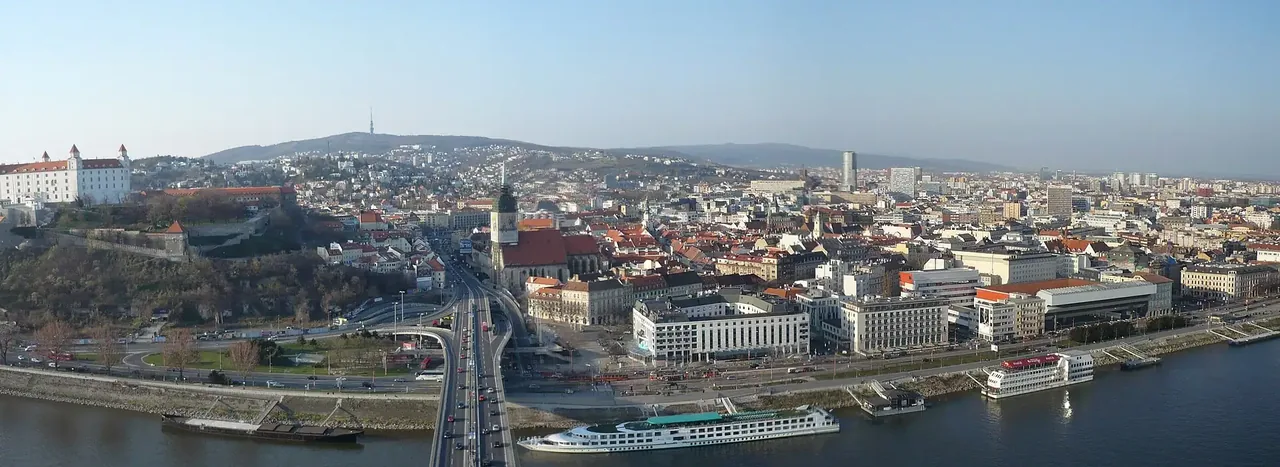
Photos from Wikimedia Commons, each with its license: Milford Sound in Fiordland National Park 12 · Bratislava Novy most - panorama 1