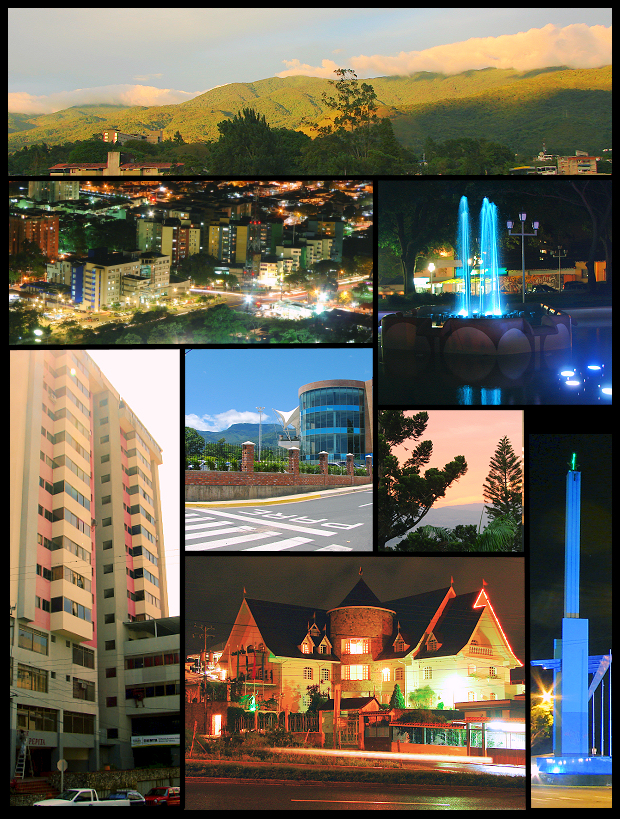
San Cristóbal, the capital of Táchira state, is the big city of Venezuela's western Andes: a temperate mountain city close to the Colombian border, known for how warm its people are - hence its nickname, the 'City of Cordiality' - and for one of the country's most celebrated festivals, the San Sebastián International Fair.
Founded in the 16th century, San Cristóbal keeps a historic center of churches, squares and houses with an Andean feel, while around it spreads a modern commercial and university city shaped by its border character and by the influences it shares with neighboring Colombia. Its pleasant climate, its parks and viewpoints and its unhurried life make it an agreeable stop on a trip through the Venezuelan Andes.
This guide brings together the essentials of San Cristóbal with a practical eye: what to see in the city, when to time your visit for the famous San Sebastián Fair, how to get around, where to eat and sleep with real prices, and how to use it as a base for exploring Táchira or crossing into Colombia. It's a destination for anyone who wants to discover the Andean, border side of Venezuela, with warmth and good food.
San Cristóbal was founded on 31 March 1561 by Captain Juan Maldonado, during the Spanish push into the Venezuelan Andes, on territory that had been inhabited by Indigenous peoples of the region (among them groups of Chibcha affiliation and other Andean peoples, in the zone of influence between the Andes and the foothills). The city was named after Saint Christopher and began as a farming and staging settlement in the valley of the Torbes river, in a favorable temperate climate. Through the colonial period, Táchira and San Cristóbal were tied to the trade and farming life of the western Andes, with strong links to what is now Colombia. In the 19th century, Táchira became a key region in Venezuelan political history: several presidents came from here (the so-called 'Andean' or Táchira hegemony that governed the country for much of the first half of the 20th century, with figures such as Cipriano Castro and Juan Vicente Gómez), which gave San Cristóbal and the state considerable political weight. The city grew with the coffee boom and border trade, and the San Sebastián Fair, consolidated in the 20th century, made it the festive capital of the Andes. Today San Cristóbal is the main city of the western Andes, a commercial, university and cultural center, shaped by its temperate climate, its Catholic tradition and its border character. The full story is on our history page.
Read the full history ↓Andean border state with Colombia: land of coffee and the twentieth century's 'cradle of presidents', of the Restorative Revolution, with San Cristóbal and its famous San Sebastián fair, amid highland moors, mountain villages and the country's busiest border crossing.
Read the history of Táchira →A local guide tells you in half an hour what no sign at the site will ever explain. We look ours up on Civitatis: guided in Spanish and booked online with no fuss. They have 6 activities in Bucaramanga. And there are free tours here: you book without paying and tip the guide whatever you think at the end, so trying one costs you nothing. Have a look below: tap any of them to see them all.
They depart from Bucaramanga, 127 km away. If you book from this link we earn a commission and you pay no more.
No exact prices: a scale from $ (budget) to $$$$$ (luxury), with 2-3 options per category.
Origins, formation and what the sources say.
Before the Spanish arrived, the region of what is now Táchira state, in Venezuela's western Andes and on the border with present-day Colombia, was inhabited by various Indigenous peoples. In these mountain and foothill lands, groups of different affiliations lived side by side, among them communities related to the Chibcha world of eastern Colombia and other Andean peoples, who farmed, hunted and traded.
The region's position, in a natural corridor between the Venezuelan and Colombian Andes, encouraged contact and trade between peoples on both flanks of the range from pre-Hispanic times. The Torbes valley and the valleys around it offered fertile land in a temperate climate, well suited to mountain crops.
That Indigenous world was the human foundation on which Spanish colonization settled. Although the conquest transformed the region profoundly, its geography as a frontier and a passage between two Andean worlds - the very thing that had shaped its original peoples - would continue to define the history of Táchira and its future capital.
San Cristóbal was founded on 31 March 1561 by Captain Juan Maldonado, during the Spanish push into the Venezuelan Andes. The settlement was established in a temperate valley in the Torbes river basin, in an area good for farming and useful as a staging point on the mountain routes linking western Venezuela with the territory of present-day Colombia.
The city was named San Cristóbal after Saint Christopher, following the Spanish custom of giving new foundations religious names. Like other colonial towns, it was organized around a central square (the future Plaza Bolívar), the church and a grid layout, with life revolving around the church, the town council and farming and trade.
Through the colonial period, San Cristóbal and Táchira developed as a farming and trading region, strongly tied to cross-border exchange with the territories of New Granada. That character - an Andean border city bound to trade and the countryside - would define it for centuries.
During the 19th century, Táchira and San Cristóbal went through an economic transformation driven by the coffee boom. The temperate lands of the western Andes turned out to be ideal for growing the bean, which became one of the region's main exports. Táchira coffee largely reached the ports along routes through neighboring Colombia, reinforcing cross-border trading ties.
Being a border region shaped San Cristóbal's economy and culture deeply. Trade with what is now Colombia - especially the Cúcuta area - was a permanent engine of Táchira life, and the closeness of the neighboring country left a shared imprint on customs, speech and family links on both sides of the Táchira river.
That economic growth, built on coffee and trade, gave Táchira increasing weight in the country as a whole. The region accumulated wealth, population and a strong identity, which set the stage for people from Táchira to play a decisive role in Venezuelan national politics from the late 19th century into the early 20th.
One of the most significant chapters in Táchira's history is the role the region played in Venezuelan politics from the late 19th century through much of the first half of the 20th. In that period Venezuela was governed by a succession of leaders from Táchira and the Andes, in what historians call the 'Andean' or Táchira hegemony.
This land produced figures such as Cipriano Castro, who took power at the end of the 19th century, and Juan Vicente Gómez, who ruled the country authoritatively for nearly three decades in the first half of the 20th. These and other Andean rulers left a deep mark on national history, in a period of state consolidation, modernization and, in many cases, authoritarianism.
For San Cristóbal and Táchira, that political prominence meant visibility and influence over the country's course. The region went from being an Andean border province to being the cradle of Venezuela's governing elite for a long stretch, which reinforced its identity and its regional pride.
Through the 20th century, San Cristóbal grew and modernized, establishing itself as the main city of Venezuela's western Andes: the commercial, university, religious and cultural center of Táchira state. The city combined its Andean and Catholic tradition with modern urban development, sustained by trade, farming and its status as a border capital.
This period also saw the consolidation of the San Sebastián International Fair, held in January in honor of the patron saint, which in time became one of the biggest and best-known festivals in Venezuela. The fair - with its concerts, sporting events (including a celebrated cycling tradition), bullfights and toros coleados, agricultural shows and religious activities - established San Cristóbal as the festive capital of the Andes and reinforced its image as the 'City of Cordiality'.
Today San Cristóbal is an Andean city, temperate and welcoming, shaped by its colonial history, its political weight in the past, its university and commercial life, and its intense border relationship with Colombia. Walking its historic center, experiencing its fair and enjoying its food is a way into the soul of Venezuela's western Andes.
On 4 February 2014, San Cristóbal became the starting point of one of the largest waves of protest in contemporary Venezuela. It began with students from the Universidad de Los Andes and the Universidad Católica del Táchira taking to the streets over crime, after an attempted assault on a student in the city. The heavy-handed police response and the detention of several young people lit the fuse: what had been a local grievance turned, within days, into a national movement.
From Táchira, the protests spread to Mérida, Caracas and much of the country. By 12 February, with big marches in the capital, the conflict was national, fueled by crime, inflation and shortages of basic goods. In San Cristóbal the clashes were particularly intense: the city filled with 'guarimbas' - barricades with which protesters closed off streets and avenues - and was left, for weeks, practically paralyzed and militarized. The wave of protests, which ran until the end of March, ended tragically across the country, with dozens killed and thousands detained.
That episode marked the recent memory of San Cristóbal's residents deeply and cemented Táchira as a region with a strong protest streak, consistent with its historic political weight. For travelers, understanding this chapter helps make sense of the city today: a proud Andean capital shaped by its border position, its university tradition and an intense political life that has, again and again, influenced the course of the whole country.