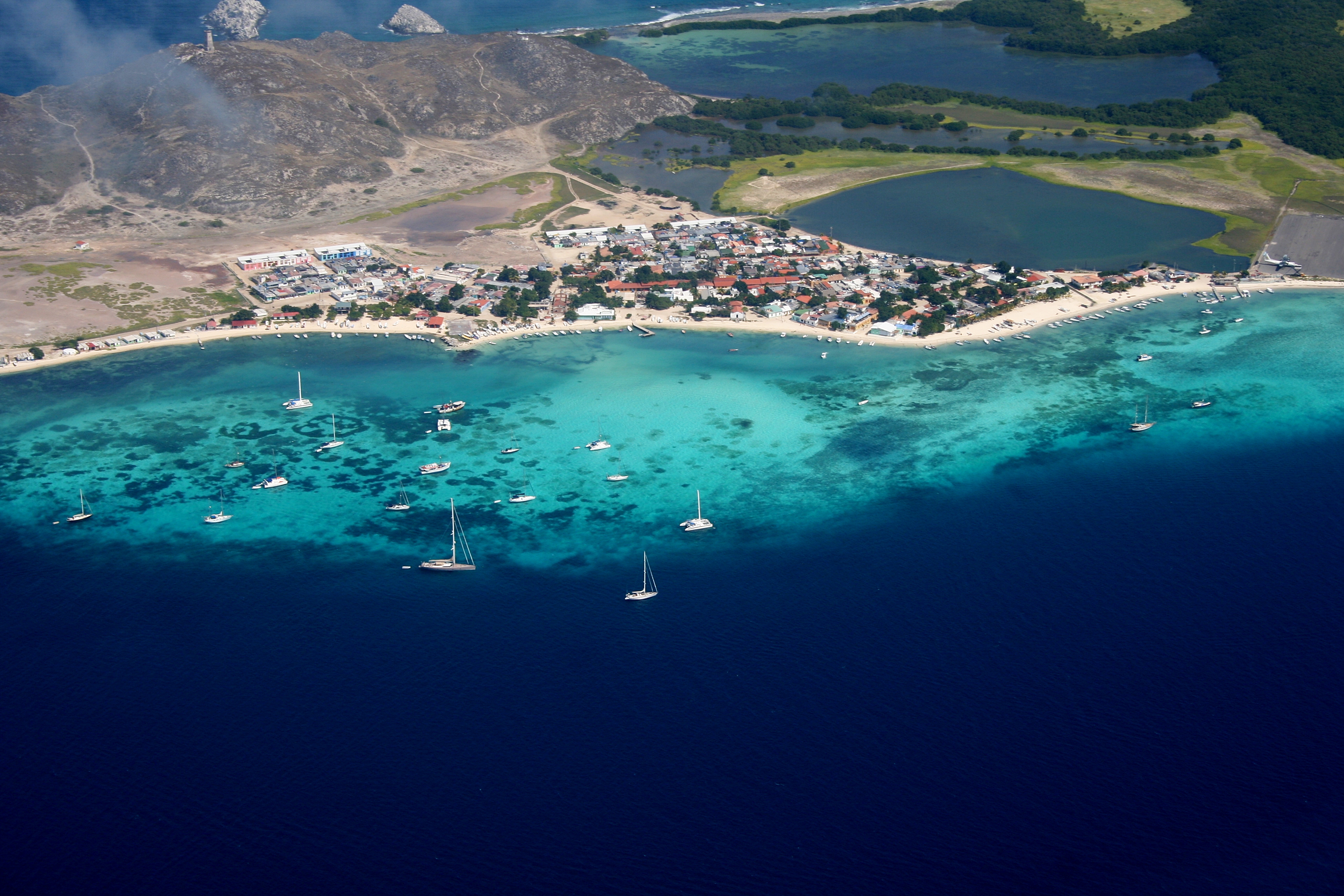
The Los Roques archipelago is one of those places that look too beautiful to be real: a string of almost three hundred cays of blinding white sand scattered across a sea that runs through every shade of turquoise, in the heart of the Venezuelan Caribbean. It is a marine national park, one of the best-preserved coral atolls in the Americas, and a sanctuary where nature sets the terms: no highways, no high-rises, just empty islands, reefs full of life, transparent water and a silence that feels like a luxury.
The only village is Gran Roque, a small island of sand streets, painted houses and family-run posadas, where life moves at an unhurried Caribbean pace. Every morning the boats leave from there for a different cay: sandbanks in the middle of the sea, turquoise lagoons, beaches where the only footprints are your own. The plan is simple and perfect: snorkeling over the coral, swims in warm water, a long lie-down under an umbrella, fresh fish and sunsets you don't forget.
This guide covers Los Roques with a practical, warm eye: how to get there by light aircraft, how the posadas in Gran Roque work, which cays to choose, ballpark prices for flights, rooms and boats, how to organize snorkeling and diving, what to pack for a national park with no shops and no ATMs, and how to enjoy this paradise without damaging its fragile ecosystem. Los Roques isn't a destination with a lot to do; it's a destination with a lot to feel. It is the Caribbean at its purest and most disconnected.
Human contact with the Los Roques archipelago goes back to pre-Hispanic times: archaeological evidence shows that Indigenous peoples, probably linked to Amerindian groups on the mainland, came out to these cays to fish and gather, and remains have been found pointing to the use of marine resources including the queen conch (botuto) and, according to some studies, possible activity tied to pearls and salt. In colonial and post-colonial times the archipelago was the territory of fishermen who came from Isla de Margarita and the coast, setting up seasonal camps to fish and, above all, to produce salt in the cays' salt pans. That Margarita fishing tradition left a deep mark on the culture of Gran Roque. The great modern milestone came in 1972, when the Venezuelan state declared the archipelago the Archipiélago Los Roques National Park, the largest marine park in the Caribbean, to protect its exceptional ecosystem of coral reefs, mangroves, seagrass meadows and wildlife (turtles, birds, fish). From then on, carefully regulated tourism joined fishing as an activity, turning Los Roques into an internationally known destination, always on the understanding that its fragile beauty comes first. The full story, from the first peoples and the salt fishermen to today's national park, is on our history page.
Read the full history ↓Venezuela's nationally administered Caribbean islands: the coral paradise of Los Roques, solitary La Tortuga, strategic Isla de Aves and dozens of turquoise-water cays and islets, land of pearls, salt, sea turtles and seabirds.
Read the history of Dependencias Federales →They depart from La Guaira, 144 km away. If you book from this link we earn a commission and you pay no more.
No exact prices: a scale from $ (budget) to $$$$$ (luxury), with 2-3 options per category.
Origins, formation and what the sources say.
Before any human history, the story of Los Roques is the story of an extraordinary natural formation. The archipelago is a coral atoll, one of the most fascinating and beautiful structures nature builds in tropical seas. An atoll is essentially a ring or cluster of coral reefs surrounding a shallow, calm inner lagoon, formed over thousands of years by the accumulation of the calcareous skeletons of corals and other marine organisms.
Los Roques is considered one of the largest and best-preserved atolls in the entire Caribbean and the Americas, which gives it exceptional scientific and ecological value. It is made up of around 300 islands, cays and islets of white sand of coral origin, scattered across a vast submarine platform and ringed by a reef barrier that shelters the inner lagoon and creates the calm, transparent turquoise water it is famous for.
This ecosystem of reefs, seagrass meadows, mangroves and sandy bottoms supports astonishing biodiversity: hundreds of species of fish, corals, molluscs, crustaceans, sea turtles and birds. That natural wealth, the product of millennia of geological and biological processes, is precisely what led to its protection as a national park and what makes it a world-famous marine sanctuary today. The beauty of Los Roques is no accident: it is the patient work of coral and sea.
Although Los Roques never had a large permanent Indigenous population —it is a cluster of small cays, with no significant freshwater sources or resources to sustain settled communities— archaeological research has shown that pre-Hispanic peoples frequented the archipelago long before the Europeans arrived. These visitors came from the mainland or from neighboring islands, drawn by the abundance of marine resources.
Archaeological studies on various cays have turned up remains indicating the presence of Amerindians who used the archipelago seasonally: traces of camps, shells, marine faunal remains and other materials. Among the resources these peoples exploited, sources mention the queen conch or botuto (a large edible sea snail), fish and other sea products, as well as, by some readings, the possible gathering of sea-related objects.
These findings suggest that Los Roques formed part of the routes and marine harvesting grounds of the southern Caribbean peoples, showing that the pull the archipelago exerts through its natural wealth is very old indeed. The first human beings to set foot on this white sand were not modern tourists or colonial fishermen but Indigenous peoples who, in their canoes, already knew what these cays lost in the Caribbean blue were worth.
During the colonial period and, above all, in the centuries that followed, Los Roques became part of the lives of eastern Venezuela's fishermen, especially those from Isla de Margarita. Heirs to a long seafaring tradition, these Margarita fishermen found in the archipelago immensely rich fishing grounds and other resources, and set up seasonal camps on its cays that they reached in their own boats.
One important activity on some cays was producing salt in the natural salt pans, using the evaporation of seawater in the coastal lagoons. Salt was a valuable resource for preserving fish and for trade. Alongside fishing for fish, lobster, conch and other sea products, this maritime and salt-based economy shaped the human relationship with the archipelago for generations.
The presence of the Margarita fishermen left a deep cultural mark, above all on Gran Roque, the only island that eventually developed a settled village. The culture, customs, speech and fishing traditions of Gran Roque have Margarita roots, and that seafaring identity is still alive among its people today, even though tourism has become the main activity. The old salt-and-fish men are the cultural grandparents of the community that welcomes visitors now.
The milestone that defined the modern fate of Los Roques came in 1972, when the Venezuelan state declared the archipelago the Archipiélago Los Roques National Park. With that decision Venezuela gave legal protection to one of its most valuable natural treasures and created one of the largest marine national parks in the Caribbean, covering not only the cays but also the waters, the reefs and the ecosystems around them.
The reasoning behind the protection was clear: to preserve an exceptional and fragile marine ecosystem. The coral reefs, seagrass meadows, mangroves and seabeds of the archipelago support enormous biodiversity and perform vital ecological functions. The archipelago is also an important refuge and nesting ground for sea turtles and for numerous bird species, and a natural nursery for fish and lobster. Without protection, the pressure of intensive fishing and, later, of tourism could have degraded this paradise.
National park status brought rules on fishing, construction and visitor behavior, aiming at a balance between conservation and use. The body responsible for managing and policing it is Inparques (the national parks institute), and entering the archipelago means paying a national park fee. Thanks to that protection, Los Roques has largely kept its beauty and its ecological health, although, like every coral ecosystem in the world, it faces threats such as climate change and human pressure.
After the national park was created, Los Roques began turning into an internationally known destination without losing —in essence at least— its character as a natural sanctuary. Tourism, regulated by the archipelago's protected status, joined fishing as an economic activity, and Gran Roque, the only inhabited island, gradually built up its supply of family posadas to receive visitors.
Unlike other Caribbean destinations, Los Roques was never overrun by big resorts or mass hotel complexes. Park regulation and the archipelago's remoteness favored a smaller-scale model of tourism, based on posadas in Gran Roque and daily boat trips out to the cays. That preserved the charm of a place with no cars, where the streets are sand and the luxury is untouched nature. Divers, snorkelers, fly fishers (drawn by the celebrated bonefish) and travelers looking to disconnect made Los Roques a recognized name in nature travel.
Today Los Roques faces the same challenge as so many paradises: balancing enjoyment with conservation. The health of its coral reefs depends on visitors and operators behaving responsibly —using reef-safe sunscreen, not damaging the coral, respecting the wildlife and the park's rules— and on protection from global threats such as ocean warming. Conserving this exceptional atoll, built by millennia of coral and generations of fishermen, is the best way to honor its history and to make sure it remains, for a long time yet, one of the most beautiful corners of the Caribbean.