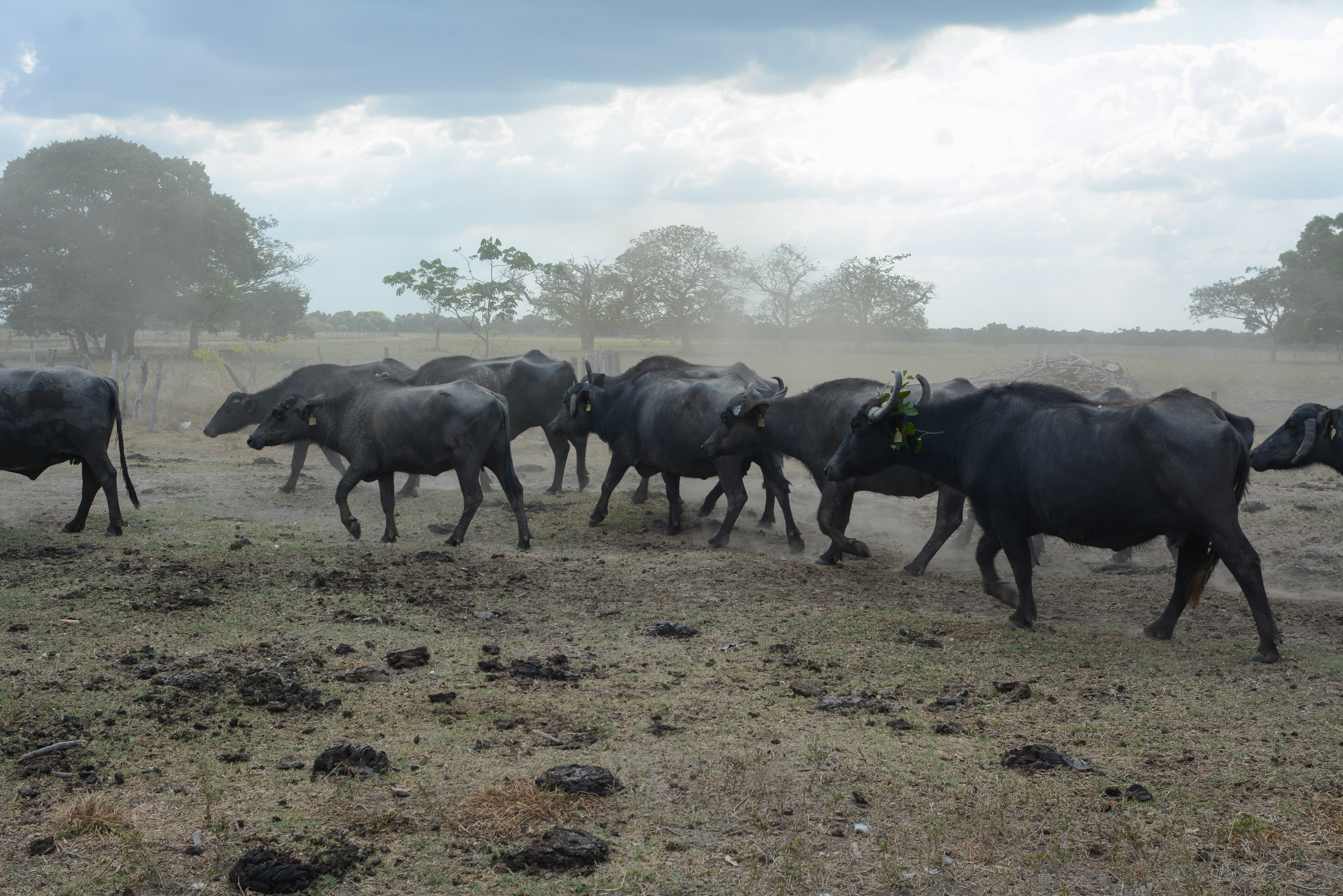
Los Llanos are one of Venezuela's great natural secrets: an immensity of savanna and wetland stretching flat to the horizon across the south-center of the country, within the great Orinoco basin. It's a land of enormous skies, blazing sunsets and wildlife so abundant and so visible that it has been compared to the great parks of Africa. Here, where water and savanna set the rhythm of life, you get one of the best photographic safaris in South America.
The star of the Llanos is its wildlife. In its lagoons, channels and grasslands live capybaras (the largest rodent in the world) in big groups, caimans and the imposing Orinoco crocodile, anacondas, turtles, giant anteaters, monkeys, hundreds of bird species —herons, scarlet ibis, wood storks, ducks— and, for the lucky, river dolphins, pumas and even the elusive jaguar. It's a paradise for anyone who loves nature, safaris and photography.
But the Llanos are also culture: that of the llanero, the man on horseback among cattle and savanna, with his music —joropo, the harp, the cuatro and the maracas—, his sung verses and a way of life bound to the land and the water. This guide covers the Llanos from a practical angle: what the llanero safari is like, where to stay (the famous ranches), indicative program prices, when to go depending on the seasons, what animals you'll see and how to organize the trip. This is the least touristy and most genuine Venezuela, the one of infinite horizons and overflowing nature.
The Venezuelan Llanos are a vast region of flooded savanna in the Orinoco basin, inhabited from ancient times by Indigenous peoples. With the colonial period came cattle and horses, brought by the Spanish, which found in these plains an ideal environment and gave rise to extensive ranching and to the figure of the llanero, the horseman and cowboy of the savanna. During the war of independence, the llaneros played a decisive role: the llanero cavalry, commanded at first by José Tomás Boves on the royalist side and then, crucially, by José Antonio Páez for the patriots, was a fearsome force; episodes such as the 'Toma de las Flecheras' and battles such as Las Queseras del Medio (1819) forged the legend of the llanero horseman. Out of that culture came joropo —Venezuela's national music and dance—, the sung verses and the rich llanero folklore. Today, many of the great cattle ranches —especially in Apure and Barinas— have been converted wholly or partly into ecotourism reserves and camps, where wildlife is protected and photographic safaris are offered. The Llanos thus combine overflowing nature, ranching tradition and national history. The full story is on our history page.
Read the full history ↓Venezuela's quintessential Llanos state: savannas and wetlands from the foothills to the Orinoco, home of the Yaruro and Guahibo peoples, birthplace of Páez's epic at Las Queseras del Medio, and the domain of cattle, joropo music and the country's great Llanos ecotourism.
Read the history of Apure →No exact prices: a scale from $ (budget) to $$$$$ (luxury), with 2-3 options per category.
Origins, formation and what the sources say.
To understand the Llanos you have to start with their geography, because it explains almost everything: the wildlife, the culture, the history. The Llanos are a vast region of savanna and plain across south-central Venezuela (continuing into Colombia), part of the great basin of the Orinoco river and its countless tributaries. It's land that is flat to the horizon, with enormous skies and barely any relief: pure plain.
The feature that defines the Llanos is the rhythm of the water. The region lives to the beat of two extreme seasons. In the rainy season, the rivers overflow and water covers huge areas, turning the savanna into an immense wetland: an amphibious land where exuberant aquatic life thrives. In the dry season, by contrast, the water pulls back and concentrates in lagoons, channels and marshes, leaving the savanna parched and cracked. That pulse —flood and drought— shapes the whole ecosystem.
That cycle is also the key to the astonishing wildlife of the Llanos. The alternation of water and land creates extremely rich habitats and, in the dry season, gathers the animals around the remaining water, which makes them abundant and visible. Savanna, moriche palm groves, gallery forest along the rivers and wetlands combine in a mosaic of environments that supports one of the greatest concentrations of wildlife in South America. Geography made the Llanos a natural paradise before there was any human being around to admire it.
Long before cattle and horses arrived, the Llanos were inhabited by various Indigenous peoples who had learned to live in this land of water and savanna. Peoples of different language families settled in the region, adapting to its cycles of flood and drought, living from fishing in the rivers and channels, hunting on the savanna, gathering and, in some cases, farming the higher, more fertile ground.
Life on a plain that floods for much of the year demanded deep knowledge of the territory: knowing where to take shelter when the waters rose, where and when to fish, how to move along the channels, how to use the palm groves and the resources of the wetlands. Those peoples developed cultures adapted to a demanding, shifting environment, and left their mark on place names, on knowledge of the natural world and on the region's cultural inheritance.
The arrival of Europeans, from the 16th century, profoundly altered that world. Conquest, the missions, disease and the introduction of cattle transformed the human landscape of the Llanos. But the Indigenous base —knowledge of the land, certain techniques, cultural elements— mixed with the European and the African to produce, over time, a new mestizo culture deeply bound to the savanna: llanero culture, which inherited from those first inhabitants the wisdom to live on the plain.
The great turning point in the human history of the Llanos came with the colonial period, through two animals the Spanish introduced to the Americas and which found these savannas an ideal environment: cattle and horses. The vast grasslands, laced with rivers, proved perfect for extensive ranching, and feral cattle multiplied across the plain. With them came the need for men able to handle them: on horseback, covering enormous distances, driving, branding and tending the herds.
Out of that work came a figure inseparable from Venezuelan identity: the llanero. The llanero is the horseman and cowhand of the savanna, forged in a hard environment —heat, floods, immensity—, expert in horses, cattle and life in the open, brave and durable. Born of the mixing of Indigenous, European and African people, the llanero developed a culture of his own, with his customs, his way of speaking, his relationship with animals and nature, and his music.
Ranching was organized around the hatos, the great estates that structured the occupation of the savanna and that remain, to this day, the heart of llanero life (and, in many cases, the base of today's ecotourism). The llanero and his world —the horse, the ranch, the cattle, the sung verse— became one of the great archetypes of Venezuelan identity, so powerful that it would end up playing a decisive part in the country's political history.
The fighting skill of the llaneros made them a decisive force during Venezuela's war of independence. Used to a rough life, expert horsemen, able to handle a lance on horseback and to move across the savanna like no one else, the llaneros formed a fearsome cavalry that tipped the balance of the war, first towards one side and then the other.
In the early stages, the llanero cavalry was commanded by José Tomás Boves, a ferocious royalist leader who, at the head of his llanero troops, inflicted heavy defeats on the patriots and spread terror, at one point putting the young Republic in serious danger. The military capability of the llaneros was demonstrated in brutal fashion. But the course changed when that force crossed to the patriot side under a leader who had come out of the savanna himself: José Antonio Páez.
Páez, a llanero by birth, became one of the great military leaders of independence and the caudillo par excellence of the patriot llanero cavalry. Under his command the llaneros pulled off legendary feats, such as the famous charge at Las Queseras del Medio (1819), where a handful of llanero horsemen defeated a far larger royalist force, or daring actions such as the 'Toma de las Flecheras'. The llanero cavalry was key to the campaigns that led to final victory. So the men of the savanna —and their horses, and their lances— were written permanently into the epic of Venezuelan independence, and after the war Páez would become a central figure in the country's politics.
Out of life on the savanna sprang one of the richest and best-loved folk cultures in Venezuela, whose supreme expression is joropo. Joropo is both a musical genre and a dance, considered the national music of Venezuela. It's traditionally played on harp, cuatro and maracas (and, in some variants, the bandola), and it's accompanied by sung verses and by the celebrated contrapunteos, sung duels of wit and improvisation between singers.
The lyrics of joropo and of the llanero songbook celebrate everything that defines this land: the savanna, the horse, the cattle, the rivers, love, the work, the courage of the llanero. It's music born of labor and of everyday country life —of milking songs, herding songs, evening gatherings— and it became a symbol of Venezuelan national identity. Hearing a joropo, with the harp letting out its notes under the immense sky of the plain, is a glimpse of the region's soul.
Llanero culture covers far more: the verses and the stories, the beliefs and legends of the savanna (such as El Silbón or La Sayona, ghosts of llanero folklore), the cattle work, the country cooking, the almost sacred relationship between llanero and horse. Today that culture is celebrated at festivals and tournaments —such as the joropo events in San Fernando de Apure— and coexists with a new role for the region: ecotourism, which has turned many ranches into wildlife reserves. Overflowing nature, heroic history and vibrant culture: that's the Llanos, one of the most genuine and endearing versions of Venezuela.