Viajá con Gus
HomeVenezuelaCiudad Bolívar
Ciudad Bolívar
🇻🇪 Venezuela · La Gran Sabana and Guayana

Ciudad Bolívar

Jump to what you need
📌State
Ciudad Bolívar is the capital of Bolívar state, in southeastern Venezuela, on the bank of the Orinoco river, at the point where the great river narrows (the 'angostura' that gave it its old name). It's one of the country's most historically important cities: the Congress of Angostura met here in 1819, and Venezuela's first newspaper was printed here. Its colorful, history-laden old town looks out over the Orinoco, and the city is also one of the gateways to travel in Guayana, Canaima and Angel Falls.
📌Service city
Ciudad Bolívar is itself the service city: it has an airport (with domestic flights and, above all, as the base for the light aircraft to Canaima), a bus terminal, hospitals, hotels, banks and everything you need. It's one of the two great departure points (along with Puerto Ordaz) for flights to Canaima and Angel Falls. It's connected by road and by river with the rest of Guayana and with central Venezuela, crossing the Orinoco on the Angostura Bridge.
📌Best time to go
The climate is warm all year, typical of the lower Orinoco region. The dry season (roughly December to April) tends to be more comfortable for exploring the city and for flights, with clear skies. The rainy season (May/June to November) brings the Orinoco in full flood —a spectacle in itself— and is also the best time to link up with the river excursion to Angel Falls. To see the old town, set out early or make the most of late afternoon, avoiding the fiercest midday heat.
📌Suggested days
One or two days is enough to take in the old town of Ciudad Bolívar unhurried: the Paseo Orinoco along the riverbank, the Plaza Bolívar, the Casa del Correo del Orinoco, the Casa de los Gobernadores (the Congress of Angostura building) and the colonial feel of its colorful streets. Since many travelers use Ciudad Bolívar as a base or stopover for Canaima and Angel Falls, the usual pattern is to add the excursion into deep Guayana (several more days) to those days. Either way, the city deserves at least a full day given over to its history.
💱 VES exchange rate
Loading rate…
🌤️ Weather in Ciudad Bolívar
Loading weather…

Ciudad Bolívar is one of those cities where the history of Venezuela seems to hang in the air on every corner. Set on the bank of the Orinoco, right where the gigantic river narrows —the 'angostura' that gave it its name for centuries—, it was the stage for one of the founding chapters of the nation: here, in 1819, Simón Bolívar convened the Congress of Angostura and delivered one of his most celebrated speeches, and from here the idea of Gran Colombia was sown. Its old town of colored houses facing the Orinoco is an open book of the independence era.

But Ciudad Bolívar isn't only memory: it's also one of the great gateways to the deep south of Venezuela, to the Guayana of the tepuis, to Canaima and Angel Falls. Light aircraft leave its airport to carry travelers into the heart of one of the most astonishing landscapes on Earth. So the city carries two souls: the heroic past, with its mansions, squares and museums beside the river, and the adventure, as a base for expeditions into the lost world.

This guide covers Ciudad Bolívar with a practical and curious eye: what to see in the old town, where the history of independence was made, how to take in the imposing Orinoco, how to use it as a base for Canaima and Angel Falls, what each excursion costs and what to bear in mind to enjoy it. It's a city of heat, river and memory, one that many people hurry through on their way to the jungle, but that deserves a stop: few Venezuelan cities have so much to tell.

📖 History of Ciudad Bolívar

Ciudad Bolívar was founded in 1764 by Joaquín Moreno de Mendoza under the name Santo Tomé de Guayana de Angostura del Orinoco —known simply as Angostura— at the point where the Orinoco narrows. Its strategic position, controlling navigation on the great river, made it a key center of Guayana. Its defining moment came during the war of independence: after being taken by the patriots, Angostura became capital of the Republic and the seat of Bolívar's government. Here, in 1818, the Correo del Orinoco was founded, the first newspaper of patriot Venezuela, and here, on 15 February 1819, the Congress of Angostura was installed, before which Bolívar delivered his famous Angostura Address; from that congress came the idea of Gran Colombia, the union of Venezuela, New Granada and Quito. In 1846, in the Liberator's honor, the city changed its name from Angostura to Ciudad Bolívar. Through its history, the river port brought prosperity and connected it with the Caribbean and the wider world by way of the Orinoco. Today it keeps a valuable old town, is the capital of Bolívar state and works as one of the gateways to travel in Guayana, Canaima and Angel Falls. The full story is on our history page.

Read the full history ↓

🏛️ Ciudad Bolívar is in Bolívar

Venezuela's largest state: home of the tepuis and Angel Falls — the world's tallest waterfall — of La Gran Sabana and the Pemón people, of Bolívar's Angostura Address, of Orinoco gold, of the Guri dam and the heavy industry of Ciudad Guayana.

Read the history of Bolívar →

🗺️ What to see

1
The Paseo Orinoco and the riverbank
The historic waterfront facing the great Orinoco, the heart of city life and a lookout over the 'angostura'.
The Paseo Orinoco is the spine of Ciudad Bolívar and the place where the city looks out on its whole reason for being: the great Orinoco. This historic promenade runs along the bank facing the river, right at the point where the Orinoco narrows —the famous 'angostura'— and from it you take in the immensity of South America's second-largest river by volume, with its broad, powerful water and, depending on the season, its shifting level. Along the Paseo Orinoco stand colored historic houses, shops, squares and buildings loaded with memory. It's the heart of everyday and commercial life in the old town, and a privileged place to understand the relationship between the city and the river that brought it into being and made it prosper as a river port. Nearby lies the 'Piedra del Medio', a rock in the middle of the channel traditionally used to gauge the level of the Orinoco. Walking the Paseo Orinoco, especially at dusk, when the heat eases and the light gilds the river, is one of the loveliest experiences in Ciudad Bolívar. From here you understand why the city was, for centuries, the key to Guayana. Getting there: right in the old town, on the riverbank (on foot from the center). Best time: at dusk, for the light and the temperature. Safety tips: walk it by day and in the early evening in busy areas, carry little cash and keep an eye on your phone; it's a tourist and commercial district, ideal to combine with the rest of the old town.
ℹ️ Distance: Orinoco riverbank, in the old town (on foot) · Best time: Dusk (better light and temperature) · Admission: Free (public promenade) · Duration: 1 to 2 hours
2
Casa del Correo del Orinoco (museum)
The house where the first newspaper of patriot Venezuela was printed, now a museum of independence.
The Casa del Correo del Orinoco is one of the most significant places in Venezuelan history. This is where the printing press of the Correo del Orinoco operated, the newspaper founded in 1818 on the initiative of Simón Bolívar and the patriots, which became the vehicle for spreading the ideas of independence and the answer to the royalist press. It was, in practice, the first newspaper of patriot Venezuela and a key piece in the war of ideas that ran alongside the war of arms. Its pages carried fundamental documents, proclamations and news of the republican cause, including Bolívar's celebrated Angostura Address. The house, restored, now holds a museum preserving the historic press used to produce the newspaper, along with documents, artworks and pieces evoking that founding era. It's an essential visit for understanding the role of Angostura (today's Ciudad Bolívar) in the birth of the Republic. Visiting it connects you very concretely with the moment when this city was the capital of a nation at war and the center from which the ideas of liberty spread. Getting there: in the old town, near the Paseo Orinoco (on foot). Best time: by day, during museum hours (Tuesday to Sunday, roughly 9-12 and 14-17; check). Tips: combine it with the Casa del Congreso de Angostura and the Plaza Bolívar on a single historical walk; confirm opening hours, which can change.
ℹ️ Distance: Old town, near the Paseo Orinoco (on foot) · Best time: By day, during museum hours (Tuesday to Sunday) · Admission: Free or very cheap (Venezuelan public museums; check when you visit, 2025) · Duration: 45 minutes to 1 hour
3
Casa del Congreso de Angostura (Casa de los Gobernadores)
The building where the Congress of Angostura met in 1819 and Bolívar delivered his celebrated address.
The Casa del Congreso de Angostura, also known as the old Casa de los Gobernadores, is one of the most history-laden places in all of Venezuela. It was here that on 15 February 1819 the Congress of Angostura was installed, the assembly convened by Simón Bolívar in the middle of the war of independence, before which the Liberator delivered the famous Angostura Address, one of the fundamental statements of his political thought. From that congress came, among other far-reaching decisions, the creation of the Republic of Colombia —what became known as Gran Colombia—, the union of Venezuela, New Granada and, later, Quito, Bolívar's grand project of integration. That is why this building is considered one of the birthplaces of independence and of the idea of Latin American unity. The building itself, colonial in style and facing the Plaza Bolívar, keeps the solemn aura of founding places. Visiting it means standing where the future of several nations was debated and imagined. For anyone interested in the history of Venezuela and of the Americas, it's an obligatory stop. Getting there: in the old town, facing the Plaza Bolívar (on foot). Best time: by day, during visiting hours (check). Tips: see it together with the Plaza Bolívar, the cathedral and the Casa del Correo del Orinoco; confirm opening hours.
ℹ️ Distance: Old town, facing the Plaza Bolívar (on foot) · Best time: By day, during visiting hours · Admission: Free or very cheap (public museum; check when you visit, verified July 2026) · Duration: 45 minutes to 1 hour
4
Plaza Bolívar and the cathedral
The colonial heart of the city, with the founding square and the cathedral, ringed by historic mansions.
The Plaza Bolívar of Ciudad Bolívar is the heart of the old town and the point from which the colonial city is laid out. As in so many Venezuelan cities, the square is presided over by the statue of the Liberator and ringed by the most important buildings of the historic center, among them the cathedral, the Casa del Congreso de Angostura (Casa de los Gobernadores) and other mansions and institutional buildings of colonial and republican origin. Ciudad Bolívar Cathedral, facing the square, is one of the city's historic churches, witness to centuries of religious and civic life. The square as a whole, with its trees, its benches and its architecture, keeps the serene atmosphere of Venezuelan historic centers and is the best starting point for exploring the old town on foot, with its steep streets, colored houses and views over the Orinoco. From the Plaza Bolívar you can walk to all the city's main historic sites, which makes it the natural epicenter of any visit. It's also a good place to feel the pulse of the city and its blend of history and everyday life. Getting there: in the middle of the old town (on foot). Best time: early morning or dusk, avoiding the midday heat. Safety tips: walk it by day in busy areas and keep an eye on your belongings; ideal as the base for a historic walk around the center.
ℹ️ Distance: Middle of the old town (on foot) · Best time: Early morning or dusk (avoid the midday heat) · Admission: Free (open access to the square and the cathedral) · Duration: 30 minutes to 1 hour (base of the walk)
5
Ciudad Bolívar as a base for Canaima and Angel Falls
The great air gateway to deep Guayana: this is where the light aircraft to the lost world leave from.
For a great many travelers, Ciudad Bolívar is above all the gateway to the big Venezuelan Guayana circuit: Canaima, Angel Falls and the tepuis. Its airport is one of the main departure points for the light aircraft that fly to the Canaima airstrip, from where excursions to the Canaima Lagoon, its waterfalls and the tallest waterfall in the world are organized. That makes the city a natural logistical base: here you book or confirm packages with operators, spend the night before or after the adventure, sort out the arrangements and rest from the heat before heading into the jungle. Historically, Ciudad Bolívar has been an adventurous air hub, bound up with the mystique of flights to the lost world —not by chance, it was from this region that Angel Falls was explored and made known. Planning this connection well is essential: arrange the flights to Canaima and the Angel Falls excursion in advance (the river route depends on the high-water season), and leave slack for the weather. Combining the history of Ciudad Bolívar with the adventure of Canaima is one of the great itineraries in southern Venezuela. Getting there: Ciudad Bolívar airport connects with Canaima by light aircraft. Best time: for Angel Falls by river, the rainy/high-water season. Tips: work with reputable operators, confirm weight limits and light aircraft schedules, and plan spare days; use your stay to see the old town.
ℹ️ Distance: Ciudad Bolívar airport; flight by light aircraft to Canaima (approx. 1 h) · Best time: Angel Falls by river: rains/high water (Jun-Nov); flights: clear days · Admission: CITATION CORRECTED (09/08/2026): the figure of «US$ 675-850 for a 3-day/2-night package» is not published by any source, and the product does not exist either: the packages actually on sale run 3 or 4 nights and leave from Caracas, not from Ciudad Bolívar. They are two different things: the TRIP ALONE to the falls, about US$ 300 for the full day and about US$ 350 with an overnight (Venezuela Tuya), and the PACKAGE with flights, lodging and meals, from US$ 995 for the 3-night one (Venezuela Tuya price list valid to December 2026) or US$ 795-850 for Osprey Expeditions' 4 days/3 nights. See Admission and prices · Duration: Stopover/base + a 3- to 4-day excursion into Guayana
6
Ciudad Bolívar Museum and the Angostura Bridge
The city museum and the view of the first bridge to cross the Orinoco, a symbol of Venezuelan engineering.
Besides its independence museums, Ciudad Bolívar has the Museo de Ciudad Bolívar, devoted to local history, with objects, photographs and pieces telling the city's story from colonial times to the present, including its life as a river port and its role in the industrialization of Guayana in the 20th century. Added to that is the chance to take in, from various points in the city or by driving across it, the Angostura Bridge over the Orinoco: opened in 1967, for years it was the first and only bridge crossing the Orinoco, a feat of engineering that for the first time joined both banks of the great river at this point and that remains a symbol of the link between Guayana and the rest of Venezuela. Getting there: the museum is in the old town; the bridge is visible from the Paseo Orinoco or by driving across it southward. Best time: the museum by day, during opening hours; the bridge looks best at dusk from the riverbank. Tips: combine the museum with the rest of the historic circuit; if you have a vehicle, crossing the bridge gives a panoramic view of the city and the river.
ℹ️ Distance: Museum in the old town; bridge to the south of the city · Best time: Museum by day; bridge at dusk for the views · Admission: Museum free or very cheap; the bridge is free to cross by vehicle · Duration: 45 minutes (museum) + the drive
Advertisements
What nobody tells you

💵 Prices

Tickets

TypePrice
Paseo Orinoco and old town (walking around)Free (open access)
Casa del Correo del Orinoco (museum)Free or very cheap (public museum; check when you visit, July 2026)
Casa del Congreso de Angostura (Casa de los Gobernadores)Free or very cheap (public museum; check when you visit, verified July 2026)
Plaza Bolívar and cathedralFree (open access to the square and the cathedral)
Canaima and Angel Falls package (with flights, lodging and excursions)⚠ CITATION CORRECTED (09/08/2026): this line used to read «US$ 675-850 per person for a 3-day/2-night package, source Osprey Expeditions and El Nacional». Neither source publishes that range, neither sells a 3-day/2-night package, and neither leaves from Ciudad Bolívar. What each one actually publishes: Osprey Expeditions sells Angel Falls 4 days/3 nights at US$ 795-850 per person and 5 days/4 nights at US$ 830-890, with the flights leaving and returning only from Caracas (consulted 09/08/2026). Venezuela Tuya publishes the camps' price list through December 2026, with the Caracas-Canaima-Caracas air ticket, transfers and full board included: Campamento Canaima US$ 995 in a standard room (3 or 4 nights) with the Angel Falls trip charged separately (US$ 295 full day, US$ 350 with an overnight), Parakaupa US$ 1.083 for the 3 nights with the overnight trip already included, Ucaima US$ 1.249 and Wakü Lodge US$ 1.575-1.875 (consulted 09/08/2026). El Nacional, in a July 2023 piece about a traveler's account, mentioned packages «from 645 dollars» for four days and three nights. None of these figures includes entry to Canaima National Park
Entry to Canaima National ParkUS$ 40 per adult, US$ 20 for children; payable in cash only on arrival and on top of the package. no rate published in an official source: INPARQUES does not publish the amount. The operators do: Venezuela Tuya, in its package price list, «the Canaima National Park entry fee (US$40 adults, US$20 children) is not included», and Osprey Expeditions, «Entry to Canaima National Park US$ 40 per person, payable on site only» (both consulted on 09/08/2026)
🔄 updated monthlyOfficial / reference values · double-check when buying

Activities and tours

ActivityPriceDurationOperator
Historic city tour of the old town (Congreso de Angostura, Correo del Orinoco, Paseo Orinoco)US$ 15-30 per person (indicative, verified July 2026; half a day, with a local guide)Half a dayCiudad Bolívar agencies and local guides
Boat trip on the Orinoco riverUS$ 15-30 per person (indicative, verified July 2026; 1-2 h)1-2 hLocal boatmen along the Paseo Orinoco
Excursion to Canaima and Angel Falls (package with flights, lodging and meals)⚠ CITATION CORRECTED (09/08/2026): Osprey Expeditions does NOT publish «US$ 675-850 for 3 days/2 nights». Its programme is 4 days/3 nights at US$ 795-850 per person (or 5 days/4 nights at US$ 830-890) and the flights leave and return only from Caracas. The alternative with a published price list is Venezuela Tuya: from US$ 995 per person for the 3-night plan at Campamento Canaima plus US$ 295-350 for the trip to the falls, or US$ 1.083 at Parakaupa with the overnight trip included. Neither includes the park entry fee4 days / 3 nights (Osprey) or 3-4 nights (Canaima camps)Osprey Expeditions (departures from Caracas) and the Canaima camps sold through Venezuela Tuya
Scenic flight over GuayanaVaries by operator and route (ask directly)VariableCiudad Bolívar air operators
🔄 updated monthlyOfficial / reference values · double-check when buying
Advertisements

🚌 How to get there and distances

Getting around

ModePriceDurationNotes
City buses and minibuses (TransBolívar and private lines)Official city fare ~40 Bs (under US$ 1) per ride (source: Gaceta Oficial N° 43.114/43.218, 2025 fares, verified July 2026)VariablePublic urban transport in Bolívar state (the TransBolívar system and private minibuses) is now paid DIGITALLY: most vehicles (some 650 across the state) adopted QR-code payment through the VeTicket system, linked to the Patria platform. Passengers generate a QR ticket in the Patria app or portal and the driver scans it with a phone; the money goes to the operator's account (Banco de Venezuela/Patria wallet). Cash in bolívares is still accepted on many vehicles, but less and less. In practice, a foreign visitor is better off in a taxi. Source: MppT / Correo del Caroní, verified July 2026
Taxi (and pre-arranged transport)US$ 3-8 per ride within the city (indicative, verified July 2026)VariableThe most comfortable and advisable option for visitors, especially in the heat and at night. There is NO reliable Uber/DiDi coverage in Ciudad Bolívar: you take a taxi in the street, at a rank or by calling your guesthouse or hotel. Agree the fare BEFORE getting in; you pay in cash (bolívares or dollars) or by Venezuelan Pago Móvil
On foot around the old townFreeVariableThe historic center is very walkable between its sites (by day, in busy areas, with the usual common sense about safety)
Transport app / for checking routesN/AThere is no established local real-time app for city buses; Moovit has very limited coverage in Ciudad Bolívar. To get your bearings and estimate journeys, Google Maps is the practical option. Bus payment, on the other hand, is digitized via VeTicket/Patria (QR). Verified July 2026
Light aircraft (to Canaima)US$ 150-300 per person return if you buy the flight separately; it's usually included in the Canaima package (source: operators and El Nacional, verified July 2026)Approx. 1 h to CanaimaLight aircraft to deep Guayana leave from Ciudad Bolívar airport. Confirm weight limits, baggage and schedules; the flight is usually the most expensive part of the trip to Canaima
🔄 updated monthlyOfficial / reference values · double-check when buying

How to get there

RouteAirlines / operatorsAvg. priceDuration
Domestic flights to Ciudad BolívarDomestic airlines and regional operatorsVaries by origin and season (check with the airlines)Depends on where you start (connection from Caracas or other cities)
By road from central Venezuela (crossing the Orinoco on the Angostura Bridge)National coach linesApprox. US$ 15-30 depending on origin (2025, indicative)Depends on where you start (several hours)
By road from Puerto Ordaz / Ciudad GuayanaCoach lines and regional transportApprox. US$ 3-6 (2025, indicative)Approx. 1.5 to 2 h (neighboring cities on the lower Orinoco)
Arriving by river on the Orinoco (historic/occasional)Local boatsVaries by originDepends on where you start
🔄 updated monthlyOfficial / reference values · double-check when buying

🏨 Where to stay

No exact prices: a scale from $ (budget) to $$$$$ (luxury), with 2-3 options per category.

CategoryPriceRecommended options
Hotels and guesthouses in the old town (with character)$$$$$US$ 40-70 a night; a few guesthouses and hotels with character in or near the old town, in restored mansions with views over the Orinoco or a colonial feel, ideal for experiencing the historic city (e.g. Posada Angostura, Posada Casa Grande)
Mid-range hotels$$$$$US$ 25-45 a night; mid-range hotels in the city, practical as a base for seeing the center and for connecting with flights to Canaima, with air conditioning (needed in the heat); e.g. Hotel Laja Real, Hotel Edi
Budget / simple lodgings$$$$$US$ 12-25 a night; cheap guesthouses and lodgings for travelers on a tight budget, many favored by backpackers using the city as a stopover to Canaima. Prioritize safe areas

🍴 Where to eat

TypePriceOptions / signature dish
River fish (Orinoco)$$$$$US$ 10-20 per dish; sitting on the great river, Ciudad Bolívar has a tradition of Orinoco river fish (curbinata, coporo). Ask about the season and the freshness
Guayana and traditional Venezuelan cooking$$$$$US$ 6-15 per dish; regional dishes and Venezuelan classics (arepas, empanadas, grilled meats), plus casabe (the cassava flatbread of Indigenous origin). Good for tasting the local flavor
Diners and restaurants in the old town$$$$$US$ 8-18 per dish; in the center and along the Paseo Orinoco there are diners and restaurants where you can eat with a view of the river or in a historic setting
Local sweets and tropical fruit of the region$$$$$US$ 1-5 per portion; Guayana offers tropical fruit and traditional sweets, a good way to finish a meal in the Orinoco heat
Advertisements

📖 History of Ciudad Bolívar

Origins, formation and what the sources say.

The Orinoco and the 'angostura': the geography that made the city

To understand Ciudad Bolívar you have to look at the river first. The Orinoco, one of South America's mightiest rivers, cuts across Venezuela as one of its great natural arteries, a route linking the Guayana interior, the plains and the Caribbean. Along almost all its course the Orinoco is enormously wide; but at one particular point, opposite the spot where the city would rise, it narrows sharply. That 'angostura' —the narrows— would be the key to everything.

A point where a great river narrows is a strategic point of the first order: it allows you to control navigation, charge tolls, watch the river traffic and, if needed, defend it. Whoever held the narrows of the Orinoco held, to a large extent, the doorway in and out of the whole of Guayana by river. That geographical advantage was the city's reason for being and the source of its importance over the centuries.

That's why, when the Spanish sought to consolidate their control over Guayana, they chose precisely this spot. And that's why the city would carry the name Angostura for a long time, a direct reference to that feature of the river. For Ciudad Bolívar the Orinoco is no mere backdrop: it is its mother and its reason to exist, the artery that brought it into being, made it prosper and carried it into history.

The narrows of the Orinoco
The city owes its old name, Angostura, to the narrowing of the Orinoco river opposite its site. That strategic point, which allowed control of river navigation in Guayana, was the principal geographical reason for the city's founding and development.
Source: https://es.wikipedia.org/wiki/Ciudad_Bol%C3%ADvar

The founding of Angostura (1764)

The founding of the city was in fact the culmination of a long process. The province of Guayana had had earlier settlements —the old Santo Tomé de Guayana, on the lower Orinoco, had been attacked and relocated repeatedly through the 16th and 17th centuries— but none had prospered on a stable footing. The decision to settle the provincial capital definitively at the narrows of the river aimed to give Guayana a firm and well-placed center.

So in 1764 Joaquín Moreno de Mendoza founded the city at the narrows, under the full name Santo Tomé de Guayana de Angostura del Orinoco, known simply as Angostura. The new capital made the most of its position over the narrowing river: it became the administrative, military and commercial center of the province of Guayana, and a key river port linking the interior with the Atlantic by way of the Orinoco.

Through the rest of the 18th century, Angostura grew as a colonial city, with its street grid, its square, its church and its mansions, living off river trade and its administrative role. Nothing then suggested that, a few decades later, this Guayana port would become one of the decisive stages in the birth of several nations. But the very geography that had made it important —its control of the Orinoco, its relative distance from the centers of royalist power— would place it, in the middle of the independence war, at the center of history.

The 1764 founding
The city's stable founding is attributed to Joaquín Moreno de Mendoza in 1764, under the name Santo Tomé de Guayana de Angostura del Orinoco. It was preceded by earlier settlements of the province of Guayana that did not last. The exact name and the details of the founding process vary between sources.
Source: https://en.wikipedia.org/wiki/Ciudad_Bol%C3%ADvar

Angostura, patriot capital, and the Correo del Orinoco (1818)

Angostura's finest hour came with the war of independence. Around 1817, at a difficult phase of the struggle, patriot forces managed to take the city and consolidate control of Guayana and the Orinoco. That conquest was strategic: it gave the republicans a secure base, far from the main centers of royalist power, with an outlet to the sea by river and with resources to sustain the war. Angostura thus became the capital of the Republic in arms and Simón Bolívar's center of operations.

From that base the patriots fought not only the war of arms but the war of ideas. In 1818 they founded the Correo del Orinoco in Angostura, a newspaper meant to spread the republican cause, report on the progress of the war and counter royalist propaganda. It was the first major press organ of patriot Venezuela, and fundamental documents of the independence era were published in its pages. The house where its press operated is now a museum.

Angostura filled with political, military and diplomatic activity: foreign legionaries arrived to join the cause, campaigns were planned, the future was debated. The city on the Orinoco, until then a provincial port, was turning into the heart of a project that reached far beyond Venezuela. Everything was in place for the event that would immortalize it: the meeting of a congress.

The Correo del Orinoco
The Correo del Orinoco, founded in Angostura in 1818, is considered the first major newspaper of patriot Venezuela, created to spread the cause of independence and answer the royalist press. Key documents were published in its pages, including the Angostura Address. The printing press is preserved today in the museum at the Casa del Correo del Orinoco.
Source: https://es.wikipedia.org/wiki/Correo_del_Orinoco_(peri%C3%B3dico)

The Congress of Angostura and the birth of Gran Colombia (1819)

On 15 February 1819, in what was then the Casa de los Gobernadores in Angostura, the Congress of Angostura was installed, one of the most important assemblies in the history of Spanish American independence. Convened by Simón Bolívar in the middle of the war, the congress brought together representatives of the liberated provinces to give institutional shape and legitimacy to the Republic being forged by arms.

Before that congress Bolívar delivered the celebrated Angostura Address, one of the central statements of his political thought. In it he set out his vision of the form of government these nations needed, his analysis of American reality and his ideas on institutions, liberty and unity. The address, published in the Correo del Orinoco, became a foundational text of Latin American republicanism.

But the most far-reaching decision of the Congress of Angostura was the creation of the Republic of Colombia —what history would call Gran Colombia—, the union of Venezuela and New Granada (and, later, Quito) in a single great state, the ambitious project of integration that Bolívar dreamed of. Out of that room in Angostura, on the bank of the Orinoco, came the idea that would shape much of the map of South American independence. That is why Angostura is considered one of the birthplaces of the nation and of continental unity, and why its Congress building is a sacred site of Venezuelan and American memory.

Angostura and the origin of Gran Colombia
The Congress of Angostura, installed on 15 February 1819, was the setting in which Bolívar delivered his Angostura Address and in which the creation of the Republic of Colombia (Gran Colombia), the union of Venezuela and New Granada, was decreed. The congress sat in Angostura and is a founding milestone of Spanish American independence.
Source: https://es.wikipedia.org/wiki/Congreso_de_Angostura

From Angostura to Ciudad Bolívar (1846) and the port's prosperity

Once the epic of independence was over, the city went on with its life within republican Venezuela. In 1846, in tribute to the Liberator Simón Bolívar —whose achievements were so bound up with this city—, Angostura officially changed its name to Ciudad Bolívar. With that gesture, the city on the Orinoco was tied forever to the name of the founding father and to his role in the birth of the nation.

Through the 19th century and much of the 20th, Ciudad Bolívar lived largely off its river port. The Orinoco connected it with the Caribbean and, through it, with international trade: the produce of Guayana and the interior shipped out from here, and goods from around the world came in. The city was an active commercial center and a landmark of Orinoco navigation, with its port life, its trading houses and its mix of peoples. Much of its architectural heritage dates from that era, the colored mansions that still line the Paseo Orinoco.

Over time the region's economic weight shifted in part toward the industrial zone of the lower Orinoco —the future Ciudad Guayana and Puerto Ordaz, with iron, aluminum and the dams— but Ciudad Bolívar kept its rank as capital of Bolívar state and its enormous historical value. Its old town, witness to independence, remains one of the most significant heritage ensembles in Venezuela: the place where, on the bank of the great river, the destiny of several nations was debated and imagined.

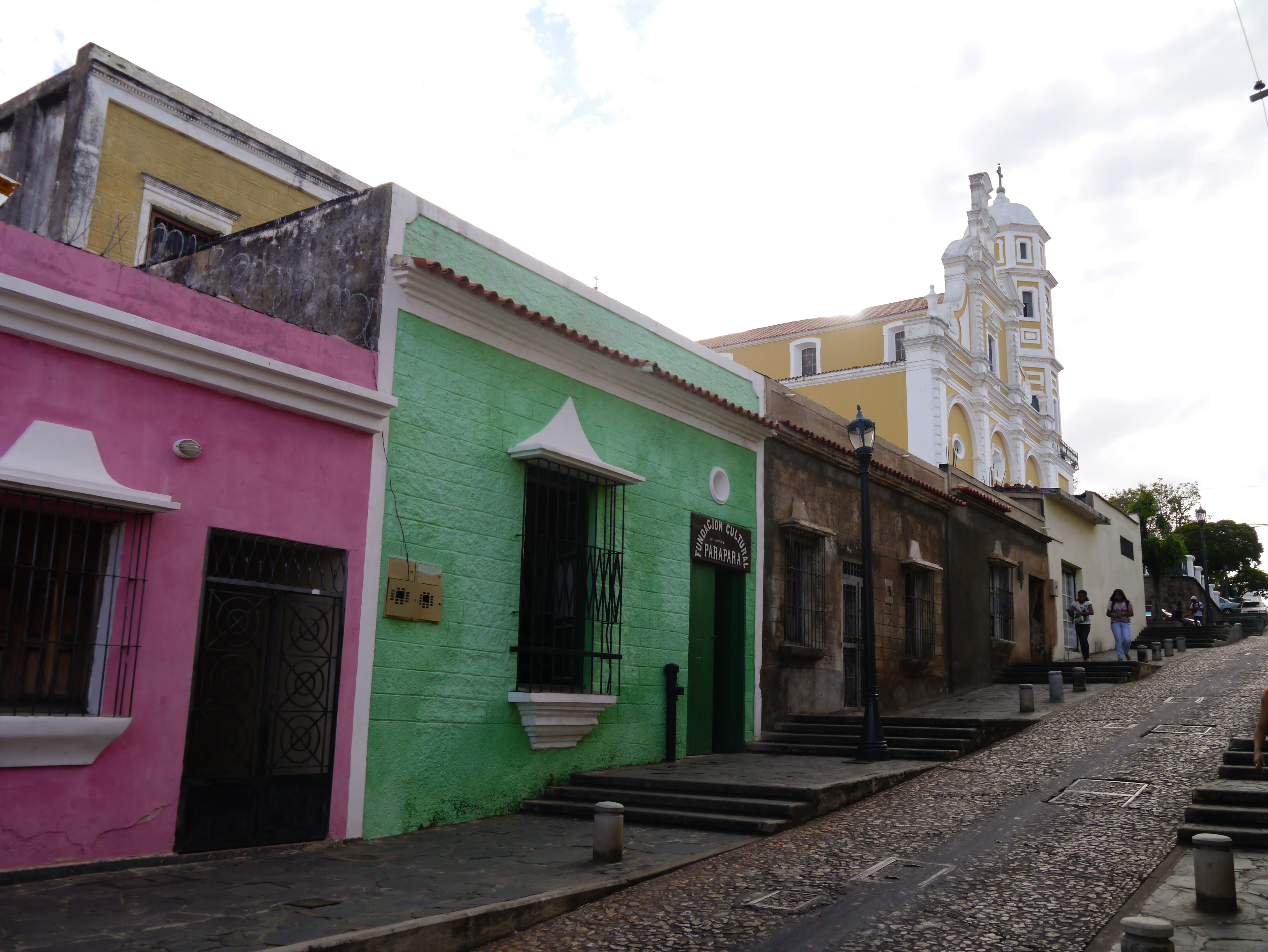
The 1846 name change
The city changed its name from Angostura to Ciudad Bolívar in 1846, in honor of Simón Bolívar. Through the 19th century it prospered as a river port on the Orinoco, an economic role it would later share and partly cede to the industrial development of neighboring Ciudad Guayana.
Source: https://es.wikipedia.org/wiki/Ciudad_Bol%C3%ADvar

📚 Bibliography

  • Wikipedia (ES) — «Ciudad Bolívar»: https://es.wikipedia.org/wiki/Ciudad_Bol%C3%ADvar
  • Wikipedia (EN) — «Ciudad Bolívar»: https://en.wikipedia.org/wiki/Ciudad_Bol%C3%ADvar
  • Wikipedia (ES) — «Congreso de Angostura»: https://es.wikipedia.org/wiki/Congreso_de_Angostura
  • Wikipedia (ES) — «Correo del Orinoco (periódico)»: https://es.wikipedia.org/wiki/Correo_del_Orinoco_(peri%C3%B3dico)
  • Wikipedia (ES) — «Orinoco»: https://es.wikipedia.org/wiki/Orinoco
  • Venezuela Tuya — «Ciudad Bolívar»: https://www.venezuelatuya.com/guayana/ciudadbolivar.htm
  • Venezuela Tuya — «El Congreso de Angostura»: https://venezuelatuya.com/historia/congreso_angostura.htm
  • Encyclopedia.com — «Angostura, Congress of»: https://www.encyclopedia.com/humanities/encyclopedias-almanacs-transcripts-and-maps/angostura-congress
  • EcuRed — «Ciudad Bolívar»: https://www.ecured.cu/Ciudad_Bol%C3%ADvar

❓ Frequently asked questions

Why is Ciudad Bolívar so important in Venezuelan history?+
Because, under its old name of Angostura, it was the capital of the Republic in arms during the independence war. The Correo del Orinoco (the first patriot newspaper) was founded here in 1818, and on 15 February 1819 the Congress of Angostura was installed here, before which Bolívar delivered his celebrated Angostura Address and out of which came the idea of Gran Colombia. In 1846 it changed its name to Ciudad Bolívar in the Liberator's honor.
What does 'angostura' mean and where does the old name come from?+
'Angostura' refers to the point where the Orinoco river narrows, right in front of the city. The city was founded in 1764 as Santo Tomé de Guayana de Angostura del Orinoco, and was known as Angostura precisely because of that narrowing of the river. (This is also, historically, where the famous Angostura bitters take their name.)
Does Ciudad Bolívar work as a base for Canaima and Angel Falls?+
Yes, it's one of the two great gateways (along with Puerto Ordaz). Light aircraft leave its airport for Canaima, from where excursions to Angel Falls and the lagoon are organized. Careful with the figure of «US$ 675-850 for a 3-day/2-night package» that circulates: no source publishes it, and it helps to understand that these are two different products. The TRIP ALONE to the falls costs about US$ 300 for the full day and about US$ 350 for the one with a night at the base camp, and that includes neither the flight to Canaima nor the 3- or 4-day stay, for which you should budget between US$ 800 and US$ 1.200 per person in a double (Venezuela Tuya, consulted on 09/08/2026). The FULL PACKAGE, with flights, lodging and meals, does have a published price list: Osprey Expeditions sells 4 days/3 nights at US$ 795-850 per person leaving from Caracas, and Venezuela Tuya lists the Canaima camps from US$ 995 for the 3 nights (Campamento Canaima, with the trip to the falls charged separately at US$ 295-350) or US$ 1.083 at Parakaupa with the overnight trip included, up to US$ 1.875 at Wakü Lodge (consulted on 09/08/2026). Note: none of those packages leaves from Ciudad Bolívar, they all leave from Caracas —and right now, with Maiquetía closed after the June 2026 earthquake, Venezuela Tuya warns that flights to Canaima have been rescheduled out of Arturo Michelena airport in Valencia—. Many travelers use the city as a base or stopover, seeing its old town before or after the Guayana adventure.
What can you see in a day in Ciudad Bolívar?+
The old town works well in a day: the Paseo Orinoco along the riverbank, the Plaza Bolívar and the cathedral, the Casa del Congreso de Angostura (where the 1819 congress met) and the Casa del Correo del Orinoco (with the historic printing press). It's all close together, walkable, and museum entry is free or very cheap; ideally go early or at dusk because of the heat.
When is the best time to visit?+
The climate is warm all year. The dry season (December to April) is more comfortable for exploring the city and for flights. The rainy season (May/June to November) brings the Orinoco in flood and is the best time to link up with the river excursion to Angel Falls. For the old town, set out early or make the most of late afternoon.
Is it safe to walk around the city?+
As in other Venezuelan cities, apply common sense: walk the old town by day and in busy areas, don't flash valuables or large amounts of cash, and take a taxi at night. Check on the current situation. The historic sights and the Paseo Orinoco can be enjoyed calmly with a bit of care.
How do I get to Ciudad Bolívar?+
By air, on domestic flights to its airport; or by road, from central Venezuela crossing the Orinoco on the Angostura Bridge, or from neighboring Puerto Ordaz (Ciudad Guayana), a little over an hour away. It's also a key air departure point for Canaima.
How do you pay for the bus in Ciudad Bolívar?+
Public urban transport in Bolívar state (the TransBolívar system and private minibuses) is now paid mostly digitally: most vehicles adopted QR-code payment through the VeTicket system, tied to the Patria platform and Banco de Venezuela. Passengers generate a QR ticket in the Patria app and the driver scans it. The official city fare is around 40 bolívares (under US$ 1). Many vehicles still take cash in bolívares, but fewer and fewer; for a visitor, the practical approach is to use taxis (agreeing the fare first) rather than rely on the bus.
How much does entry to Canaima National Park cost?+
Entry to Canaima National Park costs US$ 40 per adult and US$ 20 for children, and is payable in cash only on arrival (it isn't usually included in the package price). It's a separate payment from the Canaima and Angel Falls tour. On the price of that tour: the figure of US$ 675-850 for 3 days/2 nights that circulates is not backed by any source. Venezuela Tuya publishes about US$ 300 for the full-day trip and about US$ 350 for the overnight one, with the flight and the stay charged separately; the full package with flights and lodging starts at US$ 995 per person for the 3 nights in its price list valid through December 2026, and Osprey Expeditions sells its 4-day/3-night programme out of Caracas at US$ 795-850 (consulted on 09/08/2026). That same Venezuela Tuya price list confirms the entry fee: «the Canaima National Park entry fee (US$40 adults, US$20 children) is not included».
Sources consulted (15)
Still planning?
Explore more destinations in Venezuela
See all destinations →
Advertisements
Image credits
Photos from Wikimedia Commons, each under its own licence (CC BY, CC BY-SA or public domain). Open each file to see its author and licence.
Ciudad Bolivar, Venezuela (12455501955)