GO! Assistance has 50% off in October and, with our link, you get an extra 20%.
Pick origin, destination, dates and ages and see the price of your travel assistance in a minute.
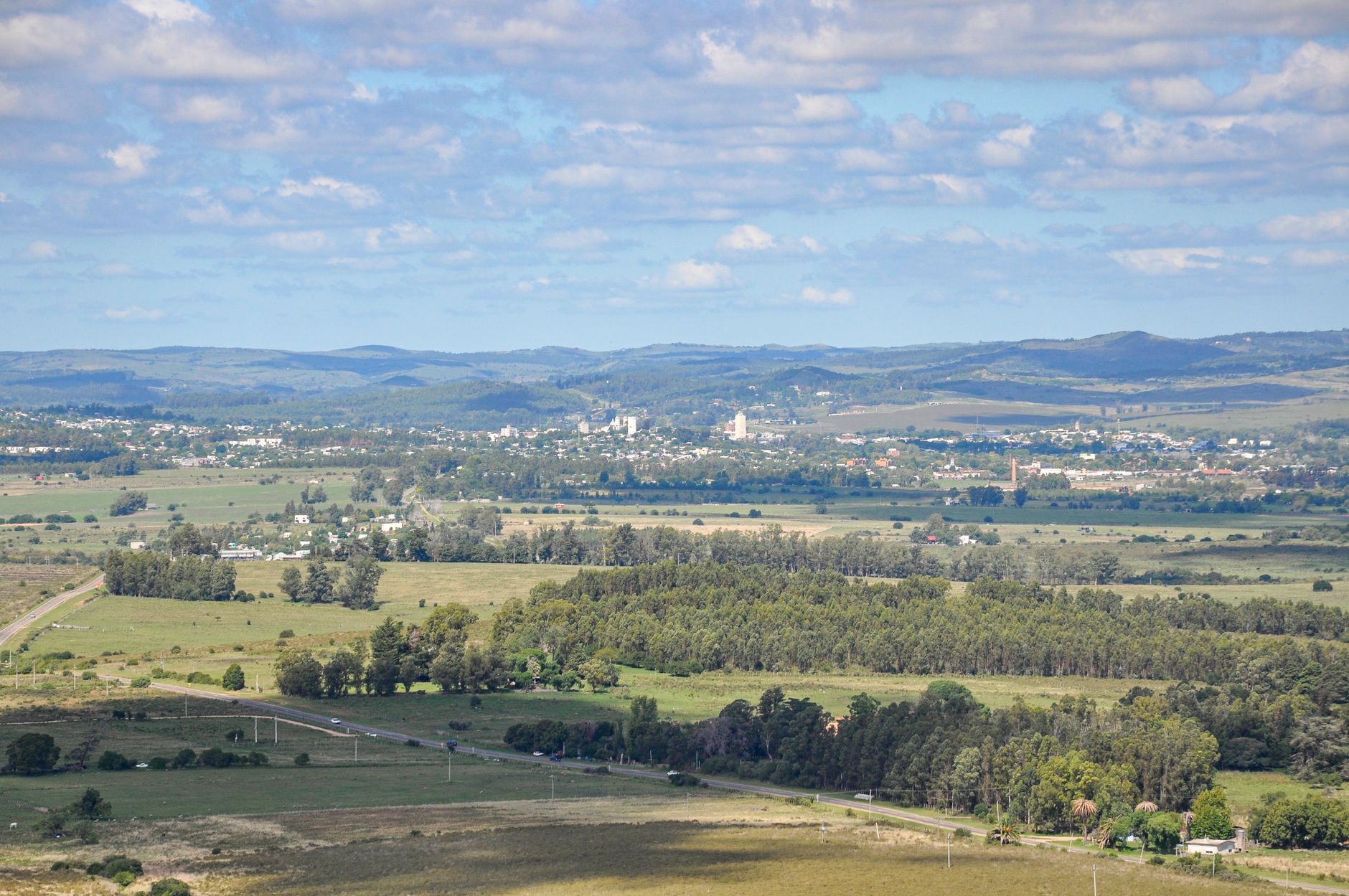
Tacuarembó is the heart of deep Uruguay, that inland country made of sierras, ridges, rivers, estancias and immense horizons where gaucho culture and criollo tradition remain alive as nowhere else. Capital of the country's largest department, in the north-centre, it's a quiet, tree-lined city surrounded by a rural landscape of great beauty, offering the traveller an experience different from the coast: that of the countryside, tradition, nature and the authenticity of the interior.
The soul of Tacuarembó is gaucho. Every year it hosts the Fiesta de la Patria Gaucha, Uruguay's biggest criollo tradition event, where for several days riders, country folk and whole families revive gaucho skills, customs, music and way of life, in an impressive display of traditional culture. To that identity is added one of the most famous controversies of the River Plate: Tacuarembó's claim as the birthplace of Carlos Gardel, the legendary tango singer, one of the theories about his disputed birth.
But Tacuarembó is also pure nature: Valle Edén, a hill corner of singular beauty; the sierras and ridges that ripple the landscape; the enormous Lago de Rincón del Bonete, ideal for fishing and boating; and the estancias that open their doors to rural tourism. This guide covers Tacuarembó with a practical, warm eye: its city, its gaucho festival, its nature and its culture, to discover the most traditional and authentic side of Uruguay, far from the beaches and close to its essence.
The Tacuarembó region was originally inhabited by Indigenous peoples, among them the Charrúa, in a territory of sierras, woods and rivers in the north-centre of today's Uruguay; its name is of Indigenous origin, tied to the geography and vegetation of the area (the 'tacuaras' or reeds). The city of Tacuarembó was founded in the nineteenth century, as part of the organization of the territory and the settlement of the country's interior. The area developed deeply tied to extensive cattle ranching, to the estancia and to gaucho life, which forged the criollo identity that sets the department apart. Tacuarembó became in time an important centre of the interior and a symbol of Uruguayan gaucho tradition, which crystallized in its famous Fiesta de la Patria Gaucha. The region is also the setting of one of the great cultural controversies of the River Plate: Tacuarembó's claim as the birthplace of Carlos Gardel, one of the theories about the disputed origin of the tango singer, which the department maintains and celebrates. The full history, with its original peoples, its gaucho past and the Gardel controversy, is on our history page.
Read the full history ↓They depart from Sant'Ana do Livramento, 103 km away. Affiliate link: we earn a commission.
Abroad, getting sick is more than a bad day. In many destinations public healthcare depends on appointments, queues and availability, and private care is paid upfront. An emergency can cost thousands of USD, right when you are far from home and on a tight budget. That is why I recommend you never leave without travel assistance.
I recommend GO! Assistance because it covers what matters: medical care, emergencies, medication and hospitalization depending on the plan. It protects you 24 hours a day, anywhere in the world, with real-time solutions on the ground. GO! 365 ECO and GO! 365 give you USD 45,000 of global coverage: the first with a USD 100 deductible, the second with none.
If you quote from Argentina, in October GO! also offers 12 interest-free instalments on all its products.
GO! Assistance has 50% off in October and, with our link, you get an extra 20%.
Pick origin, destination, dates and ages and see the price of your travel assistance in a minute.
I have never been left without internet on a trip. I land and my phone connects to the strongest network in the country I am visiting: I can let people know I arrived, sort out transport, book tours and keep posting content at a super affordable price (really cheap!). I always use the Maya Mobile eSIM, check out its plans by clicking the banner. See Maya Mobile plans →
Affiliate link: we earn a commission.
No exact prices: a scale from $ (budget) to $$$$$ (luxury), with 2-3 options per category.
Origins, formation and what the sources say.
There's a town in the Uruguayan interior that fights, against half of Argentina and against the whole of France, over having been the birthplace of Carlos Gardel. That town is Tacuarembó, and that proud stubbornness says a lot about its character: it's the heart of deep Uruguay, the land where gaucho culture isn't museum folklore but a way of life, and where every March the whole city turns into the country's biggest criollo festival. But the history of Tacuarembó begins long before Gardel, the estancias and the Patria Gaucha.
Long before the city existed, the north-central region of today's Uruguay now occupied by the department of Tacuarembó was inhabited by Indigenous peoples, among them the Charrúa, and by other groups who ranged across this territory of sierras, ridges, woods and rivers. They lived by hunting, fishing and gathering, in a landscape of open country and immense horizons that would be, centuries later, the setting of gaucho culture. The Indigenous presence left its mark on the place names and on the memory of the region.
The name 'Tacuarembó' itself is of Indigenous origin, tied to the geography and vegetation of the area. The most widespread explanations associate it with the 'tacuaras' —a kind of native reed or bamboo abundant in the region— and with natural features such as rivers or streams. As happens with many place names of Indigenous root, there are different interpretations of its exact meaning, but all of them point to the link between the name and the natural setting, the plants and the watercourses of the place.
That Indigenous root of the name and the territory is a reminder of the original inhabitants of these lands, before the arrival of the Europeans and the formation of Uruguay. The region keeps, in its geography, its place names and its memory, that deep layer of history prior to criollo settlement, which local museums usually recover and which is part of Tacuarembó's identity narrative as a land of the deep interior.
The city of Tacuarembó was founded in the nineteenth century, as part of the process of organizing the territory and settling the interior of the newborn Uruguay. After independence and the formation of the state, one of the great tasks was to occupy, order and administer the country's vast interior, until then thinly populated and dominated by extensive cattle ranching and country life. The founding of towns and villages in the interior answered that need to assert the state's presence and structure the territory.
Tacuarembó was thus born and grew as a centre of the country's north-centre, the head of a department that is Uruguay's largest. Its development was, from the start, deeply tied to cattle ranching: the great estancias, the cattle round-ups, country life and the work of the paisanos were the economic and social basis of the region. That rural world of riders, country tasks and life on horseback gradually forged the strong gaucho identity that sets Tacuarembó apart to this day.
Through the nineteenth and twentieth centuries, the city consolidated itself as an important point of the Uruguayan interior, gaining population and infrastructure, and developing its social, commercial and cultural life. Route 5, which connects the south with the north of the country and passes through Tacuarembó, reinforced its role as a communications hub of the country's centre, on the road towards the Brazilian border. On that base of a ranching, gaucho city of the interior, modern Tacuarembó would be built, the capital of criollo tradition.
If anything defines Tacuarembó's identity, it's gaucho culture. The gaucho —that country rider, skilled with horse and cattle, a central figure of River Plate rural life— is a deep symbol of Uruguayan identity, and in Tacuarembó, a land of estancias and extensive ranching, that traditional culture was preserved and celebrated with particular force. Criollo horsemanship, breaking in horses, cattle driving, shearing, mate, asado, traditional dress and nativist music are part of the region's way of life and pride.
That identity crystallized in the Fiesta de la Patria Gaucha, Uruguay's biggest gaucho tradition event, which every year, around March, turns Tacuarembó into the country's capital of criollo culture. For several days, on large grounds, period villages and camps are reconstructed, jineteadas and horsemanship displays are staged, riders and riding clubs parade, folk music plays and thousands of people, many in traditional dress, celebrate their country roots. The Patria Gaucha is far more than a show: it's an assertion of identity, a tribute to the gaucho and an event that projects Tacuarembó as a guardian of tradition.
This gaucho culture is also lived, all year round, in the rural tourism of the area's estancias, where visitors can experience country life, horseback rides, cattle work and criollo hospitality up close. Tacuarembó made that traditional heritage one of its greatest assets and attractions, and consolidated itself as the heart of deep Uruguay, that inland country that keeps the roots of nationhood alive.
Tacuarembó is the setting of one of the most famous and captivating cultural controversies of the River Plate: the dispute over the birthplace of Carlos Gardel, the legendary tango singer known as the 'Zorzal Criollo', one of the greatest figures of twentieth-century popular music. Gardel's origin is a long-debated mystery, and there are different theories placing it in different places. One of the main ones holds that he was born in France (in Toulouse); another, defended fervently by Tacuarembó, claims the singer was born in this department of the Uruguayan interior.
The 'Tacuarembó theory', or Uruguayan version, of Gardel's birth holds that the singer was born in the Tacuarembó area, linking him to certain families and circumstances of the region. The department embraces this version with pride and celebrates it: in Valle Edén there's a museum devoted to Carlos Gardel, which gathers objects, documents and testimonies in defence of the singer's Tacuarembó origin and keeps the claim alive. For Tacuarembó, Gardel is a son of its land, and that belonging is part of its cultural identity.
The question of Gardel's origin isn't unanimously settled and remains a subject of debate among historians and enthusiasts, with arguments in favour of the different theories. Beyond the historical truth —hard to establish with absolute certainty— the Gardel controversy is part of Tacuarembó's cultural appeal and connects this inland city with one of the great figures of River Plate and world culture. Visiting the museum and seeing the passion with which the department claims the singer is to step into a fascinating mystery that keeps feeding the popular imagination.
The history and identity of Tacuarembó are inseparably tied to its geography: a landscape of low sierras, ridges, native woodland, rivers and streams that is the hallmark of deep Uruguay, that inland country different from the river litoral and the Atlantic coast. This rolling relief with its broad horizons, with its ranching country and its nature, isn't only the setting of gaucho life but an attraction in itself, which at spots like Valle Edén reaches a singular beauty.
A key element of the department's geography is the Río Negro, Uruguay's main inland river, which crosses the country from east to west. On it, in the twentieth century, the dam was built that formed the Rincón del Bonete reservoir, the country's largest artificial lake, part of which stretches across southern Tacuarembó. This reservoir, tied to hydroelectric generation, transformed the landscape and created a great sheet of water that is today a destination for fishing, boating and recreation, adding the water element to the department's natural offer.
This combination of sierras, countryside, rivers and lake makes Tacuarembó a privileged destination for nature and rural tourism, the perfect complement to its cultural and traditional dimension. The region keeps a strong bond with the land, with country life and with criollo roots, and offers the visitor an experience of authenticity, calm and contact with the essence of the Uruguayan interior. From the original peoples to gaucho culture, from the Gardel mystery to the waters of the Río Negro, the history of Tacuarembó is that of the deep heart of a country that keeps much of its soul in this corner.