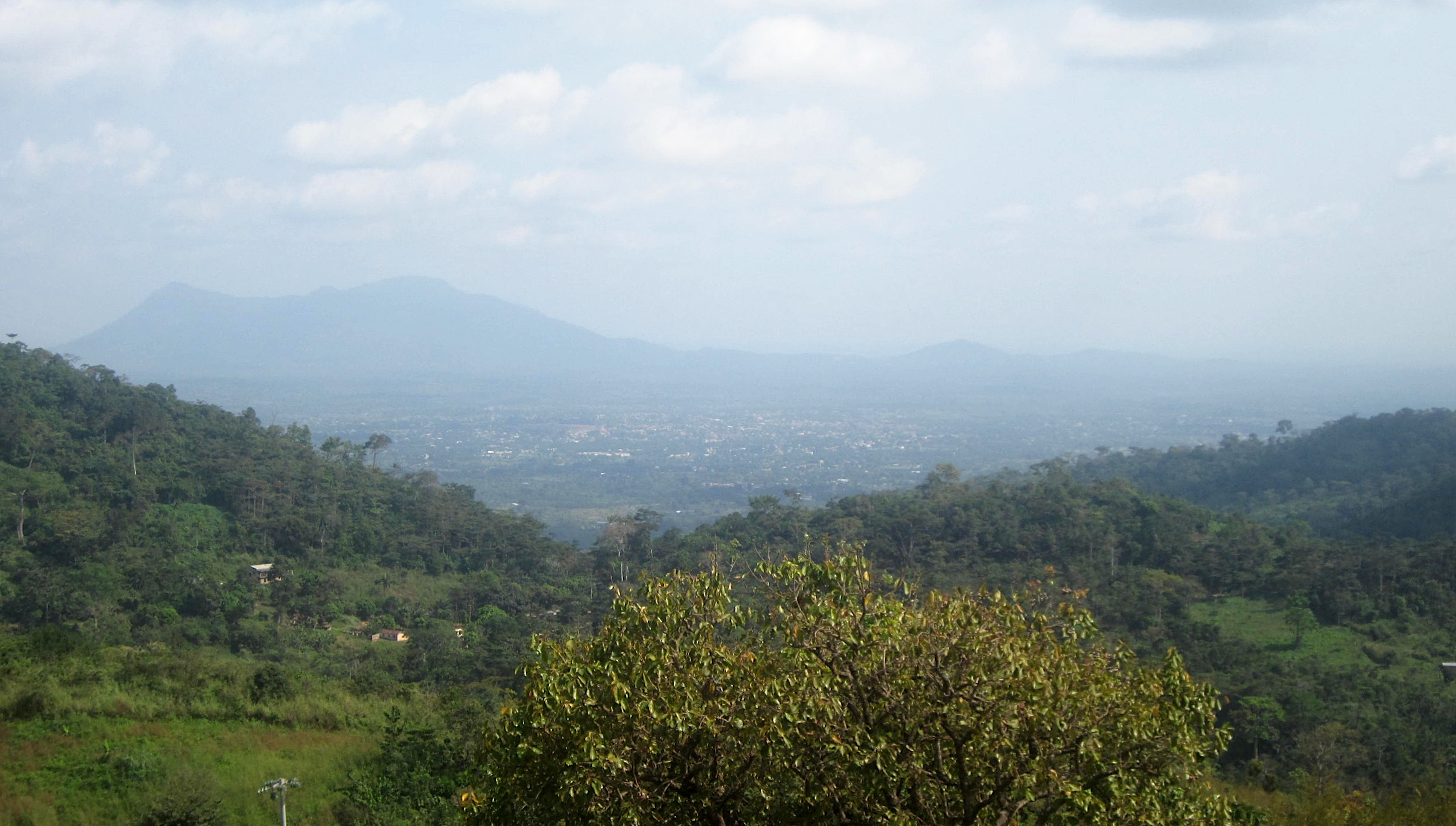
Mount Kloto is Togo's kingdom of butterflies. At around 700 metres above sea level, near Kpalimé and a stone's throw from the Ghana border, this forested mountain is famous throughout West Africa for its extraordinary diversity of butterflies (hundreds of species are recorded, some very rare) and for its hikes through rainforest, streams and coffee and cocoa plantations. It is the green heart of 'mountainous Togo'.
But Kloto isn't just about butterflies: its trails offer immersion in the humid forest, encounters with birds and medicinal plants, and viewpoints from which, on clear days, you can see the Ghana border and even distant Lake Volta. At its summit stands Château Viale, a castle with a medieval European feel built in 1944 by a French lawyer and later converted into an official residence, a historical curiosity in the middle of nature.
This guide covers Mount Kloto from a practical angle: how to get there from Kpalimé, guided walks through the butterfly forest, the viewpoints and Château Viale, where to sleep in the Kouma-Konda camps and how to combine Kloto with the area's waterfalls. If you're looking for nature, gentle hiking and biodiversity, Mount Kloto is one of Togo's great hidden treasures.
Mount Kloto is part of the highlands of south-western Togo, an ancient landscape covered in humid forest that captured moisture from the gulf and gave rise to exceptional biodiversity. From the mid-20th century, its fame as the 'butterfly mountain' drew naturalists and travellers, and a tradition of local guides able to identify hundreds of species took shape. At its summit, Château Viale, built in 1944 and later used as an official residence, adds a historical layer. Together with Kpalimé and its waterfalls, Kloto is the base of Togolese ecotourism. The full background is on our Kpalimé page.
Read the full history ↓Green Togo of coffee and cocoa plantations and waterfalls: wooded hills that were home to Notsé, the Ewe cradle, and where the Germans built the Kamina radio station near Atakpamé.
Read the history of Plateaux Region →They depart from Magné, 142 km away. If you book from this link we earn a commission and you pay no more.
No exact prices: a scale from $ (budget) to $$$$$ (luxury), with 2-3 options per category.
Origins, formation and what the sources say.
Mount Kloto (or Klouto) rises to about 700 metres in the highlands of south-western Togo. It belongs to the ancient mountain chain that runs from south-eastern Ghana into Togo and Benin. These heavily eroded crystalline rocks are covered by one of the country's last pockets of montane rainforest, a sharp contrast with the savannah of the north and the coastal plains.
Because of their height and position, these mountains catch the moisture coming in from the Gulf of Guinea. They get plenty of rain and stay cool all year round. That humid, mild microclimate supports lush vegetation (tall trees, ferns, lianas, streams) and biodiversity that is exceptional for the region.
The forest is Kloto's great treasure. Its wealth of insects, birds and plants made the mountain a unique place, and above all a butterfly sanctuary. Farming and deforestation are putting this ecosystem under pressure, and protecting it is key to the natural future of the Plateaux Region.
Mount Kloto is famous above all for its butterflies. The rainforest is home to several hundred species, many of them very beautiful and some very rare, which makes the mountain one of the largest concentrations of butterflies and moths in West Africa. Numbers peak in the rainy season, in July and August, when the butterflies breed.
From the mid-20th century onwards, this richness drew naturalists, scientists and travellers. Over time, the mountain villages, especially Kouma-Konda, built up a tradition of local naturalist guides. These are true experts who can identify hundreds of species of butterflies, birds and plants and know their cycles and habits. Some of them became well known among the travellers who came looking for the 'butterfly forest'.
Today these guides are the heart of the Kloto experience and a pillar of its ecotourism. Their knowledge, handed down from generation to generation, turns a simple walk into a living ecology lesson. It also gives the communities a tangible reason to protect the forest, since they earn an income by accompanying visitors.
The summit of Mount Kloto holds an unusual surprise: Château Viale, a stone castle with towers and battlements that looks like medieval Europe and seems to have been moved here from another continent. It was built in 1944, in the middle of the Second World War, by the French lawyer Raymond François Viale. He chose this cool, wooded mountain for a fortress-like residence that looks nothing like the region's traditional architecture.
After Togo's independence, the building passed to the State. Between 1979 and 1982 it was restored and extended, with a new wing of ministerial suites, so it could serve as an official residence and a venue for cabinet meetings, making the most of its pleasant climate and views. It still belongs to the Togolese government, so access to the interior may be restricted depending on how it is being used.
Beyond its official role, Château Viale has become a tourist curiosity: a historical and architectural landmark in the middle of the butterfly forest. On clear days the view from around the castle stretches to the Ghanaian border and even to distant Lake Volta, adding history and a panorama to Kloto's natural attractions.
Today Mount Kloto is one of Togo's top nature destinations and a centrepiece of ecotourism around Kpalimé. Every year travellers arrive from Togo, from just across the border in Ghana and from further afield. They come for the butterflies, the forest walks, the viewpoints looking towards Ghana and the curiosity of Château Viale. The mountain villages, led by Kouma-Konda, have made tourism an important part of their economy.
That growth comes with conservation challenges. Like other forests on the plateau, Kloto's rainforest is under pressure from expanding coffee and cocoa plantations and from deforestation. Protecting this ecosystem, a refuge for butterflies, birds and plants, matters for biodiversity and also for the ecotourism the communities rely on.
For travellers, Mount Kloto sums up Togo's greenest side: easy hiking, amazing biodiversity, fresh air, rural hospitality and an unusual bit of history at the top. Together with the Womé and Kpimé waterfalls and Mount Agou, the country's highest point, Kloto is the gateway to 'mountain Togo', a calm counterpoint to the bustle of Lomé and the vodun world of the coast.