Viajá con Gus
Home › Togo › Womé Waterfall
Womé Waterfall
🇹🇬 Togo · Plateaux Region

Womé Waterfall

🪪 What do I need to enter Togo?Pick your citizenship and we tell you the visa, the days and the paperwork, with the official source.

By leaving your email and citizenship you agree to receive the documents you asked for and weekly travel news. You can unsubscribe whenever you want. How we handle your data.
Jump to what you need
📍Region
The Womé waterfall (Cascade de Womé) is in the Plateaux Region, about 12 km from Kpalimé, near the village of Womé, in south-western Togo and very close to the border with Ghana. It is one of the most beautiful and most visited waterfalls in the country: it drops through the plateau forest into a natural pool, in green, cool surroundings, about 2-3 hours from Lomé.
📌Best time to go
You can visit all year round. After the rains (April to July and September-October) the waterfall carries more water and looks more spectacular, but the steps get slippery. In the dry season (November to February) the flow drops a little, but the natural pool is still good for swimming and the paths are firmer. Thanks to the altitude, the area is cooler than the coast.
📌Suggested duration
The visit takes half a day from Kpalimé, including the transfer, the walk down, the swim and the climb back up. The path to the waterfall goes down more than 300 prepared steps, with handrails and benches to rest on; the descent is easy, but the climb back up takes some effort. It combines very well with other excursions around Kpalimé.
📌Getting there
From Kpalimé, take a motorbike taxi ('zémidjan') or a taxi to the village of Womé, 12 km away, for roughly 2.000-3.000 XOF (sometimes a bit more for a return trip with waiting time). From the entrance, a local guide goes with you on the walk down to the falls. Many visitors include it in a day circuit of Kpalimé's waterfalls and mountains.
📌Admission
Admission costs around 2.500 XOF per person (2025), and walking sticks are usually available to rent for about 100 XOF for the stairs. Bring cash in CFA francs, as cards are not accepted. A local guide (included or for a tip) adds context about the vegetation and village life.
📌Language and currency
Ewe and French are spoken; guides work in French and many in English (Ghana is close by). The currency is the West African CFA franc (XOF), pegged to the euro (1 € = 655,957 XOF), around 600 XOF to the dollar (2025). Everything is paid in cash: admission, transport, guide and walking stick.
💱 XOF exchange rate
Loading rate…
🌤️ Weather in Womé Waterfall
Loading weather…

The Womé waterfall is one of the best-loved postcards of 'green Togo'. Just 12 km from Kpalimé, in the heart of the Plateaux Region, this waterfall drops through the plateau forest into a natural pool where you can take a cool dip after the walk. It's the ideal destination for combining nature, a bit of hiking and a refreshing swim, a few hours from Lomé.

What makes it so popular is the mix of beauty and easy access: a path of prepared steps, with handrails and benches, goes down through the vegetation to the foot of the falls, in a humid, green setting very different from the heat of the coast. The village of Womé, at the entrance, adds the human side, and the natural pool lets you swim even in the dry season.

This guide explains how to visit the Womé waterfall from Kpalimé: how to get there, how much admission costs, what to expect on the way down and back up, when there's more water, and how to combine it with the area's other natural gems —the Kpimé waterfall, Mount Kloto or Mount Agou—. It's a simple, rewarding excursion, perfect for discovering Togo's cool, mountainous side.

📖 History of Womé Waterfall

The Womé waterfall owes its existence to the terrain of the Plateaux Region, the highlands of south-western Togo where rivers coming down from the forested hills form waterfalls as they rush down the slopes. The village of Womé, an Ewe community, manages access to the falls and built the stepped path that opened it up to tourism. Together with the nearby Kpimé waterfall and the forests of Mount Kloto, it is part of the natural appeal that turned Kpalimé into the base for ecotourism in Togo. The full historical and natural background of the region is on our Kpalimé page.

Read the full history ↓

🏛️ Womé Waterfall is in Plateaux Region

Green Togo of coffee and cocoa plantations and waterfalls: wooded hills that were home to Notsé, the Ewe cradle, and where the Germans built the Kamina radio station near Atakpamé.

Read the history of Plateaux Region →

🗺️ What to see

Tours nearby, in Magné

They depart from Magné, 135 km away. If you book from this link we earn a commission and you pay no more.

1
The waterfall and its natural pool
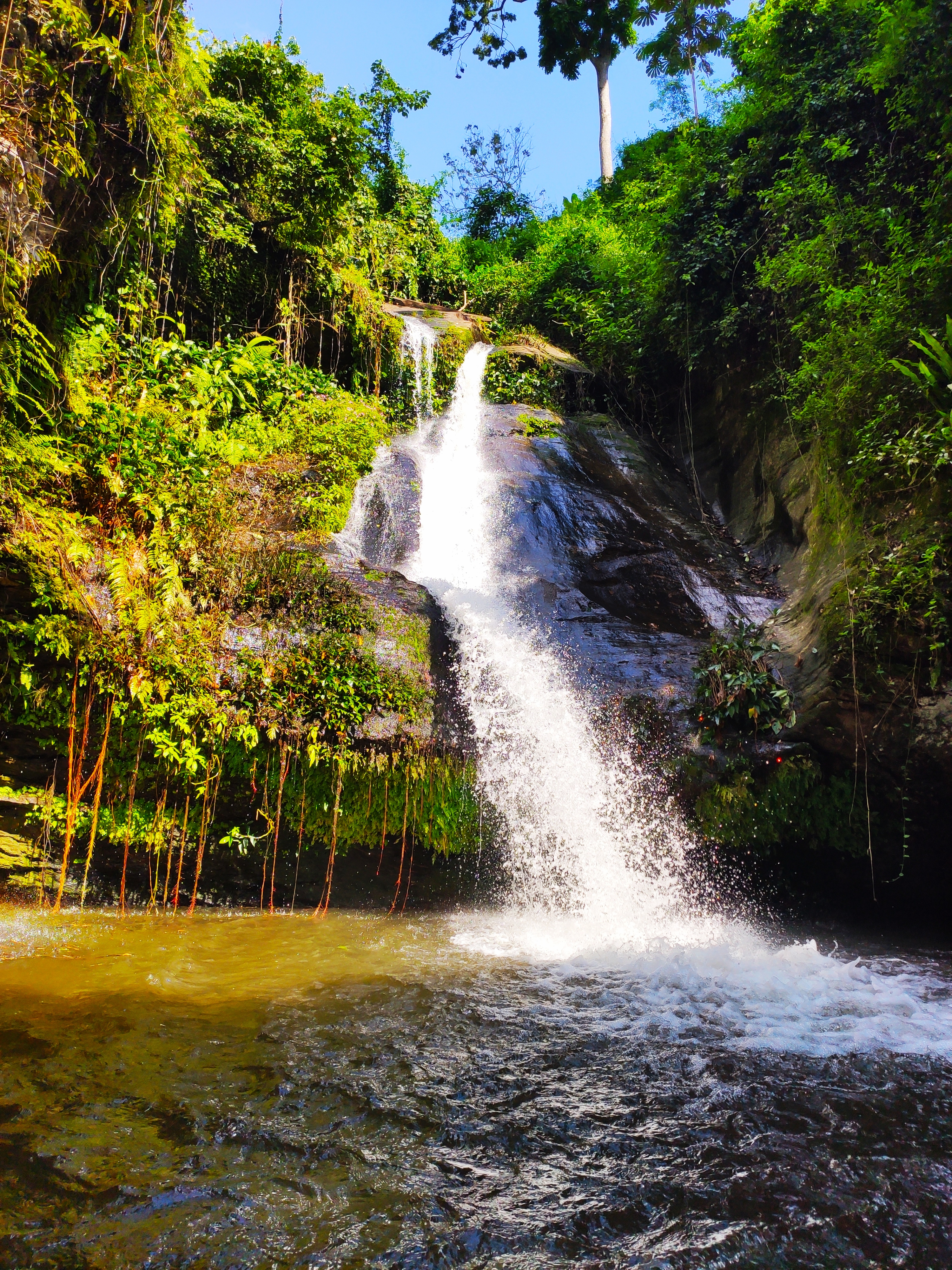
The main drop of the waterfall into a pool you can swim in, the big reward for the walk.
Leer más ↓
The heart of the visit is the waterfall itself: a cascade that rushes down the forested slope into a natural pool at the bottom, surrounded by lush vegetation and wet rock. The cool, clear water makes for a refreshing swim after the descent, even in the dry season, when many other falls in the area lose flow. The setting —the sound of the water, the forest, the humidity, the butterflies— is as appealing as the swim itself. It's a cool, peaceful spot, ideal for resting a while before tackling the climb. Bring a swimsuit, a towel and shoes with good grip for the wet rocks. Getting there: at the end of the stepped path from the Womé entrance. Best time to go: more water after the rains; swimming possible all year. Tips: watch out for slippery stones; don't leave litter; respect the place and other visitors.
ℹ️ Distance: At the end of the path, from the Womé entrance · Best time to go: More water after the rains; swimming all year · Admission: Included in admission (~2.500 XOF, 2025) · Duration: As long as you like by the water
2
The stepped path through the forest
The prepared descent with more than 300 steps, handrails and benches, through tropical vegetation.
Leer más ↓
Getting to the waterfall is an experience in itself: a path of more than 300 stone steps, with handrails and benches to rest on, winds down through the plateau forest to the foot of the falls. The descent is comfortable and suitable for almost anyone, while the climb back up takes some physical effort, especially in the heat and humidity. Along the way you pass through a humid forest full of life: ferns, lianas, tall trees, butterflies and birds. A local guide will usually point out useful plants and explain how the village built and maintains the path. It's a short but immersive walk in the region's nature. Getting there: from the access point, next to Womé. Best time to go: dry season to avoid slipping; take care after the rains. Tips: rent a walking stick (~100 XOF) if you want support; take the way back slowly; bring water.
ℹ️ Distance: From the entrance to the foot of the falls · Best time to go: Dry season; take care after the rains · Admission: Walking stick for rent ~100 XOF (2025) · Duration: 15 to 30 min down; a bit longer up
3
The village of Womé
The Ewe community that manages access to the waterfall and offers a glimpse of rural life on the plateau.
Leer más ↓
At the entrance to the site is the village of Womé, an Ewe community that manages access to the waterfall and for which tourism has become a source of income. Walking through it and chatting with the locals is a chance to get a glimpse of rural life on the plateau: simple houses, crops, children and the hospitality the region is known for. The local guides are usually from the village itself, and having one along not only enriches the walk but directly supports the community. Buying a local product or leaving a fair tip is a good way to repay the hospitality. Getting there: 12 km from Kpalimé, at the entrance to the waterfall. Best time to go: all year. Tips: say hello and ask permission before taking photos; bring small notes for tips and purchases.
ℹ️ Distance: 12 km from Kpalimé · Best time to go: All year · Admission: You pay the waterfall admission (~2.500 XOF, 2025) · Duration: In passing, on the way there and back
4
The forest, butterflies and birds
The rich natural life of the waterfall's humid surroundings, typical of the Kpalimé plateau.
Leer más ↓
The area around the Womé waterfall is part of the humid forest ecosystem of the Kpalimé plateau, famous for its biodiversity. Butterflies of many species flit among the vegetation —the region is famous for them, especially in the rainy season— and you can hear and see plenty of birds. The cool, humid air and the lush vegetation contrast with the dryness of the coast. A naturalist guide can turn the walk into a short ecology lesson: identifying butterflies, birds and medicinal plants, and explaining how the forest works. It's the same natural world that makes nearby Mount Kloto famous, and a good reason to take your time and look closely. Getting there: along the path and next to the falls. Best time to go: butterflies in the wet season (Jul-Aug). Tips: walk slowly and quietly to see more wildlife; bring insect repellent.
ℹ️ Distance: Around the waterfall · Best time to go: Butterflies: Jul-Aug; wildlife all year · Admission: Included in the visit (2025) · Duration: Throughout the walk
5
Combining it with the Kpimé waterfall
The area's other big waterfall, usually visited on the same day as Womé.
Leer más ↓
Not far away, the Kpimé waterfall (near Kpimé-Séva) is the other big waterfall around Kpalimé, and many visitors combine both in a single day. Kpimé is a tall, slender waterfall, quick to reach from Kpalimé, whose flow depends on the season and on how the water is managed for a small hydroelectric plant. Visiting both waterfalls lets you compare two different plateau landscapes and make the most of the trip. Hiring a taxi or motorbike for half a day makes the circuit easier. See also our Kpalimé page for details on Kpimé and the other excursions. Getting there: Kpimé is a few km from Kpalimé, in a different direction from Womé; by motorbike or taxi. Best time to go: after the rains for the flow. Tips: check Kpimé's flow before going; arrange the circuit with a local guide or taxi driver.
ℹ️ Distance: Kpimé, a few km from Kpalimé · Best time to go: After the rains · Admission: Local admission + guide at Kpimé, separate (check when visiting, 2025) · Duration: Half a day combining both
6
Views and fresh air on the plateau
The mountain scenery and mild climate of the Plateaux Region, the backdrop to the visit.
Leer más ↓
Beyond the waterfall itself, a visit to Womé is a dive into the landscape of the Plateaux Region: green hills, coffee and cocoa plantations, forests and a mild, humid climate that comes as a relief after the heat of Lomé. The journey from Kpalimé already offers lovely views of the plateau, with its farmed slopes and terraced villages. Those surroundings are what make the Kpalimé area Togo's top nature destination. The Womé waterfall is a perfect gateway to that green world, which you can round off with Mount Kloto and Mount Agou, the highest point in the country. Take the day slowly to enjoy the scenery. Getting there: on the Kpalimé-Womé road and around the waterfall. Best time to go: dry season for clear views. Tips: stop along the way for the views; bring a light layer if you go early or after rain.
ℹ️ Distance: Around Kpalimé and Womé · Best time to go: Dry season for the views · Admission: Free (scenery); admission only for the waterfall (2025) · Duration: As you like
📶I have never landed without internet. I arrive and my phone connects to the strongest network in the country I am visiting: I can say I landed, sort out transport, book tours and keep posting, at a seriously good price. I always use the Maya eSIM — check their plans by clicking the banner.See plans →Maya Mobile eSIM — turn travel mode on
What nobody tells you

💵 Prices

Tickets

TypePrice
Entrada a la cascada de Womé (por persona)Around 2.500 XOF per person according to travellers —the figure comes from them, not from the authority—. NO OFFICIAL BACKING, reconfirmed on 09/08/2026: the Cascade de Womé listing on the Ministry portal (togotourisme.tg) gives a 323-character description and no amount, and the 408 articles on tourisme.gouv.tg have no rate for Womé either. Confirm at the entrance
Bastón de apoyo en alquilerAbout 100 XOF (2025)
Guía localTo be agreed on site; no official rate published (verified 07/08/2026)
Transporte en mototaxi desde Kpalimé (ida)About 2.000-3.000 XOF; more with waiting time and return (2025)
🔄 updated monthlyOfficial / reference values · double-check when buying

Activities and tours

ActivityPriceDurationOperator
Half-day excursion to the Womé waterfall with a swimAdmission 2.500 XOF + transport 2.000-3.000 XOF + guide (check when visiting, 2025)Half dayKpalimé motorbike-taxi drivers and guides
Day circuit of the waterfalls (Womé + Kpimé)Admission + half-day taxi from about 15.000-25.000 XOF (check when visiting, 2025)Full dayLocal taxi drivers and guides
Nature walk combining Womé and the Kloto forestWith a naturalist guide, from about 10.000-20.000 XOF per group (check when visiting, 2025)Full dayGuides from Kouma-Konda / Kpalimé
🔄 updated monthlyOfficial / reference values · double-check when buying

🚌 How to get there and distances

Getting around

ModePriceDurationNotes
Zémidjan (motorbike taxi) Kpalimé–WoméAbout 2.000-3.000 XOF one way (more with waiting/return, 2025)20-30 minThe most common way to get there; agree on waiting time and the return trip, or the driver can act as guide
Half-day taxiFrom about 15.000-25.000 XOF (approx. USD 25-40, 2025)Half dayConvenient for combining Womé with Kpimé or other excursions; the itinerary is negotiated
On foot along the waterfall pathIncluded in admission15-30 min downMore than 300 steps with handrails and benches; walking stick rental available
🔄 updated monthlyOfficial / reference values · double-check when buying

How to get there

RouteAirlines / operatorsAvg. priceDuration
Lomé → Kpalimé → Womé waterfallBus/taxi to Kpalimé + motorbike or taxi to WoméLomé-Kpalimé from ~2.500-4.000 XOF; Kpalimé-Womé 2.000-3.000 XOF (2025)2-3 h to Kpalimé + 20-30 min to Womé
Kpalimé → Womé waterfallMotorbike taxi or taxi2.000-3.000 XOF one way (2025)20 to 30 min (12 km)
As part of a Kpalimé waterfall circuitLocal guides and taxi driversDepends on the package (check when you visit, 2025)Half day to full day
🔄 updated monthlyOfficial / reference values · double-check when buying

🏨 Where to stay

No exact prices: a scale from $ (budget) to $$$$$ (luxury), with 2-3 options per category.

Mid-range hotels in Kpalimé
Price$$$$$
Recommended options
Approx. 20,000-45,000 XOF a night (approx. USD 35-75); a comfortable base in Kpalimé for visiting Womé and the other excursions in the area
Mountain camps and auberges (Kloto)
Price$$$$$
Recommended options
Approx. 10,000-30,000 XOF a night (approx. USD 17-50); simple places to stay in the Kloto/Kouma-Konda area, ideal if you want to be close to nature
Budget guesthouses
Price$$$$$
Recommended options
From about 8,000-20,000 XOF a night (approx. USD 13-33); Kpalimé inns for travellers on a tight budget

🍴 Where to eat

Comida local en Kpalimé
Price$$$$$
Options / signature dish
About 2,000-6,000 XOF per person; 'pâte' with sauces, chicken and fish at Kpalimé's canteens and maquis, after the excursion
Picnic junto a la cascada
Price$$$$$
Options / signature dish
Bring your own food and water; in Womé village there are stalls selling drinks and basic snacks
Restaurantes de hoteles y auberges
Price$$$$$
Options / signature dish
About 4,000-12,000 XOF per person; Togolese and international food at the places to stay in Kpalimé and up in the mountains

📖 History of Womé Waterfall

Origins, formation and what the sources say.

The relief of the Plateaux: why there are waterfalls here

Womé Falls is a product of the distinctive relief of south-western Togo. The Plateaux Region is part of a chain of highlands that runs from south-eastern Ghana into Togo and Benin, sometimes called the Togo-Atacora mountains or the Atacora system. These are ancient landforms of crystalline rock and quartzite, folded and eroded over hundreds of millions of years.

Though modest in height (Togo's highest point, Mount Agou, reaches 986 metres), these mountains catch the moisture coming in from the Gulf of Guinea and receive plenty of rain. The water falling on the forested slopes forms streams and rivers that drop over the hard-rock steps of the terrain as waterfalls like Womé or nearby Kpimé.

That same relief and humid climate explain not only the waterfalls but also the lush forests, the huge variety of butterflies and birds, and the fertile soils that made the region the heart of Togo's coffee and cocoa production. In a way, Womé Falls sums up the whole natural world of the plateau.

Womé: the village that opened the waterfall to travellers

The waterfall takes its name from the village of Womé, an Ewe community about 12 km from Kpalimé, on whose land the falls lie. For a long time, waterfalls like this one were simply part of the landscape and of daily life in the plateau villages: sources of water, bathing spots and, at times, places with spiritual value in the local worldview.

As tourism grew around Kpalimé —driven by the fame of its landscapes, its butterflies and its crafts—, the Womé community developed access to the waterfall, building the stepped path with handrails and benches that today lets you walk down comfortably to the foot of the falls. Running the site, charging admission and providing local guides became a source of income for the village.

This model, in which the community itself manages access to a natural attraction, is common in the Kpalimé region and in West African ecotourism. For travellers, it means that the admission fee and tips go straight into the local economy; for the village, it means that conserving the forest and the falls has tangible value.

Womé on Kpalimé's ecotourism map

Womé Falls isn't an isolated attraction but one piece of the rich natural landscape that turned Kpalimé into Togo's ecotourism capital. Around it you'll find Kpimé Falls, the forests and viewpoints of Mount Kloto —famous for its hundreds of butterfly species and for Château Viale, a 1944 castle on its summit—, and Mount Agou, the country's highest mountain.

From the mid-20th century, naturalists, artists and travellers discovered the beauty of this mountainous region, so different from the coast. A network of local guides specialising in butterflies, birds and plants took shape, and the waterfalls became must-see stops on any visit to Kpalimé. Thanks to its mix of beauty, easy access and a natural pool for swimming, Womé established itself as one of the most popular.

Today the waterfall welcomes international travellers as well as Togolese visitors and people from neighbouring Ghana, whose border is very close. It's part of day trips that link several waterfalls and mountains, and it's the perfect gateway to 'green Togo': the cool, humid, mountainous Togo that contrasts with the heat of Lomé and the voodoo world of the coast.

Community tourism and responsible visiting

Womé Falls is a good example of community-run tourism. The village manages access, maintains the stepped path and provides the guides, so admission fees, tips and local purchases turn into direct income for its residents. That model gives conserving the forest and the falls a concrete value: looking after nature means looking after the village's livelihood.

Like all the rainforest on the Kpalimé plateau, the area around Womé faces pressures: expanding plantations, deforestation and, to a lesser extent, the impact of tourism itself. That's why responsible visiting matters: don't leave litter, don't damage plants or rocks, respect wildlife —especially butterflies and birds— and follow the local guides' instructions.

For travellers, behaving respectfully and contributing to the village economy is the best way to make sure places like Womé Falls keep existing. It's also part of a more mindful way of travelling through 'green Togo', where enjoying the landscape goes hand in hand with supporting the communities that look after it and protecting a fragile, valuable ecosystem.

📚 Bibliography

  • Wikipedia (EN) — «Kpalimé»: https://en.wikipedia.org/wiki/Kpalim%C3%A9
  • Wikipedia (EN) — «Plateaux Region, Togo»: https://en.wikipedia.org/wiki/Plateaux_Region,_Togo
  • Wikipedia (EN) — «Mount Agou»: https://en.wikipedia.org/wiki/Mount_Agou
  • Wikipedia (EN) — «Atacora» (Togo-Atacora mountain range): https://en.wikipedia.org/wiki/Atacora
  • Lonely Planet — «Cascade de Womé»: https://www.lonelyplanet.com/togo/kpalime/attractions/cascade-de-wome/a/poi-sig/1364455/1328945
  • Evendo — «Cascade de Womé (Kpalimé)»: https://evendo.com/locations/togo/kpalime/landmark/cascade-de-wome
  • Kanaga Africa Tours — «The Kpalimé unspoilt landscapes»: https://www.kanaga-at.com/en/trip-info/togo-en/the-kpalime-unspoilt-landscapes/
  • My Breaking Views — «A Solo Day at Cascade de Womé Waterfalls, Togo»: https://mybreakingviews.com/a-solo-day-at-cascade-de-wome-waterfalls-togo/

❓ Frequently asked questions

How much does it cost to visit Womé waterfall?+
Admission is around 2,500 XOF per person (about USD 4), and walking sticks for the steps can usually be rented for about 100 XOF. On top of that comes transport from Kpalimé (2,000-3,000 XOF by moto-taxi) and, if applicable, a tip for the local guide. Everything is paid in cash in CFA francs; cards are not accepted. It's worth confirming prices when you arrive, as they can change.
Can you swim at the waterfall?+
Yes. Womé waterfall has a natural pool at its base where you can take a refreshing dip, even in the dry season, when the flow drops but the pool still holds water. Bring a swimsuit, a towel and shoes with good grip for the wet rocks. After the rains the falls carry more water and look more spectacular, although the steps get more slippery.
Is it hard to get to?+
Access is via a path of more than 300 built steps, with handrails and benches to rest on. The way down is easy and suitable for almost anyone; the climb back up takes some physical effort, especially in the heat and humidity. You can rent a walking stick for about 100 XOF and take the return at your own pace. It isn't a long walk, but comfortable shoes and water are a good idea.
When is the best time to visit?+
You can go all year round. After the rains (April-July and September-October) the waterfall carries more water and is at its most impressive, but the steps are more slippery. In the dry season (November to February) the water drops somewhat, although the pool is still good for swimming and the paths are firmer and safer. Thanks to the altitude of the plateau, the area is always cooler than the coast.
What other excursions can I combine it with?+
Womé waterfall combines very well with Kpalimé's other natural gems: Kpimé waterfall (often on the same day), Mount Kloto with its butterflies and the Château Viale, Mount Agou — the highest point in the country — and the coffee and cocoa plantations. By hiring a taxi for half a day or a full day, or a local guide, you can string several of these visits together in one day around 'green Togo'.

More places in Togo

DapaongParque Nacional Fazao-MalfakassaKaraKoutammakou (país tamberma)KpaliméLago Togo
See every place in Togo →The history of Togo →
Sources consulted (5)
Still planning?
Explore more destinations in Togo
See all destinations →
Image credits
Photos from Wikimedia Commons, each under its own licence (CC BY, CC BY-SA or public domain). Open each file to see its author and licence.
Cascade de Womé