Viajá con Gus
Home › Sierra Leone › Makeni
Makeni
🇸🇱 Sierra Leone · The north and the mountains

Makeni

🪪 What do I need to enter Sierra Leone?Pick your citizenship and we tell you the visa, the days and the paperwork, with the official source.

By leaving your email and citizenship you agree to receive the documents you asked for and weekly travel news. You can unsubscribe whenever you want. How we handle your data.
Jump to what you need
📍Region
Makeni is the capital of the Northern Province and the largest city in northern Sierra Leone, with around 125.000 inhabitants. It lies in Bombali District, about 180 km northeast of Freetown along a good road. It is the north's main hub for trade, universities and services, mostly Temne land, and a crossroads for routes towards Kabala, the far north and the Loma Mountains (Mount Bintumani). It is a young, dynamic city that is growing fast.
📌Best time to go
The best time is the dry season, from November to April, when the roads to the north and the mountains are passable and the heat comes without the mud of the rains. The north is somewhat drier than the south of the country. The rainy season (May to October, peaking in July-August) brings downpours that make travel inland harder, though it leaves the landscape green; the harmattan (December-February) can bring days of dusty air from the Sahara.
📌Suggested days
You can see the city in half a day to a day: the market, the clock tower, the cotton tree, the busy trading and student atmosphere, and the climb up Wusum Hill for the views. Most travellers use Makeni as a one-night base to sort out logistics for the north — Kabala and Mount Bintumani (Loma Mountains) — or pass through between Freetown and the far north.
📌Getting there
Makeni sits on the good Freetown–Makeni road. From Freetown it takes about 2,5 to 3,5 hours by car, or by minibus ('poda-poda') and shared taxi; there are also more comfortable services such as Sea Coach. It is a crossroads: from Makeni, roads lead to Kabala (the base for Mount Bintumani), Bo and the south, and the northern border with Guinea. It has no commercial airport in use.
📌Getting around
Within Makeni, the most practical options are 'okadas' (motorbike taxis) and 'kekes' (tuk-tuks), dirt cheap and everywhere, plus shared taxis on fixed routes. The centre is compact and much of it can be done on foot. For the north (Kabala, Bintumani) you need transport to Kabala (shared taxi) and then a 4x4 or motorbike to the mountains.
📌Language and currency
The official language is English and the lingua franca is Krio; in the north, Temne is widely spoken, along with Limba and Krio. When dealing with travellers, there is usually someone who speaks English. The currency is the new leone (SLE), at about 22–24 to the dollar in 2026. Makeni has ATMs from a few banks, but it's best to carry cash (leones and dollars), because cards are hardly used and there is nowhere to withdraw money further north.
📌Population
Around 125.000 inhabitants; the largest city in the north and capital of the Northern Province.
💱 SLE exchange rate
Loading rate…
🌤️ Weather in Makeni
Loading weather…

Makeni is the capital of northern Sierra Leone, a young, fast-growing city of trade and universities at the heart of Temne land. Set in Bombali District, it is a lively hub of roads and commerce, with bustling markets, a vibrant student life around the University of Makeni and the energy of a city looking to the future, despite having been one of the hardest-hit places in the civil war.

For travellers, Makeni is above all a base and a crossroads towards the country's far north: this is where you organise the trip to Kabala and to Mount Bintumani, in the Loma Mountains, the highest peak in Sierra Leone and in West Africa. But the city has its own appeal: its cotton tree and clock tower, Wusum Hill with views over the northern savannah, and the pulse of a warm, expanding Temne city.

This guide covers Makeni with a practical eye: what to see in the city and around it, how to climb Wusum Hill, how to get around by okada and keke, where to sleep and eat, and how to use it as a springboard to the northern mountains. Makeni is not a destination of big sights, but it is an authentic, strategic stop and a good gateway to Sierra Leone's least-visited landscapes.

📖 History of Makeni

Makeni grew from the early 19th century on land inhabited by the Temne, Limba and Koranko, and established itself as the north's trading centre, helped by its position at a crossroads. During the civil war (1991-2002) it was a key stage: the Revolutionary United Front (RUF) occupied the city and even set up a kind of northern headquarters there, and Makeni suffered heavy fighting and destruction. After the peace, the city bounced back strongly as a university and trading hub, and today it is one of the fastest-growing cities in the country.

Read the full history ↓

🏛️ Makeni is in the north and the mountains

Temne and Limba country: Makeni, a booming city, Outamba-Kilimi park on the Guinea border, and Mount Bintumani, the roof of West Africa.

Read the history of The north and the mountains →

🗺️ What to see

1
Wusum Hill (Cerro Wusum)
Makeni's signature hill, about 275 metres high, with a trail to the summit and panoramic views over the city and Bombali.
Leer más ↓
Wusum Hill is Makeni's great natural landmark and its best viewpoint. It rises some 900 feet (about 275 m) above the city, and a fairly accessible hike to the top rewards you with panoramic views of Makeni, the northern savannah and much of Bombali District, with a pleasant breeze that takes the edge off the heat. It is the city's outdoor activity par excellence. The climb is a popular outing for locals and visitors alike, ideal first thing in the morning or at sunset, when the sun is gentler and the light is better for photos. It also gives its name to institutions and teams in the city (Wusum Stars is the local football club). Getting there: the hill is right by the city; an okada will drop you at the start of the trail. Best time: dry season, early morning or sunset. Tips: bring water, comfortable shoes and sun protection; consider going with a guide or a local who knows the way to the top.
2
Makeni Cotton Tree
The great cotton tree in the heart of the city, a symbol of unity for the Temne people and a historic meeting point.
Leer más ↓
In the centre of Makeni stands its cotton tree (kapok or ceiba), an imposing tree that is a symbol of unity and strength for the Temne people. For centuries, great ceibas like this were gathering places for chiefs and spiritual leaders, places of decision-making and community memory. Makeni's tree plays that symbolic role in the city. It is more a symbolic landmark and point of reference than a monumental 'attraction', but learning what it means and seeing it amid the bustle of the city helps you understand Temne culture and the city's identity. It also recalls Freetown's famous — and now fallen — Cotton Tree, a national icon. Getting there: right in the centre of Makeni. Best time: any time of day. Tips: combine it with a stroll through the market and past the clock tower, all close by; ask a local about its history and meaning.
3
Clock tower and commercial centre
The clock tower, Makeni's urban icon, in the middle of a bustling commercial centre full of life.
Leer más ↓
The clock tower is Makeni's urban icon, a classic landmark in the heart of the city around which much of the trade and traffic revolves. The centre spreads out around it: shops, banks, stalls and the constant coming and going of okadas and kekes. It is the city's 'kilometre zero' and a good place to start exploring. Makeni is a trading city through and through, and its market and central streets overflow with activity: fabrics, farm produce from the north, imported goods, street food. Wandering through it all is the best way to get a feel for life in the north. Getting there: in the centre; you can't miss it. Best time: during the day, when trade is in full swing. Tips: watch your belongings in the crowds, haggle good-naturedly at the market and ask permission before photographing people.
4
University of Makeni and student life
The country's largest private university gives Makeni a youthful air, with bars, cafés and an infectious student energy.
Leer más ↓
The University of Makeni (UNIMAK), the largest private university in Sierra Leone, draws students from all over the country and gives the city a young, dynamic character. You can feel its presence: cafés, food stalls, bars and a lively nightlife, especially during term time. Makeni has a reputation as a student and entrepreneurial city. For travellers, the interest lies less in 'visiting' the university than in the atmosphere it creates: the youthful energy, the openness of the people and an active social scene that contrasts with the pace of other inland towns. It's easy to strike up a conversation and feel the pulse of young Sierra Leone. Getting there: the university is in the city; any okada driver knows where it is. Best time: during the academic year. Tips: ask at your accommodation for recommendations of bars and 'spots' popular with students to experience Makeni's nightlife.
5
Makeni Market
A market overflowing with produce from the north — rice, livestock, onions, fabrics — and the best gauge of city life.
Leer más ↓
Makeni market is a hive of trade, reflecting the city's role as the north's collection and distribution centre. Here the region's produce changes hands — rice, onions, livestock, vegetables, fruit — along with colourful fabrics, imported goods and street food. The north is a major farming and livestock area, and you can see it in the stalls. It is a sensory experience more than an 'attraction': the haggling, the smells, the mix of Temne, Limba and Krio, the energy of trade. It's also the place to buy local products, fabrics and cheap food, and to watch everyday life in northern Sierra Leone. Getting there: in the centre of Makeni. Best time: in the morning, when the market is busiest. Tips: haggle respectfully, watch your belongings and try the local food at the stalls.
6
Gateway to the north: Kabala and Mount Bintumani
Makeni is the logistics base for Kabala and Mount Bintumani, the highest peak in Sierra Leone and in West Africa.
Leer más ↓
Makeni's great value for nature lovers is its position as a springboard to the far north. From here you reach Kabala, the picturesque mountain town that is the base for the expedition to Mount Bintumani (1.945 m), in the Loma Mountains, the highest peak in Sierra Leone and in all of West Africa (as far as Cameroon). It is also the way to other northern landscapes and to the border with Guinea. Climbing Bintumani is a multi-day expedition that requires guides, porters and coordination with local communities; Makeni and then Kabala are where that logistics comes together. Even without reaching the summit, the north offers highland savannah, hills and a less-visited Sierra Leone. Getting there: from Makeni, shared taxi to Kabala (a few hours) and then transport to the mountains. Best time: dry season (January to April) for Bintumani. Tips: organise the expedition in advance, arranging guides and porters; see the Mount Bintumani page for details of the trek.
📶I have never landed without internet. I arrive and my phone connects to the strongest network in the country I am visiting: I can say I landed, sort out transport, book tours and keep posting, at a seriously good price. I always use the Maya eSIM — check their plans by clicking the banner.See plans →Maya Mobile eSIM — download, install, go
What nobody tells you

💵 Prices

Tickets

TypePrice
Mercado, cotton tree, torre del reloj (recorrido urbano)Free entry; you only spend what you eat, drink or buy (2026)
Subida al cerro WusumNo formal fee; best to go with a local guide at an agreed price, approx. SLE 100–300 (US$ 4–13) (2026; check)
Guía local para la ciudadApprox. SLE 300–700 (US$ 13–30) per half day / day, by agreement (2026)
🔄 updated monthlyOfficial / reference values · double-check when buying

Activities and tours

ActivityPriceDurationOperator
Hike up Wusum Hill and panoramic viewsWith a local guide approx. US$ 4–13 (2026)2 to 3 hoursLocal guides
Walking tour of the centre and the marketFree (only what you spend); with a guide approx. US$ 15–30 per day (2026)2 to 4 hoursLocal guides / on your own
Outing to villages and the Bombali countryside (day trip)By agreement, with transport and guide (2026)Half day to full dayGuides / local operators
Night out at bars and student lifeStar beer approx. SLE 25–40 (US$ 1–2) per bottle (2026)As you likeLocal bars
🔄 updated monthlyOfficial / reference values · double-check when buying

🚌 How to get there and distances

Getting around

ModePriceDurationNotes
Okada (motorbike taxi)City rides from SLE 10–30 (US$ 0,50–1,50) (2026)MinutesThe fastest and cheapest transport in Makeni; agree on the price before getting on
Keke (tuk-tuk)From SLE 10–25 (US$ 0,50–1) per leg (2026)MinutesMore comfortable and safer than a motorbike for short trips; they run on fixed routes or leave when full
Shared taxiLow city fares, from SLE 15–40 (US$ 0,60–1,70) per seat (2026)VariableThey run on fixed routes; you can hire the whole car by paying for several seats
🔄 updated monthlyOfficial / reference values · double-check when buying

How to get there

RouteAirlines / operatorsAvg. priceDuration
Freetown → Makeni by roadSea Coach Express, poda-podas and shared taxisMinibus/shared approx. SLE 150–400 (US$ 7–18) per seat; private car more expensive (2026)2,5 to 3,5 hours on paved road (about 180 km)
Makeni → Kabala (base for Mount Bintumani)Shared taxis and poda-podasApprox. SLE 100–300 (US$ 4–13) per seat (2026)2 to 3 hours
Makeni → Bo / southPoda-podas and shared taxisDepending on distance; ask at the station (2026)Variable
Makeni → Guinea border (north)Shared taxis and local transportBy agreement depending on destination (2026)Variable; roads partly unpaved
🔄 updated monthlyOfficial / reference values · double-check when buying

🏨 Where to stay

No exact prices: a scale from $ (budget) to $$$$$ (luxury), with 2-3 options per category.

Mid-range and business hotels
Price$$$$$
Recommended options
Approx. US$ 40–90 per night; Makeni's best hotels, with air conditioning, generator and wifi, such as Wusum Hotel (the best known in the city) or similar options, used by travellers and business people
Guesthouses and budget hotels
Price$$$$$
Recommended options
Approx. US$ 15–40 per night; simple, clean places in the centre, with fan or air conditioning, used by people heading north
Basic accommodation / mission and NGO lodging
Price$$$$$
Recommended options
From about US$ 8–20 per night; very simple guesthouses and lodging run by churches or organisations (Makeni has a strong missionary presence), with shared bathrooms; a backpacker option

🍴 Where to eat

Comida sierraleonesa local (chop bars)
Price$$$$$
Options / signature dish
US$ 2–6 per dish; rice with groundnut sauce, cassava leaf, potato leaf, fish and okra at popular eateries in the centre and the market
Restaurantes de hotel y cocina internacional
Price$$$$$
Options / signature dish
US$ 6–15 per dish; chicken, fish, jollof rice and some Lebanese and international food at Makeni's mid-range hotels
Comida callejera y snacks
Price$$$$$
Options / signature dish
Under US$ 1–3; meat skewers, akara, bread with egg, fruit and drinks from stalls all over the city
Bares y cafés estudiantiles
Price$$$$$
Options / signature dish
US$ 2–8; Star beer, coffee and snacks in the city's lively student scene

📖 History of Makeni

Origins, formation and what the sources say.

The Temne land of the north

Makeni rises in the heart of northern Sierra Leone, the historic land of the Temne people, one of the country's largest ethnic groups, alongside the Limba and Koranko who also live in the region. For centuries the Temne, who were farmers, traders and warriors, held these savannah and hill lands of the north. They were organised into chiefdoms ruled by chiefs ('paramount chiefs') and had strong spiritual traditions and secret societies.

The great cotton tree that still stands in the centre of Makeni today is a symbol of that heritage. For generations, these towering kapok trees were meeting places for Temne chiefs and spiritual leaders, places of decision, justice and community memory. Temne culture, with its language, music and traditions, is still the deep foundation of the city.

Until the 19th century the north, like the rest of the interior, stayed outside direct British colonial control, which then covered only the Colony of Freetown and its peninsula. That changed in 1896, when the Protectorate of Sierra Leone was proclaimed over the interior. The Temne chiefdoms even led a notable resistance: the Hut Tax War of 1898, when the north rose up against colonial taxes.

The birth of a trading town

Makeni's history as a town goes back to the early 19th century, when people began settling the area and it grew in importance thanks to its strategic position. Sitting at a crossroads of northern routes, Makeni grew as a centre for trading and collecting the region's produce, such as rice, livestock and other farm goods, and as a meeting point for the communities of the north.

During the colonial era and the first decades of independence (Sierra Leone became independent in 1961), Makeni established itself as the main city of the north and the capital of Bombali District. It had its market, its schools (with a strong presence of Christian missions) and its administrative role. Its position as a junction of routes towards Freetown, the south and the northern border with Guinea made it a key logistics hub.

Unlike Bo (capital of the Protectorate) or Kenema (the diamond capital), Makeni had no single dominant driver. Instead it grew as the north's trading and services town, with a strong Temne identity. That role as a trading hub, along with its location, would put it at the centre of the tragedy when the country fell into civil war.

Makeni in the civil war: under the RUF

The 1991–2002 civil war hit Makeni especially hard. The city and its region were at the heart of the conflict, and in its final phase Makeni became a stronghold of the Revolutionary United Front (RUF), the rebel group responsible for the worst atrocities of the war. From the late 1990s, the RUF occupied Makeni and used it as a kind of northern headquarters.

Rebel commanders such as Issa Sesay operated from Makeni. The city went through fighting (including clashes between factions of the RUF itself), occupation, looting and the terror that defined the conflict: the recruitment of child soldiers, violence against civilians and a war economy built on plunder. Makeni's people suffered displacement, fear and the destruction of much of the city's normal life.

In 2000, in an episode that marked a turning point in the war, the RUF took UN peacekeepers hostage in the area. This triggered a determined international intervention, led by the United Kingdom, that helped tip the balance. The war officially ended in 2002. Makeni, devastated, would have to rebuild almost from scratch.

The post-war rebirth

After the war ended in 2002, Makeni made one of the most remarkable recoveries in the country. Rather than being marked forever by its role in the conflict, the city bounced back with energy and became one of the fastest-growing cities in Sierra Leone, a symbol of the nation's capacity to rebuild.

Education was a key driver of that rebirth. The University of Makeni (UNIMAK), backed by the Catholic Church, grew to become the country's largest private university. It drew students from all over and gave the city a young, dynamic and enterprising character. Student life, cafés, businesses and a lively social scene transformed the feel of Makeni.

Trade came on top of education: Makeni strengthened its role as the north's great commercial centre, with investment, construction and a thriving market. The city also gained political weight (it was a power base for national figures) and improved its infrastructure, including the good road that links it to Freetown. Once occupied and destroyed by war, Makeni became one of the most vibrant and promising cities in the country.

Makeni today: young, commercial and gateway to the north

21st-century Makeni is a young, expanding city, the largest in the north, with around 125,000 inhabitants and the energy of a place looking to the future. It is a busy commercial and university centre: markets full of produce from the north, the University of Makeni and its student life, bars and cafés, and the constant coming and going of okadas and kekes. It keeps its landmarks, the cotton tree and the clock tower, and its strong Temne identity.

For travellers, Makeni offers the appeal of a genuine, pleasant city along with real strategic value. It is the main base and the last well-equipped stop before the deep north. From here you organise the trip to Kabala and to Mount Bintumani, in the Loma Mountains, the highest peak in Sierra Leone and in West Africa, as well as trips into the less-visited landscapes of the north and towards the border with Guinea.

Wusum Hill, with its views over the city and the savannah, crowns this northern capital that rose from the ashes of war. A Temne city, a trading hub, a scene of the conflict and now a university centre and springboard to the mountains, Makeni sums up the resilience and drive of contemporary Sierra Leone like few other places.

📚 Bibliography

  • Wikipedia (EN) — «Makeni»: https://en.wikipedia.org/wiki/Makeni
  • Wikipedia (EN) — «Temne people»: https://en.wikipedia.org/wiki/Temne_people
  • Wikipedia (EN) — «Bombali District»: https://en.wikipedia.org/wiki/Bombali_District
  • Britannica — «Revolutionary United Front»: https://www.britannica.com/topic/Revolutionary-United-Front
  • BlackPast — «The Sierra Leone Civil War (1991-2002)»: https://blackpast.org/global-african-history/sierra-leone-civil-war-1991-2002/
  • Wikipedia (EN) — «Sierra Leone Civil War»: https://en.wikipedia.org/wiki/Sierra_Leone_Civil_War
  • Wikipedia (EN) — «University of Makeni»: https://en.wikipedia.org/wiki/University_of_Makeni
  • Wikipedia (EN) — «Hut Tax War of 1898»: https://en.wikipedia.org/wiki/Hut_Tax_War_of_1898
  • Visit Makeni: https://visitmakeni.com/
  • Sierra Leone Tourism — Makeni: https://tourismsierraleone.com/attractions/makeni/

❓ Frequently asked questions

What should I do in Makeni and how long should I stay?+
Makeni is more a base and crossroads than a destination full of sights: half a day to a day is enough for the market, the centre, the cotton tree and the climb up Wusum Hill for the views. Most people stay one night to organise the trip north — Kabala and Mount Bintumani — or pass through between Freetown and the far north. It's a young, pleasant city for getting a feel for life in northern Sierra Leone.
How do I get from Makeni to Mount Bintumani?+
From Makeni, take a shared taxi to Kabala (2–3 hours), the base for the mountain region, and from there arrange transport (motorbike or 4x4) to the villages that give access to Mount Bintumani, in the Loma Mountains. The climb up Bintumani (1.945 m) is a multi-day expedition that requires guides, porters and coordination with local communities. The best time is the dry season (January to April). It's best to organise everything in advance; see the Mount Bintumani page.
Is Makeni safe for travellers?+
Makeni is a calm, friendly city, and Sierra Leone is generally very safe and welcoming. The precautions are common sense: don't show off valuables, get around at night by a trusted okada or keke, keep an eye on your phone in the market and carry only the cash you need. As across the whole country, malaria is a real risk: use repellent, sleep under a mosquito net and take prophylaxis. The city has fully recovered from the war and life today is normal.
What currency and payment method work best in Makeni?+
The currency is the new leone (SLE); as of 2026 it is around 22–24 to the dollar. In Makeni almost everything is paid in cash: cards are practically never used outside the odd large hotel. There are a few bank ATMs in the centre, but they don't always work or have cash, so it's best to arrive with leones and some dollars in good-condition notes. There are no ATMs further north (Kabala, Bintumani), so bring all the cash you'll need.
Is it worth stopping in Makeni if I'm heading north?+
Yes. Makeni is the last large, well-equipped city before the far north: it's the ideal place to sleep comfortably, stock up, get cash and organise the logistics for Kabala and Mount Bintumani. It also has its own charm — Wusum Hill, the student life, the trading buzz — that makes it a pleasant stop and not just a functional one. A night in Makeni sets you up well for the mountain adventure.

More places in Sierra Leone

Monte BintumaniParque Nacional Outamba-KilimiBahía de River No. 2Santuario de Chimpancés de TacugamaIsla de TiwaiTokeh
See every place in Sierra Leone →The history of Sierra Leone →
Sources consulted (7)
Still planning?
Explore more destinations in Sierra Leone
See all destinations →
Image credits
Photos from Wikimedia Commons, each under its own licence (CC BY, CC BY-SA or public domain). Open each file to see its author and licence.
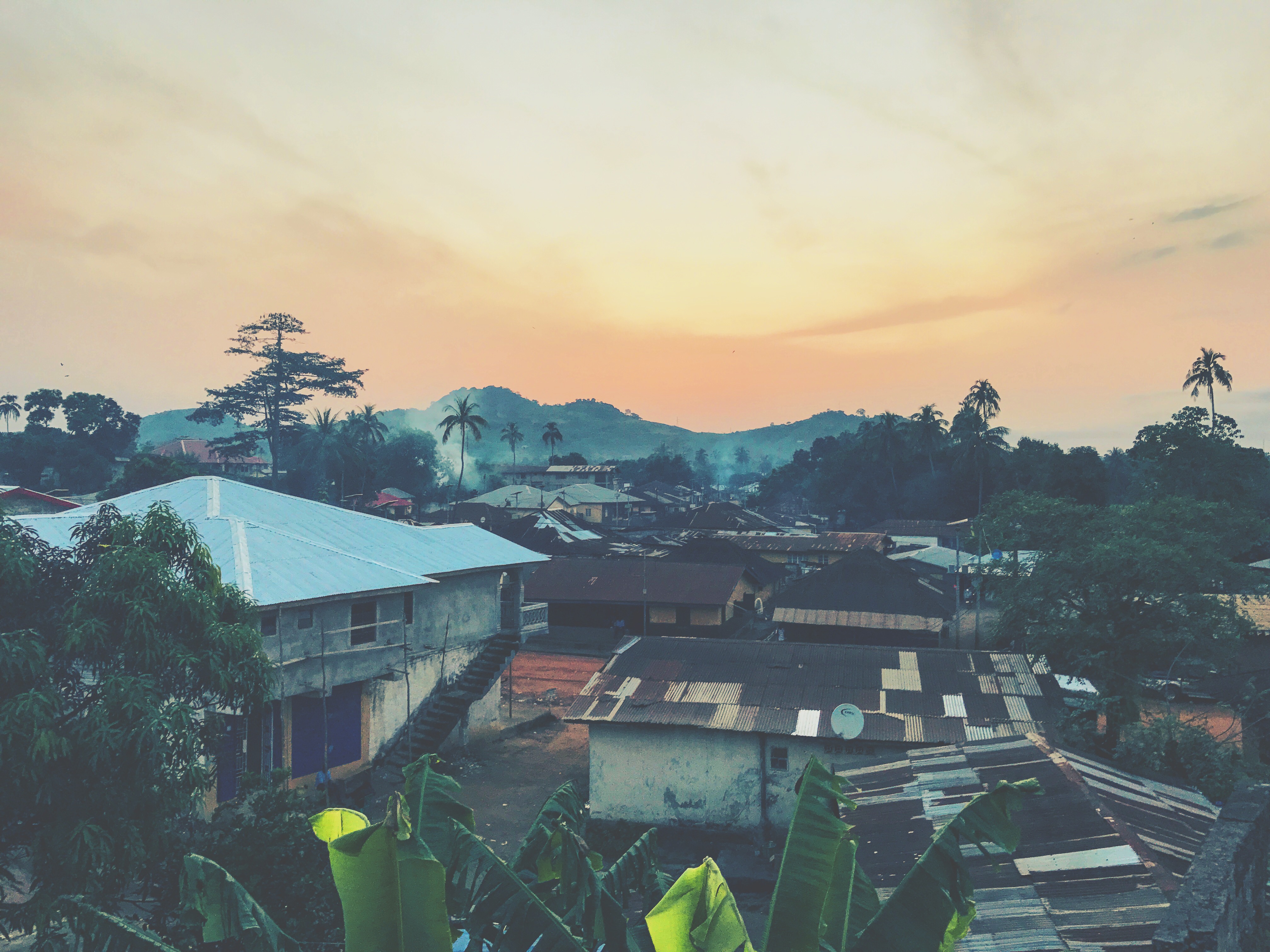
Sunset over Makeni, Sierra Leone (Unsplash)