Viaja con Gus
Home › Sierra Leone › Gola Rainforest National Park
Gola Rainforest National Park
🇸🇱 Sierra Leone · The East and the Rainforests

Gola Rainforest National Park

🪪 What do I need to enter Sierra Leone?Pick your citizenship and we tell you the visa, the days and the paperwork, with the official source.

By leaving your email and citizenship you agree to receive the documents you asked for and weekly travel news. You can unsubscribe whenever you want. How we handle your data.
Jump to what you need
📍Region
Gola Rainforest National Park (GRNP) protects some 710 km² (71,000 ha) of lowland tropical rainforest in eastern Sierra Leone, on the border with Liberia, spread across the districts of Kenema, Kailahun and Pujehun. It is the largest remnant of Upper Guinean forest in the country and a global biodiversity 'hotspot'. Together with Guinea and the neighbouring Liberian forest, it forms a large cross-border forest corridor. Since 2025, together with Tiwai Island, it has made up Sierra Leone's first World Heritage Site.
📌Best time to go
The best time is the dry season, from November to April, when the dirt roads to the park are passable and the forest hikes are less muddy. The east is one of the rainiest regions of Sierra Leone, so in the rainy season (May to October, peaking in July-August) access becomes much harder. For birdwatching, including the famous rockfowl, there are optimal seasons and times that are worth checking with the park.
📌Suggested days
To make the most of Gola, plan at least 2 days / 1 night, sleeping in a lodge or camp inside or on the edge of the forest (for example in Lalehun). Ideally, allow 3 days for several hikes, dawn birdwatching and cultural experiences in the villages. There are also longer treks, including a multi-day one that links Gola with Tiwai Island.
📌Getting there
The usual base is Kenema. From there you reach the village of Lalehun by 4x4, about 40 km away (2–3 hours on dirt roads). It is one of the gateways to the park and home to the Lalehun Lodge. You must book and coordinate in advance with the park administration (tel. +232 78 858055): all visitors need a permit and must be accompanied by park staff and community guides. A 4x4 vehicle is required.
📌Getting around
Inside the park everything is done on foot, along forest trails, always with park guides and local community guides. There are day and night walks, dedicated birdwatching outings (such as visits to the rockfowl colonies at dusk or dawn) and multi-day treks. The terrain is wet, dense and often slippery, so you need good footwear and a reasonable level of fitness.
📌Language and currency
The official language is English and the lingua franca is Krio; Mende is spoken in the area. Park guides get by in English. The currency is the new leone (SLE), at about 22–24 to the dollar in 2026. There are no ATMs or card payments around the park: bring all the cash you need (leones and dollars) from Kenema or Freetown for permits, guides, accommodation and meals.
📌What it is
Sierra Leone's largest block of lowland tropical rainforest; more than 330 bird species, chimpanzees, forest elephants, pygmy hippos and the white-necked rockfowl; Gola-Tiwai UNESCO site (2025).
💱 SLE exchange rate
Loading rate…
🌤️ Weather in Gola Rainforest National Park
Loading weather…

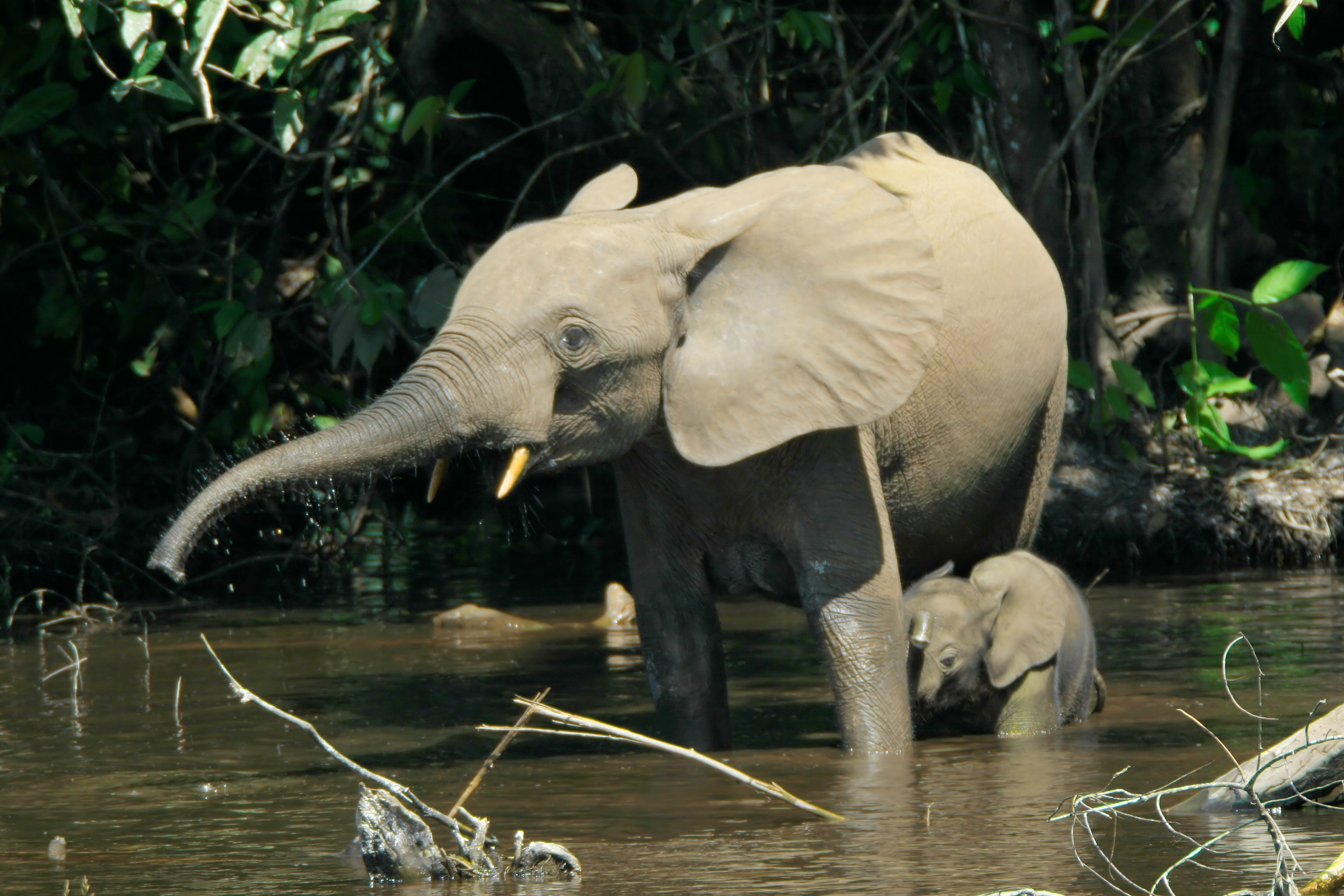
Gola Rainforest National Park is Sierra Leone's great green treasure: almost 710 km² of lowland tropical rainforest on the border with Liberia, the largest remnant of Upper Guinean forest left in the country. It is a world of giant trees, lianas and mist, home to extraordinary biodiversity: more than 330 bird species, western chimpanzees, forest elephants, pygmy hippos, Diana monkeys and the coveted white-necked rockfowl, one of the most sought-after birds on the continent.

Gola is not a classic safari park: it is a dense forest where wildlife is elusive and the reward lies in the immersion, the birdwatching and the experience of walking through one of the richest and most threatened ecosystems in West Africa. Managed in partnership between the Government of Sierra Leone, the Conservation Society of Sierra Leone (CSSL) and the British RSPB, together with local communities, it is a conservation model that turns protecting the forest into a benefit for the people who live around it.

This guide explains how to visit Gola: how to get there from Kenema via Lalehun, how to arrange permits and guides with the park administration, which hikes and birdwatching outings to do (including the search for the rockfowl), where to sleep in the lodges and community camps, and why this border rainforest, now part of the country's first World Heritage Site, is worth the effort of getting there.

📖 History of Gola Rainforest National Park

The area that is now the park was declared a forest reserve in the 1920s and logged for timber for decades, peaking in the 1980s. After years of conservation work led by the CSSL and the RSPB, and after the civil war, the Government of Sierra Leone created Gola Rainforest National Park by law in 2010-2011, the country's second. It is managed as a project that combines conservation of the Upper Guinean forest with community development. In 2025, together with Tiwai Island, it was inscribed by UNESCO as Sierra Leone's first World Heritage Site.

Read the full history ↓

🏛️ Gola Rainforest National Park is in the east and the rainforests

The eastern province of cocoa, coffee and diamonds: Kenema, a city of markets, and the Gola rainforest, the largest lowland tropical forest in the country.

Read the history of The east and the rainforests →

🗺️ What to see

1
The white-necked rockfowl (picathartes)
One of Africa's most sought-after birds: the white-necked rockfowl, a rock-dwelling bird of the Upper Guinean forest, has one of its best refuges in Gola.
Leer más ↓
The white-necked rockfowl ('Picathartes gymnocephalus'), also called the 'white-necked picathartes', is Gola's winged star and one of the holy grails for birdwatchers worldwide. It is a strange and spectacular bird, with a bald yellow-and-black head, white neck and greyish body, that builds mud nests stuck to rocks and caves deep in the forest. It lives only in the Upper Guinean forest of West Africa and is threatened. Gola is one of the best places on the planet to see it: the park runs guided outings to the nesting colonies, usually at dusk or dawn, when the birds return to or leave their rock nests. It is a thrilling, niche experience, highly prized by 'birders' who travel halfway around the world to tick it off their list. Getting there: on guided park outings to the nesting sites. Best time: check with the park; there are usually optimal nesting windows. Tips: book this specific outing in advance, bring binoculars and neutral-coloured clothing, and quietly follow the guide's instructions so as not to disturb the birds.
2
More than 330 bird species
One of West Africa's great 'birdwatching' destinations, with more than 330 species, many endemic to the Upper Guinean forest.
Leer más ↓
Gola is a paradise for birdwatching: more than 330 species have been recorded, many of them restricted to the Upper Guinean forest biome and hard to see elsewhere. Besides the rockfowl, highlights include the Gola malimbe, the rufous fishing owl, the Nimba flycatcher and a huge variety of hornbills, turacos, bulbuls, weavers and forest birds. Dawn walks, when the forest bursts into song, are the best time for 'birding', with expert local guides who help identify elusive species. For bird lovers, Gola is one of the most coveted destinations on the continent, a magnet of ornithological biodiversity. Getting there: guided walks along the park trails. Best time: dry season; at dawn. Tips: binoculars and a West African bird guide, get up early and hire a guide with a sharp eye; patience pays off.
3
Chimpanzees and the forest's large mammals
Western chimpanzees, forest elephants, pygmy hippos and Diana monkeys live in Gola's dense forest.
Leer más ↓
Beneath Gola's canopy lives a remarkable, if elusive, mammal fauna. The park is home to western chimpanzees (endangered), a population of forest elephants (the rare, small elephants of the rainforest), pygmy hippos in the waterways, Diana monkeys and other primates, duikers (small forest antelopes) and many more species. They are not easy to see (the forest is dense and the animals shy), but tracking their presence is part of the adventure. Guided walks let you look for tracks, listen for chimpanzees and, with luck and patience, spot primates and other species. Rather than a safari of big sightings, Gola offers the thrill of knowing you are in a forest inhabited by these rare animals and the chance of fleeting, unforgettable encounters. Getting there: guided walks through the park. Best time: dry season. Tips: manage your expectations (the mammals are hard to see), move quietly, follow the guide and appreciate the tracks, the sounds and the experience of the forest itself.
4
Hikes and treks through the Upper Guinean forest
Trails through the country's largest block of lowland tropical rainforest, from half-day walks to multi-day treks.
Leer más ↓
The heart of the Gola experience is walking through the forest. The park offers everything from half-day walks on trails near the villages to more demanding hikes and multi-day treks that head deep into the forest. One of the great routes is the trek of about three days that links Gola with Tiwai Island, crossing the forest landscape of the south-east. Walking beneath the giant canopy, among centuries-old trees, lianas, streams and the constant hum of the forest, is an immersive and physical experience. You pass through communities, learn about the flora and fauna from local guides, and feel the scale of one of West Africa's most valuable ecosystems. Getting there: from the park gateways (Lalehun and others), with guides. Best time: dry season. Tips: good hiking boots, quick-drying clothes, repellent, malaria prophylaxis and water; for long treks, arrange porters and camps with the park.
5
Cultural experiences in Gola's villages
The park is managed with the communities: visiting the villages, with their games, dances and crafts, is part of the visit.
Leer más ↓
Gola is as much a community development project as a conservation one: it is managed in partnership with the chiefdoms and villages surrounding the forest, which provide guides and receive benefits from ecotourism. That is why the visit includes a cultural dimension: staying in community guesthouses, getting to know villages such as Belebu, Nemahungoima or Vaama, and sharing traditional games, dances, music and crafts with the villagers. This immersion in rural Mende life, besides enriching the trip, is what gives meaning to the Gola model: when the forest is worth more standing than felled, the community becomes its best guardian. Taking part respectfully in this human dimension is an essential part of the experience. Getting there: in the villages around the park, arranged with the administration. Best time: year-round within the dry season. Tips: ask permission before taking photos, buy local crafts and contribute to community projects; your visit directly supports conservation.
6
Since 2025, Gola and neighbouring Tiwai Island have formed Sierra Leone's first UNESCO World Heritage Site.
Leer más ↓
Gola shares a historic recognition with Tiwai Island: in July 2025, the UNESCO World Heritage Committee inscribed the 'Gola-Tiwai Complex' on the World Heritage List, the first in Sierra Leone. The recognition honours the outstanding universal value of these remnants of the Upper Guinean forest and their extraordinary biodiversity, as well as the community conservation model that sustains them. For travellers, this distinction does not change the experience on the ground (the forest is still wild and hard to reach), but it does underline the global importance of what you are visiting and strengthens local pride and protection efforts. Exploring Gola means walking through a heritage that belongs to all of humanity. Getting there: Gola and Tiwai can be combined on a single trip through the south-east, even with the trek that links them. Best time: dry season. Tips: if you have time, combine both sites to grasp the scale of the complex; arrange logistics with the park and local operators.
📶I have never landed without internet. I arrive and my phone connects to the strongest network in the country I am visiting: I can say I landed, sort out transport, book tours and keep posting, at a seriously good price. I always use the Maya eSIM — check their plans by clicking the banner.See plans →Maya Mobile eSIM — download, install, go
What nobody tells you

💵 Prices

Tickets

TypePrice
Permiso de visitante / tarifa del parqueTo be arranged with the Gola administration; all visitors require a permit and must be accompanied by staff (check when booking, 2026)
Guía del parque + guía comunitario (obligatorios)Included in the visit arrangement; to be agreed depending on activity and days (2026)
Salida específica a la colonia de picatartesSupplement to be agreed; book in advance (2026; check when visiting)
🔄 updated monthlyOfficial / reference values · double-check when buying

Activities and tours

ActivityPriceDurationOperator
Guided birdwatching walk (dawn)In the arrangement with the park; guides included (2026)3 to 5 hoursGola Rainforest NP / community guides
Dusk/dawn outing to see the rockfowlSupplement to be agreed; advance booking (2026)2 to 4 hoursGola Rainforest NP
Day or night forest walkIn the arrangement with the park (2026)2 to 5 hoursGola Rainforest NP
Multi-day Gola–Tiwai trekTo be agreed; includes guides, porters and camps (2026; check)Approx. 3 daysGola and Tiwai community guides
Organised package to Gola from Freetown/KenemaFrom about US$ 300–600 per person depending on group and days (VSL Travel, 2026; check)2 to 3 daysVSL Travel / local operators
🔄 updated monthlyOfficial / reference values · double-check when buying

🚌 How to get there and distances

Getting around

ModePriceDurationNotes
4x4 with driver (Kenema ↔ Lalehun and park gateways)To be agreed depending on destination and days (2026)2 to 3 hours Kenema–LalehunEssential for access; difficult dirt roads, especially in the rains. Arrange with the park or an operator
On foot along the trails (with guides)No extra cost beyond the guide arrangementVariableThe whole interior of the park is explored on foot with park and community guides; wet, dense terrain
Boat/canoe on waterways (depending on route)To be agreed where applicable (2026)VariableLocal boats are used on some stretches and activities; ask depending on the excursion
🔄 updated monthlyOfficial / reference values · double-check when buying

How to get there

RouteAirlines / operatorsAvg. priceDuration
Kenema → Lalehun (Gola gateway) by 4x4Gola administration / operatorsTo be agreed; a 4x4 is required (2026)2 to 3 hours on dirt roads (about 40 km)
Freetown → Kenema → GolaRoad transport to Kenema + 4x4 to the parkFreetown–Kenema minibus approx. SLE 200–500 (US$ 9–22); then 4x4 to be agreed (2026)4–5 h to Kenema + 2–3 h to Lalehun
Bo → Kenema → GolaPoda-podas/taxis to Kenema + 4x4 to the parkBo–Kenema approx. SLE 80–200 (US$ 4–9); then 4x4 to be agreed (2026)1–1,5 h to Kenema + 2–3 h to Lalehun
Gola ↔ Tiwai Island (trek)Community guidesIn a trekking package to be agreed (2026)Hike of about 3 days
🔄 updated monthlyOfficial / reference values · double-check when buying

🏨 Where to stay

No exact prices: a scale from $ (budget) to $$$$$ (luxury), with 2-3 options per category.

Lalehun Lodge (the park's forest lodge)
Price$$$$$
Recommended options
Approx. US$ 25–50 per person/night; simple accommodation surrounded by forest in the village of Lalehun, the classic base for exploring the park; basic facilities and local meals
Community guesthouses and camps
Price$$$$$
Recommended options
From about US$ 15–35 per person; village guesthouses (Belebu, Nemahungoima), camps such as Malimbe and homestays in Vaama; very basic, with a direct contribution to the communities
Base in Kenema (hotels)
Price$$$$$
Recommended options
US$ 15–90 per night in Kenema; many visitors sleep comfortably in the city and make trips into the park, though you miss dawn in the forest

🍴 Where to eat

Comidas del lodge/campamento (cocina local)
Price$$$$$
Options / signature dish
Approx. US$ 5–12 per meal; simple Sierra Leonean dishes (rice with sauce, fish, chicken) prepared in Lalehun or at the guesthouses; best to give advance notice
Provisiones propias
Price$$$$$
Options / signature dish
Cost of what you buy in Kenema; bring water, snacks and some food, as there are no shops or restaurants in the park
Comida en Kenema (antes/después)
Price$$$$$
Options / signature dishUS$ 2–15 per dish at chop bars and hotels in the base town

📖 History of Gola Rainforest National Park

Origins, formation and what the sources say.

A fragment of the Upper Guinean forest

To understand Gola, you need to look at the big map of West Africa. Thousands of years ago, a great belt of humid tropical rainforest (the Upper Guinean Forest) stretched almost unbroken from Guinea and Sierra Leone to Togo. It was a remarkably rich and unique ecosystem, separated from the Congo rainforest block by the so-called 'Dahomey Gap'. That forest was home to extraordinary biodiversity, with countless endemic species.

Today, after centuries of clearing for farming, logging and resource extraction, that great forest has been reduced to scattered fragments, most of them degraded. The Gola forest, in eastern Sierra Leone, is one of the largest and best-preserved fragments left: some 710 km² of lowland rainforest, the largest remnant of this biome in the country. It is recognised as a global biodiversity 'hotspot' and a priority for international conservation.

On the border with Liberia, Gola is part of a larger cross-border forest landscape. On the Liberian side lies the Gola/Foya forest, and the whole area connects with other protected areas in the region. Protecting Gola isn't just about saving a national forest. It means conserving one of the last large pieces of an ecosystem that was once vast and now hangs by a thread.

From forest reserve to logged forest

Gola's formal history as a designated area begins in the colonial era. In the 1920s, the British declared the area the Gola forest reserves, but with a very different goal from today's. The aim wasn't to conserve biodiversity but to manage the forest as a timber resource, so the reserve was designed to regulate and make use of logging.

Commercial logging in the Gola forests began in the 1930s and grew over time, peaking in the 1980s. For decades the forest was a source of timber, with added pressure from farming by surrounding communities and, across the wider region, from mining. Naturalists knew how biologically rich the place was, but the forest was still treated essentially as a log quarry.

That model began to change towards the end of the 20th century, as awareness grew of the unique value of the Upper Guinean forest and of how quickly it was disappearing. National and international conservationists set their sights on Gola as one of the last large blocks that was worth saving, and urgently. But before that effort could take shape, the country descended into war.

Conservation, war and rebirth

The conservation push for Gola was built around an alliance that would prove key: the Conservation Society of Sierra Leone (CSSL), the UK's Royal Society for the Protection of Birds (RSPB) and the Government's Forestry Division, together with the local chiefdoms and communities. The goal was to protect the forest while making sure its conservation benefited the surrounding communities rather than harming them.

The 1991-2002 civil war hit the east of the country hard and halted these efforts. Paradoxically, though, the insecurity also slowed some of the logging, and the forest survived. Once the war was over, the conservation project picked up again in earnest, with international funding and a pioneering approach: paying communities and chiefdoms to conserve the forest, developing economic alternatives (such as shade-grown cocoa) and setting up research and ecotourism programmes.

This is how Gola went from timber reserve to flagship community-based conservation project. The RSPB embraced it as its 'Forest of Hope', largely because of its exceptional birdlife, with the white-necked rockfowl as its flagship species. Years of work laid the groundwork for the big institutional step that would come in the early 2010s.

The birth of the National Park (2010-2011)

Official recognition finally came in the early 2010s. Gola Rainforest National Park was declared by President Ernest Bai Koroma and established by an act of the Parliament of Sierra Leone in December 2010, and it was officially opened on 3 December 2011. It was only the country's second national park, a milestone in Sierra Leone's environmental policy and the result of years of conservation work.

The park protects some 71,000 hectares (710 km²) of lowland rainforest, managed jointly by the Government of Sierra Leone, the CSSL and the RSPB under a model that ensures local communities benefit directly from conservation. Community guides, village guesthouses, research programmes and a budding ecotourism scheme were set up, along with compensation and development schemes for the surrounding chiefdoms.

Gola thus became a model for how a tropical forest can be conserved in a poor, post-war country: not by fencing the forest off from its people, but by making the community both the driving force behind its protection and the one that benefits from it. The park protects an astonishing range of wildlife: more than 330 bird species, chimpanzees, forest elephants, pygmy hippos, Diana monkeys and the lush plant life of the Upper Guinean forest.

World Heritage: the Gola-Tiwai Complex (2025)

Gola's international recognition came in July 2025. At its 47th session, the UNESCO World Heritage Committee inscribed the 'Gola-Tiwai Complex', made up of Gola Rainforest National Park and nearby Tiwai Island, on the World Heritage List. It was Sierra Leone's first World Heritage Site, a historic recognition for a country that had long been associated with war and blood diamonds.

The inscription recognises the outstanding universal value of these remnants of the Upper Guinean forest: their extraordinary biodiversity, their role as a refuge for threatened species and how well they represent an endangered biome. It also implicitly recognises the community conservation model that has made it possible to protect them. For Sierra Leone, the listing was a source of national pride and a showcase for its natural heritage to the world.

Today, Gola brings together the layers of its history: the colonial timber reserve, the forest logged for decades, the conservation project that rescued it, the national park created in 2011 and the UNESCO site recognised in 2025. For travellers, exploring Gola means stepping into a heritage that belongs to all humanity, one of the last great Upper Guinean forests. Every visit also helps give this green treasure, and the communities who look after it, a future.

📚 Bibliography

  • Gola Rainforest National Park (official site) — Our History: https://golarainforest.org/grnp-history
  • Gola Rainforest National Park — Visitor Information: https://golarainforest.org/visiting-gola
  • Gola Rainforest National Park — The Forest: https://golarainforest.org/the-forest
  • Wikipedia (EN) — «Gola Rainforest National Park»: https://en.wikipedia.org/wiki/Gola_Rainforest_National_Park
  • Mongabay — «Sierra Leone creates rainforest park» (2011): https://news.mongabay.com/2011/12/sierra-leone-creates-rainforest-park/
  • Wikipedia (EN) — «Upper Guinean forests»: https://en.wikipedia.org/wiki/Upper_Guinean_forests
  • Wikipedia (EN) — «White-necked rockfowl» (Picathartes gymnocephalus): https://en.wikipedia.org/wiki/White-necked_rockfowl
  • UNESCO World Heritage Centre — «Gola-Tiwai Complex»: https://whc.unesco.org/en/list/1746/
  • RSPB — Gola Rainforest (Forest of Hope): https://www.rspb.org.uk/
  • BirdLife International — Gola Forest: https://www.birdlife.org/

❓ Frequently asked questions

How do you visit Gola? Can I go on my own?+
You cannot enter independently: all visitors need a permit and must be accompanied by park staff and community guides. You have to book and coordinate in advance with the Gola administration (tel. +232 78 858055), which arranges permits, guides and accommodation and tells you about road conditions. The base is Kenema, from where you reach Lalehun by 4x4. The easiest option is to go with an operator such as VSL Travel or directly with the park.
What animals will I see in Gola?+
Gola is above all a birdwatching destination: more than 330 species, including the coveted white-necked rockfowl, with dedicated outings to its nesting colonies. The large mammals (chimpanzees, forest elephants, pygmy hippos, Diana monkeys) are there but very elusive and hard to see in the dense forest. It is not a safari of big sightings, but an immersion in an incredibly rich ecosystem where you look for tracks, calls and fleeting encounters.
When is the best time to go to Gola?+
The dry season (November to April) is best: the dirt roads are passable and the hikes less muddy. The east is one of the rainiest parts of the country, so in the rainy season (May to October, peaking in July-August) access becomes much harder. To see the rockfowl, check with the park about the optimal nesting windows. Always coordinate in advance because of road conditions.
What should I bring and what precautions should I take?+
Bring cash (leones and dollars) from Kenema or Freetown, as there are no ATMs or card payments in the area. Good hiking boots, quick-drying long-sleeved clothes, repellent, a head torch, binoculars, water and snacks. Malaria is a real risk: use repellent, sleep under a mosquito net and take prophylaxis. The terrain is wet and the hikes require a reasonable level of fitness.
Is it worth combining Gola with Tiwai?+
Yes, very much so. Gola and Tiwai Island together form the Gola-Tiwai Complex, Sierra Leone's first World Heritage Site (UNESCO, 2025), and they complement each other: Tiwai stands out for its concentration of primates and easy wildlife viewing on an island, and Gola for its vast forest and birdlife, with the rockfowl as the star. There is even a trek of about three days linking both sites. If you have time, combining them is the best way to understand the scale of this natural heritage.

More places in Sierra Leone

Isla de BunceIslas BananaIslas TurtleKenemaLakkaMakeni
See every place in Sierra Leone →The history of Sierra Leone →
Sources consulted (6)
Still planning?
Explore more destinations in Sierra Leone
See all destinations →
Image credits
Photos from Wikimedia Commons, each under its own licence (CC BY, CC BY-SA or public domain). Open each file to see its author and licence.
Loxodontacyclotis