Viajá con Gus
Home › São Tomé and Príncipe › Praia Jalé
Praia Jalé
🇸🇹 São Tomé and Príncipe · The jungle-clad south of São Tomé

Praia Jalé

🪪 What do I need to enter São Tomé and Príncipe?Pick your citizenship and we tell you the visa, the days and the paperwork, with the official source.

By leaving your email and citizenship you agree to receive the documents you asked for and weekly travel news. You can unsubscribe whenever you want. How we handle your data.
Jump to what you need
📍Region
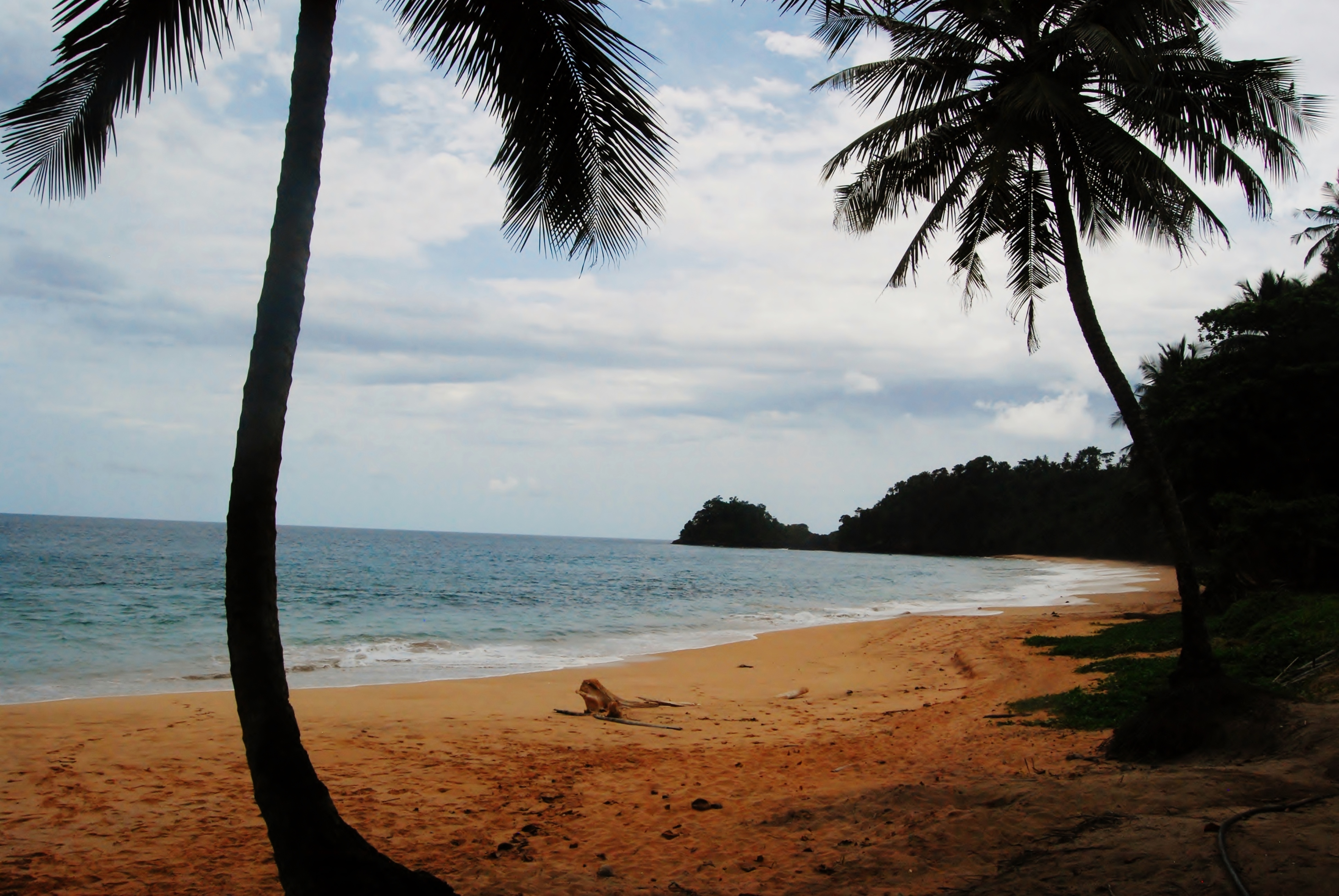
Praia Jalé is an unspoilt beach at the far southern tip of São Tomé island, in the Caué district, inside the buffer zone of Obô Natural Park, near Porto Alegre. It is one of the most remote and wild beaches in the country, all sand and palm trees. Above all, it is one of the archipelago's main sea turtle nesting sites. A small ecolodge and a conservation project (Programa Tatô) operate here, offering guided night walks to see the turtles in season.
📌Best time to go
Turtle season runs from September to May, when the females come ashore at night to lay their eggs and, later on, the hatchlings emerge. This is the best time for the night-time viewing walks. Weather-wise, the dry season (June to September) makes access easier, but the south is very rainy the rest of the year. For good access and turtle activity together, the months around September and the end-of-year dry spell tend to work well.
📌Suggested days
You can visit Praia Jalé as a day trip from the south or from the capital. The full experience, though, especially the night-time turtle walk in season, is worth staying the night for, at the Jalé ecolodge or in Porto Alegre. With one or two nights you can enjoy the beach, the turtle watching and the calm of the far south, and combine it all with Pico Cão Grande and the trails of Obô Park.
📌Getting there
Praia Jalé is at the far southern tip, near Porto Alegre, about 65-70 km from the capital. That's 2 to 2.5 hours along the southern road, which is in poor condition in places and sometimes needs a 4x4. The most practical options are a car with a driver, an organised tour, or a transfer arranged with the ecolodge. The last stretch is on a dirt track and, depending on the tide and the state of the track, part of it is on foot.
📌Getting around
In Jalé everything is on foot: the beach, the ecolodge and the conservation walks. For night-time turtle outings you must always go with the project's guides (Programa Tatô), both because the site is fragile and so the animals aren't disturbed. To get around the south (the peak, other beaches, the rainforest) you'll need a car with a driver or a tour. Bring a red-light torch, insect repellent and comfortable shoes.
📌Language and currency
Portuguese and local creoles are spoken. The turtle project guides speak Portuguese and sometimes some English or French. The currency is the dobra (STN), pegged to the euro at 24.5 STN per euro. The ecolodge and activities are paid in cash (euros or dobras). There are no ATMs or card payments in the far south, so bring enough cash from the capital.
💱 STN exchange rate
Loading rate…
🌤️ Weather in Praia Jalé
Loading weather…

Praia Jalé is one of São Tomé's most remote, unspoilt and special beaches: a strip of sand and palm trees at the island's far southern tip, far from everything, where sea, rainforest and silence meet in an almost untouched corner. What makes it truly unique, though, is that it's one of the country's main sea turtle nesting sites, a place where conservation and tourism go hand in hand.

In season, sea turtles (green turtles, hawksbills and even the huge leatherbacks) come ashore at night to lay their eggs, and later the hatchlings scramble down to the sea. Programa Tatô, a São Tomé conservation project, protects these beaches and runs guided night walks to watch the turtles without disturbing them. It's a thrilling, unforgettable experience. There's also a small, rustic ecolodge where you can spend the night.

This guide tells you how to visit Praia Jalé: when to go to see turtles, how to reach the far south, how the ecolodge and the conservation project work, and how to combine the beach with the rest of the island's wild south. It's a destination for lovers of nature, marine life and remote corners, in one of the least visited countries in the world.

📖 History of Praia Jalé

Praia Jalé is an unspoilt beach at the far southern tip of São Tomé, in the buffer zone of Obô Natural Park, famous as one of the country's main sea turtle nesting sites. Turtle conservation work has been carried out there since 1998 and is now run by Programa Tatô, which protects nesting females, fights poaching and organises turtle-watching walks and eco-volunteering. You'll find more on São Tomé's turtles and the project's history on our history page.

Read the full history ↓

🏛️ Praia Jalé is in the rainforest south of São Tomé

Equatorial rainforest, a needle of lava piercing the sky and the land of the Angolares, the descendants of rebel slaves who gave the country its first hero: Rei Amador.

Read the history of The rainforest south of São Tomé →

🗺️ What to see

1
Night-time turtle watching
The guided walk to watch sea turtles nesting on the beach at night, the big experience at Jalé.
Leer más ↓
The main reason to come to Praia Jalé is to watch sea turtles. In season (roughly September to May), the females come ashore at night to dig their nests and lay their eggs, and later the hatchlings emerge and race to the sea. Programa Tatô guides run night walks so you can witness this natural spectacle without disturbing the animals. Walking along the beach in the dark, by dim red light, and seeing a large sea turtle laying her eggs or dozens of hatchlings emerging from the sand and heading for the ocean is a thrilling, unforgettable experience. The guides explain turtle biology, the conservation work and the threats the turtles face. It's nature tourism at its purest and most responsible. Getting there: on Jalé beach, with the project guides. Best time to go: September to May (nesting and hatching season). Tips: only go with authorised guides; use red light, no flash; follow their instructions so you don't disturb the turtles; ideally stay the night nearby.
ℹ️ Distance: On Jalé beach, far southern tip of the island · Best time to go: September to May (turtle season) · Admission: Guided walk with Programa Tatô; contribution from about €10-25 per person (verify 2024) · Duration: 1 to 2 hours (at night)
2
The unspoilt beach and swimming
An almost untouched strip of sand and palm trees for swimming, relaxing and enjoying the wild south.
Leer más ↓
Turtles aside, Praia Jalé is simply a beautiful, unspoilt beach: a strip of sand fringed with palm trees and greenery, with open sea in front and rainforest behind, in one of the most remote and peaceful corners of São Tomé. Part of its charm is the feeling of being on an almost deserted beach, far from everything. It's an ideal place to swim (carefully, depending on sea conditions), walk along the shore, sunbathe and switch off completely. Being so isolated and protected, it keeps a wild, authentic feel that has become rare in the world. By day, without the turtles' night-time activity, it's a place for rest and quiet contemplation. Getting there: at the far southern tip, near Porto Alegre. Best time to go: the dry season, for better access and weather. Tips: bring everything you need (water, food, shade), as there are few services; respect the marked turtle nests and don't leave any rubbish.
ℹ️ Distance: Far southern tip, near Porto Alegre · Best time to go: Dry season (June-September) for access · Admission: Free; few services on site, 2024 · Duration: Half a day or more
3
The Jalé ecolodge and eco-volunteering
The beach's small, rustic ecolodge, linked to the turtle conservation project.
Leer más ↓
Praia Jalé has a small and very rustic ecolodge, with a few simple chalets or cabins near the sea, designed for people who want to sleep surrounded by nature and get close to the turtle experience. Staying here makes the night walks easy and means you wake up on one of the most remote beaches in the country. The ecolodge is linked to the conservation project (Programa Tatô), which as well as protecting the turtles runs eco-volunteering programmes: travellers who want to help out for a while with monitoring, nest protection and hatchling releases. It's tourism with a purpose that contributes directly to the conservation of these endangered species. Getting there: on Jalé beach itself. Best time to go: turtle season (Sept-May) for eco-volunteering. Tips: it's rustic, basic accommodation with no luxuries; book ahead; ask about the volunteering programmes if you'd like to help.
ℹ️ Distance: On Jalé beach · Best time to go: Turtle season (Sept-May) · Admission: Rustic accommodation; ask about rates and volunteering (verify 2024) · Duration: 1 night or more
4
Porto Alegre and the far south
The small village of Porto Alegre and the beaches and ecolodges of the island's far southern tip.
Leer más ↓
Praia Jalé is close to Porto Alegre, the last sizeable village at the far southern tip of São Tomé, a quiet, remote place that is the gateway to this area. Nearby are other beaches and ecolodges, such as Praia Inhame, which offer beachfront accommodation and also take part in turtle conservation. This far southern region, between the rainforest of Obô Park and the ocean, is one of the most isolated and authentic in the country, with lush nature and few tourists. From here you can arrange boat trips to nearby Ilhéu das Rolas, the islet crossed by the equator, and explore the beaches and coves of the south.
ℹ️ Distance: Far southern tip, next to Jalé · Best time to go: Dry season (June-September) · Admission: Depends on services and tours · Duration: As long as you like (base for the far south)
5
The Malanza mangrove (canoe trip)
The Malanza River mangrove, near Jalé, explored by canoe among birds and water plants.
Leer más ↓
Very close to Praia Jalé, in the Malanza area, lies one of São Tomé's most important mangroves, at the mouth of the Malanza River. It's a fascinating ecosystem that you can explore by canoe, gliding silently between the mangrove trees and their submerged roots while watching waterbirds, crabs and the wildlife of this transition zone between river and sea. The canoe trip through the mangrove, guided by locals, is a peaceful activity much loved by nature and bird enthusiasts. It's a different way to discover the biodiversity of the south, complementing the beach and the turtles, and one of the most original experiences at the island's far southern tip. Getting there: in Malanza, near Jalé and Porto Alegre. Best time to go: all year round; ideally with a suitable tide (ask locally). Tips: book the trip with local guides; bring insect repellent, water and binoculars for the birds.
ℹ️ Distance: Malanza, near Praia Jalé and Porto Alegre · Best time to go: All year round (depending on the tide) · Admission: Canoe trip with local guides; from about €10-25 per person (verify 2024) · Duration: 1 to 2 hours
6
Combine the beach with the rainforest of Obô Park and the south's iconic volcanic monolith.
Leer más ↓
As Praia Jalé lies in the buffer zone of Obô Natural Park, a visit combines beautifully with the southern rainforest. From the area you can reach the park's trails, with their lush vegetation, waterfalls and unique biodiversity, always with authorised guides. Along the way there are also the viewpoints over Pico Cão Grande, the spectacular 663-metre volcanic spire that is the country's natural icon, and Roça São João dos Angolares with its famous restaurant. A getaway of a couple of nights in the south lets you link together the beach and turtles of Jalé, the peak, the rainforest and good food, experiencing the best of São Tomé at its wildest.
ℹ️ Distance: South of the island, around Jalé · Best time to go: Dry season (June-September) · Admission: Depends on each tour (park, peak, roça) · Duration: Half-day to full-day trips
📶I have never landed without internet. I arrive and my phone connects to the strongest network in the country I am visiting: I can say I landed, sort out transport, book tours and keep posting, at a seriously good price. I always use the Maya eSIM — check their plans by clicking the banner.See plans →Maya Mobile eSIM — skip roaming fees, unlimited data
What nobody tells you

💵 Prices

Tickets

TypePrice
Recorrido nocturno de observación de tortugas (Programa Tatô)Contribution from about €10-25 per person, 2024; verify when visiting
Acceso a la playaFree; few services on site, 2024
Alojamiento en el ecolodge de Jalé (rústico)Ask about rates; basic accommodation (verify 2024)
🔄 updated monthlyOfficial / reference values · double-check when buying

Activities and tours

ActivityPriceDurationOperator
Night-time turtle watching with guidesContribution from about €10-25 per person (verify 2024)1 to 2 hoursPrograma Tatô (turtle conservation)
Eco-volunteering in turtle conservationDepends on programme and length (verify 2024)Days to weeksPrograma Tatô
Day trip to the far south (Jalé + Porto Alegre + peak)From about €60-110 per person with car and guide (verify 2024)Full dayLocal operators / ecolodges
🔄 updated monthlyOfficial / reference values · double-check when buying

🚌 How to get there and distances

Getting around

ModePriceDurationNotes
Car with driver / 4x4 from São ToméTrip to the south from about €60-110 per day (verify 2024)2-2.5 hThe usual option; the southern road is in poor condition in places and may need a 4x4
Transfer arranged by the ecolodgeDepends on route (verify 2024)VariableThe Jalé ecolodge or those in Porto Alegre can help with transfers from the capital
Shared minibus to Porto AlegreFrom about STN 40-80 (verify 2024)2.5-3 hVery cheap but slow; it drops you in Porto Alegre and you then have to get to Jalé
🔄 updated monthlyOfficial / reference values · double-check when buying

How to get there

RouteAirlines / operatorsAvg. priceDuration
São Tomé city → Praia Jalé / Porto Alegre (far south)Car with driver, 4x4, shared minibusTour from €60-110; minibus from STN 40-80 (verify 2024)2 to 2.5 h (about 65-70 km)
São João dos Angolares / Pico Cão Grande → Praia JaléCar with driver / tourDepends on route (verify 2024)Final stretch to the far south
🔄 updated monthlyOfficial / reference values · double-check when buying

🏨 Where to stay

No exact prices: a scale from $ (budget) to $$$$$ (luxury), with 2-3 options per category.

Jalé ecolodge (on the beach)
Price$$$$$
Recommended options
Basic, rustic beachside lodging linked to the turtle project; ideal for the night walks (ask about rates)
Porto Alegre and southern ecolodges
Price$$$$$
Recommended options
From around €35-90 a night; beachfront ecolodges such as Praia Inhame, which also take part in turtle conservation
Roça São João dos Angolares / southern base
Price$$$$$
Recommended options
From around €50-120 a night; the south's roça-hotel, a good base for combining Jalé, the peak and the rainforest

🍴 Where to eat

TypePriceOptions / signature dish
Ecolodges del extremo sur$$$$$Around €8-20 per person; fresh fish and local cooking at the Jalé and Porto Alegre ecolodges
Comida local en Porto Alegre$$$$$From around €3-10 per person; home-style São Toméan food and fish in the village
Roça São João dos Angolares (camino)$$$$$Signature Creole tasting menu, from around €25-40 per person; a classic food stop in the south

📖 History of Praia Jalé

Origins, formation and what the sources say.

The far south: the wildest part of the island

Praia Jalé lies at the southern tip of the island of São Tomé, one of the most remote, humid and least populated regions of the country. Here the equatorial rainforest of the Obô Natural Park comes down almost to the sea, and sandy beaches alternate with river mouths, mangroves and lush tropical vegetation. It is a hard-to-reach area, far from the capital, and that is exactly why it has kept a wild and authentic character.

This part of the island gets some of the highest rainfall in Africa: the torrential rains that pour down on the southern mountains feed an overflowing natural world, very different from the drier north. Beaches like Jalé, near Porto Alegre, are framed by this landscape of forest, sea and rivers, in a corner where people are few and nature is in charge.

Precisely because of its isolation and untouched setting, the far south became an ideal refuge for wildlife, including the sea turtles that have been coming to these beaches to lay their eggs since time immemorial. The combination of suitable sand, little artificial light and few people makes Jalé one of the most important nesting sites in the archipelago.

visitsaotome.com · Praia jaleen.programatato.org · Sao tome

The sea turtles of São Tomé

The waters and beaches of São Tomé and Príncipe are a sanctuary for sea turtles: five of the world's seven sea turtle species are found in the archipelago. Among them are the green turtle, the hawksbill turtle (highly endangered, hunted for its shell) and the impressive leatherback, the largest of them all, which can exceed two metres in length and weigh several hundred kilos.

Every year, in the season that runs roughly from September to May, the females come out of the sea at night and climb onto beaches like Jalé to dig their nests in the sand and lay dozens of eggs before returning to the ocean. Weeks later, the hatchlings emerge from the sand and race towards the sea in a dash full of dangers: only a small fraction will reach adulthood. Watching this cycle is one of nature's great spectacles.

However, São Tomé's turtles were seriously threatened for decades. The capture of adult females for their meat and shells, the plundering of eggs, accidental bycatch and habitat destruction pushed several species to the brink of local collapse. Saving them required a deep change in the relationship between communities and these animals, traditionally seen as food and a source of income.

en.programatato.org · Sao tomemonacovoice.com · Conservation on so tom a community led…

Programa Tatô: conservation from the community up

The recent history of Praia Jalé is tied to that of turtle conservation. Work in the area began in 1998 with an initial study funded by the Peace Corps for Sea Turtles, within the European Union's ECOFAC programme. In 2002 it was coordinated with the local NGO MARAPA; the project kept growing and gaining independence until, in 2018, it was formalised as the Associação Programa Tatô ('tatô' is the local name for the turtle).

Programa Tatô's mission is to improve the conservation status of the five sea turtle species that reach São Tomé and Príncipe and to promote the sustainable management of marine and coastal ecosystems. Every year, from September to May, its team sets up on beaches like Jalé to watch over the nests, protect nesting females, fight poaching and welcome visitors who want to join the guided observation walks.

One of its keys has been involving local communities: many former turtle hunters have become conservation agents and guides, finding in the protection of these animals a source of income and pride. The project has international support — since 2024, among others, from the Prince Albert II of Monaco Foundation — and has become a model of community-based conservation in the Gulf of Guinea.

en.programatato.org · Sao tomeprogramatato.org · Praia jalé

Tourism, eco-volunteering and an ecolodge

At Praia Jalé, conservation and responsible tourism go hand in hand. The project has built a small, rustic ecolodge on the beach, with a few little cabins close to the sea, which serves both as a base for the conservation team and as accommodation for visitors. Tourism income helps fund turtle protection, closing a virtuous circle.

Guided night walks let travellers watch females laying eggs or hatchlings emerging without disturbing them, under strict rules: red light only, keeping your distance, silence and always with a guide. Programa Tatô also runs eco-volunteering programmes, in which people from all over the world can spend some time helping with monitoring, nest protection and hatchling releases, experiencing conservation work up close.

This model makes Jalé an example of how well-managed nature tourism can be an ally of environmental protection rather than a threat. Every visitor who does the walk or stays at the ecolodge is helping, with their contribution, to keep the turtles coming back to these beaches year after year.

programatato.org · Ecoturismo ecovoluntariadohotelpraiainhame.com · Programa tato

Praia Jalé today: a refuge for the future

Today Praia Jalé is both one of the most beautiful and unspoilt beaches in São Tomé and a symbol of the country's effort to protect its extraordinary natural heritage. Located in the buffer zone of the Obô Natural Park, in the far south, it combines the beauty of a remote beach of sand and palm trees with the thrill of seeing sea turtles go through their life cycle.

For travellers, Jalé represents the best of tourism in São Tomé: untouched nature, direct contact with wildlife, human contact with local communities and the satisfaction of knowing their visit supports a good cause. Combined with the other highlights of the south — Pico Cão Grande, Roça São João dos Angolares, the Obô trails — it offers an experience that is hard to match.

The future of São Tomé's turtles is not guaranteed: they still face threats, and conservation depends on constant work and on the support of visitors, communities and institutions. But beaches like Jalé, where every year the females return to nest under the protection of those who once hunted them, show that change is possible. A refuge for the turtles and, also, a hope for the sustainable development model of these islands on the equator.

en.programatato.org · Sao tomevisitsaotome.com · Praia jale

📚 Bibliography

  • Programa Tatô — «São Tomé»: https://en.programatato.org/sao-tome
  • Programa Tatô — «Praia Jalé»: https://www.programatato.org/noticias/categories/praia-jal%C3%A9
  • Programa Tatô — «Ecoturismo e Ecovoluntariado»: https://www.programatato.org/ecoturismo-ecovoluntariado
  • Visit São Tomé — «Praia Jalé»: https://www.visitsaotome.com/beach/praia-jale.html
  • Praia Inhame Eco Lodge — «Programa Tatô / Marine Turtles»: https://www.hotelpraiainhame.com/en/programa-tato.html
  • Monaco Voice — «Conservation on São Tomé: A Community-Led Effort to Save Sea Turtles»: https://monacovoice.com/en/article/conservation-on-so-tom-a-community-led-effort-to-save-sea-turtles
  • GoFundMe (Programa Tatô) — «Construir para Preservar em São Tomé e Príncipe»: https://www.gofundme.com/f/construir-para-preservar-sao-tome-e-principe
  • Wikipedia (EN) — «São Tomé and Príncipe»: https://en.wikipedia.org/wiki/S%C3%A3o_Tom%C3%A9_and_Pr%C3%ADncipe

❓ Frequently asked questions

When can I see turtles at Praia Jalé?+
Turtle season runs roughly from September to May: during those months the females come ashore at night to lay their eggs and, later on, the hatchlings emerge and race to the sea. The guided night walks run by Programa Tatô take place during that season. Outside those months there is no turtle activity, although the beach is still beautiful to visit.
What are the turtle walks like and what should I respect?+
They are night walks along the beach with guides from the conservation project, to watch turtles laying eggs or hatchlings emerging. Always go with authorised guides, use only dim red light (never flash or white torches, which disorient the turtles), keep your distance, stay quiet and follow their instructions. The aim is to watch without disturbing: the priority is protecting these endangered species.
How do I get to Praia Jalé?+
It's at the far south of the island, near Porto Alegre, about 65-70 km from the capital (2 to 2.5 hours along the southern road, which is in poor condition in places and sometimes needs a 4x4). The most practical option is a car with a driver, a tour, or arranging the transfer with the ecolodge. The last stretch is a dirt track and, depending on the tide, a short section on foot. It's worth staying the night for the night walk.
What is Programa Tatô?+
It's a São Toméan conservation project dedicated to protecting the sea turtles of São Tomé and Príncipe and their coastal ecosystems. It has worked at Praia Jalé and other beaches for years (work in the area began in 1998), protecting nesting females, fighting poaching, monitoring nests and offering turtle-watching walks and eco-volunteering programmes. By taking part, visitors contribute directly to conservation.
Is it worth going that far south just for the beach?+
If you're after nature, peace and quiet and an authentic experience, yes. Praia Jalé is one of the most unspoilt and remote beaches in the country, and turtle watching in season is unforgettable. Plus, the trip south combines well with Pico Cão Grande, Roça São João dos Angolares (great food) and the trails of Parque Obô, so you can make the most of it and see the best of wild São Tomé in a getaway of a couple of days.

More places in São Tomé and Príncipe

Praia PiscinaRoça Agostinho NetoRoça Água IzéRoça São João dos AngolaresRoça SundySanto António
See every place in São Tomé and Príncipe →The history of São Tomé and Príncipe →
Sources consulted (5)
Still planning?
Explore more destinations in São Tomé and Príncipe
See all destinations →
Image credits
Photos from Wikimedia Commons, each under its own licence (CC BY, CC BY-SA or public domain). Open each file to see its author and licence.
São Tomé - Praia Jalè