Viajá con Gus
Home › Rwanda › Murambi
Murambi
🇷🇼 Rwanda · The cultural south

Murambi

🪪 What do I need to enter Rwanda?Pick your citizenship and we tell you the visa, the days and the paperwork, with the official source.

By leaving your email and citizenship you agree to receive the documents you asked for and weekly travel news. You can unsubscribe whenever you want. How we handle your data.
Jump to what you need
📌What it is
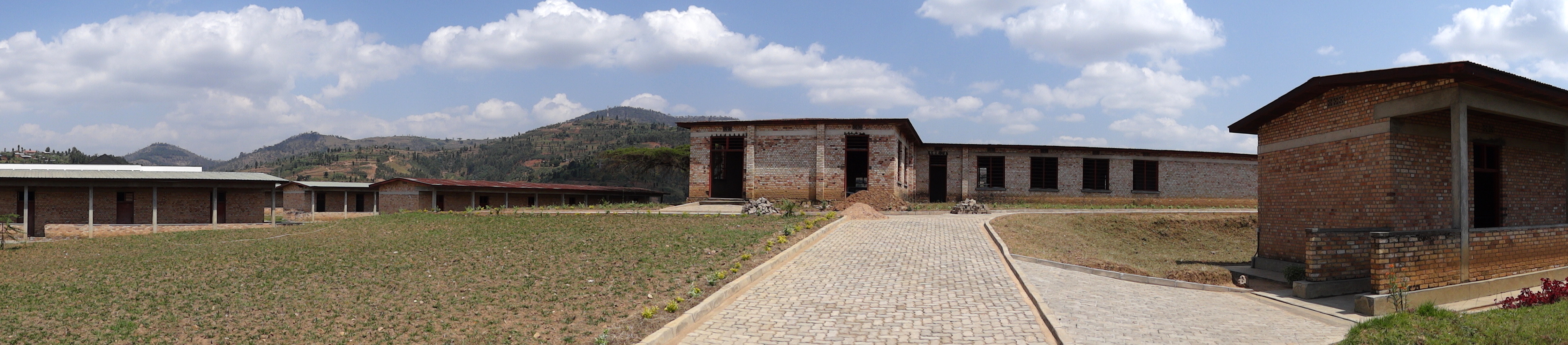
The Murambi Genocide Memorial is one of the six national memorial sites of the 1994 genocide against the Tutsi, and one of the most sober and harrowing in Rwanda. It occupies a former technical school on a hill in Nyamagabe district (formerly Gikongoro), in the Southern Province, where some 50,000 people were murdered in April 1994. It is a place of mourning, memory and education, not a tourist attraction, and it should be visited with complete respect.
📌Best time to go
The memorial can be visited all year round during daytime hours. The national genocide commemoration period ('Kwibuka') begins on 7 April and runs for several weeks. During those days the atmosphere is especially solemn and there may be ceremonies. Visit with the same seriousness at any time of year. The climate is mild, as you would expect at altitude.
📌Duration
Allow at least 2 to 3 hours to go through the interpretation centre, the rooms and the memorial spaces calmly and respectfully. Many visitors need more time because of the emotional impact. It is usually visited as part of a route through the south of the country, on the way between Huye/Butare and Nyungwe Forest.
📌Getting there
Murambi is near the town of Nyamagabe (Gikongoro), just over 1 hour west of Huye (Butare) and about 3-4 hours from Kigali by road. You get there by private transfer, on a tour or by local transport to Nyamagabe, followed by a short ride to the site. It lies on the way to Nyungwe National Park, so it is usually part of the same trip.
📌How to visit
The memorial has an interpretation centre and guides who accompany the visit, many of them connected to the memory of the site. A guide is recommended so you understand the historical context accurately. A sober attitude is essential: dress modestly, speak quietly, turn off any music and always ask before taking a photograph. In many areas photography is not allowed.
📌Language and currency
The memorial guides usually work in Kinyarwanda, English and French. There is no admission fee, but donations towards the upkeep of the site are appreciated, and audio guides cost about 7.500 RWF. The currency is the Rwandan franc (RWF). As of July 2026 it is around 1.400 RWF to the dollar. Bring some cash in francs for the donation and the audio guide.
💱 RWF exchange rate
Loading rate…
🌤️ Weather in Murambi
Loading weather…

The Murambi Genocide Memorial is one of the hardest and most necessary places to visit in all of Rwanda. On a quiet hill in the south of the country, in what was meant to be a technical school, it keeps alive the memory of one of the largest massacres of the 1994 genocide against the Tutsi. Around 50,000 people who had sought refuge there were murdered, deceived by the very people who should have protected them.

Murambi is not a tourist destination in the usual sense. It is a site of memory, mourning and education. Its power lies in how starkly it preserves the evidence of what happened. An interpretation centre explains the historical context of the genocide accurately, and the former classrooms hold remains and belongings of the victims. This is direct and deeply disturbing testimony, and Rwanda keeps it deliberately so that the world neither forgets nor denies what happened.

This guide gives you the practical information you need to visit Murambi with the seriousness and respect it demands: what you can see and learn, how to get there, how to behave, how much time to set aside and how to fit it into a route through the south. Visiting Murambi is an act of remembrance and of respect for the victims and survivors, and an unforgettable lesson in the consequences of hatred.

📖 History of Murambi

In April 1994, tens of thousands of Tutsi from the Gikongoro region were lured to the Murambi technical school, then under construction, with a false promise of protection. They were left without water or food to weaken them, and in the early hours of 21 April 1994 the genocidal forces and militias attacked and murdered some 50,000 people. It is estimated that only a handful survived. Weeks later, French troops from Opération Turquoise set up on the site. Today Murambi is a national memorial that preserves the memory of the victims with accuracy and dignity.

Read the full history ↓

🏛️ Murambi is in the cultural south

The country's cultural cradle: the old royal capital of Nyanza, the great Ethnographic Museum in Huye and the Murambi memorial, between monarchy and memory.

Read the history of The cultural south →

🗺️ What to see

Tours nearby, in Kigali

A local guide tells you in half an hour what no sign at the site will ever explain. We look ours up on Civitatis: guided in Spanish and booked online with no fuss. They have 7 activities in Kigali. And there are free tours here: you book without paying and tip the guide whatever you think at the end, so trying one costs you nothing. Have a look below: tap any of them to see them all.

They depart from Kigali, 82 km away. If you book from this link we earn a commission and you pay no more.

1
Interpretation centre and historical exhibition
The exhibition that accurately explains the context, course and consequences of the 1994 genocide.
Leer más ↓
The visit begins at the interpretation centre, a carefully documented exhibition that places what happened at Murambi within the history of the 1994 genocide against the Tutsi. It explains the roots of the hatred, including the ethnic divisions hardened under colonial rule, the planning and course of the genocide, the role of the different actors, and the country's later process of justice, remembrance and reconciliation. It is an essential introduction before you see the rest of the site, because it provides the context you need to grasp the scale and meaning of what happened on this hill. The panels, photographs and testimonies were designed for education and with deep respect for the victims. How to visit: at the start of the visit, ideally with a guide. Best time: all year round. Tips: take your time to read and understand; it is the foundation for the rest of the visit.
ℹ️ Location: Main memorial building · Best time to go: All year round; daytime hours · Admission: Free; donations appreciated (verified July 2026) · Duration: 45 min to 1,5 hours
2
The former classrooms and the preservation of the victims
The rooms where remains and testimony of the victims are kept, the harrowing heart of the memorial.
Leer más ↓
In the former classrooms of the technical school, Murambi keeps the remains of many of the victims, treated with lime to preserve them, along with clothing and personal belongings. This is a deliberate decision by the Rwandan people: to keep this direct, physical testimony as irrefutable proof of what happened, against any attempt at denial, and as a way of honouring those who were killed. It is without doubt the most shocking and difficult part of the visit. Walk through it in silence and with the utmost respect. It is not a spectacle but an act of remembrance and of dignity towards the victims. Many people find the experience deeply moving and need time to process it. How to visit: with a guide, in silence. Best time: all year round. Tips: prepare yourself emotionally; photography is not allowed in many of these areas; always follow the staff's instructions.
ℹ️ Location: Former classrooms of the technical school · Best time to go: All year round · Admission: Free; donations appreciated (verified July 2026) · Duration: Varies by visitor; take your time to reflect
3
The mass graves and burial areas
The places where many of the victims lie, marked as dignified collective graves.
Leer más ↓
Within the memorial grounds are the graves and burial areas where many of the massacre's victims lie, following the exhumation, identification wherever possible and dignified burial that Rwanda carried out at its memorials. They are places of mourning for survivors and families, and they are marked simply. Pausing at these spaces is part of the respect the visit involves. They are a reminder that Murambi is not only a historical site but also a cemetery and a sacred place for many Rwandan families. How to visit: as part of the guided visit. Best time: all year round. Tips: stay solemn; do not walk or sit on the burial areas; follow the guide.
ℹ️ Location: Outdoor grounds of the memorial · Best time to go: All year round · Admission: Free; donations appreciated (verified July 2026) · Duration: Part of the visit
4
The testimony of Opération Turquoise
The part of the site linked to the presence of French troops after the massacre, part of the memory and historical debate.
Leer más ↓
Weeks after the massacre, as part of the French military intervention known as Opération Turquoise, French troops set up in the Murambi area. The memory of the site and numerous testimonies and investigations document controversial aspects of that presence. According to these accounts, these include the fact that a recreational area for the soldiers was set up over part of the ground where there were graves. This part of the site points to one of the most debated chapters in the history of the genocide: the role of the international community and of France in particular. The guide and the exhibition cover the subject accurately. It is important for understanding why Rwanda places such weight on memory and truth. How to visit: during the visit, with the guide's explanation. Best time: all year round. Tips: listen carefully to the historical context; it is a sensitive subject that calls for accuracy and respect.
ℹ️ Location: Area of the memorial pointed out by the guide · Best time to go: All year round · Admission: Free; donations appreciated (verified July 2026) · Duration: Part of the visit
5
Guides and survivors
The guided visit, sometimes led by people connected to the memory of the site, which gives it a voice and a human context.
Leer más ↓
One of the most valuable things about Murambi is being accompanied by guides who explain the historical context accurately and sometimes share testimonies tied to the memory of the site. Hearing what happened in person, told with the calm and dignity with which Rwanda has learned to speak of its tragedy, turns the visit into a deeply human and educational experience. A guide is highly recommended. It brings understanding, respect and meaning to the whole visit, and lets you ask questions appropriately. It is also a way of supporting the site's work of remembrance. How to visit: ask for a guide when you arrive. Best time: all year round. Tips: listen respectfully; a donation helps maintain the memorial and its educational work.
ℹ️ Location: From the memorial reception · Best time to go: All year round · Admission: Guide with no fixed fee; donations appreciated; audio guide ~7.500 RWF (verified July 2026) · Duration: The whole visit (2-3 h)
6
Gardens and spaces for reflection
The memorial's outdoor spaces for reflection, mourning and paying tribute to the victims.
Leer más ↓
The memorial has outdoor spaces and gardens designed for contemplation, tribute and reflection after the impact of the visit. From the hill there are views over the peaceful landscape of southern Rwanda. The contrast invites you to think about memory, reconciliation and the hope of a country that chose to rebuild without forgetting. These are places to pause in silence, honour the victims and take in what you have seen. Rwanda has made its memorials more than evidence of the past. They are also calls for responsibility, tolerance and the prevention of new genocides anywhere in the world. How to visit: at the end of the visit. Best time: all year round. Tips: take a moment to reflect before you leave; respect the silence of those who come to remember their loved ones.
ℹ️ Location: Memorial grounds · Best time to go: All year round · Admission: Free; donations appreciated (verified July 2026) · Duration: Up to each visitor
📶I have never landed without internet. I arrive and my phone connects to the strongest network in the country I am visiting: I can say I landed, sort out transport, book tours and keep posting, at a seriously good price. I always use the Maya eSIM — check their plans by clicking the banner.See plans →Maya Mobile eSIM — download, install, go
What nobody tells you

💵 Prices

Tickets

TypePrice
Entrada al memorialFree; donations towards upkeep are appreciated (verified July 2026)
AudioguíaAbout 7.500 RWF / USD 5-6 (verified July 2026)
Acompañamiento de guíaNo fixed fee; donations appreciated (verified July 2026)
🔄 updated monthlyOfficial / reference values · double-check when buying

Activities and tours

ActivityPriceDurationOperator
Guided visit to the memorialNo admission fee; donations appreciated (verified July 2026)2 to 3 hoursNational Commission for the Fight against Genocide (CNLG) / memorial staff
Visit with audio guideAudio guide ~7.500 RWF (USD 5-6, verified July 2026)2 to 3 hoursMurambi Memorial
Southern memorial route (based in Huye)Varies by operator; the memorial charges no admission (verified July 2026)Half day to full dayTour operators and guides
🔄 updated monthlyOfficial / reference values · double-check when buying

🚌 How to get there and distances

Getting around

ModePriceDurationNotes
Private transfer or tourVaries by operator (verified July 2026)~1 h from HuyeThe most comfortable way to get there; often included in routes through the south or on the way to Nyungwe
Local transport to Nyamagabe (Gikongoro)Varies by route (verified July 2026)VariableBuses or minibuses to Nyamagabe, then a short ride to the site
Motorbike taxi from NyamagabeShort ride from about 500-2.000 RWF (USD 0,4-1,5, verified July 2026)A few minutesFor the last stretch from town to the memorial
🔄 updated monthlyOfficial / reference values · double-check when buying

How to get there

RouteAirlines / operatorsAvg. priceDuration
Huye (Butare) → Murambi (Nyamagabe)Transfer, tour, local transportVaries by mode (verified July 2026)Just over 1 hour
Kigali → Murambi (via Huye)Private transfer, tours; buses to Huye/NyamagabeKigali-Huye buses from 3.000-4.000 RWF (USD 2-3); final stretch extra (verified July 2026)3 to 4 hours
Murambi → Nyungwe National ParkTransfer, tourAccording to operator (verified July 2026)1,5 to 2,5 hours (it's on the way)
🔄 updated monthlyOfficial / reference values · double-check when buying

🏨 Where to stay

No exact prices: a scale from $ (budget) to $$$$$ (luxury), with 2-3 options per category.

Recommended base in Huye (Butare)
Price$$$$$
Recommended options
Approx. USD 60-130 per night; most people stay in Huye, just over 1 h away, which has the best hotels and services in the south
Accommodation in Nyamagabe (Gikongoro)
Price$$$$$
Recommended options
From around USD 20-60 per night; guesthouses and simple hotels in the nearby town for anyone who wants to stay closer to the memorial
Lodges on the way to Nyungwe
Price$$$$$
Recommended options
From around USD 80-200+ per night; if you're combining Murambi with Nyungwe Forest, there are mid-range and upscale lodges along that route

🍴 Where to eat

Comedores locales en Nyamagabe/Gikongoro
Price$$$$$
Options / signature dish
Around 2.500-6.000 RWF (USD 2-4); simple Rwandan buffets of rice, beans, plantain and vegetables in the nearby town
Restaurantes en Huye (Butare)
Price$$$$$
Options / signature dish
From around 4.000-12.000 RWF (USD 3-9); the best food scene in the south, in the base town for the circuit
Cafés de la región
Price$$$$$
Options / signature dish
Token price; high-altitude Rwandan coffee from the south, for a break before or after the visit

📖 History of Murambi

Origins, formation and what the sources say.

The roots of the tragedy

To understand what happened at Murambi, you have to place it within Rwanda's long history. For centuries, Hutu, Tutsi and Twa lived side by side in the kingdom of Rwanda, sharing a language, religion, culture and territory; the categories were largely social and could change. It was European colonisation, first German and then Belgian, that hardened and racialised those identities. Censuses and ethnic identity cards fixed an artificial, hierarchical division that favoured some over others.

With decolonisation, in the late 1950s and early 1960s, that fracture broke open. The revolution of 1959-1961 overthrew the Tutsi monarchy and brought a Hutu elite to power; thousands of Tutsi were persecuted and fled into exile. In the decades that followed, successive regimes fed a discourse of hatred and exclusion against the Tutsi population, which they portrayed as the enemy.

In the early 1990s, with open civil war between the government and the Rwandan Patriotic Front (formed by Tutsi exiles) and a deep internal crisis, extremist factions in power prepared the unthinkable: the total elimination of the Tutsi population. The propaganda, the lists and the militias were all ready when the trigger came.

en.wikipedia.org · Rwandan genocideen.wikipedia.org · History of Rwanda

April 1994: the deception at Murambi

On 6 April 1994, the plane carrying President Juvénal Habyarimana was shot down, unleashing the planned genocide. In one hundred days, between April and July 1994, around one million people were murdered. The vast majority were Tutsi, along with moderate Hutu. The Gikongoro region in the south had a large Tutsi population and became the scene of one of the largest massacres.

Facing the violence, tens of thousands of Tutsi from the area looked for refuge in places they believed were safe. Local authorities sent them to the Murambi technical school, then under construction on top of a hill, with the false promise that they would be protected there. As the days went by, close to 50.000 people gathered at the site.

It was a deliberate trap. The water supply was cut off and the refugees were denied food to weaken them so they could neither resist nor escape. In the early hours of 21 April 1994, army troops, gendarmes and Interahamwe militias, together with armed civilians, attacked the school. The massacre was almost total: of the tens of thousands of people gathered there, it is estimated that only a handful survived. Murambi became one of the largest mass graves of the genocide.

en.wikipedia.org · Murambi Genocide Memorial Centrekwibuka.rw · Murambi genocide memorial

Operation Turquoise and the fight for the truth

A few weeks after the massacre, in June 1994, France launched Operation Turquoise, a military intervention in south-western Rwanda. It was presented as humanitarian and backed by the UN, but it was highly controversial because of the French government's earlier ties to the genocidal regime. French troops set up in the Murambi area.

Many survivor testimonies and later investigations document dark aspects of that presence. According to these accounts, a recreational area for the soldiers was set up on part of the ground where mass graves held thousands of bodies. For many Rwandans, this came to symbolise contempt for the horror and an attempt to cover it up. France's role in Rwanda before, during and after the genocide has been the subject of decades of debate, investigations and partial admissions of responsibility.

These events help explain why Rwanda has made memory and truth a matter of state policy. Preserving the physical evidence of the genocide at sites like Murambi is also a response to attempts at denial, minimisation or cover-up, wherever they come from.

en.wikipedia.org · Opération Turquoiseen.wikipedia.org · Murambi Genocide Memorial Centre

The memorial: preserving the truth and honouring the victims

After the genocide, Rwanda began an extraordinary and painful process of justice, memory and reconciliation. It included the community 'gacaca' courts, the International Criminal Tribunal for Rwanda, the annual 'Kwibuka' ('to remember') commemorations and the creation of national memorials. Murambi became one of the six national genocide memorial sites.

At the former technical school, the Rwandan people made the difficult decision to preserve the remains of the victims, treated with lime, together with their clothes and belongings, as direct and irrefutable evidence of what happened. It is not a morbid gesture but an act of truth and dignity. Against those who deny or downplay the genocide, Murambi shows its stark reality, and against forgetting, it keeps those who were murdered present. An interpretation centre provides the historical and educational context.

In 2023, UNESCO inscribed several of Rwanda's genocide memorials, Murambi among them, on the World Heritage List, recognising their universal value as a warning to humanity. Visiting Murambi means paying tribute to the victims, standing with the survivors and taking on the shared responsibility of making sure nothing like this ever happens again, in Rwanda or anywhere else in the world.

kwibuka.rw · Murambi genocide memorialwhc.unesco.org

📚 Bibliography

  • Kwibuka.rw — «Murambi Genocide Memorial»: https://kwibuka.rw/memorial/murambi-genocide-memorial/
  • Wikipedia (EN) — «Murambi Genocide Memorial Centre»: https://en.wikipedia.org/wiki/Murambi_Genocide_Memorial_Centre
  • Genocide Archive Rwanda — «Murambi Memorial»: https://genocidearchiverwanda.org.rw/Murambi_Memorial
  • Harvard CGA — «Murambi Genocide Memorial Centre»: https://web.archive.org/web/20250328163146/http://genocidememorials.cga.harvard.edu/murambi.html
  • Wikipedia (EN) — «Rwandan genocide»: https://en.wikipedia.org/wiki/Rwandan_genocide
  • Wikipedia (EN) — «Opération Turquoise»: https://en.wikipedia.org/wiki/Op%C3%A9ration_Turquoise
  • UNESCO World Heritage Centre — «Memorial sites of the Genocide»: https://whc.unesco.org/en/list/1587/
  • News24 — «When a Rwandan school became a killing field»: https://www.news24.com/world/africa/when-a-rwandan-school-became-a-killing-field-20220506
  • Physicians for Human Rights — Rwanda: https://phr.org/our-work/resources/
  • Aegis Trust / Genocide Archive of Rwanda: https://genocidearchiverwanda.org.rw/

❓ Frequently asked questions

What exactly do you see at Murambi, and why is it so powerful?+
Murambi is the memorial to one of the largest massacres of the 1994 genocide, at a former technical school where around 50,000 people were killed. Alongside an interpretation centre that explains the historical context, the site keeps remains and belongings of the victims in its former classrooms, treated with lime to preserve them. It is a direct, deliberate testimony that Rwanda maintains as evidence against denial and as a tribute to the victims. It is deeply harrowing and calls for absolute respect.
How should I behave during the visit?+
With the utmost restraint and respect. Dress modestly, speak quietly, turn off any music and keep a solemn attitude. Don't take photos without asking: in many areas, especially where remains are kept and at the graves, it isn't allowed. Always follow the instructions of the guide and staff. Remember that it is a cemetery and a place of mourning for many families, not an attraction.
Is it suitable for children?+
The section where the victims' remains are kept is extremely raw and can be very disturbing, so it isn't recommended for young children or for especially sensitive people. The interpretation centre is better suited to an educational understanding. Each visitor and family should weigh this carefully; it's best to go emotionally prepared and to give yourself time to process the experience.
How much does it cost and how much time do I need?+
Admission is free, but donations towards the site's upkeep are appreciated, and audio guides are available for around 7.500 RWF. Plan on at least 2 or 3 hours to go through the interpretation centre and the memorial spaces calmly; many people need more time because of the emotional impact. Hiring a guide is highly recommended to understand the context properly.
How do I fit Murambi into my trip?+
Murambi is in Nyamagabe District (Gikongoro), just over 1 hour from Huye (Butare) and on the way to Nyungwe National Park. Most people stay in Huye and visit it as part of a circuit through the south, or stop on the way to Nyungwe. Given its nature, set aside time and emotional space for it, and don't rush it back-to-back with leisure activities at the same time of day.

More places in Rwanda

MusanzeNyamataNyanzaParque Nacional AkageraParque Nacional NyungweParque Nacional de los Volcanes
See every place in Rwanda →The history of Rwanda →
Sources consulted (6)
Still planning?
Explore more destinations in Rwanda
See all destinations →