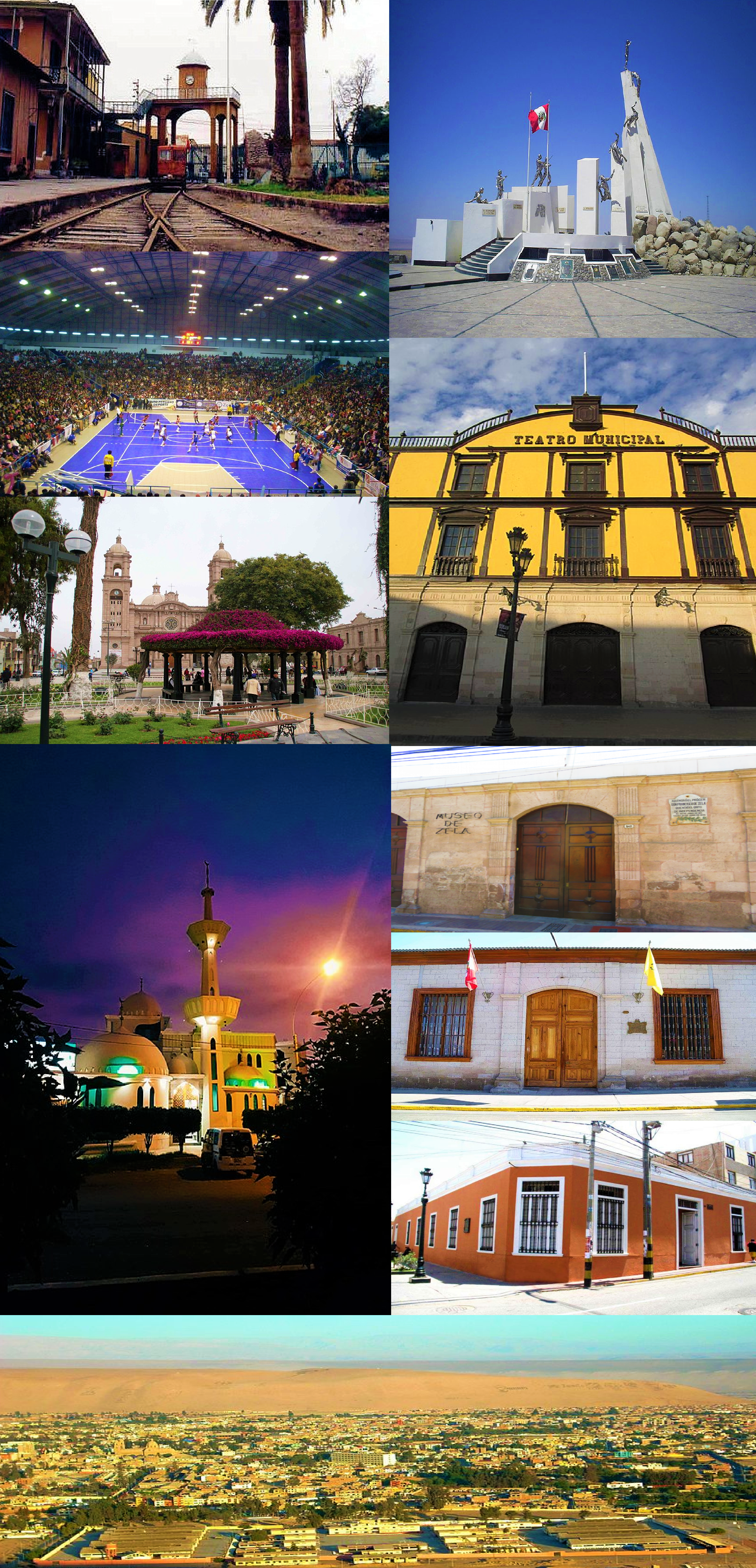
In Peru's far south, where the desert turns into a border, Tacna waits: the 'Heroic City', sunny, orderly and proud of its history. It's the last big Peruvian city before Chile and, for almost half a century, it was occupied land that patiently waited to return to its country. That wait shaped its character: few cities in Peru live patriotism as intensely as Tacna, which every 28 August remembers its return with the moving Procesión de la Bandera.
Beyond its historical weight, Tacna is a pleasant city to walk, warm and with skies that are almost always clear. Its Paseo Cívico, its tree-lined avenues, its neo-Renaissance cathedral and the Arco Parabólico honoring the heroes of the War of the Pacific give it a tidy, monumental air. It's also a major commercial and transit hub: thousands of Chileans cross every day to shop, eat and see doctors, and many travelers use it as their way into or out of Peru in the south.
This guide covers the essentials of Tacna with a practical eye: what to see in the city and around it, how to get there and how to cross to Arica, the Miculla petroglyphs, the hot springs and the Caplina valleys, plus tips for making the most of its privileged climate. Tacna rewards travelers with sun, history and the warmth of a place that never stopped feeling Peruvian.
The territory of Tacna was inhabited from very early times by peoples of the southern Andes, linked to cultures such as Tiahuanaco and, later, to Aymara lordships and Inca rule; the Miculla petroglyphs are evidence of that long occupation. In colonial times Tacna was a way station on the route between the coast and the altiplano, and in 1811 it staged one of the first uprisings for Peruvian independence, led by Francisco Antonio de Zela, which earned it the title of 'Heroic City'. Its most painful chapter came with the War of the Pacific (1879-1883): after Peru's defeat, the Treaty of Ancón (1883) left the provinces of Tacna and Arica under Chilean administration for ten years, pending a plebiscite that was never held. Tacna went through almost fifty years of occupation, in which its people kept their Peruvian identity alive despite attempts at 'Chileanization'. Finally, the Treaty of Lima of 1929 returned Tacna to Peru (while Arica stayed with Chile), and on 28 August of that year the city was officially reincorporated into the country, a date now marked with the Procesión de la Bandera. Since then Tacna has grown as a border, commercial and civic city, a symbol of Peruvian patriotism. The full story is on our history page.
Read the full history ↓If you book from here we earn a commission and you pay no more. Prices and availability come from Civitatis.
No exact prices: a scale from $ (budget) to $$$$$ (luxury), with 2-3 options per category.
Origins, formation and what the sources say.
Long before the city existed, the Caplina valley and the desert of Peru's far south were inhabited from very remote times. The most striking evidence of that ancient occupation is the Miculla petroglyphs, an extensive field of rock art with thousands of carvings on the stones: human figures, camelids, birds, snakes, felines and scenes of hunting and dancing, attributed to the cultures that peopled the region over many centuries.
The area of present-day Tacna took in influences from the great cultures of the southern Andes. The nearby altiplano and the region were within the orbit of Tiahuanaco (Tiwanaku) and, later, of the Aymara lordships that dominated much of southern Peru and Bolivia. These peoples developed farming adapted to the desert and the valleys, using water from the Caplina river and the gullies to grow crops in an arid setting.
By the 15th century the expansion of the Inca empire reached this southern region, folding it into the Collasuyo, the southern quarter of the Tahuantinsuyo. The Incas organized the territory, maintained roads and tambos and brought the local populations into their administrative system. When the Spanish arrived in the 16th century, they found a region of small farming settlements in the valleys, with Aymara roots and Inca influence, which would be the seed of the future Tacna.
During colonial times Tacna was a way station on the route linking the Pacific coast with the altiplano and the mines of the south. Its economy turned on farming in the valleys —with crops such as the grape, which gave rise to its pisco and wine tradition— and on the trade moving between the port of Arica and the interior. It was a small but strategic town within the viceroyalty of Peru.
Tacna holds a place of honor in the history of Peruvian independence. On 20 June 1811 the criollo Francisco Antonio de Zela led one of the first uprisings against Spanish rule in Peru here, encouraged by news of the independence struggles in Upper Peru (today's Bolivia) and elsewhere in the Americas. Although the rebellion was put down and Zela ended up in prison, his act was recorded as a pioneering milestone of the emancipation process.
Other uprisings followed in the region in the years after, before Peru's independence was finally consolidated in the 1820s. For having been the cradle of that early cry for freedom, Tacna later received the title of 'Heroic City', a recognition that decades afterward would be joined by the heroism shown during the years of occupation following the War of the Pacific.
The most painful chapter in Tacna's history began with the War of the Pacific (1879-1883), the conflict that pitted Chile against the alliance of Peru and Bolivia over control of the nitrate-rich territory of the Atacama desert. The Tacna region, given its border position, ended up at the heart of the war. In May 1880 the Battle of Alto de la Alianza (or Battle of Tacna) was fought near the city, in which the Chilean army defeated the Peruvian-Bolivian forces and occupied the city.
A few days later Arica fell too, in the heroic defense of the Morro led by colonel Francisco Bolognesi, who died in combat rather than surrender. With these victories Chile occupied the whole of Peru's far south. The war went on northward, with the Lima campaign and the resistance in the highlands, until a defeated Peru was forced to negotiate peace.
The conflict closed with the Treaty of Ancón, signed in 1883. Under this agreement Peru ceded the province of Tarapacá in perpetuity, and the provinces of Tacna and Arica were left under Chilean administration for ten years, after which a plebiscite was to decide their final fate. That plebiscite, however, was never held, and Tacna entered a very long period of occupation that would stretch on for almost half a century.
After the war, Tacna spent almost fifty years under Chilean administration, a period Peruvians remember as the 'captivity'. The people of Tacna, mostly Peruvian in identity, had to live with a foreign government that, especially in the first decades of the 20th century, pushed a policy of 'Chileanization' meant to erase Peruvian feeling and root a sense of belonging to Chile.
That policy took in measures affecting education, administration, the press and religious life, as well as pressure on Peruvian priests and teachers. Even so, much of Tacna's population kept its national identity alive in quiet, symbolic ways: keeping up traditions, the memory of the heroes and the longing to return to Peru. That silent resistance, over so many years, is the origin of the patriotic fervor that still marks the city today.
Meanwhile, on the diplomatic front, the 'question of Tacna and Arica' remained unresolved. Negotiations for the plebiscite provided for in the Treaty of Ancón failed again and again. The situation stayed in limbo for decades, making Tacna a painful symbol of the lost war and, at the same time, a national cause Peru was not prepared to give up.
The long-running 'question of Tacna and Arica' finally found a way out in 1929. After years of diplomatic effort, in which the good offices of the United States as mediator played a part, Peru and Chile signed the Treaty of Lima on 3 June 1929. The agreement divided the disputed territory: Tacna returned to Peruvian sovereignty, while Arica stayed permanently with Chile.
On 28 August 1929 the Chilean authorities formally handed over the city and Tacna was reincorporated into Peru amid enormous popular emotion. For the people of Tacna, who had waited almost half a century, it was the end of the 'captivity' and the reunion with their country. That date was fixed forever in the civic calendar of the city and the country.
Since 1929, every 28 August Tacna marks the anniversary of its return with the solemn Procesión de la Bandera, a ceremony unique in Peru in which a giant national flag is carried by the women of Tacna along the Paseo Cívico, in an act of deep patriotic meaning. The return closed a historical wound and cemented the image of Tacna as the 'Heroic City', a symbol of love for the country.
Back in Peru, Tacna began a new stage of growth and modernization. Through the 20th century it consolidated as the capital of Peru's far south and as one of the country's main border cities, helped by its intense exchange with neighboring Arica and with Chile in general. Cross-border trade, the free-trade zones and the constant flow of visitors from both sides of the border gave the city a particular economic dynamism.
The city organized its layout around the Paseo Cívico, completed the building of its cathedral —designed by Eiffel's school and finally inaugurated after the return to Peru— and raised the Arco Parabólico in honor of the heroes of the War of the Pacific. It also developed its farming valleys, its wine and pisco tradition, and tourist draws such as the Miculla petroglyphs and the hot springs of the Caplina.
Today Tacna is a prosperous, sunny city, deeply proud of its history. Its identity turns on two axes: patriotism, fed by the memory of the captivity and the return, renewed every 28 August with the Procesión de la Bandera; and its status as the great border gateway between Peru and Chile, which makes it a crossroads of routes, languages and cultures. That mix of civic pride and border calling is what defines Tacna today.