Viajá con Gus
HomePeruLima
Lima
🇵🇪 Peru · The Coast

Lima

Jump to what you need
📍Region
Lima (capital of Peru and of the province of Lima)
📌Service city
Lima itself (Jorge Chávez International Airport, in Callao)
📌Best time to go
Coastal summer, December to April (clear skies and beach weather); the rest of the year the 'garúa' and grey skies take over
📌Suggested days
2 to 3 days (historic center + Miraflores and Barranco + one good lunch)
💱 PEN exchange rate
Loading rate…
🌤️ Weather in Lima
Loading weather…

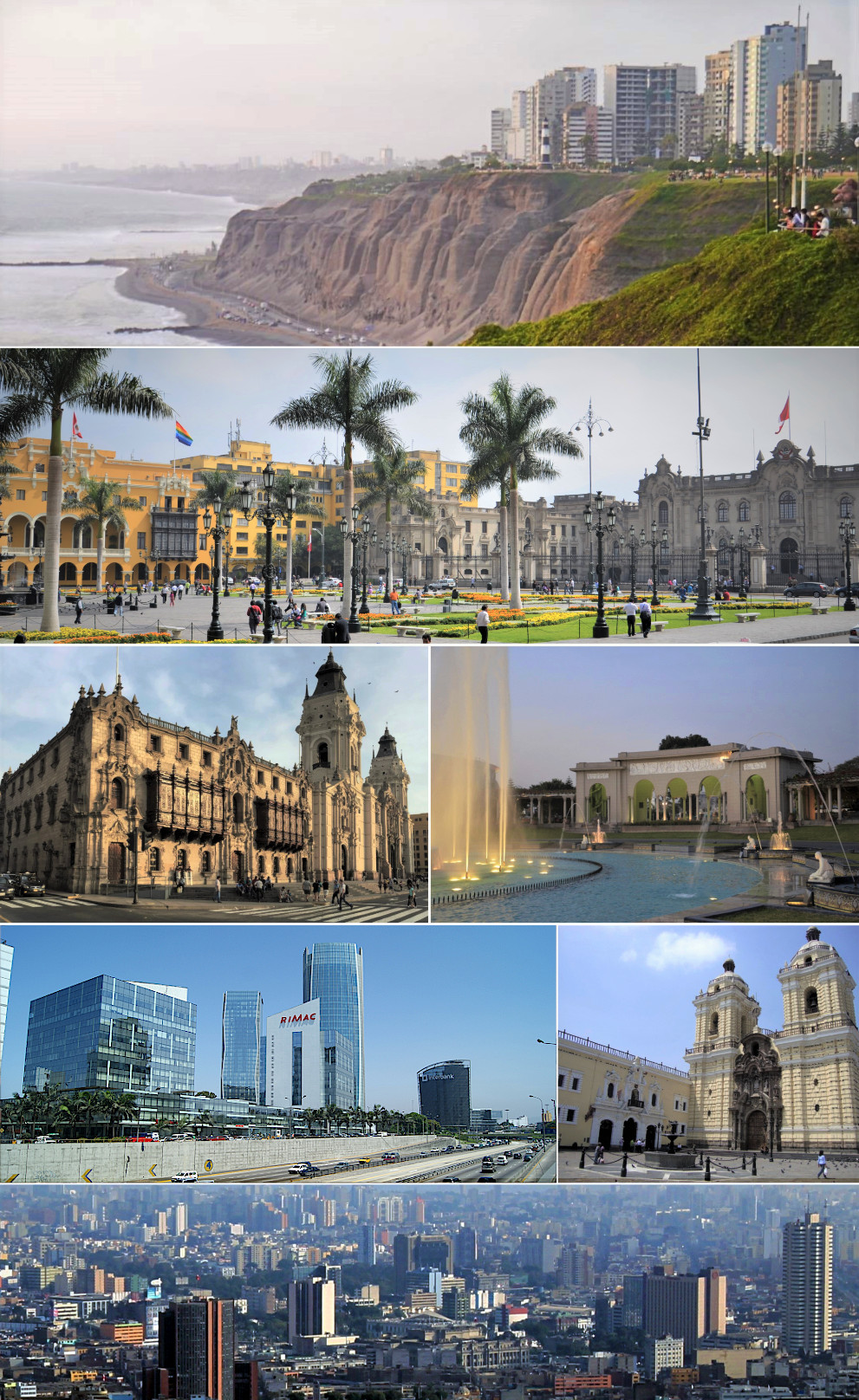
Lima is almost always the gateway to Peru: practically everyone who arrives in the country passes through its airport, and many rush straight through on their way to Cusco. That's a mistake. The capital is a huge, contradictory city looking out over the Pacific, with a colonial core listed as a World Heritage Site, seafront neighborhoods like Miraflores and Barranco, and one of the best food scenes on the planet. Give yourself at least a couple of days to make sense of it.

The weather shapes the experience a lot. Lima sits on a coastal desert, so it almost never rains, but from May to November it lives under the 'garúa', a damp mist that paints the sky grey. In summer (December to April) it changes face: the sun comes out and people pour onto the cliffs of the Costa Verde and the beaches to the south. Whatever the season, it's best to move around by area: the historic center for colonial history, Miraflores for staying and walking the seafront promenade, Barranco for a bohemian sunset.

And then there's the food. Lima is, deservedly, one of the world's great food capitals: the freshest ceviche, nikkei cooking and chifa (the Chinese-Peruvian fusion), pisco sour, street anticuchos and restaurants that turn up year after year among the world's best. Eating well here doesn't take a fortune: from a neighborhood cevichería to a fine-dining table, this city is best enjoyed through the plate.

📖 History of Lima

Before the Spanish, the Rímac valley was already inhabited by cultures such as the Lima and the Ychsma, who left adobe huacas still visible among the modern buildings. Francisco Pizarro founded it on 18 January 1535 as the 'City of Kings' and made it the capital of the Viceroyalty of Peru, the center of Spanish power in South America for almost three centuries. The full story is on the history page.

Read the full history ↓

🗺️ What to see

1
Plaza Mayor (Plaza de Armas)
Lima's founding heart, ringed by the Government Palace, the Cathedral, the Archbishop's Palace and City Hall. Changing of the guard at midday in front of the Government Palace.
Lima's Plaza Mayor is the exact spot where the city was born: here Francisco Pizarro laid out the center of the 'City of Kings' on 18 January 1535, and ever since it has been the heart of political and religious power in Peru. The square is ringed by some of the country's most important buildings: the Government Palace (Pizarro's House, the president's residence), Lima Cathedral, the Archbishop's Palace with its splendid carved wooden balconies, City Hall and the Club de la Unión. The whole ensemble is part of the historic center declared a Unesco World Heritage Site in 1991. It's worth it for the concentration of history and colonial beauty in one space. In the middle there's a bronze fountain, one of the oldest elements in the square. The big timed attraction is the changing of the guard in front of the Government Palace, held at midday (around 12:00) with the band and the grenadiers in full ceremony: a free and showy spectacle. The colonial wooden balconies, typical of Lima, are a jewel of viceregal architecture. It's right in the historic center. From Miraflores you get there by taxi or app in 25 to 40 minutes depending on traffic; many people visit it on a city tour that combines the square with the Cathedral and San Francisco. Much of the area is pedestrianized, ideal for walking by day. Practical note: visit during the day, when the center is lively and safe; at night it's better to move around more carefully. Combine it with the Cathedral (on the same square) and the nearby San Francisco convent. Watch your belongings since it's a very busy area, and carry small cash for an admission or a souvenir.
ℹ️ Founding: 18 January 1535, by Francisco Pizarro · Don't miss: Changing of the guard at midday in front of the Government Palace · Distance: 25-40 min by taxi from Miraflores depending on traffic
2
Lima Cathedral
A 16th-century church on the Plaza Mayor, with the tomb of Francisco Pizarro and a museum of religious art. An essential part of the historic center listed as a World Heritage Site.
Lima Cathedral, also called the Cathedral Basilica, dominates one side of the Plaza Mayor and is one of the most important churches in Peru. Construction began in the 16th century, shortly after the city was founded, and dragged on for decades; the current Renaissance-style façade has been rebuilt several times after the earthquakes that battered Lima. Inside you'll find a three-nave interior with numerous side chapels, carved retablos, a splendid wooden choir and an important collection of colonial religious art. The big draw for visitors is the chapel holding the remains of Francisco Pizarro, the conquistador who founded Lima, with a mosaic recalling his story. The cathedral also works as a museum of religious art, with pieces, vestments and paintings from the viceregal era, and it lets you look into the crypts. It's a visit that pairs perfectly with the Plaza Mayor, since they're in the same place. It's on the Plaza Mayor, in the historic center. You walk there from the square (it's one of its buildings) and, from Miraflores, come by taxi or on a city tour. Admission to the museum is paid separately; opening hours are usually mornings and the early afternoon. Practical note: combine it with the Plaza Mayor and the San Francisco convent, both steps away. An unhurried visit takes between 45 minutes and an hour. As everywhere in the center, go during the day and watch your things in the street. Some interior areas don't allow photos: respect the signs.
ℹ️ Location: Plaza Mayor, historic center · Don't miss: Francisco Pizarro's tomb and colonial religious art · Admission: Museum charged separately (check the current rate)
3
San Francisco Convent and Catacombs
A Franciscan complex with an antique library, cloisters lined with Sevillian tiles and, above all, the famous catacombs with thousands of arranged bones. A must in the center.
The San Francisco Convent is one of the best preserved colonial complexes in Lima and, without doubt, one of the most striking visits in the historic center. It's a 17th-century religious complex, beautifully Baroque, with cloisters decorated in 16th-century Sevillian tiles, carved cedar ceilings, a chapter house and an antique library with a magical air, thousands of colonial books and manuscripts stacked on wooden shelves that look straight out of a novel. But what everyone comes to see is the catacombs. Beneath the church runs a network of crypts that served as a cemetery during colonial times, before public cemeteries existed. The remains of tens of thousands of people are estimated to lie there, and in some areas the bones and skulls are arranged in geometric patterns. Walking these dimly lit underground passages is an experience somewhere between chilling and fascinating, and it connects you very physically to the city's history. It's a few blocks from the Plaza Mayor, right in the historic center; about a 5 minute walk from the square. Visits are always guided (you can't go into the catacombs on your own) and admission is charged; it's worth confirming times, since visits leave in scheduled groups. Practical note: the catacombs are narrow and low-ceilinged, so be careful if you're very tall or claustrophobic. Photography isn't allowed inside the crypts. Combine it with the Plaza Mayor and the Cathedral for a well-rounded morning downtown. Bring cash for the admission.
ℹ️ Distance: 5 min walk from the Plaza Mayor · Don't miss: Catacombs with thousands of bones in geometric patterns · Visit: Guided, in scheduled groups; admission charged (confirm times)
4
Miraflores and the Malecón
A modern neighborhood on the Pacific cliffs, with Parque Kennedy, the Larcomar mall built into the cliff face and kilometers of clifftop promenade for walking, running or watching the sunset.
Miraflores is Lima's most tourist-friendly and walkable neighborhood, and where most visitors choose to stay. It's a modern, safe and pleasant area looking out over the cliffs of the Costa Verde, with well-kept parks, restaurants, hotels and a relaxed city life facing the sea. Its heart is Parque Kennedy, famous among other things for the number of cats that live there and that neighbors look after; around it are cafés, ice cream shops and craft sellers. The big draw is the malecón: kilometers of tree-lined promenade along the clifftop, with lookouts, sculptures (the most famous being the Parque del Amor, with its large statue of a couple kissing and benches covered in Gaudí-style mosaics) and huge views over the Pacific. It's perfect for walking, running, cycling or simply watching the sunset over the ocean, one of the loveliest free things to do in the city. Tandem paragliders also take off from here. At the end of the cliff is Larcomar, a shopping center built into the cliff wall, with terraces looking out to sea. Miraflores is easy to cover on foot. From the airport it's 40 to 90 minutes by taxi or app depending on traffic; between Miraflores and Barranco there's a pleasant walk or a few minutes by taxi. Practical note: it's the best base for sleeping in Lima, for safety and convenience. The sunset from the malecón is unmissable; bring a layer, because it gets cool by the sea. For paragliding, flights depend on the wind, so they usually operate in the mid-afternoon when conditions are good.
ℹ️ Don't miss: Clifftop promenade, Parque del Amor and the sunset · Distance: 40-90 min by taxi from the airport · Tip: Best area to stay in Lima for safety and services
5
Huaca Pucllana
An adobe pyramid of the Lima culture (4th-7th centuries) in the middle of Miraflores, surrounded by apartment blocks. Visited with a guide, and it even has a restaurant overlooking the site lit up at night.
Huaca Pucllana is one of Lima's great surprises: a ceremonial adobe pyramid more than 1,500 years old, raised by the Lima culture between the 4th and 7th centuries AD, surviving in the middle of Miraflores surrounded by modern buildings. It's built from millions of small adobe bricks set on edge, like books on a shelf, a technique that gave it the flexibility to withstand earthquakes. It was an important administrative and ceremonial center, and excavations have turned up burials, offerings and remains that help us understand those first inhabitants of Lima. It's worth it for the contrast and for how well it's presented: the visit is guided and takes you along a walkway across the platforms and plazas of the site, with reconstructions of daily life, workshops and even animals of the species they raised (such as guinea pigs and camelids). It's an open-air lesson in pre-Inca history, meters from the bustle of Miraflores. There's an extra draw too: a fine-dining restaurant at the edge of the site, where you can have dinner with the huaca lit up at night, a beautiful experience. It's right in Miraflores, a few blocks from the center of the neighborhood; you get there on foot or with a short taxi ride. Visits are always guided (in different languages and time slots, including a night visit) and admission is charged. Practical note: the night visit, with the site lit up, has a special charm. Book if you want to eat at the restaurant with a view. Wear comfortable shoes, because the route runs over dirt paths. It's a short visit (about an hour) that goes very well with the rest of Miraflores.
ℹ️ Culture and period: Lima culture, 4th-7th centuries AD (adobe pyramid) · Location: In the middle of Miraflores, surrounded by buildings · Visit: Guided (also at night); restaurant overlooking the site
6
Barranco
The bohemian, artistic neighborhood of colorful mansions, murals, bars and galleries. The Bridge of Sighs and the Bajada de los Baños are its icons; the best place for sunset and for a night out.
Barranco is Lima's most bohemian and romantic neighborhood, the place where the city shows its artistic side. In the late 19th century it was a summer resort for well-off limeños, and it still keeps those colorful republican-era mansions, today turned into art galleries, bars, cafés, boutique hotels and restaurants. Walking its quiet streets, finding murals and street art on every corner, is one of the loveliest and most relaxed things to do in the capital. Its icon is the Puente de los Suspiros (Bridge of Sighs), a small wooden bridge wrapped in a romantic legend: tradition says that if you cross it holding your breath and make a wish, it comes true. From the bridge, the Bajada de los Baños drops down between mansions and greenery to the sea. Around it are the Ermita church, the main square with its bandstand and lookouts over the Pacific. As evening falls, Barranco lights up: it's the best neighborhood for a seaside sunset and for a night out, with its scene of criollo peñas, pisco bars and live music. It's right next to Miraflores, to the south. You can walk there from Miraflores along the malecón (a lovely 30-40 minute stroll) or get there in a few minutes by taxi. Wandering it is free; you only pay for what you consume or for galleries that charge admission. Practical note: ideal for combining sunset and dinner. The neighborhood is safe and very pleasant by day and in the early evening; at night, as in any nightlife area, use common sense. Don't miss a pisco sour in one of its classic bars. The Museo Pedro de Osma, with colonial art, is a hidden gem of the neighborhood.
ℹ️ Icon: The Bridge of Sighs and its wish-making legend · Distance: 30-40 min on foot along the malecón from Miraflores; a few minutes by taxi · Best time: Sunset and night (bars, peñas and pisco sour)
7
Museo Larco
One of the best museums in the country, in an 18th-century mansion surrounded by gardens: ceramics, gold, silver and the famous room of pre-Columbian erotic art. Lovely café with a terrace.
The Museo Larco is, for many people, the best museum in Peru and an essential visit for understanding the pre-Columbian cultures before traveling the country. It's housed in a beautiful 18th-century viceregal mansion, itself built over a pre-Columbian pyramid, surrounded by gardens full of bougainvillea. Its collection, assembled by Rafael Larco Hoyle, spans more than 5,000 years of ancient Peruvian history with thousands of pieces of ceramics, textiles and, above all, one of the largest collections of pre-Columbian gold and silver on the continent, with dazzling crowns, nose ornaments and adornments. One of its most famous (and most talked-about) rooms is the one devoted to pre-Columbian erotic art: a collection of Moche ceramics depicting sexuality and fertility with a surprising realism and freedom, giving a very different view of those cultures. Another unique feature is that the museum lets you walk through its storerooms: shelf after shelf holding tens of thousands of catalogued vessels, something almost no museum in the world shows the public. It's in the Pueblo Libre neighborhood, about 20 to 30 minutes by taxi from Miraflores. Admission is charged; set aside at least a couple of hours to go around at an easy pace. Practical note: its café-restaurant with a terrace over the gardens is one of the loveliest in Lima, perfect for lunch or a break halfway through. The museum stays open late (it usually closes at night), so a good option is to go late in the afternoon and stay for dinner with the gardens lit up.
ℹ️ Location: Pueblo Libre; 20-30 min by taxi from Miraflores · Don't miss: The gold and silver collection; the pre-Columbian erotic art room · Tip: Café with a terrace over the gardens; open until late
8
Magic Water Circuit (Parque de la Reserva)
A set of ornamental fountains with light, water and music shows at night; a Guinness record for the largest fountain complex of its kind in a public park.
The Magic Water Circuit, in the Parque de la Reserva, is one of the most popular and eye-catching night outings in Lima, especially good with children. It's a set of ornamental fountains (thirteen in all) combining water, colored lights, lasers and music in different displays. It holds the Guinness record for the largest fountain complex in the world in a public park, and every night it lights up in a show that delights kids and adults alike. Among the fountains, several are made for walking: one you can pass through like a tunnel of water, another that shoots jets to a great height and, the star of the show, the Fuente de la Fantasía, a giant water screen onto which images and lights are projected in time with the music, with several performances a night. It's a cheap, cheerful and very photogenic plan, ideal for an evening out that's different from the historic circuit. It's in central Lima, near the Estadio Nacional, about 15 to 25 minutes by taxi from Miraflores. Admission is cheap and it only opens in the late afternoon and evening (it doesn't run during the day); check the opening days and times, which can vary. Practical note: bring a camera or a charged phone, because the lit fountains make for spectacular photos. Plan to arrive in time for the Fuente de la Fantasía shows, which run to fixed times. Since it's a less touristy area than Miraflores, head back by taxi or app. Bring a layer: it gets cool by the fountains.
ℹ️ Record: Largest fountain complex in the world in a public park (Guinness) · Hours: Late afternoon and evening only (not during the day); check the days · Distance: 15-25 min by taxi from Miraflores
9
Costa Verde and Chinatown
The seafront cliffs with beaches and paragliding, and downtown the colorful Chinatown with its chifas, one of Lima's tastiest cultural blends.
The Costa Verde is the belt of cliffs and beaches running along Lima's seafront, from Chorrillos to San Miguel, taking in Barranco and Miraflores. It's the city's coastal lung: a scenic road at the foot of the cliffs, with pebble beaches where surfers go, restaurants over the sea and lookouts up above. In summer it fills with limeños, and all year round it's the stage for the paragliders taking off from the Miraflores promenade. It isn't a fine-sand Caribbean beach, but the landscape of cliffs dropping into the Pacific has a beauty all its own. In central Lima, meanwhile, is Chinatown, one of the oldest and liveliest in the Americas. Its entrance is marked by a large Chinese arch or gate, a gift from the community, and its streets are packed with restaurants, shops and, above all, the famous chifas: Chinese-Peruvian cooking, one of the most delicious and deeply rooted fusions in the country. Eating at a chifa in Chinatown (arroz chaufa, wantán, tallarín saltado) is an unmissable cultural and culinary experience, the fruit of the Chinese immigration that reached Peru from the 19th century onward. The Costa Verde is enjoyed from Miraflores or Barranco, walking the promenade or going down to the beaches. Chinatown is in the historic center, near the Mercado Central, some 25-40 minutes by taxi from Miraflores. Practical note: in Chinatown go during the day, choose a busy chifa and take the chance to browse the Asian grocery stores. On the Costa Verde, if you're heading to the beach, watch the currents and check whether the area is suitable for swimming. The sunset from the cliffs is always a winner.
ℹ️ Costa Verde: Cliffs and beaches from Chorrillos to San Miguel; paragliding and surfing · Chinatown: Central Lima; birthplace of the chifas (Chinese-Peruvian cooking) · Tip: Eat at a busy chifa in Chinatown, during the day
10
Pachacámac
A great pre-Hispanic sanctuary some 40 km to the south, dedicated to the god Pacha Kamaq, with adobe pyramids and a modern museum. Ideal as a half day out of the city.
Pachacámac is the great archaeological sanctuary of the central coast, an enormous and historically vital site some 40 km south of Lima, in the valley of the Lurín river. It was occupied for more than a thousand years by successive cultures (Lima, Wari, Ychsma) and was one of the most venerated religious centers of ancient Peru, dedicated to the god Pacha Kamaq, the 'creator of the world', whose oracle was consulted by pilgrims coming from far away. Later the Incas absorbed it into their empire and added their own buildings, such as the Temple of the Sun and the Acllahuasi (the 'house of the chosen women'). It's worth it for the scale and the atmosphere: a complex of adobe pyramids, plazas and temples spread across a desert landscape with views of the ocean, far larger and older than the urban huacas of Miraflores. You go around on a circuit (partly by vehicle, partly on foot) that climbs to the Temple of the Sun, from where the view of the Pacific is magnificent. There's also a modern, very well designed site museum, with pieces found in the excavations, among them the famous idol of Pachacámac, a carved wooden totem. It's south of Lima; you get there by taxi, tour or public transport in about 45 minutes to an hour depending on traffic. Admission (site + museum) is charged; it's worth going with a guide or a tour to make sense of what you're seeing. Practical note: it's a wide, shadeless site, so bring a hat, water and sunscreen, and wear comfortable trainers. It's ideal as a half-day trip from Lima. It pairs well with lunch at one of the countryside restaurants in the Lurín valley on the way back.
ℹ️ Distance: ~40 km south of Lima; 45 min to 1 h by car · History: A sanctuary over 1,000 years old; oracle of Pacha Kamaq · Visit: Site + site museum; best with a guide. A half-day trip
Advertisements
What nobody tells you

💵 Prices

Tickets

TypePrice
San Francisco Convent and Catacombs - adult (national or foreign)S/ 20 adult, S/ 10 students, S/ 5 children (2025; guided visit compulsory; check when visiting)
Museo Larco - adultS/ 50 adult (S/ 35 seniors 60+, S/ 25 students aged 9-17, S/ 1 children aged 3-8; 2025, with a discount for buying online; check when visiting)
Huaca Pucllana - adult (with guide)S/ 15 daytime admission, S/ 17 at night (S/ 7,50 reduced admission: children 5-12, students, teachers, people with disabilities; 2025; check when visiting)
Lima Cathedral (museum of religious art)S/ 10-30 depending on the circuit, guide included (2025; check when visiting)
Magic Water Circuit (Parque de la Reserva)S/ 5 adult (50% off for seniors 60+ and people with disabilities holding a CONADIS card; children with ID up to age 5 free; +S/ 5 for the Villa Mágica; 2025)
Pachacámac Archaeological Sanctuary (site + museum)S/ 15 adult, S/ 1 children and teenagers 3-17, S/ 5 accredited higher-education students, S/ 20 for the Pilgrims' Route with a guide (2025; free on the first Sunday of the month for Peruvians and residents; check when visiting)
🔄 updated monthlyOfficial / reference values · double-check when buying

Activities and tours

ActivityPriceDurationOperator
Colonial and Modern Lima City Tour (center + Miraflores, with Mirabus or a similar operator)US$ 20-35 per person, not including additional admissions (2025; check when visiting)Half day (4-5 h)Local agencies and sightseeing buses (Mirabus and similar)
Food tour / cooking class (ceviche and pisco sour)US$ 40-90 per person (2025; check when visiting)3 to 4 hCooking schools and food tours in Miraflores/Barranco
Free walking tour of the historic center or BarrancoTip-based (suggested tip S/ 20-30 per person)2 to 3 hSeveral free tours from the Plaza Mayor or Parque Kennedy
Tandem paragliding over the Costa Verde (Miraflores)S/ 180-340 per person depending on the operator (about US$ 50-90; HD video included; 2025; check when visiting)10-15 min of flightOperators on the Miraflores promenade (Condor Xtreme, KunturFly and similar)
Trip to the Palomino Islands (swimming with sea lions)US$ 90-100 per person, includes hotel-port-hotel transfers and wetsuit (2025; check when visiting)Half day (4-5 h from Callao)Boat operators in Callao (Vista Adventures, Nómades and similar)
🔄 updated monthlyOfficial / reference values · double-check when buying
Advertisements

🚌 How to get there and distances

Getting around

ModePriceDurationNotes
Taxi / apps (Uber, Cabify, InDriver, Didi)City ride indicatively S/ 10-35 depending on distance (verified July 2026)Variable (traffic is heavy)Apps are the most recommended option for safety and a fixed price; from the airport to the center or Miraflores usually costs more. You pay through the app by card or in cash, whichever you choose; avoid hailing taxis in the street without an app, especially at night.
Metropolitano (bus rapid transit with a dedicated lane)Trunk line S/ 3,20 / integrated with a feeder route S/ 3,50 (source: ATU / metrolima.net; verified July 2026)VariableIt links the center with several districts along the expressway. It's paid for EXCLUSIVELY with the rechargeable Lima Pass card: cash isn't accepted at the turnstiles. The card costs S/ 4,50 the first time and is bought and topped up at any station. It usually gets very crowded at peak hours.
Lima Metro – Line 1 (electric train)Adult S/ 1,50 (source: ATU / Metro de Lima; verified July 2026)VariableIt crosses the city from south to northeast (Villa El Salvador–San Juan de Lurigancho), mostly through residential areas; for the classic tourist route (Miraflores–center) the Metropolitano is usually more useful. Line 1 uses its OWN card, different from the Metropolitano's Lima Pass: they aren't interchangeable.
Complementary corridors (Corredor Azul, Rojo, Morado)Fare around S/ 2 (verified July 2026)VariableFormal buses along the main avenues; the Corredor Azul runs along Av. Arequipa/Tacna, useful between Miraflores and the center. They're also paid for with the Lima Pass card, not with cash on board.
Apps for planning your routeFree-For seeing routes, connections and real-time journey times, Google Maps and Moovit both work well in Lima, covering the Metropolitano, Line 1 and the corridors. They're the best way to find your way around the capital's public transport.
Combis and urban minibusesIndicatively S/ 1-2, cash only (verified July 2026)VariableThe cheapest informal network; you pay in cash (coins) to the conductor. It's chaotic for tourists and carries a pickpocketing risk: better avoided with luggage or at night.
Walking (within Miraflores, Barranco or the center)Free-Each neighborhood is walkable; between neighborhoods a taxi is better because of the distances.
🔄 updated monthlyOfficial / reference values · double-check when buying

How to get there

RouteAirlines / operatorsAvg. priceDuration
International flights → Lima (plane)LATAM, Avianca, Sky, JetSmart and international airlinesVaries by originArrival at Jorge Chávez Airport (Callao)
Jorge Chávez Airport → Miraflores (taxi/app)Apps (Uber/Cabify) or the airport's official taxiIndicatively S/ 50-9040 min to 1 h 30 depending on traffic
Cusco / Arequipa → Lima (plane)LATAM, Sky, JetSmartUSD 50-120 one way (indicative)1 h 15 to 1 h 45
Ica / Nazca / Paracas → Lima (bus)Cruz del Sur, Oltursa, Peru HopIndicatively USD 15-45 depending on the service4 to 8 h depending on where you start
🔄 updated monthlyOfficial / reference values · double-check when buying

🏨 Where to stay

No exact prices: a scale from $ (budget) to $$$$$ (luxury), with 2-3 options per category.

CategoryPriceRecommended options
Luxury$$$$$Belmond Miraflores Park, JW Marriott Lima, Country Club Lima Hotel, Hotel B (boutique in Barranco)
Mid-range$$$$$Casa Andina, Tierra Viva and ibis in Miraflores and San Isidro; boutique hotels in Barranco
Budget / backpacker$$$$$Guesthouses and B&Bs in Miraflores and Barranco (Pariwana, Kokopelli, Selina and similar; check availability)

🍴 Where to eat

TypePriceOptions / signature dish
High-end Peruvian cooking (world class)$$$$$Central, Maido (nikkei), Kjolle, Mayta, Astrid y Gastón
Cevicherías and seafood$$$$$La Mar (Gastón Acurio's cevichería), Pescados Capitales, El Mercado, Punto Azul
Criollo cooking and chifa$$$$$Isolina (criollo tavern in Barranco), Panchita (anticuchos), the chifas of Chinatown
Cheap eats / market and street food$$$$$Surquillo Market, set lunches, anticuchos and picarones from street carts
Advertisements

📖 History of Lima

Origins, formation and what the sources say.

The Rímac valley before the Spanish

Lima's history is usually told as if it began with Francisco Pizarro in 1535, but that's a colonial mirage: when the conquistador planted his standard in the Rímac valley, that land had already been inhabited for more than fifteen hundred years. Between the 2nd and 7th centuries AD the so-called Lima culture flourished there, raising enormous adobe pyramids (the huacas) from millions of small handmade bricks. Two of them are still standing, wedged today among modern buildings: Huaca Pucllana, in the middle of Miraflores, and Huaca Huallamarca, in San Isidro. Seeing them surrounded by traffic and glass towers is one of the city's most telling images: the pre-Hispanic past poking out through the concrete.

Later the valley came under the influence of the Ychsma lordship and, above all, of the great sanctuary of Pachacámac, a few kilometers to the south, dedicated to the god Pacha Kamaq, 'he who animates the world', one of the most powerful and feared deities of the entire Andean coast. Pilgrims from distant regions came to consult his oracle. Around the 15th century, when the Incas of Cusco absorbed the region into their empire, they were shrewd enough not to destroy that cult: instead of wiping it out, they added it to their own and built a Temple of the Sun beside the old sanctuary, a political move very typical of the way they expanded.

The city's own name preserves that Indigenous origin. 'Lima' almost certainly derives from 'Rímac', the Quechua name of the river and the valley, meaning 'the one who speaks', a reference to an oracle that spoke to the ancient inhabitants. The Spanish, pronouncing it, gradually turned Rímac into Limaq and then into Lima. Which means that although the city was founded with a grandiose Castilian name, it ended up being called forever by a word in the language of the peoples who already lived there.

es.wikipedia.org · Historia de la ciudad de Limaes.wikipedia.org · Pachacámac (sitio arqueológico)

The Spanish founding: the City of Kings (1535)

After the fall of the Inca empire, Francisco Pizarro needed a capital near the sea, with a good climate, water and a quick way out to the ocean in case of rebellion. Having ruled out Jauja, up in the highlands, he chose the Rímac valley, where the rivers coming down from the Andes toward the Pacific meet.

On 18 January 1535 Pizarro founded the city there under the name 'City of Kings', in honor of the Christian feast of the Epiphany (the Three Kings), celebrated a few days earlier. He laid out the Plaza Mayor and, around it, distributed the plots for the cathedral, the town council and the government house: that founding grid is what we recognize today as the historic center. Over time, the popular name 'Lima' (from the Rímac valley) won out over the official one.

elperuano.pe · 233704 fundacion de lima francisco pizarro y…infobae.com · Fundacion de lima las razones de francisco…

Capital of the Viceroyalty of Peru: three centuries of splendor

Lima very quickly became the center of Spanish power across all of South America. In 1543 it was established as the seat of the Viceroyalty of Peru and of a Royal Audiencia, and much of the silver of the Americas left through its port of Callao bound for Spain, a good part of it mined at Potosí. For almost three centuries Lima was one of the richest, most populous and most powerful cities on the continent: seat of viceroys, of the Inquisition and, from 1551, of the University of San Marcos, the oldest in the Americas. It was proudly called the 'City of Kings', and its aristocracy lived surrounded by a luxury that astonished European travelers.

That prosperity left an enormous architectural legacy that still defines the look of the historic center: the Cathedral, the San Francisco convent with its catacombs, the Palacio de Torre Tagle, dozens of mansions with those carved wooden balconies, closed off with latticework, that became a symbol of the city. Behind the lattices, elite women could watch the street without being seen, in a Baroque, devout and hierarchical Lima marked by the caste system and by an intense religious life, with processions that even today, like that of the Señor de los Milagros, bring the city to a halt every October.

But that splendor coexisted with the constant threat of the earth itself. Lima sits in one of the most seismically active zones on the planet, and its colonial history is punctuated by earthquakes that brought it down again and again. The most devastating was that of 1746, which marked a turning point in the way the city was built. For the richness and coherence of that colonial ensemble that survived the earthquakes, Unesco declared the historic center of Lima a World Heritage Site in 1988, a designation extended in 1991.

es.wikipedia.org · Historia de la ciudad de Limawhc.unesco.org

1746: the earthquake that refounded Lima

On the night of 28 October 1746, at half past ten, the earth shook with a violence Lima had never known. The quake, today estimated at around magnitude 8.6-8.8, brought down much of the city in a matter of minutes: of the three thousand houses in the urban core, barely a handful were left standing, and churches, convents and palaces collapsed. But the worst happened a few kilometers away, at the port of Callao. Half an hour after the earthquake, a tsunami with colossal waves -the chronicles speak of up to twenty meters- swept the port and all but erased it. Of the thousands of inhabitants of Callao only a few hundred survived; taking both cities together, it's estimated that around one in ten people in the area died.

The rebuilding fell to viceroy José Antonio Manso de Velasco, whom the Crown would reward with the title of Count of Superunda ('above the waves') and whom history remembers as a kind of 'second founder' of Lima. Manso de Velasco acted with remarkable coolness: he imposed order, organized relief and took on an urban reform designed to withstand the next quake, because everyone knew it would come. Second floors of heavy adobe were banned; the use of quincha was imposed -a light technique of cane and mud, far more flexible in a tremor-; streets were widened to make evacuation easier; and the port of Callao was redesigned, with a new settlement at Bellavista and, later, the imposing fortress of Real Felipe.

That catastrophe didn't only change Lima's physical shape: it changed its mindset. The confident Baroque city of the 17th century gave way to a Lima far more aware of its fragility, obsessed with seismology before the word existed. Many of the churches tourists admire today were rebuilt after 1746, and the slender towers of earlier times were replaced by lower, more solid bell towers. Understanding this helps you read the historic center: a good part of what looks like 'pure colonial' is in fact the result of that great 18th-century reconstruction.

es.wikipedia.org · Terremoto de Lima de 1746larepublica.pe · Asi fue el terremoto mas devastador de lima…cehmp.wordpress.com · Efemeride del 28 de octubre de 1746…

From independence to the modern metropolis

On 28 July 1821, José de San Martín climbed onto a platform in Lima's Plaza Mayor, unfurled the flag and proclaimed Peru's independence with a phrase engraved in the national memory: from that moment Peru was free and independent 'by the general will of the peoples'. The act opened the way to the end of Spanish rule, though the war would still take years to settle, up to the battles of Junín and Ayacucho in 1824.

Through the 19th century, the city slowly overflowed its colonial walls -demolished around 1870- and spread south and toward the sea. The wealth of guano first, and the rebuilding after the traumatic War of the Pacific against Chile (1879-1883), which included the occupation of Lima by Chilean troops, marked a period of ups and downs. At the start of the 20th century, with French-style boulevards, trams and the first elegant seaside resorts such as Barranco and Miraflores, Lima was still a relatively small and orderly city, the 'horizontal Lima' of low houses many remember with nostalgia.

That world changed forever from 1940 onward. Mass migration from the highlands and the jungle -driven by rural poverty and drawn by the promise of work in the capital- completely transformed the scale of the city. With no housing policy in place, the newcomers occupied the hills, the sand flats and the banks of the Rímac, building their houses brick by brick: that's how the barriadas were born, today called pueblos jóvenes, which over the course of the century came to number in the thousands. From a city of a little over half a million inhabitants in the 1940s, Lima became a metropolis of close to ten million. That transformation was hard and often painful, but it also turned Lima into a mosaic where every region of Peru coexists, with its music, its festivals, its languages and, above all, its kitchens.

es.wikipedia.org · Historia de la ciudad de Limainfobae.com · Lima de antano asi lucia la capital antes de…

The food revolution: from migration to the best restaurant in the world

If anything sums up contemporary Lima, it's a plate of food. The city that filled up with migrants from all over the country ended up, decades later, as the culinary capital of Latin America and one of the great gastronomic references on the planet. That's no accident: the diversity forced by migration -highlands, coast, jungle, plus the contributions of Chinese (chifa), Japanese (nikkei), Italian and African cooking that arrived with successive waves of immigrants- created a pantry of flavors few cities in the world can match.

The decisive turn came at the end of the 20th century and the start of the 21st. In 1994, chef Gastón Acurio and his wife, the German pastry chef Astrid Gutsche, opened 'Astrid y Gastón', which started out as a French restaurant and became the epicenter of a new Peruvian cooking proud of its roots. Acurio became the great ambassador of the country's cuisine, convinced that food could be a source of identity and national pride. In his wake came a whole generation of cooks who took Lima's name to the very top: Virgilio Martínez and Pía León, whose restaurant Central was named the best in the world in 2023; and Mitsuharu 'Micha' Tsumura, son of a Japanese father and a Peruvian mother, whose restaurant Maido -a temple of nikkei cooking- was crowned the best in the world in 2025 by The World's 50 Best Restaurants list.

For travelers, this means that eating in Lima is, in itself, one of the great experiences of the trip. You can go from a perfect ceviche in a neighborhood cevichería to a world-famous tasting menu; try lomo saltado (an inheritance from chifa), ají de gallina, street anticuchos or a pisco sour facing the Pacific. That food scene, born of the crossing between the pre-Hispanic past, the colonial legacy and the migrations of the 20th and 21st centuries, is perhaps the best summary of what Lima is today: a city made of many cities, served on a plate.

infobae.com · Como lima se convirtio en la capital…theworlds50best.comes.wikipedia.org · Gastronomía del Perú

📚 Bibliography

  • Historia de la ciudad de Lima (Wikipedia): del valle del Rímac prehispánico a la metrópoli actual. https://es.wikipedia.org/wiki/Historia_de_la_ciudad_de_Lima
  • El Peruano — Fundación de Lima: por qué Francisco Pizarro la eligió como capital (18 de enero de 1535). https://elperuano.pe/noticia/233704-fundacion-de-lima-francisco-pizarro-y-los-argumentos-por-los-que-la-eligio-como-ciudad-capital
  • Unesco — Centro Histórico de Lima, Patrimonio Mundial (inscrito en 1988, ampliado en 1991). https://whc.unesco.org/es/list/500/
  • Pachacámac, sitio arqueológico: santuario y oráculo del dios Pacha Kamaq en el valle de Lima. https://es.wikipedia.org/wiki/Pachac%C3%A1mac_(sitio_arqueol%C3%B3gico)
  • Terremoto de Lima de 1746 (Wikipedia): sismo y tsunami que destruyeron Lima y el Callao. https://es.wikipedia.org/wiki/Terremoto_de_Lima_de_1746
  • La República — El terremoto más devastador de Lima (28 de octubre de 1746) y el tsunami del Callao. https://larepublica.pe/sociedad/2024/12/30/asi-fue-el-terremoto-mas-devastador-de-lima-que-dejo-cerca-de-20-mil-personas-fallecidas-desato-un-tsunami-con-olas-de-10-a-24-metros-evat-2285670
  • Centro de Estudios Histórico Militares del Perú — Efeméride del terremoto y tsunami de 1746 y la reconstrucción del virrey Manso de Velasco. https://cehmp.wordpress.com/2024/10/28/efemeride-del-28-de-octubre-de-1746-terremoto-y-tsunami-de-lima-y-callao/
  • Infobae — Lima antes de la gran migración de la década de 1950. https://www.infobae.com/peru/2024/03/07/lima-de-antano-asi-lucia-la-capital-antes-de-la-migracion-de-la-decada-del-50/
  • Infobae — Cómo Lima se convirtió en la capital gastronómica de América Latina. https://www.infobae.com/america/america-latina/2016/06/19/como-lima-se-convirtio-en-la-capital-gastronomica-de-america-latina/
  • The World's 50 Best Restaurants: Central (mejor del mundo 2023) y Maido (mejor del mundo 2025), ambos de Lima. https://www.theworlds50best.com/
  • Gastronomía del Perú (Wikipedia): cocinas regionales, chifa, nikkei y el boom culinario limeño. https://es.wikipedia.org/wiki/Gastronom%C3%ADa_del_Per%C3%BA

❓ Frequently asked questions

How many days do I need in Lima?+
Two well-organized days cover the essentials: a morning in the historic center (Plaza Mayor, Cathedral, San Francisco), an afternoon in Miraflores and Barranco, and one good food-focused lunch. With a third day you can add the Museo Larco, Pachacámac or a food tour. Plenty of people use it only as a stopover, but it deserves more.
When is the best time to visit Lima?+
The coastal summer (December to April) brings sun, heat and clear skies, ideal for the promenade and the beach. From May to November the 'garúa' takes over, a grey, damp mist; it hardly rains, but the sky is overcast. If the grey bothers you, travel in summer.
Is Lima safe for tourists?+
The tourist areas (Miraflores, Barranco, San Isidro and the historic center by day) are reasonably safe with common sense. Watch your belongings in busy areas, use taxi apps instead of hailing in the street, avoid showing off valuables and don't walk at night through areas you don't know. The center at night is better avoided.
Where should I stay?+
Miraflores is the most popular option: safe, walkable, with the promenade, restaurants and good connections. Barranco is ideal if you want a bohemian feel and nightlife. San Isidro is more residential and quiet. The historic center is lovely by day but less advisable for sleeping.
Is it worth eating at the top restaurants?+
Yes, but book ahead: tables at Central or Maido fill up weeks or months in advance. The good news is that Lima eats well at every price level: a neighborhood cevichería or a set lunch can be as memorable as fine dining, at a fraction of the price.
How do I get to and from the airport?+
Jorge Chávez Airport is in Callao, some 40-90 minutes from Miraflores depending on traffic. The safest option is an app (Uber/Cabify) or the airport's official taxi; avoid informal taxis touting at the exit. Indicative: S/ 50-90 to Miraflores.
How do you pay for public transport in Lima and which app should I use?+
It depends on the system. The Metropolitano (bus rapid transit) and the complementary corridors (Corredor Azul, Rojo, Morado) are paid for EXCLUSIVELY with the rechargeable Lima Pass card: they don't take cash at the turnstiles, and the card costs S/ 4,50 the first time and is bought at any station. The Metropolitano trunk fare is S/ 3,20 (verified July 2026). The Lima Metro (Line 1) uses a different card, not compatible with the Lima Pass, and its adult fare is S/ 1,50. Informal combis and minibuses, by contrast, are paid in cash (S/ 1-2). To find your way, Google Maps and Moovit show Lima's transport routes and times in real time. For door-to-door trips, nearly all tourists use apps like Uber, Cabify, InDriver or Didi.
What are the absolute must-sees in Lima in 2 days?+
In the historic center: the Plaza Mayor, the Cathedral and the San Francisco convent with its catacombs. On the coast: the Miraflores promenade, the Parque del Amor, Huaca Pucllana (a pre-Inca pyramid in the middle of the city) and bohemian Barranco at sunset. For history and art, the Museo Larco; and to eat, one good cevichería plus, if you can, a fine-dining dinner booked in advance. With a third day, add the sanctuary of Pachacámac.
Sources consulted (13)
Still planning?
Explore more destinations in Peru
See all destinations →
Advertisements
Image credits
Photos from Wikimedia Commons, each under its own licence (CC BY, CC BY-SA or public domain). Open each file to see its author and licence.
Lima2017 A