Viajá con Gus
HomePeruParque Nacional Bahuaja-Sonene
Parque Nacional Bahuaja-Sonene
🇵🇪 Peru · The Amazon (Jungle)

Parque Nacional Bahuaja-Sonene

Jump to what you need
📌Province/State
Madre de Dios and Puno regions, Peru (on the border with Bolivia)
📌Best time to go
Dry season, May to October (less rain, better conditions); friajes are possible
📌Suggested days
3 to 5 days (an expedition)
📌Currency
Peruvian sol (PEN); bring cash from Puerto Maldonado
💱 PEN exchange rate
Loading rate…
🌤️ Weather in Parque Nacional Bahuaja-Sonene
Loading weather…

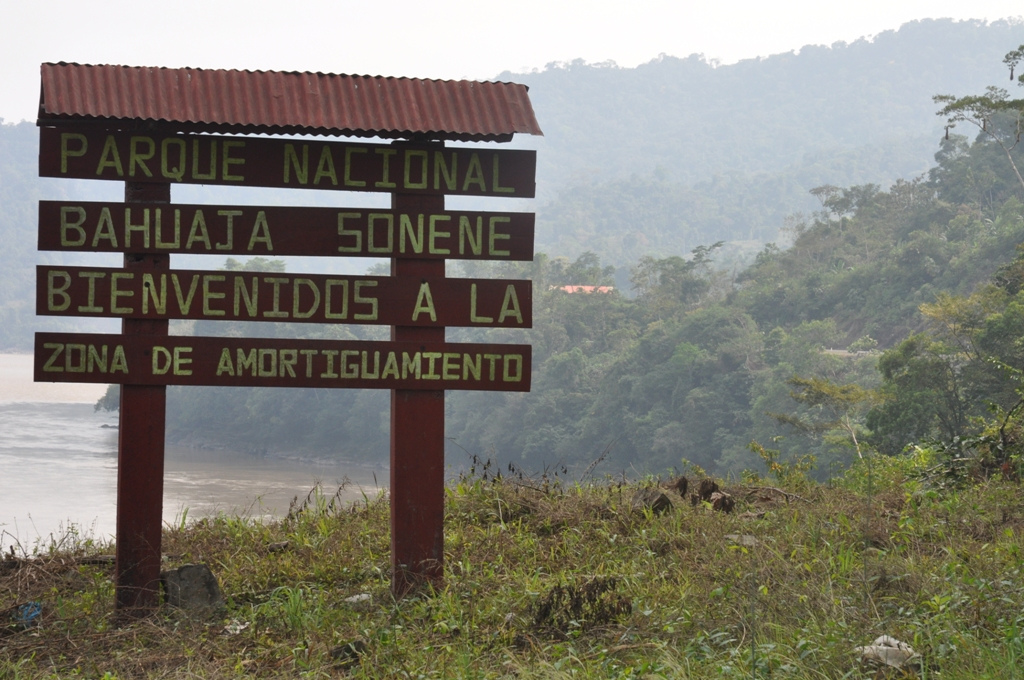
Parque Nacional Bahuaja-Sonene is one of the largest and most biodiverse protected areas in Peru, in the southeast of the country between the regions of Madre de Dios and Puno, on the border with Bolivia. It protects an exceptional mosaic of ecosystems running from lowland Amazon rainforest to the wet Heath plains, a type of tropical savannah unique in Peru.

Its most singular feature is precisely those plains, or savannahs, home to wildlife found nowhere else in the country, such as the marsh deer and the maned wolf (aguará guazú). Add to that the immense richness of the rainforest: jaguars, pumas, monkeys, giant otters, caimans, spectacular birdlife and collpas (clay licks) where macaws and other animals gather. Together with the neighboring Reserva Nacional Tambopata, it forms a huge conservation corridor.

This guide covers the essentials of Parque Nacional Bahuaja-Sonene with a practical eye: how you get in (above all from Puerto Maldonado, along the Tambopata and Heath rivers), which ecosystems and wildlife make it unique, how to organize an expedition with authorized operators, real prices for fees and tours, and what to keep in mind in a remote, protected-nature destination. A park for anyone who loves deep wilderness and Amazon wildlife.

📖 History of Parque Nacional Bahuaja-Sonene

Parque Nacional Bahuaja-Sonene protects Amazon rainforest and Peru's only wet Heath plains, between Madre de Dios and Puno, on the border with Bolivia. Its name comes from Indigenous languages (the Tambopata/Bahuaja and Heath/Sonene rivers). It was established in 1996 and enlarged in 2000, taking in an area that, together with Bolivia's Madidi, forms an enormous binational conservation corridor. The full story is on our history page.

Read the full history ↓

🏛️ Parque Nacional Bahuaja-Sonene is in Madre de Dios

The 'biodiversity capital of Peru': southern rainforest of rivers, oxbow lakes and clay licks, home to Manu and Tambopata, two of the richest wildlife sanctuaries in the world, today threatened by gold mining.

Read the history of Madre de Dios →

🗺️ What to see

1
The Heath plains (wet savannahs)
The park's most singular ecosystem: tropical savannahs unique in Peru, with wildlife found nowhere else.
What makes Parque Nacional Bahuaja-Sonene genuinely unique is the Heath plains, a type of wet tropical savannah that is the only example of this ecosystem in Peru. Unlike dense rainforest, the plains are open stretches of grassland dotted with palms and scrub, flooding seasonally, which makes for a startling landscape in the middle of the Amazon. These savannahs hold wildlife found nowhere else in the country, such as the marsh deer (the largest deer in South America) and the maned wolf or aguará guazú, a long-legged canid with an unmistakable look. They're also a refuge for grassland birds and other wildlife adapted to this open habitat. All of which makes the Heath plains one of Peru's most valuable ecological treasures. Getting there: the plains lie in the Heath river sector, in a remote part of the park; access requires expeditions with authorized operators, several days of river travel from Puerto Maldonado. Best time: dry season. Tips: this is a destination for long, well-planned expeditions; go with an authorized operator, bring repellent, binoculars and suitable clothing, and follow the park's rules strictly.
ℹ️ Peru's only wet savannah ecosystem. Reachable only on a multi-day expedition. Exclusive wildlife: marsh deer and maned wolf.
2
Amazon rainforest and flagship wildlife
Forests of very high biodiversity, with jaguars, monkeys, giant otters and more.
Bahuaja-Sonene protects a vast stretch of lowland and foothill Amazon rainforest of extraordinary biodiversity. Its forests are home to large mammals such as the jaguar (the largest cat in the Americas), the puma, the tapir (sachavaca), the giant anteater, several monkey species, sloths and the endangered giant river otter, along with caimans, snakes and an enormous diversity of amphibians and insects. The birdlife is one of the great draws: hundreds of bird species, including macaws, parrots, toucans, eagles and grassland birds. Together with the neighboring Reserva Nacional Tambopata, the park forms one of the largest conservation corridors in the southern Peruvian Amazon, essential for the survival of species that need large territories. Getting there: the park's forest is explored on river expeditions (Tambopata, Heath) from Puerto Maldonado. Best time: dry season. Tips: wildlife watching takes patience, expert guides and early starts; bring strong repellent, binoculars, a camera with zoom and everything you need for several days in the jungle.
ℹ️ Jaguar, puma, tapir, giant otter, dozens of primate species. A conservation corridor with Tambopata.
3
Macaw clay licks and rivers
Clay licks where macaws and parrots gather, and rivers teeming with life.
One of the most spectacular experiences in the southern Amazon, found in the park and its surroundings, is the collpas: clay walls or riverbanks where every morning hundreds of macaws, parrots and parakeets gather to eat the clay, which gives them minerals and helps neutralize toxins in their diet. The display of color and sound from these flocks is unforgettable. The rivers that cross and border the park —such as the Tambopata (Bahuaja) and the Heath (Sonene)— are the region's arteries of life and the access routes for expeditions. Traveling them lets you watch wildlife along the banks, reach the clay licks and the plains, and take in the immensity of the jungle. Water, forest and sky combine in landscapes of great beauty. Getting there: the clay licks and rivers are visited on expeditions from Puerto Maldonado; some famous collpas, such as Collpa Chuncho and Collpa Colorado, are in the Tambopata area. Best time: dry season; the clay licks are busiest in certain months. Tips: get up early for the clay licks, bring binoculars and a camera, and hire authorized operators who keep their distance and follow the park's rules.
ℹ️ Famous clay licks: Chuncho and Colorado (Tambopata area). Best time: 6-9 am. Busiest in the dry season.
4
Lake Sandoval and Amazon oxbow lakes
A dark-water lake ringed by jungle, reachable from Puerto Maldonado, with giant otters and water birds.
Lake (or Cocha) Sandoval, in the buffer zone near Puerto Maldonado, is one of the most classic trips for getting a taste of the ecosystem that defines Bahuaja-Sonene and Tambopata: an oxbow lake of dark water, ringed by aguajales (palm stands) and tall forest, home to one of the most visible giant river otter populations in the region, along with black caimans, turtles and numerous water birds. You get there by a combination of boat along the Madre de Dios river and a walk of about 3 km on a forest trail to the lake's landing, where you paddle in a silent canoe (no motor) so as not to scare off the wildlife. It's a shorter, more accessible trip than a full expedition to the Heath plains, ideal if you have fewer days but still want to see the same kind of Amazon ecosystem the park protects.
ℹ️ About 25 km from Puerto Maldonado along the Madre de Dios river + a 3 km walk. A half-day to full-day trip.
5
Canopy towers and lookouts
Raised structures above the treetops for watching the jungle and its birds from up high.
Several lodges in the Tambopata area, the usual gateway toward Bahuaja-Sonene, have canopy towers and hanging bridges that let you climb above the forest canopy, 20-30 meters up. From there the perspective changes completely: you see a green sea of treetops to the horizon, and it's the best place to watch birds that live high in the forest —toucans, eagles, macaws in flight— and to take in the real scale of the Amazon. It's an activity that complements the walks and river trips, and it's usually done at dawn or dusk, when bird activity is highest and the light is best for photography. Being above the canopy, with the green immensity at your feet, is one of the most often mentioned memories of anyone who visits the region.
ℹ️ Towers 20-30 m high at lodges in the Tambopata area. Best at dawn or dusk for birdwatching.
6
Ese eja communities and Amazon culture
The Indigenous people who gave the park its name (Bahuaja-Sonene) and who keep their culture alive in the region.
The park's very name pays tribute to the Ese Eja people, one of the Indigenous Amazonian groups of the region, whose language gave rise to the terms 'Bahuaja' (the Tambopata river) and 'Sonene' (the Heath river). Some Ese Eja communities, such as Infierno and Palma Real, near Puerto Maldonado, receive visitors and share their traditional knowledge of the forest, fishing, natural medicine and crafts, in a community tourism that complements the park's nature experience. Getting to know Ese Eja culture, even briefly, adds a human dimension to the trip: understanding how these communities have lived alongside the forest now protected as a national park for generations, and how their ancestral presence in this territory is a fundamental part of the story of Bahuaja-Sonene. Several operators include short community visits in their multi-day programs.
ℹ️ Nearby Ese Eja communities: Infierno, Palma Real. Community tourism available with authorized operators.
Advertisements
What nobody tells you

💵 Prices

Tickets

TypePrice
Admission to Parque Nacional Bahuaja-Sonene - foreign adultS/ 30 (SERNANP rate, verified July 2026); children S/ 15
Admission to Reserva Nacional Tambopata (the usual access zone)S/ 30 foreign adult; around USD 20 (verified July 2026)
Expedition with an authorized operator (3-5 days, all inclusive)USD 250-600 per person depending on length and lodge standard (verified July 2026)
Specialist / naturalist guide (extra day)USD 50-100 a day, depending on experience and agency (verified July 2026)
🔄 updated monthlyOfficial / reference values · double-check when buying

Activities and tours

ActivityPriceDurationOperator
Expedition to the Heath plains (4-5 days)USD 400-700 per person, all inclusive (verified July 2026)4 to 5 daysAuthorized operators in Puerto Maldonado
Tambopata tour, 3 days / 2 nights at a lodge (gateway to Bahuaja-Sonene)USD 180-320 per person depending on the lodge (verified July 2026)3 days / 2 nightsLodges in the area (Tambopata Research Center and similar)
Visit to the macaw clay licksIncluded in tours of 2 days or more; as a separate trip USD 60-100 (verified July 2026)Half day (pre-dawn start)Tambopata lodges and operators
Trip to Lake Sandoval from Puerto MaldonadoUSD 30-60 per person, full day (verified July 2026)Half day to full dayPuerto Maldonado agencies
🔄 updated monthlyOfficial / reference values · double-check when buying
Advertisements

🚌 How to get there and distances

Getting around

ModePriceDurationNotes
Boat on the rivers (Tambopata, Heath, Madre de Dios)Included in the expedition you bookSeveral hours depending on the destinationThe main way into the park from Puerto Maldonado; arranged by the operator
Walking the forest trailsIncluded in the expeditionVariableFor exploring the forest and watching wildlife with a guide
Mototaxi in Puerto MaldonadoS/ 3-6 for a short city ride (verified July 2026)A few minutesThe city's star form of transport. You agree the price before getting in and pay IN CASH in soles: there's no meter and no payment app. Ideal for short rides (2 passengers).
Taxi / local taxi appS/ 10-20 within the city; Padre Aldamiz airport to the center around S/ 15-25 (verified July 2026)A few minutesUber and Cabify practically DO NOT operate in Puerto Maldonado; instead there are local taxi apps (e.g. 'Taxi Turismo Madre de Dios') that order a car on the spot. Payment in cash (sometimes Yape/Plin); bring soles, above all coming from the airport (source: local operators / entreaeropuertos.com, verified July 2026).
Real-time route app--Puerto Maldonado has no urban bus system with a real-time app like Moovit: the city moves by mototaxi and taxi, arranged on the spot or through local taxi apps/WhatsApp. For the park, transport is always by river and the authorized operator sets it up.
🔄 updated monthlyOfficial / reference values · double-check when buying

How to get there

RouteAirlines / operatorsAvg. priceDuration
Puerto Maldonado → Tambopata/Heath rivers → the parkAuthorized operators (expeditions)Included in the expedition package you bookSeveral hours on the water (1.5 to 8 h depending on the destination)
Lima → Puerto Maldonado (plane)LATAM, Sky AirlineUSD 50-140 one way approx. depending on how far ahead you book (verified July 2026)Approx. 1 h 30 min
Cusco → Puerto Maldonado (Interoceánica highway, bus)Wari Palomino, Turismo Tisoc, othersS/ 35-80 approx. (USD 10-22) depending on the service (verified July 2026)Approx. 9 to 11 h
🔄 updated monthlyOfficial / reference values · double-check when buying

🏨 Where to stay

No exact prices: a scale from $ (budget) to $$$$$ (luxury), with 2-3 options per category.

CategoryPriceRecommended options
Jungle lodges in Tambopata (around the park)$$$$$USD 60-150 a night per person with full board at ecotourism lodges in the Tambopata area, the base for expeditions toward Bahuaja-Sonene (verified July 2026; the price usually includes excursions)
Expedition camps$$$$$Included in the expedition package to the Heath plains (USD 400-700 all inclusive); basic camp facilities with tents or rustic shelters (verified July 2026)
Accommodation in Puerto Maldonado$$$$$USD 15-40 a night in hotels and guesthouses in town, the starting point for expeditions (verified July 2026)

🍴 Where to eat

TypePriceOptions / signature dish
Food at lodges and on expeditions$$$$$Included in the package price; Amazonian dishes prepared at the lodge or camp, with river fish, plantain and local produce (verified July 2026)
Amazonian cooking in Puerto Maldonado$$$$$S/ 20-40 a dish (USD 5-11); juane, tacacho con cecina, patarashca and river fish such as paiche or dorado (verified July 2026)
Local produce (Brazil nuts, fruit)$$$$$S/ 5-15 (USD 1-4) a bag or portion of castaña (Brazil nut), aguaje or copoazú in Puerto Maldonado markets (verified July 2026)
Advertisements

📖 History of Parque Nacional Bahuaja-Sonene

Origins, formation and what the sources say.

The name and the territory

Parque Nacional Bahuaja-Sonene owes its name to the languages of the Indigenous peoples of the area, in particular the Ese Eja, who live in the Amazon region of southeastern Peru. 'Bahuaja' is the Indigenous name of the Tambopata river, and 'Sonene' that of the Heath river, the park's two great river axes. This naming recognizes the ancestral presence of the original peoples in the territory and their deep bond with the rivers and the forest.

The park spreads across a vast territory of 1,091,416 hectares between the regions of Madre de Dios and Puno, on the border with Bolivia, running from lowland Amazon rainforest up to the Andean foothills. Its most singular feature is the Heath plains, wet tropical savannahs that are the only ecosystem of their kind in Peru, an open and exceptional landscape in the middle of the Amazon.

This range of environments —dense forest, flooded woodland, rivers, clay licks and savannah— explains the park's extraordinary biodiversity, which protects an enormous number of plant and animal species, several of them endemic, rare or endangered. The territory lies at the heart of one of the biologically richest regions on the planet, where the tropical Andes meet the Amazon plain.

The Ese Eja, ancestral inhabitants

Long before the park existed, the territory Bahuaja-Sonene protects today was, and still is, the home of the Ese Eja people (also called Huarayo), whose language belongs to the Tacanan family and whose name can be translated as 'people' or 'true people'. The Ese Eja have historically occupied the basins of the Tambopata and Madre de Dios rivers, and they made contact with Andean populations as far back as the Inca empire, possibly during the reigns of the Incas Sinchi Roca and Yahuar Huaca.

Contact with the Spanish began in 1567, with Maldonado's expedition to the upper Madre de Dios river. The deepest change, though, came at the end of the 19th century with the rubber boom: the mass arrival of migrants from Loreto, Ucayali, Bolivia and Brazil tied to the rubber trade drastically altered traditional settlement patterns, and several Ese Eja families had to leave their ancestral lands.

Today the Ese Eja live mainly in three native communities: Infierno, on the banks of the Bahuaja (Tambopata) river; Palma Real, on the Madre de Dios; and Sonene. Their culture keeps elements such as shamanism, central to their worldview, and a basketry tradition that Peru's Ministry of Culture declared Cultural Heritage of the Nation for its link to their ancestral territory. The park's name —Bahuaja-Sonene— is in itself a tribute to that age-old presence.

Creation and expansion of the park

Protecting this territory answered the need to conserve unique ecosystems and exceptional biodiversity against the threats of deforestation, settlement and extractive activity. Parque Nacional Bahuaja-Sonene was officially established on 17 July 1996 and later enlarged in 2000, taking in new areas that reinforced its role as a great reservoir of nature in southeastern Peru.

The expansion brought in the Heath plains and better connected the park with other neighboring protected areas, forming an extensive conservation corridor. On the Peruvian side, the park borders the Reserva Nacional Tambopata, and on the Bolivian side it links up with Madidi National Park, one of the most biodiverse in Bolivia. Together, these areas form one of the largest continuous conservation spaces in the Amazon and the tropical Andes, essential for the survival of species that need large territories.

The park is managed by SERNANP, the national protected areas service. Its status as a national park means the highest level of protection: strict conservation of its ecosystems, where no resource extraction is allowed and entry is tightly regulated, largely for scientific research and controlled ecotourism.

The threat of illegal mining

Despite its top-level protected status, Bahuaja-Sonene has faced a serious and growing threat in recent decades: illegal gold mining. Organizations devoted to informal and illegal gold extraction have expanded their reach in Madre de Dios, closing in on Indigenous communities and protected areas such as the Reserva Nacional Tambopata, and pushing toward the park's own boundaries, particularly at the headwaters of the Malinowski river and in the buffer zone.

The environmental impact is severe: between 2019 and 2022, illegal mining deforested thousands of hectares of forest in Madre de Dios, with several hundred hectares affected inside and along the edges of Bahuaja-Sonene itself. The indiscriminate use of mercury to separate the gold contaminates rivers and streams, destroys fish habitats and directly affects flagship species of the park, such as the giant river otter, whose migration routes have been disrupted.

Tens of thousands of people are estimated to take part in artisanal mining, both formal and informal, in the Madre de Dios region, with thousands of rigs devoted to gold extraction. Those who mine inside protected areas face prison sentences and civil damages, but effective control across such a vast, remote region remains a huge challenge for the Peruvian authorities, who work alongside conservation organizations to halt the spread of this illegal activity.

Ecotourism, research and conservation

Against these threats, responsible ecotourism and scientific research have become key tools for conserving Bahuaja-Sonene. The neighboring Reserva Nacional Tambopata, far more accessible from Puerto Maldonado, holds most of the lodges and tourist programs that let visitors see ecosystems similar to the park's, generating income that sustains conservation and local jobs, including for Ese Eja communities who take part directly in community tourism.

At the same time, Bahuaja-Sonene has been and remains a first-rate natural laboratory for scientists worldwide: its biodiversity records, especially for birds and butterflies, are among the highest on the planet for a protected area, and numerous expeditions and research institutions —such as the Frankfurt Zoological Society— work with SERNANP on monitoring endangered species and on strategies to counter illegal mining.

Bahuaja-Sonene is thus one of the great strongholds of Amazonian and Andean nature in Peru: a territory of incalculable scientific and cultural value, the ancestral home of the Ese Eja, today under heavy extractive pressure but also the focus of a sustained conservation effort that combines state protection, science and responsible tourism to secure its future.

📚 Bibliography

  • SERNANP — Servicio Nacional de Áreas Naturales Protegidas por el Estado (official): https://www.gob.pe/sernanp
  • Wikipedia (ES) — «Parque nacional Bahuaja-Sonene»: https://es.wikipedia.org/wiki/Parque_nacional_Bahuaja-Sonene
  • Wikipedia (EN) — «Bahuaja-Sonene National Park»: https://en.wikipedia.org/wiki/Bahuaja-Sonene_National_Park
  • Ministerio de Cultura del Perú — BDPI, Ese Eja: https://bdpi.cultura.gob.pe/pueblos/ese-eja
  • Wikipedia (ES) — «Pueblo ese'ejja»: https://es.wikipedia.org/wiki/Pueblo_ese'ejja
  • Rainforest Expeditions — Comunidad Nativa Ese Eja de Infierno: https://rainforestexpeditions.com/es/comunidad-nativa-ese-eja-de-infierno/
  • Mongabay Latam — Minería ilegal en la frontera de Perú y Bolivia amenaza a territorios indígenas: https://es.mongabay.com/2022/09/mineria-ilegal-en-la-frontera-de-peru-y-bolivia-amenaza-a-territorios-indigenas/
  • Mongabay Latam — Bahuaja Sonene en peligro: biodiversidad atacada por la minería ilegal y el narcotráfico: https://es.mongabay.com/2018/05/peru-bahuaja-sonene-mineria-ilegal-narcotrafico-2/
  • Sociedad Zoológica de Fráncfort — Paisaje Bahuaja Sonene - Tambopata: https://peru.fzs.org/paisajes/bahuaja-sonene-tambopata-landscape/
  • SERNANP — Cuadro consolidado de tarifas de ingreso a ANP: https://cdn.www.gob.pe/uploads/document/file/4034213/CUADRO%20DE%20TARIFAS%202023.pdf.pdf

❓ Frequently asked questions

What is Parque Nacional Bahuaja-Sonene?+
It's one of the largest and most biodiverse protected areas in Peru, between the regions of Madre de Dios and Puno, on the border with Bolivia. It protects Amazon rainforest and the country's only wet Heath plains, with wildlife found nowhere else, such as the marsh deer and the maned wolf. It was created in 1996 and enlarged in 2000.
What are the Heath plains?+
They're wet tropical savannahs, the only ecosystem of this kind in Peru, in the Heath river sector. They're open stretches of grassland with palms that flood seasonally and hold unique wildlife, such as the marsh deer (the largest deer in South America) and the maned wolf (aguará guazú).
How much does admission and an expedition cost?+
SERNANP's entrance fee is S/ 30 per foreign adult (check when visiting). A full expedition to the Heath plains, 4 to 5 days all inclusive, costs between USD 400 and 700 per person (verified July 2026). Shorter, more accessible programs in the Tambopata area (3 days / 2 nights at a lodge) run around USD 180-320 per person.
What wildlife can you see?+
An enormous variety: jaguars, pumas, tapirs, giant anteaters, monkeys, giant otters, caimans, and hundreds of birds, including macaws that gather at the clay licks. On the plains, species found nowhere else, such as the marsh deer and the maned wolf.
How do you get into the park?+
Mainly from Puerto Maldonado, traveling the Tambopata (Bahuaja) and Heath (Sonene) rivers, on multi-day expeditions with authorized operators. Puerto Maldonado is reached by plane from Lima (USD 50-140) or along the Interoceánica highway from Cusco by bus (S/ 35-80, about 9-11 h).
Is it a destination for every traveler?+
It's a remote park visited on long, well-organized expeditions with authorized operators, especially to reach the Heath plains. It's ideal for lovers of nature and wildlife who are up for an adventure. Many jungle experiences are done in the neighboring and more accessible Tambopata area, with lodges and tours of 2 to 4 days.
When is the best time to go?+
The dry season, May to October, with less rain and better conditions for river travel and wildlife watching, though 'friajes' (cold air pushing up from the south) can happen. It's a tropical area with high heat and humidity all year.
How do I get around Puerto Maldonado and how do I pay?+
Puerto Maldonado runs on the mototaxi (motocarro), the fastest and cheapest way around town (a short ride runs around S/ 3-6). There's no meter and no payment app: you agree the price before getting in and pay IN CASH in soles. Uber and Cabify barely operate; there are local taxi apps (such as 'Taxi Turismo Madre de Dios') to order a car, useful above all from the airport. There's no urban bus system with a real-time app. To get into the park, all transport is by river (boat on the Tambopata and Heath) and the authorized operator organizes it. Bring enough cash from town, because in the jungle there are no ATMs and nowhere to pay by card.
Sources consulted (8)
Still planning?
Explore more destinations in Peru
See all destinations →
Advertisements