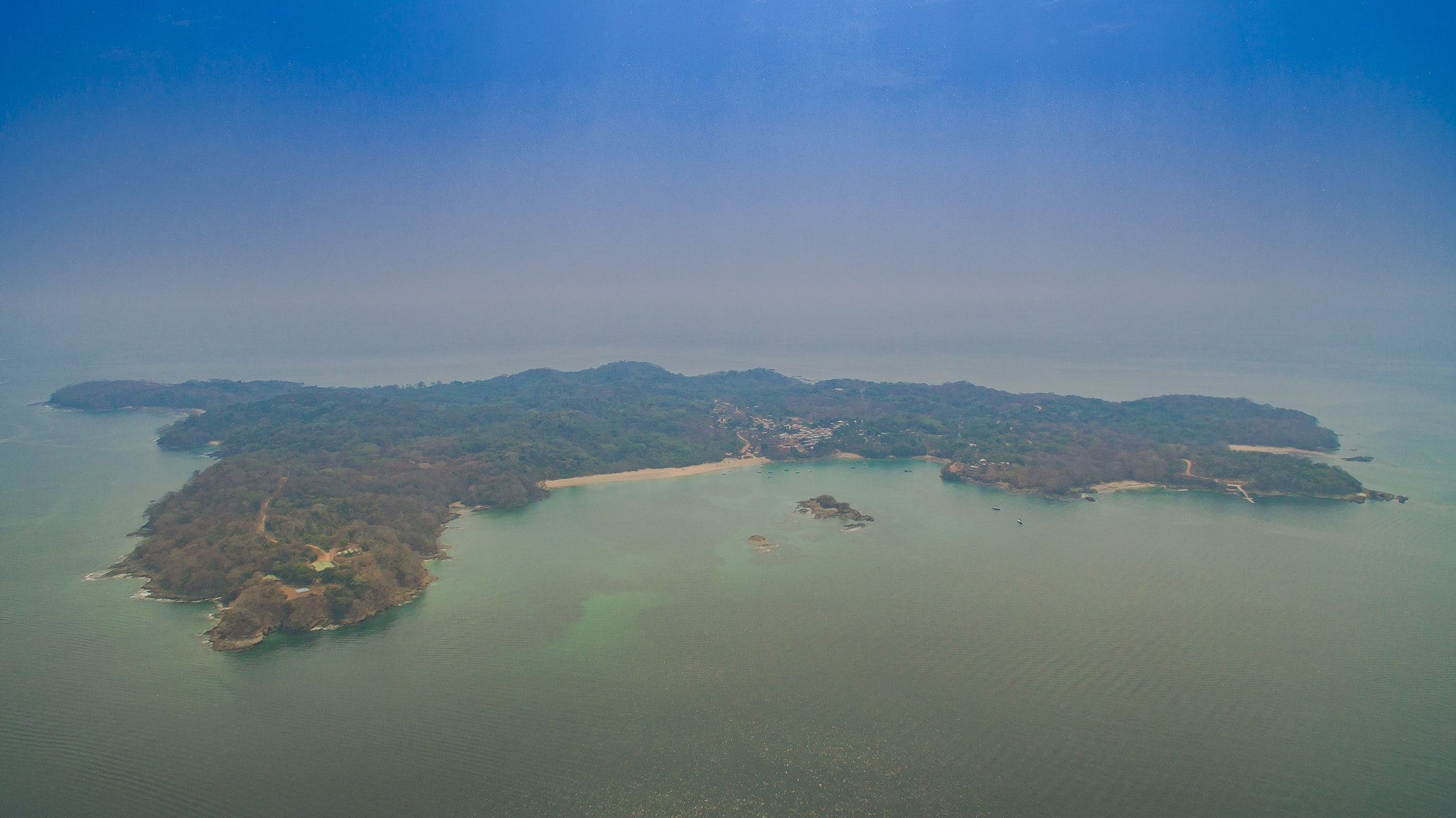
Isla Contadora is the most touristed and accessible island in the Pearl Islands archipelago, in the Gulf of Panama, a short hop from the capital. Small and easily covered, it's famous for its pale-sand beaches and turquoise water, its quiet, exclusive atmosphere, and for having been for decades a retreat for the Panamanian and international elite.
Its name, 'Contadora' ('counting house'), comes from the colonial era, when the pearls extracted from the archipelago were counted on the island before being shipped to Spain. Today it's a relaxed beach destination, with several coves and beaches of different character, snorkeling, and the chance to spot humpback whales in season. You get here on a short flight or by ferry from Panama City, which makes it ideal for a seaside break without going far.
This guide covers the practical side of Isla Contadora: its beaches, the snorkeling and water activities, how to get around the island, the surrounding Pearl Islands archipelago, where to sleep and eat, and how to get here from the capital by plane or ferry.
Isla Contadora owes its name to the colonial era, when the pearls extracted from the Pearl Islands archipelago were counted there before being shipped to Spain. In the 20th century it developed as an exclusive tourist and second-home destination, and was the setting for historic episodes such as the refuge granted to the deposed Shah of Iran at the end of the 1970s.
Read the full history ↓The province of the capital and the Canal: from the first city on the American Pacific (1519) to the modern skyline of Panama City, with the Casco Viejo and Panamá Viejo — World Heritage Sites — and the Miraflores locks.
Read the history of Panamá →They depart from Ciudad De Panama, 66 km away. If you book from this link we earn a commission and you pay no more.
No exact prices: a scale from $ (budget) to $$$$$ (luxury), with 2-3 options per category.
Origins, formation and what the sources say.
Long before the Europeans arrived, the Pearl Islands archipelago was inhabited by Indigenous communities living from fishing, gathering shellfish and trading with the mainland coast. The region formed part of the sphere of influence of the chiefdoms of the isthmus's Pacific shore, among them Chochama, which stretched across the Gulf of San Miguel and the coasts between Chimán and the Bay of Chame, taking in the archipelago and the nearby islands of Chepillo, Taboga and Otoque.
Archaeological evidence shows a continuous human presence on these islands from at least several centuries BCE, with changes in ceramic styles around 700-850 CE that suggest contact with, or population movements from, northern Colombia. Among the peoples occupying the southwest of the isthmus, including these coasts, were the so-called Cueva, one of the major Indigenous groups of pre-Hispanic Panama alongside the Guaymí and the Cuna (today Guna).
Excavations in the archipelago have also turned up singular finds, such as the remains of a now-extinct dwarf deer endemic to these islands, evidence of an island ecosystem that developed in isolation for millennia before the Europeans arrived.
The Spanish reached the archipelago in 1513, during Vasco Núñez de Balboa's expedition that culminated in the historic sighting of the Pacific Ocean (the 'South Sea'). Balboa and his men soon got wind of the pearl wealth of these islands, which they named the 'Pearl Islands' for the abundance of pearl oysters on their underwater beds.
What followed was one of the most tragic chapters of the conquest on the isthmus. The Spanish organized intensive pearl extraction using enslaved Indigenous labor and, later, enslaved Africans, subjected to repeated and exhausting dives in search of the coveted oysters. In barely a couple of decades, the archipelago's original Indigenous population was practically wiped out by forced labor, diseases brought from Europe and the violence of the conquest, ending thousands of years of Indigenous human occupation on these islands.
Isla Contadora forms part of the Pearl Islands archipelago, a group of islands in the Gulf of Panama famous since colonial times for the wealth of its pearl oyster beds. After the Spanish reached the isthmus at the start of the 16th century, the archipelago became an important center of pearl extraction, an activity that left a deep mark on the region's history.
The island's name, 'Contadora' — literally 'counting house' — points straight to that activity: it was here that the pearls harvested in the archipelago were counted and registered before being sent to Spain, in a process of administrative control typical of the colonial system for extracting the resources of the New World. That role of counting and recording gave the island its name, which survives today as a reminder of a past tied to one of the era's most coveted riches.
The pearls of this archipelago achieved worldwide fame, and legendary specimens came out of its waters, including the so-called 'La Peregrina', one of the most famous pearls in history, associated by tradition with these Panamanian coasts and which ended up adorning European royal jewelry. That pearl history is an essential part of the area's identity and an evocative backdrop for visitors who come today drawn by the beaches and crystalline water.
In the 20th century, Isla Contadora was transformed into an exclusive tourist and second-home destination. Its proximity to Panama City, the beauty of its beaches and the calm of the small island drew well-off sectors of Panamanian and international society, who built holiday houses and drove the development of hotels and services aimed at a clientele with money to spend, including the construction of its own airstrip that made access from the capital easier.
Contadora gained international notoriety on several occasions. At the end of the 1970s it was one of the places that gave temporary refuge to the deposed Shah of Iran, Mohammad Reza Pahlavi, during his exile after the Islamic Revolution, an episode that put the small island in headlines around the world. It also gave its name to the so-called 'Contadora Group', a 1980s diplomatic initiative driven by Mexico, Venezuela, Colombia and Panama to seek peace in Central America, which held meetings linked to the island and set precedents for later peace processes in the region.
These events reinforced Contadora's aura as a select place bound up with Latin American diplomatic history. Over time tourism diversified somewhat, and today the island combines that quiet, exclusive profile with a range of beaches, snorkeling and excursions accessible to a broader public, always keeping its character as a peaceful refuge a short hop from the bustling capital.
In the early 2000s, the Pearl Islands archipelago caught international attention again when the American network CBS chose the area as the setting for three seasons of the reality show Survivor: Pearl Islands (2003), All-Stars (2004) and Panama (2006). Although the contestants competed on nearby uninhabited islands such as Mogo Mogo, Saboga and Casaya, Contadora served as the production's logistical base and the site of the tribal council ceremonies, which gave it media exposure that boosted its international appeal.
Today, Isla Contadora combines that past of exclusivity and notoriety with a more accessible profile: it remains the most practical gateway to the Pearl Islands archipelago, with short flights and regular ferries from Panama City, a varied choice of hotels and a relaxed atmosphere that appeals both to those after a beach break and to those wanting to explore the dozens of less-visited islands in the archipelago.