Viajá con Gus
Home › Nigeria › Zuma Rock
Zuma Rock
🇳🇬 Nigeria · Abuja and the centre

Zuma Rock

🪪 What do I need to enter Nigeria?Pick your citizenship and we tell you the visa, the days and the paperwork, with the official source.

By leaving your email and citizenship you agree to receive the documents you asked for and weekly travel news. You can unsubscribe whenever you want. How we handle your data.
Jump to what you need
📍Country and region
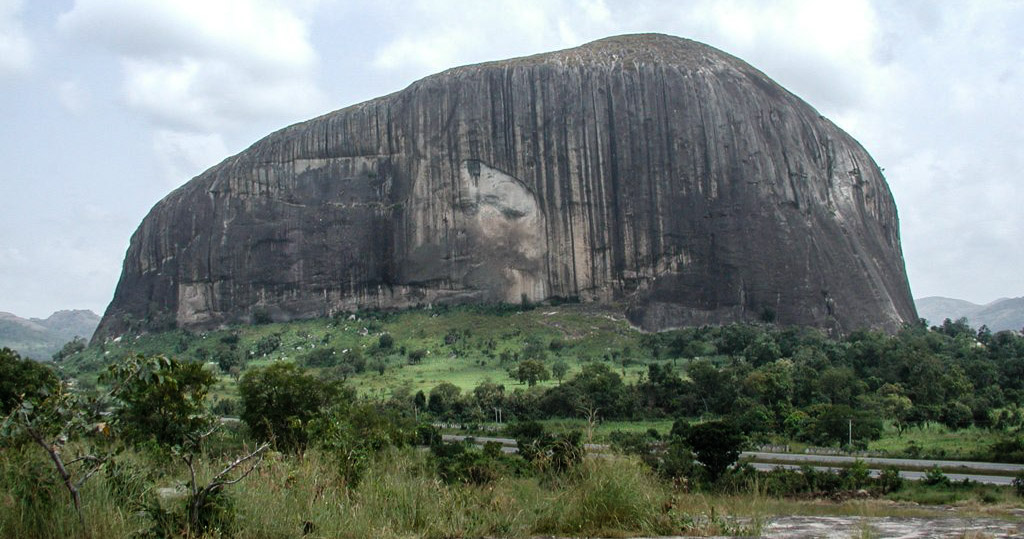
Zuma Rock is a colossal granite monolith in Niger State, in central Nigeria, right on the doorstep of Abuja, the capital. It rises beside the road linking Abuja with Kaduna, near the town of Madalla and the city of Suleja, about 40 km from the centre of the capital. Its enormous bulk reaches around 725 metres above sea level (and some 300 metres above the surrounding land), making it one of the country's most famous natural landmarks, so much so that it appears on the 100-naira note. It is known as the 'gateway' to Abuja from the north.
📌Best time to go
The best time to visit Zuma Rock is the dry season, from November to March, when clear skies let you see it in all its splendour and take good photos. During the 'harmattan' (December to February), dust haze from the Sahara can blur the view a little. In the rainy season (April to October) the surroundings turn very green and the rock is sometimes crowned with clouds, which makes for spectacular images, but with a higher chance of rain. Being so close to Abuja, it is easy to visit at any time of year as a half-day trip.
📌Suggested days
Zuma Rock can be visited in half a day as a trip from Abuja: the drive along the Abuja-Kaduna expressway is short, and once there you take in the view, explore the surroundings, take photos from the best angles and learn about its history and legends. It combines very well with a visit to the city of Suleja (markets and pottery) or, on a broader itinerary, with Abuja itself and the Gurara Falls. It is not a multi-day destination, but a natural must-see to add to your stay in the capital.
📌Getting there
Zuma Rock is about 40 km from central Abuja, on the road to Kaduna, near Madalla and Suleja. It takes about 45 minutes to 1 hour by car from the capital. The most comfortable option for travellers is a car with driver, a taxi or a booked Uber/Bolt, or an organised tour. The rock is impossible to miss: it dominates the landscape beside the road. There are spots from which to view and photograph it; it is best to go with a guide or driver who knows the best viewpoints and the local situation.
📌Getting around
The visit is mainly about viewing and photographing the rock from the various viewpoints and access points at its base, beside the road. It is not a mountain that ordinary tourists climb: its walls are vertical, and the ascent is technical and not set up as a general tourist activity. To get around the area and find the best angles, it is best to go by car with a driver or guide. There are stalls in the surroundings, and sometimes local guides who tell the history and legends of the place in exchange for a tip.
📌Language and currency
The official language is English; in this north-central area Hausa and Gbagyi (Gwari), the language of the region's original people, are also spoken. The currency is the naira (NGN or ₦); in mid-2026 the exchange rate is around 1,400 naira to the dollar. It is a good idea to carry some cash in naira for tips to local guides, purchases at stalls or in the Suleja markets, and for transport, since card payment is not available at a natural site like this.
💱 NGN exchange rate
Loading rate…
🌤️ Weather in Zuma Rock
Loading weather…

Zuma Rock is one of Nigeria's great natural icons: a gigantic granite monolith rising, solitary and monumental, from the savannah of central Nigeria, right on the doorstep of Abuja. Its rounded bulk and vertical walls, which exceed 700 metres above sea level and rise hundreds of metres above the plain, make it a sight impossible to ignore for anyone travelling the expressway linking the capital with Kaduna. It is so emblematic that it features on the 100-naira note.

Known as the 'gateway' to Abuja from the north, Zuma Rock is not just a geological wonder: it is steeped in history and legend. It was discovered centuries ago by the Zuba and Gwari (Gbagyi) peoples of the region, who used it as a defensive refuge during inter-tribal wars. And one curiosity has made it even more famous: erosion has drawn on one of its faces what many see as a huge human face —with eyes, nose and mouth—, which has fuelled all kinds of myths and popular tales.

This guide covers Zuma Rock from a practical angle: what it is and how it formed, where the famous 'face' in the stone is, its history and legends, the best spots to view and photograph it, and how to organise the trip from Abuja. It is an unmissable natural stop for anyone visiting the capital, a symbol of Nigeria that combines the power of the landscape with the rich traditions of the centre of the country.

📖 History of Zuma Rock

Zuma Rock was 'discovered' centuries ago by the Zuba people of the region of present-day Niger State, who called it 'zumwa', usually translated as 'place of guinea fowl'. The Gwari (Gbagyi) people used it as a refuge and defensive stronghold during the inter-tribal wars. Geologically, it is a huge monolith of igneous rock (gabbro and granodiorite) sculpted by erosion over millions of years, leaving on one of its faces the famous figure that many interpret as a human face. From 1999 it appeared on the 100-naira note, and today it is one of Nigeria's most recognisable natural symbols. Its full history is told on our dedicated page.

Read the full history ↓

🏛️ Zuma Rock is in Abuja and the centre

The country's planned capital and its central belt: Abuja, built from scratch in the geographic heart of Nigeria and guarded by the granite bulk of Zuma Rock.

Read the history of Abuja and the centre →

🗺️ What to see

1
The Zuma monolith
The colossal granite mass rising above the savannah beside the Abuja-Kaduna road, one of Nigeria's iconic sights.
Leer más ↓
The main attraction is the rock itself: a monumental granite monolith that rises abruptly from the plain of central Nigeria, reaching around 725 metres above sea level and standing several hundred metres above the surrounding land. Its rounded, massive shape, its almost vertical walls and its greyish colour that changes with the daylight make it an imposing natural spectacle, visible from many kilometres away. Seeing it up close, from its base beside the road, conveys the enormous scale of this formation, one of the largest of its kind in the country. It is the emblem of the area and a must-stop for anyone entering or leaving Abuja to the north. The best experience is simply to stop, look at it and let yourself be impressed by its size. Getting there: on the Abuja-Kaduna road, near Madalla; by car from Abuja (45-60 min). Best time: dry season for clear skies. Tips: stop at a safe spot off the road to take it in; bring water and a camera.
2
The rock's 'human face'
The figure that erosion drew on one of the rock's faces, in which many see a huge face with eyes, nose and mouth.
Leer más ↓
One of the most famous curiosities of Zuma Rock is the figure that water and erosion have sculpted over millennia on one of its faces: a silhouette in which many people see a huge human face, with features suggesting eyes, nose and mouth. This 'face in the stone' has fuelled all kinds of legends and popular tales for generations, and is one of the reasons the rock fascinates Nigerians and visitors so much. Finding the angle from which the 'face' is best seen is part of the fun of the visit; a local guide or driver usually knows where to stand. Beyond the myth, it is a spectacular example of natural pareidolia (the tendency to see faces in random shapes) and a good subject for photos and conversation. It adds mystery to a monument that is already imposing in itself. Getting there: seen from certain points at the base and along the road; ask a local guide for help finding the best angle. Best time: in good light, dry season. Tips: ask for the exact spot where the 'face' can be seen; it is sharper under certain lighting.
3
Viewpoints and photo spots
The best places to view and photograph the rock, from the base and from the road, with the savannah as a backdrop.
Leer más ↓
Zuma Rock is enjoyed above all through the view, and there are several prime spots to see and photograph it: from its base, where you can appreciate its full verticality; from stretches of the Abuja-Kaduna road, with the rock dominating the horizon; and from open areas of the surrounding savannah, which frame it in the landscape. The light at sunrise and sunset, when the stone takes on warm tones, offers the most spectacular images. At various times there have been projects and recreational spaces (viewpoints, rest areas) in the surroundings to make visiting easier. It is best to go with a guide or driver who knows the best angles and the safe places to stop. It is a very photogenic destination and one of Nigeria's great visual symbols. Getting there: at the base and along the nearby road; by car with a guide. Best time: sunrise or sunset in the dry season for the best light. Tips: stop the vehicle only in safe places; follow local guidance on where access is allowed.
4
The rock on the 100-naira note
Zuma's link with the national currency: its image appeared on the back of the 100-naira note, an icon of the country.
Leer más ↓
Part of Zuma Rock's fame comes from its presence on the national currency: its image appeared on the back of the 100-naira note issued from 1999, making it a symbol recognisable to every Nigerian, who sees it daily on their money. In the commemorative centenary edition (2014) the back was changed to a different image, but the association between Zuma and the 100-naira note remained fixed in the country's imagination. This detail makes the visit special: seeing 'live' a landscape that millions of people know from their banknote. It is a nice fact for travellers and proof of the rock's iconic status, raised to a national emblem alongside other symbols of Nigeria. Many visitors take a photo holding the note in front of the real rock. Getting there: the rock, beside the Abuja-Kaduna road. Best time: any. Tips: bring a 100-naira note for the classic photo comparing the image with the real rock.
5
Gwari (Gbagyi) history and legends
The cultural background of the rock: a defensive refuge for the Gbagyi people and a source of myths and tales from the region.
Leer más ↓
Zuma Rock is not just geology: it is a place full of history and cultural meaning for the peoples of the region, especially the Gwari (Gbagyi) and the Zuba. According to tradition, the rock was discovered centuries ago and used as a natural refuge and defensive stronghold: its inaccessible bulk offered protection against attacks by neighbouring tribes in times of war. Its name is said to derive from 'zumwa', 'place of guinea fowl', referring to the birds that were plentiful in the area. Over time, the rock has been the source of numerous legends and popular beliefs —about the 'face' in the stone, about forces or spirits associated with the place— that are part of local folklore. A guide from the area can recount these stories, which give the visit a human and cultural dimension beyond the natural one. It is an opportunity to learn about the traditions of the Gbagyi people, native to the land where Abuja was built. Getting there: at the base of the rock, with a local guide. Best time: year-round. Tips: ask about the legends and Gbagyi history; a tip for the local guide is customary and welcome.
6
Combined trip with Suleja and Abuja
The visit to the rock links up with the city of Suleja and the capital's attractions for a full day out.
Leer más ↓
Zuma Rock is best enjoyed as part of a tour of the area. Very close by is Suleja, a historic city in Niger State known for its markets and its pottery tradition (Suleja Pottery), where you can buy handmade ceramics and see local life. Combining the rock with Suleja makes a good half-day trip. And, of course, the rock is the perfect natural complement to a stay in Abuja: most travellers visit it as a getaway from the capital, adding it to the city's landmarks (National Mosque, Aso Rock, Millennium Park) and, if there is time, the Gurara Falls. In just a few days you can combine the planned, modern Nigeria of Abuja with the great natural symbols of the centre of the country. Getting there: the rock and Suleja, on the Abuja-Kaduna road; by car with driver. Best time: dry season. Tips: link the rock with Suleja's markets and pottery, and with Abuja's sights, in a comfortable itinerary.
📶I have never landed without internet. I arrive and my phone connects to the strongest network in the country I am visiting: I can say I landed, sort out transport, book tours and keep posting, at a seriously good price. I always use the Maya eSIM — check their plans by clicking the banner.See plans →Maya Mobile eSIM — skip roaming fees, unlimited data
What nobody tells you

💵 Prices

Tickets

TypePrice
Contemplación de la roca (desde la base/carretera)No formal admission fee; tip for local guides if hired (verified July 2026)
Guía local / relato de leyendasTip of around ₦2,000-5,000 as agreed (about USD 1.5-4; verified July 2026)
Estacionamiento / acceso a miradores (si aplica)Possible small cash charge depending on the spot and local management (verified July 2026)
Excursión organizada desde AbuyaFrom around USD 40-90 per person with transport (verified July 2026)
🔄 updated monthlyOfficial / reference values · double-check when buying

Activities and tours

ActivityPriceDurationOperator
Half-day trip to Zuma Rock from AbujaFrom around USD 40-90 per person with transport and guide (verified July 2026)Half day (3-5 h)Tour operators in Abuja
Photo session and sightseeing at the viewpointsNo formal cost; tip for local guides (verified July 2026)1 to 2 hoursLocal guides
Zuma Rock + Suleja combo (markets and pottery)From around USD 50-110 per person with transport (verified July 2026)Half day to full dayLocal operators
Abuja + Zuma Rock + Gurara Falls comboFrom around USD 80-160 per person with transport (verified July 2026)Full dayTour operators in Abuja
🔄 updated monthlyOfficial / reference values · double-check when buying

🚌 How to get there and distances

Getting around

ModePriceDurationNotes
Car with driver (from Abuja)Per day; common on tours (verified July 2026)45-60 min each wayThe most comfortable way to get there, find the best viewpoints and combine with Suleja
Uber / Bolt (booked)Return trip from Abuja as agreed; best to arrange waiting time (verified July 2026)45-60 min each wayUseful, but best to agree that the driver waits, as it is not easy to find a ride back from the site
Taxi at an agreed priceAs agreed for the return trip from Abuja (verified July 2026)45-60 min each wayAgree the fare and waiting time in advance; it is a half-day trip
Organised tourIncludes transport and guide (verified July 2026)Half dayThe simplest option for travellers, with logistics sorted
🔄 updated monthlyOfficial / reference values · double-check when buying

How to get there

RouteAirlines / operatorsAvg. priceDuration
Abuja → Zuma Rock via the Abuja-Kaduna road (via Madalla)Car with driver, taxi, Uber/Bolt, operatorsDepends on mode; half-day trip (verified July 2026)45 min to 1 h (about 40 km)
Zuma Rock ↔ SulejaCar with driver, local taxiShort trip, depending on mode (verified July 2026)10-20 min
Abuja Airport (ABV) → Zuma RockCar with driver, private transferDepends on route (verified July 2026)Approx. 1 to 1.5 h
Kaduna → Zuma Rock by roadCar with driver, intercity transportDepends on mode (verified July 2026)2 to 2.5 h (check road safety)
🔄 updated monthlyOfficial / reference values · double-check when buying

🏨 Where to stay

No exact prices: a scale from $ (budget) to $$$$$ (luxury), with 2-3 options per category.

Base in Abuja (recommended)
Price$$$$$
Recommended options
The most practical option is to stay in Abuja, 40 km away, and visit the rock as a half-day trip; see the Abuja guide for hotels in every category (from USD 30 to 500+ a night)
Hotels in Suleja (nearby)
Price$$$$$
Recommended options
Approx. USD 30-80 a night; simple hotels in Suleja, a few minutes from the rock, for those who want to sleep very close
Budget accommodation in the area
Price$$$$$
Recommended options
From around USD 20-50 a night; basic options in Suleja and the surroundings; most travellers, however, stay in Abuja
Resorts and upscale hotels in Abuja
Price$$$$$
Recommended options
From USD 200 a night; the Transcorp Hilton and other luxury hotels in the capital are the usual base for trips to the rock

🍴 Where to eat

Cocina local del centro-norte
Price$$$$$
Options / signature dish
From around USD 3-10 per person; 'tuwo' with soups, 'suya', rice and Hausa/Gbagyi dishes at eateries in Suleja and the area
Nigeriana general
Price$$$$$
Options / signature dish
USD 5-15 per person; 'jollof rice', chicken, plantain and typical dishes at eateries in Suleja and in Abuja
Gastronomía en Abuya
Price$$$$$
Options / signature dish
USD 12-60 per person; to eat well it is best to head back to Abuja, with a wide range of Nigerian and international restaurants; see the Abuja guide
Snacks y provisiones para la visita
Price$$$$$
Options / signature dish
USD 2-6; best to bring water and snacks, as facilities at the rock itself are very basic

📖 History of Zuma Rock

Origins, formation and what the sources say.

A monolith of fire and erosion

Zuma Rock is, above all, a geological wonder formed over millions of years. It is an enormous monolith of igneous rock, made up mainly of gabbro and granodiorite. That means it is rock that formed when magma cooled and solidified deep in the Earth's crust. Over geological eras, erosion wore away the softer ground around this mass of hard rock, gradually leaving it exposed and towering over the plain.

The result is an imposing mass that reaches about 725 metres above sea level. It rises several hundred metres above the surrounding savannah, with almost vertical walls and a rounded summit. It is one of the largest and most spectacular formations of its kind in Nigeria, comparable to other great monoliths around the world. Its bare granite face changes colour with the daylight and the seasons.

The same erosion that sculpted it also left an unusual figure on one of its faces. Over time, water running down the rock traced a silhouette in which many observers see a huge human face, with features that suggest eyes, a nose and a mouth. This 'face in the stone' is one of the rock's best-known features, and for generations it has shaped the stories people tell about it.

en.wikipedia.org · Zuma Rockatlasobscura.com · Zuma rock

The discovery and the 'place of guinea fowl'

The human history of Zuma Rock goes back several centuries. According to tradition, it was discovered around the 15th century by the Zuba people, one of the communities living in this part of central Nigeria, in what is now Niger State. They are said to have given it the name that later became 'Zuma'. One of the most widespread explanations is that it comes from 'zumwa', usually translated as 'place of guinea fowl', after the wild birds that were plentiful in the area.

The rock became a geographical and cultural landmark for the peoples of the region. Among them were the Gwari, or Gbagyi, one of the ethnic groups native to the land where Abuja stands today. It dominates the landscape and can be seen from far away, so it naturally became a landmark and a place full of meaning.

Beyond the guinea fowl, the area's rich oral tradition offers other versions of where the name came from and which peoples first had ties to the rock. What they all share is how old the bond is between the rock and the local communities. These communities knew it, named it and made it part of their world long before the modern capital existed at its feet.

en.wikipedia.org · Zuma Rocken.wikipedia.org · Gbagyi people

Defensive refuge and source of legends

During the intertribal wars that shook the region, Zuma Rock played a practical, strategic role. It served as a refuge and natural stronghold for the Gbagyi (Gwari) people. Its inaccessible mass and heights gave protection from attacks by neighbouring tribes and invaders, and it was a place to retreat to and hold out. That defensive role is part of the historical memory of the communities in the area.

As often happens with great natural formations, the rock also gathered a rich store of legends and beliefs. The mysterious 'face' carved into the stone, the rock's overwhelming size and its solitary presence on the plain all fed stories about spirits, supernatural forces and events linked to the place. These stories, passed down by word of mouth, are part of the folklore of central Nigeria. They give the rock a mystical side that goes beyond geology.

The Gbagyi people, who are native to this area, keep a deep cultural bond with the rock and the land. When the decision was made to build the capital, Abuja, in this region, many Gbagyi communities were displaced, a sensitive part of recent history. Zuma Rock has been a stone witness to all these changes and remains a symbol of the land and its original peoples.

en.wikipedia.org · Zuma Rocken.wikipedia.org · Gbagyi people

From local landmark to national symbol

The building of Abuja as Nigeria's new capital, from the 1980s onwards, changed Zuma Rock's status. It stands about 40 kilometres from the city, on the road linking the capital with Kaduna and the north of the country. For anyone arriving from that direction, the rock became Abuja's great natural 'gateway'. Its imposing bulk welcomes travellers and visitors, and it has become one of the landscapes most closely tied to the capital.

Its appearance on the national currency sealed that fame. An image of Zuma Rock was printed on the back of the 100 naira note issued from 1999. Every Nigerian came to know it, since they see it every day on their money. In the commemorative edition for Nigeria's centenary (2014), that image on the back was replaced with a different one. Even so, the link between the rock and the 100 naira note has stayed fixed in the public mind.

Today, Zuma Rock is one of Nigeria's most recognisable natural symbols. It appears in photographs, postcards and tourism material, and it is close to a must-see for anyone visiting Abuja. It combines the power of the landscape, a colossal monolith sculpted by time, with the many layers of history, culture and legend of the peoples of central Nigeria. A silent witness to centuries of history, it still dominates the horizon at the gates of the capital, as imposing as on the day the Zuba people discovered it.

en.wikipedia.org · Zuma Rocken.wikipedia.org · Nigerian one hundred naira note

📚 Bibliography

  • Wikipedia (EN) — «Zuma Rock»: https://en.wikipedia.org/wiki/Zuma_Rock
  • Wikipedia (EN) — «Nigerian one-hundred-naira note»: https://en.wikipedia.org/wiki/Nigerian_one-hundred-naira_note
  • Central Bank of Nigeria — ₦100 note: https://www.cbn.gov.ng/currency/gallery/N100.html
  • Atlas Obscura — «Zuma Rock»: https://www.atlasobscura.com/places/zuma-rock
  • Wikipedia (EN) — «Gbagyi people»: https://en.wikipedia.org/wiki/Gbagyi_people
  • Wikipedia (EN) — «Niger State»: https://en.wikipedia.org/wiki/Niger_State
  • Wikipedia (EN) — «Suleja»: https://en.wikipedia.org/wiki/Suleja
  • Britannica — «Abuja»: https://www.britannica.com/place/Abuja
  • Oriire — «Glimpsing the Secrets Behind Zuma Rock's Stony Stare»: https://oriire.com/article/glimpsing-the-secrets-behind-zuma-rocks-stony-stare
  • Nigeria Tourism Development Corporation (NTDC) (the site is no longer online)

❓ Frequently asked questions

Can you climb Zuma Rock?+
Not as an ordinary tourist activity. Zuma Rock is a monolith with almost vertical walls whose ascent is technical, dangerous and not set up for general tourism; it also has strong symbolic and cultural significance for the peoples of the area. The visit consists of viewing and photographing it from its base and the viewpoints, and learning about its history and legends with a local guide. Do not try to climb it on your own.
Why does the rock appear on the 100-naira note?+
Because of its status as a great natural symbol of Nigeria and the 'gateway' to the capital, Abuja. The image of Zuma Rock appeared on the back of the 100-naira note issued from 1999, making it familiar to all Nigerians. In the commemorative centenary edition (2014) that image was replaced by another, but the association between the rock and the 100-naira note remained fixed in the popular imagination. Many visitors take photos with the note in front of the real rock.
Where exactly is the 'face' on the rock?+
Zuma's famous 'human face' is a figure that erosion drew on one of the rock's faces, in which many people make out eyes, nose and mouth. It is best seen from certain angles and in certain light; a local guide or driver usually knows where to stand to see it more clearly. It is an example of natural pareidolia (seeing faces in random shapes) that has fuelled many local legends and is one of the highlights of the visit.
How long does a visit take and where is it best to go from?+
The visit itself is short —viewing, photographing and listening to the stories takes one or two hours—, and as a trip from Abuja it takes half a day including the drive (about 45-60 minutes each way). The most comfortable option is to go from Abuja by car with driver, taxi or organised tour. It is worth combining it with nearby Suleja (markets and pottery) or with the capital's sights to make the most of the outing.
Is it safe to go and what should I keep in mind?+
Zuma Rock is very close to Abuja and is usually visited without problems as a half-day trip. It is best to go in a reliable vehicle (car with driver, taxi or app), agree that the driver waits, stop only at safe spots off the road, and bring water, a hat and cash for tips. As with any trip in Nigeria, check the general situation and road conditions before setting off, especially if you plan to continue north (Kaduna).

More places in Nigeria

AbeokutaAbuyaBadagryBenin CityCalabarCataratas de Gurara
See every place in Nigeria →The history of Nigeria →
Sources consulted (6)
Still planning?
Explore more destinations in Nigeria
See all destinations →
Image credits
Photos from Wikimedia Commons, each under its own licence (CC BY, CC BY-SA or public domain). Open each file to see its author and licence.
Zuma Rock