Viajá con Gus
HomeNicaraguaMombacho Volcano
Mombacho Volcano
🇳🇮 Nicaragua · Volcanoes and adventure

Mombacho Volcano

Jump to what you need
📌Location
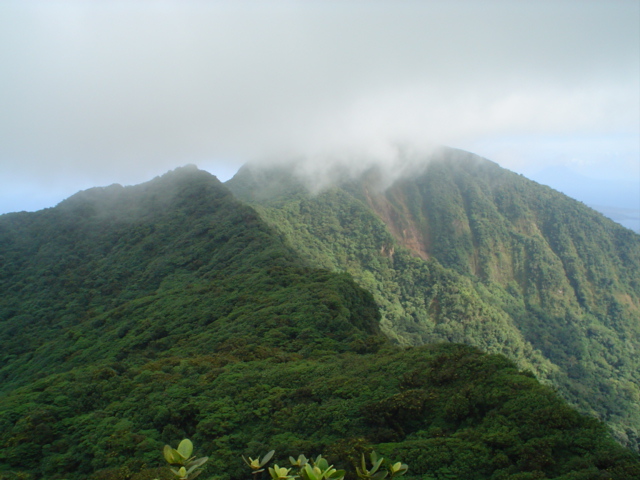
Mombacho Volcano rises to some 1,344 meters just south of the town of Granada, in the department of the same name, in southwestern Nicaragua. It is a volcano covered in cloud forest and declared the Mombacho Volcano Nature Reserve. Its outline dominates the landscape of Granada and Lake Cocibolca, and its surroundings offer trails, fumaroles, great biodiversity (orchids, sloths, monkeys, birds) and coffee farms on its slopes
📌Service town
Granada, a few kilometers to the north, is the natural base for visiting the Mombacho: it has hotels, restaurants, agencies and all the services, and the excursions leave from there. Access to the reserve is through the entrance at the foot of the volcano (near the Pan-American Highway / the road to Granada), from where a special vehicle takes you up to the trail area. There is no relevant airport nearby; you arrive by road from Granada or Managua
📌Best time to go
The dry season (November to April) is the most comfortable for the trails and offers better chances of clear views, although being cloud forest, mist can appear at any time of year (it is part of its charm). The rainy season (May to October) leaves the forest lush and green, ideal for the flora, though with more mud and cloud. Because of the altitude, the summit is cool and damp all year: bring a light layer and a waterproof
📌Suggested days
The Mombacho is usually visited on a half-day or full-day excursion from Granada. With half a day you go up in the reserve's vehicle and walk the shorter crater trail. With a full day you can do a longer trail (such as the one circling one of the craters), add the canopy zip line on the lower slopes or combine it with a coffee farm. It is a perfect complement to a stay in Granada
💱 NIO exchange rate
Loading rate…
🌤️ Weather in Mombacho Volcano
Loading weather…

Mombacho Volcano is one of the great backdrops of Granada: a mass of more than one thousand three hundred meters covered in cloud forest rising just south of the colonial town and dominating the landscape of Lake Cocibolca. Declared a nature reserve, it is a green and misty world, full of orchids, giant ferns, sloths, monkeys and birds, where the clouds tangle among the trees and the fumaroles remind you that the volcano is still alive.

Going up the Mombacho is one of the most popular and accessible excursions from Granada. A special reserve vehicle climbs the steep road to the trail area at the top, from where paths lead around the craters, past fumaroles and out to viewpoints with spectacular views of Granada, the Isletas and the immense lake. It is a plan that combines nature, gentle adventure and landscape in its purest state, a step from town.

This guide covers the essentials of the Mombacho with a practical, warm eye: how to get up to the reserve, which trails to choose, what you can see, how to add the canopy or a coffee farm, when to go and how to organize it from Granada. It is the ideal nature escape for anyone who wants to swap colonial streets for cloud forest without going too far.

📖 History of Mombacho Volcano

The Mombacho is a stratovolcano south of Granada, currently considered to have fumarolic activity (it emits gases and steam, with no recent eruptions of any magnitude). Its geological history is marked by ancient collapses: in the past, part of the volcanic edifice gave way in great debris avalanches, and according to tradition and some chronicles, a collapse or event at the volcano is said to have affected Indigenous settlements on its slopes in the early colonial period. From those collapses and from the geography of the volcano and the lake came, among other formations, the famous Isletas de Granada, the archipelago of hundreds of islets in Lake Cocibolca. On its summit grows a cloud forest, a relatively rare ecosystem that is very rich in biodiversity, with endemic species. The Mombacho region was inhabited by Chorotega peoples and, in the colonial period and afterward, its slopes filled with farms, especially coffee farms, taking advantage of the cool climate and the volcanic soils. In recent decades, the volcano was declared the Mombacho Volcano Nature Reserve and its trail and visitor infrastructure was developed, managed with a conservation approach. The full story is on our history page.

Read the full history ↓

🏛️ Mombacho Volcano is in Granada

The 'Gran Sultana', a colonial jewel on the shores of Lake Cocibolca: founded in 1524, sacked by pirates and burned down by Walker, with its islets, the Mombacho volcano, the Poetry Festival and half a millennium of history.

Read the history of Granada →

🗺️ What to see

1
Crater trails (cloud forest and viewpoints)
The trails at the top of the Mombacho that run around the craters, the cloud forest and viewpoints with views of Granada and the lake.
The great draw of the Mombacho is its trails at the top of the volcano, running through the cloud forest around the craters. Once the reserve vehicle drops visitors at the trail area, several walking options open up through a green and misty world, full of lush vegetation, mosses, ferns, orchids and forest wildlife (with luck, sloths, monkeys and a multitude of birds). The shortest and most popular trail is the one circling one of the craters, a relatively accessible loop passing fumaroles (where the volcano releases steam and gases), viewpoints and cloud forest formations. For the more active there are longer and more demanding trails covering a wider perimeter and going deeper into the forest. At the viewpoints, when the mist allows, the views are spectacular: Granada, the Isletas archipelago and the immense Lake Cocibolca at your feet. The experience combines nature, a touch of gentle adventure and the unique atmosphere of the cloud forest, where the clouds move among the trees. It is common to walk the trails with a reserve guide, who greatly enriches the visit by explaining the flora, fauna and geology of the volcano. Getting there: from the base of the reserve, in the special vehicle that climbs the steep road to the trail area. Best time: the dry season for better chances of views; mornings tend to be clearer. Tips: bring hiking shoes, a light layer and a waterproof (at the top it is cool, damp and it can rain), water and repellent. Check which trails are open and whether they require a guide.
ℹ️ Distance: Summit of the Mombacho; access from the base in the reserve vehicle · Best time to go: Dry season and mornings for the best views (mist is frequent) · Entrance: US$ 5 walking up or US$ 20 with transport (eco-truck included); own 4x4 US$ 25/vehicle. Source: Along Dusty Roads and Fundación Cocibolca, verified July 2026 · Duration: Short trail: 1-1.5 h; long trails: half a day
2
Transport up to the reserve (the Mombacho truck)
The special vehicle that climbs the volcano's steep road to the trail area, an experience in itself.
The usual way to get up to the top of the Mombacho is in the reserve's special vehicle, a truck or adapted transport that climbs the steep road up the volcano's flank. Because of the gradient and the state of the road, ordinary private cars are not allowed all the way up, so this transport is a central part (and part of the adventure) of the visit. The ascent passes through different vegetation belts, from the lower slopes with coffee farms to the cloud forest at the summit, and offers views that open up as you gain height. The journey, with its gradient and its bends, is quite an experience, and on clear days it gives you panoramas of the lake and the region. For the more athletic, there is also the option of walking up the road, a long and demanding hike. The vehicle's departure times are set and worth checking, since they organize the visiting slots. In high season there can be considerable demand, so it is advisable to arrive with time to spare. Getting there: you reach the base of the reserve from Granada by taxi, vehicle or with a tour; from there you take the reserve transport. Best time: the dry season for better road conditions and views. Tips: check the departure times in advance, arrive early in high season and bring a layer, since it gets cooler as you climb. The transport is usually included in or added to the reserve entrance fee.
ℹ️ Distance: From the base of the reserve (access from Granada by road) · Best time to go: Dry season; arrive early in high season · Entrance: included in the entrance WITH transport at US$ 20 per person (the US$ 5 one is only for those walking up); own 4x4 US$ 25/vehicle. Source: Along Dusty Roads, verified July 2026 · Duration: Ascent of approx. 30-45 min each way
3
Canopy / zip line on the slopes of the Mombacho
Zip line circuits among the trees on the volcano's flanks, an adventure activity with views of the lake.
On the slopes of the Mombacho there are canopy (zip line) circuits that let you glide among the trees, above the forest canopy, in an adventure activity that is very popular with those visiting the area from Granada. It is a fun, adrenaline-filled way to enjoy the volcano's nature, with cables connecting platforms in the trees and, on the higher stretches, views of the vegetation, the coffee farms and the lake in the distance. Canopy routes usually include several cables of different length and height, with guides who handle the safety equipment (harness, helmet, carabiners) and accompany participants. No previous experience is needed, which makes it suitable for most visitors looking for a bit of excitement. This activity takes place on the flanks, below the crater trail area, and can be combined with a visit to the reserve or with a coffee tour, since several farms in the area offer these experiences. It is ideal for adding adventure to a day at the Mombacho. Getting there: to the slopes of the Mombacho from Granada, with the canopy operator or on your own. Best time: the dry season for better conditions; any time of day. Tips: book in advance, wear comfortable clothes and closed shoes, follow the guides' safety instructions and check weight or age restrictions. Combine it with the climb to the reserve or a coffee farm to make the most of the day.
ℹ️ Distance: Slopes of the Mombacho (from Granada with the operator) · Best time to go: Dry season; any time of day · Entrance: US$ 30–95 depending on the operator and whether booked as part of a combo (Miraville canopy, 2 km, 17 platforms, 11 cables; verified July 2026) · Duration: 1 to 2 hours
4
Coffee farms on the slopes
Coffee plantations on the volcano's flanks, where you can learn about the bean's process and enjoy the cool setting.
The slopes of the Mombacho, with their cool climate, their cloud cover and their volcanic soils, are ideal for growing coffee, and several historic farms in the area offer tours combining the bean with the volcano's nature. It is an experience that complements the reserve visit very well, showing another face of the Mombacho: the coffee-growing landscape that has shaped the region. Coffee tours at the Mombacho farms usually walk you through the plantation, explain the process (from plant to cup) and offer a tasting, all in a setting of forest and plantations with views of Granada and the lake. Some farms also have their own trails, viewpoints and, in certain cases, the canopy circuits, so you can string several activities together in one place. Visiting a farm lets you understand the relationship between the volcano, the highland climate and coffee growing in the Granada region, and it usually includes the chance to buy local coffee. It is a quiet and pleasant plan, especially for those who enjoy coffee and rural landscapes. Getting there: to the farms on the slopes of the Mombacho from Granada, by vehicle, taxi or with a tour. Best time: the dry season for the roads; the harvest (broadly Nov-Feb/Mar) to see the process. Tips: book the tour in advance, bring a light layer (it gets cool) and comfortable shoes, and take the chance to buy local coffee. It combines very well with the canopy or the climb to the reserve.
ℹ️ Distance: Slopes of the Mombacho (from Granada by vehicle, taxi or tour) · Best time to go: Dry season; harvest (Nov-Feb/Mar) to see the process · Entrance: US$ 15–35 per person for the coffee tour with tasting, depending on the farm (verified July 2026, confirm when visiting) · Duration: Half day
5
Views of the Isletas de Granada and Lake Cocibolca
From the Mombacho's viewpoints you can take in the Isletas de Granada and the immense lake, a landscape unique to Nicaragua.
One of the great rewards of climbing the Mombacho are the views from its viewpoints, when the cloud forest mist allows. From the top of the volcano you take in a landscape unique to Nicaragua: the colonial town of Granada, the archipelago of the Isletas de Granada (hundreds of islets in the lake) and the immensity of Lake Cocibolca, the largest in Central America, stretching to the horizon. It is especially fascinating because the Isletas de Granada are directly linked to the geological history of the Mombacho: they formed from the material thrown out by ancient collapses and events at the volcano, which fell into the lake and created that maze of islets. Seeing them from above helps you understand the relationship between the volcano and the lake landscape that so characterizes Granada. The views depend a great deal on the weather: on clear days they are spectacular, while when the cloud forest lives up to its name, the mist can cover everything (which has its own atmospheric magic). So choose a day with good weather and go up early, when it tends to be clearer. Getting there: the viewpoints are reached along the trails at the top of the volcano, after going up with the reserve transport. Best time: clear days in the dry season and early mornings. Tips: bring a camera, a layer and a waterproof, and patience: sometimes you have to wait for the mist to open up to enjoy the view. Even if it is cloudy, the forest and the fumaroles still make the visit worthwhile.
ℹ️ Distance: Viewpoints at the top of the Mombacho (along the summit trails) · Best time to go: Clear days in the dry season; early mornings · Entrance: Included in access to the trails (entrance US$ 5 on foot or US$ 20 with transport, verified July 2026) · Duration: Part of the trail route
6
Fumaroles and secondary craters of the Mombacho
The points where the volcano releases gases and steam, evidence of its current fumarolic activity.
Along the summit trails, especially on the loop circling one of the craters, you can see the Mombacho's fumaroles up close: cracks and vents through which the volcano releases water vapor and gases with a characteristic sulfurous smell. They are a reminder that, although the Mombacho has recorded no recent eruptions of any magnitude, it is still a geologically active volcano. The fumaroles are usually signposted and the reserve guides explain their geological origin, the composition of the gases and why the volcano, despite its apparent calm, is still monitored. It is a brief but interesting stop within the general trail route, adding a scientific dimension to the walk through the cloud forest. Getting there: on the summit trail loop, signposted from the visitors' center. Best time and hours: any moment during the daytime route. Tips: do not go closer than the signage or the guide indicates, and pay attention to the sulfur smell as a sign that you are close.
ℹ️ Distance: On the summit trail loop of the Mombacho · Best time to go: Any moment during the daytime route · Entrance: Included in the reserve entrance (US$ 5 on foot or US$ 20 with transport, verified July 2026) · Duration: 10 to 20 minutes (a stop within the trail)
Advertisements
What nobody tells you

💵 Prices

Tickets

TypePrice
Mombacho Volcano Nature Reserve — entrance walking upUS$ 5 per foreign visitor (source: Along Dusty Roads and Fundación Cocibolca, verified July 2026)
Entrance WITH transport (eco-truck up included)US$ 20 per foreign visitor, ascent all included (source: Along Dusty Roads, verified July 2026)
Access in your own 4x4 vehicleUS$ 25 per vehicle, on top of the per-person entrance (source: Along Dusty Roads, verified July 2026)
Guide per trail (compulsory on several)Crater Trail US$ 8 (Spanish) / US$ 12 (English); El Tigrillo US$ 12/17; El Puma US$ 17/22, per group; cash only (source: Fundación Cocibolca, verified July 2026)
Canopy / zip line on the slopesUS$ 30–95 depending on the operator and how it is booked (verified July 2026)
Coffee tour at a Mombacho farmUS$ 15–35 per person depending on the farm (verified July 2026)
Organized excursion from Granada (transport + entrance + guide)US$ 40–47 per person approx. for half a day (verified July 2026)
🔄 updated monthlyOfficial / reference values · double-check when buying

Activities and tours

ActivityPriceDurationOperator
Hiking the crater trails (cloud forest)US$ 5 on foot or US$ 20 with transport included (verified July 2026)1 h to half a dayMombacho Volcano Nature Reserve / reserve guides
Canopy / zip line on the volcano's slopesUS$ 30–95 depending on the operator (verified July 2026)1-2 hCanopy Tour Miraville and other operators in the area
Coffee tour at a Mombacho farmUS$ 15–35 per person (verified July 2026)Half dayCoffee farms on the volcano's slopes
Full-day excursion from GranadaUS$ 40–70 per person approx., depending on what it includes (canopy, coffee; verified July 2026)Full dayGranada agencies and guides
Birdwatching and cloud forest wildlifeIncluded in the entrance; a specialized naturalist guide is separate, approx. US$ 15–25Half dayNaturalist guides of the reserve
🔄 updated monthlyOfficial / reference values · double-check when buying
Advertisements

🚌 How to get there and distances

Getting around

ModePriceDurationNotes
Reserve eco-truck (ascent to the summit)Entrance WITH transport US$ 20 per person (the truck ride up is included in that price; source: Along Dusty Roads and Fundación Cocibolca, verified July 2026)Approx. 30-45 min each wayIt is the usual way up the steep road; it leaves the summit biological center several times a day (approx. 11:30, 13:30 and 16:00). Private cars do NOT go up except 4x4s with a separate fee. Arrive early
Own 4x4 (driving up yourself)US$ 25 per vehicle, on top of the per-person entrance (source: Along Dusty Roads, verified July 2026)Approx. 30-45 min to drive upOnly 4x4 vehicles are allowed because of the gradient; vehicle ascent hours from 8:00. Ask at the base
Public bus from Granada (to the Mombacho entrance)Approx. C$ 10 (about US$ 0.30), in cash (source: Along Dusty Roads, verified July 2026)Approx. 25 min + a 1.5 km walk to the boothAny bus from Granada toward Rivas/Nandaime stops at 'la entrada de Mombacho' if you ask the driver; from the highway there is a flat 1.5 km walk (about 20 min) to the booth
Taxi from Granada to the baseUS$ 10–15 approx. (verified July 2026)Approx. 20-30 minFor getting from Granada to the reserve entrance or to the farms on the slopes. Agree on the price and, if you want, the waiting time
Organized excursion (transport included)US$ 40–47 per person approx. (verified July 2026)VariableThe most convenient option: Granada agencies offer tours with round-trip transport, entrance and guide, taking care of all the logistics
On foot (walking up the road)Only the US$ 5 entrance (source: Along Dusty Roads, verified July 2026)Demanding climb of approx. 5 km; descent approx. 90 minAn alternative for strong walkers: you have to start early (allowed from 6:00) and leave the biological center to head down before 15:00; a steep gradient of 40-45°
🔄 updated monthlyOfficial / reference values · double-check when buying

How to get there

RouteAirlines / operatorsAvg. priceDuration
Granada → base of the MombachoTaxis, agencies and toursTaxi approx. US$ 10–15 (verified July 2026)Approx. 20-30 min (a few km)
Managua → Granada → MombachoBuses and shuttles to Granada + transport to the reserveBus to Granada approx. US$ 1–2; tourist shuttle US$ 15–25; plus entrance and transport to the reserve (verified July 2026)Approx. 1-1.5 h to Granada + transfer to the base
Round-trip excursion from GranadaGranada agenciesUS$ 40–70 per person all inclusive (verified July 2026)Half day to full day (all inclusive)
Base of the reserve → trail area (summit)Eco-truck of the Mombacho Volcano ReserveIncluded in the entrance WITH transport at US$ 20 per person (verified July 2026)Approx. 30-45 min to climb
🔄 updated monthlyOfficial / reference values · double-check when buying

🏨 Where to stay

No exact prices: a scale from $ (budget) to $$$$$ (luxury), with 2-3 options per category.

CategoryPriceRecommended options
Accommodation in Granada (recommended base)$$$$$US$ 60–150 a night; a wide choice of boutique hotels in colonial mansions, mid-range hotels and options at every level, for visiting the Mombacho as a day trip (verified July 2026)
Ecolodge / farm on the volcano's slopes$$$$$US$ 70–160 a night; farms and ecolodges on the flanks of the Mombacho with accommodation among coffee plantations and forest, with nature and views (verified July 2026)
Mid-range hotels in Granada$$$$$US$ 35–70 a night; a wide choice of mid-range hotels in Granada, comfortable and well located for combining the colonial town with excursions (verified July 2026)
Budget / hostels in Granada$$$$$US$ 8–20 for a dorm bed; US$ 25–40 for a private room; hostels and budget hotels in Granada, chosen by backpackers and travelers on a tight budget (verified July 2026)

🍴 Where to eat

TypePriceOptions / signature dish
Restaurants in Granada (dining base)$$$$$US$ 8–20 per dish; the dining scene is above all in Granada, with restaurants for every taste along Calle La Calzada (verified July 2026)
Cafés and restaurants at Mombacho farms$$$$$US$ 6–15 per dish or coffee menu; some farms on the volcano's slopes have cafés or restaurants where you can try the local coffee (verified July 2026)
Typical Nicaraguan food$$$$$US$ 4–8 per dish; gallo pinto, vigorón, grilled meat, quesillo and fresh fruit drinks at eateries and fritangas in Granada (verified July 2026)
Supplies for the trail$$$$$US$ 2–5 approx. for water and snacks; buy them in Granada before setting out, since at the top of the volcano the services are limited (verified July 2026)
Advertisements

📖 History of Mombacho Volcano

Origins, formation and what the sources say.

Geology and formation of Mombacho Volcano

The more than 350 islets dotting Lake Cocibolca in front of Granada —that maze of green islets the tourist boats work their way through today— are not a whim of geography: they are literally pieces of the Mombacho volcano. A few thousand years ago, an entire flank of the mountain collapsed in a colossal avalanche of rock and mud that plunged into the lake, and that debris, poking above the water, formed the archipelago. To understand the Mombacho is to understand where half of Granada's landscape came from.

The Mombacho is a stratovolcano south of Granada, in southwestern Nicaragua, reaching around 1,344 meters. It forms part of the volcanic chain running along the country's Pacific side, linked to the subduction of tectonic plates off the Central American coast, the same process that raised Nicaragua's impressive line of volcanoes. Its outline, covered in forest, dominates the horizon of Granada and Lake Cocibolca.

Unlike the highly active volcanoes of the León region (such as Cerro Negro or Telica), the Mombacho is currently considered a volcano with fumarolic activity: it releases water vapor and gases through fumaroles, but records no recent eruptions of any magnitude. That relative calm has allowed a singular ecosystem to develop on its summit, the cloud forest, which today is its main natural attraction.

The geological history of the Mombacho is nonetheless marked by dramatic episodes: in the past, part of its volcanic edifice suffered great collapses, generating debris avalanches that moved toward the lake. These collapses shaped the volcano's present form, with its slopes and craters, and had a scenic consequence of enormous importance for the Granada region.

The Mombacho as a volcano with fumarolic activity
Sources agree in classifying the Mombacho as a stratovolcano with current fumarolic activity, with no recent eruptions of any magnitude, which sets it apart from Nicaragua's more active volcanoes. The exact height and the details of its classification can vary slightly depending on the source.
Source: https://es.wikipedia.org/wiki/Volc%C3%A1n_Mombacho

The volcano's collapses and the origin of the Isletas de Granada

One of the most fascinating chapters in the history of the Mombacho is its relationship with the famous Isletas de Granada, the archipelago of hundreds of islets dotting Lake Cocibolca in front of the town. According to the most widely accepted geological interpretation, these islands formed from the material thrown out by a great collapse of the volcano in the past: a debris avalanche that moved as far as the lake and, on partly sinking, left that multitude of small islands emerging.

So the Isletas de Granada —today one of the region's great tourist attractions, explored by boat or kayak— are in fact fragments of the Mombacho itself scattered across the water. This connection between the volcano and the lake landscape is one of the most singular features of the geography of southwestern Nicaragua, and it is best appreciated from the viewpoints at the volcano's summit.

The great collapses of the volcanic edifice not only created the Isletas but also shaped the Mombacho's present form. Some chronicles and traditions also associate events at the volcano with harm to Indigenous settlements on its slopes in the early period of the Spanish presence, although the historical details of those accounts should be taken with caution.

The Isletas as the product of a Mombacho collapse
The most widespread geological interpretation holds that the Isletas de Granada formed from the material of a great debris avalanche produced by a collapse of the Mombacho, which fell into Lake Cocibolca. The dimensions and exact dating of the event vary depending on the studies.
Source: https://es.wikipedia.org/wiki/Isletas_de_Granada

The cloud forest and the biodiversity of the summit

The summit of the Mombacho holds a relatively rare and very valuable ecosystem: a cloud forest, a type of high-altitude rainforest that develops where clouds habitually envelop the vegetation, providing constant humidity. In the Mombacho's case, its height and position mean the summit is frequently covered in mist, which sustains this lush forest in the middle of a mostly warm and dry region.

This condition as an 'island' of cloud forest, isolated at the top of the volcano, has favored remarkable biodiversity, with plant and animal species adapted to this microclimate, some of them endemic or rare. The Mombacho forest is famous for its great variety of orchids, its ferns and mosses, and for sheltering sloths, monkeys, numerous birds, amphibians and insects, among them species of scientific interest.

That biological richness, together with the presence of fumaroles and the panoramic views, is what makes the Mombacho such a prized natural destination. Conserving this fragile cloud forest ecosystem is, in fact, one of the main reasons the volcano was declared a protected area.

The cloud forest as an 'island' of biodiversity
Ecological studies describe the cloud forest at the Mombacho's summit as an ecosystem of great biodiversity with endemic species, favored by the constant humidity of the clouds. The exact number of species cited (orchids, birds, etc.) varies depending on the sources and the surveys.
Source: https://en.wikipedia.org/wiki/Mombacho

Original peoples, coffee and life on the slopes

The slopes of the Mombacho have been inhabited and cultivated since remote times. The Granada region and the volcano were the territory of Chorotega peoples before the conquest, drawn by the fertility of the volcanic soils and the closeness of the great lake. The arrival of the Spanish and the founding of Granada in the 16th century marked the start of a new stage, in which the Mombacho's surroundings were absorbed into the colonial life of one of the oldest towns on the American mainland.

Over time, the volcano's flanks filled with farms making use of the cool climate, the humidity and the soils rich in volcanic minerals. Coffee in particular found favorable conditions on the slopes of the Mombacho, and coffee growing became a characteristic activity of the area. Some of these historic farms are still working and today combine coffee production with tourism.

That relationship between the volcano and human activity —original peoples, colonial town, coffee farms— is part of the Mombacho's identity. Today its slopes bring together plantations, ecolodges, canopy circuits and the rural life of the region, while the protected summit preserves its cloud forest, in a balance between use and conservation.

Coffee on the slopes of the Mombacho
Sources agree that the slopes of the Mombacho, with their cool climate, humidity and volcanic soils, have traditionally been coffee farm country, some of the farms historic and still working. The founding dates of the different farms and the scale of coffee growing vary depending on the sources.

The Mombacho Volcano Nature Reserve and conservation today

Recognizing the value of its cloud forest and its biodiversity, the Mombacho was declared the Mombacho Volcano Nature Reserve, joining Nicaragua's system of protected areas. The reserve's management combines conservation of the fragile summit ecosystem with the development of orderly nature tourism, through prepared trails, regulated transport up and the presence of rangers and guides.

The reserve's administration has been tied to conservation initiatives seeking to protect the cloud forest, the fumaroles and the species living there, while allowing controlled visits. The infrastructure of trails and viewpoints and the special-vehicle access system respond both to visitor safety (because of the steep road) and to protection of the environment.

Today the Mombacho is one of the most visited natural destinations from Granada, an example of how a volcano can combine geological value, biological richness and tourist interest under a conservation scheme. Climbing to its misty summit, walking its trails among orchids and fumaroles and looking out over the lake and the Isletas is, as well as a nature experience, a journey through the geological and human history of southwestern Nicaragua.

The Mombacho's conservation management
Sources note that the Mombacho Volcano Nature Reserve is managed with a cloud forest conservation approach combined with orderly nature tourism (trails, regulated transport, rangers). The institutional details of the management can change over time, so it is worth consulting up-to-date official sources.
Source: https://es.wikipedia.org/wiki/Reserva_natural_Volc%C3%A1n_Mombacho

📚 Bibliography

  • Wikipedia (ES) — «Volcán Mombacho»: https://es.wikipedia.org/wiki/Volc%C3%A1n_Mombacho
  • Wikipedia (EN) — «Mombacho»: https://en.wikipedia.org/wiki/Mombacho
  • Wikipedia (ES) — «Reserva natural Volcán Mombacho»: https://es.wikipedia.org/wiki/Reserva_natural_Volc%C3%A1n_Mombacho
  • Wikipedia (ES) — «Isletas de Granada»: https://es.wikipedia.org/wiki/Isletas_de_Granada
  • Wikipedia (ES) — «Granada (Nicaragua)»: https://es.wikipedia.org/wiki/Granada_(Nicaragua)
  • MARENA — Ministerio del Ambiente y los Recursos Naturales (Nicaragua): https://www.marena.gob.ni/
  • INETER — Instituto Nicaragüense de Estudios Territoriales: https://www.ineter.gob.ni/
  • Fundación Cocibolca — Reserva Natural Volcán Mombacho: https://www.mombacho.org/
  • INTUR — Instituto Nicaragüense de Turismo: https://www.intur.gob.ni/

❓ Frequently asked questions

How do you get up Mombacho Volcano?+
The usual way is in the reserve's special vehicle (a truck or adapted transport) that climbs the steep road from the base to the trail area, since private cars do not go all the way up. It is also possible, for the more athletic, to walk up the road, a long and demanding hike. Check the transport times in advance.
What can you see at the Mombacho?+
At the top, a lush cloud forest with orchids, ferns, sloths, monkeys and birds; fumaroles where the volcano releases steam and gases; trails circling the craters; and, when the mist allows, viewpoints with spectacular views of Granada, the Isletas and Lake Cocibolca. On the lower slopes there are also coffee farms and canopy circuits.
What is the best time to visit?+
The dry season (November to April) offers better chances of clear views and more comfortable trails. The rainy season (May to October) leaves the forest very green, ideal for the flora, but with more mud and cloud. Being cloud forest, mist can appear at any time of year. Go up early and pick a day with good weather for the views.
Where is the visit organized from?+
From Granada, a few kilometers to the north, which is the natural base: that is where the hotels, restaurants and agencies are that offer excursions to the Mombacho with transport, entrance and guide. You can also go on your own by taxi to the base of the reserve and take the transport up from there. It is a perfect complement to a stay in Granada.
Do you need a guide for the trails?+
Some Mombacho trails require you to be accompanied by a reserve guide, and in general it is recommended, because it greatly enriches the visit: the guides explain the flora, the fauna and the geology of the cloud forest. Ask on arrival which trails are open and which require a compulsory guide.
What should I bring to go up the Mombacho?+
Hiking shoes, a light layer and a waterproof or rain jacket (at the top it is cool, damp and it can rain), water, something to eat, repellent and sun protection. A camera is essential for the views. Also bring cash in córdobas for entrance fees and purchases, since services at the top are limited.
Is the Mombacho a dangerous volcano?+
The Mombacho is currently considered a volcano with fumarolic activity (it releases steam and gases, with no recent eruptions of any magnitude), and the reserve is open for visits with safe trails. The fumaroles are part of the appeal. As in any natural and volcanic area, follow the instructions of the rangers and guides and check up-to-date official sources before you go.
How much does it cost to go up the Mombacho and how do you pay?+
The reserve entrance costs US$ 5 per person if you walk up, or US$ 20 if you include the eco-truck ride up (the usual option); if you drive up in your own 4x4, you pay US$ 25 per vehicle on top of the entrance. Trail guides are separate and cash only: about US$ 8–17 in Spanish depending on the trail (Crater, El Tigrillo, El Puma). The entrance can be paid by card, but bring córdobas in cash for guides and purchases (verified July 2026).
Can I get to the Mombacho by public transport from Granada?+
Yes. Any bus from Granada toward Rivas or Nandaime passes 'la entrada de Mombacho' and stops if you ask the driver; it costs barely about C$ 10 in cash and takes some 25 minutes. From the highway there is a flat 1.5 km walk (about 20 min) to the booth, and there you take the eco-truck up. Watch the times of the truck coming down (approx. 11:30, 13:30 and 16:00) so you do not get stranded at the top (verified July 2026).
Sources consulted (10)
Still planning?
Explore more destinations in Nicaragua
See all destinations →
Advertisements
Image credits
Photos from Wikimedia Commons, each under its own licence (CC BY, CC BY-SA or public domain). Open each file to see its author and licence.
Mombacho vulcano