Viajá con Gus
HomeMexicoReal de Catorce
Real de Catorce
🇲🇽 Mexico · The Bajío

Real de Catorce

Jump to what you need
📌State
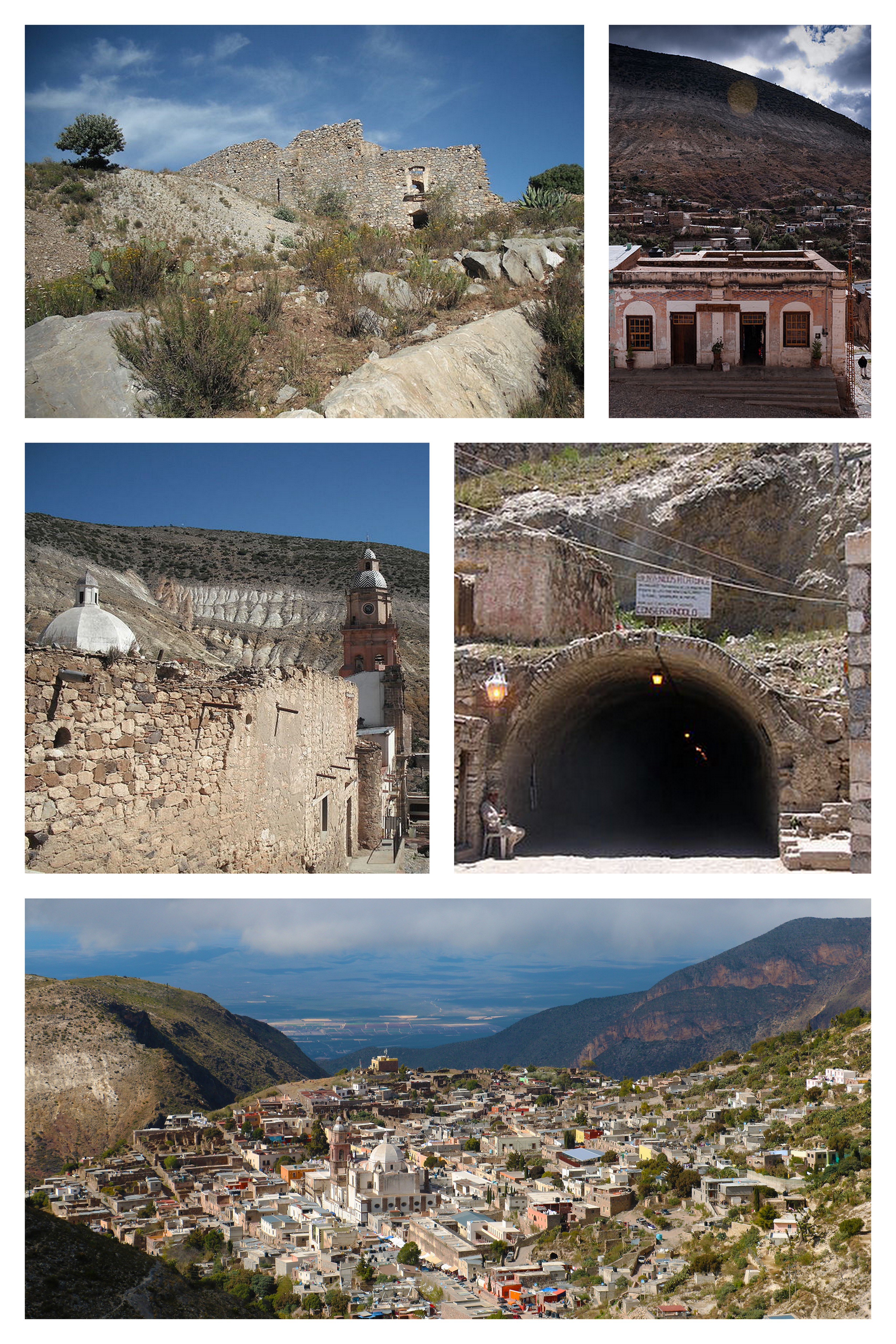
San Luis Potosí. Real de Catorce is a former silver-mining town, today a Pueblo Mágico, perched at over 2,700 meters of altitude in the Sierra de Catorce, on the Potosí highlands, inside the Wirikuta semi-desert. Its main access is a narrow tunnel more than 2 km long dug into the rock in the 19th century, the Ogarrio tunnel
📌Gateway city
Real de Catorce itself has hotels, restaurants and guides, though it's a small town. The access base is Matehuala, an hour away by car, with a bus terminal, hotels and every service; from there you take local transport (taxi or combi van) up to Real de Catorce. The nearest airport with scheduled flights is San Luis Potosí (SLP), about 3 hours away
📌Best time
October to May, with cool to cold weather because of the altitude (over 2,700 m); nights are cold all year, even in summer. Summer (June to September) brings some rain. Around 4 October (the feast of Saint Francis of Assisi) the town receives a big pilgrimage and is very crowded
📌Suggested days
1 to 2 days is enough for the essentials, but it's worth staying at least one night to take in the town's atmosphere at dusk and after dark, and to do an unhurried trip on horseback or by willys through the sierra to the Ghost Town, Cerro Quemado or the Wirikuta desert
💱 MXN exchange rate
Loading rate…
🌤️ Weather in Real de Catorce
Loading weather…

Real de Catorce is one of the most singular and evocative Pueblos Mágicos in Mexico: a former silver-mining town, almost a ghost town, perched at over 2,700 meters of altitude in the Sierra de Catorce, on the Potosí highlands. Its striking access, through a narrow tunnel more than two kilometers long dug into the rock (the Ogarrio tunnel), adds an air of mystery to arriving at this place suspended in time.

The town lived an extraordinary heyday in the 19th century thanks to its silver mines, growing to thousands of inhabitants, but the exhaustion of the veins and the fall in the price of the metal plunged it into decline and near abandonment. Today, among cobbled streets, ruined mansions, churches and mining remains, Real de Catorce offers a unique experience, part Mexican Wild West ghost town, part spirituality, part semi-desert mountain landscape.

This guide covers the essentials of Real de Catorce: the access tunnel, the Templo de la Purísima Concepción (with its venerated image of Saint Francis), the horseback and willys rides through the sierra, the Wirikuta desert (sacred territory of the Wixárika or Huichol people) and its unique atmosphere. It's a destination that asks for time, comfortable footwear and a willingness to let its harsh, solitary magic take hold.

📖 History of Real de Catorce

Founded at the end of the 18th century after rich silver veins were discovered, Real de Catorce lived a huge mining boom in the 19th century, becoming a prosperous town of thousands of inhabitants. The exhaustion of the mines and the fall in the price of silver at the start of the 20th century turned it into something close to a ghost town. Today it's a Pueblo Mágico and a pilgrimage center, next to the sacred Wirikuta desert of the Wixárika people. The full history is on our history page.

Read the full history ↓

🏛️ Real de Catorce is in San Luis Potosí

The state of four regions —the altiplano, the sierra, the zona media and the lush Huasteca—: silver mining country, home of the Pueblo Mágico of Real de Catorce, of the surrealism of Las Pozas in Xilitla and of Madero's Plan de San Luis.

Read the history of San Luis Potosí →

🗺️ What to see

1
Ogarrio Tunnel (the way into town)
The narrow mining tunnel more than 2 km long that is the main entrance to Real de Catorce.
Getting to Real de Catorce is already an experience in itself. The main way into town is the Ogarrio tunnel, a mining gallery about 2.3 km long dug into the rock of the mountain in the 19th century, so narrow that only one vehicle can pass at a time, which means traffic is regulated in turns at both ends. Crossing the tunnel, dark and damp, to emerge suddenly in the town perched on the sierra, adds enormously to the feeling of entering a place that is isolated and outside of time. Private cars can cross by paying the toll; many visitors without their own car reach the tunnel mouth by transport from Matehuala/Estación de Catorce and cross in local pickups or shared taxis that make the run. Getting there: by road from Matehuala (about 40 km) to Real de Catorce, crossing the tunnel. Best time: all year, though it's worth avoiding long weekends and 4 October because of the congestion. Tips: the crossing can take a while because of the turn system; bring patience and, if you can, time your crossing outside peak hours.
ℹ️ Distance: Access from Matehuala (about 40 km) by road up to the tunnel · Price: Tunnel toll approx. $25-30 MXN per private vehicle; crossing by pickup approx. $20 MXN per person (source: local guides / Tripadvisor, verified July 2026) · Best time: All year; avoid long weekends and 4 October because of the crowds · Duration: A crossing of about 10-15 minutes, plus the wait for the turn system
2
Templo de la Purísima Concepción and Saint Francis
The town's main church, a major pilgrimage center thanks to its image of Saint Francis.
The Templo de la Purísima Concepción (the parish church of Real de Catorce) is the religious heart of the town and an important pilgrimage center. It holds the venerated image of Saint Francis of Assisi ('Pancho de Catorce'), credited with miracles and drawing large numbers of pilgrims, especially around 4 October, the saint's day. One curiosity of the church is its 'cuarto de los retablos' or 'milagritos' room, where the ex-votos are displayed: small paintings and offerings with which the faithful give thanks for favors granted. The church's wooden floor and its austere atmosphere reinforce the special character of the place. It's a must-see in town. Getting there: in the center of town, on foot from any accommodation. Best time: all year; a big influx of pilgrims around 4 October. Tips: enter respectfully (it's an active church), visit the retablos room to understand the local devotion, and combine it with a stroll around the main square.
ℹ️ Distance: In the center of town, on foot · Price: Free entry; voluntary donation · Best time: All year; very crowded on 4 October (the feast of Saint Francis) · Duration: 20 to 40 minutes
3
Ghost Town (Real de Ánimas)
An abandoned old mining settlement with spectacular views, reached on horseback or by willys.
A short distance from Real de Catorce lies the so-called Pueblo Fantasma, the Ghost Town (also identified as Real de Ánimas), an old mining settlement left abandoned after the decline of silver, with ruined houses, stone walls and an overwhelming silence on the slope of the sierra. The views from up there, with the town of Real de Catorce in the distance and the semi-desert mountain landscape, are one of the great draws of the area. You usually get there on horseback (a ride of about 2-3 hours round trip) or in the characteristic 'willys', mid-20th-century off-road trucks that climb the mountain tracks. It's one of the most popular and most photographed trips in the destination, ideal for feeling the scale of the landscape and the mining history of the region. Getting there: on a horseback or willys tour arranged with guides/horse handlers in town. Best time: October to May, with milder weather; go early to avoid the strong midday sun. Tips: agree the price and the duration before setting off, bring water, sunscreen and something warm (mornings are cold), and closed shoes.
ℹ️ Distance: Close to town, up in the sierra; reached on horseback or by willys · Price: On horseback approx. $300-600 MXN per person; by willys approx. $500-1,500 MXN per vehicle depending on the route (verified July 2026) · Best time: October to May; go early in the morning · Duration: 2 to 3 hours (on horseback); half a day (willys, combined with other stops)
4
Cerro Quemado and the Wirikuta desert
A sacred site of the Wixárika (Huichol) people, in the middle of the protected Wirikuta desert, with panoramic views.
Cerro Quemado is one of the most important sacred sites for the Wixárika (Huichol) people, who consider it the place where the Sun was born according to their cosmovision, and to which they make an annual pilgrimage from the Sierra Madre Occidental in search of peyote and to hold ritual ceremonies. It sits inside the vast Wirikuta desert, a semi-desert territory of great ecological and spiritual value, home to a remarkable diversity of cacti. Reaching the hill and the desert is another of the great trips out of Real de Catorce, generally by willys or on horseback, combined with a visit to the Ghost Town. From the top you get extraordinary panoramic views over the Potosí highlands. It's essential to visit the area respectfully, since it's a living sacred site for the Wixárika, avoiding any interference with ceremonies that may be under way and without picking plants (peyote is a protected species). Getting there: on a tour with local guides, generally by willys (combined with the Ghost Town) or on horseback. Best time: October to May, with milder weather; avoid coinciding with the Wixárika pilgrimages if you want privacy, although crossing paths with them is also part of the experience if done respectfully. Tips: hire guides who explain the cultural context, don't touch or pick plants, bring water and sun protection.
ℹ️ Distance: In the Wirikuta desert, reachable by willys or on horseback from town · Price: Included in willys tours from $500-1,500 MXN per vehicle depending on the route (verified July 2026) · Best time: October to May; be respectful if there are Wixárika pilgrimages · Duration: Half a day to a full day
5
Streets, mining ruins and the atmosphere of the town
The maze of cobbled streets, ruined mansions and remains of the boom years.
Real de Catorce is, above all, a town to walk and let its unique atmosphere soak in. Its cobbled streets climb and drop along the hillside between restored mansions, ruined buildings and traces of its splendid past: the old Casa de Moneda mint, the circular cockfighting ring (the Palenque), and various mining structures that speak of a time when the town had tens of thousands of inhabitants. The contrast between past grandeur and present silence, the altitude, the cold air and the light of the highlands make for an unforgettable experience, halfway between a western ghost town and a spiritual sanctuary. There are shops selling Wixárika crafts (beadwork, yarn paintings), cafés and small charming hotels in restored old mansions. Getting there: the whole town is covered on foot from any accommodation. Best time: all year, with dusk and night the most evocative moments. Tips: bring comfortable footwear and something warm for the cobbles and the slopes, wander with no fixed route through the quieter streets, and visit the Palenque and the old Casa de Moneda.
ℹ️ Distance: The whole town, walkable · Price: Free (open to wander); craft purchases are extra · Best time: All year; special at dusk and after dark · Duration: Half a day
6
Estación de Catorce and the abandoned mines
The old mining town at the foot of the sierra, with industrial remains and the historic railway line.
Estación de Catorce (or Estación Catorce) is the settlement at the foot of the sierra, down on the plain, where the historic railway that connected the mines with the rest of the country used to run, and it's an unavoidable waypoint for anyone coming from Matehuala before climbing to the Ogarrio tunnel. It preserves remains of the railway and mining infrastructure from the boom years, and it's usually included in the willys routes along with the abandoned ore-processing haciendas in the area. The willys tours that leave Real de Catorce often drop down to this area to show the ruins of the old ore-processing hacienda and the semi-desert landscape where peyote grows (without picking it, since it's a protected species). It's a good complement for grasping the scale of the mining industry that gave rise to the whole network of towns in the sierra. Getting there: on a willys tour arranged in Real de Catorce, or in passing on the way down from or up to Matehuala. Best time: all year. Tips: combine it with the Ghost Town and Cerro Quemado tour to make the most of the same route; bring a camera for the industrial ruins.
ℹ️ Distance: At the foot of the sierra, on the road to Matehuala; on a willys tour or in passing · Price: Included in willys tours from $500-1,500 MXN per vehicle (verified July 2026) · Best time: All year · Duration: Included in a half-day trip
Advertisements
What nobody tells you

💵 Prices

Tickets

TypePrice
Ogarrio Tunnel (vehicle access)Approx. $25-30 MXN per private vehicle; crossing by pickup approx. $20 MXN per person (source: local guides / Tripadvisor, verified July 2026)
Templo de la Purísima Concepción and the retablos roomFree entry (voluntary donation)
Horseback ride to the Ghost TownApprox. $300-600 MXN per person depending on the route/duration (source: local guides, verified July 2026)
Willys tour (Ghost Town, Cerro Quemado, Estación de Catorce)Approx. $500-1,500 MXN per vehicle depending on the route; shared willy to Estación de Catorce from ~$50 MXN per person (source: local guides / El Universal, verified July 2026)
Combi/shared van Matehuala → tunnel mouth + crossing by pickupCombi Matehuala-tunnel approx. $121 MXN per person; tunnel crossing by pickup approx. $20 MXN per person; cash (source: Grupo Senda / local guides, verified July 2026)
Wixárika crafts (beadwork)Varies by piece; from about $50 MXN for small crafts
🔄 updated monthlyOfficial / reference values · double-check when buying

Activities and tours

ActivityPriceDurationOperator
Horseback ride to the Ghost Town and the lookouts$300-600 MXN per person depending on the route (verified July 2026)2-3 h (up to ~7 h for the full day)Local horse handlers
Willys tour through the sierra (Ghost Town, Cerro Quemado, Estación de Catorce)$500-1,500 MXN per vehicle depending on the route (verified July 2026)Half a dayLocal willys drivers
Walk around the town and its ruinsFreeHalf a dayOn your own
Visit to the Wirikuta desert and Cerro Quemado (respecting the sacred site)Included in willys tours from $500-1,500 MXN per vehicle (verified July 2026)Full dayLocal guides
🔄 updated monthlyOfficial / reference values · double-check when buying
Advertisements

🚌 How to get there and distances

Getting around

ModePriceDurationNotes
On footFreeVariableThe town is covered on foot; steep, cobbled streets. It's the only way to move around the town center. Real de Catorce is a tiny mountain town: there is NO urban public transport, no shared vans on fixed routes, no real-time bus app (Moovit/Google Maps don't cover transport inside the town, only the bus journey as far as Matehuala). Everything inside the town is done on foot.
Horse / willys (excursions)Horse approx. $300-600 MXN per person (full day ~$600 for 2 people, ~7 h); willys $500-1,500 MXN depending on the route; shared willy to Estación de Catorce from ~$50 MXN per person (source: local guides and Mérida Experiences/El Universal, verified July 2026)VariableThe main way of doing the trips through the sierra to the Ghost Town, Cerro Quemado, Wirikuta and Estación de Catorce. You arrange it on the spot with the horse handlers and willys drivers on the main square; payment is in cash (there's no app and no card). Agree the price, the route and the duration before setting off.
Transport to Estación de Catorce / MatehualaCombi/shared taxi from Matehuala to the tunnel mouth (Dolores Trompeta) approx. $121 MXN per person; tunnel crossing by pickup approx. $20 MXN per person; tunnel toll $30 MXN per private vehicle (source: Grupo Senda and local guides, verified July 2026)Approx. 1 h from MatehualaHow to pay: in cash, on board. The combis/shared vans leave from fixed points near the old train station and the central streets of Matehuala; there's no electronic ticketing and no QR. There's no real-time app for this leg: you check the timetable at the Matehuala terminal or directly with the drivers.
🔄 updated monthlyOfficial / reference values · double-check when buying

How to get there

RouteAirlines / operatorsAvg. priceDuration
Matehuala → Real de Catorce (via Estación de Catorce and the tunnel)Own car, taxi or local combi/shared taxi (cash payment)Combi/shared van approx. $121-150 MXN per person as far as the tunnel mouth; tunnel toll $30 MXN per vehicle (source: Grupo Senda / local guides, verified July 2026)Approx. 1 h (mountain road and tunnel)
San Luis Potosí → Matehuala (bus)Futura, Frontera, Del Norte, Senda Diamante, Flixbus (approx. 42 departures a day)Approx. $211-350 MXN per person (source: Rome2Rio / the bus lines, verified July 2026)Approx. 2h10 to 2h40
Mexico City → Matehuala (bus) → Real de CatorceFutura Select, Anáhuac Select, Frontera (Mexico City-Matehuala) + local taxi/combi to Real de CatorceMexico City-Matehuala approx. $715-882 MXN; + $121-150 MXN for the local leg (verified July 2026)Approx. 6-7 h Mexico City-Matehuala + 1 h for the final leg
🔄 updated monthlyOfficial / reference values · double-check when buying

🏨 Where to stay

No exact prices: a scale from $ (budget) to $$$$$ (luxury), with 2-3 options per category.

CategoryPriceRecommended options
Boutique in old mansions$$$$$US$ 90-220 a night; e.g. Hotel Boutique Mesón de la Abundancia, Hotel El Real and Hotel Corral del Conde, set in restored old mansions downtown, with colonial charm. Book in advance for weekends and for 4 October (2025; check availability)
Mid-range$$$$$US$ 35-80 a night; charming guesthouses and hotels in the center of town, comfortable and well placed for getting around on foot, 2025
Budget$$$$$US$ 20-45 a night (from about $400 MXN); simple guesthouses and lodgings in town, basic but enough for a night or two, 2025

🍴 Where to eat

TypePriceOptions / signature dish
Potosí and mountain cooking$$$$$$80-180 MXN per dish; Potosí dishes, gorditas, quesadillas and home-style highland food in the town's restaurants and guesthouses, 2025
Charming cafés and restaurants$$$$$$120-280 MXN per dish; cafés and restaurants in restored old mansions, some with international or vegetarian menus aimed at visitors, 2025
Antojitos and the market$$$$$$40-100 MXN per portion; simple stalls and eateries in town, ideal for a quick, cheap meal, 2025
Advertisements

📖 History of Real de Catorce

Origins, formation and what the sources say.

The 'Silver Belly': discovery and founding (1772-1778)

Picture a stone town hanging at 2,750 meters of altitude, in a sierra so arid and remote that the only way in is a tunnel hacked out of the rock. A little over two centuries ago, that impossible place was one of the richest cities on the planet. The mountain Real de Catorce sits on was called, with good reason, the 'Barriga de Plata', the Silver Belly, and it set off a fever comparable to the ones Nevada and California would live decades later.

It all started with the metal. The mines of Real de Catorce were discovered around 1772, and it was in 1778 that the settlement was formally founded, as large numbers of miners came to settle and work the veins of the steep Sierra de Catorce, in the north of what is today the state of San Luis Potosí. As was customary, the settlement was given the name 'Real' —the term used for royal mining camps— with the name of the sierra added, and was placed under the patronage of the Purísima Concepción: its full name was Real de Minas de la Purísima Concepción de los Álamos de Catorce.

There are several hypotheses about the origin of the place name 'Catorce' (fourteen), none of them conclusive, which has fed local legends. The most widespread explanation links it to fourteen soldiers (or bandits) killed or ambushed in the area, although other versions tie it to different episodes or numbers associated with the sierra. The location of the deposit, at over 2,700 meters of altitude in a harsh, hard-to-reach semi-desert setting, shaped the town's entire history: despite the tough conditions, the wealth of silver drew a growing population that settled on the mountain slopes, giving rise to a singular layout of steep, cobbled streets.

The fourteen soldiers or bandits
The most widespread version attributes the name 'Catorce' to a group of fourteen soldiers (or, according to other versions, bandits) killed or ambushed in the sierra, whose number then stuck to the place.
Source: Wikipedia (ES) — «Real de Catorce»: https://es.wikipedia.org/wiki/Real_de_Catorce
Other explanations of the place name
There are alternative explanations linking the number fourteen to veins, places or other episodes in the sierra; none is fully documented, which keeps the origin of the name in the realm of tradition.
Source: Wikipedia (ES) — «Real de Catorce»: https://es.wikipedia.org/wiki/Real_de_Catorce

The mining heyday: the world's second silver producer

The numbers from Real de Catorce's peak are hard to believe. In 1803, this town lost in the sierra ranked second in the world for the amount of silver it produced, behind only Guanajuato, and it was one of the richest mines in all of New Spain. The intensive working of its veins made the 'Real' one of the most productive and prosperous royal mining camps in Mexico, and its population grew at dizzying speed: the traditional figures speak of tens of thousands of inhabitants across the mining zone at its best moment, an astonishing number for a place so remote and so high up.

The wealth translated into an urban life surprisingly sophisticated for such isolation. Real de Catorce came to have a circular cockfighting ring (palenque), the Alameda theater, a cultural center, shops, banking, churches and stately mansions, plus its own mint. Religious devotion flourished alongside: the Templo de la Purísima Concepción, with its venerated image of Saint Francis of Assisi —'Panchito' or 'Pancho de Catorce'— became one of the most important pilgrimage centers in northern Mexico, with its famous room of retablos and ex-votos.

The combination of economic boom, cultural life and religious fervor made Real de Catorce an exceptional place on the Mexican altiplano, an enclave where silver paid for luxuries that rarely reached such isolated mountain towns.

The mint and the Ogarrio tunnel (1865-1901)

Two works sum up Real de Catorce's ambition better than any others: its mint and its tunnel. For a mountain town to strike its own coinage was a privilege of the great mining capitals. The origin of the local mint goes back to the War of Independence, when in 1810-1811 the Potosí commander Mariano Jiménez had eight-real silver coins struck in the area; later, under the Second Empire, the Spanish businessman Cayetano Rubio obtained the permit and set up a formal mint. The machinery was imported from Philadelphia and General Tomás Mejía —the same man who would be executed alongside Maximilian in Querétaro— oversaw its start-up; the mint began operating in January 1865, but it ran barely fourteen months: Emperor Maximilian himself ordered it closed for fear that Benito Juárez's forces would seize it. That building is today the town's cultural center.

The most impressive work, however, was the Ogarrio tunnel. Hemmed into the sierra, the town needed a usable way in, and the initiative came from the Counts of La Maza —Santos, Gregorio, Joaquín and Pedro. Boring through the hill began on 23 July 1897 and finished on 2 April 1901, after almost four years of work with pick and blasting charge. The result was a gallery some 2,300 meters long, so narrow that only one vehicle fits at a time. The route was laid out by the engineer Vicente Irizar, who named the work 'Ogarrio' after the town in Spain where he had been born. Ever since, crossing that dark, damp tunnel to emerge all at once in the town hanging off the mountain has been the first and most memorable experience for every traveler who reaches Real de Catorce.

Decline and near abandonment

Real de Catorce's splendor turned out to be as intense as it was brief. In the late 19th and early 20th centuries, a combination of factors triggered its decline: the progressive exhaustion of the richest veins, the technical and economic difficulties of mining at such altitude, and above all the international collapse in the price of silver. The instability brought by the Mexican Revolution made things worse.

The mines closed one after another, and with them went the town's reason to exist. People left en masse in search of work elsewhere, and Real de Catorce, which had been a prosperous mining city, was reduced to a handful of inhabitants living among its own ruins. Mansions, public buildings and mining structures were left abandoned, giving the place the ghost-town look it largely keeps today.

For much of the 20th century, Real de Catorce stayed half-deserted and nearly forgotten, sustained above all by the pilgrimages to Saint Francis and by the survival of the communities of the sierra, in a silence that contrasted dramatically with its boom-time past.

Rebirth as a Pueblo Mágico and a sacred place

In recent decades, Real de Catorce has lived a revival tied to tourism, spirituality and heritage. Its unique mountain ghost-town atmosphere, its access through the tunnel, its evocative ruins and its semi-desert surroundings drew travelers, artists and people looking for something out of the ordinary. Hollywood found it in 2001, when the director Gore Verbinski shot much of 'The Mexican' ('La Mexicana') in the town and in the Ogarrio tunnel, with Brad Pitt and Julia Roberts in the lead roles; that shoot in 'the town with a single telephone' projected Real de Catorce to the world. Before that it had already gained a reputation as a refuge for hippies, mystics and countercultures in search of peyote and the silence of the sierra.

A fundamental part of its identity is its bond with the Wixárika (Huichol) people, for whom the area is part of Wirikuta, a vast sacred territory they walk to every year, crossing several states, in search of híkuri (peyote) and to perform their rituals at places such as Cerro Quemado, considered the point where the Sun was born according to their cosmovision. That spiritual dimension, together with the Catholic pilgrimage to Saint Francis every 4 October, gives the place a deeply mystical character and has generated tensions and campaigns in defense of Wirikuta against modern mining projects.

Real de Catorce's designation as a Pueblo Mágico in 2001 consolidated its tourist revival, drawing visitors after its singular mix of mining history, highland landscape, religiosity and mystery. Today the town combines the melancholy of its lost grandeur with the appeal of a unique destination, suspended between the rock, the sky and the memory of silver.

📚 Bibliography

  • Wikipedia (ES) — «Real de Catorce (San Luis Potosí)»: https://es.wikipedia.org/wiki/Real_de_Catorce_(San_Luis_Potos%C3%AD)
  • Wikipedia (ES) — «Wirikuta»: https://es.wikipedia.org/wiki/Wirikuta
  • Wikipedia (EN) — «The Mexican» (2001, Gore Verbinski): https://en.wikipedia.org/wiki/The_Mexican
  • Real de Catorce Info — Historia del pueblo minero: https://realdecatorce.info/real-de-catorce.html
  • Real de Catorce Info — Túnel Ogarrio: https://realdecatorce.info/tunel-ogarrio.html
  • Vox Populi SLP — «Túnel de Ogarrio, 2 de abril de 1901»: https://voxpopulislp.com/en-esta-fecha-hace-123-anos-se-termina-la-construccion-del-tunel-de-ogarrio-real-de-catorce-2-de-abril-de-1901/
  • El Universal San Luis — «El túnel de Ogarrio cumple 120 años»: https://sanluis.eluniversal.com.mx/municipios/02-04-2021/el-tunel-de-ogarrio-en-el-pueblo-magico-real-de-catorce-cumple-120-anos/
  • El Dato Numismático — «Casa de Moneda de Real de Catorce»: https://eldatonumismatico.com/casa-de-moneda-real-de-catorce/
  • INAH — «El mineral de Real de Catorce, paisaje cultural»: https://www.revistas.inah.gob.mx/index.php/boletinmonumentos/article/download/2054/1982/3562
  • Secretaría de Turismo de San Luis Potosí: https://descubre.sanluispotosi.gob.mx/

❓ Frequently asked questions

Why is Real de Catorce famous?+
For being a former silver-mining town, almost a ghost town, perched at over 2,700 meters in the Sierra de Catorce and reached through a narrow tunnel more than 2 km long. It's a Pueblo Mágico, a pilgrimage center for Saint Francis, and it sits next to the sacred Wirikuta desert.
How do you get to the town and how much does it cost?+
The main access is through the Ogarrio tunnel, a mining gallery about 2.3 km long regulated in turns (only one vehicle passes at a time), with a toll of approx. $30 MXN per vehicle. You normally come from Matehuala (an hour by car), via Estación de Catorce, in your own car or by shared taxi (approx. $121-150 MXN per person). Matehuala is connected by bus to San Luis Potosí (~$211-350 MXN, 2h30) and to Mexico City (~$715-882 MXN, 6-7 h).
What is the Wirikuta desert?+
It's a vast semi-desert territory considered sacred by the Wixárika (Huichol) people, who make pilgrimages there in search of peyote and to perform rituals, especially around Cerro Quemado. It's a site of great spiritual and ecological value; it should be visited respectfully and, preferably, with local guides, without picking plants.
Do I need warm clothes?+
Yes. The town sits at high altitude (over 2,700 m), so the weather is cool to cold, especially at night and in winter, even in the summer months. Bring a warm jacket, some layers and comfortable footwear for the steep, cobbled streets.
When are there the most pilgrims?+
Around 4 October, the feast of Saint Francis of Assisi, the town receives a large influx of pilgrims who venerate the image of 'Pancho de Catorce' in the church. It's a very crowded time with a strong religious atmosphere; book accommodation well in advance if you want to visit on those days.
How long is it worth staying and how much do the tours cost?+
A day is enough for the essentials, but staying overnight (from about US$ 20-45 in budget lodging) makes the experience much better: the town takes on a special atmosphere at dusk and after dark, and it lets you do an unhurried trip on horseback (about $300-600 MXN per person) or by willys (about $500-1,500 MXN per vehicle) through the sierra to the Ghost Town, Cerro Quemado and the Wirikuta desert (verified July 2026).
How do I get around inside Real de Catorce? Is there public transport or an app?+
No. Real de Catorce is a tiny mining town up in the sierra: inside the town everything is done on foot, along steep cobbled streets. There's no urban public transport, no shared vans on fixed routes, no real-time bus app (Moovit or Google Maps only cover the intercity bus journey as far as Matehuala, not transport inside the town). For the trips through the sierra you arrange the horses and the 'willys' (old 4x4 trucks) on the spot, in cash, directly with the guides on the main square. Access from Matehuala is by combi/shared van as far as the tunnel mouth (~$121 MXN) and the Ogarrio tunnel crossing by pickup (~$20 MXN per person), also in cash (verified July 2026).
Sources consulted (11)
Still planning?
Explore more destinations in Mexico
See all destinations →
Advertisements
Image credits
Photos from Wikimedia Commons, each under its own licence (CC BY, CC BY-SA or public domain). Open each file to see its author and licence.
Real de 14