Viajá con Gus
HomeMexicoMexicali
Mexicali
🇲🇽 Mexico · The North

Mexicali

Jump to what you need
📌State
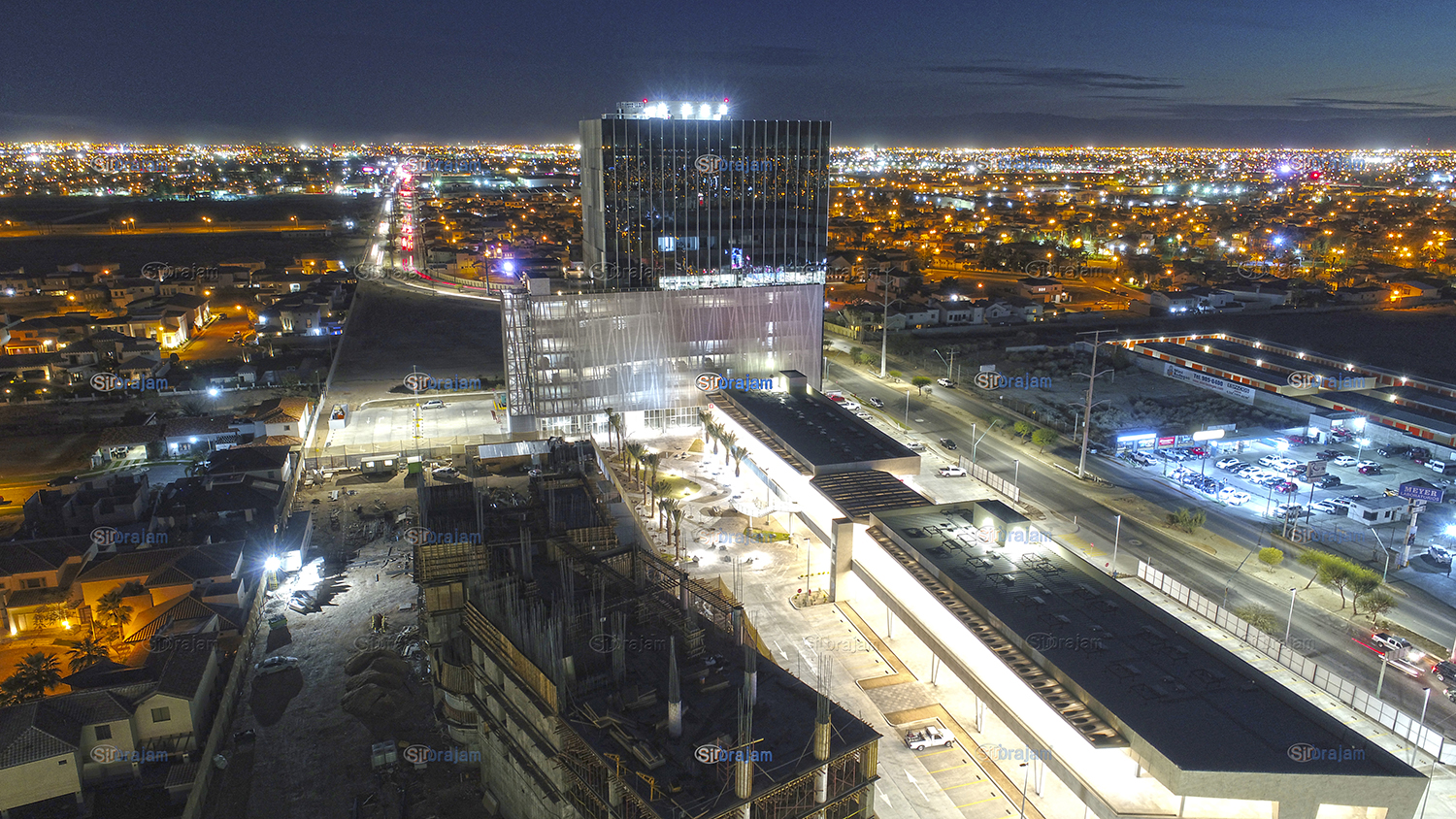
Mexicali (Baja California, Mexico). It is the capital of the state of Baja California, in the far northeast of the state, in the Mexicali valley, right on the border with the United States (facing the American city of Calexico, California) and very close to the Sonora state line and the Colorado River. A desert-climate city and an important agricultural, industrial and administrative center, known for its historic Chinatown (La Chinesca), its food and its booming craft beer scene.
📌Service city
Mexicali itself has every service. It has General Rodolfo Sánchez Taboada International Airport (MXL), with domestic flights; border crossings into Calexico (the Mexicali I and Mexicali II / Garita Este ports of entry); a bus terminal with connections to Tijuana, Ensenada, San Felipe and the rest of the country; and, as the state capital, a wide range of hotels, hospitals, universities, ATMs and government offices. It is the base for visiting San Felipe, on the Gulf of California, and the farming valley.
📌Best time to go
Mexicali has one of the most extreme climates in Mexico: desert, with very hot summers (among the hottest in the country, with temperatures that can comfortably top 40 °C) and mild winters. The best time to visit is October to April (autumn, winter and spring), when temperatures are pleasant. Summer (June to September) is very hot and best avoided, or planned around indoor activities. The festive calendar includes the Fiesta del Sol, a traditional city event.
📌Suggested days
One or two days cover the essentials of Mexicali: La Chinesca (Chinatown), the old town, the museums, the Chinese-Mexican food and the beer and dining scene. Three days or more let you add a getaway to San Felipe, the fishing port on the Gulf of California (about two hours away), a drive through the farming valley or a trip out into the desert. Mexicali also works as a road gateway to the rest of the peninsula.
💱 MXN exchange rate
Loading rate…
🌤️ Weather in Mexicali
Loading weather…

Mexicali is a border city and a desert city, the capital of Baja California, with a personality of its own that sets it apart from its neighbor and rival Tijuana. Planted in a farming valley wrested from the desert thanks to the Colorado River, Mexicali is a city of intense heat, hard-working people and a singular history shaped by Chinese immigration, which left an indelible mark on its identity and, above all, on its table.

Its most distinctive feature is La Chinesca, the most important Chinatown in Mexico, the result of thousands of Chinese immigrants arriving in the early 20th century to work the valley's farmland. That heritage made Mexicali the country's capital of Chinese food, with hundreds of restaurants serving a Chinese-Mexican cuisine that exists nowhere else. On top of that culinary identity come a booming craft beer scene and a proud, deep-rooted local culture.

This guide covers Mexicali with a practical, warm eye: what to see in La Chinesca and downtown, where to eat (Chinese food is close to obligatory), how to cross the border, how to get around a city with an extreme climate, and how to use it as a base for a trip to San Felipe and the Gulf of California. Mexicali is not the typical Baja postcard, but it rewards the curious traveler with authenticity, flavor and a fascinating history.

📖 History of Mexicali

Mexicali is a young city, born at the start of the 20th century right on the border. Its official founding is dated 14 March 1903, in the context of the agricultural development of the Colorado River valley, driven by American companies that channelled the river's water to irrigate the desert. Its name is a portmanteau of 'México' and 'California', mirroring that of its neighbor Calexico (California + México) on the other side of the line. Thousands of immigrants arrived to work the land in the new farming valley, among them a large contingent of Chinese workers, who gave rise to La Chinesca, the Chinatown that would mark the city's identity forever. In 1915 Mexicali became the capital of what was then the Northern District of Baja California, and it consolidated its administrative role when Baja California became a state in 1952, with Mexicali as its capital. Through the 20th century it grew on farming, industry and border trade, keeping its character as a city of immigrants and of the frontier. The full story is on our history page.

Read the full history ↓

🏛️ Mexicali is in Baja California

The country's northwestern frontier between the desert and two seas: Kumiai land of Jesuit and Dominican missions, of Valle de Guadalupe wine, of vibrant Tijuana and of the capital, Mexicali.

Read the history of Baja California →

🗺️ What to see

1
La Chinesca (Chinatown)
The most important Chinatown in Mexico, the heart of Mexicali's Chinese heritage and of its famous food.
La Chinesca is Mexicali's soul and one of the most singular neighborhoods in Mexico. It is the country's most important Chinatown, born in the early 20th century with the arrival of thousands of Chinese immigrants who came to work the farmland of the Colorado River valley. Over time that community turned central Mexicali into an enclave of shops, associations, temples and, above all, restaurants that made the city Mexico's capital of Chinese food. One of La Chinesca's most fascinating quirks is its underground world: because of the extreme summer heat, part of the neighborhood's life and commerce moved below ground, into connected tunnels and basements that served as housing, businesses and refuge from the heat. Today some of those underground spaces can be visited on guided tours that tell the story of the Chinese community and of the city. Exploring La Chinesca means walking among arches, lanterns and shops, learning its past through the neighborhood tours and, of course, eating at one of its many Chinese-Mexican restaurants. The area has been through renewal projects aimed at restoring the value of its historic and cultural heritage. Getting there: it is in central Mexicali, a short distance from the border; by taxi or app, or on foot from downtown. Best time: October to April (pleasant weather); avoid the extreme summer heat. Tips: take a guided tour to see the tunnels and hear the history, and book a meal at one of its restaurants; check the tour times.
ℹ️ Distance: Central Mexicali, near the border (taxi/app or on foot) · Best time to go: October to April (pleasant weather); avoid summer because of the heat · Admission: Walking the neighborhood is free; the underground tunnel tour ~$200 MXN per person (about 1h45, Tuesday to Sunday, book in advance) (source: La Chinesca operators / local press, verified July 2026) · Duration: Half a day (with the tour and a meal)
2
Chinese and Chinese-Mexican food
Mexicali is Mexico's capital of Chinese food, with hundreds of restaurants serving a cuisine found nowhere else.
If there is one thing Mexicali is famous for across Mexico, it is its Chinese food. The legacy of Chinese immigration, which gave rise to La Chinesca, made the city the country's undisputed capital of Chinese cooking, with hundreds of restaurants — it is said to have one of the highest concentrations of Chinese restaurants per inhabitant in Mexico. Nothing else in the country matches this density and tradition. What makes it most interesting is that Mexicali's Chinese food is not quite the same as China's or anywhere else's: it is a Chinese-Mexican cuisine, adapted over time to local ingredients and to the region's palate, and it is unique in the world. Generous portions, combinations of its own and recipes passed down through generations make eating Chinese in Mexicali an unmissable culinary experience and an essential part of the visit. Beyond the Chinese food, Mexicali has plenty of northern cooking (steaks, carne asada), seafood brought in from the Gulf of California and a fast-growing craft beer scene, with several breweries you can visit. The city takes its table very seriously. Getting there: the restaurants are spread through La Chinesca, downtown and the whole city; move around by taxi or app. Best time: any time of year (better outside the extreme summer heat). Tips: try a traditional Chinese restaurant in La Chinesca; for the best-known ones it may be worth booking.
ℹ️ Distance: La Chinesca, downtown and across the city (taxi/app) · Best time to go: Any time; better outside summer because of the heat · Admission: Depends what you order; a full Chinese meal runs about $150–350 MXN per person (2025) · Duration: A meal or a tour
3
The old town and the Sol del Niño Museum
The civic heart of the state capital, with historic buildings, squares, museums and the interactive Sol del Niño.
Mexicali's old town preserves the traces of the city's first years and of its role as state capital. It holds buildings from the early 20th century, the old commercial district, La Chinesca and several civic and cultural spaces. It is an area you can cover on foot (when the weather allows) and it helps you understand Mexicali's border and multicultural history. One of the attractions families love most is the Museo Sol del Niño, a large interactive science and technology museum housed in a former industrial plant (an old cotton mill). With themed halls, experiments, a cinema and exhibits designed for children and adults, it is one of the most visited cultural spaces in the city and an ideal plan with kids. Downtown and around it there are other museums and cultural spaces too, such as the Museo Universitario and centers covering regional history, plus theaters and the civic life of the capital. The Plaza de la Amistad and the city's monuments round out the walk. Getting there: right in central Mexicali; the Sol del Niño is nearby, by taxi or app. Best time: October to April; the museums make an ideal refuge on hot days. Tips: combine downtown and La Chinesca in one outing; check the museum hours (they usually close one day a week).
ℹ️ Distance: Central Mexicali (on foot and by taxi/app) · Best time to go: October to April; museums as a refuge from the heat in summer · Admission: Streets and squares free; Museo Sol del Niño $60 MXN general, IMAX 3D $75 MXN, museum+IMAX combo $110 MXN (2025) · Duration: Half a day
4
The City Forest and Zoo (Parque Vicente Guerrero)
Mexicali's great green lung, with a zoo, a lake, recreation areas and a natural history museum.
The Bosque de la Ciudad (officially Parque Vicente Guerrero) is Mexicali's main green and recreational space, an oasis that counts for a lot in a desert-climate city. It is a large urban park with wooded areas, a lake, playgrounds, spaces for walking and exercising, and a family atmosphere that locals fill, especially on weekends. Its main draw is the city zoo, one of the most important in the region, home to a variety of species and working as a space for environmental education. The park also has a natural history museum, picnic areas and facilities for spending the day as a family. It is an ideal place to visit with children or to take a break from the urban bustle and the heat, enjoying the shade of the trees and the greenery, something particularly appreciated in a desert setting. A staple of everyday life in the city. Getting there: by taxi or app from downtown. Best time: October to April, and early in the morning on hot days. Tips: a perfect plan for families; bring water, sunscreen and a hat, because the sun is fierce.
ℹ️ Distance: Mexicali, within the city (taxi/app) · Best time to go: October to April; mornings on hot days · Admission: Park free to enter; zoo $25 MXN adults, $20 MXN children; water area $63 MXN extra per person (2025) · Duration: Half a day
5
The craft beer scene and nightlife
Mexicali is one of northern Mexico's craft beer hubs, with breweries, bars and a lively night scene.
Mexicali joined Baja California's craft beer boom in force and is today one of the brewing hubs of northern Mexico. The city has several breweries (taprooms) and specialist bars where you can try local beer in a range of styles, often with good food alongside. Working through these breweries has become one of the favorite activities for visitors and locals alike. On top of that comes a lively nightlife, spread between the renovated downtown, La Chinesca and various parts of the city, with bars, traditional cantinas and venues with live music. The culture of going out for a drink and a bite is strong, partly as an answer to the daytime heat, which means social life blooms in the late afternoon and at night. The mix of craft beer, food (Chinese, northern and seafood) and night atmosphere makes Mexicali a surprisingly entertaining destination for anyone who likes to taste and go out. Let local recommendations guide you to the breweries and bars of the moment. Getting there: the venues are spread across downtown and various neighborhoods; move around by taxi or app, especially at night. Best time: any time; better outside the extreme summer heat. Tips: try the local beers; use a taxi or app to get back at night.
ℹ️ Distance: Downtown, La Chinesca and neighborhoods across the city (taxi/app) · Best time to go: Any time; the nightlife picks up once the heat drops · Admission: Depends what you order; a craft beer runs about $60–100 MXN; a tasting flight $150–250 MXN (2025) · Duration: An evening
6
A getaway to San Felipe (Gulf of California)
The fishing port on the upper Gulf of California, about two hours away, with beaches, seafood and desert that runs down to the sea.
From Mexicali you can make a getaway to San Felipe, a quiet fishing port on the shores of the upper Gulf of California (the Sea of Cortez), about two hours away by road. It is the closest seaside spot to Mexicali and a classic weekend destination for locals, where the desert meets the sea in an arid, luminous landscape. San Felipe is famous for its seafood (especially shrimp and fish tacos), for its calm-water beaches and for the enormous tides of the gulf, which expose vast stretches of sand. It is a laid-back place, with a malecón, seafood restaurants, sport fishing and the option of riding a quad bike over the dunes of the nearby desert. Its lighthouse and lookouts give good views over the gulf. The region is part of the upper Gulf of California, an area of great natural richness and a protection zone for marine species. A simple, authentic destination, ideal for adding sea and desert to a trip through Baja California. Getting there: by car, bus or tour from Mexicali (about 2 hours). Best time: October to May, when the weather is pleasant; summer is very hot. Tips: perfect for eating seafood by the water; check the tides (they change the look of the beach dramatically) and bring sun protection.
ℹ️ Distance: San Felipe, about 2 h from Mexicali by road (car, bus or tour) · Best time to go: October to May; avoid the summer heat · Admission: Public beaches free; quad bike tour over the dunes from $500–800 MXN; fishing trip from $1,500 MXN per boat (2025) · Duration: A day or a weekend
Advertisements
What nobody tells you

💵 Prices

Tickets

TypePrice
La Chinesca — walking the neighborhoodFree (open access)
La Chinesca — the underground tunnel tour~$200 MXN per person (Tuesday to Sunday, book in advance) (source: La Chinesca operators, verified July 2026)
Museo Sol del Niño$60 MXN general; IMAX 3D $75 MXN; museum+IMAX combo $110 MXN (source: Museo Sol del Niño, verified July 2026)
The City Forest and Zoo (Parque Vicente Guerrero)Park free; zoo $25 MXN adults, $20 MXN children; water area $63 MXN extra (verified July 2026)
Downtown museums (Museo Universitario, etc.)Free or low-cost admission, about $20–40 MXN (2025; check when you go)
Craft brewery tours$300–500 MXN per person (a tasting flight at several breweries, 2025)
Food tours (Chinese food)$400–700 MXN per person (2025, several tastings included)
San Felipe beaches (getaway)Free (public beaches)
🔄 updated monthlyOfficial / reference values · double-check when buying

Activities and tours

ActivityPriceDurationOperator
Guided tour of La Chinesca and its underground tunnels$200 MXN per person (2025)2-3 hLa Chinesca guides and operators
Food tour of Chinese and Chinese-Mexican cooking$400–700 MXN per person (2025)Half a dayLocal food tour operators
Beer tour of the craft breweries$300–500 MXN per person (2025)Half a dayMexicali brewery operators
Trip to San Felipe (Gulf of California)$600–900 MXN per person on a tour; the ABC bus from $360–700 MXN round trip if you go on your ownFull dayLocal agencies / ABC buses
City tour of the old town and the museums$300–500 MXN per person (2025)Half a dayLocal guides and agencies
🔄 updated monthlyOfficial / reference values · double-check when buying
Advertisements

🚌 How to get there and distances

Getting around

ModePriceDurationNotes
Taxi and apps (Uber, DiDi)A short trip in the city about $60–120 MXN; in the app, the fare is quoted up front and you pay by card or cash (verified July 2026)VariableThe most convenient way to get around, especially in the heat and at night. Uber runs 24/7 in Mexicali and so does DiDi, with good coverage; highly recommended for visitors (source: Uber México, verified July 2026)
City buses and calafias (shared vans)City fare about $15 MXN (students, seniors and people with disabilities $7.50). You pay the driver IN CASH; there is no reloadable card or payment app (source: Mexicali city government, verified July 2026)VariableA wide network of buses and 'calafias' (shared vans on fixed routes) across the city. Very cheap, but the routes can be confusing for a visitor; a taxi or app is usually simpler. You pay cash as you board
Real-time route appsFree (the app; the fare is paid separately, in cash)For routes, stops and timetables of Mexicali's buses people use MOOVIT, which covers the city lines; Google Maps helps too. There is no single travel card or bus payment app: it is always cash (source: Moovit, verified July 2026)
Walking (downtown and La Chinesca)FreeVariableDowntown and La Chinesca can be covered on foot, but only comfortably outside the extreme summer heat. Bring water and sun protection; in summer, better to move around by air-conditioned taxi or app
Border crossing into Calexico (on foot or by car)The pedestrian crossing is free; check the wait times at the port of entryVaries with the queueMexicali sits right against Calexico (USA): you cross on foot or by car at the Mexicali I (downtown) and Mexicali II / Garita Este ports of entry. Bring your passport and visa; wait times vary a great deal (check CBP's Border Wait Times)
Rental carAbout US$ 30–55 a day depending on category (verified July 2026)VariableUseful for getaways to San Felipe, the farming valley or the rest of the peninsula. Check your insurance and paperwork in the border zone (if you cross into the US, you need separate American insurance)
🔄 updated monthlyOfficial / reference values · double-check when buying

How to get there

RouteAirlines / operatorsAvg. priceDuration
Mexicali International Airport (MXL) → downtownAuthorized taxis (fixed fare by zone) and apps (Uber, DiDi)About $150–300 MXN (verified July 2026)20 to 30 min depending on traffic
Crossing from Calexico (USA) at the Mexicali ports of entry (on foot or by car)Pedestrian or vehicle crossing; taxis on the Mexican sidePedestrian crossing free; a taxi on the Mexican side $50–100 MXN to downtownVaries with the queue at the port of entry
Arriving by road from Tijuana or Ensenada (car or bus)ABC, Autobuses de Baja CaliforniaAbout $350–550 MXN from Tijuana (2025)About 2-3 h from Tijuana
Arriving by road from San Felipe (the gulf) or SonoraABC (buses)About $360–700 MXN from San Felipe (2025)About 2 h from San Felipe
Domestic flights to Mexicali (MXL) from Mexico City, Guadalajara, etc.Aeroméxico, Volaris, VivaAerobusVaries with where you start and how far ahead you book; from Mexico City, from US$ 70–150Depends on where you start
🔄 updated monthlyOfficial / reference values · double-check when buying

🏨 Where to stay

No exact prices: a scale from $ (budget) to $$$$$ (luxury), with 2-3 options per category.

CategoryPriceRecommended options
Business / upper category$$$$$US$ 80–140 a night; e.g. Lucerna Mexicali, Crowne Plaza, chain hotels aimed at business travelers
Mid-range downtown and in the commercial districts$$$$$US$ 45–75 a night; e.g. Hotel Colonial, Hotel Calafia, well located near downtown and La Chinesca
Budget$$$$$US$ 20–35 a night; cheap hotels and motels near downtown and the border
Chain hotels near the airport / the highway$$$$$US$ 50–85 a night; e.g. City Express, Fiesta Inn, on the highway approaches and near the airport

🍴 Where to eat

TypePriceOptions / signature dish
Chinese and Chinese-Mexican food$$$$$$150–350 MXN per person; e.g. Restaurant China Sea, La Misión, in La Chinesca and downtown
Northern cooking and steaks$$$$$$200–450 MXN a dish; e.g. El Corral Steakhouse, steaks and northern-style grills
Seafood from the Gulf of California$$$$$$150–320 MXN a dish; e.g. Mariscos Baja Fish, shrimp, aguachiles and fish tacos
Craft breweries and street food$$$$$$60–150 MXN a round; e.g. Cervecería Fauna, Insurgente, with tacos and antojitos on the side
Advertisements

📖 History of Mexicali

Origins, formation and what the sources say.

The Colorado River valley before the city: the Cucapá and the desert

Long before Mexicali existed, the delta region of the Colorado River, where the great river runs into the Gulf of California, was inhabited by indigenous peoples, chiefly the Cucapá (Cucapah or Cocopah), a Yuman people whose life revolved around the river. The Cucapá lived from fishing, hunting and floodplain farming that made use of the Colorado's floods, which periodically fertilized the delta lands. They were, in a sense, 'the river people'.

The landscape was extreme: a hot, arid desert crossed by the Colorado River, which in its lower reaches formed a fertile delta. That combination of desert and water would in time be the key to the city's birth: inhospitable desert could be turned into farmland if the river's water could be channelled and distributed.

Through the colonial centuries and the early years of independent Mexico, this remote region in the far northwest of the country remained thinly populated and outside the great national events. Only in the late 19th and early 20th centuries, with the valley's irrigation projects, would it begin to fill up and the city we know today start to take shape.

The Cucapá, people of the Colorado River
The sources agree that the Cucapá (Cocopah) people inhabited the Colorado River delta long before Mexicali was founded, with a way of life tied to the river and to floodplain farming. Cucapá communities survive today on both sides of the border. Details about their historic territorial extent vary from source to source.
Source: https://es.wikipedia.org/wiki/Cucap%C3%A1

The founding of Mexicali (1903) and where its name comes from

Mexicali was born in the early 20th century out of the great irrigation projects of the Colorado River valley. American companies, keen to turn desert into farmland, built canals to divert and distribute the Colorado's water, creating a fertile growing valley (cotton above all) that stretched across both sides of the border. Working that land required settlements and labor, and so two twin border cities sprang up facing each other.

Mexicali's official founding is dated 14 March 1903. On the American side of the line grew Calexico, and on the Mexican side, Mexicali. The two names are a mirrored play on the words 'México' and 'California': Calexico (California + México) and Mexicali (México + California), a perfect reflection of their nature as sister cities separated by the border and joined by the same farming valley.

In its early years Mexicali was a fast-growing farming and border town, shaped by the cotton economy and by the arrival of workers from very different backgrounds. The city was built, literally, on the idea of making the desert bloom with water from the Colorado River, a feat of hydraulic engineering that defined its destiny.

The name 'Mexicali' as a mirror of Calexico
The sources agree that 'Mexicali' is a portmanteau of 'México' and 'California', formed as a mirror of its American twin city Calexico (California + México). Both names reflect their status as border sister cities born of the same agricultural project in the Colorado River valley.
Source: https://en.wikipedia.org/wiki/Mexicali
The founding date: 14 March 1903
14 March 1903 is the officially accepted founding date for Mexicali, in the context of the valley's agricultural development. As with other border cities, it is a formal starting point for a settlement process that was gradual.
Source: https://es.wikipedia.org/wiki/Mexicali

Chinese immigration and the birth of La Chinesca

One of the most singular and defining chapters in Mexicali's history is the arrival of Chinese immigration. In the early 20th century, the companies developing the farming valley needed abundant labor to dig canals, clear land and grow cotton. A very significant share of those workers were Chinese immigrants, who arrived in large numbers and became a key piece of the valley's development.

Over time many of those Chinese workers settled in central Mexicali and created shops, associations, restaurants and homes, giving rise to La Chinesca, the most important Chinatown in Mexico. The Chinese community left a deep mark on the city's life: on its commerce, its culture and, above all, its food, to the point of making Mexicali the country's capital of Chinese cooking.

One fascinating feature of La Chinesca was its underground development: to escape the extreme summer heat, part of the neighborhood's life, commerce and housing moved below ground, into tunnels and basements. The history of the Chinese community in Mexicali was not without hard episodes —including periods of anti-Chinese discrimination and violence that occurred in various parts of Mexico in the first decades of the 20th century— but its legacy endures as one of the most distinctive traits of Mexicali identity.

How much the Chinese community weighed in Mexicali's development
The sources agree that Chinese immigration was fundamental to Mexicali's agricultural and commercial development in the early 20th century, to the point that at certain moments in those first years there were more Chinese residents than Mexican ones. La Chinesca and the city's culinary fame came out of that. The precise figures vary from source to source.
Source: https://en.wikipedia.org/wiki/Chinese_Mexicans

Mexicali as capital: from the Northern District to the state of Baja California

As it grew, Mexicali gained political and administrative weight within the territory of Baja California. In 1915, in the middle of the Mexican Revolution, the city was designated capital of what was then the Northern District of Baja California, displacing other towns in the region and establishing itself as the seat of power in the country's far northwest.

Over the following decades Mexicali consolidated as the political capital and the region's economic engine, thanks to the valley's agriculture, border trade and, later, industry. The great institutional leap came in the mid-20th century: in 1952 the northern territory of Baja California was raised to the status of a free and sovereign state of the federation, creating the state of Baja California, and Mexicali was confirmed as its capital.

Since then Mexicali has played the role of state capital, seat of the government of Baja California and administrative center of a state that includes cities with larger populations, such as Tijuana. That status as capital gives Mexicali an institutional, university and bureaucratic character that sits alongside its farming, industrial and border identity.

Mexicali as capital: 1915 and 1952
The sources agree on two milestones: in 1915 Mexicali became capital of the Northern District of Baja California, and in 1952, when the state of Baja California was created, it was confirmed as its capital. Even though Tijuana is larger in population, Mexicali retains the state capital status.
Source: https://es.wikipedia.org/wiki/Mexicali

Agriculture, industry and border life in the 20th century

Through the 20th century Mexicali's economy rested on three pillars that still shape its identity: the valley's agriculture, industry and border trade. The Mexicali valley, irrigated with water from the Colorado River, established itself as one of the great farming areas of northwestern Mexico, with crops such as cotton —the emblem of its early years—, wheat and vegetables, sustained by a complex system of irrigation canals.

A sensitive and recurring issue in the region's history has been the sharing of Colorado River water between Mexico and the United States, governed by international treaties. Because the river rises and runs largely through American territory before reaching Mexico, the quantity and quality of the water that finally arrives in the Mexicali valley has been the subject of binational negotiation and tension for decades, a vital matter for a city that lives on irrigation in the middle of the desert.

In the second half of the century, industrial development was added to the agricultural base, with the arrival of maquiladora industry that used the border to set up export factories, generating jobs and drawing migrants from across the country. All of that, along with the constant exchange with neighboring Calexico and Southern California, made Mexicali a deeply border city, where daily life —work, shopping, study, family— plays out on both sides of the line.

Colorado River water as a binational issue
Historical and environmental sources note that the sharing of Colorado River water between the United States and Mexico (governed by treaties, particularly that of 1944) has been a central and contentious issue for the Mexicali valley, which depends on the river's water for its agriculture. The declining flow reaching the delta has had a heavy environmental impact.
Source: https://es.wikipedia.org/wiki/R%C3%ADo_Colorado_(Estados_Unidos_y_M%C3%A9xico)

Mexicali today: identity, culture and the table

The Mexicali of the 21st century is a capital city, multicultural and proud of its singularity. Its identity is built on a mix of origins —Mexicans from all over the country, descendants of Chinese immigrants, and the permanent American influence of the border— and on a strong local culture, with its own accent, its music and its traditions, such as the historic Fiesta del Sol.

Mexicali's great ambassador to the rest of Mexico is still its food. Chinese and Chinese-Mexican cooking, the direct legacy of La Chinesca, is its most recognizable hallmark and makes it an essential culinary destination. In recent years a striking craft beer boom has been added, making Mexicali one of the brewing hubs of northern Mexico, alongside a solid tradition of northern cooking and seafood from the nearby Gulf of California.

The city has also invested in restoring the value of its historic heritage, with renewal projects in La Chinesca and downtown, and in an active cultural and university life befitting a state capital. Far from the peninsula's mass tourist circuits, Mexicali offers the curious traveler an authentic experience: a desert and border city with a unique history, a firm identity and a table that is, perhaps, the best way to get to know it.

Mexicali, capital of Chinese food in Mexico
Culinary and cultural sources agree that Mexicali holds one of the largest concentrations of Chinese restaurants in Mexico and is considered the country's capital of Chinese food, a direct result of the La Chinesca legacy. Mexicali's Chinese-Mexican cooking is regarded as a unique culinary phenomenon.
Source: https://en.wikipedia.org/wiki/Chinese_Mexicans

📚 Bibliography

  • Wikipedia (ES) — «Mexicali»: https://es.wikipedia.org/wiki/Mexicali
  • Wikipedia (EN) — «Mexicali»: https://en.wikipedia.org/wiki/Mexicali
  • Wikipedia (ES) — «La Chinesca»: https://es.wikipedia.org/wiki/La_Chinesca
  • Wikipedia (EN) — «Chinese Mexicans»: https://en.wikipedia.org/wiki/Chinese_Mexicans
  • Wikipedia (ES) — «Cucapá»: https://es.wikipedia.org/wiki/Cucap%C3%A1
  • Wikipedia (EN) — «Calexico, California»: https://en.wikipedia.org/wiki/Calexico,_California
  • Wikipedia (ES) — «Baja California»: https://es.wikipedia.org/wiki/Baja_California
  • Wikipedia (ES) — «Río Colorado (Estados Unidos y México)»: https://es.wikipedia.org/wiki/R%C3%ADo_Colorado_(Estados_Unidos_y_M%C3%A9xico)
  • Visit Baja California (turismo oficial): https://www.descubrebajacalifornia.com/

❓ Frequently asked questions

Why is Mexicali famous for Chinese food?+
In the early 20th century thousands of Chinese immigrants arrived to work the farmland of the Colorado River valley, and they created La Chinesca, the most important Chinatown in Mexico. That heritage made Mexicali the country's capital of Chinese food, with hundreds of restaurants serving a Chinese-Mexican cuisine found nowhere else. Eating Chinese in Mexicali is an unmissable experience.
When is the best time to visit Mexicali, weather-wise?+
Mexicali has a desert climate with extremely hot summers (among the hottest in Mexico, often above 40 °C). The best time to visit is October to April (autumn, winter and spring), when temperatures are pleasant. Summer is best avoided, or planned around indoor activities and plenty of water.
What is La Chinesca and can you visit it?+
La Chinesca is Mexicali's Chinatown, the most important in Mexico, born out of the Chinese immigration of the early 20th century. You can walk it freely and take guided tours, including a visit to the tunnels and underground spaces where, because of the heat, part of the neighborhood's life and commerce took place. It is one of the city's great attractions.
How many days do I need in Mexicali?+
One or two days cover the essentials: La Chinesca, downtown, the museums, the food and the beer scene. Three days or more let you add a getaway to San Felipe (the Gulf of California port, about 2 hours away) and a drive through the farming valley or the desert.
How do I get around the city and how is transport paid for?+
The most convenient option for visitors is a taxi or the apps: Uber runs 24/7 in Mexicali and so does DiDi, paying by card or cash in the app; ideal in the heat and at night. Downtown and La Chinesca can be walked in the cool season. There are city buses and shared vans ('calafias') costing about 15 pesos (half that for students, seniors and people with disabilities), ALWAYS paid to the driver in cash: there is no reloadable card or payment app, and the routes can be confusing for a visitor. For routes, use Moovit or Google Maps. For getaways to San Felipe, a car or a tour works best.
Is San Felipe worth the trip from Mexicali?+
Yes, it is the closest beach to Mexicali (about 2 hours). San Felipe is a fishing port on the Gulf of California with superb seafood, calm beaches, big tides and desert running down to the sea. A classic weekend getaway; best to avoid summer because of the heat.
Sources consulted (15)
Still planning?
Explore more destinations in Mexico
See all destinations →
Advertisements
Image credits
Photos from Wikimedia Commons, each under its own licence (CC BY, CC BY-SA or public domain). Open each file to see its author and licence.
Punta Este Mexicali 2