Viajá con Gus
HomeMexicoLa Paz
La Paz
🇲🇽 Mexico · Pacific Coast

La Paz

Jump to what you need
📌Location
Capital of the state of Baja California Sur, on the Baja California Peninsula, on the shore of the Sea of Cortez (Gulf of California), in its own bay. It's about 200 km north of Los Cabos. Several hundred thousand inhabitants in its metropolitan area.
📌Best time to go
The best window runs from October to May (pleasant, dry weather). Summer is very hot. Whale shark swims usually run from October/November to April; swimming with sea lions is allowed from 1 September to 31 May (closed June to August for breeding). The La Paz Carnival is in February/March.
📌Language and currency
Spanish; Mexican peso (MXN). English is common in tourist settings. Heads up: the city bus system (Tiburón Urbano) does NOT take cash, only a rechargeable card.
📌Suggested length
3 to 5 days for the malecón, the beaches (Balandra, Tecolote) and the boat trips (Isla Espíritu Santo, whale sharks). An ideal base for exploring the Sea of Cortez.
📌How to get there
La Paz 'Manuel Márquez de León' International Airport (LAP), with domestic flights. You can also come by road from Los Cabos (about 2-3 h) and by ferry from Mazatlán or Topolobampo (Sinaloa).
📌Character
A quiet, genuine capital, with a beautiful seafront malecón, a relaxed mood and none of the crowds (unlike Los Cabos). The gateway to the Sea of Cortez, 'the aquarium of the world' (Cousteau), with exceptional marine life.
💱 MXN exchange rate
Loading rate…
🌤️ Weather in La Paz
Loading weather…

La Paz, capital of Baja California Sur, is one of the best-kept secrets of the Sea of Cortez. On the shore of the sea that the explorer Jacques Cousteau called 'the aquarium of the world', La Paz offers what many people are after and few places deliver: spectacular marine nature, dream beaches and a quiet, genuine, uncrowded atmosphere, a world away from the bustle of nearby Los Cabos.

Its heart is the malecón, a lovely promenade along the bay, dotted with sculptures, palms and restaurants, perfect for a sunset walk watching the sun drop into the sea and stain the sky with color. The trips that are La Paz's real treasure leave from here: swimming with sea lions at Isla Espíritu Santo (a World Heritage Site), diving or snorkeling, and —in season— swimming alongside whale sharks, the largest fish in the world, right in its own bay.

A few minutes from the center wait some of the most beautiful beaches in Mexico, led by Balandra, with its turquoise water, its famous rock 'Mushroom' and its shallow lagoon, considered one of the loveliest beaches in the country. La Paz brings together marine adventure, paradise beaches and the calm of an unhurried provincial capital. This guide tells you what to see, what to do, how to get there, how to get around and how to discover this Sea of Cortez paradise.

📖 History of La Paz

The La Paz region was inhabited by the peninsula's indigenous peoples, the Pericú (and, further north, the Guaycura and Cochimí), hunter-gatherers and fishers who lived off the rich sea and the oases. The Spanish arrived early: in 1535, Hernán Cortés himself landed in the bay looking for pearls and riches, and founded a short-lived settlement he named Santa Cruz; but the hostile conditions, the lack of water and indigenous resistance sank the first attempts at colonization for nearly two centuries. The bay was famous for its pearls, which drew seekers for centuries. Stable colonization only came in the 18th century with the Jesuit missions and, afterward, the definitive founding of the city of La Paz in the early 19th century (around 1811). During the war between Mexico and the United States (1846-1848), La Paz was occupied, and in the mid-19th century it was also the setting for William Walker's failed filibustering expedition. Pearl fishing was its great source of wealth until the pearl oyster collapsed in the early 20th century. In 1974, Baja California Sur became a state and La Paz its capital. Today it lives off government, fishing, the university and a booming nature tourism. The full story is on our history page.

Read the full history ↓

🏛️ La Paz is in Baja California Sur

The southern end of the peninsula between the desert and the Sea of Cortés —Cousteau's 'aquarium of the world'—: land of rock paintings, Jesuit missions, gray whales and the luxury resorts of Los Cabos.

Read the history of Baja California Sur →

🗺️ What to see

1
La Paz Malecón
The city's beautiful seafront promenade, with sculptures, palms and unforgettable sunsets.
The La Paz malecón is the city's heart and its pride: a long, beautiful promenade along the bay, considered one of the nicest in Mexico. Lined with palms, benches and a run of bronze sculptures —among them the iconic mermaid figure, whales, dolphins, sea lions and a tribute to Jacques Cousteau— it's where the city's social life beats. The malecón is ideal for walking, cycling or running, and it fills with people at sunset, when the sun goes down over the sea and the bay turns pink and orange (La Paz sunsets are legendary). Along the promenade and on the adjoining streets there are restaurants, cafés, ice cream shops, bars and stores, perfect for dinner facing the sea or a night stroll. Many boat trips also leave from the malecón. Access is free and open. It's the best place to start getting to know La Paz and to feel its relaxed rhythm. Don't miss the sunset: it's one of the city's great experiences.
ℹ️ Location: Facing the bay, in the city center · Best time to go: Sunset; all year · Entry: Free (what you spend is extra) · Duration: 1 to 2 hours
2
Playa Balandra
One of the most beautiful beaches in Mexico: a shallow turquoise lagoon and the famous 'Mushroom'. You need to book ahead.
Playa Balandra, about 27 km north of downtown La Paz, is considered one of the most beautiful beaches in Mexico and a genuine natural paradise. It's a coastal lagoon of crystal-clear, turquoise, very shallow water: at low tide you can walk out to sea with the water at your waist for tens of meters. It's sheltered from the swell, which makes it ideal for a calm swim, snorkeling, kayaking or paddleboarding and, above all, relaxing in a postcard setting, ringed by desert hills and mangroves. Its symbol is 'El Hongo' (the Balandra Mushroom), a curious mushroom-shaped rock formation rising out of the water that has become the icon of La Paz. Balandra's beauty and fragility led to it being declared a protected natural area and, for some years now, to access being strictly regulated. Today access is controlled: you buy a conservation wristband —online at CONANP's official site (descubreanp.conanp.gob.mx) or at the entrance itself— and you go in on one of the two daily shifts, with a maximum of 450 people per shift; according to CONANP, all digital entries correspond to Shift 2. The fee is a single one: $ 125 MXN per person per day (art. 198, section I Ter of the Federal Fees Law). Mexican nationals and foreign residents in Mexico who can prove that status pay 50% ($ 62.50); students and teachers with ID, 25% ($ 31.25); and under-12s, people with disabilities, seniors with an INAPAM card, pensioners and retirees are exempt. Heads up: visitbalandra.com is NOT an official site: it describes itself as a «private and independent service» reselling physical wristbands at $11 USD for nationals / $16 USD for foreigners, well above the official fee. Since capacity is limited and sells out, it's worth booking days or weeks ahead in high season. Bring water, food, shade and everything else you need (there are few services) and respect the conservation rules. An absolute must in La Paz.
ℹ️ Location: About 27 km north of the center · Booking: Conservation wristband from CONANP's official site (descubreanp.conanp.gob.mx) or at the entrance. Maximum 450 people per shift; digital entries are for Shift 2 (13:00-17:00). ⚠ visitbalandra.com is NOT official: it's a private reseller · Hours: Two blocks a day: 8:00-12:00 and 13:00-17:00 · Entry: Single fee $ 125 MXN per person per day; 50% for nationals and accredited foreign residents ($ 62.50) and a 75% discount for students and teachers ($ 31.25); exempt: under-12s, people with disabilities, seniors with an INAPAM card, pensioners and retirees (source: CONANP, official protected-area factsheet; LFD art. 198 and Annex 4 of the RMF 2026 (DOF 28/12/2025), verified 08/08/2026) · Duration: Half a day (one block)
3
Isla Espíritu Santo and swimming with sea lions
A trip to the World Heritage island to swim with sea lions and snorkel.
Isla Espíritu Santo is La Paz's natural jewel: an uninhabited island of desert landscapes, white-sand beaches, turquoise coves and reddish rock formations, declared a World Heritage Site by UNESCO (as part of the Islands and Protected Areas of the Gulf of California) and a Biosphere Reserve. It's one of the most spectacular places in the Sea of Cortez and the star destination of the trips out from the city. The most famous activity is swimming with the sea lions at the Los Islotes colony, at the northern end: there, a breeding colony of more than 300 California sea lions plays, spins and comes right up to visitors in the water, in an unforgettable snorkeling experience (suitable for almost everyone, with a life vest). The tour usually also includes snorkeling on reefs, a run along the island's bays and beaches, wildlife spotting (birds, sometimes dolphins and, in season, whales on the way) and lunch. Full-day tours to Espíritu Santo with the sea lion swim cost, depending on the operator and what's included, generally between $ 1,200 and $ 1,800 MXN per person (several already include the wristband). On top of that comes the protected-area access fee charged by CONANP, around $ 225 MXN per person (wristband required), with exemptions for children and seniors. Important: the sea lion swim is only allowed from 1 September to 31 May (closed June to August for the breeding season). It's best to book with an authorized operator.
ℹ️ Location: Sea of Cortez, off La Paz (departure by boat) · Best time to go: October to May; sea lion swim allowed 1 Sep - 31 May (closed Jun-Aug) · Entry: Full-day tour ~$1,200-1,800 MXN per person; CONANP wristband required ~$225 MXN per person, with exemptions for children and seniors (source: local operators and CONANP, verified July 2026) · Duration: Full day (5-6 h)
4
Swimming with whale sharks (in season)
Swimming alongside the largest fish in the world in the bay of La Paz, in season.
One of the most striking experiences La Paz offers is swimming alongside whale sharks, the largest fish in the world (they can exceed 10 meters), which visit the bay of La Paz every year to feed on plankton. Despite their enormous size, they're entirely harmless animals, filter feeders that move slowly, which lets you snorkel beside them in a safe and deeply moving experience. Whale shark season in the bay of La Paz usually runs, roughly, from October/November to April (it varies year to year). The activity is strictly regulated to protect the animals: only authorized operators work, with guides, in a marked-off area of the bay, with a limited number of swimmers in the water at a time, distance rules and a ban on touching them. It's essential to go with a certified operator who respects these rules. Whale shark swim tours cost, depending on the operator, generally between $ 1,500 and $ 2,500 MXN per person, and include snorkel gear, a guide and the access fee for the regulated zone. It's a once-in-a-lifetime experience and one of the big reasons to visit La Paz in season.
ℹ️ Location: Bay of La Paz (regulated zone) · Best time to go: About October/November to April (varies by year) · Entry: Tour ~$1,500-2,500 MXN per person (includes gear, guide and the zone fee; with an authorized operator) (source: local operators, verified July 2026) · Duration: Half a day
5
Playa El Tecolote and the northern beaches
A wide beach with services facing Espíritu Santo, plus other coves along the northern coast.
Near Balandra, further north, is Playa El Tecolote, one of the most popular and accessible beaches in La Paz. Unlike sheltered Balandra, El Tecolote is a wide, open beach (with no booking and no cap), looking straight across the channel at Isla Espíritu Santo, and it has services: restaurants and palapas right on the sand for seafood, kayak and paddleboard rental and other activities. It's ideal for spending the day, eating facing the sea and enjoying a livelier mood, and a good alternative if you didn't get a Balandra booking. The coast north of the city, on the way to Balandra and El Tecolote, is dotted with beautiful beaches and turquoise coves, like Playa El Coromuel (the closest to the center, with a swimming spot), Playa Pichilingue (near the ferry port) and other small inlets. Each has its own character, from the urban ones with services to the quieter ones. Access to these beaches is generally free and open. El Tecolote and El Coromuel have services; others are more rustic. They're perfect to pair with a visit to Balandra and to enjoy the Sea of Cortez without going far from the city.
ℹ️ Location: North coast of La Paz (El Coromuel, Pichilingue, El Tecolote) · Best time to go: All year; morning or afternoon · Entry: Free, no booking (services, palapas and rentals extra) · Duration: Half a day
6
Historic center, cathedral and museums
The capital's urban core, with its cathedral, square, museums and local life.
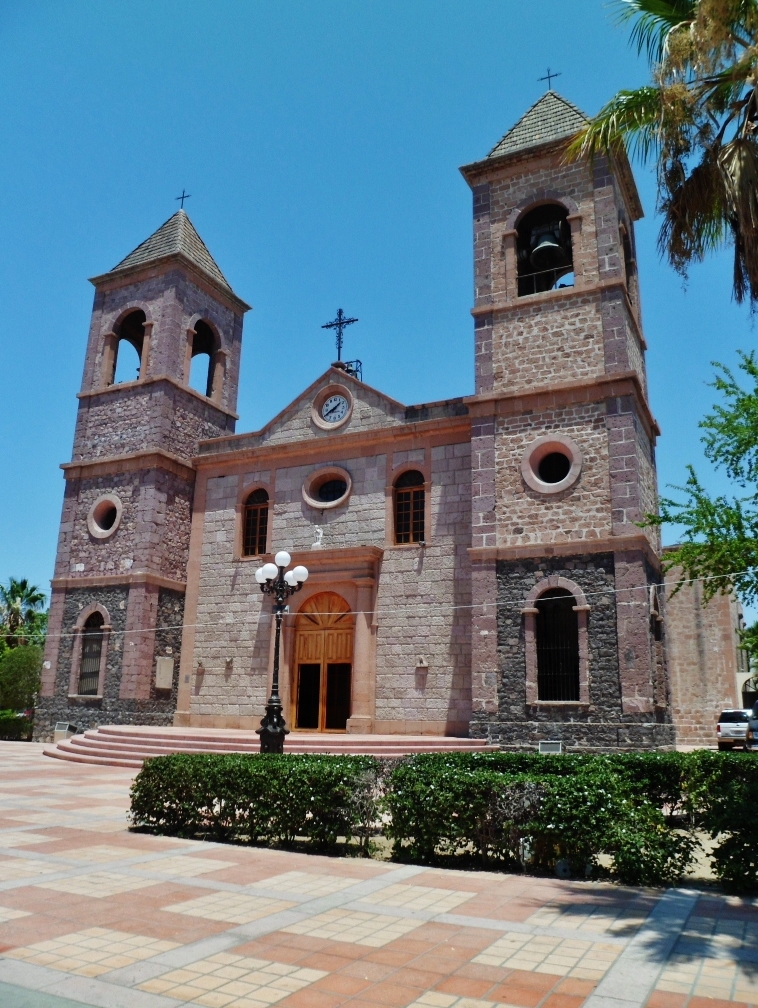
Beyond the malecón and the beaches, La Paz has a pleasant urban center worth walking to see the everyday face of the Baja California Sur capital. At the heart of the city is the Cathedral of Nuestra Señora de La Paz (Nuestra Señora del Pilar), facing the Jardín Velasco square, the traditional civic space, ringed by historic buildings and full of local life. The city also has cultural spaces like the Regional Museum of Anthropology and History of Baja California Sur, which tells the story of the peninsula from its indigenous peoples (with the famous rock paintings of the Sierra de San Francisco) through the mission era and into modern times. Calle Madero and the downtown streets have shops, cafés, murals and the life of a large, quiet, genuine town. Access to the streets, the square and the cathedral is free; the museums have affordable entry fees. Walking the center, paired with the malecón, gives you a complete picture of La Paz: an unhurried capital that lives facing the sea but also has its own Baja California Sur identity.
ℹ️ Location: City center · Best time to go: Morning or afternoon; any day · Entry: Streets, square and cathedral free; museums have affordable entry fees (source: local information, verified July 2026) · Duration: 1 to 2 hours
Advertisements
What nobody tells you

💵 Prices

Tickets

TypePrice
Malecón and city beachesFree and open access (what you spend is extra) (source: La Paz tourism board, verified July 2026)
Playa Balandra (conservation wristband, CONANP)$ 125 MXN per person per day, a single fee (art. 198, section I Ter of the LFD); 50% for nationals and accredited foreign residents ($ 62.50), a 75% discount for students and teachers ($ 31.25); exempt: under-12s, people with disabilities, seniors with an INAPAM card, pensioners and retirees. Bought at descubreanp.conanp.gob.mx or at the entrance (source: CONANP, official protected-area factsheet; LFD art. 198 and Annex 4 of the RMF 2026 (DOF 28/12/2025), verified 08/08/2026)
Protected-area wristband (CONANP) — Isla Espíritu Santo~$ 225 MXN per person (wristband required); exemptions for children and seniors (source: CONANP, verified July 2026)
Cathedral and downtown squaresFree access (source: local information, verified July 2026)
Regional Museum of Anthropology and History of BCSAffordable entry fee (source: local information, verified July 2026)
🔄 updated monthlyOfficial / reference values · double-check when buying

Activities and tours

ActivityPriceDurationOperator
Tour to Isla Espíritu Santo with the sea lion swim~$1,200-1,800 MXN per person; CONANP wristband ~$225 MXN (sometimes included). Sea lion swim allowed 1 Sep - 31 May (source: local operators / CONANP, verified July 2026)Full day (5-6 h)Authorized boat operators in La Paz
Swimming with whale sharks (in season)~$1,500-2,500 MXN per person (includes gear, guide and the fee; Oct/Nov-Apr) (source: local operators, verified July 2026)Half a dayCertified authorized operators
Scuba diving in the Sea of CortezDive trips from ~$1,500-3,000 MXN depending on the site and the number of dives (source: La Paz dive centers, verified July 2026)Half a day to a full dayLa Paz dive centers
Kayaking, paddleboarding and snorkeling at TecoloteKayak/paddleboard rental from ~$200-400 MXN/hour; snorkel tours from ~$600 MXN (source: beach operators, verified July 2026)1 to 4 hoursBeach and local operators
Gray whale watching (day trip to the Pacific coast)Full-day trips to Puerto López Mateos/San Carlos from ~$1,500-2,500 MXN (Jan-Mar) (source: La Paz agencies, verified July 2026)Full dayLa Paz agencies (trip out to the lagoon)
Sunset tour / sailing trip around the bayFrom ~$800-1,500 MXN per person depending on the boat (source: boat operators on the malecón, verified July 2026)2 to 3 hoursBoat operators on the malecón
🔄 updated monthlyOfficial / reference values · double-check when buying
Advertisements

🚌 How to get there and distances

Getting around

ModePriceDurationNotes
On foot and by bike (malecón and center)Walking is free; bike rental from ~$100-200 MXN/day (source: local rental outfits, verified July 2026)VariableThe malecón and downtown La Paz are flat and pleasant to cover on foot or by bike. Most restaurants, downtown hotels and the tour departure points are a short distance apart.
City bus 'Tiburón Urbano' (card payment only)'TU Tarjeta' card $ 50 (one-off) + $ 12 a ride (standard); concession (seniors/disability) card $ 30 + $ 6 a ride (source: La Paz municipality / Tiburón Urbano, verified July 2026)VariableThis is the city's modern public transport system. It does NOT take cash: you have to buy and top up the 'TU Tarjeta' and tap it on the validator as you board. The main routes (SMT-01, SMT-02) run through the center, the cathedral, the UABCS university and several neighborhoods. You can see the buses in real time with the 'App La Paz'.
Real-time app ('App La Paz')Free (the app)The official 'App La Paz' shows the location of Tiburón Urbano buses in real time and helps you plan a trip and check routes and schedules. It's the app to use in this city; Moovit and Google Maps have limited coverage here.
Taxis and ride appsTrips within the city from about $60-150 MXN; more to the northern beaches (Balandra/Tecolote) (source: local fares, verified July 2026)VariableTaxis (and to some extent ride apps) cover the city. To get to Balandra or El Tecolote (about 27 km away), it's best to take a car, a return taxi with an agreed pickup time, or a tour. Taxis are paid in cash; agree the fare beforehand.
Rental carDepends on the rental and fuel (source: agencies at LAP airport, verified July 2026)VariableHighly recommended for reaching Balandra freely (remember to book access online separately), El Tecolote and the northern beaches, and for exploring the region (Todos Santos, El Triunfo). Distances on the peninsula are long.
🔄 updated monthlyOfficial / reference values · double-check when buying

How to get there

RouteAirlines / operatorsAvg. priceDuration
La Paz airport (LAP) → center / malecónAirport taxis (fare by zone), private transport/shuttleTaxi/shuttle from about $300-600 MXN depending on the service (source: LAP airport transport, verified July 2026)15 to 25 min (the airport is about 11 km away)
Los Cabos (SJD / San José / Cabo San Lucas) → La PazCar, bus (Águila/Ruta del Desierto) or private transferBus from about $400-600 MXN; a private transfer costs considerably more (source: Autobuses Águila, verified July 2026)2 to 3 hours (some 150-200 km)
Ferry from Mazatlán or Topolobampo (Sinaloa) → Pichilingue (La Paz)Baja Ferries / TMCFare depends on the cabin and vehicle (check with the ferry line) (source: Baja Ferries, verified July 2026)Mazatlán ~12-16 h; Topolobampo ~6-7 h (depending on the ship)
Arriving by cruise ship (port of Pichilingue/La Paz)Cruise lines (some calls)Depends on the cruiseA one-day call
🔄 updated monthlyOfficial / reference values · double-check when buying

🏨 Where to stay

No exact prices: a scale from $ (budget) to $$$$$ (luxury), with 2-3 options per category.

CategoryPriceRecommended options
Boutique and luxury hotels on the seafront$$$$$La Paz has boutique hotels and a few luxury ones facing the bay and around the malecón and Pichilingue (such as CostaBaja Resort and others), with views, a marina and high-end services. Approximate rates from $3,000 MXN up to several thousand a night (source: accommodation search sites, verified July 2026). Less crowded and quieter than Los Cabos.
Mid-range hotels and places on the malecón$$$$$A good spread of mid-range hotels facing the malecón and downtown, comfortable and well placed for walking and catching tours. Approximate rates from $1,200 to $2,500 MXN a night (source: accommodation search sites, verified July 2026). Excellent location for the price.
Budget, guesthouses and B&Bs$$$$$Budget hotels, guesthouses and bed and breakfasts downtown, from about $700 to $1,200 MXN a night (source: accommodation search sites, verified July 2026). Enough if you're using the city as a base for boat trips.
Hostels and vacation rentals$$$$$Hostels for backpackers and nature travelers (from about $300-500 MXN a bed) and vacation rentals (apartments and houses) for longer stays or groups (source: accommodation search sites, verified July 2026). La Paz is popular with divers and sea lovers.

🍴 Where to eat

TypePriceOptions / signature dish
Seafood and fish from the Sea of Cortez$$$$$La Paz's great strength. Fresh fish, fish and shrimp tacos, chocolata clams, scallops, ceviches, aguachiles and seafood from the gulf, from popular seafood counters to malecón restaurants. Dishes from about $120-300 MXN (source: local survey, verified July 2026).
Malecón restaurants and contemporary cooking$$$$$Along the malecón and downtown there are restaurants serving Baja California Sur and contemporary cooking, with terraces and sea views, ideal at sunset. Mains from about $220-450 MXN (source: local survey, verified July 2026).
Tacos, antojitos and local food$$$$$Taquerías (the Baja-style fish tacos are a must), seafood stalls, fondas and street food around the city. Tacos and antojitos from about $20-90 MXN (source: local survey, verified July 2026). Cheap and very good.
Cafés, bars and quiet nightlife$$$$$Specialty coffee shops, craft breweries (Baja California Sur has a brewing tradition) and relaxed bars, above all downtown and on the malecón. Drinks from about $40-120 MXN (source: local survey, verified July 2026). A calm scene, not a party one.
Advertisements

📖 History of La Paz

Origins, formation and what the sources say.

The peninsula's indigenous peoples: Pericú, Guaycura and Cochimí

Long before Hernán Cortés landed looking for pearls, the bay of La Paz was already home to expert divers who went down without equipment to pull from the seabed the oysters that held those same pearls. The Baja California Peninsula, one of the driest and most demanding environments in the Americas, was inhabited by hunter-gatherer and fishing peoples remarkably well adapted to that desert facing the sea. The Pericú lived in the La Paz region and the south of the peninsula; further north, the Guaycura and the Cochimí. They were nomadic or semi-nomadic groups who made use of the resources of the rich Sea of Cortez —fish, shellfish, turtles— and of the desert's fruits, living in small bands.

These peoples left an extraordinary cultural legacy on the peninsula: the rock paintings of the Sierra de San Francisco (further north), enormous prehistoric murals painted in caves and rock shelters, today a UNESCO World Heritage Site, evidence of the art and worldview of the ancient Californios. In the La Paz area, the Pericú were skilled divers and knew the pearls that abounded in the gulf's oysters well, a resource that would shape the region's history.

Tragically, the indigenous peoples of Baja California suffered a devastating demographic collapse after European contact, from disease, conflict and the upheavals of the mission era. The Pericú in particular had all but vanished as a distinct people by the 18th century, leaving their mark on the deep history of the peninsula.

The Pericú and Californio rock art
The sources agree that the La Paz region was inhabited by the Pericú, one of the indigenous peoples of Baja California (along with the Guaycura and Cochimí). The peninsula's extraordinary rock art (Sierra de San Francisco), a UNESCO World Heritage Site, is one of their most remarkable legacies, though exactly which groups made it is still being studied.
Source: https://whc.unesco.org/en/list/714/

Hernán Cortés, the pearls and two centuries of failed colonization

The European history of La Paz began very early and at the hands of one of the great figures of the conquest: Hernán Cortés. In 1535, the conqueror of Mexico himself landed in the bay of La Paz, drawn by legends of the wealth of the 'island of California' and, above all, by its famous pearls. There Cortés founded a settlement he named Santa Cruz, the first European attempt to colonize the peninsula.

But California turned out to be a very hard nut to crack. The extreme aridity, the lack of fresh water, the difficulty of supplying such a remote settlement and the resistance of the indigenous peoples sank Cortés's project in short order. For nearly two centuries, successive Spanish attempts to settle permanently in the La Paz region were frustrated over and over. In practice, the peninsula remained the land of the indigenous peoples, visited only sporadically.

What did draw seekers throughout all that time were the pearls. The bay of La Paz and the Sea of Cortez were famous for their rich beds of pearl oysters, and pearl fishing —often brutal for the indigenous divers— became the great activity linking the region to the rest of the colonial world. La Paz pearls became famous in Europe. It was only in the 18th century, though, that stable colonization would take root, thanks to a new player: the Jesuit missions.

Cortés's landing in 1535
The sources agree that Hernán Cortés landed in the bay of La Paz in 1535 and founded the short-lived settlement of Santa Cruz, drawn by the pearls and the legends of wealth. The project failed because of the harsh conditions, and stable colonization didn't arrive until the 18th century.
Source: https://es.wikipedia.org/wiki/La_Paz_(Baja_California_Sur)

Jesuit missions and the definitive founding of the city (18th-19th centuries)

Permanent colonization of Baja California finally came with the Jesuit missions, from the late 17th century on. Missionaries like Father Juan María de Salvatierra founded, from 1697 (with the Loreto mission, the first in the Californias), a chain of missions that worked its way up the peninsula. A mission was established in the La Paz region in the early 18th century (the mission of Nuestra Señora del Pilar de La Paz), though the area remained difficult and the indigenous population fell dramatically.

After the Jesuits were expelled in 1767, the missions passed to Franciscans and Dominicans. The definitive founding of the city of La Paz as a stable settlement is placed in the early 19th century, around 1811, when a permanent town took hold that would no longer disappear. From then on, La Paz grew slowly as a port and a center of pearl fishing.

The 19th century brought turbulent episodes. During the war between Mexico and the United States (1846-1848), La Paz was occupied by American forces, and the fate of Baja California hung in the balance (in the end it stayed with Mexico). In the middle of the century, in 1853-1854, the city was the setting for the failed expedition of the American filibuster William Walker, who went as far as proclaiming a short-lived 'Republic of Baja California' before being driven out. Despite these upheavals, La Paz established itself as the main town in the south of the peninsula.

The definitive founding of La Paz (around 1811)
After centuries of failed attempts and the mission period, the founding of the city of La Paz as a permanent settlement is usually placed in the early 19th century, around 1811. Dates and details vary between sources depending on whether the mission, the garrison or the civil town is counted.
Source: https://es.wikipedia.org/wiki/La_Paz_(Baja_California_Sur)

The rise and collapse of the pearls

For centuries, La Paz's great wealth was pearls. The bay and the Sea of Cortez held abundant beds of pearl oysters, and extracting fine pearls was the activity that gave the region fame and prosperity. La Paz pearls were prized on international markets, and the city lived through a boom tied to the industry, above all in the 19th and early 20th centuries, which drew divers, traders and pearling companies.

The exploitation, however, was intensive and unsustainable. Overfishing of the oysters, together with diseases that hit the pearl beds, led to the collapse of the gulf's pearl oyster in the early 20th century. By the 1930s and 1940s, La Paz's pearling industry, which had been its hallmark, crashed and all but vanished, closing an era.

That rise and fall of the pearls left a deep mark on La Paz's identity and memory; it even inspired literary works, like the celebrated novel 'The Pearl' by the American writer John Steinbeck, set in La Paz, which portrays the life of the pearl divers. Today the pearling tradition is reviving on a smaller scale through sustainable pearl farming projects in the region, recovering a trade that was, for centuries, the economic soul of the city.

Capital of Baja California Sur and a nature destination (20th-21st centuries)

After the pearl era ended, La Paz reinvented itself. Through the 20th century it consolidated its role as the main urban, political and administrative center of the southern peninsula. A key milestone came in 1974, when the territory of Baja California Sur became a state of the Mexican federation, and La Paz was designated its capital. Since then, the city has combined the functions of a state capital —administration, government, the Universidad Autónoma de Baja California Sur— with fishing and a growing tourism sector.

La Paz's great asset in recent decades has been its natural setting. The Sea of Cortez, which the explorer Jacques Cousteau called 'the aquarium of the world' for its extraordinary biodiversity, turned La Paz into a first-rate nature tourism destination: diving, snorkeling, swimming with sea lions at Isla Espíritu Santo (declared a World Heritage Site by UNESCO as part of the Islands and Protected Areas of the Gulf of California in 2005), whale shark swims and whale watching. Protecting areas like Balandra and the Espíritu Santo archipelago reflected a growing environmental awareness.

Today, La Paz has positioned itself as a quieter, more genuine and more sustainable alternative to the mass tourism of nearby Los Cabos. Its beautiful malecón, its paradise beaches, its exceptional marine life and the relaxed mood of an unhurried capital have made it one of the best-loved destinations in northwestern Mexico, true to its name: a haven of peace on the shore of the Sea of Cortez.

Espíritu Santo, a World Heritage Site (2005)
Isla Espíritu Santo, off La Paz, is part of the property 'Islands and Protected Areas of the Gulf of California', inscribed by UNESCO on the World Heritage list in 2005 for its exceptional marine biodiversity. Jacques Cousteau called the Gulf of California 'the aquarium of the world'.
Source: https://whc.unesco.org/en/list/1182/

📚 Bibliography

  • Wikipedia (ES) — «La Paz (Baja California Sur)»: https://es.wikipedia.org/wiki/La_Paz_(Baja_California_Sur)
  • Wikipedia (ES) — «Pericúes»: https://es.wikipedia.org/wiki/Peric%C3%BA
  • Wikipedia (ES) — «Misiones de Baja California»: https://es.wikipedia.org/wiki/Misiones_de_Baja_California
  • Wikipedia (ES) — «William Walker (filibustero)»: https://es.wikipedia.org/wiki/William_Walker_(filibustero)
  • Wikipedia (EN) — «The Pearl» (John Steinbeck): https://en.wikipedia.org/wiki/The_Pearl_(novella)
  • UNESCO — «Islands and Protected Areas of the Gulf of California» (2005): https://whc.unesco.org/en/list/1182/
  • UNESCO — «Rock Paintings of the Sierra de San Francisco»: https://whc.unesco.org/en/list/714/
  • Enciclopedia de los Municipios y Delegaciones de México (INAFED) — La Paz, BCS: http://www.inafed.gob.mx/work/enciclopedia/EMM03bajacaliforniasur/
  • Turismo de Baja California Sur / La Paz: https://www.golapaz.com/
  • CONANP — Parque Nacional Zona Marina del Archipiélago de Espíritu Santo: https://www.gob.mx/conanp

❓ Frequently asked questions

La Paz or Los Cabos?+
They're very different destinations. Los Cabos is more touristy, more luxurious and busier, with big resorts and nightlife. La Paz is quieter, more genuine and cheaper, focused on marine nature (Espíritu Santo, sea lions, whale sharks) and on beaches like Balandra. If you want marine adventure, calm and friendlier prices, La Paz; if you want resorts and partying, Los Cabos. They're 2-3 h apart by car and combine well.
How do you visit Playa Balandra and what does it cost in 2026?+
Balandra is no longer free to enter: today you have to pay a conservation wristband of $ 125 MXN per person per day, bought on CONANP's official site (descubreanp.conanp.gob.mx) or at the entrance itself. It's a single fee, but Mexican nationals and foreign residents in Mexico who can prove it pay 50% ($ 62.50), students and teachers with ID 25% ($ 31.25), and under-12s, people with disabilities, seniors with an INAPAM card, pensioners and retirees are exempt. Watch out for visitbalandra.com: it isn't official, it's a private reseller charging considerably more. Entry is organized in two blocks (8:00-12:00 and 13:00-17:00) with a cap of 450 people per shift —digital entries are for Shift 2— and it sells out, especially in high season, so book days ahead. It's about 27 km from the center; bring water, food and shade.
When can you swim with whale sharks and with sea lions?+
Whale sharks are usually in the bay of La Paz from October/November to April (it varies each year); a tour runs around $1,500-2,500 MXN per person. The sea lion swim at Los Islotes (Isla Espíritu Santo) is allowed from 1 September to 31 May and closed June to August for the breeding season. Both activities are heavily regulated: always book with an authorized operator.
How do I get around La Paz, and how do I pay for transport?+
The center and the malecón are covered on foot or by bike. Urban public transport is the 'Tiburón Urbano', which does NOT take cash: you have to buy the 'TU Tarjeta' ($ 50) and top it up, and a ride costs $ 12 (standard) or $ 6 (concession). You can track the buses in real time with the 'App La Paz'. For the northern beaches (Balandra, Tecolote, about 27 km away) it's best to take a car, a return taxi with an agreed pickup time, or a tour, since city transport doesn't really reach out there.
How many days do you need for La Paz?+
Three to five days works well: one for the malecón, the center and the sunset; one for the trip to Isla Espíritu Santo with the sea lion swim; one for Balandra and the northern beaches; and, in season, one for the whale shark swim or diving. It's also a great base for trips out to Todos Santos or the mining town of El Triunfo.
Is La Paz safe?+
La Paz has a reputation as one of the calmest and safest cities in northwestern Mexico, with the relaxed mood of a provincial capital. As always, apply common sense. Its peaceful character (fitting for its name) and its focus on nature tourism make it very pleasant for travelers.
Sources consulted (12)
Still planning?
Explore more destinations in Mexico
See all destinations →
Advertisements
Image credits
Photos from Wikimedia Commons, each under its own licence (CC BY, CC BY-SA or public domain). Open each file to see its author and licence.
Cathedral of La Paz, Baja California